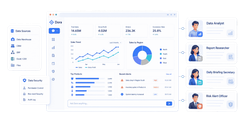

FineReport is a flexible enterprise reporting and dashboard platform that helps organizations build customized ESG reporting outputs on top of existing business data.
Workiva vs Persefoni vs FineReport at a glance among ESG reporting platforms
When comparing esg reporting platforms, the real question is not which tool is universally best, but which one fits your reporting stack, governance model, and internal operating reality.
Workiva
- One-sentence overview: Workiva is a connected reporting platform designed for organizations that need governed, collaborative disclosures across finance, ESG, and regulatory reporting.
- Key Features:
- Connected data linking across reports and disclosures
- Strong workflow management, approvals, and version control
- Support for multi-stakeholder collaboration
- Structured environment for audit readiness and disclosure governance
- Pros & Cons:
- Pros: Strong controls, enterprise-grade collaboration, good fit for complex disclosure programs
- Cons: Higher process maturity required, heavier implementation footprint, can be costly for smaller teams
- Best For: Large enterprises, finance-led reporting teams, and organizations managing ESG alongside statutory, annual, or investor reporting
Persefoni
- One-sentence overview: Persefoni is a carbon-accounting-centric platform built for companies that want emissions management and climate reporting at the core of their ESG program.
- Key Features:
- Carbon footprint measurement across Scope 1, 2, and 3
- Emissions calculation support and climate analytics
- Decarbonization planning and operational emissions visibility
- Regulatory and stakeholder climate reporting support
- Pros & Cons:
- Pros: Strong climate data depth, emissions-focused workflows, useful for decarbonization initiatives
- Cons: Broader ESG narrative reporting may need other tools, less suited as a single platform for every reporting use case
- Best For: Sustainability-led teams, climate compliance programs, and organizations starting with carbon reporting
FineReport
- One-sentence overview: FineReport is a BI-oriented reporting platform that enables teams to design highly customized ESG dashboards, statements, and stakeholder-facing reports.
- Key Features:
- Pixel-level report design and dashboard customization
- Broad connectivity to ERP, HR, finance, spreadsheet, and operational systems
- Flexible data modeling and presentation for different stakeholder groups
- Strong fit for embedding ESG outputs into wider business intelligence environments
- Pros & Cons:
- Pros: Highly customizable, adaptable to complex reporting formats, effective for cross-functional data presentation
- Cons: ESG-specific workflows and framework logic may require internal setup, more technical resources may be needed than with prepackaged ESG tools
- Best For: BI-led reporting stacks, data-driven enterprises, and teams that already have source systems but need better ESG reporting presentation
Who each platform suits best often comes down to three factors: company size, reporting maturity, and who owns the reporting process internally.
- Workiva tends to fit larger organizations with formal disclosure cycles, stronger internal controls, and established finance or compliance teams.
- Persefoni is often better for companies whose ESG priorities start with carbon accounting, emissions transparency, and climate-related compliance.
- FineReport fits teams that already have data in multiple systems and need a customizable reporting layer rather than a rigid all-in-one ESG workflow product.
The biggest differences among these esg reporting platforms show up in four areas:
- Reporting depth: Workiva is strong in disclosure governance and connected reporting.
- Carbon accounting focus: Persefoni is strongest where emissions measurement and climate analysis are central.
- Dashboard flexibility: FineReport stands out when customized dashboards and stakeholder-specific output design matter.
- Cross-functional collaboration: Workiva is especially strong when many contributors, reviewers, and approvers are involved in controlled reporting.
A simple recommendation framework helps narrow the field quickly:
- Finance-led reporting stack: Start with Workiva
- Sustainability-led or emissions-led stack: Start with Persefoni
- BI-led or analytics-led reporting stack: Start with FineReport
How to evaluate an ESG reporting platform for your 2026 reporting stack
Selecting from modern esg reporting platforms requires more than comparing feature lists. In 2026, the right choice depends on whether the platform can support changing disclosure requirements while fitting your current architecture and team capabilities.
Core capabilities that matter most
Before evaluating branding or market visibility, assess whether the platform can reliably support the full reporting cycle.
Data collection and validation across ESG metrics, entities, and reporting periods
An ESG platform must help you collect and organize data across multiple business units, subsidiaries, facilities, and reporting periods. That includes environmental metrics, workforce data, governance indicators, and any custom KPIs relevant to your industry.
Look for:
- Centralized collection from multiple source systems
- Validation rules to reduce manual errors
- Entity-level and period-level tracking
- Clear ownership of data inputs
- Support for recurring data refreshes
This is especially important for organizations still relying on email chains and spreadsheets. A platform that improves data consistency can materially reduce reporting risk.
Framework alignment for CSRD, GRI, SASB, TCFD, ISSB, and other evolving disclosure needs
Most organizations are no longer reporting against only one standard. A practical ESG reporting platform should support mapping and organizing disclosures across multiple frameworks, including:
- CSRD
- GRI
- SASB
- TCFD
- ISSB
The key is not just whether a vendor mentions these frameworks, but whether the platform helps operationalize them. That means tagging data to disclosures, maintaining consistency across reporting cycles, and adapting as requirements evolve.
Audit trails, workflow controls, approvals, and version history for report readiness
As ESG reporting becomes more formalized, report readiness matters as much as data collection. Strong platforms support:
- User permissions and access controls
- Approval chains and sign-off processes
- Version history
- Audit trails
- Documentation for supporting evidence
If your reporting process includes legal review, finance review, internal audit, or external assurance, these controls become essential rather than optional.
Integration and architecture fit
Even the strongest ESG tool can underperform if it does not fit your current data environment.
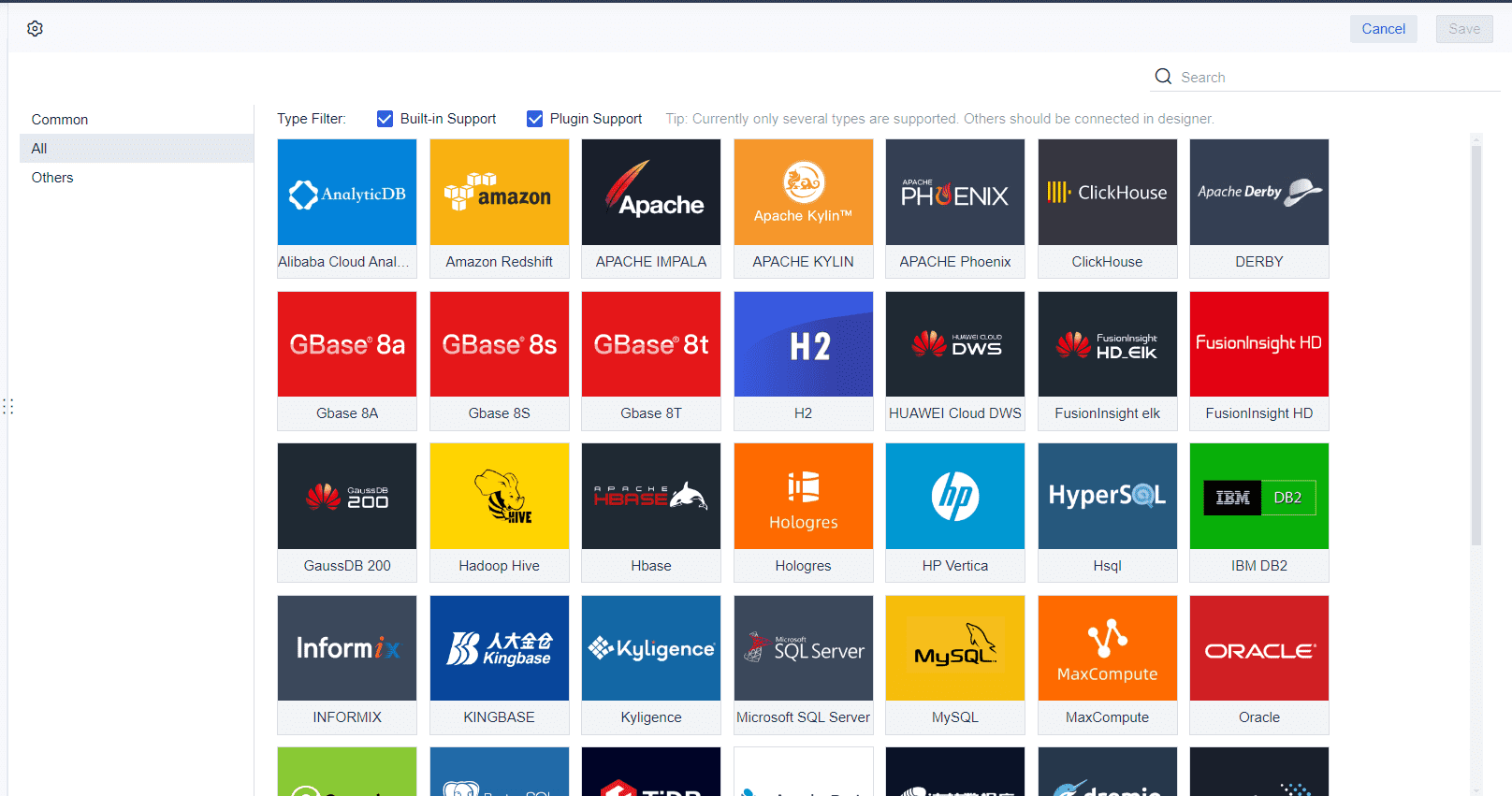
Connections with ERP, EHS, finance, HR, carbon, and spreadsheet-based data sources
Most companies do not store ESG data in one place. Environmental data may sit in EHS tools, people metrics in HR systems, operational metrics in ERP platforms, and supplemental figures in spreadsheets.
A platform should connect with:
- ERP systems
- EHS applications
- HR systems
- Finance platforms
- Carbon data tools
- Excel and other spreadsheet sources
The broader and more reliable the connection layer, the less manual reconciliation your team will have to manage.
API availability, data modeling flexibility, and fit with existing analytics or governance tools
For many enterprises, architecture fit is the deciding factor. Ask:
- Does the platform offer APIs?
- Can it model ESG data flexibly?
- Does it work with existing analytics tools?
- Can it fit current governance and access-control standards?
This is where FineReport deserves attention. If your organization already runs a mature analytics environment, FineReport can act as a strong reporting layer without forcing you to abandon your current source systems.
Cost, implementation, and team adoption
Feature depth matters, but adoption determines value.
Time to deploy, implementation support, training requirements, and total cost of ownership
Platform cost should be evaluated across the full lifecycle:
- Software licensing
- Implementation services
- Data integration effort
- User training
- Ongoing administration
- Internal resourcing
A platform with deeper native ESG controls may reduce some manual work, but it may also require longer implementation and higher cost. A more flexible reporting platform may be faster to adapt if your data foundation already exists.
How well the platform matches the skills of sustainability teams, finance teams, and report builders
Different teams work differently:
- Sustainability teams often prioritize framework mapping, emissions quality, and regulatory interpretation
- Finance teams often prioritize controls, auditability, and repeatable disclosure processes
- Report builders and BI teams often prioritize data integration, modeling flexibility, and dashboard design
The best ESG reporting platform is often the one your actual operators can manage successfully over time.
Workiva: strengths, tradeoffs, and best-fit use cases
Where Workiva stands out
- One-sentence overview: Workiva stands out as one of the more governance-oriented ESG reporting platforms for enterprises that need connected reporting and disciplined collaboration.
- Key Features:
- Connected reporting across financial and non-financial disclosures
- Workflow controls, approvals, and version management
- Multi-user collaboration in a controlled reporting environment
- Strong alignment with formal reporting processes
- Pros & Cons:
- Pros: Strong for enterprise governance, useful for combined financial and ESG disclosures, effective for audit-ready workflows
- Cons: Can be more complex to implement, may require stronger internal process maturity, higher budget threshold
- Best For: Large enterprises, regulated sectors, and organizations with formal cross-functional reporting cycles
Workiva is strongest when reporting is not just about producing a sustainability report, but about managing a controlled disclosure process across finance, ESG, legal, and executive stakeholders.
Its value increases in environments where:
- Data needs to flow consistently across multiple reports
- Teams require clear review and approval workflows
- Disclosure accuracy must be maintained under tight governance
- ESG reporting is integrated with annual, statutory, or investor reporting
This makes Workiva especially compelling for companies that already treat ESG as an extension of enterprise reporting governance.
Where Workiva may fall short
- One-sentence overview: Workiva may feel overly structured for teams that do not need enterprise-grade reporting controls or broad disclosure orchestration.
- Key Features:
- Extensive workflow and governance capabilities
- Strong structure for collaborative reporting
- Broad reporting use-case coverage beyond pure ESG
- Pros & Cons:
- Pros: Powerful for controlled reporting environments
- Cons: More setup, process discipline, and budget than smaller or earlier-stage teams may expect
- Best For: Organizations that can justify a governed reporting platform, rather than those seeking a lighter emissions-first solution
For companies focused mainly on emissions accounting or early-stage ESG program development, Workiva may feel heavier than necessary. It is often best when the organization already has established reporting ownership, defined workflows, and budget for implementation.
Best fit scenarios
- One-sentence overview: Workiva fits organizations that need ESG reporting handled with the same discipline as financial reporting.
- Key Features:
- Controlled collaboration
- Connected data updates across reports
- Audit and approval support
- Pros & Cons:
- Pros: Strong enterprise readiness
- Cons: Less optimized for organizations that primarily need carbon accounting depth
- Best For: Large enterprises, regulated industries, and teams managing ESG alongside statutory or investor reporting
If your ESG program is heavily tied to CFO ownership, investor relations, or regulated disclosure cycles, Workiva is often the most natural fit.
Persefoni: strengths, tradeoffs, and best-fit use cases
Where Persefoni stands out
- One-sentence overview: Persefoni stands out for organizations that see climate data and carbon accounting as the foundation of their ESG reporting strategy.
- Key Features:
- Scope 1, 2, and 3 emissions accounting
- Carbon measurement and reporting workflows
- Climate analytics and decarbonization support
- Emissions visibility across operations and value chains
- Pros & Cons:
- Pros: Strong carbon accounting depth, useful for climate compliance, supports operational emissions analysis
- Cons: Broader board-style or narrative ESG reporting may need additional tooling
- Best For: Sustainability-led teams and organizations prioritizing climate reporting
Persefoni is strongest when emissions data quality is the primary challenge. For many companies, climate data is the most difficult part of ESG reporting due to fragmented activity data, estimation needs, supplier dependencies, and changing reporting expectations.
Persefoni helps address that by focusing more directly on:
- Emissions calculation rigor
- Carbon data management
- Climate-related reporting outputs
- Decarbonization planning and tracking
Where Persefoni may fall short
- One-sentence overview: Persefoni may be less complete as a single system for every ESG workflow, especially where highly customized narrative reporting is required.
- Key Features:
- Deep carbon accounting support
- Focused climate reporting workflows
- Operational emissions analysis capabilities
- Pros & Cons:
- Pros: Excellent for emissions-led sustainability programs
- Cons: Broader ESG disclosure orchestration and presentation may require complementary tools
- Best For: Companies building ESG programs around climate and emissions first
If your board expects highly tailored packs, if your finance team needs broader disclosure governance, or if your executives want deeply branded multi-stakeholder dashboards, Persefoni may need to sit alongside another reporting layer.
That is not necessarily a weakness. In many organizations, best-of-breed architecture works well: one tool for carbon accounting, another for reporting presentation and enterprise analytics.
Best fit scenarios
- One-sentence overview: Persefoni is best suited to companies that want climate reporting to anchor their broader ESG program.
- Key Features:
- Carbon accounting
- Decarbonization analysis
- Emissions-focused reporting support
- Pros & Cons:
- Pros: Strong fit for operational climate visibility
- Cons: Not always ideal as the single platform for every ESG disclosure process
- Best For: Companies starting with carbon reporting, climate compliance, or emissions-led sustainability programs
If your near-term roadmap is driven by emissions transparency, climate risk communication, or carbon reduction planning, Persefoni is a strong candidate.
FineReport: strengths, tradeoffs, and best-fit use cases
Where FineReport stands out
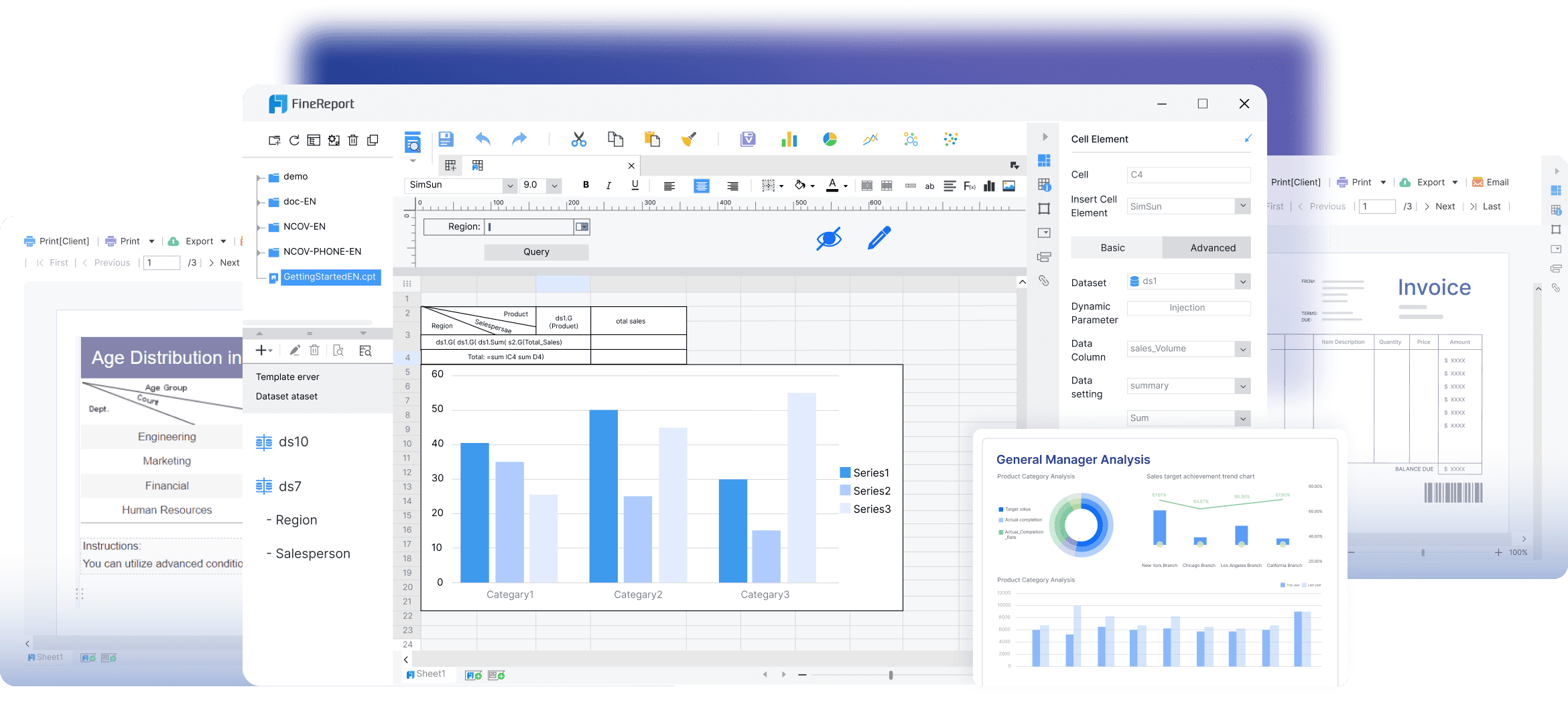
- One-sentence overview: FineReport stands out among ESG reporting platforms for its ability to turn fragmented enterprise data into highly customized ESG reports, dashboards, and stakeholder views.
- Key Features:
- Custom dashboarding and report design
- Strong integration with enterprise data sources
- Flexible output formats for management, board, and operational users
- BI-style analysis and visualization for ESG metrics
- Pros & Cons:
- Pros: High flexibility, strong presentation layer, adaptable to diverse reporting needs
- Cons: ESG framework logic and workflow controls may need configuration rather than coming fully packaged
- Best For: Data-driven teams that want ESG reporting embedded into broader analytics ecosystems
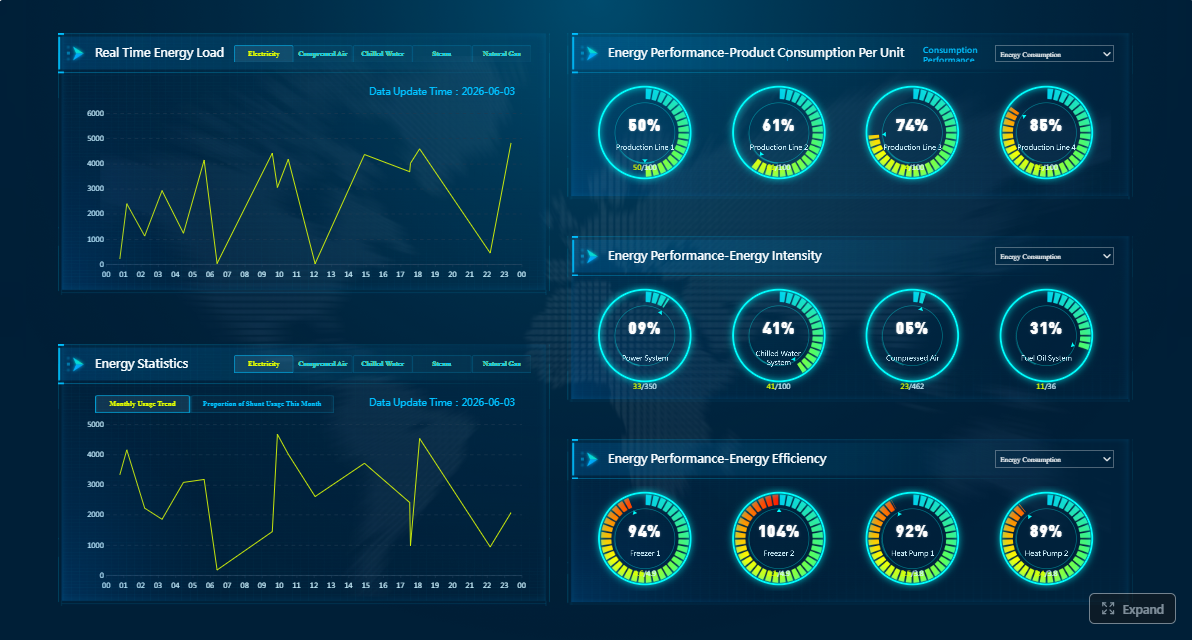
FineReport is particularly valuable when ESG data already exists in multiple operational systems but reporting remains inconsistent, slow, or visually weak. Instead of forcing teams into one predefined reporting model, FineReport allows organizations to build outputs that match actual stakeholder needs.
That includes:
- Executive ESG dashboards
- Board-ready visual summaries
- Operational KPI monitoring
- Investor-facing data views
- Internal sustainability performance tracking
For organizations with existing ERP, HR, finance, and operational systems, FineReport can serve as the reporting layer that unifies ESG outputs without replacing every source application.
Another practical advantage is flexibility. Many ESG teams need different views for different audiences:
- Sustainability managers need detailed data drill-down
- Executives need summary dashboards
- Boards need polished presentation-ready packs
- Business units need operational KPI tracking
FineReport handles this kind of reporting variation well. That is a meaningful advantage over rigid ESG tools that are stronger in templates than in customization.
Where FineReport may fall short
- One-sentence overview: FineReport may require more internal design and governance setup when organizations need built-in ESG-specific workflows and framework mapping.
- Key Features:
- Flexible data and visualization architecture
- Customizable reporting outputs
- Enterprise connectivity
- Pros & Cons:
- Pros: Adaptable and scalable for custom reporting environments
- Cons: ESG-specific controls, disclosure logic, and sustainability workflows may require more internal configuration
- Best For: Teams with BI resources or technical support that want control over how ESG reporting is built
FineReport is not positioned as a pure-play ESG compliance platform. That means organizations may need to configure framework mapping, workflow logic, approvals, and governance practices more deliberately.
For some companies, that is a drawback. For others, it is exactly the appeal. If your reporting process is unique, if your existing systems are already mature, or if you need ESG reporting integrated into a broader enterprise analytics environment, flexibility can outweigh the lack of rigid prebuilt ESG processes.
Best fit scenarios
- One-sentence overview: FineReport is best for organizations that want customized ESG reporting outputs built on top of existing enterprise systems.
- Key Features:
- Tailored dashboard and report design
- Broad data connectivity
- BI-friendly analytics and visualization
- Pros & Cons:
- Pros: Excellent for stakeholder-specific reporting and enterprise data integration
- Cons: Best results often depend on internal technical capability
- Best For: Data-driven teams that already have source systems in place and want customizable reporting layers
FineReport is especially compelling in these scenarios:
- Your ESG data is spread across ERP, HR, EHS, and spreadsheets
- You need custom board or management reporting
- Your BI team already owns reporting architecture
- You want ESG reporting integrated with broader performance dashboards
- You prefer configurable reporting design over rigid out-of-the-box workflow templates
For organizations that prioritize reporting flexibility and enterprise integration, FineReport is a strong option to promote within the shortlist of ESG reporting platforms.
Which platform fits your reporting stack best in 2026?
The best choice depends on your disclosure scope, team structure, and technical environment.
Choose Workiva if
- One-sentence overview: Choose Workiva if your ESG reporting process needs enterprise governance, collaborative disclosures, and strong workflow control.
- Key Features:
- Connected reporting
- Formal approvals and review chains
- Strong reporting governance
- Pros & Cons:
- Pros: Excellent for controlled enterprise disclosures
- Cons: Heavier and costlier than some teams need
- Best For: Finance-led, regulated, and disclosure-intensive organizations
Workiva is the strongest fit when ESG reporting behaves like a controlled enterprise reporting program rather than a lightweight sustainability initiative.
Choose Persefoni if
- One-sentence overview: Choose Persefoni if carbon management and climate reporting are the center of your ESG strategy.
- Key Features:
- Emissions accounting
- Decarbonization analysis
- Climate-focused reporting workflows
- Pros & Cons:
- Pros: Deep carbon capabilities
- Cons: May need complementary tools for broader reporting presentation
- Best For: Sustainability-led and emissions-led programs
Persefoni is the better fit when the primary challenge is measuring, managing, and reporting emissions with greater rigor.
Choose FineReport if
- One-sentence overview: Choose FineReport if you need customizable ESG reporting experiences integrated with your wider BI and enterprise data stack.
- Key Features:
- Highly flexible dashboards and reports
- Broad enterprise data integration
- Tailored outputs for multiple stakeholders
- Pros & Cons:
- Pros: Strong customization and analytics fit
- Cons: Requires more internal setup for ESG-specific workflows
- Best For: BI-led reporting stacks and organizations with strong data infrastructure
If your team already manages ESG data across multiple systems and wants a powerful presentation and reporting layer, FineReport can be the most adaptable choice.
Final decision checklist
Use this checklist to make the final call among leading esg reporting platforms:
- What disclosures do you need to support in 2026 and beyond?
- Is your reporting model finance-led, sustainability-led, or BI-led?
- Do you primarily need carbon accounting, controlled disclosures, or customizable dashboards?
- How much workflow governance is required?
- What source systems must be integrated?
- How much internal technical capacity do you have?
- Do you need a platform that is prescriptive, or one that is flexible?
- Will ESG reporting remain a separate process, or become part of broader enterprise reporting and analytics?
In practical terms:
- Pick Workiva for governance-heavy, collaborative enterprise reporting.
- Pick Persefoni for climate-first, emissions-led ESG management.
- Pick FineReport for customizable, enterprise-connected ESG reporting outputs.
For many organizations in 2026, the winning platform will not be the one with the longest feature list. It will be the one that best matches your disclosure roadmap, internal ownership model, and reporting stack architecture. If flexibility, tailored dashboards, and integration with broader BI environments are high priorities, FineReport deserves serious consideration as part of your ESG reporting platform shortlist.
FAQs
Workiva is strongest for governed, collaborative disclosures, Persefoni is most focused on carbon accounting and emissions management, and FineReport is best for highly customized ESG dashboards and reports. The right choice depends on whether your reporting stack is finance-led, sustainability-led, or BI-led.