EEO reporting is not just an annual HR task. For enterprise employers, it is a compliance workflow that affects audit readiness, workforce visibility, legal risk, and executive accountability. If you manage HR operations across multiple entities, locations, or systems, the real challenge is not simply filing on time. It is making sure your employee counts, job classifications, demographic fields, and establishment structure are accurate before the filing window opens.
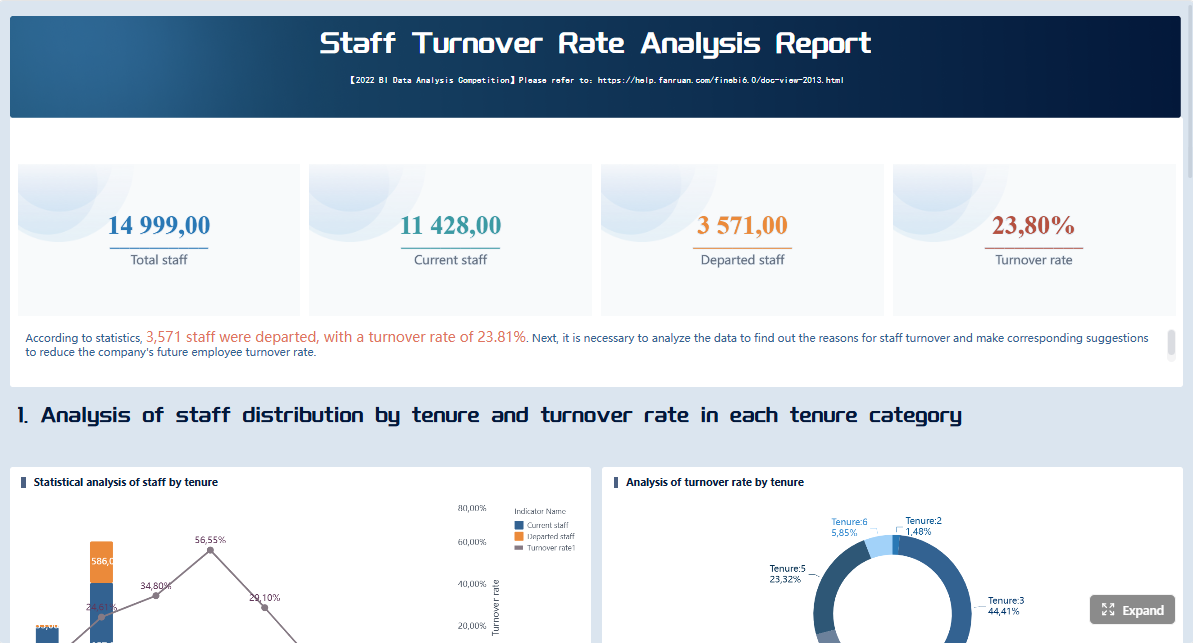 Click To Try The Dashboard
All reports in this article are built with FineReport
EEO reporting explained: what it is and why enterprise HR teams should pay attention
In plain language, eeo reporting is the process of organizing and submitting workforce demographic data for compliance purposes. In the U.S., the most recognized example is the EEO-1 Component 1 report, which generally captures employee counts by job category, race or ethnicity, and sex for covered employers. For enterprise HR teams, this reporting supports three practical goals:
- Workforce compliance: Demonstrates that the organization can meet required federal reporting obligations.
- Benchmarking: Helps leadership understand workforce composition across business units and locations.
- Audit readiness: Creates a documented, repeatable process that can stand up to internal reviews and external scrutiny.
That said, the annual EEO-1 filing is only one part of the bigger picture. Broader equal employment obligations also include anti-discrimination compliance, hiring and promotion practices, recordkeeping, accommodation processes, and, for some employers, additional federal or state reporting requirements. Many HR leaders make the mistake of treating EEO-1 as a once-a-year upload. In reality, it is the visible output of year-round data governance.
For large, multi-location employers, the complexity rises fast. HR owns the employee records, payroll holds active headcount details, legal interprets filing rules, compliance validates process controls, and operations often manages establishment changes on the ground. Without coordination across these functions, the same organization can end up using conflicting data definitions in different systems.
Key Metrics (KPIs) enterprise HR teams should track
To manage eeo reporting effectively, monitor these core elements continuously:
- Total employee headcount: The number of employees during the selected workforce snapshot period.
- Covered entity count: The number of legal entities that may need to be included in the filing structure.
- Establishment count: Total reporting locations that must be mapped correctly for submission.
- Demographic completeness rate: Percentage of employee records with complete race or ethnicity and sex fields.
- Job category mapping accuracy: Share of employees assigned to the correct EEO job classification.
- Duplicate record rate: Number of employee profiles that appear more than once across HR or payroll systems.
- Location assignment accuracy: Percentage of employees linked to the correct establishment.
- Pre-submission exception volume: Outstanding data issues still unresolved before final review.
- Approval cycle time: Time required for HR, legal, and compliance to review and sign off on the report.
- Submission readiness status: A dashboard indicator showing whether the organization is ready to file.
Who must file and how EEO-1 filing rules apply to enterprise employers
At a high level, EEO-1 filing rules generally apply to:
- Private employers with 100 or more employees
- Certain federal contractors with 50 or more employees and qualifying contract thresholds
For enterprise organizations, however, the harder question is rarely the threshold alone. It is how the filing structure applies across parent companies, subsidiaries, related entities, and dispersed establishments.
A parent company may need to consider whether affiliated entities should be rolled into a consolidated reporting framework. Subsidiaries may operate independently for some purposes but still require coordinated EEO-1 treatment. Multi-brand organizations often struggle when HR systems are decentralized but reporting obligations must still be analyzed centrally.
Mergers, acquisitions, reorganizations, and rapid hiring create even more confusion. If the business added a new subsidiary late in the year, restructured legal entities, or shifted employees between payroll companies, the reporting setup can become unclear quickly. This is where enterprise teams need a documented methodology, not assumptions.
How to determine whether your organization is covered
Start with a practical three-part review:
-
Assess workforce size
- Review current and historical employee counts.
- Confirm whether thresholds are met under the applicable rules.
- Consider whether counts should be evaluated across related entities.
-
Review entity structure
- Identify parent companies, subsidiaries, divisions, and establishments.
- Confirm which entities share HR, payroll, or legal control.
- Determine how establishments should be grouped or reported.
-
Confirm contractor status
- Check whether the organization has federal contractor obligations that may affect filing.
- Review contract thresholds and entity-specific contractor relationships.
Internal legal review is especially useful when there is any uncertainty around related entities, ownership changes, or coverage status. Enterprise employers should not wait until the filing portal opens to resolve structural questions. If you are debating scope during the submission window, you are already behind.
Where to verify official eligibility and instructions
Enterprise teams should verify eligibility and filing instructions through official federal guidance and the current EEO-1 filing resources issued for the reporting cycle. This matters because filing requirements, portal processes, and instructions can change. Relying on last year's checklist without validating current rules is a common compliance mistake.
A sound practice is to assign one owner, usually in HR compliance or legal operations, to monitor official announcements and distribute confirmed updates internally. That single-source-of-truth model prevents teams from acting on outdated interpretations shared informally across business units.
What EEO-1 data includes and how enterprise teams should organize it
The core EEO-1 dataset typically includes employee counts broken out by:
- Job category
- Race or ethnicity
- Sex
- Establishment or location
- Employer or entity structure
For large employers, gathering this data is less about extraction and more about reconciliation. HRIS may contain the employee master record, payroll may define active status for the snapshot period, recruiting may hold self-identification data for newer hires, and compliance teams may maintain separate establishment lists. If these systems do not align, reporting errors follow.
A critical concept is the workforce snapshot period. Employers typically select a payroll period within the allowed date range for the reporting year, and the employees active during that period form the basis of the report. Choosing the right payroll period matters because it determines who is counted. A poorly selected snapshot can introduce avoidable noise, especially if the organization had unusual seasonality, acquisitions, or major workforce transitions during certain periods.
Enterprise HR teams should build a repeatable data flow:
- Extract active employee data for the approved snapshot period.
- Map each employee to one EEO job category.
- Validate demographic fields for completeness and formatting consistency.
- Reconcile employee records across HRIS and payroll.
- Confirm establishment assignments and entity rollups.
- Generate a pre-submission audit report before filing.
Common data quality issues that delay filing
The most common enterprise filing delays come from preventable data issues:
- Missing demographic fields: Employees have incomplete race or ethnicity or sex data.
- Inconsistent job mappings: Similar roles are classified differently across business units.
- Duplicate employee records: One person appears multiple times due to system integration or rehire logic.
- Location-level reporting errors: Employees are attached to the wrong establishment or default corporate headquarters.
- Inactive employee confusion: Terminated or transferred workers are included incorrectly because snapshot logic is weak.
- Entity misalignment: Payroll company structure does not match the legal reporting structure.
These issues do more than slow down filing. They reduce confidence in the final report and can trigger unnecessary executive review cycles.
Practical steps to improve data accuracy
From a consulting standpoint, the most effective way to improve EEO-1 data quality is to standardize before the deadline, not clean up during submission week.
1. Standardize job category mapping
Create one enterprise-owned job mapping table that links every internal job title or family to a single EEO category. Do not let each business unit interpret categories independently.
2. Validate headcount logic against the snapshot period
Lock the selected payroll period early. Then test whether active employees, transfers, leaves, and terminations are being counted consistently across systems.
3. Build a pre-submission checklist
A strong checklist should include:
- Entity and establishment confirmation
- Snapshot-period validation
- Demographic completeness review
- Duplicate record review
- Job category exception review
- Executive signoff workflow
- Final archive of support files
4. Assign data owners by source system
HRIS, payroll, recruiting, and legal should each own a specific validation area. Shared responsibility sounds collaborative, but in practice it often means no one owns the error.
5. Run a mock submission before the filing window
Enterprise employers should test the workflow end to end. This reveals formatting issues, role confusion, and approval bottlenecks before timing becomes critical.
Filing timelines, deadlines, and signals HR teams should watch for in 2026
One of the biggest mistakes in eeo reporting is assuming this year's timeline will mirror last year's. Filing windows and deadlines can shift, and enterprise teams need to watch official announcements carefully rather than relying on historical habit.
For 2026 planning, the key discipline is monitoring:
- Filing portal opening announcements
- Official submission deadlines
- Updated instructions or technical changes
- Eligibility clarifications
- Changes to contact or account-holder requirements
This matters even more in periods of policy uncertainty. Public discussion around possible changes to EEO reporting does not erase current obligations unless and until official guidance says so. Enterprise HR leaders should avoid making compliance decisions based on headlines, speculation, or legal commentary alone. Those sources may be useful for context, but confirmed agency updates should drive action.
A mature enterprise team builds an internal compliance calendar with milestones well before the external deadline. That calendar should include:
- Snapshot period selection
- Data extraction deadlines
- Reconciliation and quality checks
- HR and legal review
- Leadership approval
- Final filing and record retention
What recent policy signals may mean for future reporting
Recent public discussion has created understandable confusion for employers. But the practical rule is simple: unless official guidance changes the requirement, prepare as though filing will still occur.
For enterprise employers, waiting for certainty is risky. Large organizations need lead time to confirm scope, clean data, align approvers, and validate establishment logic. Even if future reporting rules evolve, the underlying governance work still creates value. Better demographic data, cleaner job mapping, and stronger reporting controls improve compliance beyond EEO-1 alone.
How to prepare early for the 2026 reporting cycle
The smartest teams start before the filing window opens. Focus on these four moves:
-
Assign ownership
- Name a program owner in HR compliance or workforce analytics.
- Define roles for legal, payroll, and IT support.
-
Confirm entity structure
- Review legal entities, establishments, acquisitions, and reorganizations.
- Resolve reporting-scope questions early.
-
Review demographic completeness
- Audit missing fields now.
- Fix data-collection and self-identification workflows where needed.
-
Test reporting workflows
- Run a dry run using the expected snapshot logic.
- Document where reconciliation or approval delays occur.
These are not theoretical best practices. They are the difference between a controlled submission and a last-minute scramble.
A practical enterprise checklist for EEO reporting readiness
For enterprise HR teams, readiness comes down to operational control. Use this checklist to pressure-test your process before the filing season begins.
Enterprise EEO reporting readiness checklist
-
Confirm reporting scope
- Identify all covered entities and establishments
- Review recent mergers, acquisitions, or reorganizations
- Validate parent-subsidiary relationships
-
Validate employee counts
- Confirm headcount thresholds
- Test snapshot-period logic
- Reconcile active employee status between HRIS and payroll
-
Audit demographic data
- Review missing race or ethnicity fields
- Review missing sex fields
- Check formatting consistency across systems
-
Review job classifications
- Map each role to one EEO category
- Resolve duplicate or conflicting mappings
- Standardize classification logic enterprise-wide
-
Check establishment reporting
- Confirm correct location assignments
- Review remote, shared-service, and transferred employee logic
- Validate establishment IDs and addresses
-
Document governance
- Define review and approval responsibilities across HR, legal, and compliance
- Maintain a version-controlled checklist
- Archive support files and submission confirmations
-
Retain records
- Save data extracts used for the filing
- Save validation reports and exception logs
- Save final submission records for future reference
When to escalate questions internally or seek outside support
Escalate early when the organization is facing:
- Unclear entity ownership or reporting scope
- Significant merger or acquisition activity
- Data integrity issues across multiple systems
- Job category disputes that affect large employee groups
- Potential contractor-status questions
- Incomplete support for leadership or legal signoff
If scope, structure, or data reliability is uncertain, involve internal counsel or compliance specialists before the filing deadline compresses decision-making. Enterprise risk usually comes from ambiguity left unresolved too long.
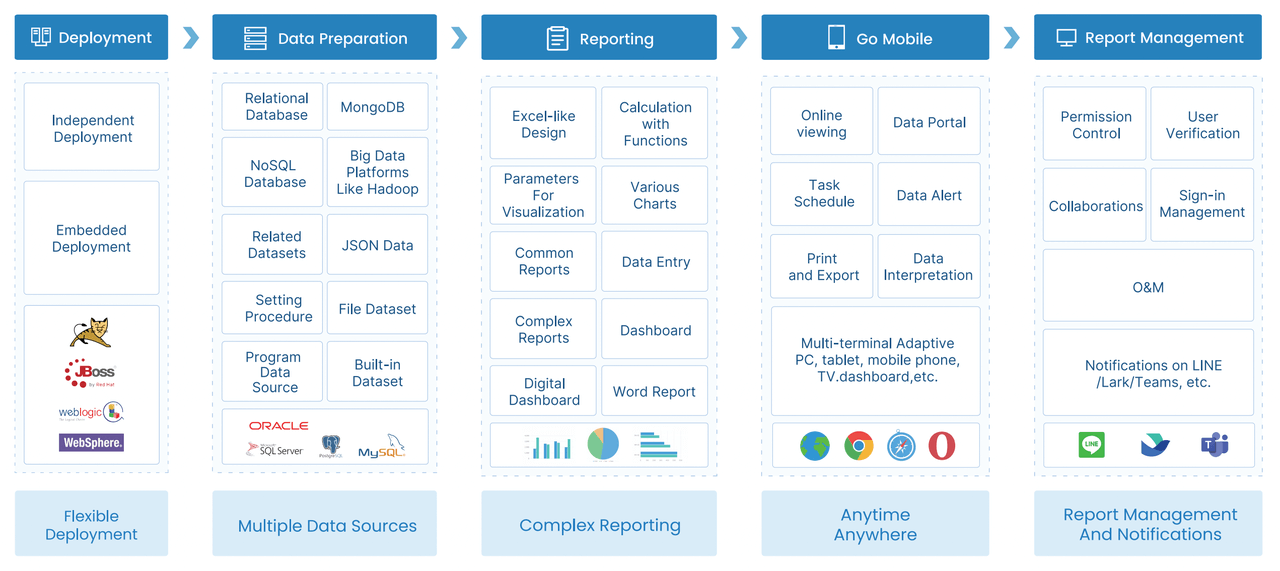
Building this manually is complex; use FineReport to utilize ready-made templates and automate this entire workflow
At enterprise scale, eeo reporting is not just a form. It is a cross-functional data pipeline that touches HRIS, payroll, compliance, legal review, and executive reporting. Building this manually is complex; use FineReport to utilize ready-made templates and automate this entire workflow.
With FineReport, enterprise teams can:
- Consolidate HR and payroll data into one reporting layer
- Build dashboards for demographic completeness, job mapping, and establishment readiness
- Track filing milestones and approval status in real time
- Standardize reporting templates across entities and business units
- Reduce spreadsheet dependency and last-minute reconciliation work
This is where reporting maturity turns into operational leverage. Instead of chasing disconnected files, HR leaders can monitor readiness from a single dashboard and escalate issues before they become filing delays.
Get Ready-to-Use Dashboard Templates in Fine Gallery
For organizations preparing for 2026, the goal should be simple: create a repeatable EEO reporting process that is accurate, auditable, and resilient to policy change. FineReport helps make that possible with dashboard automation, workflow visibility, and enterprise-ready reporting controls.
FAQs
EEO reporting is the process of organizing workforce demographic data for compliance purposes. For many employers, it mainly refers to the EEO-1 report that counts employees by job category, race or ethnicity, and sex.