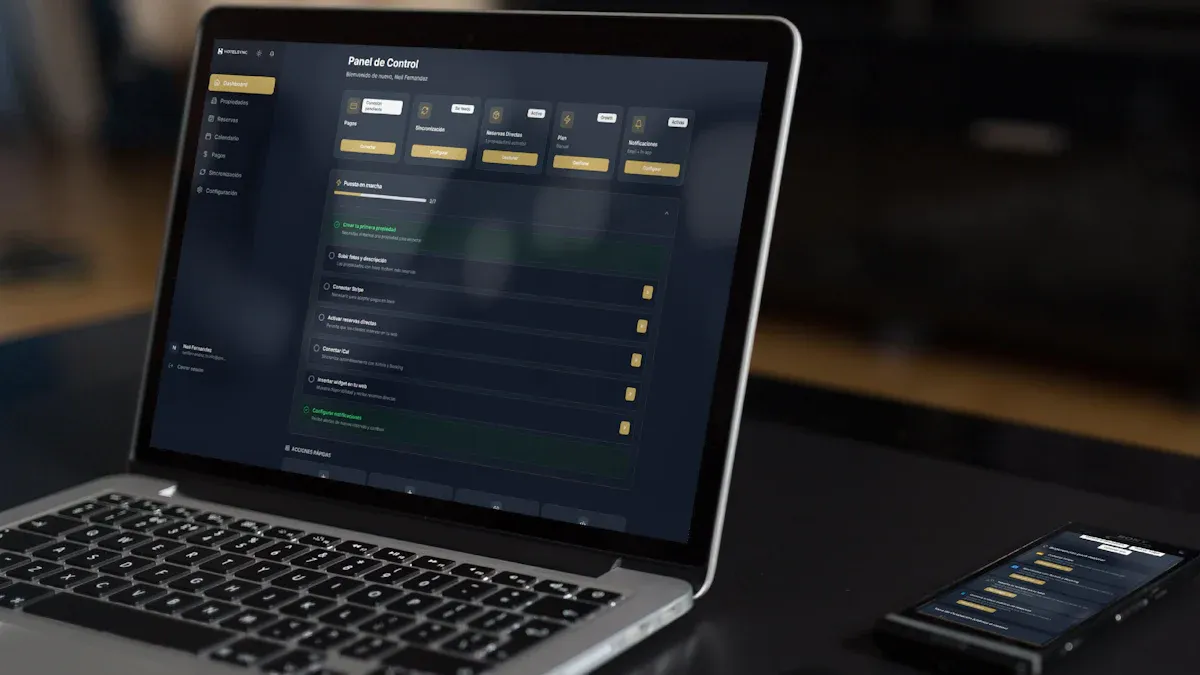
An spd dashboard is a centralized view of performance data that helps teams monitor marketing, sales, and business outcomes in one place. Instead of jumping between ad platforms, analytics tools, CRM systems, and spreadsheets, decision-makers can use a single dashboard to understand what is happening, what is changing, and where action is needed.
For growing organizations, this kind of dashboard is more than a convenience. It becomes a practical system for improving visibility, speeding up reporting, and helping teams make decisions based on shared numbers rather than disconnected reports.
What Is an SPD Dashboard?
An spd dashboard is a reporting and monitoring interface that pulls data from multiple sources and presents it in a clear, usable format. In simple terms, it turns scattered business and marketing data into one view so teams can quickly track performance.
Rather than looking separately at website traffic, paid ad spend, lead generation, sales outcomes, and customer behavior, a dashboard combines those metrics into a single environment. This allows marketers, executives, sales teams, and operations leaders to see how activity across channels connects to real business results.
Its role usually includes:
Bringing together data from several systems
Showing current performance at a glance
Highlighting trends, wins, and risks
Supporting faster and more confident decisions
Making performance tracking easier across teams
A strong spd dashboard improves visibility across channels such as paid search, social ads, organic search, email, and website activity. It helps answer practical questions like:
Which campaigns are driving the most qualified leads?
Where is budget being wasted?
Are conversions improving or declining?
How much revenue is tied to current marketing efforts?
Which channels are contributing most to the pipeline?
This is one reason dashboards are often preferred over static reporting. A static report is usually a snapshot created manually at a certain point in time. It can be useful for summaries, but it quickly becomes outdated and often lacks interactivity.
Raw analytics tools are different as well. They provide access to detailed data, but they may require users to dig through multiple menus, filters, and dimensions to find insights. An spd dashboard simplifies that process by surfacing the most important numbers in a structured, business-friendly way.
Key Metrics to Track on an SPD Dashboard
The best spd dashboard does not try to show everything. It focuses on the metrics that directly support business decisions. While the exact setup depends on the organization, most dashboards include a mix of performance, engagement, and operational health indicators.
Performance and growth indicators
Performance and growth metrics show whether marketing and business activities are generating meaningful outcomes.
Common examples include:
Traffic: Total visits, users, or sessions across the website
Leads: Form fills, demo requests, sign-ups, or inquiries
Conversions: The number of users who complete a desired action
Revenue: Sales generated from campaigns, channels, or customer segments
Pipeline contribution: The amount of sales pipeline influenced or created by marketing
These metrics matter because they connect visibility and activity to real growth. For example, an increase in traffic may look positive, but if lead volume and conversions stay flat, the traffic may not be qualified.
Cost efficiency is equally important. A useful spd dashboard should often include:
Cost per acquisition (CPA): The average cost to gain a customer or lead
Return on ad spend (ROAS): Revenue generated compared with advertising spend
Customer acquisition cost (CAC): The total cost of acquiring a customer across marketing and sales efforts
These numbers help teams evaluate whether growth is sustainable. A campaign that generates high revenue but requires excessive spend may not be as strong as it appears on the surface.
Engagement and campaign efficiency metrics
Engagement metrics help teams understand how users interact with campaigns and content before they convert.
Important engagement and efficiency metrics often include:
Click-through rate (CTR): How often users click after seeing an ad, email, or search result
Bounce rate: The percentage of visitors who leave without taking further action
Time on page: How long users stay on key pages
Email engagement: Opens, clicks, unsubscribes, and reply rates
Landing page conversion rate: The share of visitors who complete the intended action on a landing page
These metrics are especially useful when top-line results are underperforming. If conversions are low, engagement data can reveal whether the problem starts with the ad creative, audience targeting, website experience, or landing page offer.
Channel-level performance comparisons are another valuable part of a well-built spd dashboard. Teams should be able to compare:
Paid search vs. paid social
Organic traffic vs. paid traffic
Email campaigns vs. website conversions
Campaigns by region, audience, or product line
This comparison makes it easier to identify underperforming campaigns and reallocate budget toward channels that are producing stronger results.
Operational and reporting health metrics
A dashboard is only useful if the underlying data is reliable. That is why operational and reporting health metrics deserve a place on the dashboard too.
Useful health indicators include:
Data freshness: When each source was last updated
Reporting completeness: Whether all expected fields and sources are populating correctly
Anomaly alerts: Sudden spikes or drops in performance that may signal issues or opportunities
Trend changes over time: Week-over-week, month-over-month, or quarter-over-quarter shifts
These metrics help teams trust what they are seeing. If a platform connection breaks or data stops updating, performance decisions based on stale information can quickly become expensive.
A mature spd dashboard often includes visual trend lines, threshold alerts, and warning indicators so users can notice reporting issues before they affect planning or campaign optimization.
Common Data Sources That Feed the Dashboard
An spd dashboard is only as strong as the data connected to it. Most organizations rely on several systems, each capturing a different piece of the customer journey or business process.
Marketing and advertising platforms
Marketing and ad platforms are usually the first data sources connected to the dashboard because they capture top-of-funnel and campaign activity.
Common sources include:
Google Analytics for website traffic, behavior, and conversions
Google Ads for paid search and display campaign performance
Meta Ads for Facebook and Instagram advertising metrics
LinkedIn Ads for B2B campaign performance and lead generation
Email platforms for sends, opens, clicks, and subscriber actions
SEO tools for rankings, organic visibility, and keyword performance
These systems help answer questions about traffic generation, audience behavior, media efficiency, and channel performance. When integrated into one spd dashboard, they create a broader view of how marketing efforts work together.
Sales and customer data systems
Marketing metrics alone rarely tell the full story. To measure business impact, dashboards often need sales and customer data as well.
Common sources include:
CRM platforms for lead status, opportunity stages, deal value, and closed revenue
E-commerce systems for orders, average order value, products sold, and repeat purchases
Customer support tools for ticket volume, satisfaction metrics, and support trends
Product analytics platforms for feature usage, retention, and user behavior inside the product
By connecting these systems, an spd dashboard can show more than campaign performance. It can reveal whether leads are becoming opportunities, whether customers are retained, and whether early-stage marketing success is translating into actual revenue.
This connection is often what turns a basic marketing dashboard into a strategic business reporting tool.
Internal business data and integrations
Many important business metrics live outside standard platforms. Internal systems and custom data sources often fill the gaps.
Examples include:
Spreadsheets used for budgeting, targets, or manual tracking
Data warehouses that centralize cleaned and standardized data
BI tools that support custom models and advanced reporting
APIs that allow direct data access from proprietary systems
Automated connectors that sync data between platforms
These integrations are especially important when teams need to match data definitions, combine multiple business units, or create custom logic for attribution and reporting.
For example, a company may use a spreadsheet for sales targets, a warehouse for unified customer data, and API connections for internal subscription or billing data. Bringing these together into one spd dashboard creates a more complete picture of performance.
How Teams Use an SPD Dashboard in the Real World
The value of an spd dashboard becomes more obvious when looking at how teams use it in day-to-day operations.
Campaign monitoring and optimization
Marketing teams often use a dashboard to track live or near-real-time performance across channels. This makes it easier to see which campaigns are working and which need adjustments.
Typical use cases include:
Monitoring spend and results during active campaigns
Adjusting budget allocation based on channel performance
Identifying audience segments with the strongest conversion rates
Spotting weak creatives, underperforming landing pages, or inefficient keywords
Comparing campaign performance against targets
If paid social is generating low-cost clicks but poor lead quality, while search campaigns are producing fewer clicks but stronger conversions, the dashboard makes that pattern easier to spot. Teams can then shift budget and effort toward the better-performing channel.
This ability to move quickly is one of the biggest reasons businesses invest in a strong spd dashboard.
Executive reporting and cross-team alignment
Executives do not usually need every detail. They need a concise, reliable summary of goals, trends, and business impact.
An effective spd dashboard can provide:
High-level KPI snapshots
Progress against monthly or quarterly goals
Revenue and pipeline trends
Channel contribution summaries
Alerts when performance moves outside expected ranges
This creates a common view for leadership and reduces time spent manually assembling slides or exporting reports from multiple systems.
It also improves cross-team alignment. Marketing, sales, and operations often work with overlapping data but different definitions. A shared dashboard helps those groups work from the same numbers and understand how their activities affect one another.
For example, marketing may see lead volume rising, while sales sees lower qualification rates. A shared dashboard can surface both metrics together, making it easier to diagnose the issue collaboratively.
Forecasting and strategic planning
An spd dashboard is not only for current performance. Historical trend data can support forecasting and planning as well.
Teams may use it to:
Set future traffic, lead, and revenue targets
Estimate the impact of budget changes
Identify seasonal performance patterns
Plan staffing and resource allocation
Prioritize channels or campaigns for the next quarter
When performance history is clearly organized, leaders can make planning decisions with more confidence. If a dashboard shows that certain channels consistently deliver better ROAS or lower CAC over time, those insights can influence budget planning and growth strategy.
Forecasting is never perfect, but a dashboard improves the quality of assumptions by grounding decisions in actual historical performance.
Benefits and Common Challenges
Like any reporting system, an spd dashboard offers major benefits but also comes with practical challenges that need attention.
Why organizations invest in dashboards like this
The main reason organizations build dashboards is simple: they want faster, clearer, and more reliable access to performance data.
Key benefits include:
Time savings from reduced manual reporting
Faster decision-making because key metrics are always visible
Better visibility across campaigns, channels, and departments
Improved accountability through clear KPI ownership
A more reliable source of truth for performance reviews and planning
Instead of spending hours each week collecting data from multiple systems, teams can focus more on analysis and action. This shift can have a real impact on productivity and performance.
A good spd dashboard also helps reduce reporting confusion. When stakeholders all reference the same centralized view, meetings tend to be more focused and decisions are easier to support.
Challenges to plan for
Even the best dashboard can fail if data quality, ownership, and usability are ignored.
Common challenges include:
Data silos across platforms and teams
Inconsistent definitions for metrics such as leads, opportunities, or conversions
Integration gaps that leave important systems disconnected
Dashboard clutter caused by too many widgets or unnecessary charts
Another challenge is governance. Without clear rules, dashboards can become messy, outdated, or untrusted. Teams need to know:
Who owns the dashboard
Who validates data accuracy
How metrics are defined
When reports are reviewed and updated
Which changes require approval
Regular maintenance matters too. Platforms change, tracking can break, and business goals evolve. A dashboard that is useful today may become noisy or incomplete in a few months if no one is actively managing it.
How to Build a Useful SPD Dashboard
Building a strong spd dashboard is not just about connecting tools. It requires thoughtful planning around users, decisions, data quality, and layout.
Start with business questions and users
The best dashboards begin with clear business questions, not charts.
Start by identifying:
Who will use the dashboard
What decisions they need to make
Which metrics matter most for those decisions
How often they need the information
What level of detail is appropriate for each audience
For example, executives may need a high-level summary of revenue, pipeline, and trend direction. A campaign manager may need deeper channel and creative data. Trying to serve both audiences with one crowded interface often leads to confusion.
A focused spd dashboard should answer specific questions such as:
Are we on track to hit our lead target?
Which channels are generating the best return?
Where are we losing conversion efficiency?
Is performance improving or declining over time?
When the dashboard is designed around decisions, it becomes much more useful.
Choose the right data sources and layout
Once the questions are clear, choose the most important data sources first. It is better to have a smaller dashboard with trusted data than a large one filled with incomplete or inconsistent metrics.
Prioritize integrations that directly support performance visibility, such as:
Web analytics
Ad platforms
CRM data
Revenue systems
Email performance tools
Then organize the layout so users can find what they need quickly. Common structures include:
By audience: executive view, marketing view, sales view
By funnel stage: awareness, engagement, conversion, retention
By business goal: lead generation, revenue growth, customer retention
Use visual hierarchy carefully. Place the most important KPIs at the top, followed by trends, comparisons, and supporting details. Avoid overcrowding the dashboard with low-value metrics that distract from action.
A clean layout makes an spd dashboard easier to scan and more likely to be used regularly.
Keep it actionable over time
A dashboard should evolve as the business changes. What matters during one growth stage may not matter later.
To keep the dashboard useful:
Review metrics regularly
Remove widgets that no longer support decisions
Refine definitions when business processes change
Add alerts or benchmarks where action is needed
Check data quality and freshness on a routine schedule
It is also helpful to gather feedback from actual users. If teams are ignoring certain sections or repeatedly asking for metrics not shown, that is a sign the dashboard needs adjustment.
The most effective spd dashboard is not the one with the most data. It is the one that consistently helps people notice what matters and act on it.
Final Thoughts
An spd dashboard gives organizations a practical way to bring scattered performance data into one clear, actionable view. It helps teams track key metrics, compare channels, connect marketing activity to business outcomes, and make faster decisions with greater confidence.
When built well, it becomes more than a reporting tool. It becomes a shared system for visibility, accountability, and planning.
The key is to stay focused on business questions, reliable data sources, and ongoing usability. With the right metrics, integrations, and maintenance, an spd dashboard can become one of the most valuable tools in a modern data-driven organization.
FAQs
An SPD dashboard brings data from multiple business and marketing systems into one view so teams can monitor performance, spot trends, and make faster decisions. It helps reduce manual reporting and keeps everyone aligned around the same metrics.
The most useful metrics depend on your goals, but common choices include traffic, leads, conversions, revenue, pipeline contribution, CPA, ROAS, and CAC. Many teams also track engagement metrics such as CTR, bounce rate, and landing page conversion rate.
A static report is usually a one-time snapshot that can become outdated quickly. An SPD dashboard is more dynamic and gives teams an ongoing view of current performance across channels and data sources.
An SPD dashboard often connects to ad platforms, web analytics tools, CRM systems, email platforms, and spreadsheets or internal databases. The goal is to combine scattered data into a single, business-friendly reporting layer.
Marketing teams, sales leaders, executives, and operations teams all benefit because they can track shared performance data in one place. It is especially useful for organizations that need clearer visibility into campaign results and revenue impact.
Product Trial
FineReport
Pixel-perfect reports · Interactive dashboards · Easy data entry · Digital twins