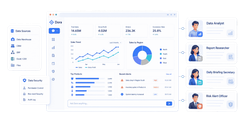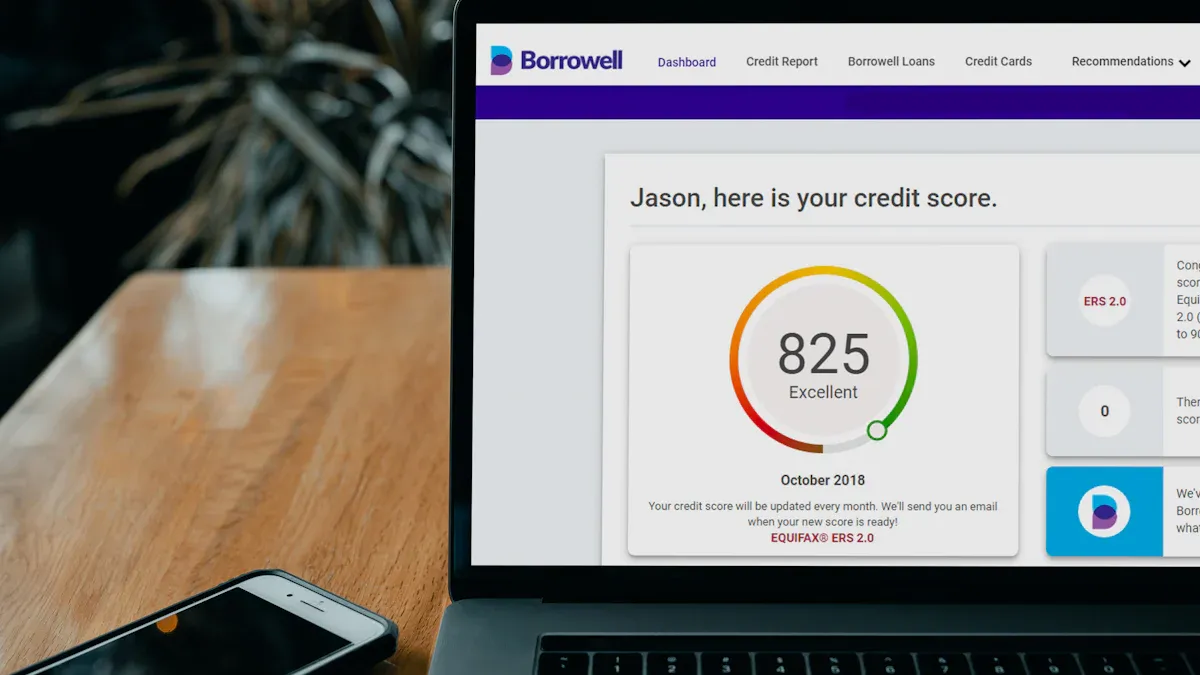

Financial reporting software is a platform that helps finance teams automate data collection, consolidate results, and produce accurate management, board, and statutory reports faster.
The best financial reporting software in 2026 at a glance
Below is a quick comparison of the best financial reporting software options for 2026, with FineReport placed first for teams that need flexible, board-ready reporting with strong data connectivity and customization.
| Tool | Best For | Pricing Approach | Implementation Effort | Integrations | Reporting Depth |
|---|---|---|---|---|---|
| FineReport | Companies needing highly customizable financial reporting and dashboards across multiple data sources | Custom quote | Moderate | ERP, databases, APIs, BI stacks | Very strong |
| Workday Adaptive Planning | Growing finance teams wanting planning and reporting together | Custom quote | Moderate to high | Workday, ERP, CRM, cloud apps | Strong |
| Cube | Spreadsheet-first finance teams | Custom quote | Low to moderate | Excel, Google Sheets, ERP, CRM | Moderate to strong |
| Vena | Organizations wanting Excel familiarity with stronger control | Custom quote | Moderate | Microsoft ecosystem, ERP, GL | Strong |
| Datarails | SMB and mid-market teams automating spreadsheet reporting | Custom quote | Low to moderate | Excel, ERP, accounting tools | Moderate |
| Planful | Mid-market and enterprise close and consolidation workflows | Custom quote | Moderate to high | ERP, CRM, HRIS, cloud apps | Strong |
| insightsoftware | Finance teams needing broad ERP connectivity | Custom quote | Moderate | Oracle, JD Edwards, SAP, Microsoft and more | Strong |
| Sage Intacct Reporting and Planning | Sage-centric finance teams | Subscription + modules | Moderate | Sage ecosystem, connected business apps | Moderate to strong |
| Wave | Very small businesses on a budget | Freemium / low-cost tiers | Low | Basic business app ecosystem | Basic |
| OneStream | Complex enterprises with advanced consolidation and compliance | Custom quote | High | ERP, enterprise data sources, CPM stack | Very strong |
Fast recommendations by business type
- Startups and small businesses: Wave, Cube, and Sage Intacct Reporting and Planning
- Mid-market finance teams: FineReport, Vena, Datarails, and Planful
- Multi-entity and enterprise organizations: FineReport, Workday Adaptive Planning, insightsoftware, and OneStream
How to evaluate the best financial reporting software for faster close and board-ready reporting
Core reporting and close capabilities to compare
When comparing the best financial reporting software, start with the workflows that affect close speed and reporting quality most.
Automated consolidations and multi-entity support matter if your team manages multiple subsidiaries, currencies, intercompany eliminations, or different ownership structures. Basic tools can generate reports, but they may still rely on manual exports and spreadsheet work for consolidations. More advanced platforms automate much of that process and reduce the risk of version errors.
Month-end close workflow support is another key differentiator. Some platforms focus mainly on reporting output, while others include task tracking, approvals, variance review, and recurring close processes. If your bottleneck is not report creation but coordination, workflow features can have a major operational impact.
Custom dashboards and board packs should also be reviewed carefully. Board-ready reporting often requires more than standard P&L, balance sheet, and cash flow outputs. Finance leaders may need:
- KPI dashboards
- variance commentary
- department-level views
- consolidated executive summaries
- scheduled board packet distribution
Budget vs. actuals and forecasting links are especially important if reporting needs to tie directly into FP&A. A strong platform should let users compare actual performance against plan, analyze deviations, and drill down into transaction-level or source-system data without rebuilding reports manually.
Audit trail, compliance, and control features that matter
For finance teams, good reporting is not just about speed. It is also about control, traceability, and confidence in the numbers.
Role-based permissions help ensure users only see the data and reporting objects relevant to their role. This becomes more important as organizations add business unit leaders, controllers, auditors, or board stakeholders into the reporting process.
Approval workflows and change tracking reduce the risk of unreviewed edits making it into final reports. If your current process relies on emailed spreadsheets and last-minute changes, version control issues can easily undermine reporting integrity.
Look for platforms with:
- Audit logs that record who changed what and when
- Version history for reports, templates, and assumptions
- Workflow checkpoints for review and sign-off
- Evidence retention that supports internal and external audits
If your business operates across regions or regulated sectors, evaluate support for reporting frameworks such as GAAP, IFRS, and relevant regulatory disclosures. Not every tool is designed for statutory complexity, so the right fit depends on whether you need internal management reporting only or broader compliance-ready outputs.
Integration, implementation, and total cost considerations
The best feature set on paper can still disappoint if implementation drags on or the platform becomes expensive to maintain.
Integration depth should be assessed first. Most finance teams need a tool that connects with:
- ERP systems
- accounting software
- CRM platforms
- payroll or HR systems
- data warehouses
- spreadsheets already embedded in reporting workflows
Some platforms are strongest inside a single ecosystem, while others are more flexible across mixed environments. If your reporting depends on multiple operational systems, open connectivity and data modeling flexibility are critical.
Time to value varies significantly. Spreadsheet-friendly tools may be faster to deploy for smaller teams, while enterprise CPM platforms often require more setup, data mapping, and change management. A shorter implementation is not always better if it limits scale later, but it should align with your internal capacity.
Also compare:
- vendor onboarding and support quality
- admin and maintenance workload
- user licensing structure
- module-based pricing
- consulting dependency after go-live
A lower headline subscription fee does not always mean lower total cost. If a platform requires heavy manual upkeep or frequent outside support, long-term ownership costs can rise quickly.
10 best financial reporting software tools compared
1. FineReport
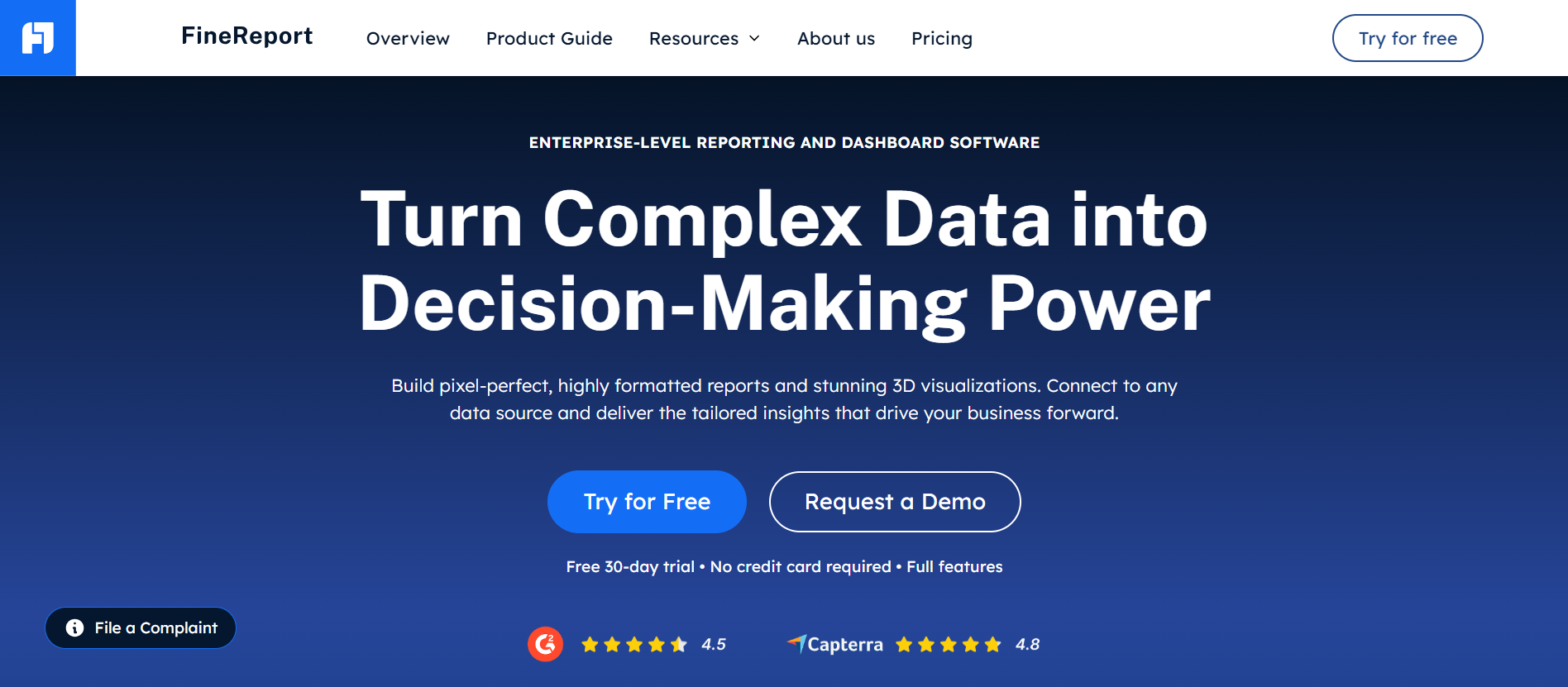
- One-sentence overview: FineReport is a flexible enterprise reporting platform that helps finance teams build highly customized financial statements, dashboards, and board-ready reports from multiple data sources.
- Key Features:
- Custom financial report design with pixel-level formatting
- Dashboard creation for executive and management reporting
- Broad data connectivity across databases, ERP systems, and APIs
- Scheduled report distribution and automated refresh
- Drill-down analysis and interactive reporting
- Role-based access controls for secure data delivery
- Pros & Cons:
- Pros:
- Strong customization for board packs, management reports, and multi-format reporting
- Good fit for companies with complex reporting layouts and varied stakeholder needs
- Flexible data integration compared with tools tied to a single ecosystem
- Useful for combining finance and operational data in one reporting layer
- Cons:
- May require more setup than lightweight spreadsheet-first tools
- Best value is realized when teams need tailored reporting, not just standard accounting outputs
- Pros:
- Best For (Target user/scenario): Mid-market and enterprise organizations that need tailored, board-ready reporting across multiple systems and want more flexibility than standard finance templates provide.
FineReport stands out because it is not limited to fixed finance report structures. Teams can create detailed board books, management dashboards, consolidated financial views, and operational-financial reporting in one environment. For organizations that need polished presentation quality and strong cross-system reporting, it is one of the more versatile options in this category.
It is particularly relevant for companies where reporting demands vary by audience. CFOs may want executive dashboards, controllers may need reconciliation views, and business leaders may require self-service drill-down access. FineReport supports that range without forcing all reporting into one rigid template style.
2. Workday Adaptive Planning
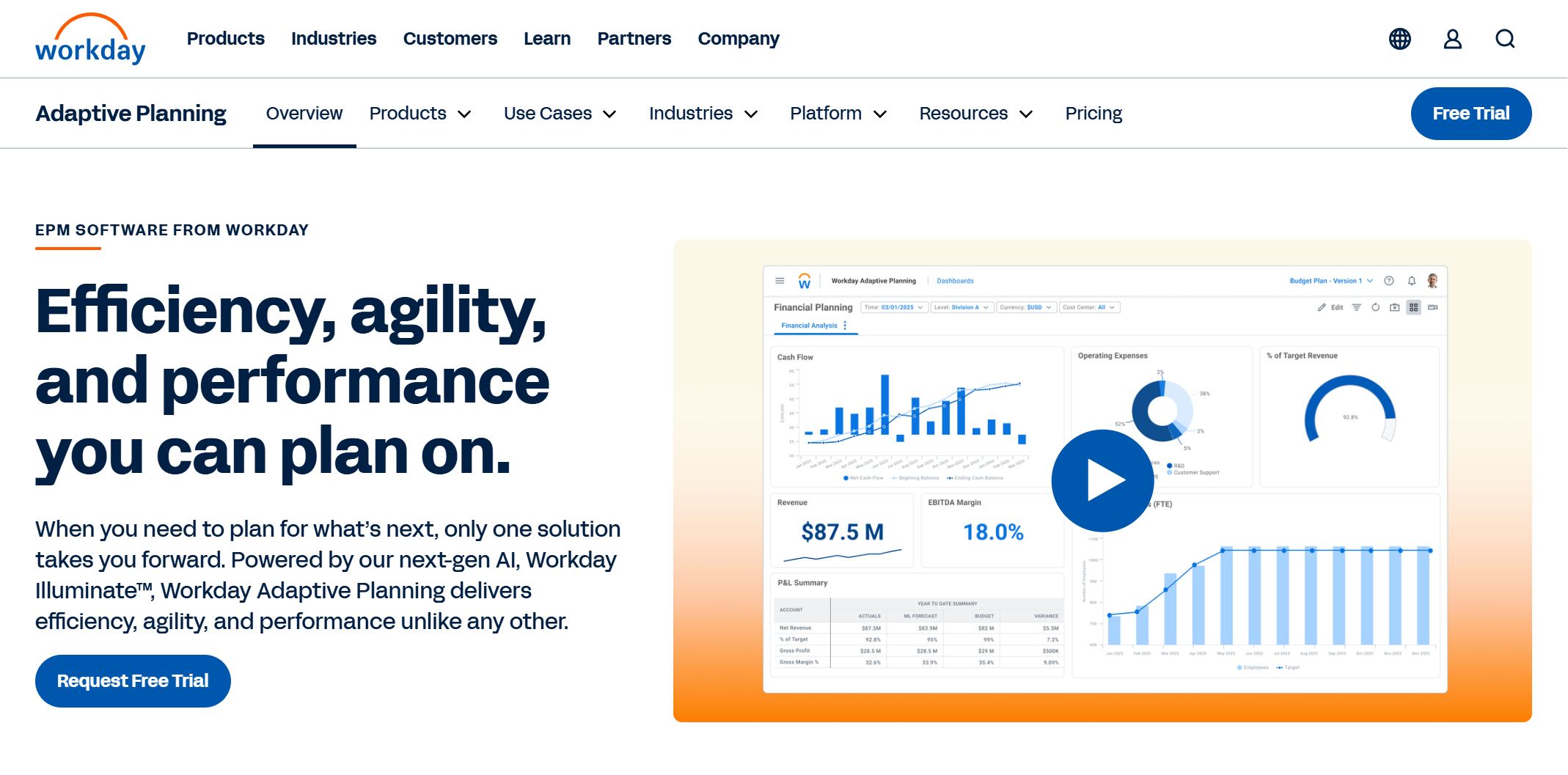
Website: https://www.workday.com/
- One-sentence overview: Workday Adaptive Planning combines planning, forecasting, and reporting in a cloud platform built for scaling finance teams.
- Key Features:
- Planning and reporting in one platform
- Multi-entity and multi-currency support
- Consolidation and scenario modeling capabilities
- Dashboards and visual management reporting
- Integration with Workday and other business systems
- Pros & Cons:
- Pros:
- Strong fit for organizations aligning FP&A with financial reporting
- Good modeling flexibility for growing complexity
- Scales well across business units and entities
- Cons:
- Implementation can be resource-intensive
- May be more than smaller teams need if reporting is the only priority
- Pros:
- Best For (Target user/scenario): Growing finance teams that want a shared platform for planning, reporting, and performance analysis.
Workday Adaptive Planning is often shortlisted by companies that have outgrown manual reporting cycles and want tighter links between actuals, budgets, forecasts, and scenario planning. It works well when leadership expects reporting to support decision-making, not just month-end output.
3. Cube

Website: https://www.cubesoftware.com/
- One-sentence overview: Cube is a finance platform designed for teams that want faster reporting while continuing to work heavily in spreadsheets.
- Key Features:
- Native spreadsheet experience
- Integration with ERP, CRM, and source systems
- Budget vs. actuals and variance analysis
- Shared data model for more controlled reporting
- Support for Excel and Google Sheets workflows
- Pros & Cons:
- Pros:
- Familiar interface for finance teams that rely on spreadsheets
- Faster adoption than more complex enterprise systems
- Reduces manual copy-paste work
- Cons:
- Less suited to highly complex consolidation requirements
- Reporting presentation flexibility may be narrower than dedicated reporting platforms
- Pros:
- Best For (Target user/scenario): Spreadsheet-first finance teams that want better speed and control without abandoning Excel.
Cube is a practical choice when the main pain point is inefficient spreadsheet reporting rather than enterprise-level compliance complexity. It helps modernize finance workflows while preserving familiar working habits.
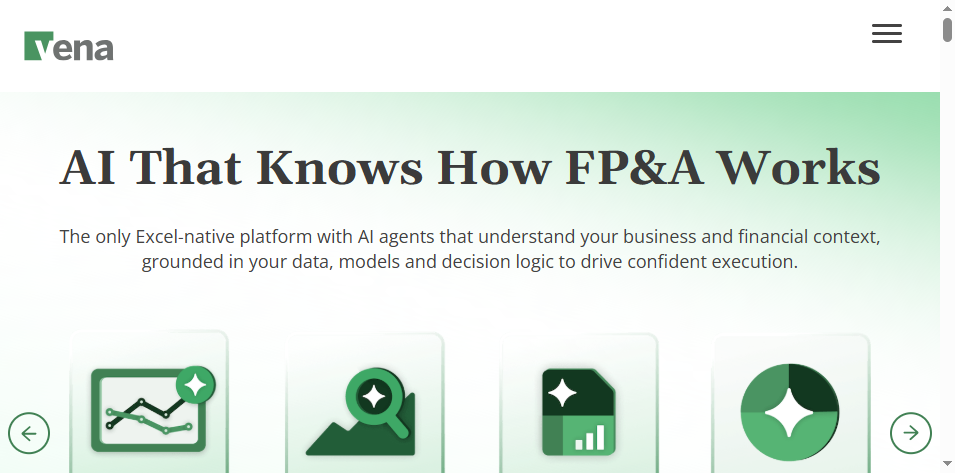
4. Vena
Website: https://www.venasolutions.com/
- One-sentence overview: Vena delivers Excel-based financial reporting and planning with stronger governance, workflow, and centralized data control.
- Key Features:
- Excel front-end with centralized database
- Workflow automation for reporting and planning
- Version control and audit trail features
- Reporting templates and collaborative approvals
- ERP and GL integrations
- Pros & Cons:
- Pros:
- Strong balance of familiarity and governance
- Good workflow controls for finance teams managing review cycles
- Useful for companies standardizing reporting processes across departments
- Cons:
- Excel dependency may feel limiting for teams seeking a more modern reporting UX
- Setup complexity can increase with broader use cases
- Pros:
- Best For (Target user/scenario): Organizations that want Excel familiarity but need more structure, control, and repeatability.
Vena is often a good middle ground for teams that are not ready to move away from spreadsheet-driven reporting but need better governance, auditability, and process discipline.
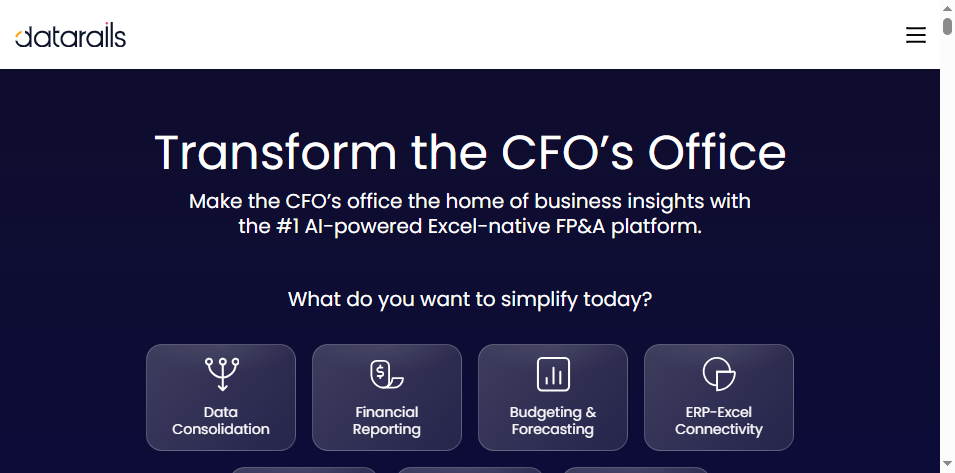
5. Datarails
Website: https://www.datarails.com/
- One-sentence overview: Datarails helps finance teams automate reporting from existing spreadsheets while centralizing data and reducing manual reporting work.
- Key Features:
- Spreadsheet automation
- Consolidated data layer
- Budgeting and reporting workflows
- Variance analysis and dashboards
- Integrations with accounting and business systems
- Pros & Cons:
- Pros:
- Useful for teams heavily invested in Excel-based processes
- Faster implementation than many enterprise CPM tools
- Can improve close and reporting efficiency without a full platform overhaul
- Cons:
- Less suited for highly complex global reporting structures
- Long-term scalability may be lower than heavier enterprise platforms
- Pros:
- Best For (Target user/scenario): SMB and mid-market teams that want to automate financial reporting built around spreadsheets.
Datarails is best when a finance team wants clear productivity gains quickly and prefers to improve current spreadsheet workflows rather than redesign the entire reporting architecture.
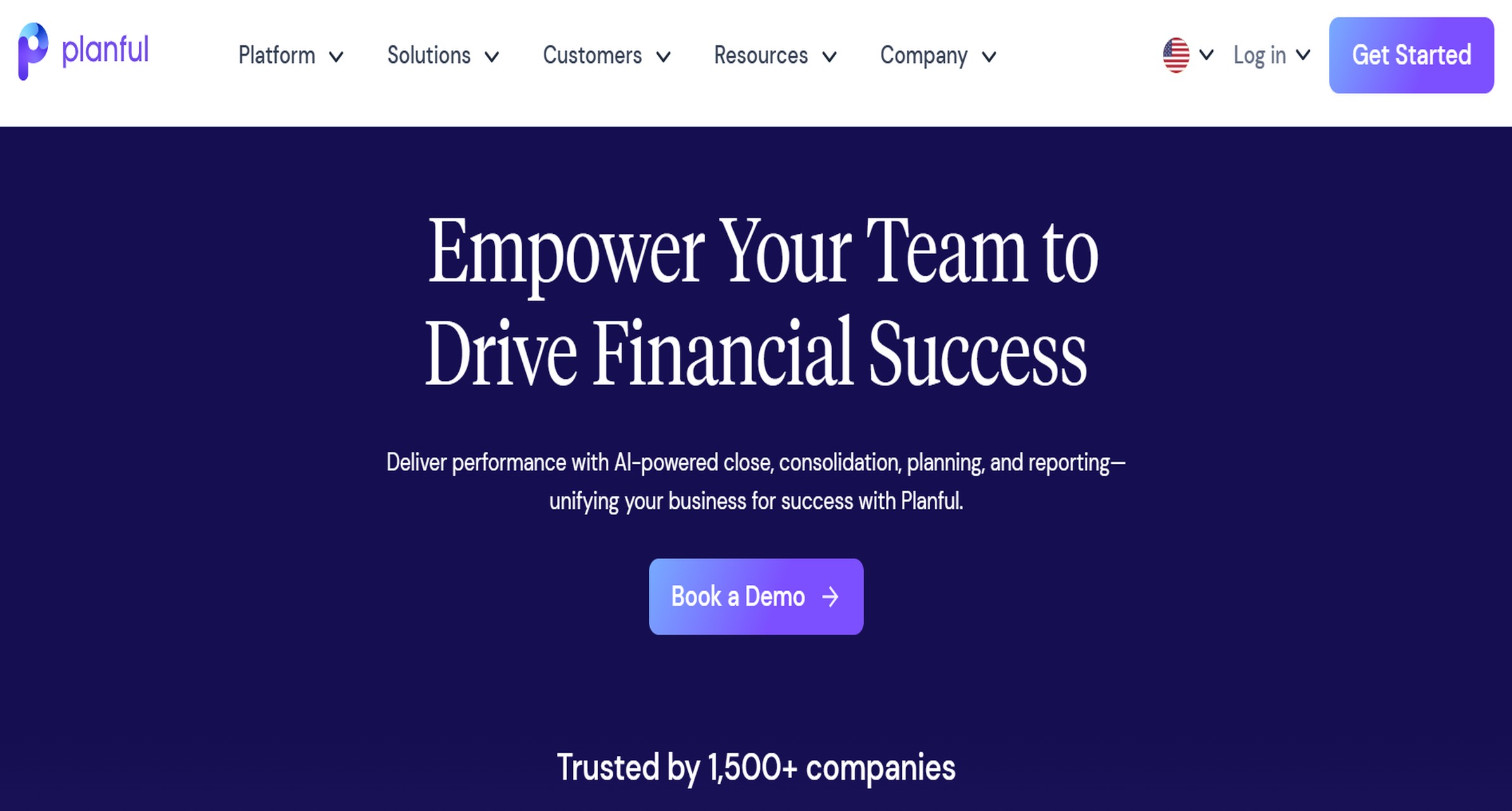
6. Planful
Website: https://planful.com/
- One-sentence overview: Planful is a corporate performance management platform that supports close, consolidation, financial reporting, and board reporting for mid-market and enterprise teams.
- Key Features:
- Financial close and consolidation support
- Reporting, planning, and forecasting
- Board and management reporting tools
- Workflow automation and collaboration
- Integration with ERP and business systems
- Pros & Cons:
- Pros:
- Strong breadth across finance processes
- Good fit for teams needing both operational efficiency and reporting depth
- Supports more structured finance transformation initiatives
- Cons:
- Implementation effort can be significant
- May require more internal process maturity to unlock full value
- Pros:
- Best For (Target user/scenario): Mid-market and enterprise finance teams that need a broader platform for reporting, close, and planning.
Planful is often considered by organizations moving beyond point solutions and looking for a more unified finance stack. It is particularly relevant where reporting and close improvement are part of a larger modernization effort.
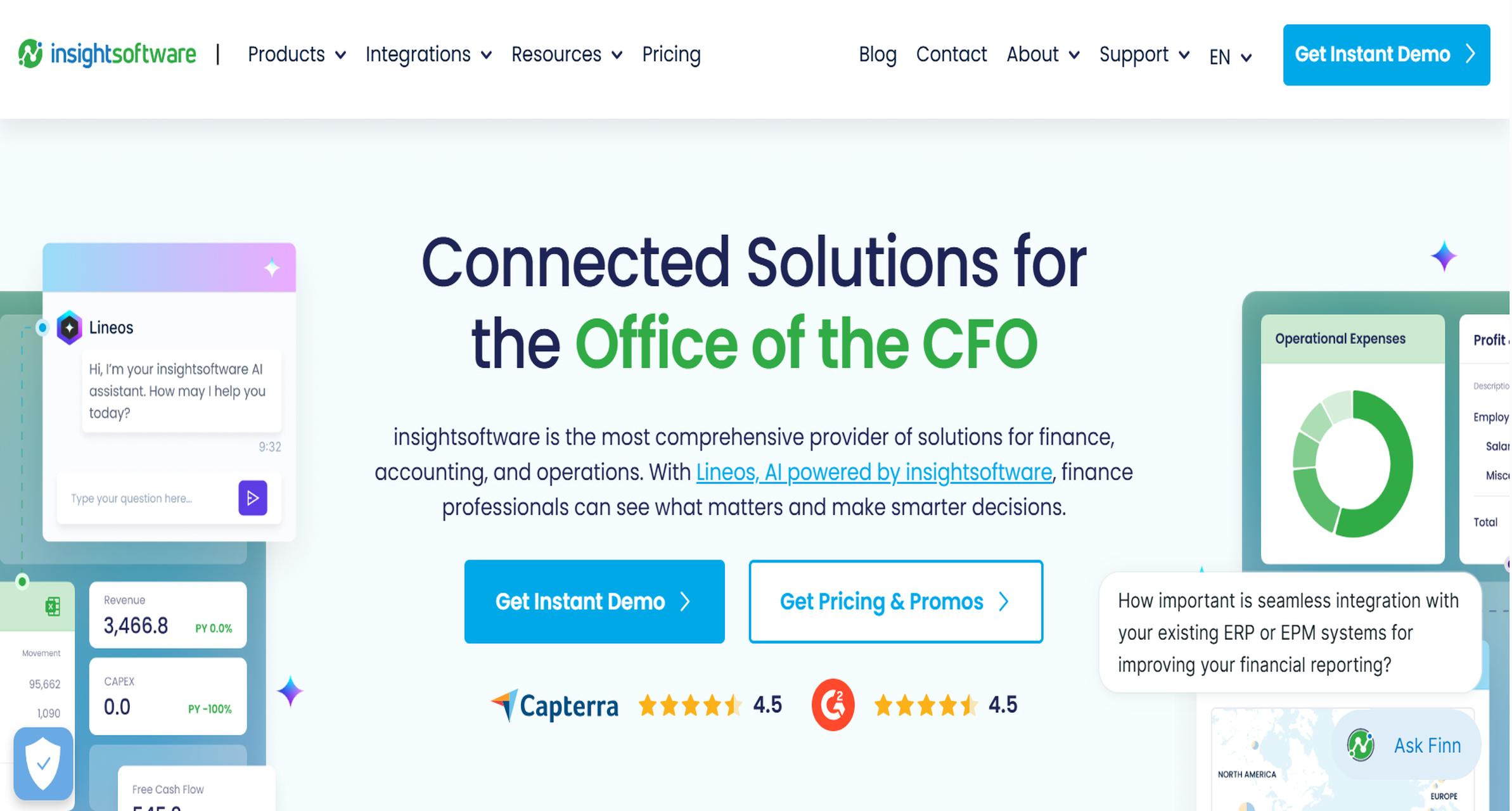
7. insightsoftware
Website: https://insightsoftware.com/
- One-sentence overview: insightsoftware offers a broad portfolio of financial reporting solutions with strong ERP connectivity and operational reporting options.
- Key Features:
- Deep connectivity to many ERP environments
- Financial and operational reporting
- Excel-based and self-service reporting options
- Consolidation and analytics capabilities in certain products
- Governance and distribution features
- Pros & Cons:
- Pros:
- Strong fit for organizations with established ERP investments
- Broad product coverage for different reporting needs
- Useful where real-time ERP-connected reporting is a priority
- Cons:
- Product portfolio complexity can make selection less straightforward
- Capabilities vary depending on the specific solution in use
- Pros:
- Best For (Target user/scenario): Finance teams needing broad ERP compatibility and flexible reporting paths.
insightsoftware is especially relevant for companies that want to stay close to their ERP data and prioritize reporting access across finance and operations.
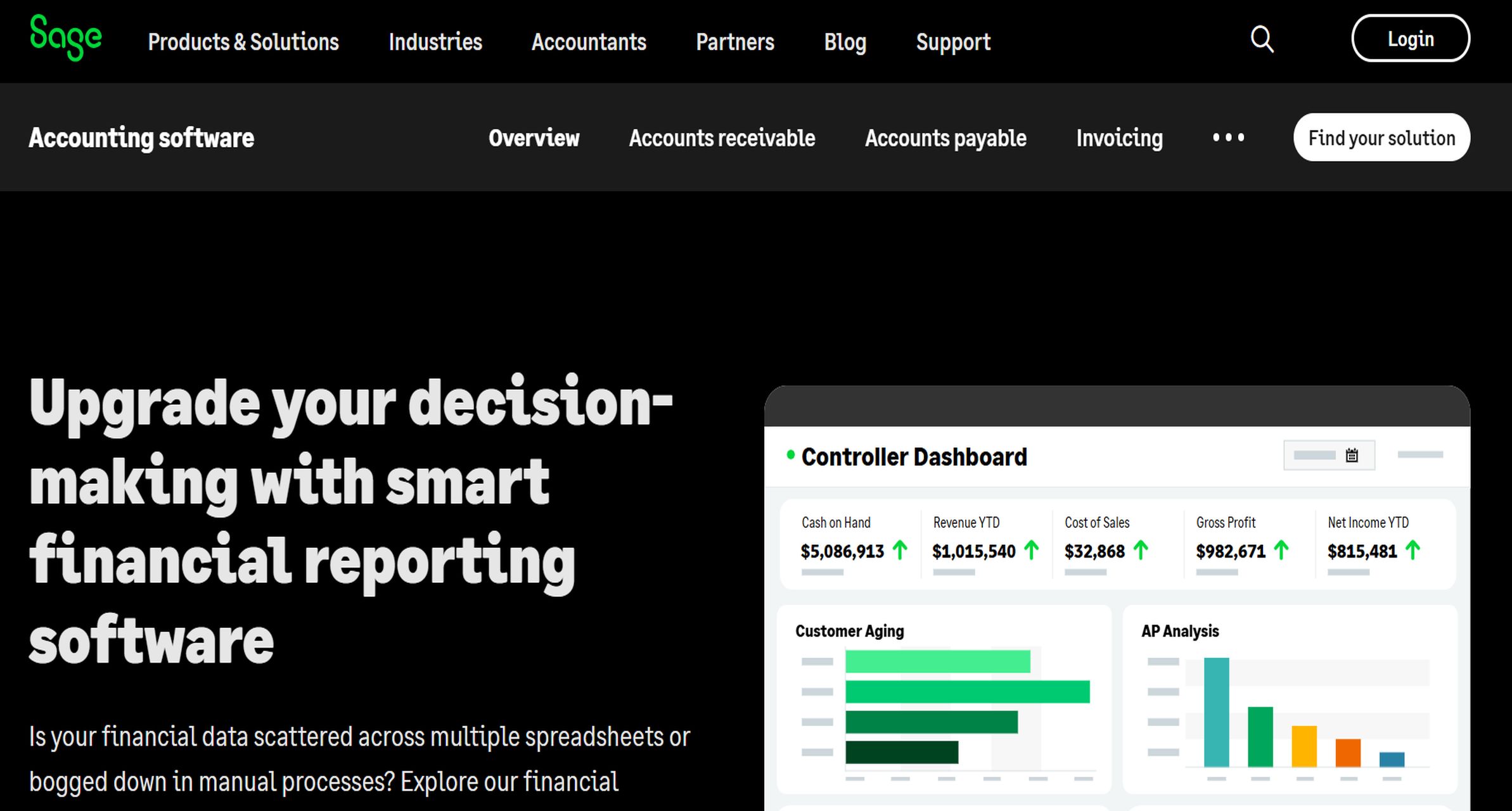
8. Sage Intacct Reporting and Planning
Website: https://www.sage.com/en-us/sage-business-cloud/intacct/
- One-sentence overview: Sage Intacct Reporting and Planning provides accounting-rooted financial reporting with planning capabilities for teams already using or considering the Sage ecosystem.
- Key Features:
- Core financial statement reporting
- Budgeting and planning support
- Dimensional reporting
- Dashboards and management visibility
- Native alignment with Sage accounting workflows
- Pros & Cons:
- Pros:
- Natural fit for Sage-centered organizations
- Easier alignment between accounting and reporting
- Useful dimensional structure for management views
- Cons:
- Broader flexibility may be lower than more specialized reporting platforms
- Best value often depends on commitment to the Sage ecosystem
- Pros:
- Best For (Target user/scenario): Companies already using Sage or wanting financial reporting software companies with strong accounting roots.
Sage Intacct Reporting and Planning can be a logical option if the main goal is stronger reporting without creating a disconnected finance tech stack.
9. Wave
Website: https://www.waveapps.com/
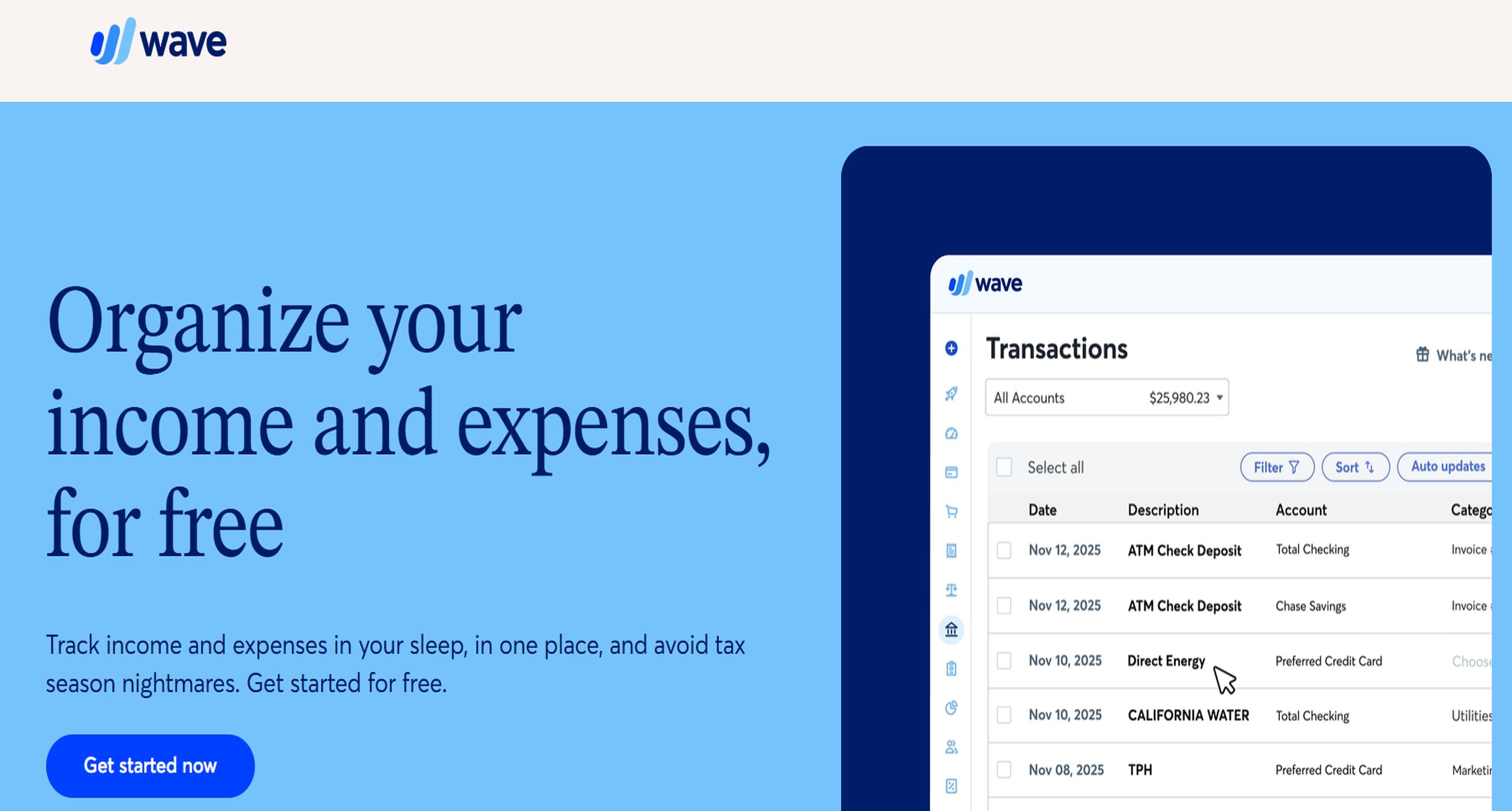
- One-sentence overview: Wave is a low-cost accounting and reporting option for very small businesses that need simple financial visibility.
- Key Features:
- Basic income, expense, and cash flow tracking
- Standard financial statements
- Invoicing and payment features
- Lightweight bookkeeping workflows
- Low-cost entry point
- Pros & Cons:
- Pros:
- Accessible for freelancers and very small businesses
- Low barrier to adoption
- Adequate for basic bookkeeping and simple reports
- Cons:
- Limited controls, audit trail depth, and advanced customization
- Not designed for complex board reporting or multi-entity close
- Pros:
- Best For (Target user/scenario): Very small businesses and solopreneurs needing basic reporting on a budget.
Wave is not an enterprise reporting platform, but it can be enough for companies that simply need straightforward financial statements and basic visibility without a major software investment.
10. OneStream
Website: https://www.onestream.com/
- One-sentence overview: OneStream is an enterprise CPM platform built for complex consolidation, compliance, performance management, and financial reporting at scale.
- Key Features:
- Advanced consolidation engine
- Multi-entity, multi-currency, and ownership management
- Statutory and management reporting
- Auditability and compliance controls
- Extensible platform architecture
- Pros & Cons:
- Pros:
- Excellent fit for highly complex global organizations
- Strong control, compliance, and consolidation capabilities
- Supports a unified finance operating model
- Cons:
- Higher cost and implementation effort
- Often too complex for smaller teams
- Pros:
- Best For (Target user/scenario): Large enterprises with advanced consolidation, governance, and reporting requirements.
OneStream is a strong contender when complexity is the primary challenge and the organization needs enterprise-grade control over consolidation and reporting processes.
Which is the best financial reporting software for your company size and reporting complexity?
Best options for startups and small businesses
Startups and small businesses usually do not need heavy consolidation workflows or advanced statutory reporting controls. What they need is speed, affordability, and enough visibility to support monthly review, cash planning, and investor updates.
Good options include:
- Wave for very small businesses with simple needs
- Cube for teams that already operate in spreadsheets and want to improve reporting efficiency
- Sage Intacct Reporting and Planning for businesses ready for a stronger accounting-centered platform
The trade-off at this level is usually control depth. Lower-cost tools may offer limited audit trail functionality, simpler permissions, and less polished board reporting. That may be acceptable early on, but teams should think ahead if they expect rapid growth or more formal investor reporting.
Best options for mid-market finance teams
Mid-market companies often reach the point where manual reporting becomes a bottleneck. This is where the best financial reporting software can materially improve close speed, confidence, and executive visibility.
Strong mid-market options include:
- FineReport for customized board-ready reporting across multiple systems
- Vena for governance-heavy Excel-based reporting
- Datarails for spreadsheet automation
- Planful for broader finance process support
- Workday Adaptive Planning for teams combining planning with reporting
At this stage, the right priority depends on your biggest pain point:
- Choose consolidation strength if entity complexity is increasing
- Choose workflow automation if close coordination is the bottleneck
- Choose report customization if leadership reporting consumes too much manual effort
For many mid-market organizations, FineReport is particularly compelling because it supports polished reporting outputs without forcing teams into one narrow reporting format.
Best options for enterprise and multi-entity organizations
Enterprise and multi-entity finance teams need more than report generation. They need governance, compliance support, scalability, and the ability to manage complexity across business units, geographies, and ownership structures.
Top choices include:
- OneStream for advanced consolidation and compliance
- Workday Adaptive Planning for planning-reporting alignment at scale
- insightsoftware for ERP-connected environments
- FineReport for highly customized, cross-system reporting delivery
- Planful for broader CPM-oriented use cases
Higher investment is usually justified when:
- close cycles are slowed by entity complexity
- board and management reporting require extensive manual effort
- regulators or auditors require stronger evidence and traceability
- multiple systems must feed a trusted reporting layer
If your organization already has solid accounting and consolidation systems but lacks a flexible reporting front end, FineReport can complement that environment particularly well.
Final verdict: how to choose the right platform between the best financial reporting software tools
Choosing the best financial reporting software depends less on brand recognition and more on fit across reporting complexity, team maturity, and system architecture.
Shortlist recommendations by use case
- Best for highly customized board-ready reporting: FineReport
- Best for combined planning and reporting: Workday Adaptive Planning
- Best for spreadsheet-first teams: Cube
- Best for Excel familiarity with governance: Vena
- Best for spreadsheet automation in SMB and mid-market: Datarails
- Best for broad finance process coverage: Planful
- Best for ERP-connected reporting: insightsoftware
- Best for Sage-centered teams: Sage Intacct Reporting and Planning
- Best for very small businesses: Wave
- Best for enterprise consolidation and compliance: OneStream
Key questions to ask during demos and proof-of-concept reviews
Before making a decision, ask vendors to show:
- how multi-entity consolidations actually work
- how board packs are built and refreshed
- how users drill back to source transactions
- how permissions, approvals, and audit logs are handled
- what integrations are native versus custom
- what internal admin effort is required after go-live
- what implementation timeline is realistic for your environment
Also ask them to use your real reporting examples, not generic templates. This is the fastest way to see whether the platform can support your actual management and board reporting needs.
Common mistakes to avoid before signing a multi-year contract
Avoid these common mistakes:
- choosing based only on pricing without evaluating maintenance burden
- overbuying enterprise complexity for a small finance team
- underestimating implementation and change management effort
- assuming spreadsheet compatibility equals reporting maturity
- failing to test report customization against real board or executive requirements
For many organizations, the most practical choice is not the largest platform, but the one that best closes the gap between data, finance control, and executive-ready output. If your priority is flexible, polished, and cross-system reporting, FineReport deserves a close look as a leading option in 2026.
FAQs
Financial reporting software helps finance teams collect data, consolidate results, and produce management, board, and statutory reports faster. It reduces manual spreadsheet work and improves accuracy across the close process.