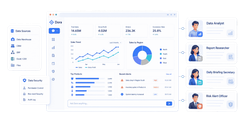

Regulatory reporting solutions are software platforms and related services that help financial firms collect, validate, reconcile, and submit required data to regulators accurately and on time.
Best regulatory reporting solutions in 2026 at a glance
Below is a quick comparison of 10 regulatory reporting solutions for banks, brokers, dealers, and asset managers, with FineReport placed first for teams that need flexible reporting automation, strong data integration, and cost-conscious deployment.
| Platform | Best fit | Compliance breadth | Automation strength | Implementation effort | Cost profile |
|---|---|---|---|---|---|
| FineReport | Mid-market, customizable reporting teams | Medium to High | High | Medium | Moderate |
| LSEG | Large cross-border institutions | High | High | Medium to High | High |
| Regnology | Centralized enterprise control | High | High | High | High |
| Moody’s | Prudential and capital-heavy firms | High | High | High | High |
| Broadridge | Trade/transaction reporting | High | High | Medium to High | High |
| Gresham | Data quality-led operations | Medium | High | Medium | Moderate to High |
| MSCI | Asset management disclosures | Medium to High | Medium | Medium | Moderate to High |
| OneSumX | Banking prudential reporting | High | High | High | High |
| AxiomSL | Global enterprise reporting | High | High | High | High |
| Kaizen | Outsourcing-first teams | Medium to High | High | Low to Medium | Moderate |
How to evaluate regulatory reporting solutions
Choosing between regulatory reporting solutions is less about feature volume and more about fit. The right platform should match your reporting obligations, data maturity, operating model, and budget.
Core compliance coverage and reporting breadth
Start with the most practical question: which reporting obligations must the system support today, and which ones are likely to matter next year?
For many firms, that means assessing support for:
- Trade reporting
- Transaction reporting
- Prudential reporting
- Financial and capital reporting
- Cross-border or multi-jurisdiction obligations
- Disclosure and supervisory submissions
A strong platform should also show:
- Clear jurisdiction coverage
- Frequent regulatory content updates
- Structured rule change management
- Support for evolving schemas, validations, and submission standards
This is where the market splits. Platforms such as LSEG, Regnology, OneSumX, and AxiomSL are typically stronger on breadth for large institutions. Broadridge is especially relevant where reporting volume and market activity are central. FineReport, by contrast, is a strong option when firms need a configurable reporting layer that can adapt to internal regulatory templates and operational reporting needs without adopting a highly specialized monolithic stack.
Automation, data quality, and workflow controls
Most reporting failures do not happen at the final submission step. They happen earlier, when firms struggle with fragmented data, inconsistent mappings, incomplete reconciliations, and weak exception handling.
When reviewing regulatory reporting solutions, compare:
- Data ingestion from internal and external systems
- Validation rules and data quality checks
- Reconciliation across books, records, and submissions
- Exception queues and remediation workflows
- Audit trails and user activity history
- Approval chains and documentation capture
- Submission readiness and regulator-facing output controls
The best platforms reduce manual touchpoints while preserving oversight. Broadridge and Gresham stand out in workflow control and exception management. Regnology and AxiomSL are strong for governance-heavy enterprise environments. FineReport deserves attention here because it can automate recurring report generation, standardize templates, and provide dashboards and approval workflows that make compliance operations more visible and controlled.
Cost, implementation, and operating model
Cost should be evaluated over the full operating life of the platform, not just at contract signature.
Look beyond licensing and ask about:
- Onboarding costs
- Integration work
- Internal IT dependency
- Need for specialist consultants
- Ongoing rule maintenance
- Support and service tiers
- Managed service availability
- Upgrade and change request costs
Enterprise regulatory reporting solutions often deliver broad coverage, but they can come with:
- Longer implementation timelines
- Higher change management costs
- Greater dependency on vendor services
- Higher total cost of ownership over time
For firms that do not need the full complexity of an enterprise specialist platform, FineReport can be attractive because it offers a lower-overhead route to structured reporting automation, especially where internal teams can define templates, workflows, and data connections themselves. On the other hand, firms with heavy prudential or high-volume trade reporting obligations may still justify the larger investment in providers like LSEG, Regnology, or OneSumX.
10 regulatory reporting solutions compared for compliance, cost, and automation
Enterprise platforms for complex multi-jurisdiction reporting
These platforms are generally best for organizations that report across multiple entities, regulators, and jurisdictions and need strong governance, scalability, and formal change control.
1. FineReport
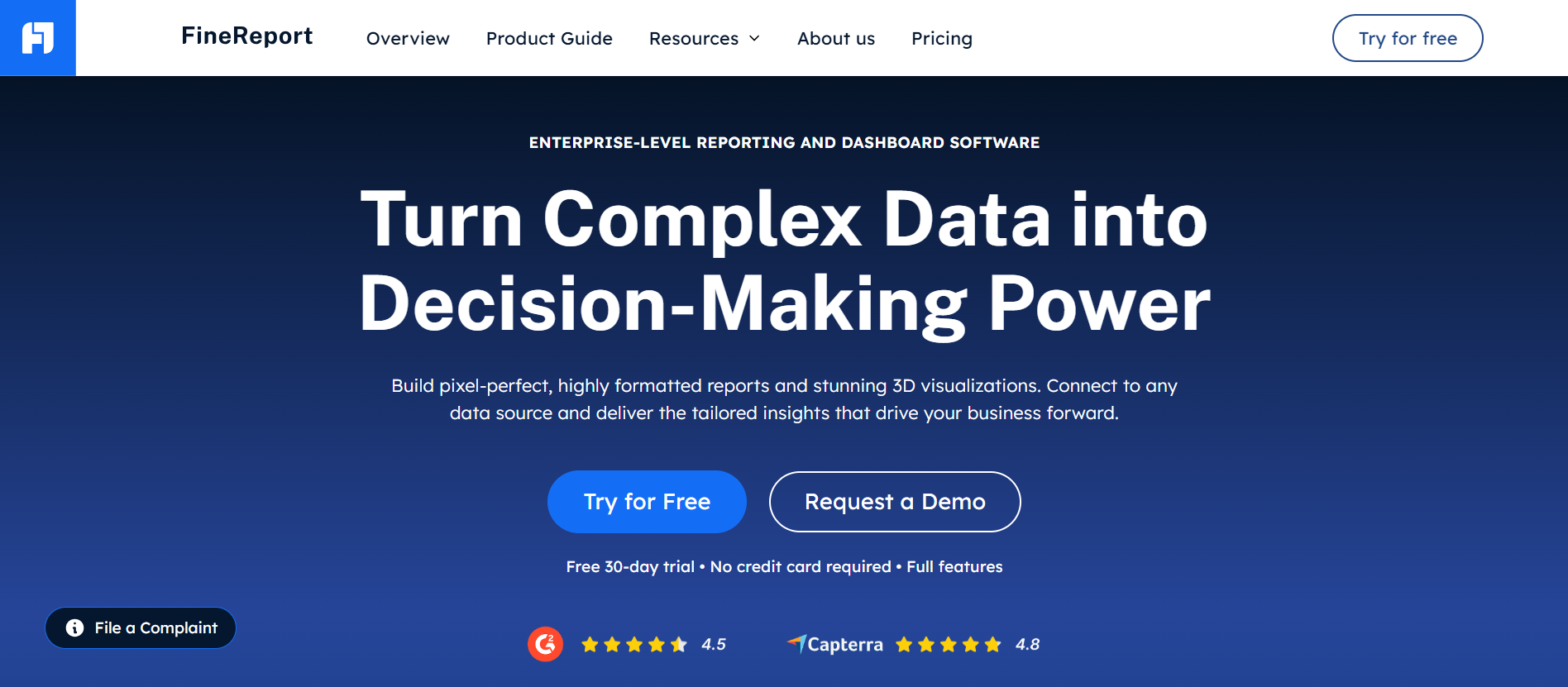
- One-sentence overview: FineReport is a configurable reporting platform that helps financial firms automate regulatory report production, manage data from multiple systems, and create auditable compliance workflows at a lower cost than many specialist enterprise stacks.
- Key Features:
- Multi-source data connectivity across databases, APIs, and enterprise systems
- Report designer for complex regulatory forms and recurring submission templates
- Scheduled report generation and automated delivery
- Parameterized reporting for entity, jurisdiction, or reporting-period views
- Workflow approvals, permissions, and role-based access
- Dashboards for tracking reporting status, exceptions, and operational KPIs
- Export support for regulator-ready formatted outputs and internal review packs
- Pros & Cons:
- Pros: Flexible deployment; strong reporting design; useful for centralizing fragmented internal compliance reporting; lower cost profile than many heavyweight alternatives
- Cons: Requires firms to define some reporting logic and compliance mappings; less out-of-the-box regulatory content than pure-play RegTech vendors
- Best For: Mid-market banks, brokers, and asset managers that want customizable regulatory reporting automation, especially when balancing functionality with cost discipline
What makes FineReport notable in this comparison is not that it replaces every specialist reporting engine in every scenario. Rather, it gives firms a practical middle path. If your compliance team struggles with multiple spreadsheets, disconnected data extracts, and manual report assembly, FineReport can standardize and automate the process quickly. It is especially useful when the challenge is operational reporting efficiency rather than only jurisdictional breadth.
2. LSEG Regulatory Reporting Solutions
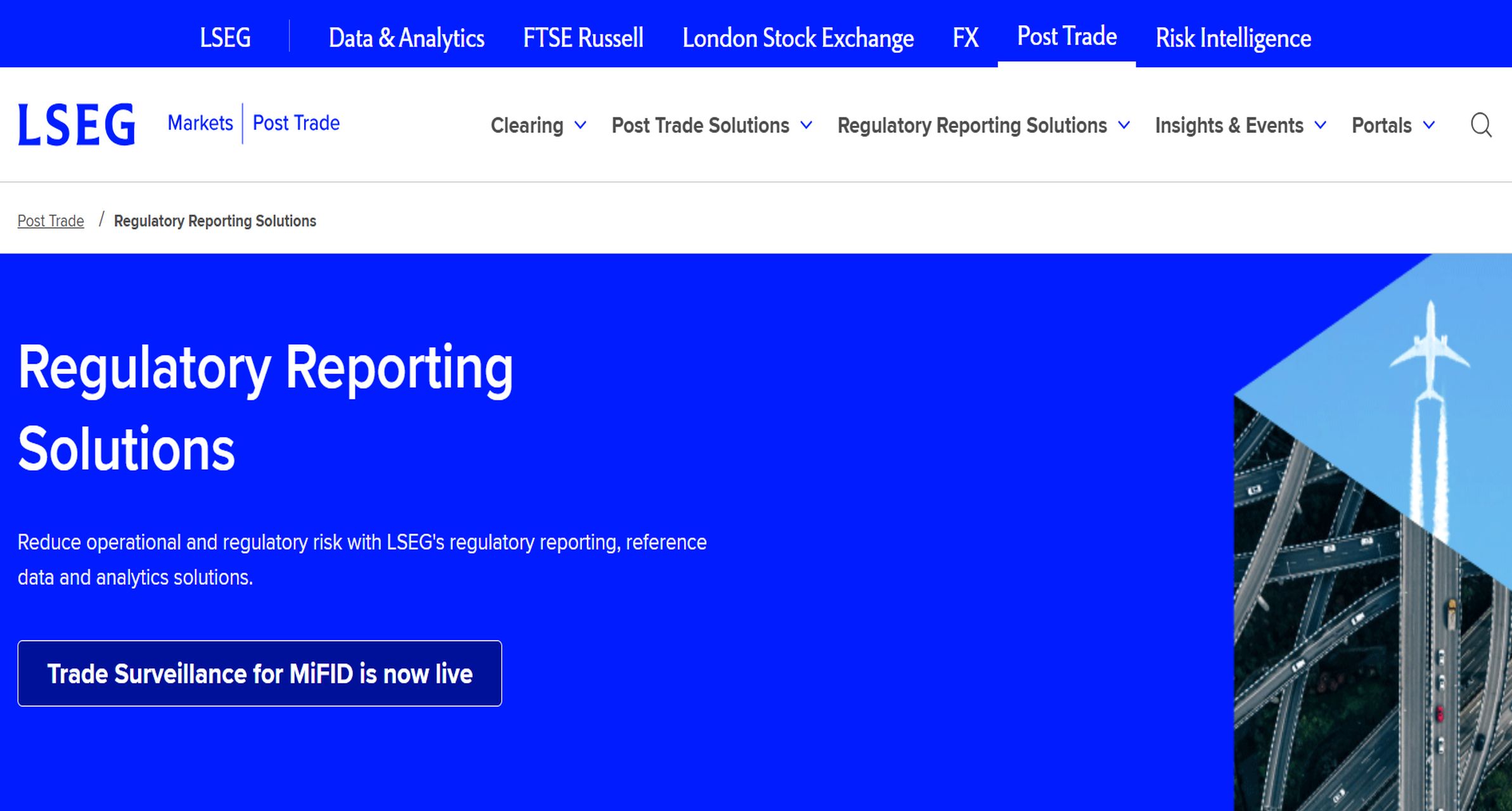
Website: https://www.lseg.com/en/post-trade/regulatory-reporting
- One-sentence overview: LSEG provides large-scale regulatory reporting services backed by trusted infrastructure, strong reference data, and broad support for transaction-focused obligations.
- Key Features:
- Multi-regulation support across major reporting frameworks
- High-volume reporting infrastructure
- Reference data and analytics integration
- Automated workflows and onboarding support
- Global support coverage
- Pros & Cons:
- Pros: Strong market credibility; proven scale; broad operational resilience
- Cons: Premium positioning; may exceed the needs of smaller or less complex firms
- Best For: Large institutions with cross-border reporting responsibilities and significant transaction volume
LSEG is often shortlisted when firms want scale, trusted market infrastructure, and a provider with broad reporting operations experience. It is a particularly strong fit where data depth and transaction reporting reliability are key.
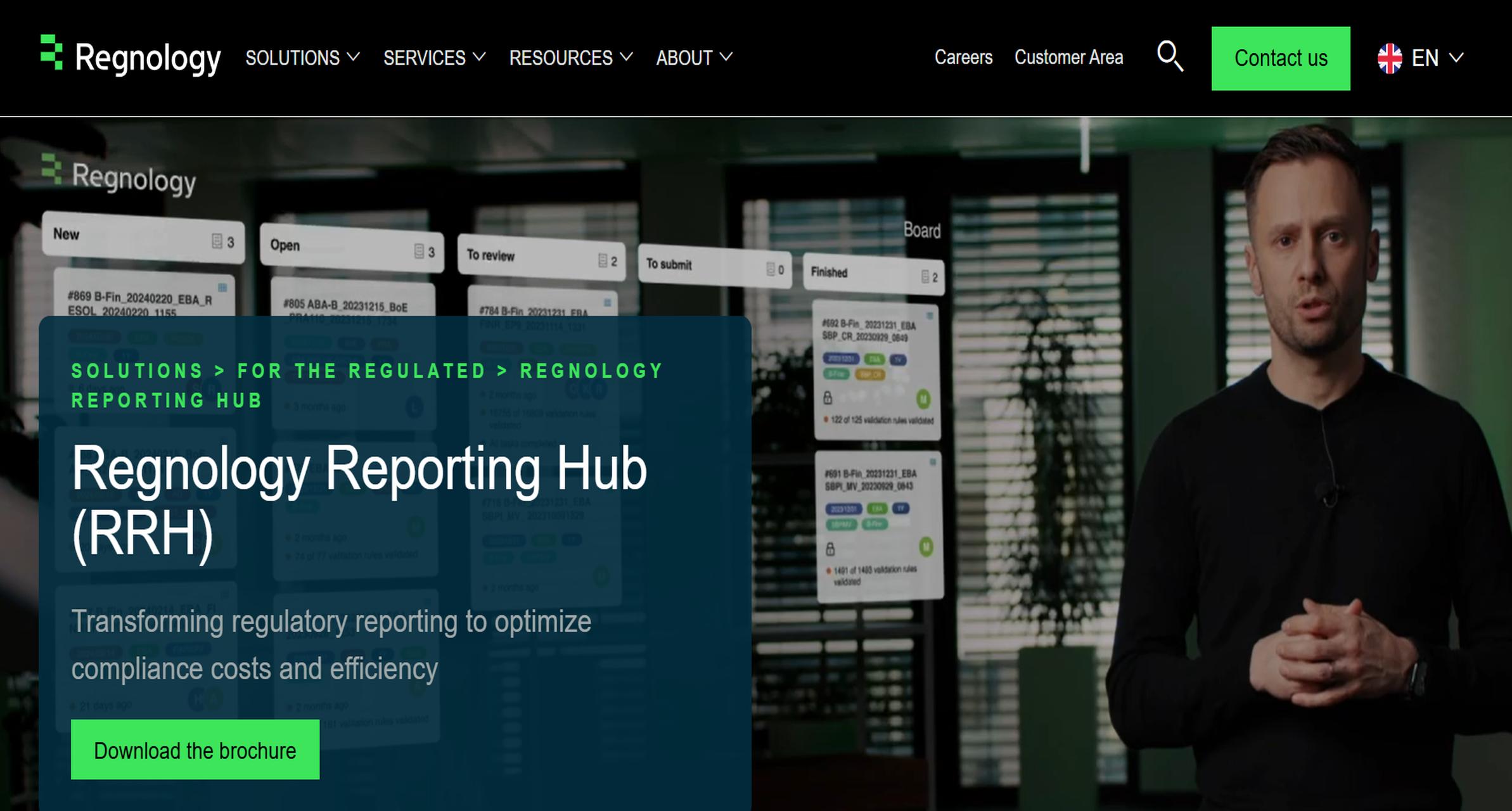
3. Regnology Reporting Hub
Website: https://www.regnology.net/en/solutions/for-the-regulated/regnology-reporting-hub/
- One-sentence overview: Regnology Reporting Hub is designed to centralize reporting control and support regulatory change management across a large institution’s reporting landscape.
- Key Features:
- Central hub architecture for multiple reporting frameworks
- Governance, lineage, and control features
- Regulatory update handling
- Workflow orchestration across business units
- Audit-ready reporting structure
- Pros & Cons:
- Pros: Excellent for standardization; strong enterprise governance; useful in multi-entity models
- Cons: Complex projects can require substantial implementation planning and resource commitment
- Best For: Large banks and financial groups consolidating fragmented reporting operations
Regnology is strongest where firms need a formal reporting control layer across diverse obligations. For institutions under constant rule change pressure, that centralized governance can be a major advantage.
4. AxiomSL ControllerView
Website: https://www.nasdaq.com/solutions/fintech/nasdaq-axiomsl/regulatory-reporting
- One-sentence overview: AxiomSL ControllerView supports enterprise-scale regulatory reporting with configurable data management, validation, and multi-entity control.
- Key Features:
- Flexible data architecture
- Validation and lineage tooling
- Multi-entity reporting support
- Workflow governance controls
- Enterprise reporting scalability
- Pros & Cons:
- Pros: Highly configurable; strong control environment; suitable for large reporting estates
- Cons: High implementation complexity; best for firms with dedicated reporting architecture teams
- Best For: Global financial institutions with complex reporting ecosystems
AxiomSL remains a strong contender for firms that need enterprise flexibility and are prepared to invest in configuration and governance.
5. Wolters Kluwer OneSumX for Regulatory Reporting
- One-sentence overview: OneSumX offers banking-focused regulatory reporting capabilities with robust prudential coverage, governance controls, and structured update support.
- Key Features:
- Prudential reporting support
- Banking-focused reporting models
- Data governance and workflow controls
- Regulatory content maintenance
- Enterprise reporting management
- Pros & Cons:
- Pros: Mature banking functionality; good governance depth; strong prudential alignment
- Cons: Higher cost and heavier implementation than simpler tools
- Best For: Banks with formal prudential, supervisory, and financial reporting programs
OneSumX is a logical option when banking-specific reporting depth matters more than lightweight deployment.
6. Moody’s Regulatory Reporting and Capital Solutions
Website: https://www.moodys.com/web/en/us/solutions/regulatory-calculation-reporting.html
- One-sentence overview: Moody’s focuses on regulatory reporting tied closely to capital, risk, and financial reporting processes, making it especially relevant to prudential-heavy institutions.
- Key Features:
- Capital adequacy and prudential reporting support
- Workflow automation
- Data integration and validation
- Risk and finance connectivity
- SaaS-oriented delivery options
- Pros & Cons:
- Pros: Strong prudential orientation; useful for aligning compliance with risk and finance teams
- Cons: May be less suitable where trade and transaction reporting are the dominant needs
- Best For: Banks and insurers with extensive financial and capital reporting demands
For institutions where regulatory reporting is tightly linked to capital calculations and risk governance, Moody’s is often a better fit than transaction-centric platforms.
Platforms focused on trade and transaction reporting
These tools are best for firms that face high-volume market reporting obligations and need speed, validation, and lifecycle event support.
7. Broadridge Regulatory Trade & Transaction Reporting
- One-sentence overview: Broadridge provides end-to-end trade and transaction reporting with strong exception handling, auditability, and support across multiple asset classes.
- Key Features:
- OTC, listed derivatives, equities, fixed income, and securities finance support
- Real-time and T+1 reporting workflows
- Position verification and reconciliation
- Exception prioritization and assignment
- Enterprise audit trails
- Pros & Cons:
- Pros: Excellent fit for capital markets operations; strong workflow resilience; broad asset coverage
- Cons: More specialized than firms with mainly prudential reporting needs may require
- Best For: Brokers, dealers, and trading firms with intensive reporting throughput
Broadridge is one of the stronger options where lifecycle event accuracy, submission speed, and exception workflow discipline are central operational requirements.
8. Gresham Regulatory Reporting
Website: https://www.greshamtech.com/solutions/regulatory-reporting
- One-sentence overview: Gresham strengthens regulatory reporting operations through data control, reconciliation, and exception management capabilities.
- Key Features:
- Data validation frameworks
- Reconciliation and matching
- Operational controls
- Exception resolution workflows
- Monitoring for reporting accuracy
- Pros & Cons:
- Pros: Strong data quality posture; useful for resolving underlying control issues before submission
- Cons: May need to sit alongside broader reporting infrastructure depending on scope
- Best For: Firms with recurring reporting breaks caused by fragmented or low-quality data
Gresham is especially relevant if your reporting problems are downstream symptoms of upstream data quality weaknesses.
Regulatory reporting software for mid-market and growing firms
These platforms are more attractive when firms want usable automation, quicker time to value, and lower operating overhead.
9. MSCI Regulatory Reporting Solutions
Website: https://www.msci.com/data-and-analytics/regulatory-reporting-solutions
- One-sentence overview: MSCI supports regulatory disclosure and reporting requirements with strong data and analytics capabilities that are particularly relevant to investment organizations.
- Key Features:
- Analytics-backed reporting
- Disclosure support
- Portfolio and entity oversight
- Scalable report production
- Data-driven compliance visibility
- Pros & Cons:
- Pros: Strong fit for portfolio-related reporting and disclosure use cases; analytical depth
- Cons: Not always the first choice for transaction repository-heavy obligations
- Best For: Asset managers and investment firms with disclosure-centric compliance programs
MSCI is a sensible option where regulatory reporting overlaps heavily with investment analytics and transparency requirements.
10. Kaizen Reporting
Website: https://www.kaizenreporting.com/
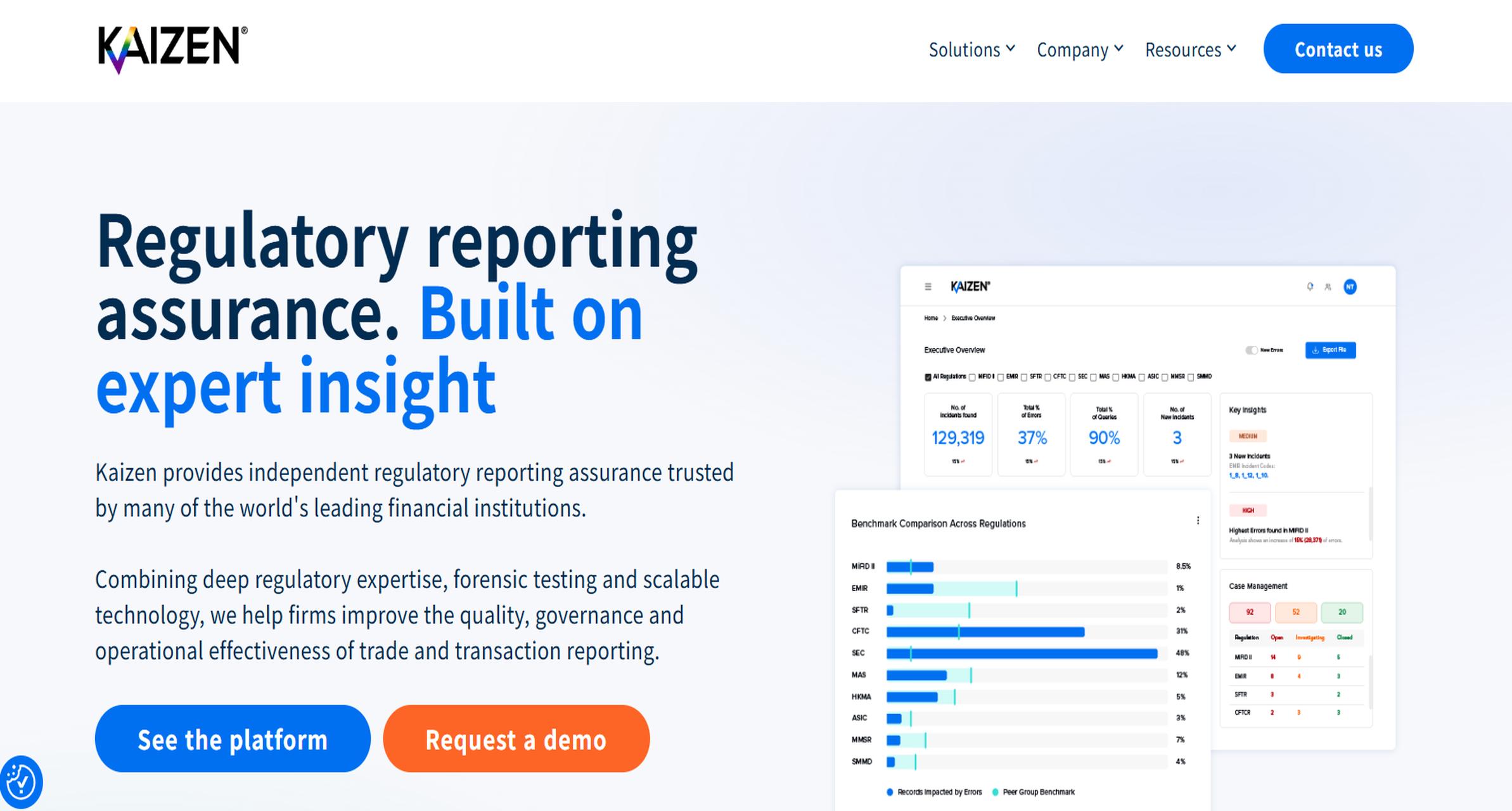
- One-sentence overview: Kaizen combines reporting technology with managed services to reduce the operational load on firms with smaller in-house compliance functions.
- Key Features:
- Managed reporting support
- Validation and control workflows
- Exception handling
- Monitoring and assurance services
- Operational support for ongoing submissions
- Pros & Cons:
- Pros: Lower in-house burden; practical support model; good for lean teams
- Cons: Less control for firms seeking a deeply customized in-house platform architecture
- Best For: Smaller compliance teams, outsourcing-first firms, and firms that need reporting support without building a large internal reporting operation
Kaizen is often the right answer when the real requirement is not just software, but an operating model that reduces staffing strain.
Automated regulatory reporting solutions for efficiency-driven teams
If your main objective is to reduce manual effort, focus on which platforms automate the most time-consuming tasks:
- Data extraction from multiple systems
- Mapping into reporting templates
- Validation and exception routing
- Approval tracking
- Report scheduling and delivery
- Audit log generation
- Dashboard visibility for open issues
On pure workflow efficiency, Broadridge, Gresham, Regnology, and LSEG are strong choices depending on use case. For teams that want automation without the cost and complexity of a very large specialist stack, FineReport stands out because it can automate repeatable reporting cycles, standardize internal controls, and replace spreadsheet-heavy processes with governed, reusable reporting workflows.
That matters most in firms where:
- Compliance and operations share data from multiple internal systems
- Reporting packs must be created repeatedly across entities or jurisdictions
- Management needs visibility into completion status and exceptions
- Manual formatting and review cycles consume too much staff time
Which regulatory reporting solution fit your firm type
The best choice depends heavily on your institution type, reporting burden, and internal operating model.
Banks
Banks usually need the broadest reporting coverage, especially across:
- Prudential reporting
- Capital requirements
- Financial disclosures
- Governance and audit controls
- Multi-entity data management
Strongest options for banks:
- Regnology Reporting Hub for centralized enterprise control
- Wolters Kluwer OneSumX for banking-specific prudential depth
- AxiomSL ControllerView for configurable enterprise-scale reporting
- Moody’s for capital and risk-linked reporting
- FineReport for banks that need flexible reporting automation with tighter budget control or a complementary reporting layer
If a bank is large, international, and heavily supervised, a specialist enterprise platform is often justified. If the bank is regional or growing, FineReport can be a practical option to improve regulatory reporting operations without immediately taking on the cost of a full-scale specialist transformation.
Brokers and dealers
Brokers and dealers are usually more sensitive to:
- Reporting speed
- Trade lifecycle handling
- Reconciliation accuracy
- Exception management
- Operational resilience under high transaction volume
Strongest options for brokers and dealers:
- Broadridge for trade and transaction reporting depth
- LSEG for broad market reporting coverage and trusted infrastructure
- Gresham for control and reconciliation-intensive environments
- FineReport for internal reporting automation, operational dashboards, and cost-efficient workflow standardization
For firms with intensive market reporting obligations, specialist transaction reporting platforms still lead. But FineReport can add substantial value where the bottleneck is internal report assembly, compliance tracking, or management oversight.
Asset managers
Asset managers typically prioritize:
- Multi-entity oversight
- Disclosure obligations
- Portfolio transparency
- Lean team productivity
- Scalable compliance processes
Strongest options for asset managers:
- MSCI for analytics-led disclosure reporting
- Kaizen for managed service efficiency
- LSEG where transaction reporting obligations are material
- FineReport for building flexible compliance dashboards, scheduled reporting packs, and internal review workflows
For many asset managers, the best answer is not the most complex platform. It is the one that gives a lean compliance team enough automation and control to keep up with recurring reporting obligations.
Smaller compliance teams and outsourcing-first firms
If your team is small, your decision should focus on:
- Time to deploy
- Internal dependency on IT
- Ease of ongoing maintenance
- Availability of service support
- Total operating cost over three to five years
Best-fit options:
- Kaizen for outsourcing-first operating models
- FineReport for firms that want affordability, flexibility, and self-managed reporting automation
- Gresham where data control is the immediate problem to solve
In this segment, highly customizable enterprise tools can become a burden if internal resources are limited. A lighter platform or service-led model is often the better business decision.
Final verdict and selection checklist of regulatory reporting solutions
For most buyers, there is no single best regulatory reporting solution in every scenario. The right choice depends on whether your biggest challenge is compliance breadth, operating cost, or automation efficiency.
Best overall platform by use case
- Best for cost-conscious flexibility: FineReport
- Best for enterprise complexity: Regnology Reporting Hub
- Best for trade and transaction reporting: Broadridge
- Best for large-scale market infrastructure support: LSEG
- Best for prudential and capital-heavy reporting: Moody’s or OneSumX
- Best for outsourcing-first firms: Kaizen
- Best for data control and reconciliation improvement: Gresham
Why FineReport ranks first in this list:
FineReport earns the top position because it addresses a large part of what many firms actually struggle with in regulatory reporting: fragmented data, manual report compilation, limited workflow visibility, and budget pressure. It may not replace every specialist regulatory engine for every large global institution, but it offers one of the most practical combinations of flexibility, automation, and cost control for mid-sized and growing firms.
Key questions to ask vendors before signing
Before selecting any regulatory reporting solution, ask:
- Which regulations, jurisdictions, and reporting formats are supported out of the box?
- How are regulatory rule changes maintained and deployed?
- What internal data sources must be integrated?
- How are validations, reconciliations, and exceptions handled?
- What audit trail and approval workflow features are included?
- What is the realistic implementation timeline for our use case?
- What resources are required from IT, compliance, and operations?
- Is managed service support available?
- What costs should we expect after year one, including upgrades and change requests?
- How easily can the platform scale if our reporting scope expands?
A practical shortlist framework
Use this simple framework to narrow the market:
Shortlist FineReport if:
- You need customizable reporting automation
- You want to reduce spreadsheet-based compliance work
- You need strong report design and internal workflow control
- You are balancing capability with budget discipline
Shortlist LSEG or Broadridge if:
- Trade and transaction reporting are core obligations
- High-volume operational resilience is critical
- You need market-tested infrastructure and service depth
Shortlist Regnology, AxiomSL, or OneSumX if:
- You are centralizing reporting across entities and jurisdictions
- Governance and formal control architecture are top priorities
- You have the budget and internal resources for enterprise implementation
Shortlist Moody’s if:
- Prudential, capital, and financial reporting dominate your compliance workload
- Risk and finance integration is strategically important
Shortlist Kaizen if:
- Your team is lean
- You prefer operational support or managed services
- You want to reduce in-house reporting overhead quickly
The final decision should align three things: your reporting obligations, your internal delivery model, and your long-term operating cost tolerance. If you want a practical starting point with strong automation potential and lower complexity than many enterprise-only alternatives, FineReport is one of the most compelling regulatory reporting solutions to evaluate in 2026.
FAQs
A regulatory reporting solution helps financial firms collect, validate, reconcile, and submit required data to regulators accurately and on schedule. It also improves auditability and reduces the manual work involved in compliance reporting.