Manufacturers evaluating quality control software in 2026 are usually trying to solve one of three problems: disconnected quality processes, rising compliance pressure, or limited visibility into what is happening across plants, suppliers, and production lines. TLM, ComplianceQuest, and MasterControl all address those needs, but they do so in very different ways.
This comparison is built for manufacturing teams that need more than a generic software list. If you are deciding between a manufacturing-focused quality platform, a cloud-native connected quality system, or a deeply regulated enterprise QMS, this guide will help you understand where each option fits best.
Quality Control Software at a Glance for Manufacturers
When manufacturers compare quality control software, the right choice often depends less on feature checklists and more on operating context. Company size, industry risk, validation expectations, and current systems all shape which platform will deliver the best outcome.
Who TLM, ComplianceQuest, and MasterControl are best suited for
TLM is generally best suited for manufacturers that want practical quality management closely tied to day-to-day operations. It is especially attractive for small to mid-sized manufacturers, multi-site operations that need core quality workflows, and teams that want quality processes connected to ERP-driven production activity without overcomplicating implementation.
ComplianceQuest is often a strong fit for organizations pursuing broader digital transformation. Because it is built on the Salesforce ecosystem, it tends to appeal to manufacturers that want connected quality, service, supplier, and customer workflows in a cloud-first environment. It can be a compelling choice for businesses that already rely heavily on Salesforce or want enterprise-wide process visibility.
MasterControl is typically the best fit for highly regulated manufacturers, especially in medical device, life sciences, and FDA-regulated environments. It is designed for companies that need rigorous document control, formal validation support, detailed audit trails, and structured quality processes that can stand up to intense regulatory scrutiny.
The biggest differences in deployment model, industry fit, and validation depth
The most important differences come down to three areas:
-
Deployment approach
- TLM emphasizes operational integration and manufacturing usability
- ComplianceQuest offers a modern cloud architecture with Salesforce-native workflows
- MasterControl delivers a mature cloud QMS with strong regulated-industry orientation
-
Industry fit
- TLM aligns well with general manufacturing, automotive-adjacent operations, and companies needing quality tied to plant activity
- ComplianceQuest fits organizations wanting connected enterprise quality across departments and external stakeholders
- MasterControl is strongest where regulated manufacturing compliance is central to the business
-
Validation depth
- TLM supports structured quality environments, including regulated use cases, but is often chosen for operational practicality
- ComplianceQuest can support compliance-heavy organizations, though the depth of formal validation expectations should be carefully assessed during selection
- MasterControl is built with validation-heavy use cases in mind and is often chosen precisely because compliance cannot be compromised
A quick summary of strengths, trade-offs, and ideal use cases
| Software | Best for | Key strengths | Main trade-offs |
|---|---|---|---|
| TLM | Small to mid-sized manufacturers and operational quality teams | Manufacturing-focused workflows, practical ERP alignment, accessible rollout | May have less ecosystem breadth than larger enterprise platforms |
| ComplianceQuest | Enterprise digital transformation and cross-functional quality | Cloud-native architecture, Salesforce connectivity, unified quality processes | Can be complex or costly depending on org size and maturity |
| MasterControl | Highly regulated manufacturing | Strong compliance controls, audit readiness, validation depth, mature document management | Higher implementation effort and potentially steeper adoption curve |

How We Compare Manufacturing Quality Control Software
A useful quality control software comparison has to go beyond marketing claims. Manufacturers need to know how each platform performs in the workflows people use daily, the integrations it can support, and the level of process discipline it can realistically sustain.
Evaluation criteria that matter most
The following areas matter most when comparing quality systems in manufacturing.
Document control, CAPA, nonconformance, audit readiness, training, and supplier quality
At a minimum, manufacturers should expect strong support for:
- Document control with versioning and approvals
- CAPA workflows and effectiveness checks
- Nonconformance and deviation handling
- Audit planning, execution, and follow-up
- Training management tied to controlled documents
- Supplier quality processes and records
These are not optional capabilities. They form the core operating system of quality. The difference between vendors is usually how connected, configurable, and easy to use these workflows are.
ERP, MES, and CRM integration flexibility
Quality events rarely live in one system. Inspection results may originate in MES, supplier records may live in ERP, and complaints may enter through CRM or service channels. That is why integration flexibility matters so much.
Manufacturers should look for:
- ERP integration for item, supplier, purchase, and inventory data
- MES or shop-floor connectivity for inspections, traceability, and production events
- CRM connectivity for complaints, customer quality issues, and service feedback
- API support or middleware compatibility for future expansion
A platform that works well in isolation but poorly with the rest of your stack can create more manual work than it removes.
Usability for operators, quality teams, and multi-site leadership
The best quality control software should work for more than one audience:
- Operators need clarity, speed, and mobile-friendly execution
- Quality teams need workflow control, traceability, and documentation discipline
- Leadership needs dashboards, trend analysis, and site-to-site visibility
A system that only works for quality administrators but frustrates frontline teams often struggles to deliver consistent adoption.
What manufacturers should weigh before choosing
Feature coverage matters, but buying decisions should also account for organizational reality.
Regulatory complexity, implementation resources, and internal change management
A company facing FDA inspections or ISO certification pressure may require more formality than a general industrial manufacturer. At the same time, even the most capable platform can fail if implementation resources are limited or change management is weak.
Manufacturers should ask:
- How regulated is the environment?
- How much configuration and validation support will be needed?
- Does the internal team have time to redesign workflows and train users?
- Can the vendor support adoption beyond go-live?
Scalability across plants, business units, and product lines
Some systems work well in one plant but become difficult when rolled out globally. Manufacturers planning growth should consider whether the platform can scale across:
- Multiple plants
- Different quality teams
- New product families
- Varying customer and regulatory requirements
- Supplier networks across regions
Total cost of ownership, time to value, and vendor support
The cheapest option upfront is not always the most affordable long term. A better comparison includes:
- Licensing and user model
- Implementation costs
- Validation and documentation effort
- Integration costs
- Admin overhead
- Time to first value
- Quality of support and customer success
TLM vs ComplianceQuest vs MasterControl: Feature-by-Feature Comparison
Now let’s compare how these three quality control software platforms perform in the areas manufacturers care about most.
Core quality management workflows
All three vendors cover core QMS processes, but their strengths differ.
Complaint handling, deviations, change control, and traceability
TLM is strong where manufacturing quality needs to stay close to production realities. It is well suited for handling nonconforming materials, inspections, supplier issues, corrective actions, and related operational records without separating quality from day-to-day plant execution.
ComplianceQuest offers connected workflows for complaints, nonconformance, CAPA, audits, and change management. Its architecture supports quality events across departments, which is useful for organizations that want one workflow backbone for both internal quality and external-facing processes.
MasterControl provides highly structured workflows for deviations, change control, complaint handling, training, and traceability. It is especially effective where formal approvals, documented controls, and strict record integrity are mandatory.
Workflow automation, approvals, and closed-loop corrective action
Workflow automation is one of the clearest differentiators in modern quality control software.
- TLM emphasizes practical automation that quality and production teams can use consistently
- ComplianceQuest supports broad automation across quality processes, with strong orchestration potential for organizations already operating in Salesforce
- MasterControl excels in controlled approval environments where electronic signatures, audit trails, and closure discipline are essential
For manufacturers with immature processes, too much complexity can slow adoption. For highly regulated teams, too little control can create audit risk. The right balance depends on process maturity.
Industry fit and compliance readiness
A platform can be feature-rich and still be the wrong fit if it does not align with your regulatory profile.
Support for regulated manufacturing environments and audit preparation
TLM can work well for manufacturers that need quality discipline, audit readiness, and manufacturing integration, especially where ISO-driven quality systems are a major focus.
ComplianceQuest is suitable for many compliance-oriented manufacturers, especially those looking for a connected cloud platform that links quality with broader business systems. However, buyers should evaluate how much regulated-process formalization they truly need.
MasterControl is the strongest option in this group for highly regulated environments. It has a long-standing reputation for supporting audit preparation, compliance documentation, training traceability, and controlled records in life sciences and similar industries.
Validation expectations for medical device, life sciences, and general manufacturing teams
Validation is where the differences become more pronounced.
- General manufacturing teams often prioritize usability, integration, and speed of deployment over maximum validation rigor
- Medical device and life sciences teams often need detailed validation support, stronger control over electronic records, and formalized workflows
For that reason:
- TLM often fits manufacturers that want robust quality control without unnecessary administrative weight
- ComplianceQuest can be compelling for organizations balancing compliance with digital transformation goals
- MasterControl is usually the safer choice where validation depth and regulatory defensibility are non-negotiable
Integration, reporting, and data visibility
Manufacturers rarely succeed with quality improvement if data remains fragmented.
Connections to existing enterprise systems and shop-floor data sources
TLM stands out for manufacturers that want quality connected to ERP and operational data. This matters when inspection records, purchase activity, inventory, supplier events, and nonconformance processes need to stay synchronized with plant operations.
ComplianceQuest benefits from Salesforce ecosystem connectivity, making it attractive for organizations already using Salesforce across quality, customer service, or supplier collaboration workflows.
MasterControl supports enterprise integrations and broader platform connectivity, but in many cases, implementation planning will be more structured and deliberate due to the compliance sensitivity of the environments it serves.
Dashboards, analytics, and executive reporting for continuous improvement
Reporting quality data is not just about producing audit evidence. It is also about improving yield, reducing recurring defects, and identifying process drift.
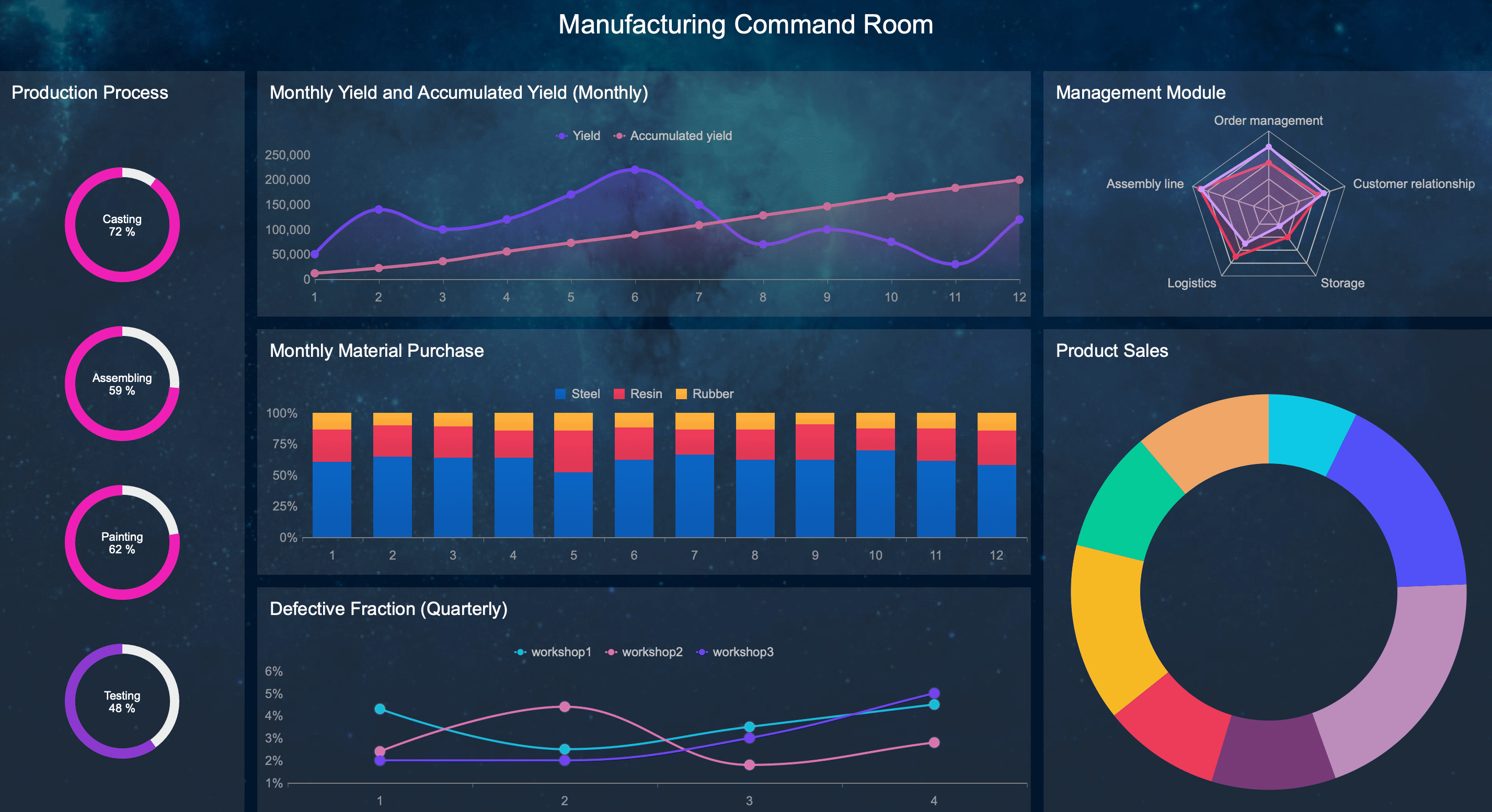
This is especially important in lean management environments. When discussing lean management tools, manufacturers should also consider FineReport. FineReport helps address the data visualization demands of lean management by turning quality, production, supplier, and improvement data into visual dashboards, cross-plant KPI views, and management reports. For teams that need stronger visual analytics across NCRs, CAPAs, audits, defect trends, and continuous improvement metrics, FineReport can complement core quality platforms by improving how data is presented and acted upon.
- TLM can support operational reporting tied to manufacturing workflows
- ComplianceQuest offers real-time visibility and analytics advantages in a cloud-connected model
- MasterControl supports mature reporting for compliance and enterprise quality oversight
- FineReport is worth considering when manufacturers need more flexible lean management data visualization across multiple systems

Pros and Cons of Each Quality Control Software
No quality control software is perfect for every manufacturer. Each platform has a clear sweet spot.
TLM
Where it stands out for manufacturing-focused quality teams
TLM’s biggest advantage is its manufacturing orientation. It is designed for organizations that want quality management tightly connected to operational systems and plant workflows rather than treated as a standalone compliance layer.
Pros of TLM:
- Strong fit for manufacturing-focused quality teams
- Practical handling of inspections, nonconformance, supplier quality, and corrective action
- Good alignment with ERP-connected environments
- More approachable for small to mid-sized manufacturers
- Can deliver value faster when teams need focused functionality
Potential limitations in ecosystem breadth, advanced compliance needs, or reporting depth
TLM may be less ideal for organizations that need the broadest enterprise application ecosystem or the deepest compliance formalization available in top-tier regulated platforms.
Cons of TLM:
- May not offer the same ecosystem scale as Salesforce-based or highly enterprise-centric platforms
- May require additional tools for advanced cross-functional analytics or highly customized executive reporting
- May be less compelling for organizations with extremely complex validation expectations
ComplianceQuest
Strengths in cloud architecture, connected quality processes, and Salesforce-based workflows
ComplianceQuest appeals to manufacturers that want quality to be part of a broader digital business architecture. Its cloud foundation and Salesforce relationship can be a major advantage for connected workflows across service, customers, suppliers, and internal quality teams.
Pros of ComplianceQuest:
- Cloud-native and modern in architecture
- Strong support for connected quality processes
- Attractive for Salesforce-centric organizations
- Good fit for enterprise visibility and cross-functional coordination
- Can support broad workflow standardization across sites and business units
Trade-offs around fit, complexity, or cost depending on organization size
The same breadth that makes ComplianceQuest attractive can also make it more than some manufacturers need.
Cons of ComplianceQuest:
- Can feel complex for smaller manufacturers with simpler quality needs
- Cost and implementation effort may be high relative to focused use cases
- Best value often depends on broader Salesforce strategy
- Some organizations may need significant process maturity to fully benefit
MasterControl
Advantages for highly regulated environments and mature quality processes
MasterControl is built for organizations where auditability, process control, and compliance depth matter every day. It is often the safest strategic choice in heavily regulated manufacturing.
Pros of MasterControl:
- Excellent fit for medical device, life sciences, and other regulated sectors
- Deep document control and training management capabilities
- Strong support for audit readiness and controlled workflows
- Mature handling of deviations, change control, and compliance documentation
- Well suited for organizations with formal quality governance
Considerations around implementation effort, flexibility, or user adoption
MasterControl’s rigor is valuable, but it can come with a heavier rollout and governance burden.
Cons of MasterControl:
- Implementation may require more planning and resources
- Can be more structured than general manufacturers need
- User adoption may take longer if frontline workflows are not carefully designed
- May be less agile for organizations seeking lightweight process flexibility
Which Solution Fits Your Manufacturing Environment Best?
The best quality control software depends on your operating model, regulatory pressure, and transformation goals.
Best for small to mid-sized manufacturers
When ease of rollout, focused functionality, and practical quality control matter most
For small to mid-sized manufacturers, the best platform is usually the one that gets used consistently. That means:
- Clear workflows
- Easy training
- Fast deployment
- Good operational fit
- Minimal unnecessary complexity
Best fit: TLM
TLM is often the most practical choice for manufacturers that need real quality control improvements without taking on enterprise-level implementation overhead. If your team wants document control, NCRs, inspections, supplier quality, and CAPA tied closely to plant activity, TLM is likely the strongest fit of the three.
Best for complex or highly regulated operations
When validation, audit trails, and formal process control are non-negotiable
Highly regulated manufacturers need more than convenience. They need defensible records, validated processes, and audit-ready workflows that can support inspections and compliance obligations.
Best fit: MasterControl
MasterControl is typically the best option when formal quality governance is essential. For medical device, pharmaceutical, and other heavily regulated teams, its depth in document control, training, deviations, and validation-related discipline makes it a leading choice.
Best for digital transformation and cross-functional quality
When integration, visibility, and enterprise-wide process alignment drive the decision
Some manufacturers are not just replacing paper or spreadsheets. They are redesigning how quality connects with customers, suppliers, service teams, and enterprise leadership.
Best fit: ComplianceQuest
ComplianceQuest is often the best choice when the goal is enterprise-wide process alignment and connected cloud workflows. It is especially attractive for organizations already invested in Salesforce and looking to unify quality data with broader business operations.

Final Recommendation and Shortlist Guidance of Quality Control Software
Choosing quality control software should not start with vendor branding. It should start with your process complexity, compliance risk, and operational priorities.
Questions to ask vendors before scheduling a demo
Before committing to a demo, manufacturers should ask:
- How does the system handle document control, CAPA, NCRs, audits, and training in one workflow model?
- What ERP, MES, CRM, and reporting integrations are already available?
- How much configuration is required for our industry?
- What validation support is included for regulated use cases?
- How long does implementation typically take for a manufacturer of our size?
- What does reporting look like for plant managers, corporate quality leaders, and executives?
- Can the system support multi-site deployment without heavy customization?
- How does mobile or frontline user access work?
- What is included in onboarding, support, and post-go-live success?
Red flags that signal poor fit for your industry or team maturity
A vendor may be the wrong fit if:
- The demo focuses on generic workflows rather than manufacturing use cases
- Integration answers are vague or depend heavily on custom work
- Validation and audit trail questions get weak or inconsistent responses
- Frontline usability appears secondary to admin functionality
- Reporting is rigid and difficult to adapt
- The implementation approach assumes more internal resources than you actually have
- The platform feels oversized for your current process maturity
How to build a shortlist based on process complexity, compliance pressure, and growth plans
A simple shortlist framework can help:
Choose TLM if:
- You are a small or mid-sized manufacturer
- You need practical manufacturing quality workflows
- ERP-connected quality control is a priority
- You want faster time to value with less complexity
Choose ComplianceQuest if:
- You want enterprise-wide connected quality
- Your business already uses Salesforce or plans to expand it
- Cross-functional visibility matters as much as core quality workflows
- You are pursuing broader digital transformation
Choose MasterControl if:
- You operate in a highly regulated industry
- Validation, audit readiness, and formal controls are critical
- You need mature document, training, and change control processes
- Your organization can support a more structured implementation
In the end, the best quality control software is the one that fits how your manufacturing organization actually works today while supporting where it needs to go next. For many general manufacturers, TLM will be the most practical and operationally aligned option. For connected enterprise quality, ComplianceQuest is often the most strategic. For highly regulated operations, MasterControl remains the strongest choice.
FAQs
TLM is often the strongest fit for small to mid-sized manufacturers that want practical quality workflows tied closely to ERP and daily plant operations. It is usually chosen for usability and operational alignment rather than enterprise complexity.