Small teams often move fast, wear multiple hats, and handle constant changes in priorities. That flexibility is a strength, but it can also create confusion, rework, and wasted effort. This is where lean management becomes especially useful.
Instead of adding more process for the sake of control, lean management helps small teams focus on what truly matters: delivering value, removing waste, and improving work a little at a time. Done well, it creates a system that is simpler, clearer, and easier to maintain.
Why Lean Management Works for Small Teams
At its core, lean management is a way of organizing work so teams can deliver more value with less waste. Waste can mean many things: unnecessary meetings, duplicated tasks, delays in approvals, unclear handoffs, or work that does not help the customer.
For small teams, this approach works well because resources are limited. There usually is no extra capacity to absorb poor processes. If communication breaks down or priorities are unclear, the impact is immediate. Lean helps solve that by making work visible, reducing friction, and keeping the team focused on outcomes.
The main goal is simple: create more customer value while using less time, effort, and complexity.
Small teams that adopt lean management often see benefits such as:
- Better focus on the highest-value work
- Faster workflows with fewer delays
- Clearer priorities across the team
- Less rework caused by misalignment
- More ownership and accountability
- Stronger collaboration without heavy bureaucracy
Lean is also practical because it does not require a large transformation program to start. A small team can begin with a few simple habits, test improvements, and build from there.
Start With the Basics: Principles, Mindset, and Team Readiness
Before changing tools or meetings, it helps to understand how lean management works in day-to-day operations. Lean succeeds when teams treat it as a way of thinking, not just a checklist.
What Lean Means in Everyday Team Operations
In everyday work, lean thinking asks a few important questions:
- What does the customer actually value?
- Which steps help create that value?
- Which steps slow us down without adding value?
- How can we improve the flow of work?
For a small team, this might mean reviewing how a request turns into a finished deliverable. Maybe a content team notices that most delays come from unclear briefs. Maybe an operations team finds that too many approvals create bottlenecks. Maybe a product team sees that constant task switching causes work to stall.
Lean management turns these observations into action. It encourages teams to:
- Focus on customer value first
- Reduce waste in daily processes
- Improve continuously instead of waiting for a major overhaul
This mindset shapes ordinary routines. Meetings become shorter and more purposeful. Task ownership becomes clearer. Work in progress becomes easier to manage. Problems become visible earlier, before they turn into larger issues.
The Core Principles Behind a Lean Approach
Most lean management systems are built around a few core principles:
-
Identify value
Start by understanding what matters most to the customer, stakeholder, or internal client. -
Map the work
Look at how work moves from request to delivery. This helps expose delays, handoff problems, and unnecessary steps. -
Improve flow
Make it easier for work to move smoothly instead of getting stuck between people or stages. -
Use pull, not overload
Teams should take on work based on actual capacity and demand, not just because tasks are available. -
Pursue continuous improvement
Lean is never “finished.” Teams keep learning, adjusting, and improving over time.
These principles are especially relevant for small teams because they often face:
- Limited time
- Overlapping roles
- Frequent context switching
- Informal processes that become messy as workload grows
A lean approach brings structure without making the team rigid.
How to Know if Your Team Is Ready to Begin
A team does not need to be highly mature or perfectly organized to start lean management. In fact, lean often works best when a team is already feeling some friction and wants a better way to operate.
Your team may be ready if you notice signs like:
- Priorities change often and no one knows what comes first
- Tasks get delayed between handoffs
- Meetings consume time without resolving blockers
- Team members feel busy but results still move slowly
- Ownership is unclear
- Workloads are uneven across the team
The key is to set realistic expectations. Lean management is not an instant transformation. It is a gradual improvement process. Teams that expect steady progress, rather than a dramatic overnight fix, usually get better long-term results.

Step-by-Step Guide to Implementing Lean Management
Once the team understands the basics, the next step is to put lean management into practice. The following process is simple enough for small teams but strong enough to produce meaningful change.
Step 1: Define Customer Value and Team Priorities
Every lean management effort should begin with value. If the team does not agree on what matters most, improving the process will not solve the right problem.
Start by identifying the people your team serves. Depending on your function, that could include:
- External customers
- Internal stakeholders
- Sales teams
- Leadership
- Cross-functional partners
Then ask:
- What outcomes matter most to them?
- What do they need faster, better, or more clearly?
- What are they willing to prioritize?
- Which outputs actually help them make progress?
This step helps shift the team from a task-based mindset to an outcome-based one. Instead of only asking, “What do we need to do this week?” ask, “What result are we trying to create?”
For example:
- A marketing team may define value as publishing campaigns faster without sacrificing quality.
- An operations team may define value as reducing turnaround time for internal requests.
- A product team may define value as shipping improvements that solve real user pain points.
Once value is clear, align team priorities around it. That means fewer “nice to have” tasks and more focus on work with real impact.
Step 2: Map Your Current Workflow
The next step in lean management is to make the current process visible. Many teams think they understand how work moves, but once they map it out, hidden delays become obvious.
Document each stage from request to completion. Keep it simple at first. A basic workflow might include:
- Request received
- Reviewed and clarified
- Assigned
- In progress
- Waiting for feedback
- Revisions
- Completed
As you map the workflow, look for common issues such as:
- Delays before work starts
- Too many handoffs
- Duplicate effort
- Tasks bouncing back for clarification
- Bottlenecks at approval stages
- Work sitting idle between steps
This is where visualization becomes very powerful. A visible process helps everyone see the same reality.
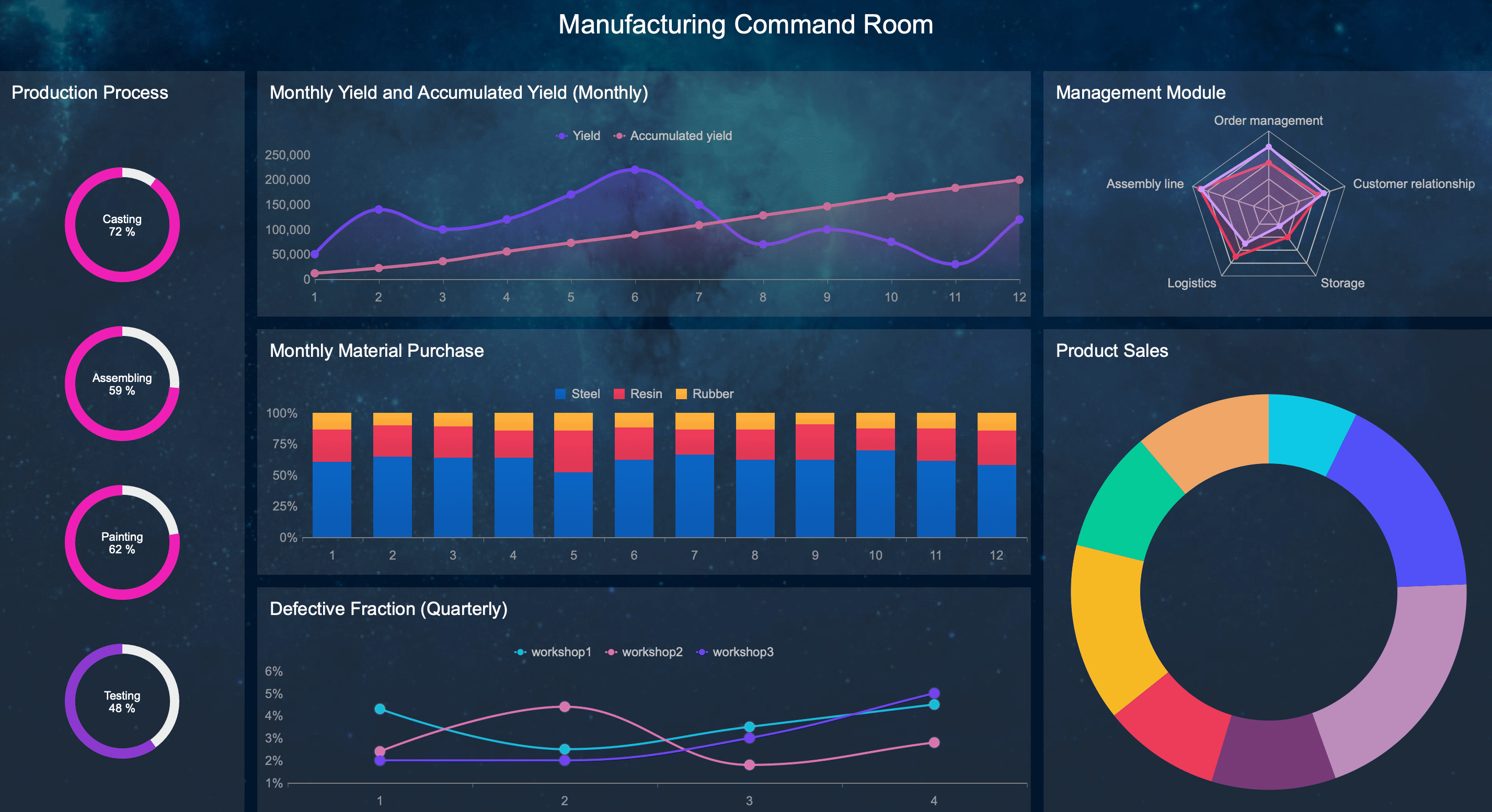
For teams that want stronger workflow visibility, reporting, and dashboard support, FineReport can be a practical match within lean management. While lean itself is a management method, one of its biggest execution challenges is making work status, bottlenecks, and workload distribution easy to see. FineReport helps address this visual side of lean management by turning workflow data into clear dashboards, status boards, and performance views that support faster decisions.
Step 3: Reduce Waste and Simplify Processes
Once the workflow is mapped, the team can begin removing waste. In lean management, waste is anything that consumes effort without adding value.
Common waste in small teams includes:
- Unnecessary meetings
- Repeated status updates across multiple channels
- Waiting for approvals that add little value
- Rework caused by unclear requirements
- Duplicate documentation
- Too many tasks happening at once
- Undefined ownership
This does not mean removing every process. It means removing low-value activities and simplifying the rest.
A few practical ways to do this:
- Replace long meetings with short focused check-ins
- Create templates for repeatable work
- Clarify approval rules so not everything needs escalation
- Define one owner for each task or deliverable
- Reduce batch sizes so work gets completed sooner
- Standardize recurring workflows where consistency saves time
Standardization is especially helpful for small teams that repeat the same type of work. A marketing team can standardize campaign intake. An operations team can standardize request categories. A product team can standardize bug triage. This reduces errors and frees up mental energy for more important work.
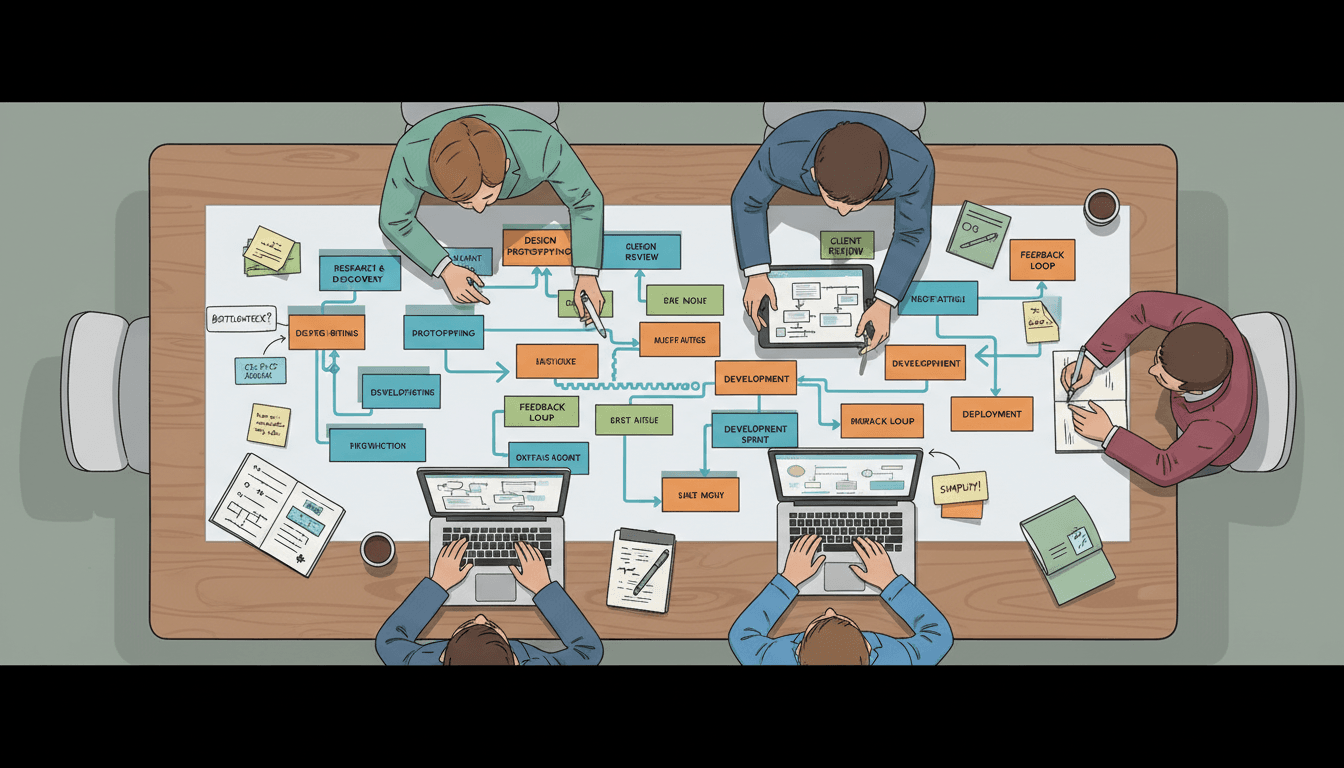
Step 4: Build a Visual System to Track Work
A visual system is one of the most effective lean management tools for small teams. When work is visible, priorities become clearer, blockers surface faster, and the team can coordinate without relying on constant follow-up.
A simple visual system usually includes:
- A board showing stages of work
- Clear task ownership
- Priority labels
- Work-in-progress limits
- Daily or regular check-ins
This can be done with a physical board, a project management tool, or a reporting platform that connects tasks and metrics into one view.
The goal is not just to list tasks. The goal is to show:
- What is waiting
- What is active
- What is blocked
- Who is responsible
- Where overload is building
For small teams trying to strengthen the visualization side of lean management, FineReport is worth considering because it helps turn scattered operational data into intuitive dashboards and real-time visual panels. That is especially useful when a team wants more than a basic task board and needs a clearer view of cycle time, workload balance, blocked work, response speed, or department-level performance. In other words, FineReport fits lean management by supporting one of its most important practical needs: making waste, flow, and improvement opportunities visible.
Step 5: Create a Habit of Continuous Improvement
The final step is what keeps lean management alive. Without continuous improvement, teams often drift back into old habits.
Set aside time regularly to reflect on the process. This does not need to be formal or time-consuming. A short weekly or biweekly review can be enough.
Ask questions like:
- What helped work move smoothly this week?
- Where did tasks get stuck?
- What created confusion or rework?
- Which change improved performance?
- What small experiment should we try next?
The best lean teams do not wait for major failures before improving. They make small, steady changes and learn from them.
This approach is often more sustainable than large process redesigns because it reduces disruption. A team can test one change, observe the result, and either keep it, improve it, or drop it.
Over time, these small improvements compound into a much stronger operating system.
Practical Examples of Lean Management in Small Teams
Lean management is flexible. The same principles can be applied across different functions, even when the day-to-day work looks very different.
Examples in Marketing, Operations, and Product Teams
Marketing team example
A small marketing team may struggle with content delays, unclear requests, and last-minute campaign changes. By applying lean management, the team can define what stakeholders value most, create a clearer intake process, limit work in progress, and standardize content review steps. As a result, campaigns move faster and the team spends less time reacting to unclear requests.
Operations team example
An operations team may handle a constant stream of internal requests. Without a lean system, work can pile up and response times become inconsistent. A lean management approach helps the team map request flow, identify waiting time, simplify approvals, and create a visible queue. This improves turnaround time and makes capacity easier to manage.
Product team example
A small product team may deal with competing priorities, bug fixes, feature requests, and stakeholder pressure. Lean management helps the team separate urgent work from important work, visualize flow, reduce context switching, and review whether shipped items actually deliver value. This creates a more stable delivery rhythm.
The point is not to force every team into the same process. It is to apply the same lean principles in ways that match the work.
Lean Project Management for Day-to-Day Execution
Lean project management helps small teams manage deadlines and priorities without becoming overly rigid. Traditional planning often assumes that everything can be predicted in advance. Small teams know that reality is rarely that neat.
A lean project management approach emphasizes:
- Delivering value in smaller increments
- Adjusting based on feedback
- Limiting overload
- Keeping priorities visible
- Solving bottlenecks early
This is especially useful in environments where requests change quickly. Instead of building a heavy plan that becomes outdated, the team creates a lighter system focused on flow and outcomes.
For example, rather than planning every detail of a six-week project up front, a lean team may:
- Define the desired outcome
- Break work into smaller deliverables
- Review progress frequently
- Surface blockers visually
- Adjust based on actual capacity and feedback
To support this, visual reporting matters. This is another place where FineReport fits naturally into lean management. Teams using lean project management often need more than a task list. They need visual oversight of timelines, throughput, bottlenecks, and execution risks. FineReport can help present this information in a clear, shared format so the team and leaders can act quickly without relying on manual status consolidation.

Common Mistakes to Avoid and How to Sustain Results
Lean management can create strong results, but only if teams avoid a few common mistakes. Small teams especially need to keep the system practical.
Pitfalls That Slow Down Lean Adoption
One common mistake is copying systems designed for large enterprises. Small teams do not need layers of complexity, dozens of metrics, or a formal transformation office. They need a clear, usable process.
Other pitfalls include:
-
Changing everything at once
Too much change creates confusion and resistance. -
Tracking too many metrics
If the team spends more time measuring than improving, lean management loses its purpose. -
Confusing activity with value
A full board does not necessarily mean meaningful progress. -
Lack of ownership
If tasks, blockers, or improvement actions have no owner, progress slows down quickly. -
Weak leadership support
Teams need leaders to reinforce priorities, remove barriers, and support experimentation. -
Treating lean as a one-time project
Lean management is an ongoing practice, not a short-term initiative.
Another mistake is overlooking the visual dimension. Teams may talk about improvement but still lack visibility into where work stalls. That is why a suitable visualization and reporting tool can make a real difference. When lean management data is hard to see, teams react slowly. When it is visible, they improve faster.
How to Keep Lean Practices Working Over Time
To sustain lean management, keep the system lightweight, visible, and useful.
A few simple ways to maintain momentum:
- Review workflow regularly
- Measure a small number of meaningful indicators
- Celebrate small wins
- Keep team check-ins focused on blockers and flow
- Update standards when better methods emerge
- Encourage everyone to suggest improvements
Useful metrics may include:
- Lead time
- Cycle time
- Number of blocked tasks
- Rework rate
- Completion rate
- Response time for incoming requests
Do not use these metrics just for reporting. Use them to guide discussion and identify where improvement is needed.
It also helps to build lean into team culture. That means improvement should not depend on one champion alone. Over time, the whole team should become more comfortable asking:
- Is this step necessary?
- Does this add value?
- What is slowing us down?
- What can we simplify?
When that habit takes hold, lean management becomes part of how the team operates, not just a framework they occasionally revisit.
Final Thoughts
For small teams, lean management is not about doing more with less in a stressful way. It is about doing the right work, removing unnecessary effort, and creating a system that supports consistent improvement.
The most effective way to start is also the simplest:
- Define value clearly
- Map the current workflow
- Remove waste
- Make work visible
- Improve continuously
That is enough to build real momentum.
And because visibility is such a critical part of lean management, teams should not ignore the tools that support it. When you need stronger dashboards, clearer workflow reporting, and better visual control over work and performance, FineReport can help fill an important gap in lean execution by making team flow, bottlenecks, and progress easier to see and manage.
Small teams do not need a perfect lean system from day one. They need a practical one they can actually use. Start small, improve steadily, and let the process evolve with the team.
FAQs
Lean management is a way to help a small team deliver more customer value while using less time, effort, and unnecessary process. It focuses on reducing waste, improving flow, and making small ongoing improvements.