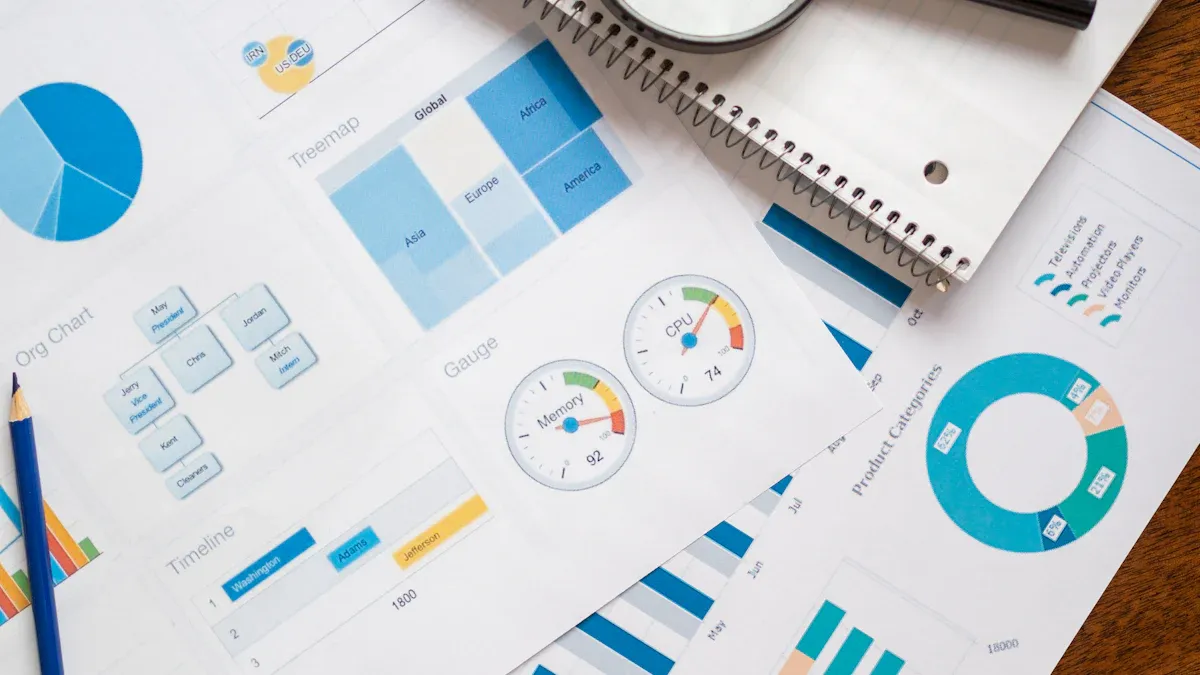
Integrated reporting gives you a complete view of your organization by combining financial and non-financial information. Today, stakeholders want more than just numbers—they expect you to show how your business creates value and impacts society.
Here’s how integrated reporting builds trust and transparency:
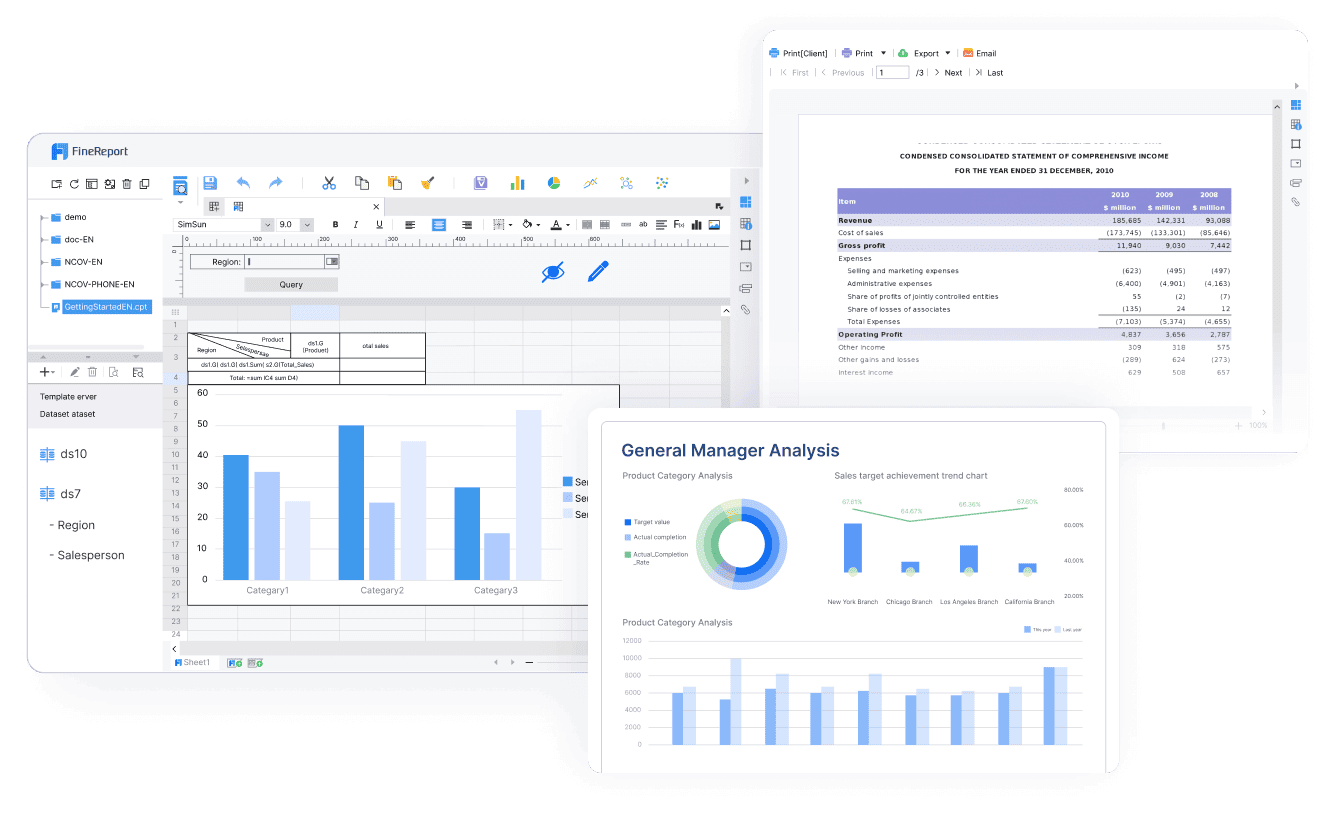
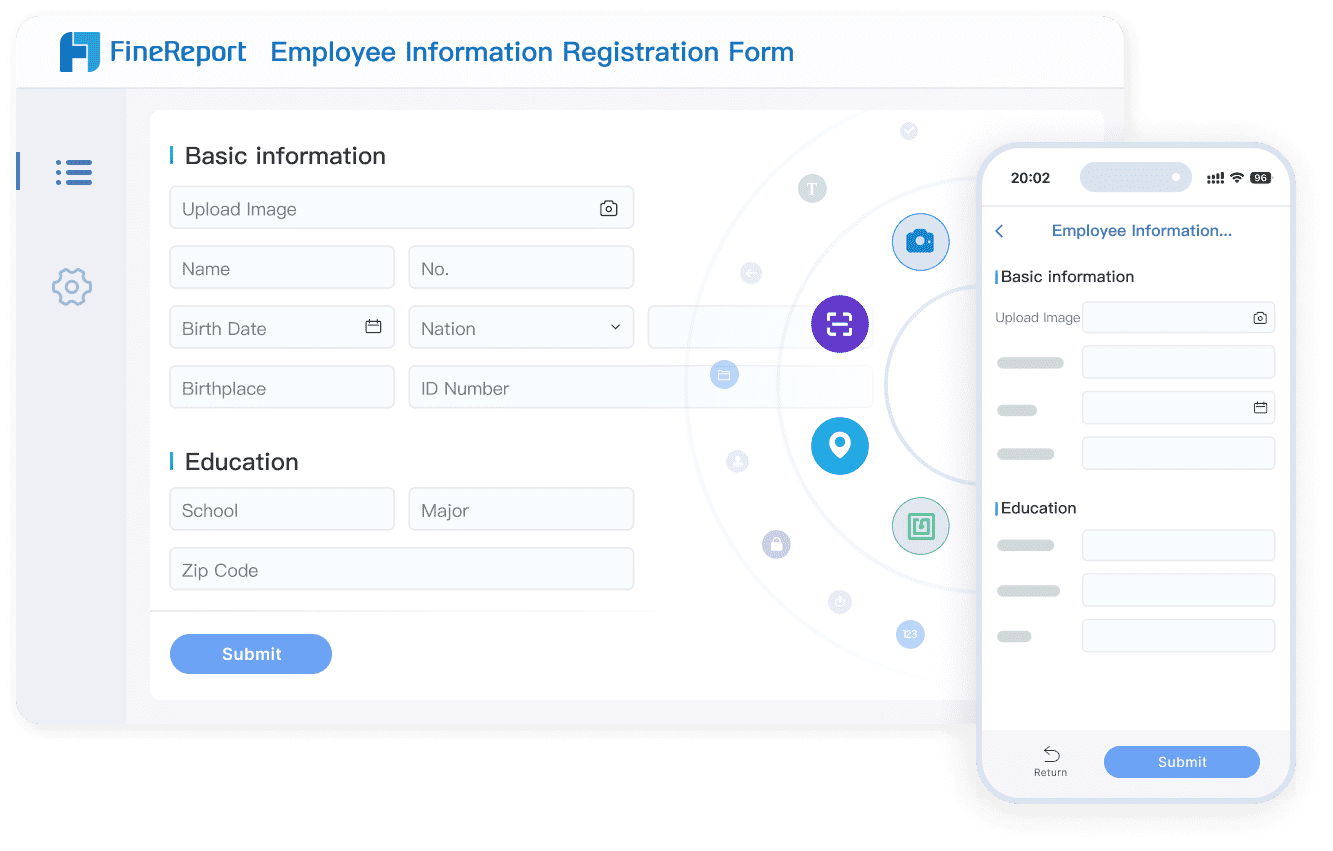
You need to connect data from many sources to tell your full story. FineReport by FanRuan helps you merge information, spot trends, and share real-time insights. This approach makes your business more open and prepares you to meet rising expectations.
What Is Integrated Reporting
Definition and Core Principles
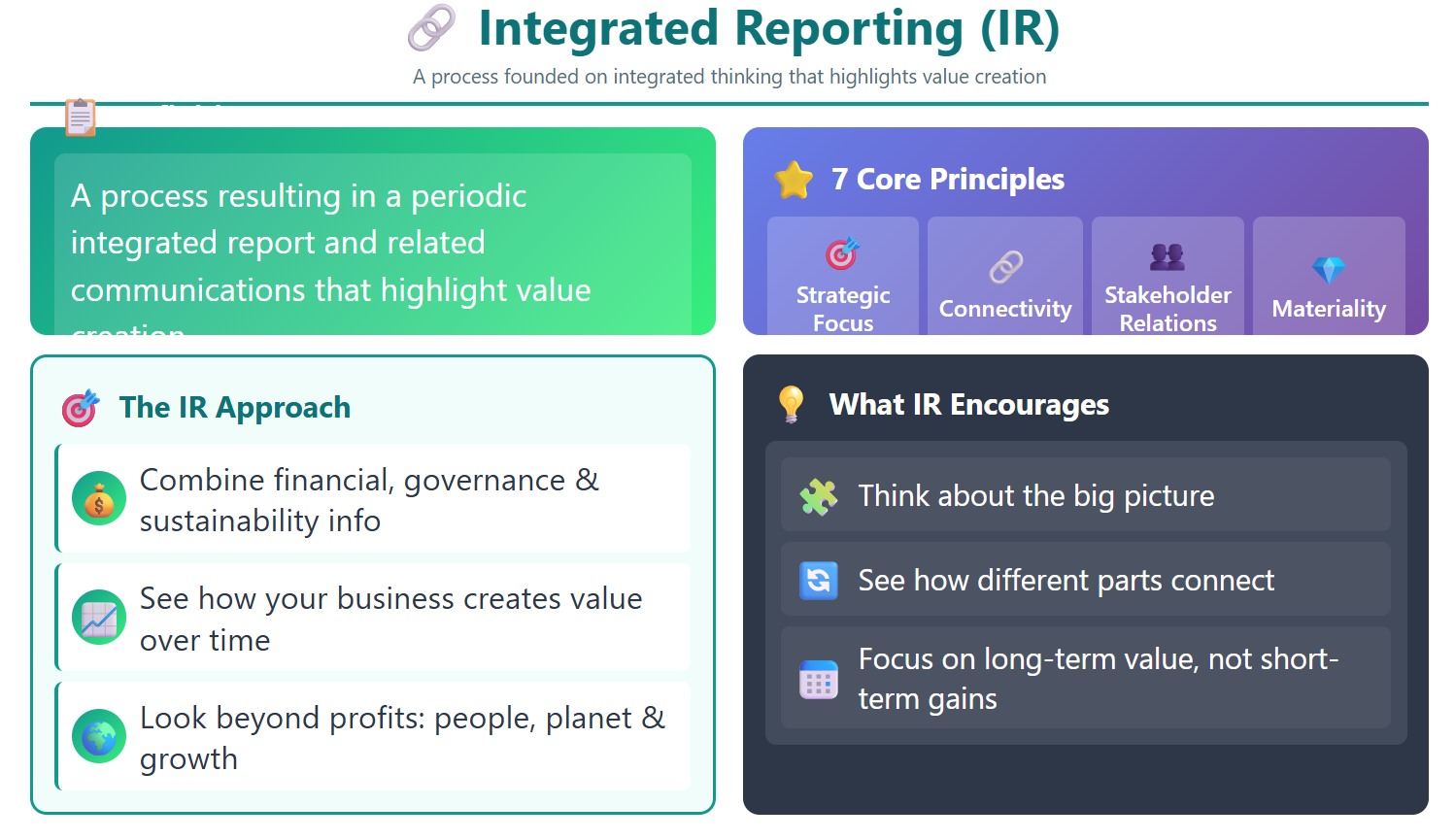
Integrated reporting (IR) is defined as a process, founded on integrated thinking, which results in a periodic integrated report, and related communications that highlight value creation.
When you use integrated reporting, you combine financial, governance, and sustainability information into one clear story. This approach helps you see how your business creates value over time. You do not just focus on profits. You also look at how your company affects people, the planet, and long-term growth.
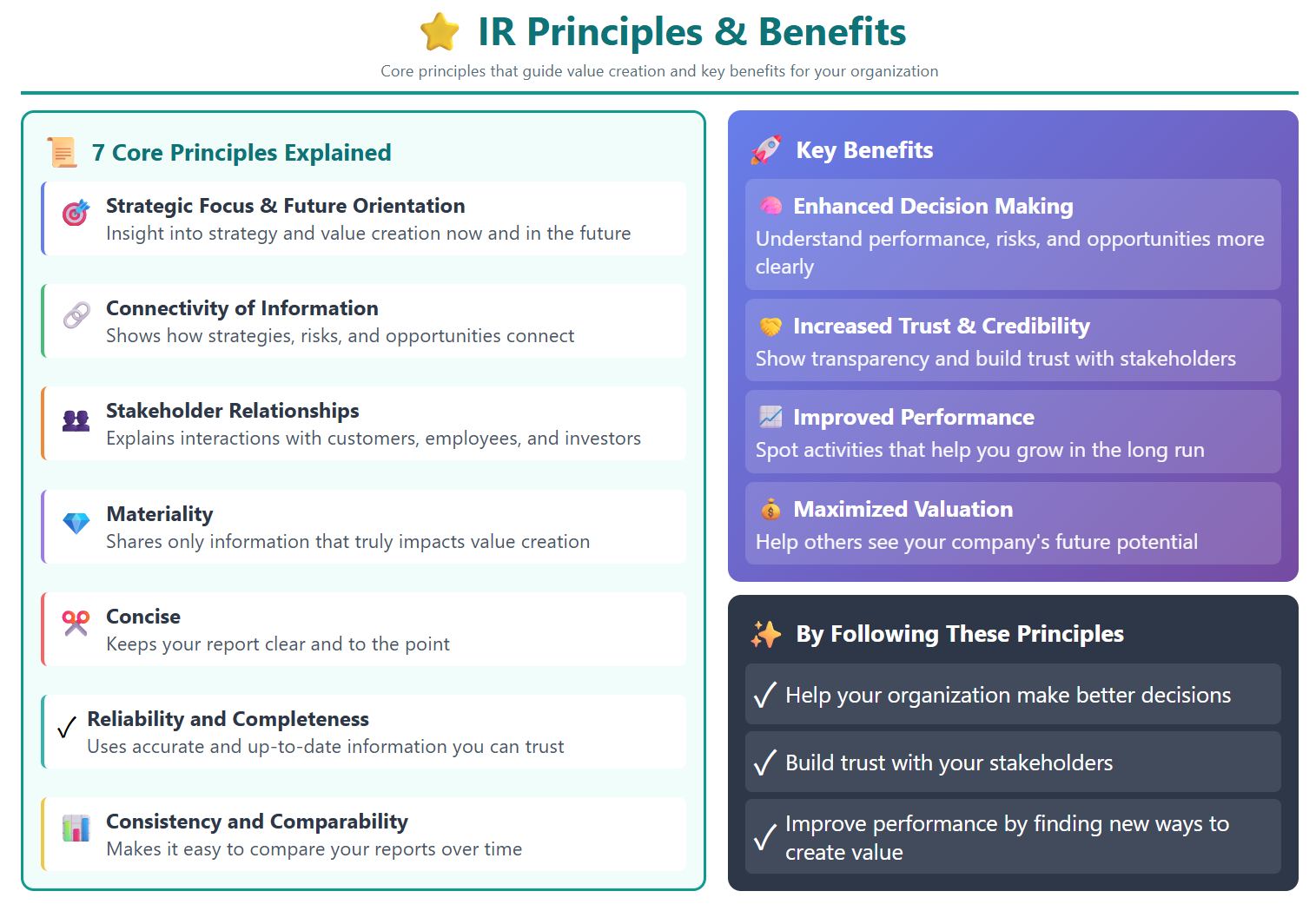
Integrated reporting stands on several core principles. These principles guide you to share information that matters most for value creation and decision-making. Here is a table that explains each principle:
Principle
Description
Strategic focus and future orientation
Gives insight into your business strategy and how you plan to create value now and in the future.
Connectivity of information
Shows how your strategies, risks, and opportunities connect across your business.
Stakeholder relationships
Explains how you interact with people who matter to your business, like customers, employees, and investors.
Materiality
Shares only the information that truly impacts your ability to create value.
Concise
Keeps your report clear and to the point.
Reliability and completeness
Uses accurate and up-to-date information that you can trust.
Consistency and comparability
Makes it easy to compare your reports over time.
When you follow these principles, you help your organization make better decisions. You build trust with your stakeholders. You also improve your performance by finding new ways to create value. Some benefits include:
Enhanced decision making: You understand your performance, risks, and opportunities more clearly.
Increased trust and credibility: You show transparency, which builds trust with others.
Improved performance: You spot activities that can help you grow in the long run.
Maximized valuation: You help others see your company’s future potential.
Integrated reporting encourages you to think about the big picture. You look at how different parts of your business connect. You also focus on long-term value creation, not just short-term gains.
How It Differs from Traditional Reporting
Integrated reporting is not the same as traditional financial reporting. Traditional reports focus mostly on numbers and past performance. They often leave out important details about your company’s impact on society and the environment.
Here is a table that shows the main differences:
Aspect
Integrated Reporting
Traditional Financial Reporting
Scope
Broader, includes financial and non-financial information
Narrow, focuses mainly on financial performance
Content
Focuses on value creation over time
Focuses on financial statements and disclosures
ESG Factors
Includes environmental, social, and governance factors
Usually excludes ESG factors unless financially relevant
Reporting Standards
Flexible, adapts to stakeholder needs
Follows strict standards like GAAP or IFRS
Purpose
Looks at all risks and opportunities
Looks at past financial results
When you use integrated reporting, you include both financial and non-financial data. This gives you a fuller picture of your business. Studies show that adding non-financial information helps markets work better. It can improve how analysts predict earnings and how well your company controls its operations. The effect is even stronger if your company gets a lot of media attention.
Many people think sustainability reporting is only about the environment. In reality, it covers social and governance issues too. Some believe it is cheap and easy, but it often requires time and resources. Others think one annual report is enough. In fact, you need ongoing reporting to track progress and meet rules.
Integrated reporting helps you connect all the dots. You see how your actions today shape your future. You also show others how your business creates value for everyone involved.
Value Creation and the Six Capitals
The Value Creation Process
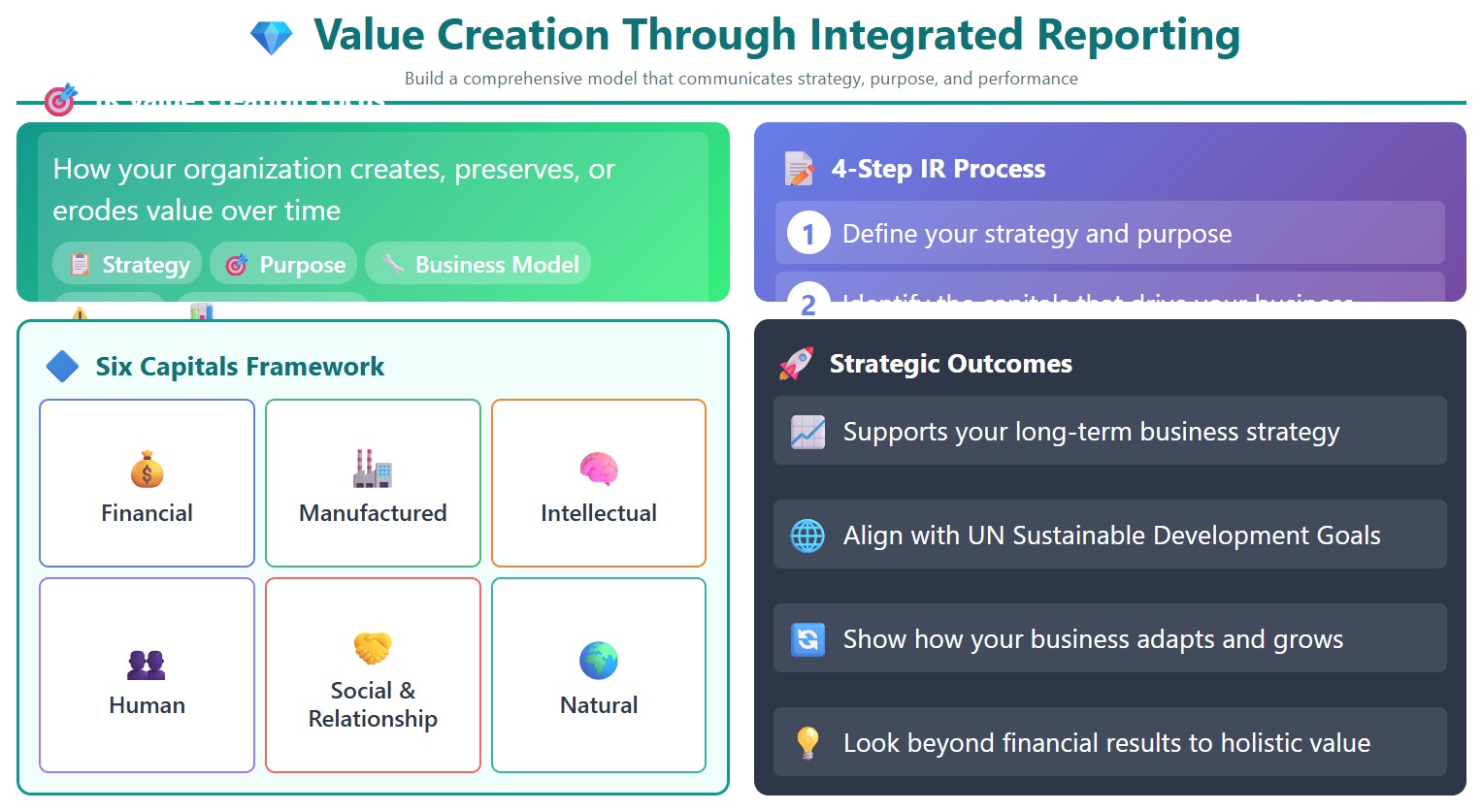
When you use integrated reporting, you focus on how your organization creates, preserves, or erodes value over time. You do not rely on a single measurement. Instead, you build a value creation model that acts as a blueprint. This model helps you communicate your strategy, purpose, business model, risks, and performance. You decide what matters most for your business and your stakeholders.
Integrated reporting encourages you to look beyond financial results. You measure the quality of your disclosures by showing how well you integrate the six capitals into your reports. Many organizations use a custom index to track how much they include each capital in their disclosures.
Here is a simple process you can follow:
Define your strategy and purpose.
Identify the capitals that drive your business.
Connect your activities to each capital.
Share how you create value for the short, medium, and long term.
This process supports your long-term business strategy. You can align your goals with broader standards, such as the United Nations Sustainable Development Goals. You also show how your business adapts and grows over time.
Understanding the Six Capitals
The six capitals give you a complete framework for understanding how your organization generates value. Each capital plays a unique role in your success.
Capital Type
Description
Financial
Monetary resources available to your organization.
Manufactured
Physical objects or infrastructure used to produce goods or services.
Intellectual
Knowledge, intellectual property, and innovations that contribute to growth.
Human
Skills, knowledge, and experience of your workforce.
Social
Relationships and networks that enhance your ability to create value.
Natural
Natural resources and ecosystems your organization relies on for operations.
You need to consider all six capitals, not just financial ones, to achieve sustainable success. When you integrate these capitals into your long-term business strategy, you support sustainable growth and improve decision-making. Studies show that integrated reporting helps you track progress on global goals and resolve trade-offs. You can monitor your impact and adjust your strategy to create lasting value.
Benefits of Integrated Reporting for Businesses
Enhancing Transparency and Trust
You want your business to be open and honest. Integrated reporting helps you achieve this by showing how your company deals with social, environmental, and economic issues. When you share both financial and non-financial information, you build stronger trust with your stakeholders. Investors can see how you plan for the future and how you manage risks. This level of transparency gives them confidence in your business.
Integrated reporting increases transparency about your company’s actions.
You foster trust with stakeholders by aligning financial data with non-financial metrics.
Investors get the information they need to judge your future profitability and sustainability.
FineReport by FanRuan makes this process easier. You can connect data from many sources and visualize it in real time. This helps you share accurate information and keep everyone informed. When you use FineReport, you show your commitment to transparency and accountability.
Improving Decision-Making with FineReport
You need to make smart choices for your business. Integrated reporting gives you deeper insights by combining financial and non-financial value drivers. You see which activities help you create value. This approach supports effective decision-making and helps you align your strategies with stakeholder expectations.
Integrated reporting provides management with insights into value creation.
You rebuild trust with investors and stakeholders by sharing clear information.
Principles-based guidance helps you understand the impact of your decisions.
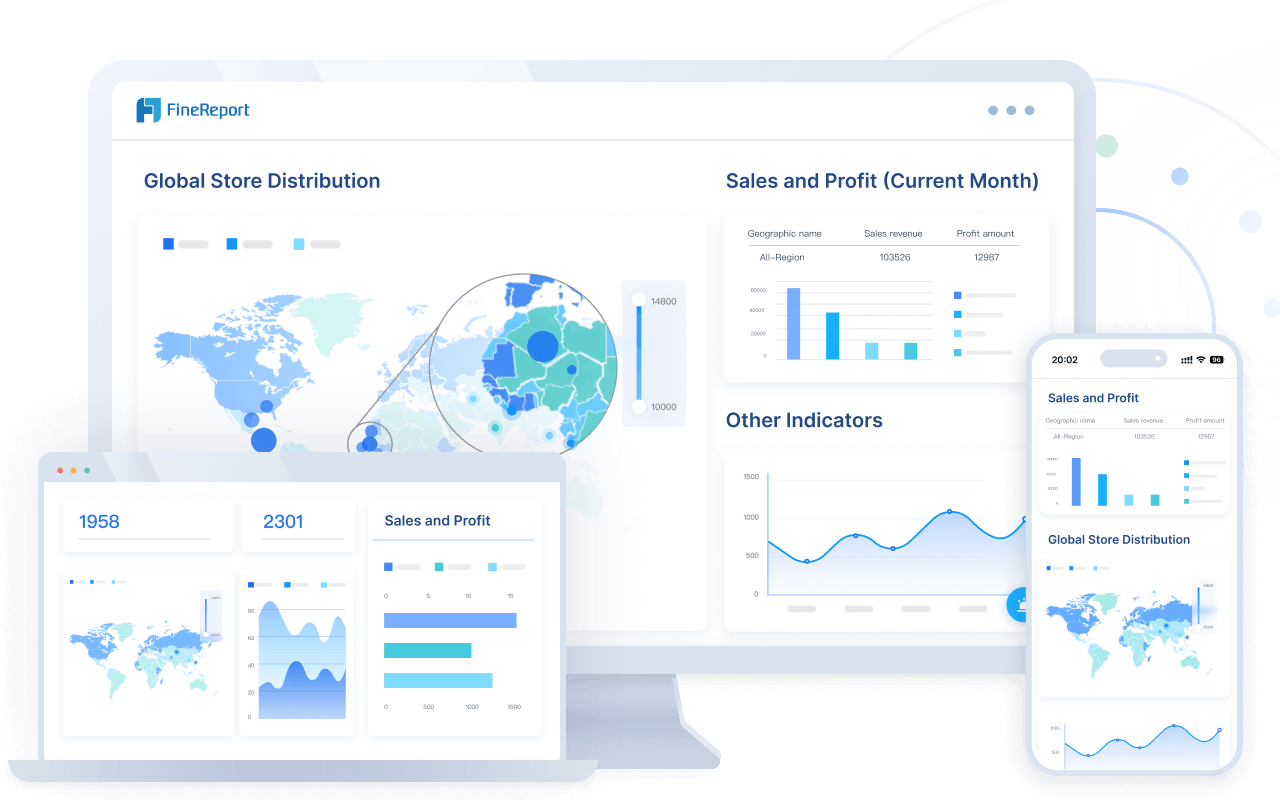
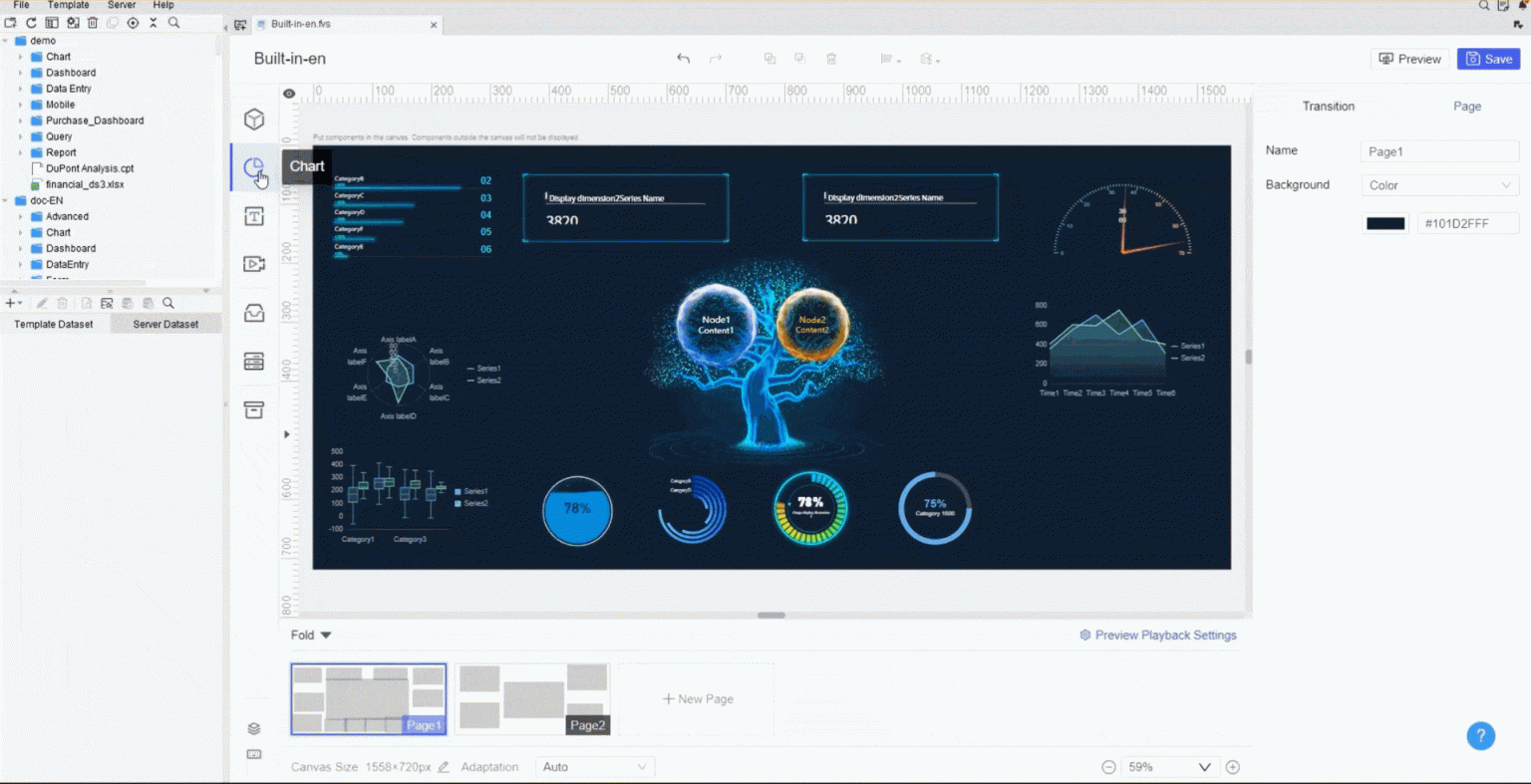
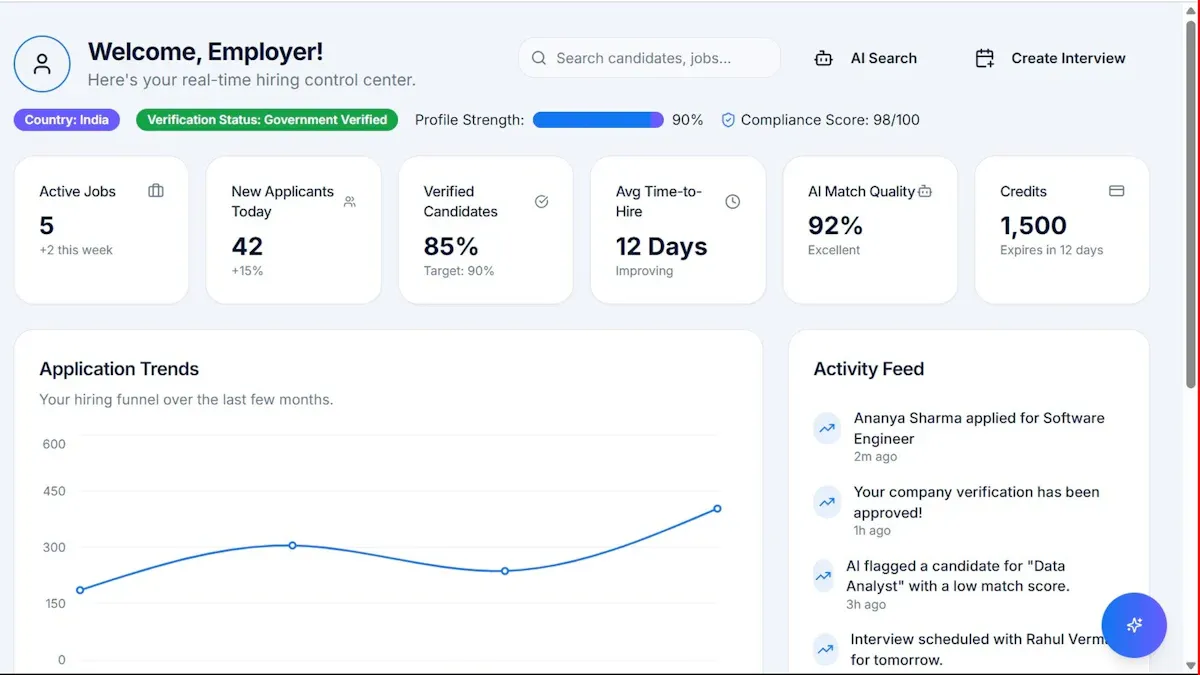
FineReport supports you in this process. You can integrate data from different departments and systems. The platform offers dashboards and analytics that help you track key performance indicators. You get a clear view of your business, which supports strategic decision-making. You can respond quickly to changes and make informed choices.
In manufacturing, esg and sustainability reporting are becoming global standards. You need to meet compliance requirements and respond to investor demands for transparency. FineReport enables you to align financial and non-financial data, making it easier to report on esg metrics. You gain a competitive edge by embedding esg into your reporting and decision-making processes.
You want to engage with your stakeholders and understand their needs. Integrated reporting encourages you to share how you create value in a broader sense. This leads to better stakeholder engagement and stronger relationships.
Evidence
Description
Improved stakeholder relationships
Integrated reporting encourages companies to report on value creation, leading to better engagement with stakeholders.
Understanding stakeholder needs
An integrated report provides insights into relationships with key stakeholders, showing how you respond to their interests.
Insight into stakeholder relationships
Integrated reporting reveals how you address the legitimate needs of stakeholders, fostering stronger relationships.
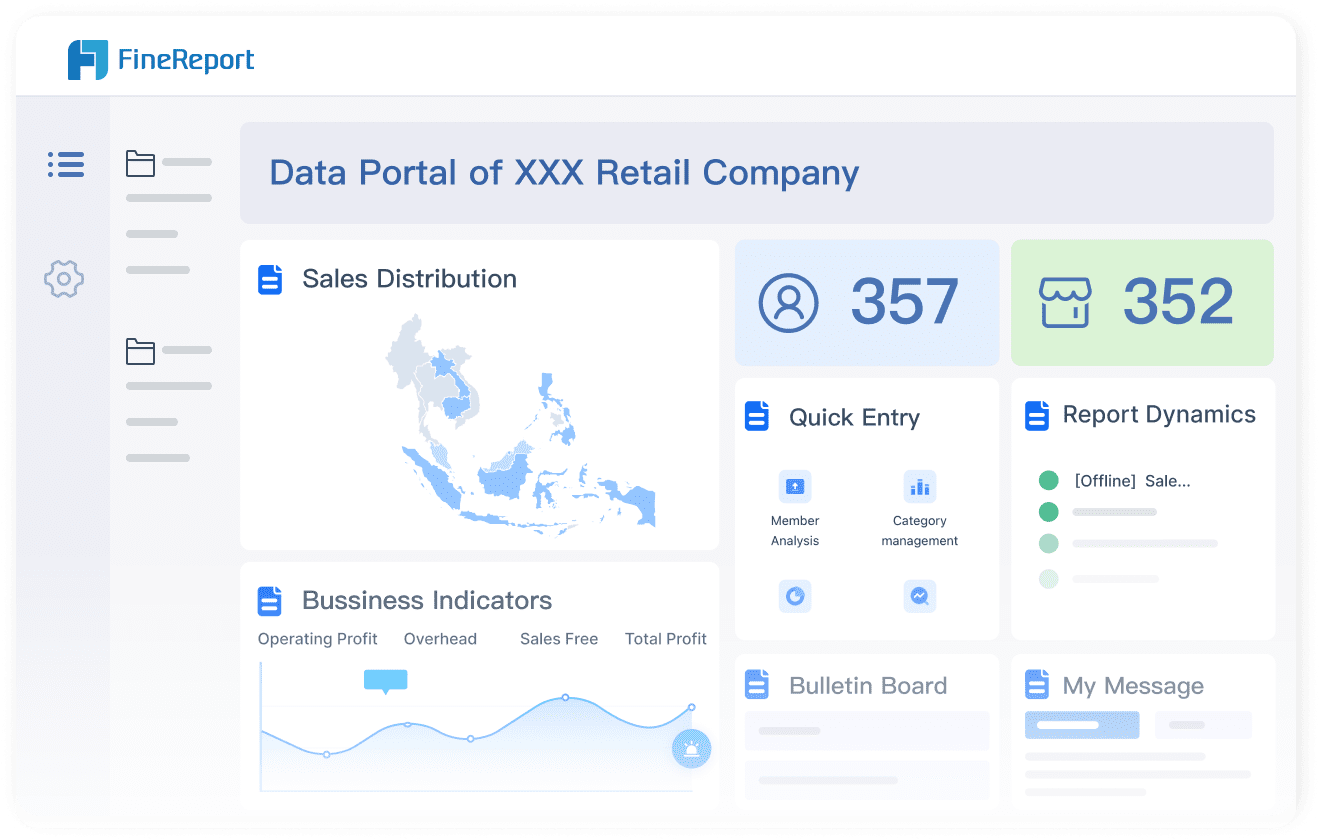
FineReport helps you communicate with stakeholders by providing clear and accessible reports. You can customize dashboards for different audiences, such as investors, employees, and regulators. This supports stakeholder engagement and helps you build trust.
In manufacturing, esg and sustainability reporting play a key role in stakeholder relationships. You need to show how you manage energy, carbon emissions, and social impacts. FineReport enables you to track esg metrics and share progress with stakeholders. You can demonstrate your commitment to corporate sustainability reporting and meet global standards.
Integrated reporting combines financial performance metrics with sustainability disclosures. You link sustainability risks directly to financial outcomes. This approach gives stakeholders a clearer view of long-term value creation and resilience. In manufacturing, you need to integrate esg into your strategy and reporting. FineReport supports cross-departmental collaboration and helps you achieve your sustainability goals.
Key benefits of integrated reporting for businesses:
Support for corporate sustainability reporting and long-term growth
FineReport by FanRuan empowers you to integrate data, visualize key metrics, and share insights in real time. You can meet the demands of esg and sustainability reporting, especially in manufacturing. You build trust, make better decisions, and create lasting value for your stakeholders.
You can begin your integrated reporting journey by following a clear set of steps. First, prepare your system by checking server configuration and making sure your software versions match. Next, copy necessary JAR packages and plugins, then maintain your configuration files. You may choose to save folders like embed, logs, and resources for future use. When you integrate FineReport with FineBI, you create a unified platform. This allows you to manage permissions and access reports easily, which improves decision-making across your organization.
Tip: Start with a small pilot project to test your setup and build confidence before scaling up.
Best Practices and Challenges
You will face some common challenges when adopting integrated reporting. Data silos can slow down your progress. Skills gaps may make it hard to analyze complex data. Leadership support is essential for success. The table below shows how you can overcome these challenges:
Challenge
Description
Solution
Data Silos
Separate data sources hinder productivity and decision-making.
Consolidate data for a single source of truth.
Skills Gap
Lack of expertise in analyzing complex data.
Partner with experts to enhance skills.
Leadership Support
Insufficient backing from leadership.
Show benefits to secure leadership buy-in.
FineReport offers features that help you succeed. You can integrate data from ERP, OA, and MES systems, breaking down information barriers. The dashboard creation tools use drag-and-drop, so you can customize visual elements without coding. Reporting automation keeps your data updated in real time, making sure you always have the latest information. You also get advanced dashboard creation, multi-dimensional report design, and enterprise-grade analysis with AI charting.
DAS Corporation, a global automotive seat manufacturer, improved its integrated reporting by using FineReport. The company enhanced audit quality and created efficiencies at every step. DAS streamlined processes, reduced errors, and attracted new talent by using innovative technology. The transition allowed DAS to manage data from 12 branches in real time, improving decision-making and operational efficiency. You can learn from DAS’s experience and apply similar strategies to your own organization.
Note: When you use integrated reporting with FanRuan, you build a foundation for transparency, efficiency, and growth.
You can drive transparency, value creation, and sustainable growth with integrated reporting. The table below shows how this approach benefits your organization:
Evidence
Explanation
Combines financial and non-financial information
Delivers value-relevant insights and boosts transparency.
Readable, optimistic reports
Increase market value and stakeholder trust.
Stronger impact in stakeholder-oriented environments
Supports sustainable growth where transparency matters most.
FineReport by FanRuan gives you a central hub for data and interactive dashboards. You gain enhanced investor confidence, better risk management, and a stronger reputation. Explore integrated reporting to stay ahead and maximize your strategic advantage.
Access a wealth of case studies, industry insights, and solution guides to accelerate digital transformation.
FAQ
What is integrated reporting?
Integrated reporting combines financial and non-financial data into one report. You get a complete view of your organization’s performance, including sustainability and social impact.
How does FineReport support integrated reporting?
FineReport helps you connect data from multiple sources. You can create dynamic dashboards and reports. The platform makes it easy to visualize and share insights in real time.
Why should you use integrated reporting in manufacturing?
You can track ESG metrics, energy use, and carbon emissions. Integrated reporting helps you meet global standards and improve transparency with stakeholders.
Can you access FineReport reports on mobile devices?
Yes, you can view and interact with reports on smartphones and tablets. FineReport offers mobile-friendly layouts and dashboards for easy access anywhere.