
Data management consulting helps businesses assess, organize, integrate, govern, and improve the data they use for reporting, analytics, operations, and AI. It is useful when data is scattered across ERP, CRM, databases, spreadsheets, and SaaS applications, or when teams cannot agree on trusted metrics.
For many companies, the goal is not just to create a data strategy document. The real goal is to turn that strategy into reliable data pipelines, governed definitions, and reusable data assets. This is where a data integration platform such as FineDataLink can support consulting projects and make the results operational.
What Is Data Management Consulting?
You might wonder what data management consulting actually means. Data management consulting helps you organize, protect, and use your data in smarter ways. When you work with a data management consultancy, you get expert advice on how to collect, store, and share your data. Consultants guide you through every step, from assessing your current data landscape to designing solutions that fit your business needs.
Here’s a quick look at the main components and processes involved in data management consulting:
| Component/Process | Description |
|---|---|
| Implementation | Solution design, technical architecture, system configuration, and testing. |
| Optimization | Performance and efficiency improvements using monitoring frameworks. |
| Training | Role-specific education to build technical skills and organizational capabilities. |
| Governance | Policies and structures for accountability and compliance. |
| Data Architecture | Blueprint for organizing and integrating information sources. |
| Data Management | Data collection, organization, protection, storage, and sharing for effective handling. |
Consultants help you build a strong foundation for data management. You get support with implementation, optimization, training, governance, and architecture. This approach ensures your data is accurate, secure, and ready for analysis.
Why Data Management Matters
Data management matters because your business relies on data every day. If your data is scattered or inconsistent, you face challenges making decisions and staying competitive. Good data management gives you a single source of truth. You can trust your data and use it to drive growth.
Let’s break down why data management consulting is important:
- You gain control over your data. No more guessing where information lives.
- You improve data quality. Clean, organized data leads to better insights.
- You boost efficiency. Automated processes save time and reduce errors.
- You stay compliant. Strong governance keeps your data safe and meets regulatory standards.
- You empower your team. Training helps everyone use data management tools confidently.
Data management consulting guides you through these steps. You start with a data assessment and discovery. Next, you build a governance strategy. You integrate and centralize your data. You choose the right technology. You get training and ongoing support. Solutions can be customized for your industry, so you see results faster.
When you invest in data management, you unlock the full potential of your business. You make smarter decisions, respond quickly to changes, and set yourself up for long-term success.
What Do Data Management Consultants Do?
Data management consultants perform a mix of assessment, design, implementation, and enablement activities. Their work typically spans:
- Current-state assessment. Inventory data sources, map existing integrations, profile data quality, and interview stakeholders to understand pain points and priorities.
- Gap analysis. Compare current capabilities against target state requirements for reporting, analytics, AI readiness, or regulatory compliance.
- Architecture and solution design. Define target data architecture, integration patterns, governance models, and technology selection criteria.
- Implementation support. Build or configure data pipelines, quality rules, metadata catalogs, and access controls. Validate outputs against business requirements.
- Change management and training. Transfer knowledge to internal teams. Document processes. Establish ongoing maintenance and governance routines.
- Vendor and tool evaluation. Assess platforms against functional, technical, and organizational fit. Support procurement and proof-of-concept testing.
Consultants do not replace internal teams. They accelerate outcomes by providing focused expertise and bandwidth during critical phases, then transition ownership to sustainable internal operations.
Common Data Management Consulting Services
Not every engagement covers all services. Most firms specialize in subsets aligned to client maturity and urgency.
| Service | What It Solves | Typical Output |
| Data assessment | Unclear where data problems originate; no baseline for improvement | Data audit report, gap analysis, prioritized issue backlog |
| Data integration | ERP, CRM, Excel, APIs, and SaaS data scattered across silos | Integrated data pipelines connecting heterogeneous sources |
| Data governance | Inconsistent metric definitions, unclear ownership, unmanaged access permissions | Governance rules, RACI matrix, documented ownership and approval workflows |
| Data quality management | Duplicate, missing, incorrect, or inconsistent records eroding trust | Validation rules, cleansing workflows, quality monitoring dashboards |
| Master/reference data management | Customer, product, supplier, and region codes defined differently per system | Standardized business dimensions synchronized across all consuming systems |
| Data warehouse design | Slow reports, tangled models, metrics that cannot be reused across teams | Clean analytics data layer with documented dimensional models |
| AI-ready data foundation | AI analysis produces unreliable outputs due to ungoverned or inconsistent inputs | Governed, validated datasets ready for Dora and other AI agent consumption |
Organizations often combine 2–3 services in a single engagement (e.g., governance + integration + quality) rather than purchasing them in isolation. Bundled engagements produce more coherent outcomes because data management disciplines are interdependent.
Data Management Consulting Process
Effective engagements follow a structured methodology rather than ad-hoc discovery. A typical process includes five phases:
Phase 1: Discovery and Assessment
Stakeholder interviews, data source inventory, integration mapping, data quality profiling, and pain-point prioritization. Output: current-state report with ranked opportunity list.
Phase 2: Strategy and Design
Target-state architecture, governance model, integration pattern selection, tool evaluation, and phased implementation roadmap. Output: approved strategy document with business case and milestone plan.
Phase 3: Implementation and Validation
Pipeline development, quality rule deployment, governance workflow configuration, dashboard/report delivery, and user acceptance testing. Output: operational data assets validated against business requirements.
Phase 4: Enablement and Transition
Role-based training, documentation, runbook creation, support handover, and success metric baseline establishment. Output: internal team readiness to operate independently.
Phase 5: Optimization and Governance Sustainment (Ongoing)
Periodic reviews, performance tuning, governance maturity assessments, and roadmap updates. Output: continuous improvement cycle embedded in operations.
Timeline varies significantly based on scope, data complexity, organizational readiness, and change velocity. Phased delivery with early wins maintains stakeholder alignment better than big-bang approaches.
Data Management Consultant vs Data Management Platform
A common question is whether to hire consultants, buy a platform, or both. The answer depends on the nature of the gap.
| Dimension | Data Management Consultant | Data Management Platform |
| Best for | Diagnosis, strategy, organizational change, complex design, temporary expertise gap | Repeatable execution, automation, scaling, ongoing operations |
| Time horizon | Project-based (weeks to months) | Continuous (years) |
| Cost model | Professional services fees (time & materials or fixed price) | Software licensing / subscription |
| Ownership transfer | Must be explicitly planned; risk of dependency if not | Inherent; platform operates under internal team control |
| Handles organizational resistance | Yes; change management is core consulting competency | No; tools cannot resolve cultural or political barriers |
| Executes at scale post-design | Limited; consultants advise but rarely operate long-term | Designed for sustained, automated execution |
| Risk if used alone | Strategy without operationalization; shelf-ware deliverables | Automation without direction; efficient but misaligned pipelines |
You may need data management consulting when:
- Different departments report different numbers for the same metric.
- Business users rely on manual Excel exports.
- ERP, CRM, finance, sales, and operation systems are not connected.
- Dashboards are slow, inconsistent, or hard to maintain.
- Data quality problems block BI, reporting, or AI projects.
- Your team wants to introduce AI analytics but lacks governed data.
How FineDataLink Supports Data Management Projects
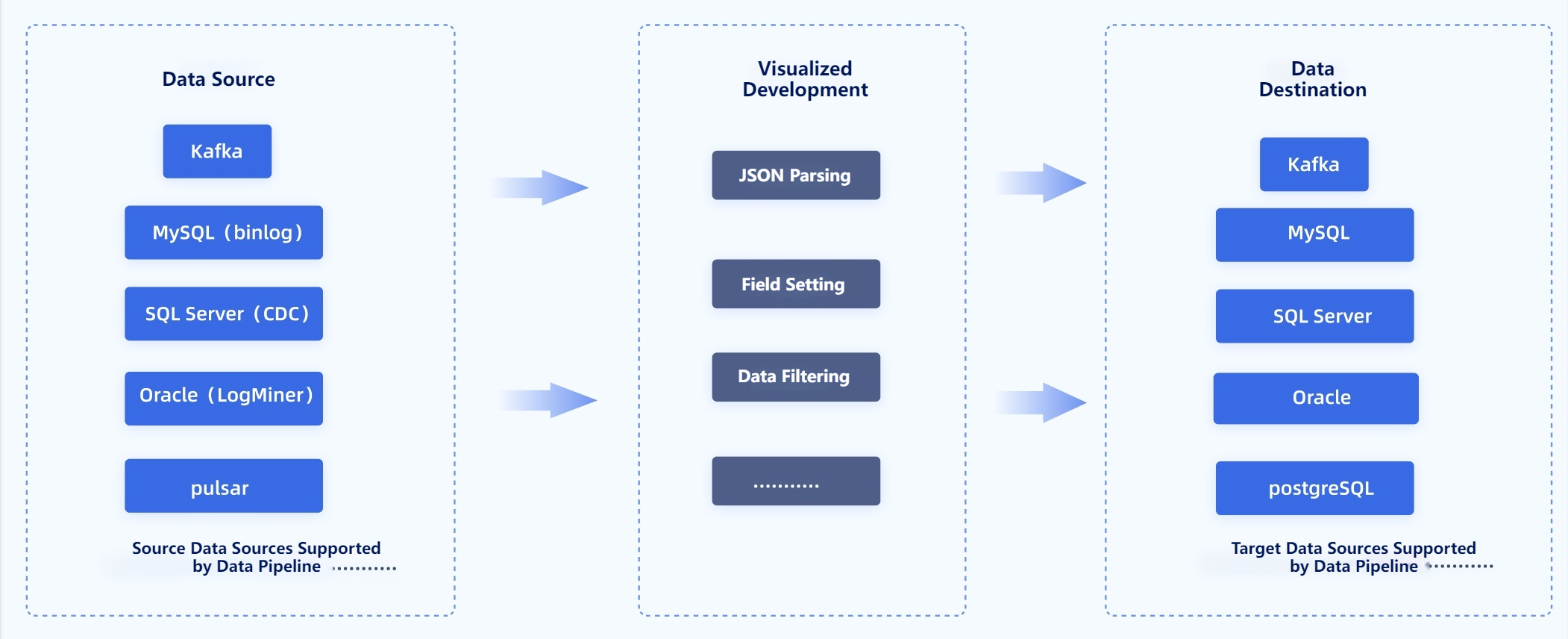
FineDataLink helps turn data management consulting recommendations into repeatable workflows. Instead of leaving the result as a strategy document, teams can use FineDataLink to connect ERP, CRM, databases, APIs, spreadsheets, and SaaS applications, then synchronize, transform, and deliver trusted data to downstream warehouses, BI dashboards, reports, and AI systems.
This makes FineDataLink especially useful for:
- Data integration projects. Visual ETL/ELT pipeline builder with multi-source connectivity reduces custom coding and accelerates delivery of consulting-designed integration architectures.
- Data quality improvement. Built-in profiling, validation rules, and anomaly detection embed quality checks directly into pipelines, operationalizing consultant-defined standards.
- Real-time synchronization. CDC-based incremental sync and scheduled refresh match data freshness to business requirements identified during assessment.
- API and SaaS integration. Native connectors abstract API complexity, pagination, and authentication—common pain points in consulting-led integration projects.
- AI-ready data foundations. Governed pipelines prepare consistent, validated datasets that downstream AI agents and analytics platforms can trust.
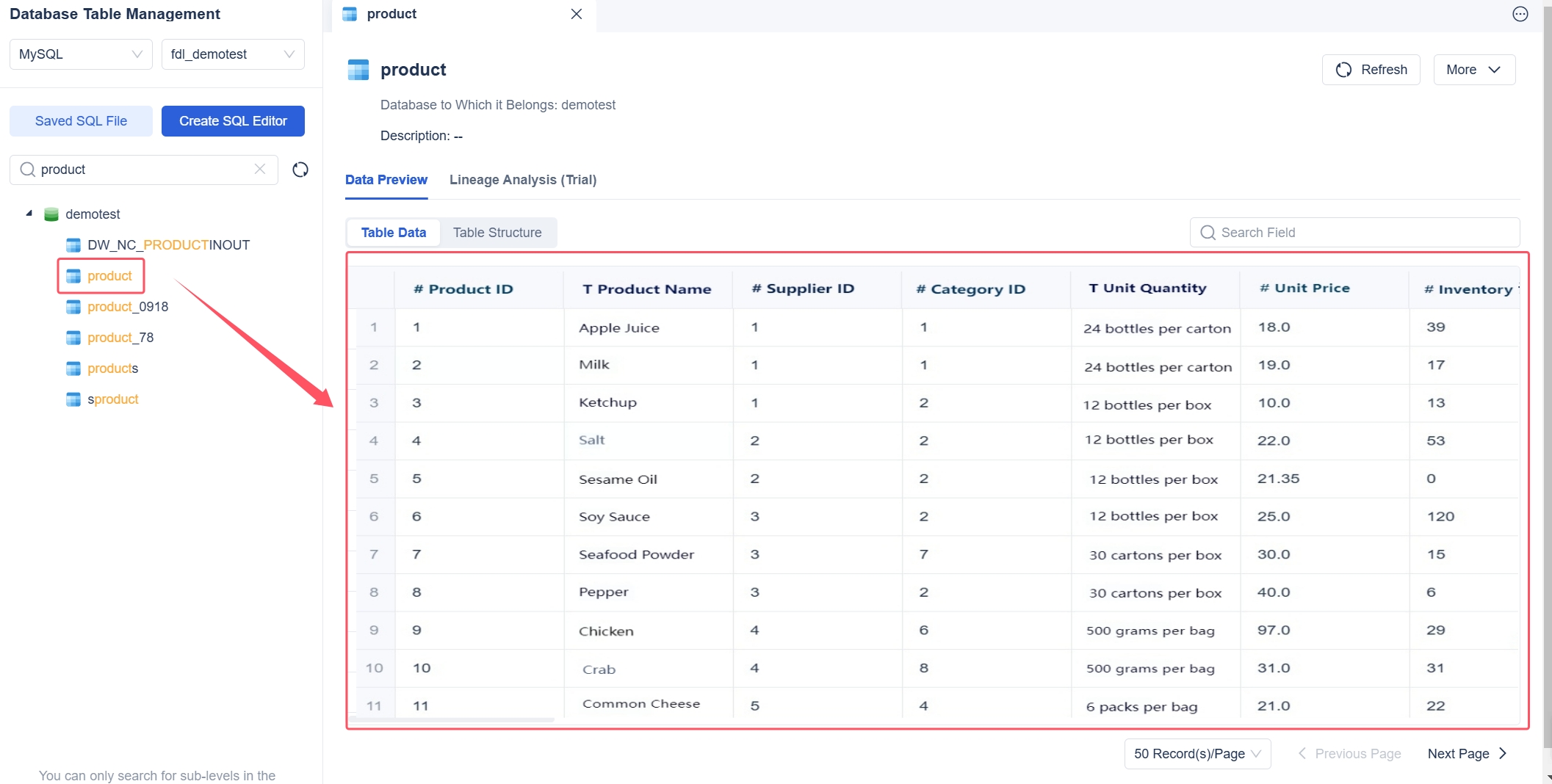
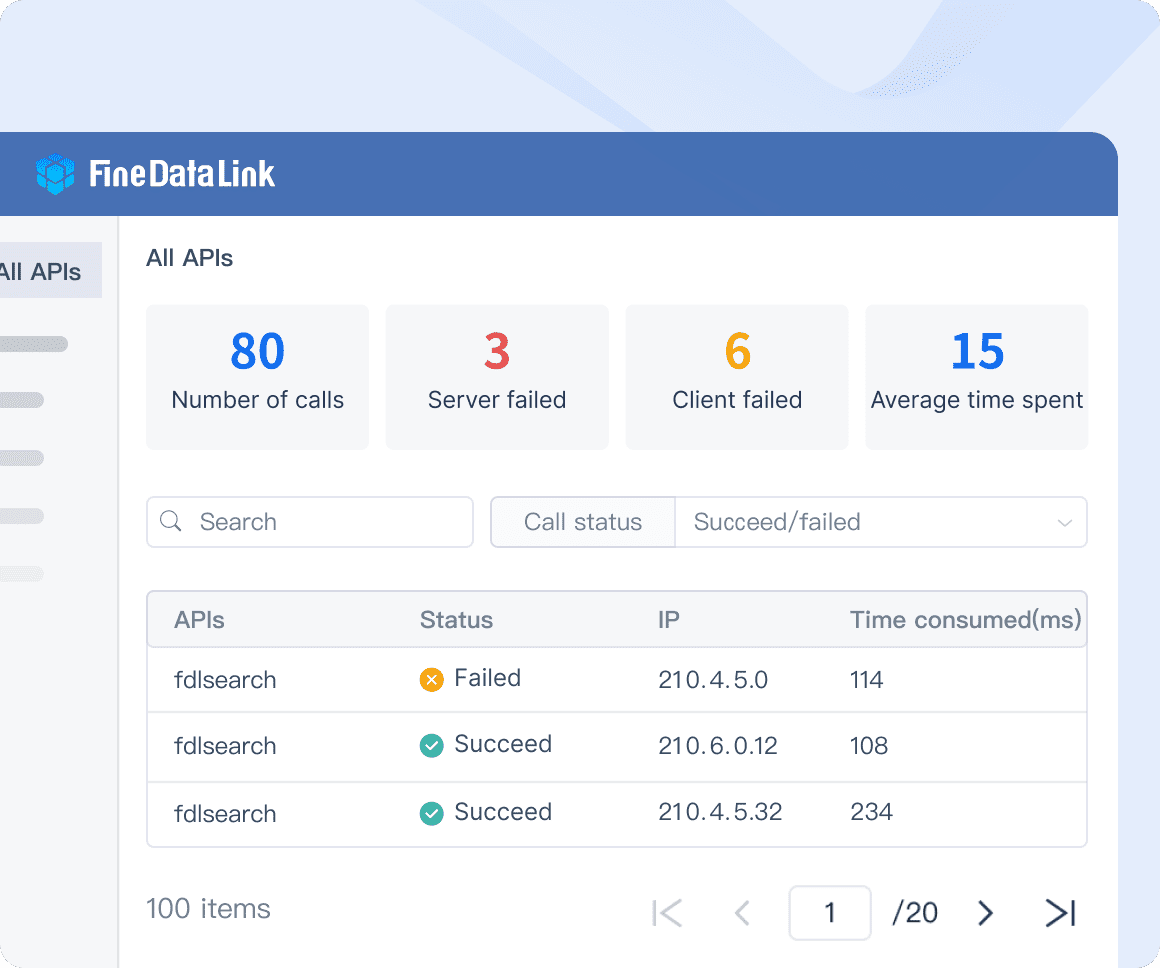
Consulting engagements define what needs to happen. FineDataLink provides the how—turning recommendations into automated, monitored, maintainable data workflows that persist after the consulting team departs.
Explore FineDataLink for data management and integration projects →
From Data Management to AI Data Agent
Once data sources, business definitions, permissions, and data quality rules are standardized, Dora can work as an AI Data Agent on top of trusted enterprise data. Business users can ask questions in natural language, generate summaries, monitor anomalies, and receive follow-up insights without relying on inconsistent spreadsheet exports.
In this workflow, FineDataLink prepares and connects the data foundation, while Dora helps business teams use that trusted data through AI-assisted analysis. Without the foundational work—whether delivered through consulting, internal teams, or both—AI agents operate on fragmented or unreliable inputs, producing confident-sounding but inconsistent outputs.
Data management consulting identifies the gaps. FineDataLink closes them operationally. Dora amplifies the value of closed gaps for business users.
Continue Reading About Data Management Consulting
Mastering Data Integration Engineering: A Comprehensive Guide
Understanding Data Integration Architecture Basics
Understanding Data Integration Techniques and Their Applications
2025 Best Data Integration Solutions and Selection Guide
Best Data Integration Platforms to Use in 2025
Frequently asked questions
Data management consulting is a professional service that helps organizations assess, design, and implement improvements to how they collect, store, integrate, govern, and use data. Consultants provide expertise in data strategy, governance, quality, integration, architecture, and tool selection. Engagements range from strategic assessments to hands-on implementation, depending on organizational maturity and urgency.