What to look for in financial data management solutions for enterprise reporting and governance
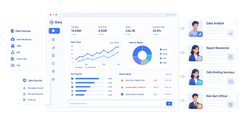
When evaluating financial data management solutions, enterprise buyers should separate two closely related but different goals: producing reliable financial reports and governing the underlying data with consistency, control, and traceability.
Core requirements enterprises should not compromise on
At minimum, a credible platform should support:
Data integration across ERP, CRM, budgeting, consolidation, treasury, and operational systems
Chart of accounts alignment so business units report with a consistent financial structure
Entity hierarchies for subsidiaries, regions, business lines, and legal entities
Audit trails that show who changed what, when, and why
Internal controls for approvals, reconciliation checkpoints, and exception handling
Role-based access to protect sensitive financial and management information
For enterprise finance teams, these are not optional add-ons. They are foundational capabilities that reduce manual work, support audit readiness, and improve confidence in management reporting.
Reporting needs and governance needs are not the same
Many tools are strong in reporting but weaker in governance. Others are excellent at data stewardship but require separate layers for finance-facing reporting.
To shortlist effectively, buyers should distinguish between:
This separation helps buyers avoid a common mistake: choosing a dashboard-friendly tool that cannot sustain enterprise-grade governance, or selecting a governance-heavy platform that slows finance teams down.
Must-have capabilities for global and complex organizations
If your business operates across multiple countries, legal entities, or regulatory frameworks, look for capabilities such as:
The market includes several distinct categories rather than one single software pattern. Some organizations need an integrated finance performance suite; others need a master data hub, a regulated-industry platform, or a reporting-first solution.
Below is a practical shortlisting view.
Solution category
Ideal company size
Deployment model
Key strengths
Limitations
Implementation complexity
Reporting support
Consolidation support
Master data controls
Workflow automation
Governance visibility
Enterprise performance and consolidation platforms
Time to value: How quickly can finance see cleaner reporting or stronger controls?
Scalability: Can the tool support acquisitions, new entities, and greater reporting complexity?
IT dependency: Will finance be able to operate the system, or will every change require technical support?
Total cost of ownership: Include software, services, integrations, governance overhead, and internal maintenance
For many enterprises, FineReport stands out when the priority is reporting speed, dashboard flexibility, and governed distribution across business teams without requiring a full finance transformation program on day one.
8 financial data management solutions compared
1. Enterprise performance and consolidation platforms
This category includes platforms such as Oracle Cloud EPM, SAP Group Reporting, and OneStream.
One-sentence overview: These platforms unify reporting, planning, close, consolidation, and governance workflows in one finance-oriented environment.
Large enterprises with complex legal structures, global close requirements, and a need to connect planning, reporting, and governance
These are often the best fit where finance wants one strategic platform rather than a collection of tools. The tradeoff is implementation effort. Organizations should be prepared for process redesign, data model decisions, and a formal governance operating model.
2. Master data management–focused solutions
This category includes platforms such as Informatica MDM, Profisee, and Semarchy.
One-sentence overview: MDM-focused solutions help enterprises govern master records, hierarchies, reference data, and stewardship rules across systems.
Pros: Strong governance foundation, better cross-domain consistency, policy enforcement across systems
Cons: Often requires separate finance reporting, planning, or consolidation tools
Best For (Target user/scenario)
Enterprises prioritizing data quality, entity consistency, and long-term governance across finance and non-finance domains
These solutions are especially useful when the root problem is fragmented master data rather than weak reporting design. If account, entity, product, or customer definitions differ across systems, no reporting layer will fully fix the issue without stronger master data control.
3. Financial services data management solutions
This category includes industry-oriented platforms from vendors such as Oracle Financial Services and other banking or insurance data specialists.
One-sentence overview: These solutions are designed for highly regulated firms that need defensible data lineage, reconciliation, and compliance-ready reporting processes.
Pros: Stronger compliance alignment, risk-aware governance, better traceability for audits and regulators
Cons: Narrower fit outside regulated financial sectors, more specialized implementation requirements
Best For (Target user/scenario)
Banks, insurers, capital markets firms, and other regulated institutions with strict governance mandates
For these organizations, reporting speed matters, but defensibility matters more. The platform must support reviewability, repeatability, and evidence-backed reporting outputs.
4. Reporting, forecasting, and consolidation specialists
This category includes tools such as Fathom, Fluence, and similar finance-friendly reporting platforms.
One-sentence overview: These tools focus on making financial reporting, dashboards, forecasting, and light consolidation easier for business users.
Pros: Quicker adoption, easier dashboards, lighter administration, faster setup than large enterprise suites
Cons: May be less extensible for complex governance models, limited stewardship depth in very large environments
Best For (Target user/scenario)
Finance teams that need faster reporting cycles and business-user-friendly workflows without a heavy enterprise platform rollout
This category is attractive when organizations want practical gains quickly. If the problem is slow monthly reporting and fragmented Excel-based board packs, these tools can deliver visible improvement fast.
FineReport belongs in this conversation for enterprises that need more than dashboarding but less than a full EPM overhaul. It is particularly effective for building governed financial reports, executive dashboards, drill-down analysis, and automated report distribution across departments.
One-sentence overview:FineReport is a reporting and analytics platform that helps enterprises centralize financial data, build pixel-perfect reports, and improve governance visibility through controlled access and standardized reporting workflows.
This category includes ERP-embedded capabilities from vendors such as SAP, Oracle, Microsoft, and NetSuite.
One-sentence overview: ERP-native tools extend existing transactional systems with reporting, analytics, and finance data workflows closely aligned to core records.
Pros: Simpler integration with core records, lower friction for ERP-centric teams, strong transactional consistency
Cons: Weaker flexibility when data must be unified across many source systems, limited fit for heterogeneous environments
Best For (Target user/scenario)
Organizations with a highly standardized ERP landscape and a preference for staying within one vendor ecosystem
This approach works well when most financial truth already lives in one platform. It is less effective when reporting depends on spreadsheets, acquisitions, legacy applications, or operational data outside the ERP stack.
6. Cloud data platform and analytics combinations
This category includes combinations such as Snowflake or Databricks plus BI and transformation tools.
One-sentence overview: These modern data stack approaches give enterprises a customizable foundation for reporting and governance if they have the technical maturity to operate them.
Pros: High flexibility, advanced modeling potential, strong interoperability, scalable architecture
Cons: Greater technical overhead, more internal ownership, governance outcomes depend heavily on design quality
Best For (Target user/scenario)
Enterprises with mature data teams that want custom reporting and governance frameworks rather than packaged finance software
This model can be powerful, especially when finance reporting must be combined with sales, operations, and customer data. But it requires discipline. Without clear data ownership and semantic governance, enterprises can end up with a modern platform that still produces inconsistent metrics.
7. Midmarket-friendly enterprise options
This category includes tools designed for growing companies that need better discipline without full-scale transformation.
One-sentence overview: These solutions balance reporting improvements, controls, and usability for organizations moving beyond spreadsheets and basic accounting reports.
Pros: Balanced cost, usability, and control gains; faster adoption for lean teams
Cons: May hit limits in highly complex global environments or where governance models are deeply layered
Best For (Target user/scenario)
Upper-midmarket and growing enterprise teams that need structure now but are not ready for a major EPM or MDM program
This category is often the right stepping stone for companies formalizing finance operations after rapid growth, acquisitions, or regional expansion.
8. Point solutions for specific finance workflows
This category includes tools focused on reconciliations, close management, board reporting, or disclosure workflows.
One-sentence overview: Point solutions solve targeted finance bottlenecks quickly but usually need to sit inside a broader reporting and governance architecture.
Key Features
Workflow-specific automation
Task management
Approval routing
Exception tracking
Documented controls
Narrow process analytics
Pros & Cons
Pros: Fast improvements in a narrow area, clear ROI for immediate pain points, lower initial complexity
Cons: Can create tool sprawl if not connected to a broader governance model, limited cross-process visibility
Best For (Target user/scenario)
Teams solving one urgent issue such as close management, reconciliations, disclosure control, or board pack production
Point tools are useful, but enterprises should avoid buying them in isolation. A workflow fix without shared governance standards can add another silo instead of reducing risk.
How to evaluate the best financial data management software for enterprises
A smart evaluation process should test how each option fits your operating model, governance expectations, and resourcing realities.
Match the tool to your operating model
Before comparing feature lists, decide who will own the platform:
Finance-led ownership works best when business users need to maintain reports, mappings, and dashboards directly
IT-led ownership is more common when architecture, integration, and data quality programs are centralized
Shared ownership fits complex enterprises where finance defines policy and IT manages infrastructure
Then map your complexity across:
Number of entities
Currency exposure
Acquisition activity
Regulatory obligations
ERP diversity
Reporting cadence
Board and investor expectations
The best financial data management solutions are not simply the most feature-rich. They are the ones your organization can govern consistently.
Score vendors on governance and reporting fit
Use a scorecard that covers both finance usability and control maturity.
This is where FineReport often compares well. It gives enterprises a practical route to improve financial reporting quality, dashboard consistency, and controlled information sharing without requiring every use case to be rebuilt from scratch.
Estimate implementation effort and long-term value
Do not assess software cost alone. Evaluate the full delivery model:
Deployment time
Services and partner dependency
Internal finance resourcing
Integration effort
Data cleansing requirements
Training and adoption effort
Ongoing administration
Future extensibility
A platform with a slower start may deliver better control at scale. A lighter platform may create faster wins but need supplementation later. The right choice depends on whether your main issue is immediate reporting friction, weak governance foundations, or fragmented enterprise architecture.
Recommended picks by enterprise scenario
Different organizations should prioritize different categories. The best choice depends on complexity, regulation, team structure, and strategic direction.
Best choice for large global enterprises
Recommended category: Enterprise performance and consolidation platforms
Why: These platforms support scale, controls, complex close cycles, and cross-entity governance in demanding reporting environments
Best fit: Multinational groups with multiple ERPs, heavy consolidation needs, and formal governance expectations
If executive reporting, statutory outputs, planning, and close workflows all need to live together, this category usually has the strongest long-term fit.
Best choice for regulated financial institutions
Recommended category: Financial services data management solutions
Why: These tools are built for traceability, policy enforcement, and defensible reporting processes
Best fit: Banking, insurance, lending, and capital markets organizations facing intensive audit and regulatory scrutiny
Here, governance cannot be an afterthought. Controls, reconciliation, lineage, and evidence need to be embedded in the process.
Best choice for fast-moving finance teams
Recommended category: Reporting, forecasting, and consolidation specialists
Why: They reduce reporting friction, support faster adoption, and require lighter administration
Best fit: Finance teams under pressure to shorten reporting cycles, improve dashboard visibility, and reduce spreadsheet dependency
For this scenario, FineReport is a strong option when the organization needs enterprise-grade reporting flexibility with better control, standardized report delivery, and broad internal visibility.
Best choice for building a modern finance software stack
Recommended category: Cloud data platform and analytics combinations, often paired with a dedicated reporting layer like FineReport
Why: This approach supports interoperability with ERP, BI, planning, and broader data platform investments
Best fit: Enterprises with strong data engineering capability and a need for custom financial and operational analytics
In this model, FineReport can serve as the business-facing reporting layer that translates curated financial data into usable dashboards, management packs, and governed reporting outputs.
Final takeaway: how to choose the right solution in 2026
The best financial data management solutions in 2026 are not defined by the longest feature list. They are defined by how well they solve real reporting bottlenecks and governance risks in your operating environment.
Start with these priorities:
Identify your biggest reporting delays and trust gaps
Clarify where governance failures create audit, compliance, or executive decision risk
Shortlist categories based on enterprise fit, not market noise
Check the reality of integration, ownership, and internal skill requirements
Favor phased rollout plans that improve data trust and reporting speed early
For many enterprises, the smartest path is not replacing everything at once. It is building a layered architecture: strong data foundations, clear governance controls, and a reporting platform that business users can actually adopt.
If your immediate need is to improve reporting consistency, dashboard usability, and governed distribution across teams, FineReport is a practical platform to put on the shortlist. It helps enterprises modernize financial reporting while supporting the control and visibility expected in complex organizations.
FAQs
It is a platform that centralizes financial data from multiple systems while adding controls for reporting accuracy, auditability, access, and workflow governance. The goal is to support both finance reporting needs and enterprise data stewardship.
The most important features are data integration, chart of accounts alignment, entity hierarchy management, audit trails, role-based security, approval workflows, and version control. Global organizations should also look for consolidation, intercompany support, and multi-currency handling.
Reporting focuses on producing dashboards, board packs, statutory reports, and management outputs. Governance focuses on controlling the underlying data through lineage, approvals, stewardship, policy enforcement, and segregation of duties.
Large and complex organizations usually need platforms that can handle multi-entity consolidation, local and group reporting alignment, scalable security, and strong governance visibility. The best fit depends on whether your priority is integrated finance workflows, master data control, or reporting speed.
Start by evaluating time to value, scalability, IT dependency, and total cost of ownership. Shortlist tools that match your reporting complexity, governance requirements, and system landscape rather than choosing only for dashboard usability.
Product Trial
FineReport
Pixel-perfect reports · Interactive dashboards · Easy data entry · Digital twins