

Big data analytics solutions are advanced, scalable systems that integrate and process massive, diverse datasets in real time to uncover actionable insights that support smarter business decisions.
Here are the top 10 big data analytics solutions for enterprises:
- FineBI
- Microsoft Power BI
- Tableau
- Qlik Sense
- Google BigQuery
- IBM Cognos Analytics
- SAP BusinessObjects
- Amazon QuickSight
- Oracle Analytics Cloud
- SAS Visual Analytics
You get tools that stand out for scalability, integration, real-time analytics, and self-service BI. Picking the right big data analytics solutions can boost your decision accuracy and speed. Take a look at how recent studies measure the impact on enterprise performance:
| Study | Findings |
|---|---|
| Kampoowale (2025) | Organizations using big data analytics reported significant increases in decision accuracy, responsiveness, and agility in supply chain operations. |
| Sumrit (2025) | Big data analytics capabilities enhance managers’ confidence and decision-making speed, leading to competitive advantage. |
What Are Big Data Analytics Solutions?
Definition and Core Functions
Big data analytics solutions help you make sense of massive amounts of information. These solutions use advanced technology to examine data and uncover patterns, trends, and insights that drive better business decisions. When you use big data analytics solutions, you can bring together data from many sources, process it quickly, and turn it into clear, useful reports or dashboards.
You might wonder what makes big data analytics solutions different from regular data analytics tools. The answer is scale and speed. These solutions handle structured, semi-structured, and unstructured data—often at the petabyte level. They use distributed computing and cloud storage to manage and analyze data in real time. Here’s a quick look at how industry analysts describe big data analytics solutions:
| Aspect | Description |
|---|---|
| Purpose | The process of examining big data to uncover information such as hidden patterns, correlations, market trends, and customer preferences to aid in informed business decisions. |
| Techniques | Involves advanced analytics methods including predictive models, statistical algorithms, and what-if analysis, powered by analytics systems. |
| Data Types | Deals with structured, semi-structured, and unstructured data formats, typically at the petabyte level, managed in distributed computing systems or cloud storage. |
| Tools | Utilizes advanced tools with machine learning and data mining features to analyze data in or near real time. |
Big data analytics solutions offer a range of core functions that help you get the most out of your data:
| Core Function | Description |
|---|---|
| Data integration and unified data management | Integrates diverse data sources to create a single source of truth, ensuring consistency in decision-making. |
| Scalable data storage solutions | Offers flexible storage options like data lakes and data warehouses to accommodate growing data needs. |
| Advanced data processing techniques | Utilizes distributed computing for near real-time analysis of massive datasets, enabling quick decisions. |
| AI-driven data visualization | Transforms complex data into intuitive dashboards, making insights accessible to all stakeholders. |
| Predictive analytics | Forecasts future outcomes by analyzing historical data, aiding in resource allocation and risk assessment. |
| Prescriptive analytics | Suggests optimal actions by simulating various scenarios, providing data-driven recommendations. |
| Sentiment analysis and customer intelligence | Analyzes customer feedback to understand behavior and adapt strategies accordingly. |
Importance for Enterprises
You need big data analytics solutions if you want to stay competitive in today’s fast-moving business world. These solutions help you spot trends, predict outcomes, and make smarter decisions faster than ever before. For example, big data analytics can improve supply chain management, optimize pricing, and even prevent fraud. In healthcare, it helps doctors find new treatment options. In retail, it predicts what customers want next.
Here are some ways big data analytics solutions drive enterprise growth:
- They enhance decision-making by identifying patterns and trends in data, leading to actionable insights.
- In e-commerce, analyzing customer behavior allows for personalized recommendations, which improves customer experience and increases sales.
- Healthcare organizations use big data analytics for continuous patient monitoring and personalized treatments.
- Schools and universities can identify at-risk students and provide tailored resources, boosting academic performance.
- Transportation companies optimize traffic management and improve safety through data analysis.
- Governments use big data analytics solutions to enhance public services and manage resources more efficiently.
When you choose the right big data analytics tools, you empower your team to act quickly and confidently. The right data analytics tools can transform raw information into a strategic advantage, helping your business grow and adapt to new challenges.
Top 10 Big Data Analytics Solutions
When you look for big data analytics solutions, you want tools that help you turn massive data into clear, actionable insights. The right big data analytics tools can transform your business, making it easier to spot trends, predict outcomes, and make smarter decisions. Here’s a closer look at the top 10 big data analytics solutions for enterprises. Each tool brings unique strengths, so you can find the best fit for your needs.
1.FineBI: Self-Service Big Data Analytics Solution
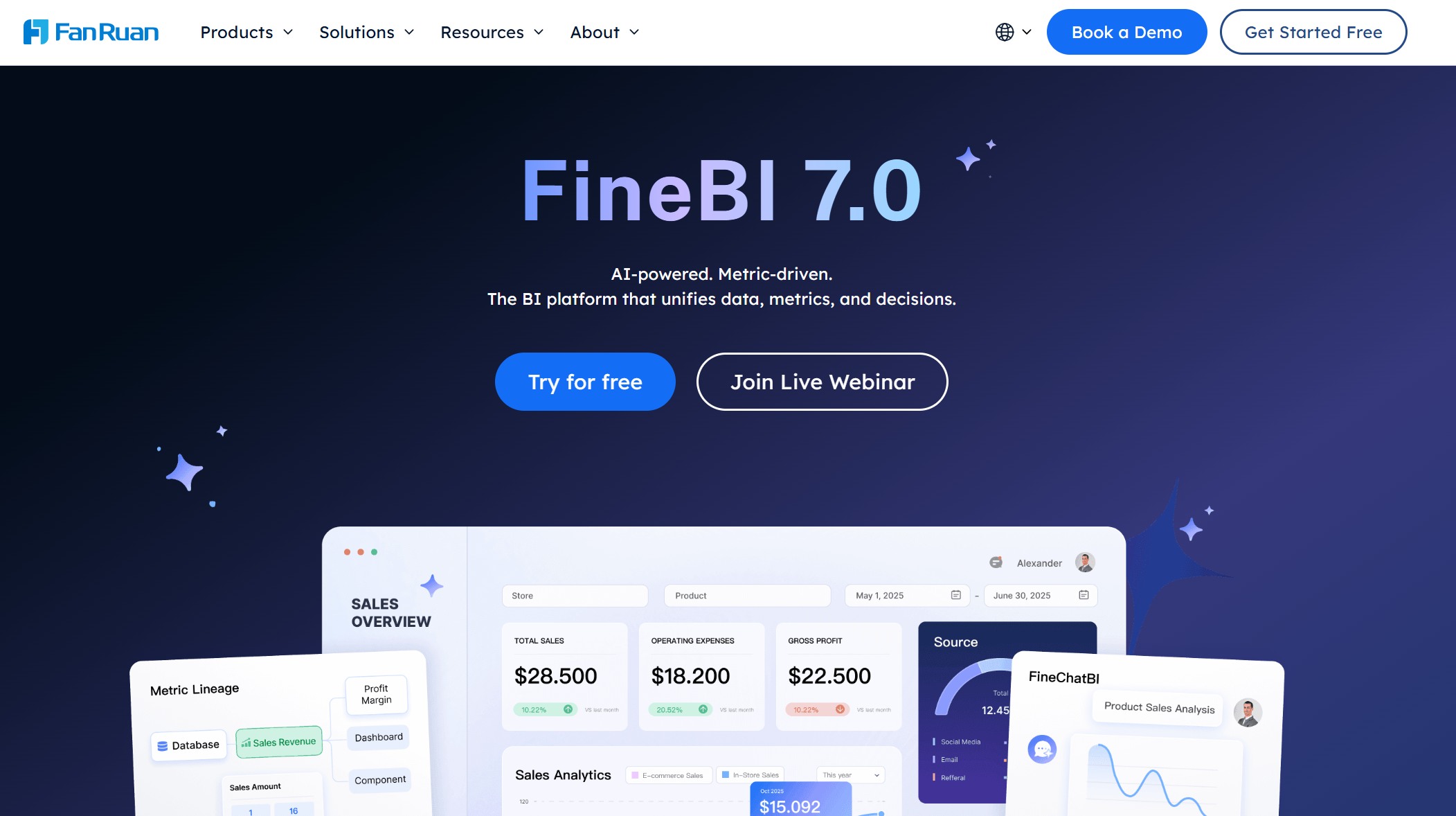
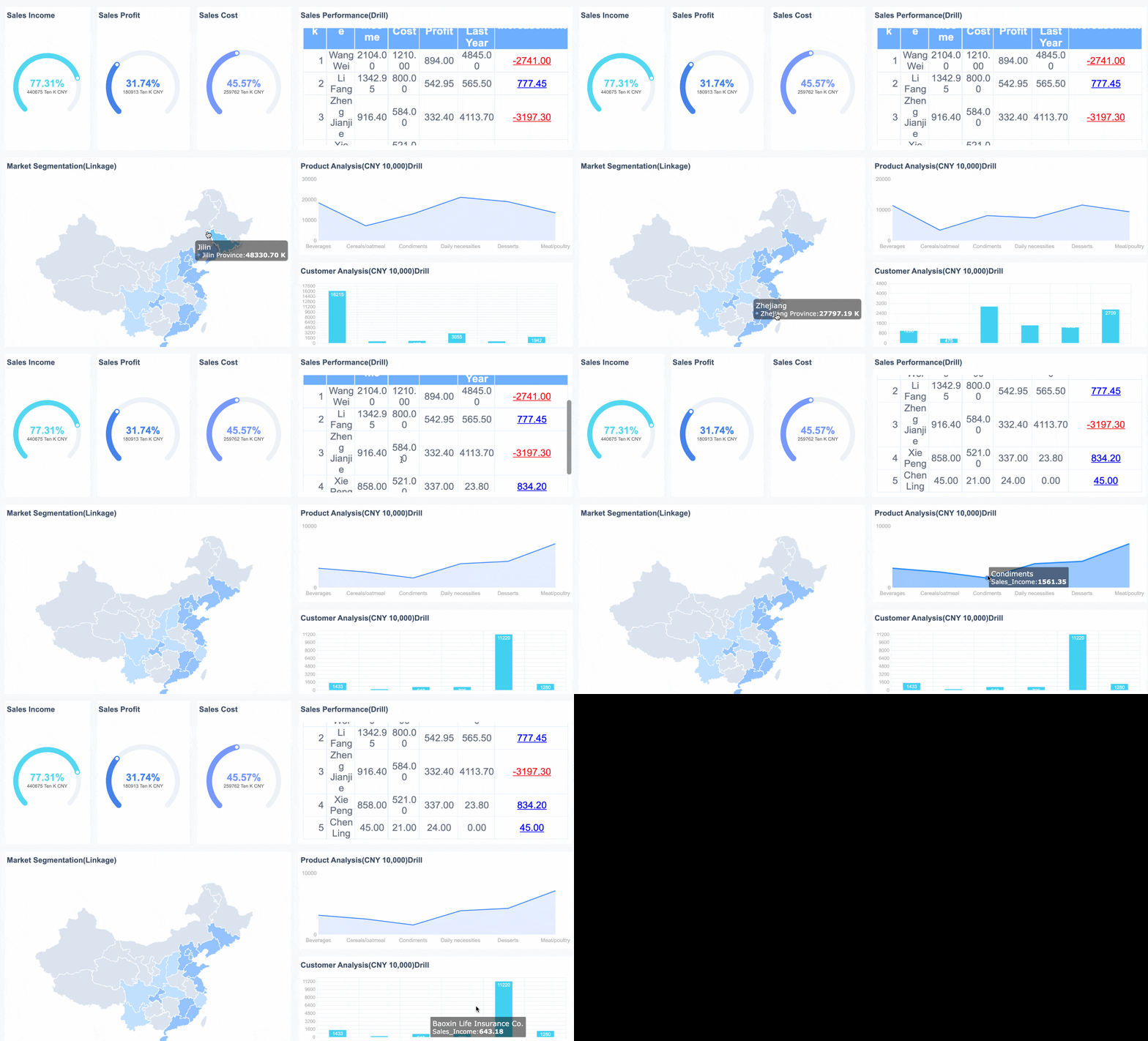
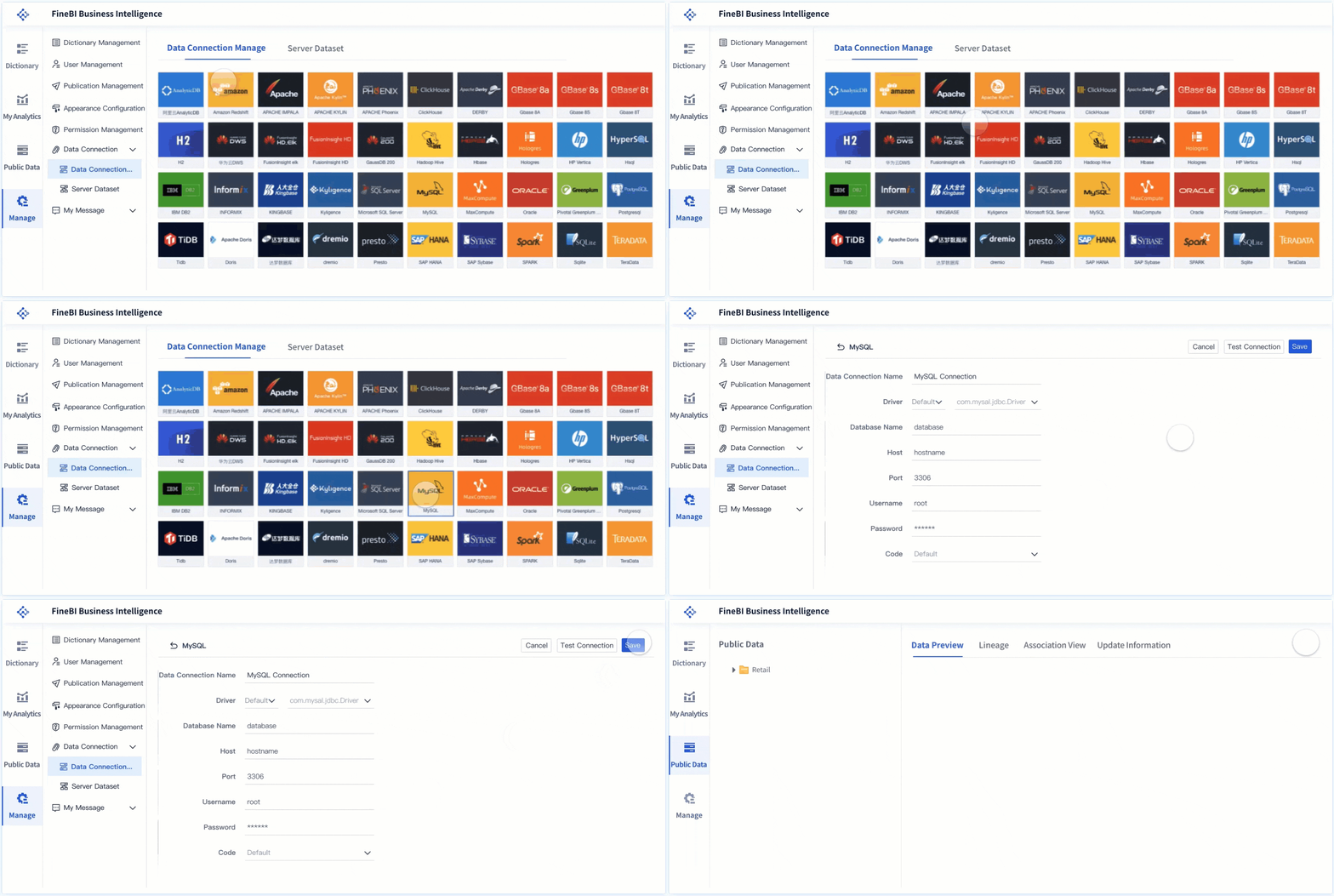
FineBI is a modern self-service platform designed to make big data analytics solutions accessible to everyone in your organization. You don’t need coding skills to use FineBI. Its drag-and-drop interface lets you connect, prepare, and visualize data from over 60 sources, including big data platforms, cloud warehouses, and traditional databases.
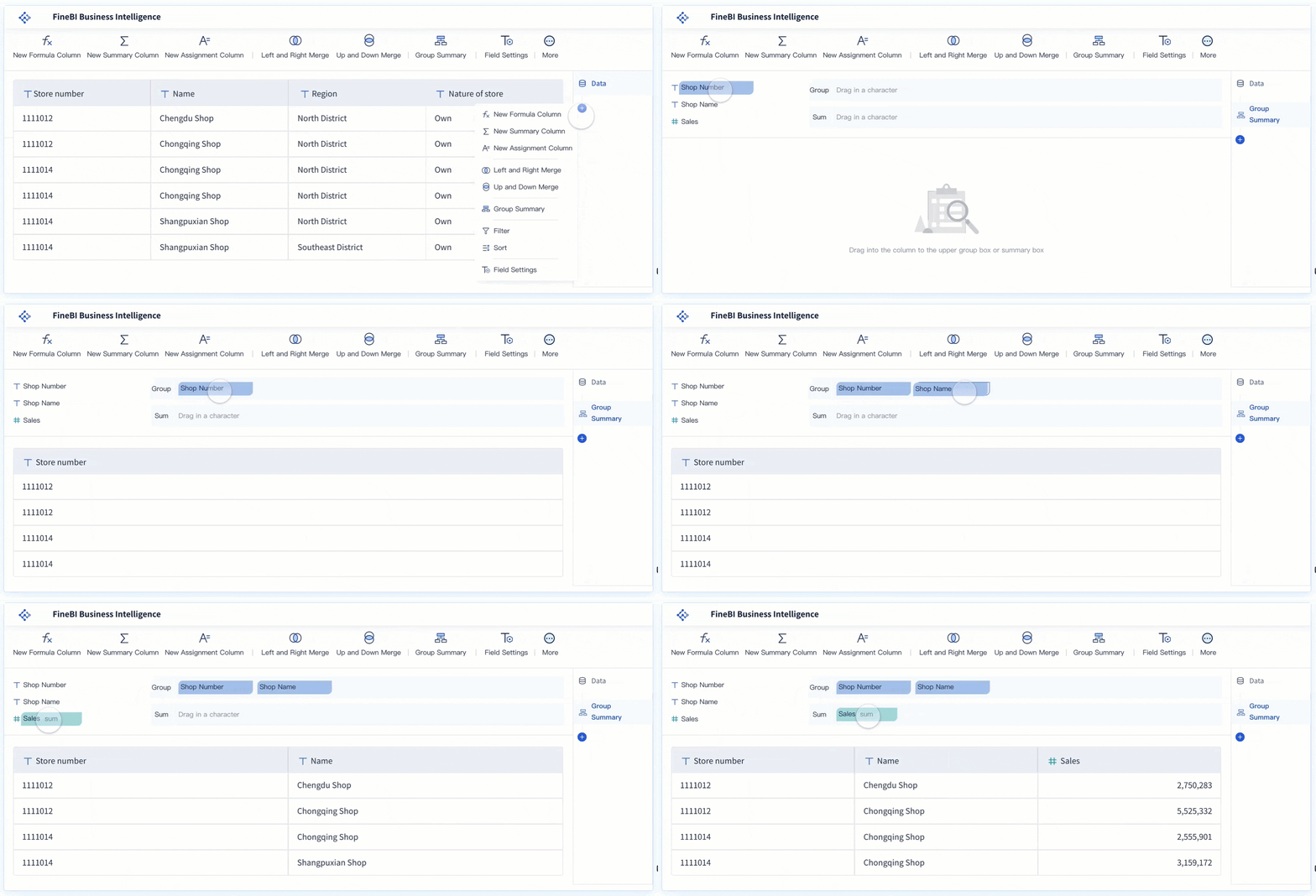
FineBI’s workflow covers four main stages: data integration, data processing, visual exploration, and publishing with governance. You can easily join tables, create calculated fields, and apply filters to build custom datasets. The dashboards update in real time, so you always see the latest insights.
| Key Feature | Benefit |
|---|---|
| Self-service analytics | Empowers business users to create dashboards without IT support. |
| Data integration | Connects to databases, files, APIs, and big data platforms for unified analysis. |
| Real-time analysis | Delivers up-to-the-minute insights for fast decision-making. |
| Enterprise governance | Offers role-based access, audit trails, and compliance for secure data sharing. |
| Scalability | Supports thousands of users and massive datasets with high-performance engines. |
| AI-driven insights | Uses augmented analytics and conversational BI for deeper understanding. |
FineBI fits organizations that want to democratize analytics and reduce IT bottlenecks. You can use it in finance, sales, HR, supply chain, and more. For example, BOE Technology Group, a global leader in IoT and displays, used FineBI to unify fragmented data, standardize metrics, and build KPI dashboards. This led to a 5% reduction in inventory costs and a 50% boost in operational efficiency. FineBI's real-time data analysis and strong governance make it a smart choice for enterprises seeking agile, scalable big data analytics solutions.
2.Microsoft Power BI
Microsoft Power BI stands out among big data analytics solutions for its user-friendly interface and deep integration with Microsoft products. You can connect to a wide range of data sources, from Excel to cloud databases, and build interactive dashboards with ease. Power BI makes it simple for you to visualize complex data and share insights across your organization.
| Feature | Description |
|---|---|
| User-friendly interface | Lets you create visualizations without technical skills. |
| Data source connectivity | Connects to Excel, cloud, and on-premises data. |
| Interactive visualizations | Offers charts, graphs, and maps for clear data storytelling. |
| Secure sharing | Allows you to share reports securely inside and outside your company. |
| Real-time dashboard | Monitors key metrics and trends as they happen. |
You’ll find Power BI especially useful in industries like manufacturing and healthcare, where data comes from many systems. It supports strategic decision-making by giving you a single view of all your data. You can monitor KPIs in real time and respond quickly to changes. Power BI’s suite of applications and connectors makes it a top choice for organizations that want to aggregate data from multiple sources and drive data-driven decisions.
3.Tableau
Tableau is a leader in big data analytics solutions, known for its advanced data visualization and strong community support. You can connect Tableau to almost any data source, making it easy to explore and analyze large datasets. The platform shines when you need to create compelling dashboards and share them with your team.
- High performance with large datasets.
- Connects to multiple data sources for richer analytics.
- Thriving user community for support and learning.
Tableau works well for enterprises that need advanced analytics and want to empower users to dig deep into their data. You can use Tableau to uncover hidden patterns, track business performance, and tell stories with your data. However, you might notice a steep learning curve if you’re new to the platform, and the cost can be high for some organizations. Still, if you value advanced data visualization and flexibility, Tableau remains a top pick among big data analytics tools.
4.Qlik Sense
Qlik Sense is another top contender among big data analytics solutions. It excels at interactive dashboards and data exploration. You can connect to a wide range of data sources, both structured and unstructured, and use Qlik’s associative engine to uncover relationships in your data.
| Feature | Description |
|---|---|
| Data Visualization | Builds interactive dashboards for deep data exploration. |
| Scalability | Handles large datasets and high user concurrency. |
| Customization | Offers APIs and flexible architecture for tailored analytics. |
| Collaboration | Enables real-time sharing and guided analytics experiences. |
| Data Integration | Supports ETL for structured and unstructured data. |
| Mobile Responsiveness | Lets you access dashboards on any device. |
Qlik Sense works well for enterprises that need scalable, customizable analytics. You can use it for collaborative decision-making and to support big data use cases across departments. Its mobile-friendly design ensures you can access insights anywhere.
5.Google BigQuery
Google BigQuery is a cloud-based platform built for big data analytics solutions at scale. You don’t have to worry about infrastructure because BigQuery uses a serverless architecture. It automatically scales to handle massive datasets and supports real-time processing.
| Feature | Description |
|---|---|
| Serverless Architecture | Scales automatically, so you focus on analysis, not infrastructure. |
| Real-time Analytics | Delivers immediate insights as data arrives. |
| Built-in Machine Learning | Lets you build and deploy ML models using SQL. |
| Diverse Data Types | Handles structured, semi-structured, and geospatial data. |
BigQuery is ideal for organizations that need cloud-based big data analytics tools for fast, large-scale analysis. You can use it for marketing analytics, IoT data, or any scenario where speed and scale matter. Its built-in machine learning and support for diverse data types make it a powerful choice for advanced analytics and big data predictive analytics.
6.IBM Cognos Analytics

IBM Cognos Analytics is a robust big data analytics solution that combines self-service capabilities with enterprise-grade features. You can create your own reports and dashboards without deep technical knowledge. Cognos integrates with IBM Watson Analytics, giving you access to AI-driven insights and advanced analytics.
| Key Differentiator | Description |
|---|---|
| Self-Service Capabilities | Lets you build reports and dashboards independently. |
| Watson Analytics Integration | Enhances exploration with AI and machine learning. |
| Modern User Interface | Makes navigation and use intuitive. |
| Data Integration and Modeling | Automates integration and modeling of complex data sources. |
| Smart Search | Helps you find tools and functions quickly. |
| Cloud Options | Eases adoption for organizations new to IBM Cognos. |
IBM Cognos Analytics fits enterprises that want a balance between self-service and advanced analytics. You can use it for financial reporting, operational dashboards, and more. Its integration with Watson makes it a strong choice for organizations looking to leverage AI in their big data analytics decision making.
7.SAP BusinessObjects
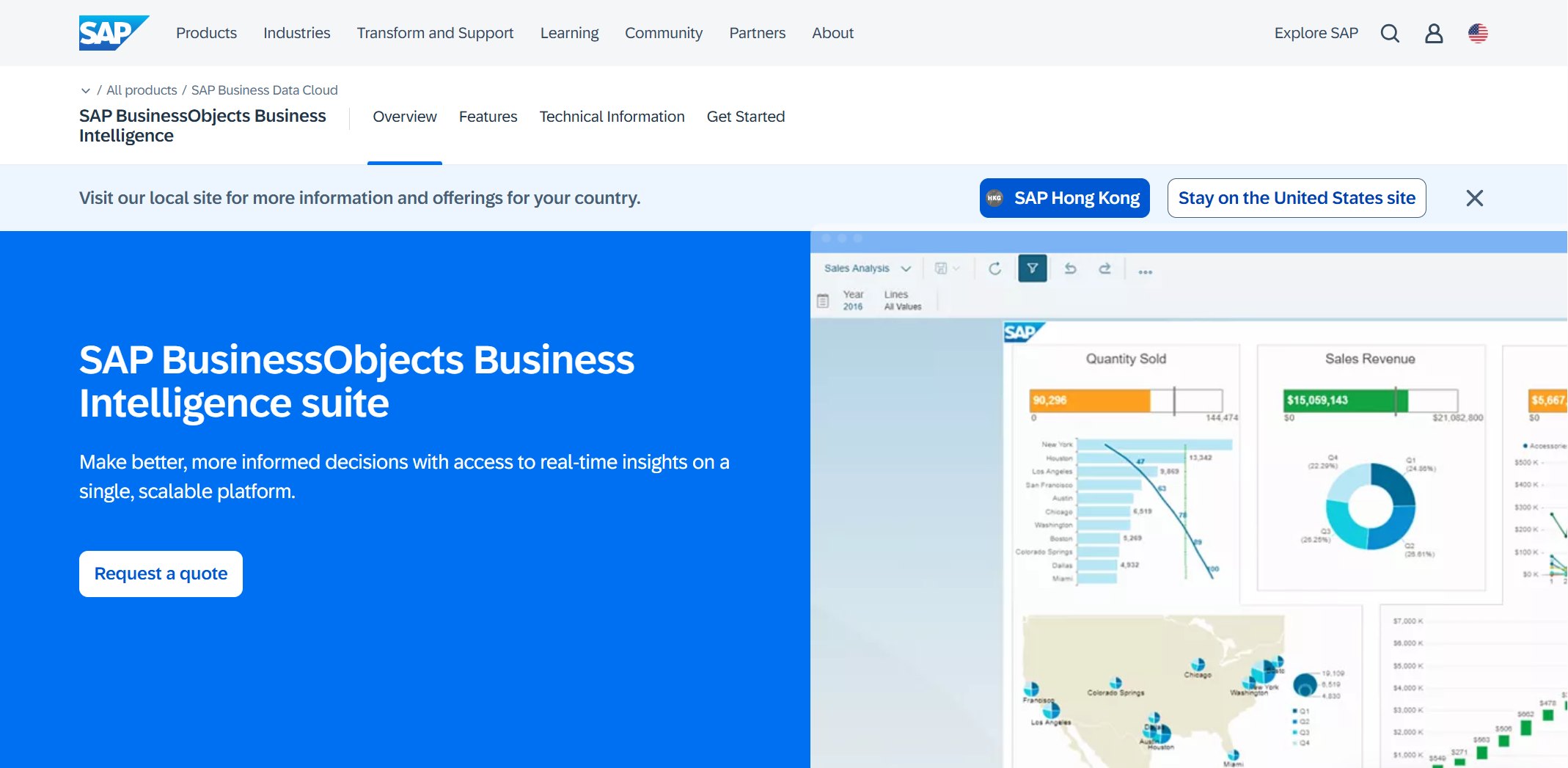
SAP BusinessObjects is a comprehensive suite of big data analytics solutions designed for enterprises with complex reporting needs. You can connect to various data sources and create both static and interactive reports. The platform supports advanced analytics, predictive modeling, and strong data governance.
| Feature | Description |
|---|---|
| Business Intelligence Tools | Offers a range of tools for different reporting needs. |
| Data Connectivity | Unifies data from multiple systems for a single view. |
| Data Visualization | Designs interactive charts and dashboards for clear communication. |
| Self-Service BI | Lets users create reports and dashboards independently. |
| Advanced Analytics | Integrates predictive modeling for proactive decisions. |
| Mobile Accessibility | Access reports on mobile devices for remote decision-making. |
| Enterprise Reporting | Crystal Reports for detailed, pixel-perfect reporting. |
| Collaboration and Governance | Ensures secure sharing and compliance. |
SAP BusinessObjects is a preferred choice for sectors like finance, manufacturing, and government. You can use it for enterprise reporting, compliance, and advanced analytics. Its strong governance features make it suitable for organizations with strict regulatory requirements.
8.Amazon QuickSight
Amazon QuickSight is a cloud-based data analytics tool that offers fast setup and high scalability. You can merge data from sources like Amazon Redshift, SQL servers, and Excel files. QuickSight produces beautiful visualizations and supports embedded analytics for your applications.
| Strengths | Description |
|---|---|
| High Data Source Compatibility | Merges data from many sources, including AWS and on-premises. |
| Easily Accessible: Anytime, Anywhere | Works on web browsers and mobile devices. |
| Spectacular scalability | Handles multiple business domains and computes metrics independently. |
| Beautiful visualizations | Creates impressive charts and dashboards. |
| Quick setup and user-friendly | Simple to set up and use. |
QuickSight is great for organizations already using AWS or those needing cloud-based big data processing. You can use it for embedded analytics, operational dashboards, and real-time analysis. Its scalability and ease of use make it a strong option for growing businesses.
9.Oracle Analytics Cloud
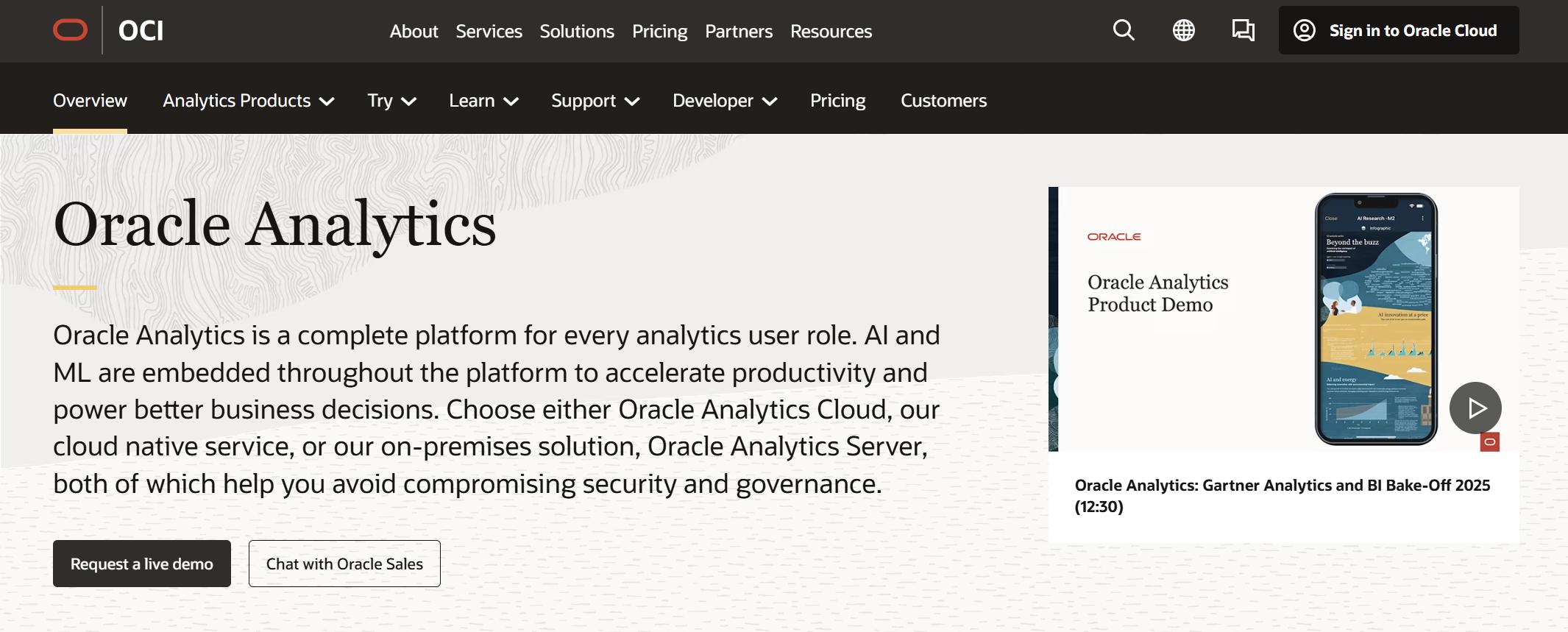
Oracle Analytics Cloud (OAC) is built for large organizations that need scalable, integrated big data analytics solutions. OAC’s cloud-based architecture lets you expand analytics capabilities without worrying about infrastructure limits. You can integrate with big data technologies like Hadoop and Spark, and use robust ETL tools for clean, structured data.
OAC fits enterprises that want to scale analytics quickly and analyze data from many sources. You can use it for financial planning, supply chain optimization, and more. Its flexibility and integration capabilities make it a top choice for organizations with complex analytics needs.
10.SAS Visual Analytics
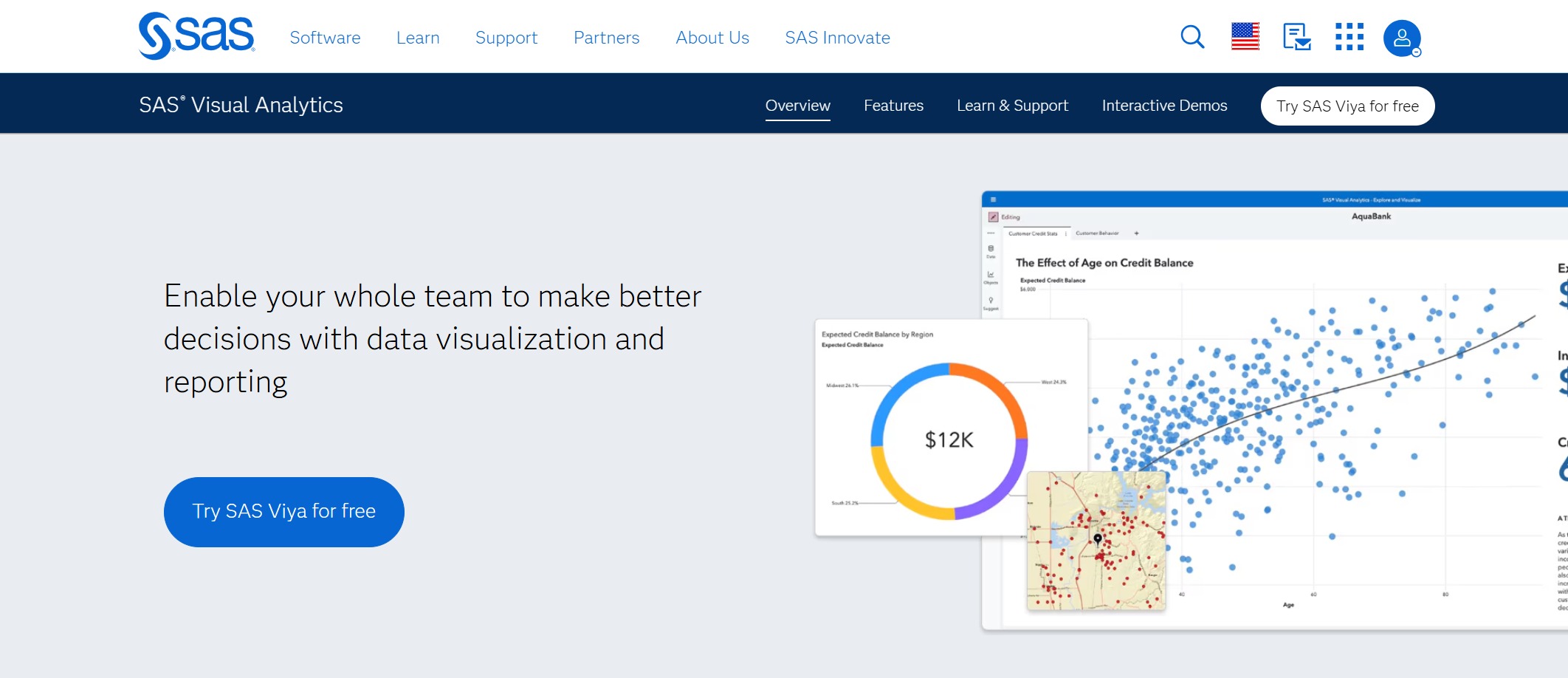
SAS Visual Analytics rounds out the list of top big data analytics solutions with its comprehensive analytics suite. You get tools for complex data models, industry-specific solutions, and high security standards. SAS Visual Analytics is especially strong in sectors like finance and healthcare, where data privacy and advanced analytics matter most.
| Feature/Benefit | Description |
|---|---|
| Comprehensive Analytics Suite | Offers a wide array of analytical tools for complex data models and scenarios. |
| Industry-Specific Solutions | Tailored for finance, healthcare, and other sectors. |
| High Security Standards | Ensures secure handling of sensitive data. |
You can use SAS Visual Analytics for regulatory reporting, fraud detection, and big data analytics in healthcare. Its advanced analytics and security features make it a trusted choice for organizations with strict compliance needs.
Tip: When you evaluate big data analytics tools, focus on criteria like scalability, integration, visualization, pricing, security, and customization. Here’s a quick table to help you compare:
| Criteria | Description |
|---|---|
| Scalability and Performance | Handles current and future data volumes as your business grows. |
| Integration Capabilities | Connects with your existing systems and data sources. |
| Visualization and Storytelling | Turns complex data into clear, compelling visuals. |
| Pricing Structure and ROI | Balances upfront costs with long-term value. |
| Security and Compliance Features | Meets regulatory requirements and protects your data. |
| Customization Flexibility | Adapts to your unique business processes and reporting needs. |
The best big data analytics software solutions empower you to design and implement big data analytics solutions that fit your business. Whether you need real-time data analysis, advanced data visualization, or cloud-based data analytics, these top 10 big data analytics tools offer the flexibility and power to drive your enterprise forward.
Comparing Big Data Analytics Solutions

Key Features and Capabilities
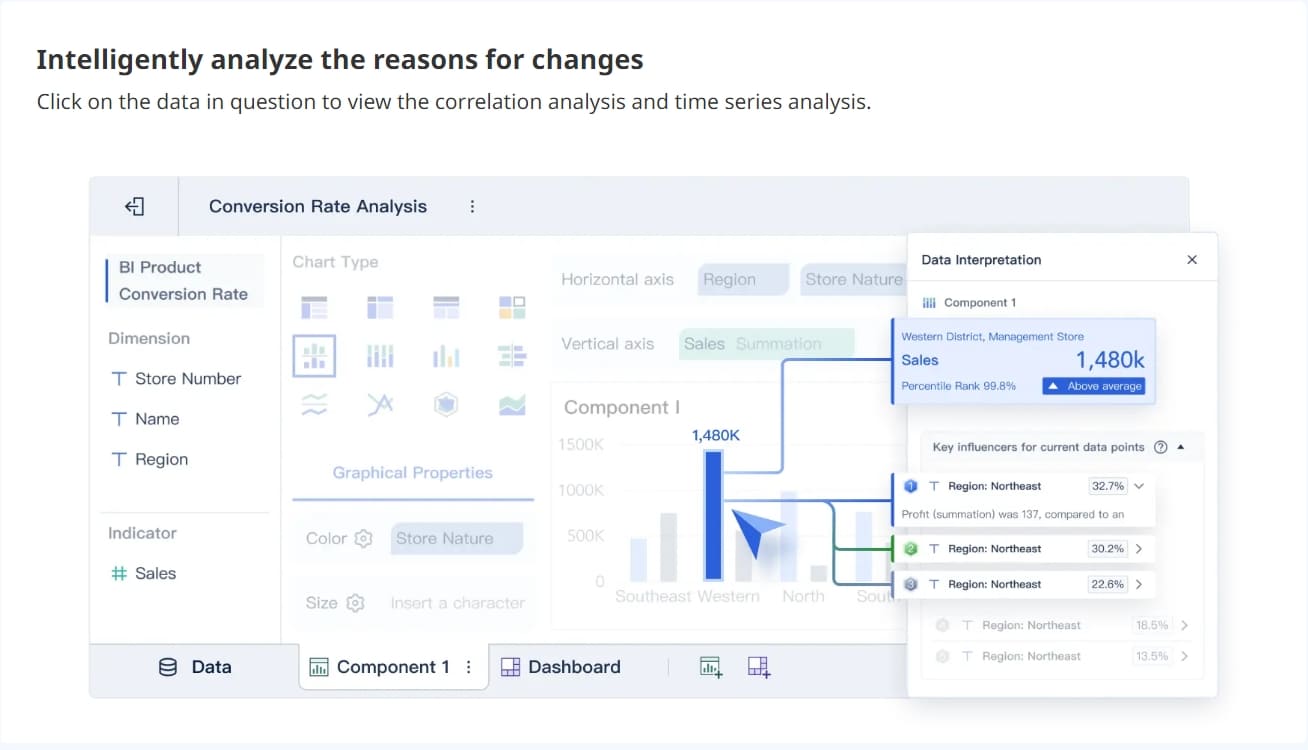
When you compare big data analytics solutions, you want to see how each tool stands out. You look for scalability, real-time processing, integration, ease of use, flexibility, security, and cost efficiency. These features help you handle large data volumes, connect different systems, and keep your data safe.
Here’s a quick table to help you compare some top big data analytics solutions:
| Tool | Key Features | Use Cases |
|---|---|---|
| Tableau | Advanced visualization, real-time insights | Sales forecasting, customer segmentation |
| FineBI | Real-time analytics, seamless integration, customizable dashboards | Financial analysis, budgeting, forecasting |
| MicroStrategy | Enterprise analytics, mobility, robust security | Finance, healthcare, retail analytics |
| Looker | Real-time analytics, scalable dashboards | Product analytics, performance tracking |
| Zoho Analytics | Self-service BI, affordable reporting | SME analytics |
You see software dominance in the market, with over 38% share, because businesses need flexible big data analytics solutions for credit risk management and business intelligence. Data discovery and visualization lead the way, making it easier for you to get real-time insights and make decisions quickly.
Enterprise Benefits and Use Cases
Big data analytics solutions give you the power to solve real business problems. Large enterprises use these tools to manage growing data volumes and improve decision-making. The BFSI sector relies on analytics for customer acquisition and retention. You see benefits in every industry.
Here are the most common enterprise use cases:
- Data preparation: Clean and transform your data for analysis.
- Statistical analysis: Find patterns and relationships in your data.
- Machine learning: Build models to forecast and detect anomalies.
- Data visualization: Present data in a way that helps you make decisions.
- Optimization: Choose the best actions for resource allocation and efficiency.
Your big data analytics solution should deliver self-service analytics. When you democratize data, you empower every business user to find insights on their own. This means faster decisions and more agile teams.
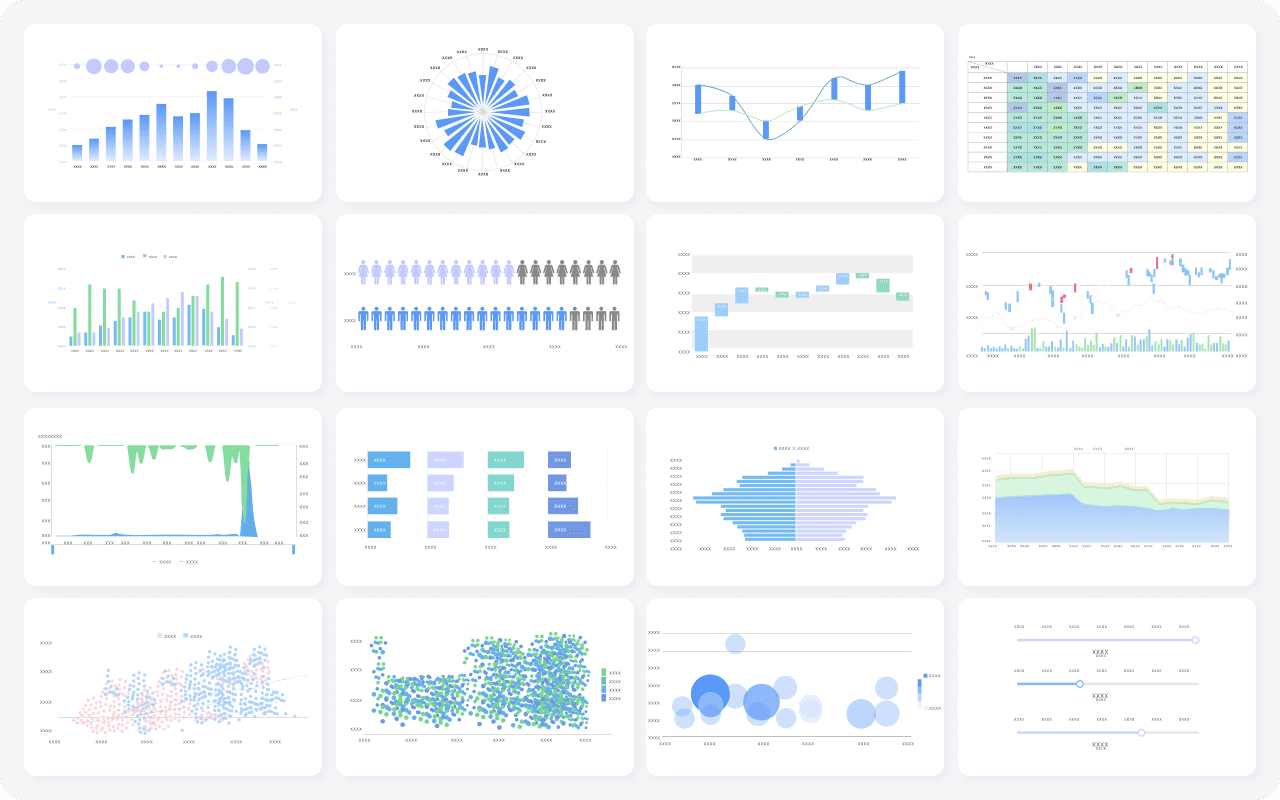
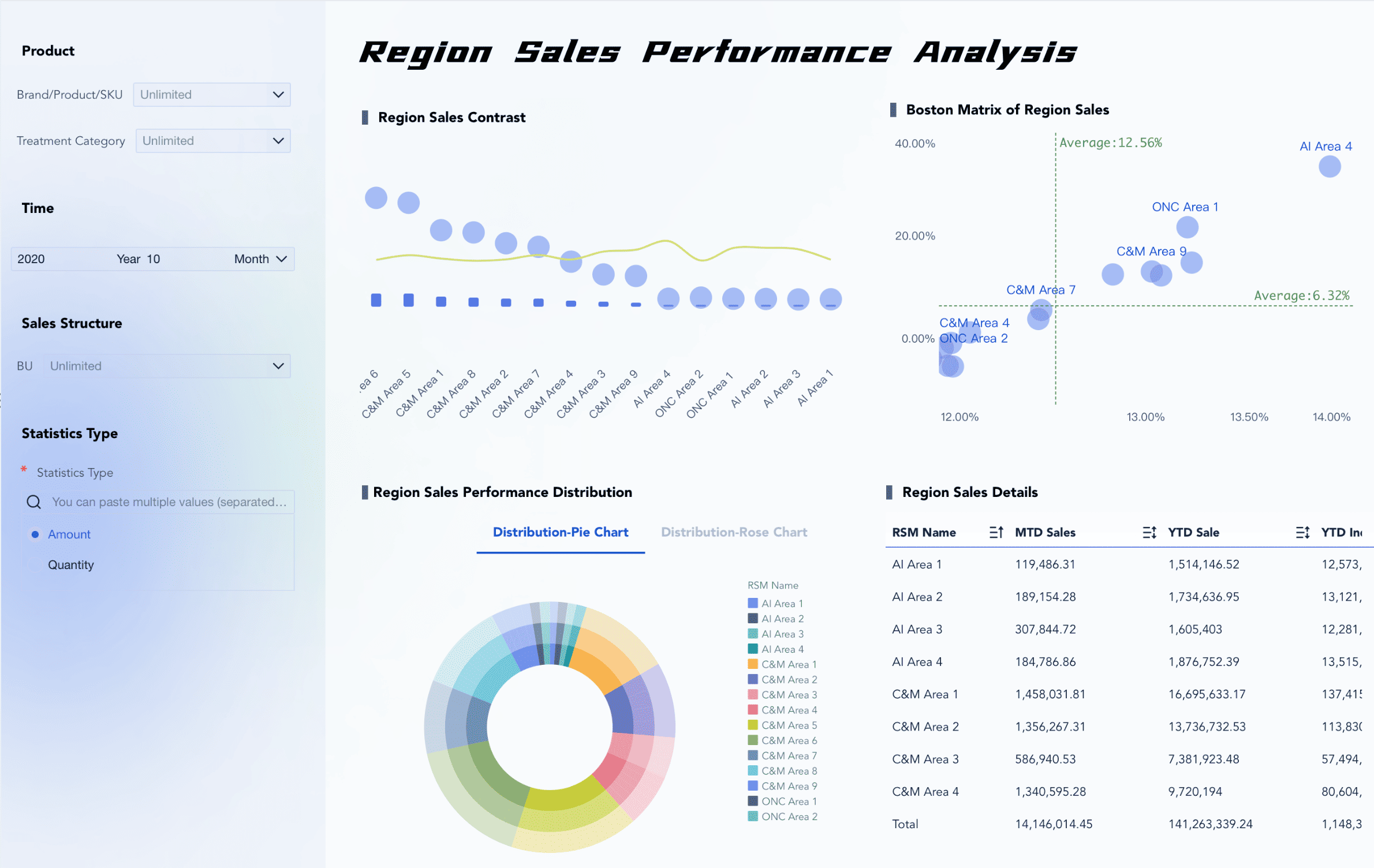
FineBI is a great example of a self-service, enterprise-ready big data analytics solution. You can connect to over 60 data sources, build dashboards with drag-and-drop tools, and share insights securely. FineBI helps you reduce IT bottlenecks and gives every department—from finance to HR—the ability to analyze data independently. You get real-time analytics, strong governance, and scalable performance, making FineBI a smart choice for modern enterprises.
How to Choose the Big Data Analytics Solutions
Choosing the right big data analytics solutions can feel overwhelming. You want a tool that fits your business now and grows with you. Let’s break down the key factors you should consider when picking data analytics tools for your enterprise.
Scalability and Performance
Scalability matters when your data grows fast. You need big data analytics solutions that handle large volumes and keep performance high. Look at these metrics to compare options:
| Metric | Description |
|---|---|
| Response Time | How quickly the system answers your requests. |
| Throughput | Number of transactions handled per second. |
| Latency | Delay between request and response, important for real-time apps. |
| Load Capacity | Maximum workload before performance drops. |
| Elasticity | Ability to scale resources up or down as needed. |
You can use benchmarks like TPC-DS to test how well a tool manages complex queries and big data predictive analytics. Always check how the system performs under peak loads and during failures.
Integration and Compatibility
Your business runs on many systems. The best big data analytics solutions connect easily to your existing platforms. Look for these features:
| Feature | Description |
|---|---|
| Pre-built connectors | Ready integrations for popular platforms. |
| API compatibility | Support for custom connections and real-time data feeds. |
| Plug-and-play functionality | Easy setup with minimal disruption. |
| Data quality checks | Automatic checks for accuracy and security. |
| Role-based access control | Manage who can see and use data. |
You want data analytics tools that work with your databases, cloud services, and business apps. This saves you time and helps you make data-driven decisions faster.
Security and Compliance
Protecting your data is critical. Big data analytics solutions must meet strict security and compliance standards. Here are some you should know:
| Standard | Description |
|---|---|
| GDPR | Protects personal data and privacy. |
| SOC 2 | Focuses on security, availability, and confidentiality. |
| ISO 27001 | Global standard for managing information security. |
| HIPAA | Safeguards health information. |
| PCI DSS | Ensures payment data security. |
Check if your tool supports role-based access, encryption, and audit trails. Compliance helps you avoid fines and builds trust with customers.
Cost and ROI
Budget is always a concern. You want big data analytics solutions that deliver value. Here’s a quick look at typical costs:
| Scope of Analytics Investment | Estimated Annual Cost or Project Budget |
|---|---|
| Departmental dashboards | $100,000 – $250,000 |
| Enterprise-wide integration | $250,000 – $500,000+ |
| Full-scale transformation | $1 million – $5 million+ |
Think about the return on investment. Predictive analytics can help you save money and boost revenue. Look for tools that offer clear pricing and strong support.
Tip: Before you commit, run a pilot project. Define your goals, build a team, and test the tool with real data. Focus on data preparation, security, and visualization. Monitor performance and optimize as you go.
Choosing the right data analytics tools means balancing scalability, integration, security, and cost. When you follow these steps, you set your business up for success with big data analytics solutions.
You’ve seen how top big data analytics solutions like FineBI, Power BI, and Tableau help companies unlock data-driven insights and drive real results. For example, Netflix and Walmart use analytics to boost engagement and efficiency. When you choose a tool, match it with your business goals and tech plans. Here’s a quick look at what matters:
| Key Component | Why It Matters |
|---|---|
| Data Roadmap | Guides growth and adapts to new tech |
| Integration of Goals | Aligns analytics with business priorities |
| Data Governance | Builds trust and ensures security |
Ready to take the next step? Try a free trial, request a demo, or talk with a solution provider to see which platform fits your needs.
Continue Reading About Best Big Data Analytics Solutions
How to Do Retention Analysis for Business Success
What is Pareto Chart and How Does it Work
How DuPont Analysis Helps You Understand Your Business
Frequently asked questions
Big data analytics solutions help you collect, process, and analyze large amounts of data. You use these tools to find patterns, trends, and insights that support better business decisions.