Enterprise BI programs rarely fail because teams lack dashboards. They fail because governance changes are unclear, ownership is disputed, and no one knows who can approve, implement, or communicate a decision. That is why the raci framework data governance change management topic matters so much for IT leaders, data governance teams, BI managers, and executives.
In practice, most BI environments need two things at the same time:
- a trusted dashboard and metric foundation
- a faster, more controlled way to manage governance-driven change
With FineBI + Dora, business users can ask for analysis in chat, generate chart-based answers or dashboard-style views from trusted BI assets, and receive scheduled summaries before the next meeting. That matters during governance change because role clarity is only useful if teams can also monitor adoption, track impact, and follow up on exceptions with timely data.
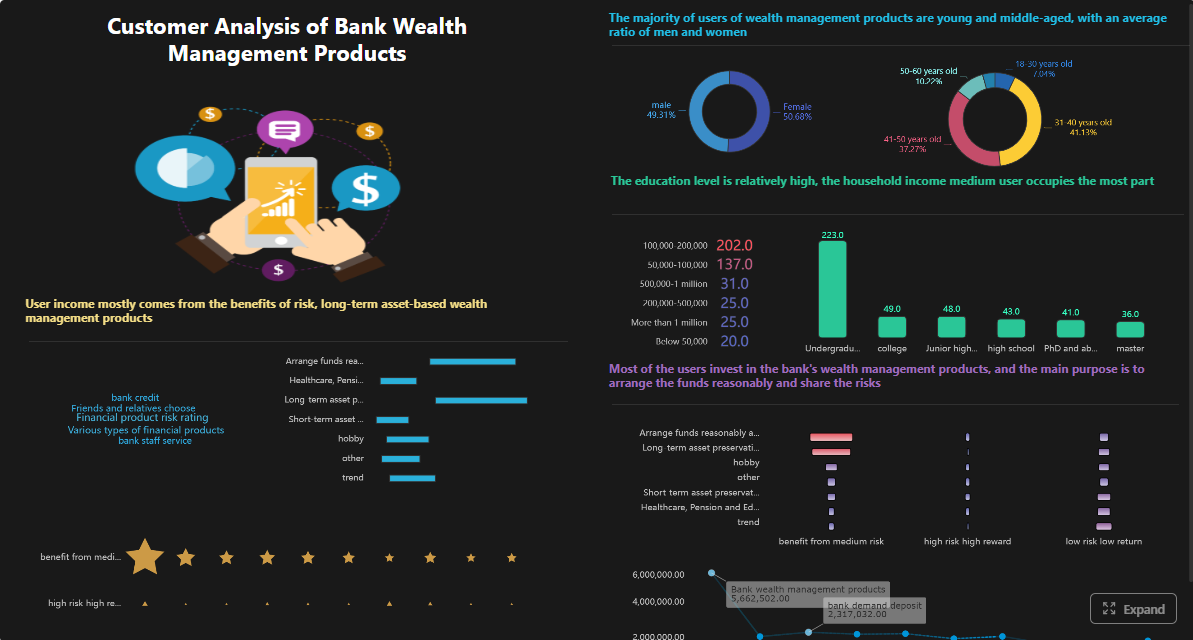 Click To Try The Dashboard
All dashboards in this article are built with FineBI
What a RACI Framework Means for Data Governance Change Management
A RACI framework is a simple way to define who does what in a change process. In data governance change management, it helps teams assign clear roles for policy updates, metric changes, access decisions, quality remediation, and BI platform changes.
RACI stands for:
- Responsible: the people who do the work
- Accountable: the person who owns the final outcome and approval
- Consulted: the stakeholders who provide input before a decision is made
- Informed: the people who must know the decision or status
In plain language, a RACI matrix prevents situations like these:
- IT believes the business owns a metric definition
- a data steward assumes compliance approved a change
- business users adopt a new KPI before documentation is finalized
- multiple leaders think they are the final approver
For enterprise BI programs, that confusion is expensive. Changes to governance often affect dashboards, semantic models, access permissions, refresh rules, and executive reporting. If role ownership is vague, the BI team ends up reworking dashboards, explaining conflicting numbers, or managing escalations that should have been prevented.
RACI is not a replacement for data ownership or stewardship. It works alongside them:
- Data owners define authority over a business domain
- Data stewards support quality, definitions, and process discipline
- Governance councils resolve cross-functional policy and priority issues
- RACI translates those structures into an operational decision model for actual change workflows
This is where BI and AI start to connect. FineBI provides the governed dashboard, metric, and semantic foundation. Dora adds an enterprise Data Agent layer that can help teams retrieve the right KPI definitions, monitor governance adoption, summarize status, and push reminders or alerts to the right people based on approved workflows.
Why Change Management Often Fails in Enterprise BI Programs
Common breakdowns in roles and accountability
Most governance failures in BI programs are not technical failures. They are operating model failures.
Common examples include:
- overlapping responsibilities between business, IT, analytics, and data governance teams
- approvals that depend on informal relationships rather than defined authority
- no clear escalation path for disputed metric definitions
- inconsistent communication when access policies or data rules change
- delayed implementation because too many stakeholders think they need to approve
These problems often appear when an enterprise scales beyond a few dashboards. A metric that once lived in one team suddenly appears in executive scorecards, operational reports, and self-service analysis. Without a RACI framework, every change becomes a negotiation.
Typical friction points include:
- the BI lead is responsible for updating dashboards but not authorized to approve definition changes
- the data owner is accountable for a KPI but unavailable during release cycles
- the security team is consulted too late in access change workflows
- executives are informed only after business users have already seen conflicting reports
A practical RACI matrix reduces this friction by making decision rights visible before the change happens.
Risks of weak governance during BI change
Weak governance during BI change creates business risk quickly.
The most common risks are:
- poor report trust because business users see conflicting definitions across dashboards
- conflicting metrics when one KPI is updated in one model but not another
- compliance exposure if access, retention, or policy changes are not approved correctly
- rework caused by undocumented decisions
- slow adoption because users do not trust whether a new rule is final
- uneven stakeholder alignment across regions, business units, or platforms
In many enterprises, the hidden cost is not the change itself. It is the ripple effect after the change:
- repeated meetings to clarify ownership
- manual report audits
- emergency corrections to executive dashboards
- inconsistent policy adoption across departments
This is also where an AI assistant becomes practical rather than theoretical. Dora can support governance change management by helping teams retrieve the latest approved metrics, generate chart-based answers from trusted BI assets, summarize change impact, and issue scheduled briefings or anomaly alerts when adoption patterns look off. The AI value is strongest when governance rules already exist and need to be applied consistently.
How to Build a RACI Matrix for Governance Changes
Identify the change scenarios that need role clarity
Do not start by creating one giant matrix for every possible governance event. Start with the change scenarios that most often create confusion.
In enterprise BI programs, those usually include:
- policy updates
- metric definition changes
- access requests and permission changes
- data quality remediation
- source system or model changes
- tool migrations
- dashboard retirement or replacement
- regulatory or audit-driven reporting changes
For each scenario, define the trigger, expected outcome, and affected stakeholders.
For example, a metric definition change might include:
- trigger: finance redefines revenue recognition logic
- outcome: approved definition updated in semantic assets and dependent dashboards
- affected stakeholders: finance owner, BI lead, data steward, architect, audit, executive report consumers
This step is important because different changes need different RACIs. A data quality issue does not require the same approval model as a policy exception or a dashboard migration.
Assign Responsible, Accountable, Consulted, and Informed roles
Once the scenarios are clear, map the key stakeholders. Typical roles in enterprise BI programs include:
- data owner
- data steward
- BI product owner or BI lead
- analytics manager
- data architect
- platform administrator
- security lead
- compliance or risk officer
- department manager
- governance council
- executive sponsor
A practical rule is to avoid overcomplication:
- assign one clear Accountable owner per decision
- assign only the Responsible roles needed to execute
- include Consulted roles that truly shape the decision
- limit Informed roles to those who need visibility, not everyone in the company
Here is a simplified example for a KPI definition change:
- Responsible: BI lead, data steward
- Accountable: business data owner
- Consulted: finance, enterprise architect, compliance
- Informed: executive reporting users, operations managers, dashboard consumers
For an access request change:
- Responsible: BI admin, security admin
- Accountable: data owner
- Consulted: compliance, team manager
- Informed: requestor, audit team if needed
RACI works best when it is tied to actual workflow stages rather than stored as a static spreadsheet no one uses.
Validate the matrix before rollout
Before publishing the matrix, test it.
Look for these issues:
- two or more accountable owners for the same decision
- responsible roles that cannot actually execute because they lack system access or authority
- bottlenecks caused by too many consulted stakeholders
- no clear escalation path if an accountable owner is unavailable
- informed groups that are so broad they create communication noise
- missing stakeholders such as security, compliance, or regional business owners
A good validation exercise is to walk through 3 to 5 recent change examples and ask:
- Who actually initiated the change?
- Who approved it?
- Who was skipped but should have been consulted?
- Where did the process stall?
- Which decisions were not documented well enough for later audit or review?
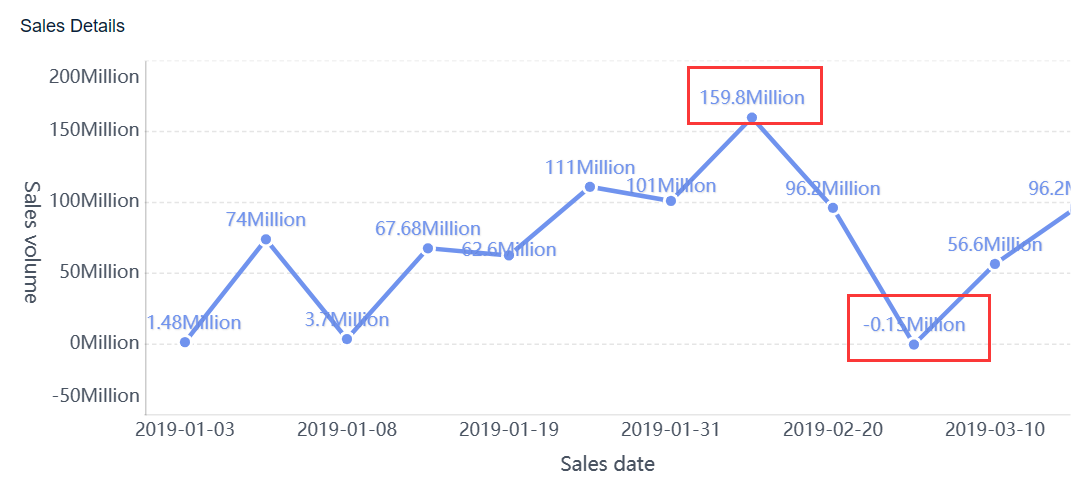
FineBI can help visualize this operational performance by tracking approval cycle time, dashboard impact, issue backlog, and governance exception trends. Dora can then help summarize these patterns for governance committees or release review meetings.
How to Apply the RACI Framework in a BI Change Workflow
Use RACI at each stage of the change lifecycle
A RACI matrix is most useful when applied to the actual BI change lifecycle.
A typical governance change workflow includes:
-
Intake
Someone submits a request for a policy, metric, access, or model change. -
Impact assessment
Teams review affected dashboards, metrics, semantic assets, business processes, and users. -
Approval
The accountable owner approves, rejects, or requests changes. -
Implementation
Responsible teams update FineBI assets, documentation, permissions, workflows, or communication materials. -
Communication
Informed stakeholders receive clear notice of what changed, when it changed, and what to do next. -
Post-change review
Teams validate adoption, exceptions, unresolved issues, and downstream impacts.
At each stage, RACI should answer a practical question:
- Who does the work?
- Who signs off?
- Who gives input?
- Who must be notified?
For example, during impact assessment, the BI lead may be responsible for identifying affected dashboards, the business data owner accountable for the decision scope, architects and compliance consulted for downstream implications, and report consumers informed after approval.
Connect RACI to governance operating rhythms
A RACI framework should not sit outside normal governance operations. It should be embedded in the rhythms the BI program already follows.
That includes:
- steering committee reviews
- monthly governance council meetings
- BI release cycles
- data quality review sessions
- access review checkpoints
- issue management and incident response workflows
- executive reporting preparation
When tied to these routines, RACI becomes operational rather than theoretical. Teams stop asking, “Who owns this?” in every meeting because the decision path is already defined.
This is also a strong fit for FineBI + Dora. FineBI can provide dashboards for governance KPIs such as approval backlog, policy adherence, exception rates, unresolved quality issues, and release impact. Dora can act as a Daily Briefing Secretary or Risk Alert Officer, turning those assets into periodic summaries, threshold alerts, and follow-up prompts for the right stakeholders.
Keep documentation practical and usable
The best RACI matrix is the one people actually use.
That usually means:
- lightweight templates
- simple role descriptions
- scenario-based ownership logs
- concise approval records
- version-controlled change notes
- easy access through BI or governance portals
Avoid creating massive matrices with dozens of micro-decisions that become impossible to maintain. Start with the decisions that repeatedly create delay, risk, or confusion.
Useful documentation elements include:
- change request ID
- change type
- accountable owner
- responsible execution team
- consulted functions
- informed audience
- approval date
- effective date
- impacted reports and dashboards
- communication status
- post-change review status
This structure also helps AI work better. Dora performs best when workflows are governed, semantic rules are clear, and ownership metadata is maintained. That allows the AI assistant to retrieve trusted content, summarize approved changes, and follow permission boundaries more reliably.
How an AI Data Agent Handles This Scenario
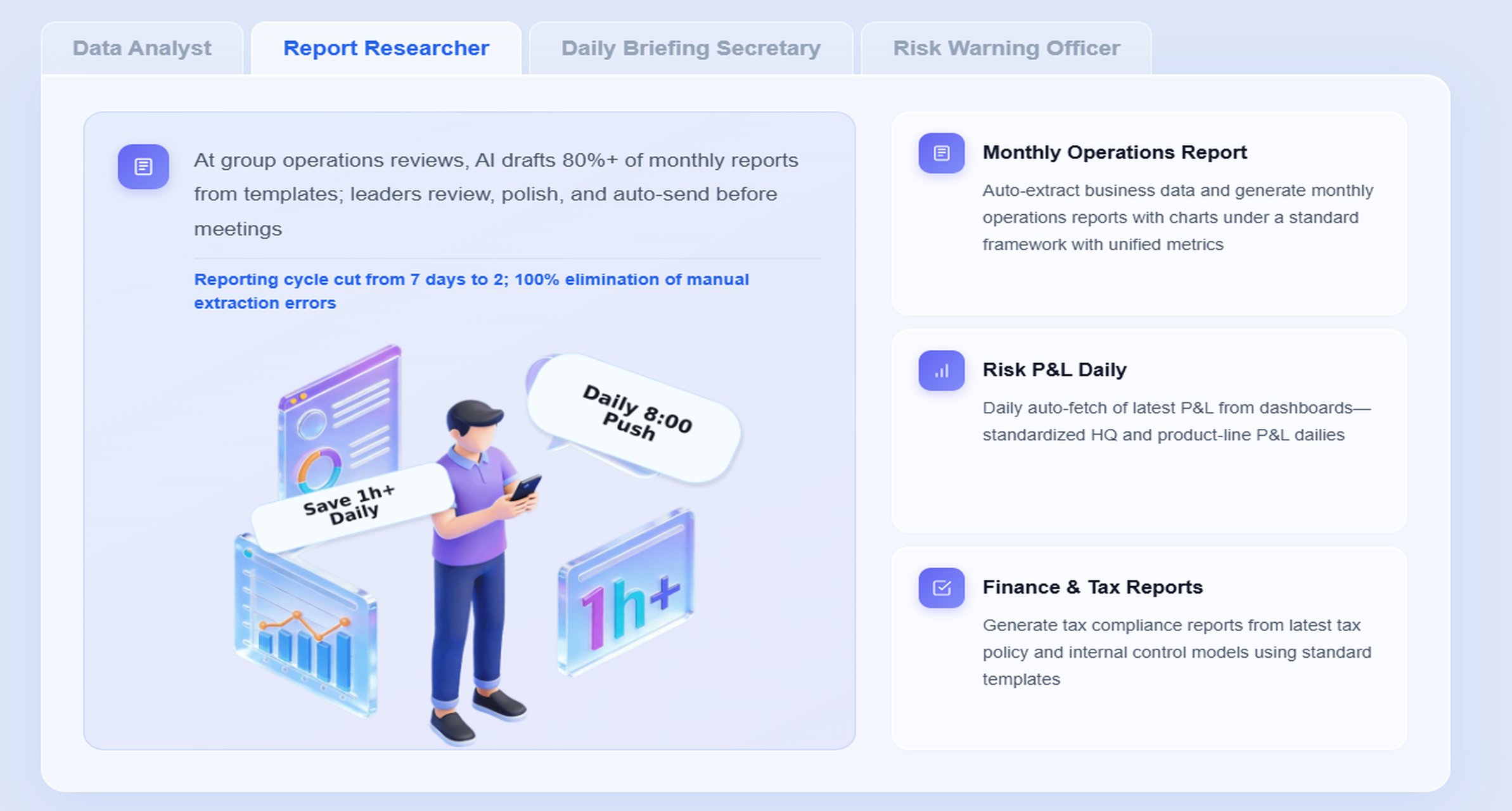
In data governance change management, the most relevant Dora digital employees are usually:
- Data Analyst digital employee for natural-language queries, dashboard retrieval, and governance impact analysis
- Daily Briefing Secretary for scheduled change summaries and meeting preparation
- Risk Alert Officer for monitoring overdue approvals, policy breaches, or abnormal governance exceptions
- Report Researcher for structured governance status reports built from dashboard and workflow data
A scenario-specific query might look like this:
“Show me all pending BI governance changes related to metric definition updates, average approval time by business domain, overdue items above seven days, and the dashboards most affected this month.”
Here is how the workflow can work in a real enterprise setting:
-
Retrieve trusted FineBI governance assets
Dora accesses the approved FineBI dashboards, governance metrics, workflow datasets, and semantic models related to change requests, approval stages, issue queues, and impacted reports. -
Understand KPI definitions and role logic
Dora uses the governed semantic layer to interpret terms such as “pending approval,” “overdue,” “policy adoption rate,” “metric definition change,” and “high-impact dashboard.” This reduces ambiguity compared with raw prompt-only agents. -
Generate chart-based answers and dashboard-style analysis views in chat
A BI manager or governance lead can ask for a summary in natural language. Dora returns a chart-based answer, a structured table, or a dashboard-style analysis view using trusted FineBI assets. -
Detect abnormal changes or threshold breaches
If approval time spikes, policy adoption drops, or unresolved change items exceed a threshold, Dora can flag the issue. This supports the Risk Alert Officer role in governance operations. -
Push summaries, alerts, and suggested follow-up
Dora can send scheduled weekly governance summaries, exception alerts, and owner follow-up reminders to the relevant stakeholders based on permissions and workflow rules. -
Support post-meeting execution
After a governance review, Dora can help produce a concise follow-up summary: open items, accountable owners, impacted dashboards, and upcoming deadlines.
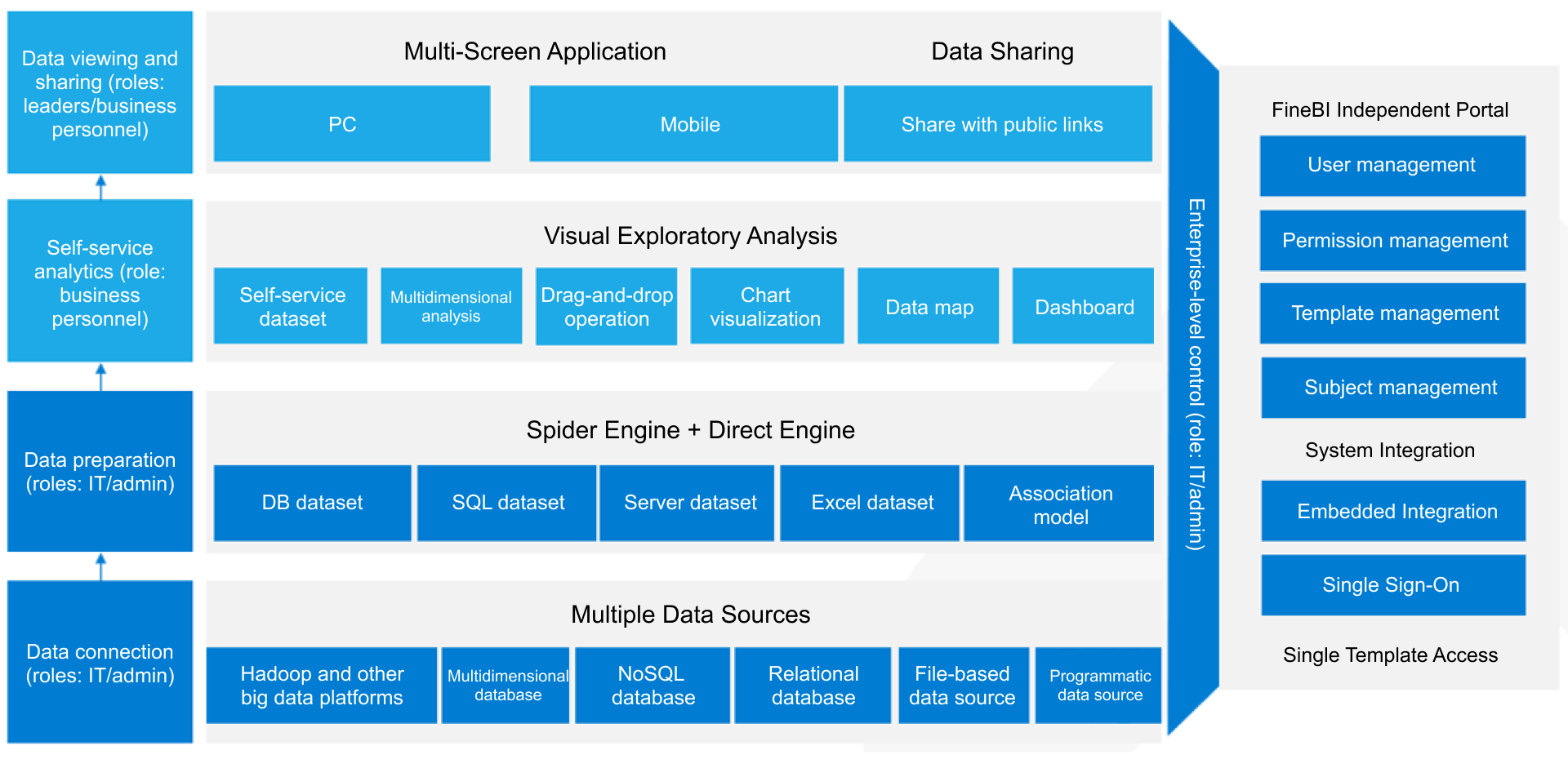
This is where FineBI + Dora becomes practical. FineBI provides the trusted dashboard, semantic foundation, KPI governance, and visual analysis assets. Dora turns that foundation into an enterprise Data Agent that helps teams ask questions in chat, retrieve approved metrics, generate summaries, issue alerts, and support controlled follow-up.
For executives, this means governance is no longer just a static policy layer. It becomes a measurable operating process. For IT, it means less time answering repetitive status questions and more time improving connections, semantics, permissions, and reusable Skills. For business users, it means timely updates without searching across dashboards, emails, and meeting notes.
Core Framework and Key Metrics for Governance Change Management
A strong raci framework data governance change management program needs measurable KPIs. These metrics help teams see whether governance changes are moving efficiently and being adopted correctly.
Governance change intake and throughput metrics
-
Change Request Volume: The number of governance-related BI changes submitted in a period.
Business value: Shows demand on governance and BI operations. Helps estimate workload and prioritize staffing.
AI use: Dora can retrieve request trends by domain, summarize spikes, and include them in scheduled briefings. -
Change Completion Rate: The percentage of submitted changes completed within a reporting period.
Business value: Indicates whether the program is keeping up with governance demand.
AI use: Dora can compare completion trends against prior periods and explain where backlogs are growing. -
Average Approval Time: The average time between request submission and final approval.
Business value: Reveals governance bottlenecks and decision friction.
AI use: Dora can surface overdue approvals by owner, threshold, or business domain and push reminders to responsible stakeholders.
Governance quality and adoption metrics
-
Policy Adherence Rate: The percentage of implemented BI changes that follow approved governance procedures.
Business value: Measures whether teams are actually using the governance model instead of bypassing it.
AI use: Dora can include adherence trends in governance committee summaries and flag exceptions. -
Metric Consistency Rate: The percentage of dashboards using the approved KPI definition after a governance change.
Business value: Protects trust in enterprise reporting and reduces conflicting numbers.
AI use: Dora can help identify affected dashboards and summarize consistency gaps using FineBI asset lineage and semantic mappings. -
Stakeholder Communication Coverage: The percentage of impacted users who received and acknowledged change communication.
Business value: Reduces confusion and improves change adoption.
AI use: Dora can support scheduled pushes, reminders, and follow-up summaries for communication owners.
Risk and issue management metrics
-
Overdue Governance Items: The number of change actions or approvals that exceed defined timelines.
Business value: Helps governance leads focus attention where the process is slowing down.
AI use: Dora can act as a Risk Alert Officer and notify accountable owners when thresholds are breached. -
Issue Resolution Time: The average time to resolve governance-related data or reporting issues after a change.
Business value: Measures whether the organization can stabilize changes quickly.
AI use: Dora can summarize recurring issue categories and support meeting prep with chart-based answers. -
Rework Rate: The percentage of changes that required rollback, correction, or repeated approval.
Business value: Indicates whether role clarity, requirements, or communication are weak.
AI use: Dora can detect patterns in rework and support root-cause reviews with dashboard retrieval and summary generation.
Role accountability metrics
-
Approval by Owner Group: Approval time and volume by accountable function or business domain.
Business value: Highlights whether some ownership groups are overloaded or unclear on decision boundaries.
AI use: Dora can answer chat questions like, “Which data owner groups have the most delayed approvals this quarter?” -
Escalation Rate: The share of changes that required escalation beyond the original accountable owner.
Business value: Signals unclear governance boundaries or insufficient authority at lower levels.
AI use: Dora can include escalation trends in periodic briefings and propose which workflows need redesign.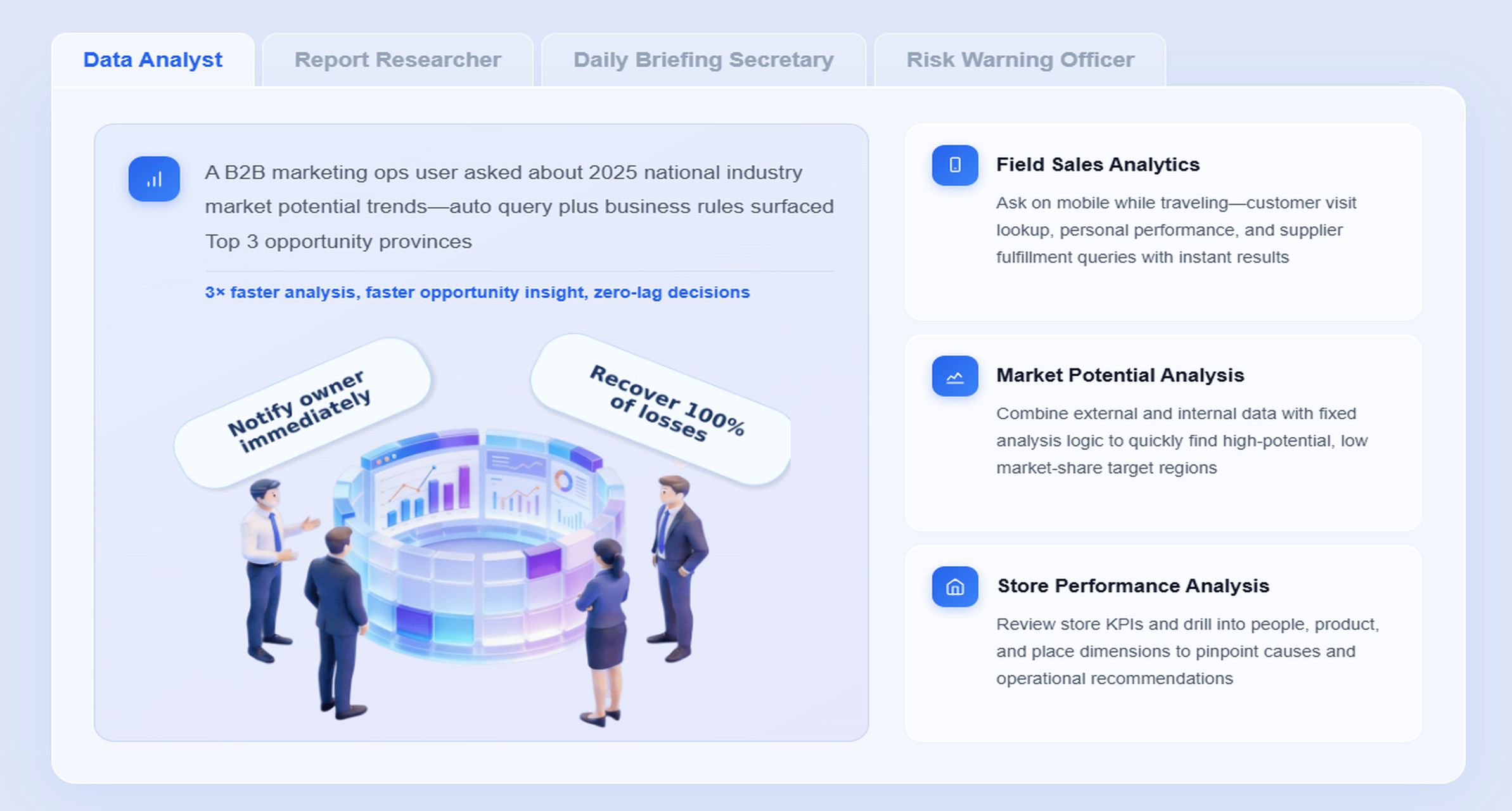
Best Practices for Adoption, Review, and Continuous Improvement
Train teams on responsibilities and decision boundaries
Do not assume everyone interprets RACI the same way. Many teams confuse responsible with accountable, or treat consulted as optional.
Training should include:
- short role definitions
- scenario-based examples
- examples of what each role can decide
- examples of when escalation is required
- examples of what must be documented
This training is especially important when business, IT, security, and governance teams work across different regions or platforms.
Review the framework as the BI program evolves
A RACI framework should change when the BI program changes.
Update assignments when:
- new data domains are added
- FineBI models or dashboard portfolios expand
- a new platform or workflow tool is introduced
- regulations change
- organizational structures shift
- new governance councils or executive sponsors are established
Treat the matrix as a living operating model, not a one-time governance deliverable.
Measure whether the framework is working
If you do not measure it, you will not know whether role clarity is improving outcomes.
Track metrics such as:
- approval time
- policy adherence
- issue resolution speed
- communication coverage
- rework rate
- stakeholder satisfaction
- number of escalations
- percent of dashboards aligned to updated KPIs
FineBI is well suited to operationalizing these measures in a governance performance dashboard. Dora can then turn those metrics into periodic executive summaries, team-level alerts, and actionable follow-up.
Start with high-value recurring workflows
Do not try to automate every governance scenario at once. Start with recurring workflows where ambiguity causes repeat cost.
Good starting points include:
- KPI definition changes
- access request approvals
- weekly governance status reporting
- overdue issue tracking
- data quality remediation workflows
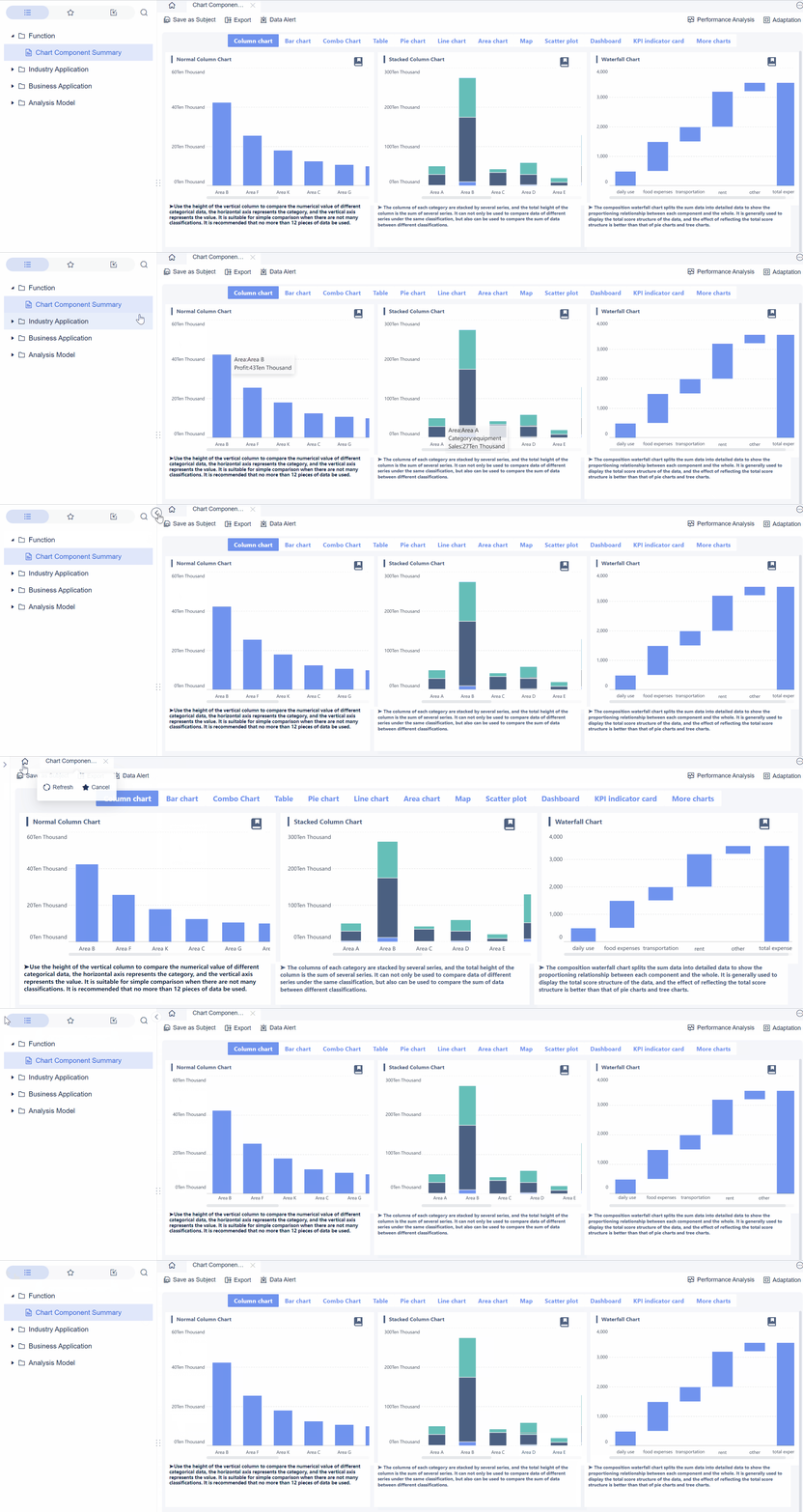
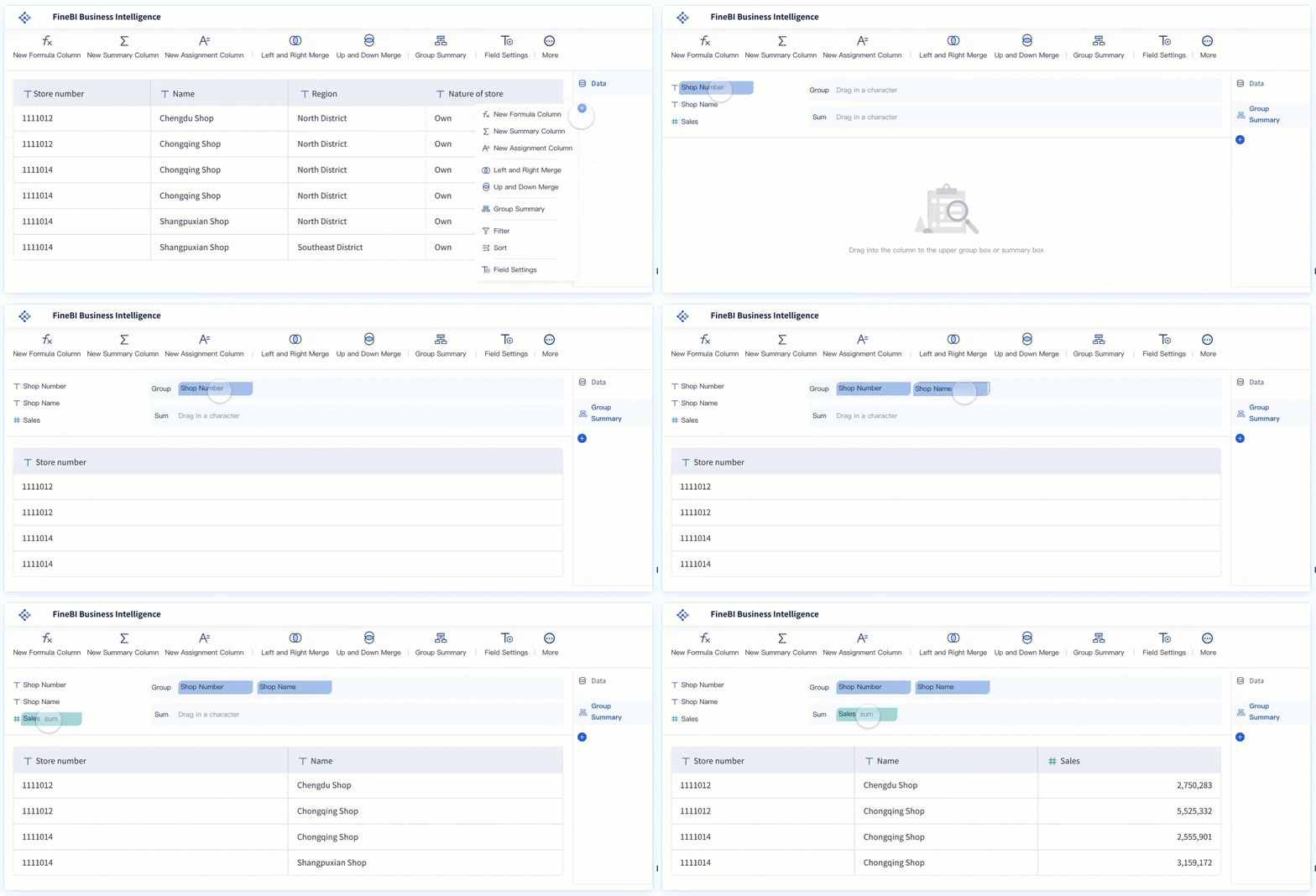
These are high-fit scenarios for FineBI + Dora because they combine governed metrics, repeatable decisions, and frequent stakeholder communication.
Preserve governance and human review in AI-supported workflows
AI support is most valuable when it accelerates retrieval, summarization, follow-up, and exception handling. It should not bypass governance.
Use these controls:
- preserve FineBI permission boundaries
- maintain approved semantic definitions
- review AI-generated reports before broad distribution
- start with constrained Skills and expand gradually
- ensure ownership and audit records remain visible
This is what makes Dora enterprise-ready. It is designed for governed AI workflows, not uncontrolled prompt experiments.
Common Mistakes to Avoid When Using RACI in Data Governance
Several common mistakes reduce the value of RACI in enterprise BI programs.
Treating RACI as a one-time exercise instead of an operating tool
If the matrix is created during a governance project and never used again, it will not shape behavior. It must be tied to real workflow stages, review meetings, and reporting.
Assigning too many accountable owners for the same decision
A decision with multiple accountable owners often has no real owner. Use one accountable owner per decision point whenever possible.
Creating matrices that are too detailed to maintain
An overengineered matrix becomes shelfware. Focus on material decisions that affect KPI trust, policy compliance, access control, release quality, and stakeholder communication.
Ignoring executive sponsorship and change communications
Without executive sponsorship, governance decisions can stall or be bypassed. Without communication discipline, even well-approved changes fail in adoption.
Separating governance design from BI operations
A RACI model that is disconnected from actual dashboards, semantic models, releases, and support workflows will not hold. Governance change management must be operationalized inside the BI program.
Assuming AI can fix unclear governance
AI cannot compensate for undefined KPI ownership, poor data quality, or missing semantic rules. Dora becomes powerful when FineBI assets and governance structures are already trustworthy enough to support governed execution.
FineBI + Dora Solution Pitch
Building this manually is complex. FineBI helps teams build trusted dashboards, metrics, and semantic assets. Dora turns those assets into an AI assistant that can answer questions in chat, generate dashboard-style analysis views, push scheduled summaries, monitor anomalies, and follow up with responsible owners.
In a data governance change management scenario, FineBI can support:
- governance KPI dashboards
- approval cycle analysis
- metric consistency tracking
- exception and issue monitoring
- semantic standardization for approved definitions
- permission-aware access to governed BI assets
Dora can then add a practical execution layer through:
- natural-language data query over trusted BI assets
- chat-based answers for governance leads, BI managers, and executives
- dashboard and metric retrieval from FineBI assets
- chart-based answers and dashboard-style analysis views
- scheduled summaries for governance committees and release meetings
- anomaly alerts for overdue approvals, policy breaches, or adoption issues
- digital employees for repeatable reporting and follow-up work
- Skills-based execution for more controllable and auditable AI workflows
FineBI + Dora is not only a BI upgrade; it is a practical fourth-generation Agentic BI path. FineBI provides governed metrics and visual analysis. Dora provides the AI assistant layer for scenario execution, with more controlled Skills, lower token waste, faster execution paths, and more stable workflows than prompt-only agents.

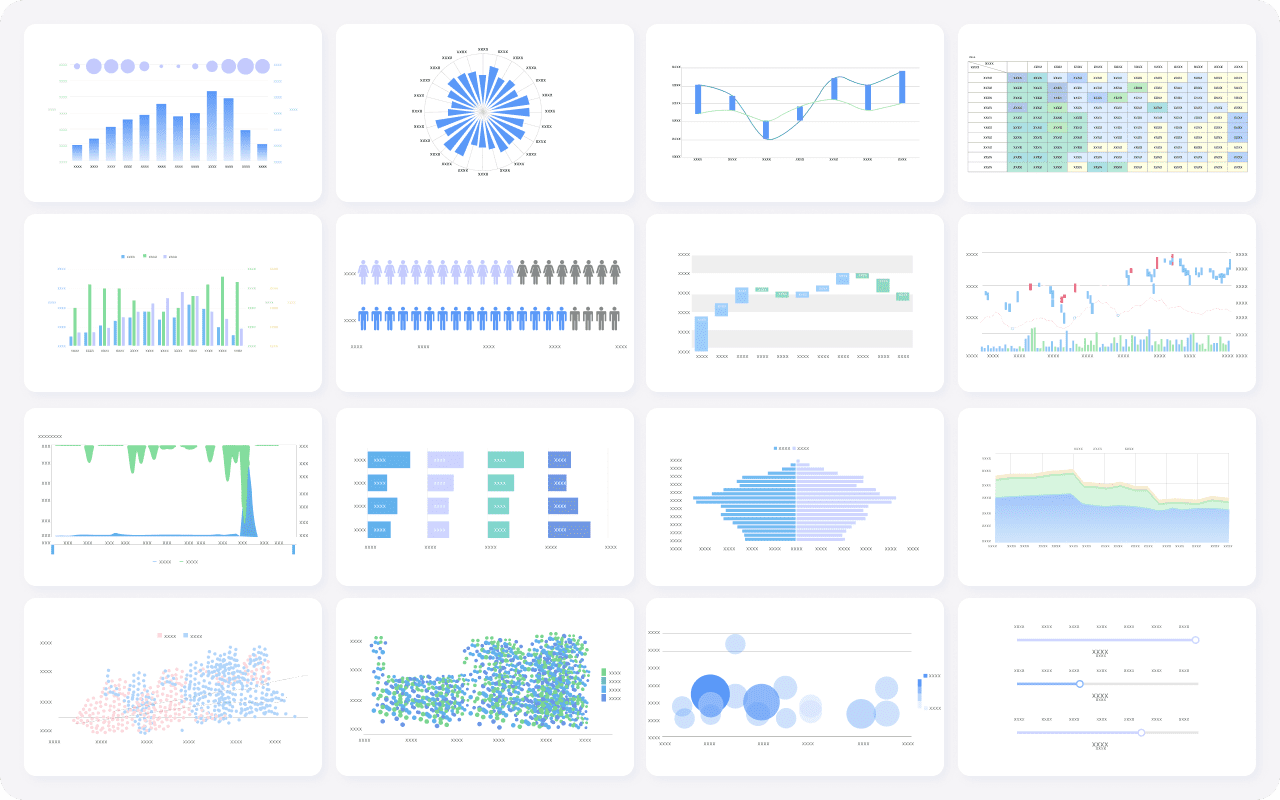
Get Ready-to-Use Dashboard Templates in Fine Gallery
The strongest Dora pitch is scenario + product + service: FineBI provides the trusted BI foundation, Dora provides the AI digital employee, and implementation service connects data, governance, semantic setup, Skills, and rollout.
For enterprise decision-makers, that means a clearer path from governance theory to measurable execution. For IT teams, it means shifting effort from manual status chasing to governed data enablement. For business stakeholders, it means timely answers, trusted metrics, and lower friction during BI change.
FAQs
A RACI framework defines who is responsible, accountable, consulted, and informed for each governance change. In enterprise BI, it helps teams manage policy, metric, access, and reporting updates with clearer decision rights.