

Generative ai for data analytics uses advanced ai models to automatically create, interpret, and visualize data insights, making complex analytics tasks easier for everyone—from business leaders to front-line staff—by transforming raw data into actionable analysis and recommendations in real time.
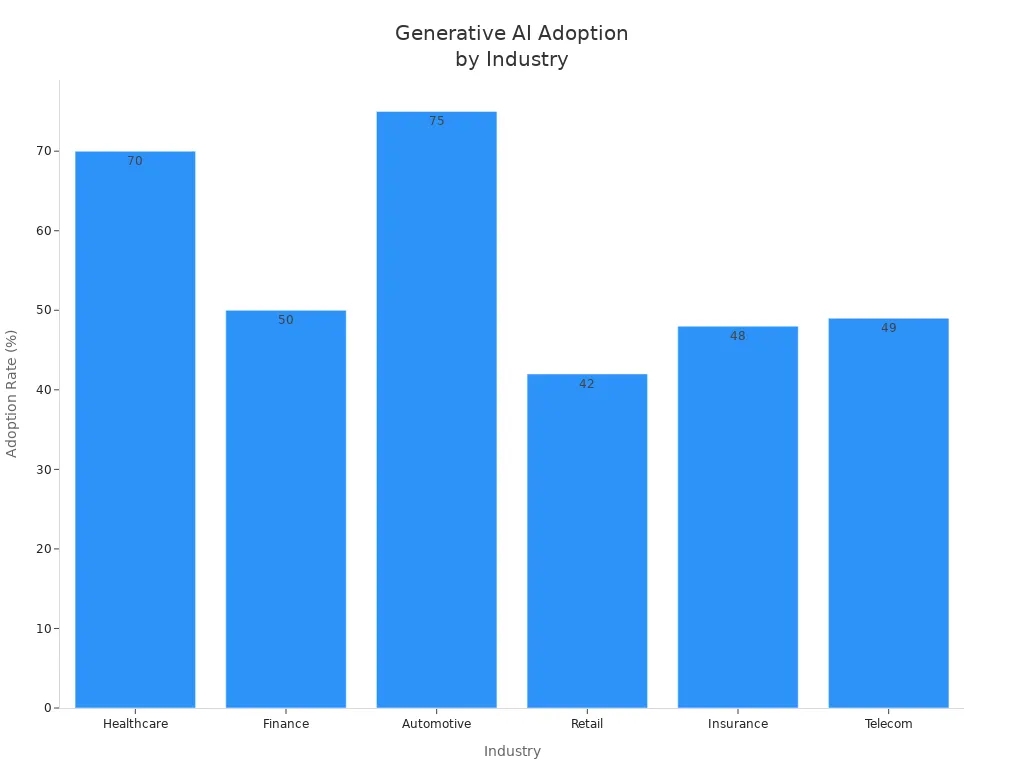
Many industries now use generative AI to automate key data tasks and drive better results. For example, adoption rates in healthcare have reached 70%, while automotive stands at 75%.
You can see advanced analytics in action through natural language queries, instant access to data, and personalized insights. FanRuan leads innovation in this space. Its FineChatBI tool allows you to interact with analytics using everyday language. In manufacturing, generative AI for data analytics supports predictive maintenance and drives new ideas. You will discover how advanced analytics and generative AI for data analytics bring real benefits to your work.
Generative AI Basics
Generative ai for data analytics uses advanced ai and machine learning to create new data, generate insights, and automate analytics tasks, making it easier for you to explore and understand information.
What Is Generative AI?
Generative ai is a branch of ai and machine learning that creates new content, such as text, images, or datasets, by learning from existing data. In data analytics, generative ai applications help you produce synthetic data, automate analysis, and visualize results. Unlike traditional ai, which focuses on analyzing and interpreting data, generative ai can generate new examples and support creative problem-solving. You can use tools like FineChatBI to ask questions in plain language and receive instant, reliable answers. This approach makes analytics accessible to everyone, not just data experts.
Generative ai for data analytics enhances your ability to find patterns, predict trends, and make decisions by automating complex analytics processes.
How Generative AI Differs from Traditional Analytics
Generative ai and machine learning bring new possibilities to analytics compared to traditional methods. The table below highlights the main differences:
| Aspect | Traditional AI | Generative AI |
|---|---|---|
| Functionality | Analyzes and predicts | Creates new content |
| Learning Method | Supervised, rule-based | Self-supervised, deep learning |
| Use Cases | Automation, decision-making | Content generation, creativity |
| Industries Impacted | Finance, cybersecurity, healthcare | Marketing, media, design, research |
| Limitations | Task-specific, lacks creativity | Bias, misinformation risks |
You will notice that generative ai applications rely on prompts and interactive refinement, while traditional analytics uses structured, task-specific interfaces. Generative ai tools like FineChatBI let you explore data conversationally, without needing to know SQL or statistics. Many organizations report higher adoption rates and positive experiences with conversational ai in analytics. Most users prefer ai assistance over waiting for human help, making ai in analytics more approachable and effective for everyone.
Practical Examples of Generative AI for Data Analytics
Data Preparation with Generative AI
Automating Data Cleaning
You face many challenges when preparing data for analytics. Missing values, incorrect entries, and inconsistent formats often slow down your progress. Generative ai helps you solve these problems quickly. You can use generative ai tools to process millions of records in minutes. Traditional methods may take days. Generative ai identifies fuzzy duplicates by understanding context, not just matching rules. It automatically standardizes data formats, adapting to regional differences and ensuring uniformity across datasets. Machine learning algorithms reduce human errors and improve accuracy over time. You can scale generative ai to handle expanding datasets and maintain consistency across departments.
Automated tools for data cleansing and enrichment play a crucial role in ensuring that ai models have access to high-quality data. These tools can identify and correct errors in real-time, which enhances the overall effectiveness of generative ai outputs.
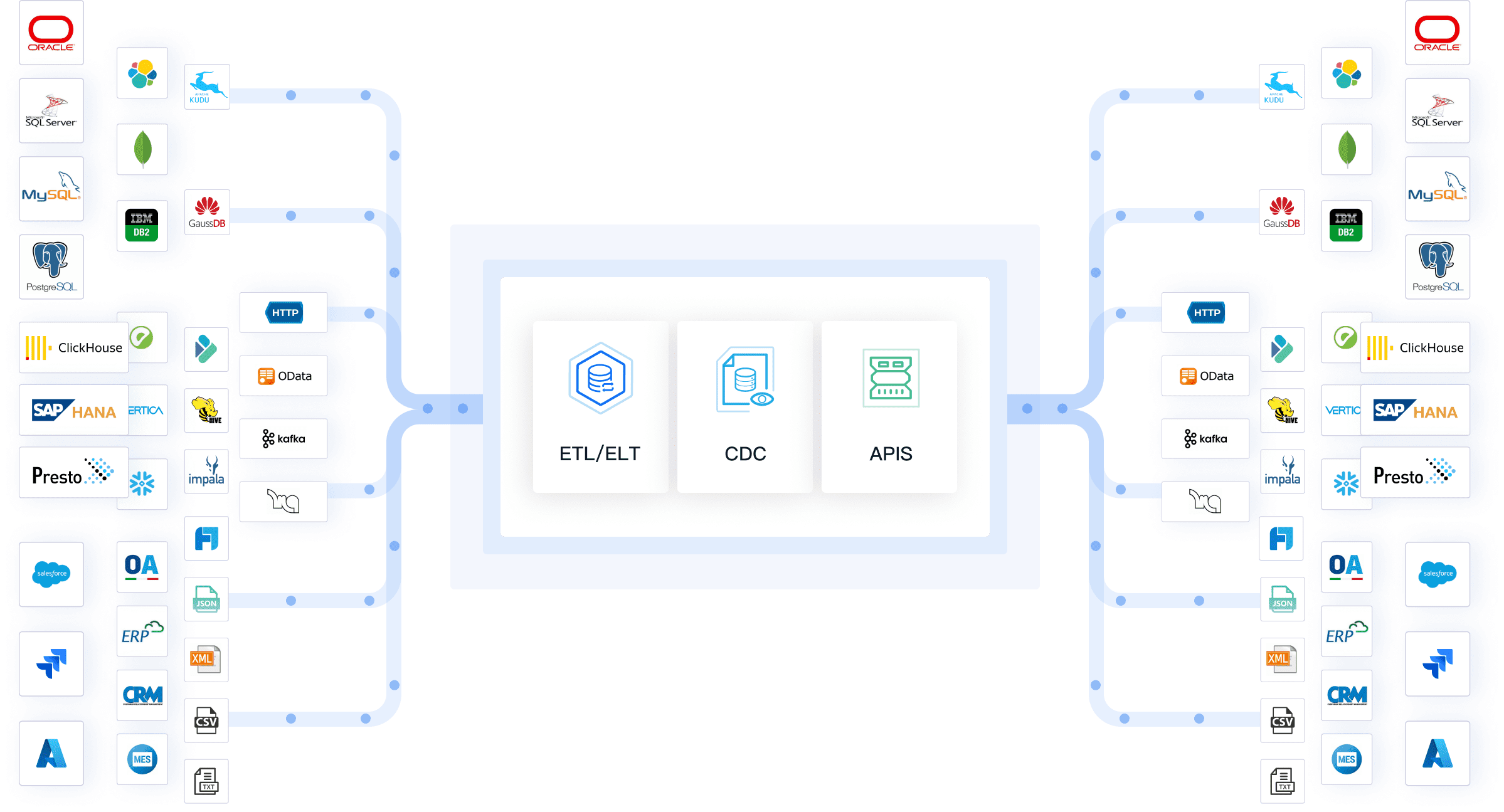
FanRuan’s FineDataLink offers a visual interface for data integration. You can synchronize data across multiple tables in real time. This platform supports over 100 data sources, making it easy to connect and clean data from different systems.
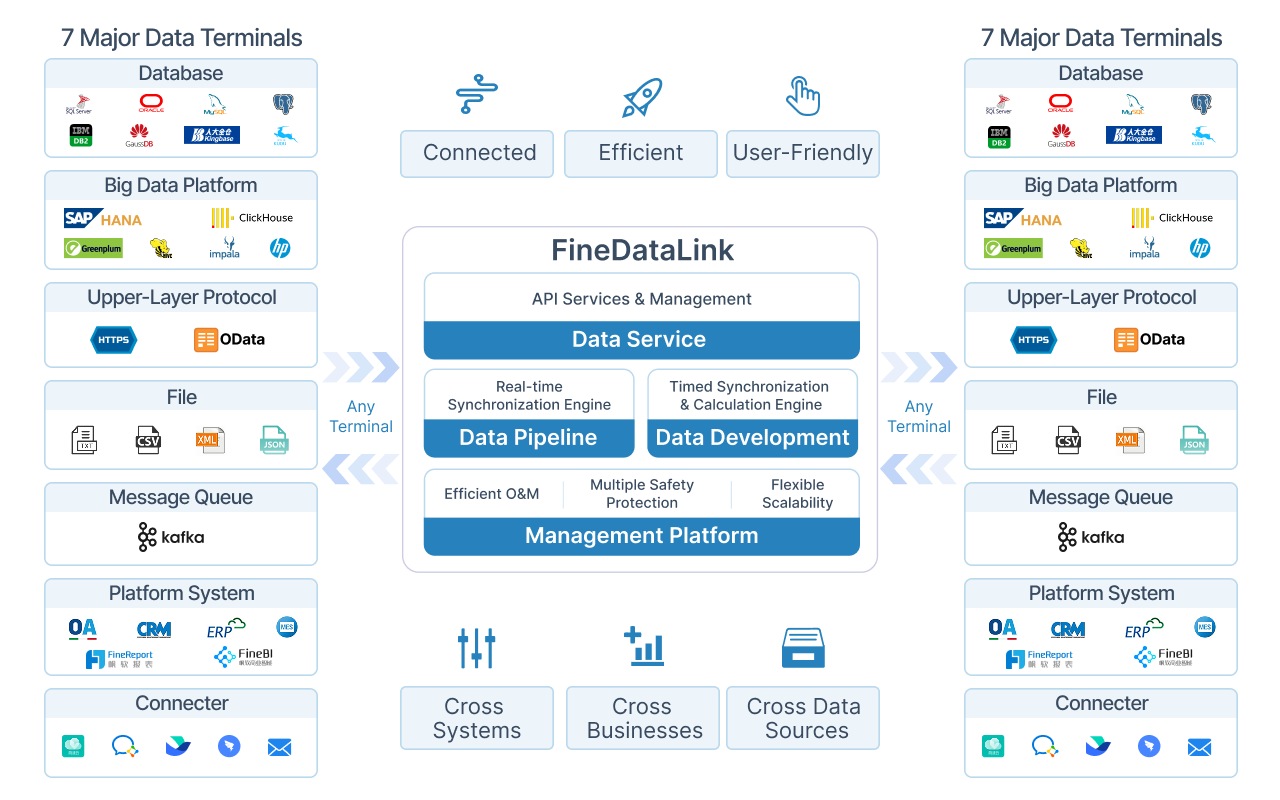
In manufacturing, generative ai helps resolve data silos and complex formats. For example, you can integrate production, quality, and cost data from separate systems. FineDataLink synchronizes these datasets in real time, supporting lean production and smart decision-making.
Data integrity ensures accuracy, consistency, and reliability of data. It mitigates biases and enables reliable outputs. Tools are emerging to safeguard data integrity in ai systems.
You can establish data governance policies, use automated validation, and monitor data quality metrics to maintain high standards. Generative ai makes data preparation faster, more accurate, and scalable for your analytics needs.
Automated Visualization & Reporting in Data Analytics

Generative AI for Dashboards
You can use generative ai to create dashboards that show important data trends. Generative ai understands your questions and builds charts that match your needs. You do not need to write code or design layouts by hand. You can ask for a sales overview, and generative ai will select the best chart type. You can drill down into details or switch views with a simple command. This process saves you time and helps you focus on analysis.
FineBI and FineReport from FanRuan make dashboard creation easy. You can connect to many data sources and see results in seconds. Generative ai helps you spot patterns and outliers in your data. You can use data visualization to compare performance across teams or products. You can share dashboards with your team for faster real-time decision making.
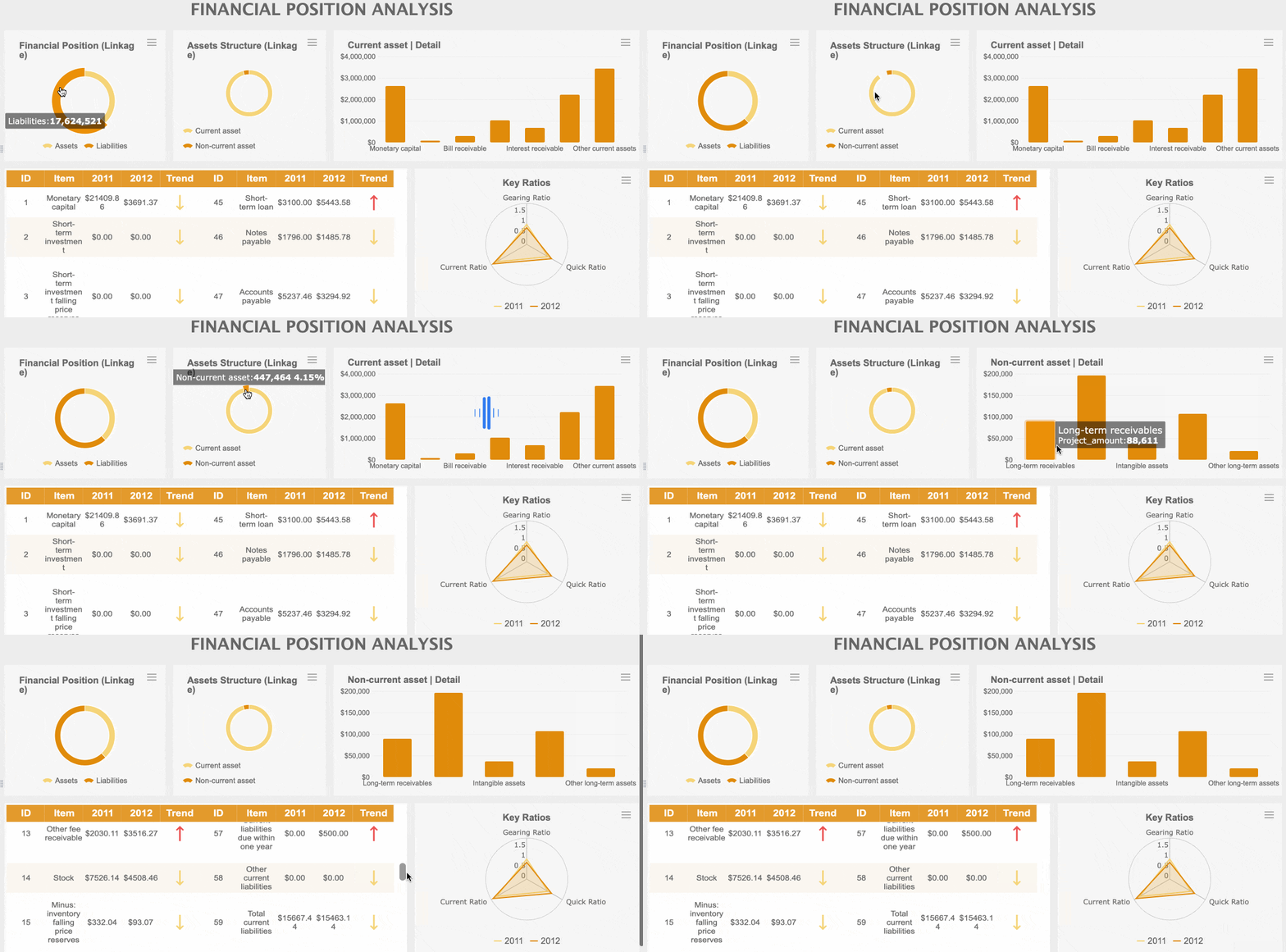
Tip: Use generative ai to update dashboards automatically. You always see the latest data without manual refresh.
Report Generation with FanRuan
You can use generative ai to automate report creation. FineReport lets you build custom reports with an Excel-like designer. You can set up templates and let generative ai fill in the data. You can generate daily, weekly, or monthly reports with one click. FineBI supports self-service analytics, so you can explore data and create reports on your own.
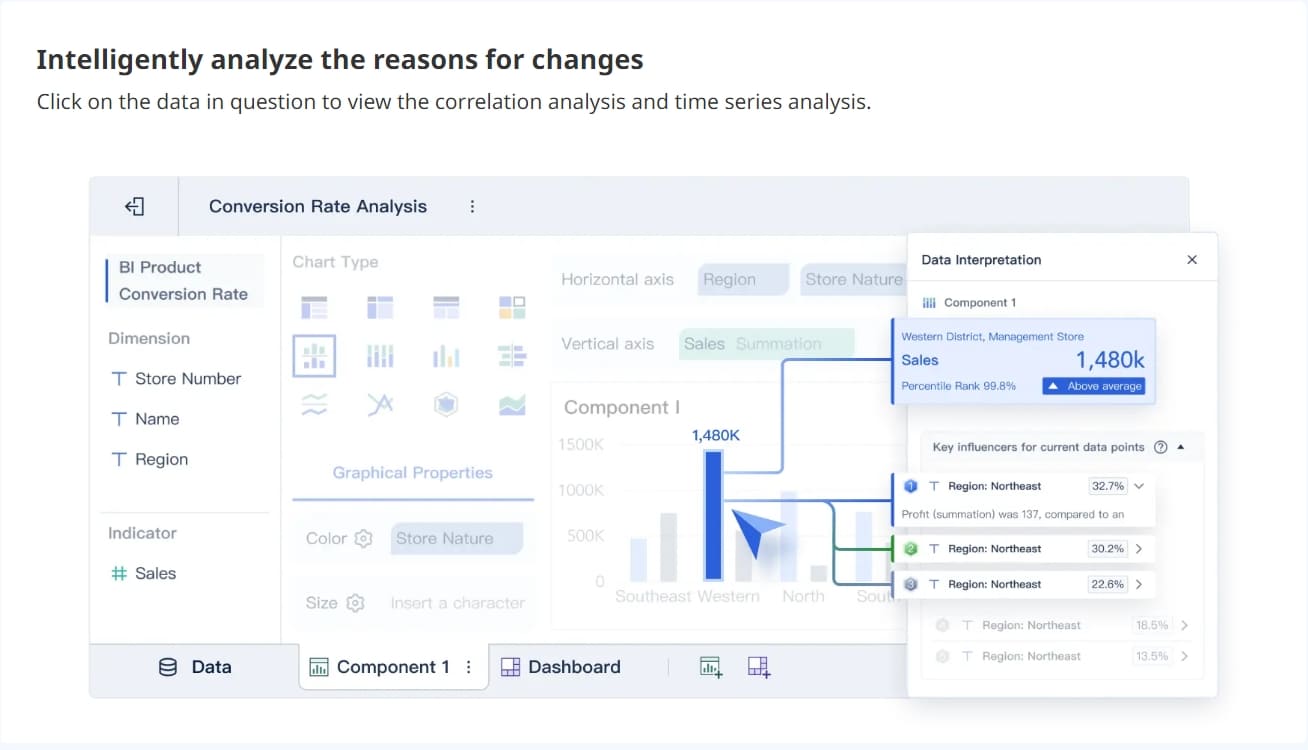
In manufacturing, you can track production, quality, and costs in real time. For example, a factory manager uses FineReport to monitor equipment status and output. Generative ai pulls data from sensors and systems, then creates a report that highlights issues and suggests actions. You can export reports as Excel files or images for sharing.
| Feature | Benefit |
|---|---|
| Automated dashboards | Faster insights |
| Real-time reporting | Better decision making |
| Custom templates | Consistent data presentation |
You can rely on generative ai to keep your reports accurate and up to date. This approach improves efficiency and supports better data analytics across your organization.
Conversational Data Analytics with FineChatBI
Natural Language Querying
You can use generative ai to interact with your data in a way that feels natural. FineChatBI lets you type questions directly into a chatbox. You do not need to know coding or SQL. Generative ai understands your intent and extracts the right data for your needs. This approach makes data analytics accessible to everyone, not just experts.
FineChatBI uses Text2DSL technology. This converts your natural language into structured queries. You get accurate results faster. Proprietary rule models handle simple questions with precision. Large language models manage complex queries, ensuring you get comprehensive answers.
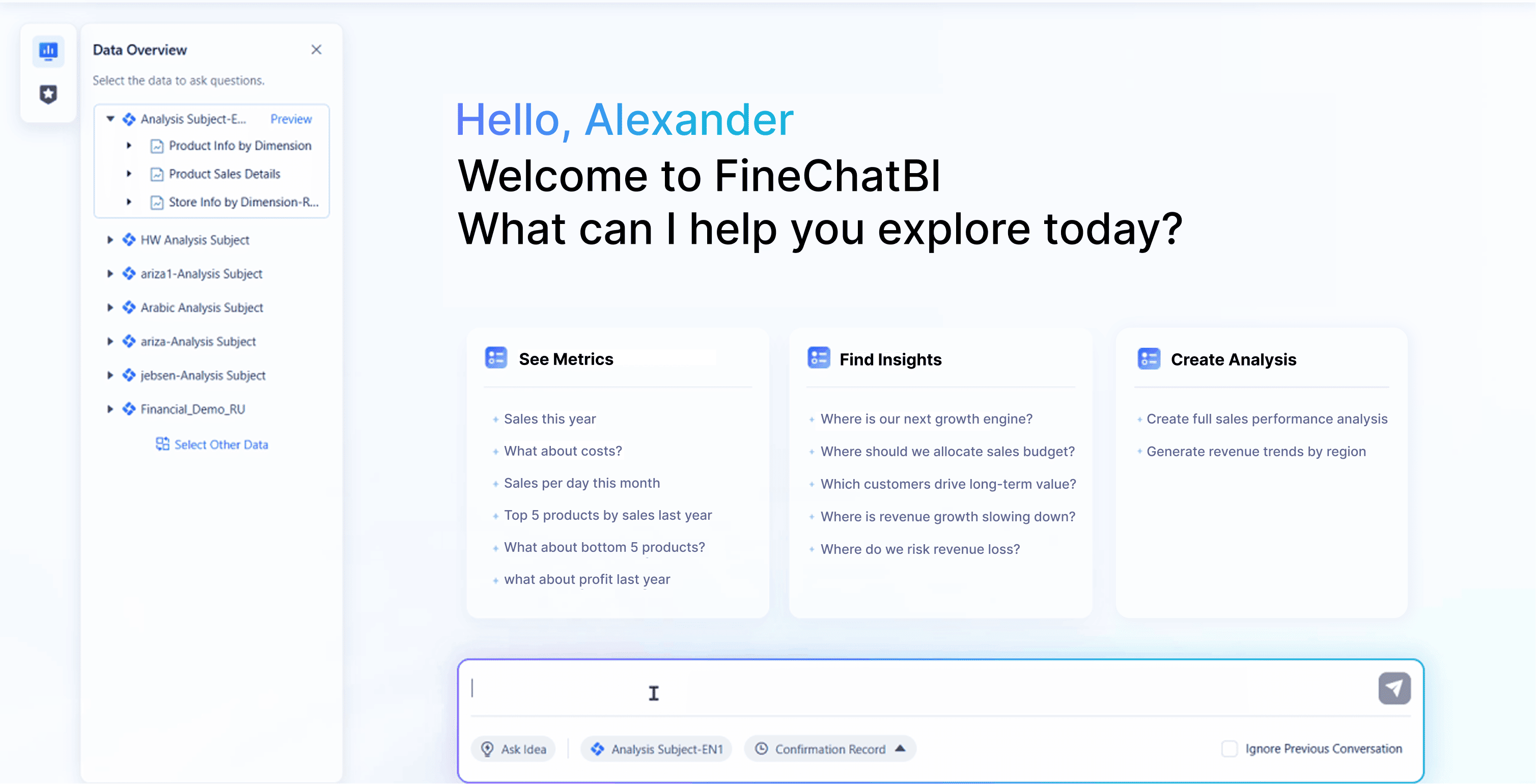
Tip: Practice your prompts. The more context you provide, the better generative ai understands your data needs.
Here is how FineChatBI compares to other generative ai solutions:
| Feature | FineChatBI | Other Generative AI Solutions |
|---|---|---|
| User Interaction | Natural language queries | Often requires coding or SQL knowledge |
| Accessibility | Self-service analytics for non-experts | Typically aimed at data experts |
| Technology Utilized | Text2DSL for converting queries into commands | Varies, often lacks such direct conversion |
| Efficiency | Enhances data analytics process | May not focus on efficiency |
Multi-Turn Analysis
Generative ai in FineChatBI supports multi-turn analysis. You can ask follow-up questions and keep the conversation going. The system remembers your previous queries and builds on them. This helps you explore data trends and patterns without starting over each time.
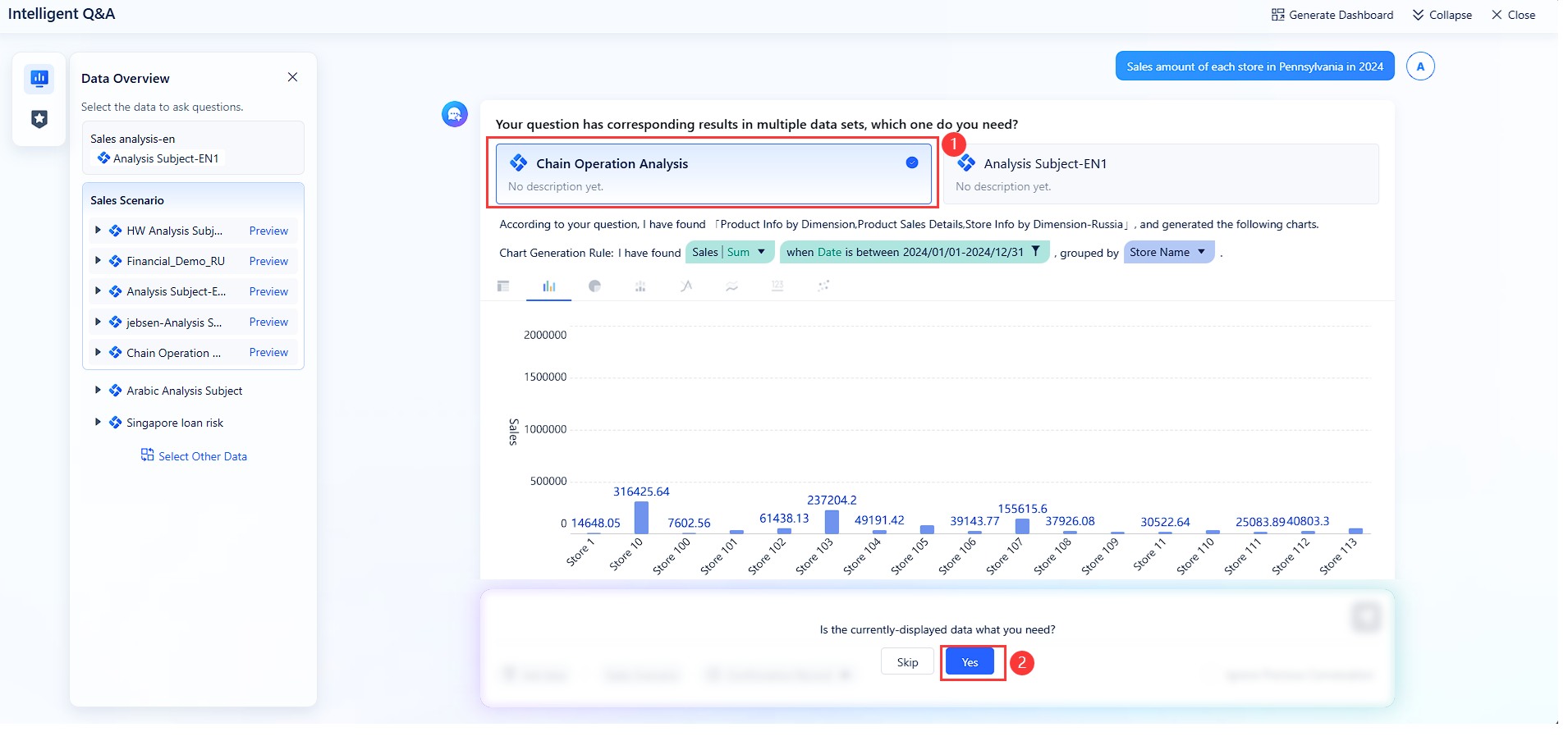
You can switch chart types, drill down for deeper analysis, and apply attribution analysis. FineChatBI integrates with enterprise data sources, so you always work with up-to-date information. You can export results as Excel files or images for sharing.
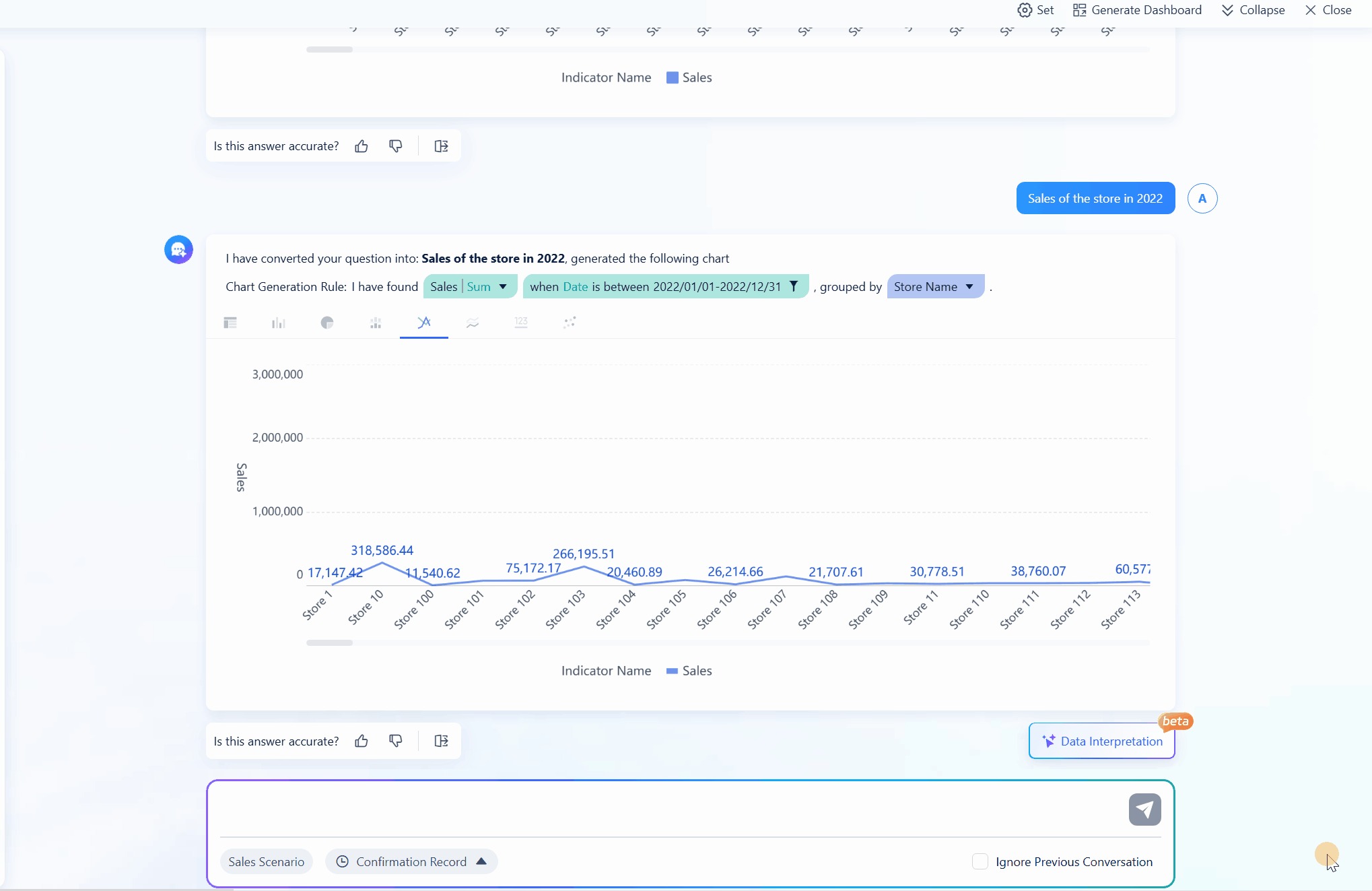
Here are some best practices for using generative ai in your data analytics workflow:
- Structure your prompts for clarity.
- Provide rich context and business metrics.
- Establish standardized prompts for consistency.
- Prioritize data privacy and governance.
A real-world example comes from BOE, a leader in manufacturing. BOE used FineChatBI to unify fragmented data and standardize metrics. Managers asked questions in plain language and received instant insights. This led to a 50% increase in operational efficiency and a 5% reduction in inventory costs.

Generative ai transforms how you interact with data. You gain deeper insights and make better decisions with less effort.
Synthetic Data Generation for Modeling

Enhancing Data Models
You can use generative ai to create synthetic data that improves your modeling process. Synthetic data mimics the patterns and properties of real data, but it does not contain sensitive information. This approach helps you train and test models when real data is limited or privacy rules restrict access. You can generate new examples to balance your datasets and make your models more accurate.
Studies show that using synthetic data increases sensitivity and specificity in model training. Here is a comparison:
| Study Description | Sensitivity | Specificity |
|---|---|---|
| Classical Augmentation | 78.6% | 88.4% |
| With Synthetic Data | 85.7% | 92.4% |
You see higher fidelity in clinical parameters, reaching 92.3%. Synthetic data preserves the statistical properties of real data, so your models learn from realistic scenarios. You can use generative ai to simulate rare events, test predictive analytics, and expose vulnerabilities before attackers find them.
FanRuan supports data modeling and integration across diverse sources. You can connect different systems and use generative ai to fill gaps in your data. This process helps you build stronger models for data analytics and predictive analytics.
Tip: Use synthetic data to test your models before deploying them in real-world situations. This reduces risk and improves reliability.
Use Cases in Business Intelligence
You can apply synthetic data in many business intelligence scenarios. Generative ai helps you create realistic datasets for training, testing, and sharing without privacy risks. Here are some common use cases:
| Use Case Description | Benefits |
|---|---|
| Enhancing model training with variations in datasets | Models become more resilient to environmental changes and unexpected inputs. |
| Generating realistic examples of rare events | Improves model performance in predicting infrequent events, aiding in fraud detection and emergency response. |
| Automatic label assignment during data generation | Speeds up model development and reduces human errors in labeling. |
| Evaluating vendor performance without exposing sensitive data | Facilitates collaboration while maintaining compliance with data protection laws. |
| Internal data sharing without privacy risks | Accelerates innovation and experimentation across departments. |
| Predicting customer behavior while ensuring compliance | Helps in building segmentation models and forecasting churn. |
| Planning patient recruitment and identifying adverse events | Supports healthcare analytics before real-world data collection. |
| Running marketing simulations without user consent | Allows for detailed analysis of marketing spend using synthetic data. |
You can use generative ai to replace sensitive training data with synthetic alternatives. This ensures compliance with privacy laws and supports secure data analytics. You should implement rigorous data governance, use explainable ai frameworks, and conduct regular audits to protect your data. Employee training helps prevent unintentional data leaks.
Synthetic data generation with generative ai gives you the flexibility to innovate, test, and share data safely. You can improve your data modeling, support predictive analytics, and drive business intelligence without compromising privacy.
Insight Generation & Explanation with Generative AI
Automated Insights
You can use generative ai to uncover valuable data insights from both structured and unstructured data. Generative ai analyzes images, videos, and text, revealing patterns that traditional analytics often miss. You gain a deeper understanding of your business by letting generative ai process large datasets quickly. This technology finds hidden correlations and trends, helping you make smarter decisions.
Generative ai processes data 1000 times faster than human analysts. You see results in seconds, not days.
Here is a comparison of how generative ai and traditional analytics handle data:
| Aspect | Generative AI | Traditional Analytics |
|---|---|---|
| Data Types | Structured and unstructured | Primarily structured |
| Insight Generation | Generates new insights from patterns | Relies on predefined algorithms |
| Flexibility | Highly flexible in data processing | Limited flexibility |
| Use Cases | Content creation, product design | Standard reporting and analysis |
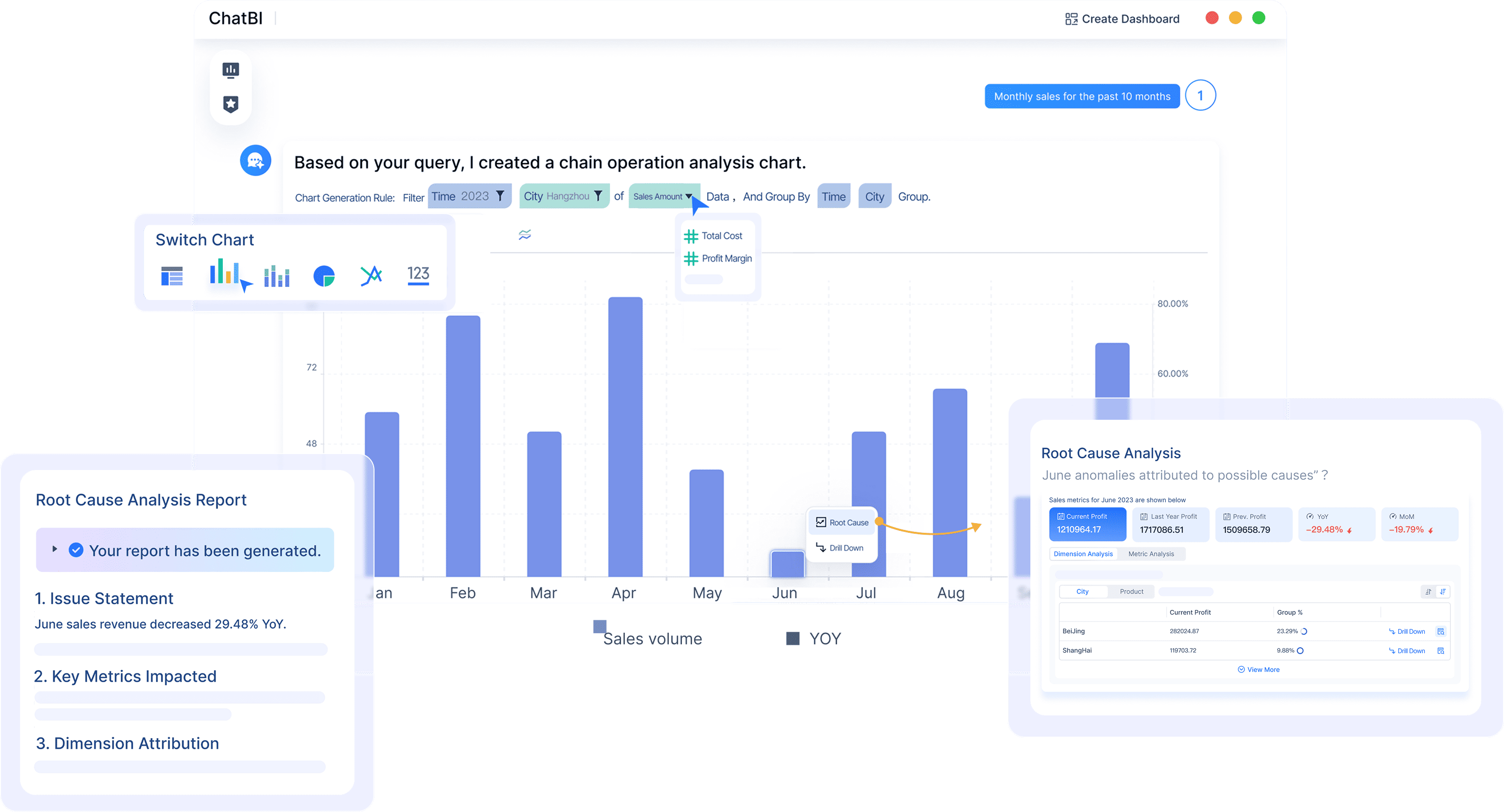
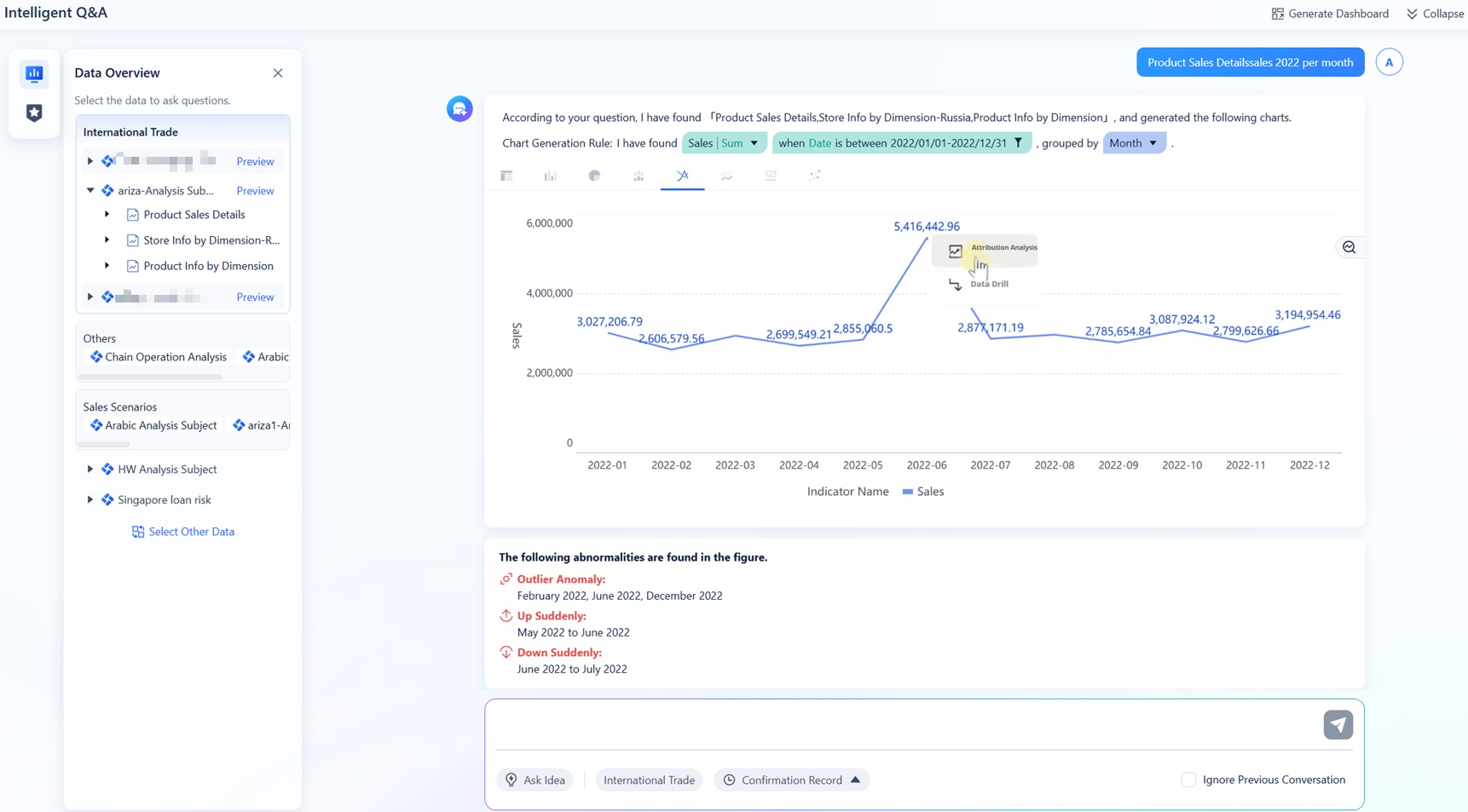
FanRuan’s FineChatBI uses advanced models to analyze your data. You can detect anomalies and track the reasons behind changes. FineChatBI connects to over 100 data sources, giving you a complete view of your business. You get real-time analytics and a user-friendly interface, making it easy to spot issues and opportunities.
Actionable Recommendations
Generative ai does more than find patterns. You receive actionable recommendations based on the latest data insights. FineChatBI supports attribution analysis, helping you understand what drives changes in your business. You can use prescriptive analytics to decide your next steps with confidence.
Many companies have improved their operations with generative ai. For example, a Gen AI-powered chatbot enhanced customer service, leading to a 34% revenue increase and a 69% improvement in consumer satisfaction. Another client used generative ai for onboarding, boosting conversion rates by 22% and engagement by 20%.
You can combine generative ai with human expertise for the best results. AI excels at pattern recognition and predictive modeling, reaching up to 99% accuracy. Human analysts add strategic business context, improving decision-making. This approach supports data-driven decision making and helps you stay ahead in your industry.
Tip: Use generative ai to monitor your business in real time. Act on recommendations quickly to maximize your results.
You have seen how generative AI improves data preparation, visualization, conversational analytics, synthetic data generation, and insight creation. Integrating FanRuan products into your workflow brings greater efficiency and value. You gain faster decision-making, better forecasting, and actionable recommendations.
Focus on explainability, ethics, and skill development to maximize the value of generative AI.
Explore these resources to get started:
| Resource Title | Description |
|---|---|
| An Ultimate Guide to Generative AI Implementation | Learn how to boost productivity and content creation. |
| Generative AI for data analytics | Discover practical steps for every stage of analytics. |
| The Data Professional’s Guide to Generative AI | Build foundational and advanced skills for your team. |
Benefits and Value of AI in Analytics

Generative ai for data analytics uses ai and machine learning to automate the creation, interpretation, and visualization of data insights, making analytics faster, more accessible, and more reliable for everyone.
You gain clear advantages when you use generative ai applications in analytics. These tools help you make better decisions, save time, and improve accuracy. FineChatBI shows how ai and machine learning can transform your daily data tasks.
Key Advantages for Business Users
Generative ai applications offer you many benefits in analytics. You can automate routine tasks, personalize customer experiences, and boost productivity. The table below highlights the main advantages for business users:
| Advantage | Description |
|---|---|
| Cost Reduction | Automates repetitive tasks, lowering operational costs. |
| Time Savings | Frees up time for critical work by automating routine tasks. |
| Personalized Customer Experiences | Powers recommendations for better customer satisfaction. |
| Increased Productivity | Automates tasks that take up most of your time, improving overall productivity. |
| Enhanced Data Analysis Capabilities | Finds trends and patterns in large datasets for better decision-making. |
| Customization | Adapts models to your business needs. |
| Improved Customer Service | Delivers quick, accurate responses to inquiries. |
You see improvements in accessibility, speed, and trustworthiness. AI automates time-consuming tasks like data cleaning, which can take up to 80% of your time. Machine learning and ai analyze large datasets quickly and consistently, reducing errors and increasing confidence in your results.
Real-World Impact: TXC Corporation Case
TXC Corporation used generative ai for data analytics to solve reporting and data access challenges. Employees now use ai and machine learning to analyze data, create reports, and share insights across departments. TXC improved analytical efficiency and empowered staff to make data-driven decisions. The company saw better process improvements and stronger data governance. This example shows how generative ai applications can help you unlock business value and drive digital transformation.

Limitations and Considerations
Generative ai applications in analytics have some challenges. You may face issues with bias, data privacy, and ethical concerns. Models can sometimes struggle with context or produce unfair outcomes. Integration with existing systems may require extra effort. Experts recommend strong governance, regular security audits, and employee training to address these challenges. You should focus on transparency, accuracy, and security to build trust in ai and machine learning outputs.
Tip: Always review ai-generated insights and analysis to ensure fairness and reliability in your decision-making.
Generative ai for data analytics gives you the power to turn raw data into actionable insights with speed and accuracy. You saw how tools like FineChatBI automate data preparation, visualization, and analysis, making analytics accessible for everyone. Companies using ai-driven analytics report higher revenue growth and efficiency.
- You benefit from:
- Automated data cleaning and real-time insights
- Enhanced predictive analytics and scalable solutions
- Easy access to examples and practical applications
Explore generative ai solutions like FineChatBI to unlock new value in your analytics journey. For next steps, review resources on FanRuan’s website or consider collaborative projects that showcase real-world applications.
Frequently asked questions
Generative AI uses advanced algorithms to automate tasks like data cleaning, visualization, and insight generation. You can use it to analyze large datasets and discover patterns faster than traditional methods.