Choosing the right data intelligence software in 2026 is no longer just about picking a dashboard tool. BI buyers now have to evaluate a much broader stack: analytics, data discovery, governance, lineage, quality, AI assistance, and integration across modern cloud platforms. That shift has changed how organizations shortlist vendors, define requirements, and measure long-term value.
This guide compares the leading options across the market, explains how BI buyers should assess them, and ranks the top tools by practical enterprise buying criteria. While the wider market includes dozens of products, the top tier is increasingly shaped by a smaller group of platforms that stand out in analytics, governance, integration breadth, or unified data-and-AI delivery.
Why data intelligence software matters for BI buyers in 2026
Modern data intelligence software covers far more than charts and dashboards. A strong platform may now include:
- Data discovery to help users find relevant datasets faster
- Cataloging and metadata management for context and ownership
- Data lineage to show where data comes from and how it changes
- Data quality monitoring to improve trust in reporting and AI outputs
- Governance and policy controls for compliance and stewardship
- AI-assisted analysis including natural language querying, recommendations, and automated insights
- Integration capabilities connecting pipelines, warehouses, lakehouses, and BI layers
For BI buyers, this matters because reporting alone is no longer enough. Leadership teams want trusted, reusable, governed data products that support operational decisions, self-service analytics, and AI initiatives at the same time.
In 2026, several buying pressures are shaping the market:
- Rising data volume and variety across SaaS apps, cloud platforms, streaming sources, and unstructured content
- Stricter governance requirements driven by compliance, privacy, model transparency, and internal accountability
- Faster self-service expectations from business teams that want answers without waiting on central analytics teams
- Pressure to reduce tool sprawl by consolidating overlapping capabilities into fewer strategic vendors
This comparison is designed for:
- BI leaders building or modernizing analytics programs
- Analytics managers responsible for user adoption and reporting outcomes
- Data platform owners balancing engineering, governance, and consumption needs
- Procurement and sourcing teams evaluating enterprise software fit, implementation effort, and total cost of ownership
How we ranked the 30 best data intelligence software
The market for data intelligence software is crowded, but not all products solve the same problem. Some are visualization-first. Others focus on metadata, governance, or cloud-native platform unification. Our ranking emphasizes buyer value across the full decision process rather than popularity alone.
Evaluation criteria used in this comparison
We weighed each product against six major criteria.
Core analytics and visualization capabilities
We assessed dashboard quality, ad hoc analysis, reporting flexibility, collaboration, semantic consistency, and ease of use for business teams. Platforms that support broad adoption without sacrificing analytical depth scored higher.
Data integration and pipeline support
We looked at connectivity, ingestion options, transformation support, compatibility with warehouses and lakehouses, and whether the vendor can support modern data movement or federated access patterns.
Governance, catalog, lineage, and quality features
This includes metadata management, stewardship workflows, policy enforcement, lineage mapping, data trust signals, and built-in or adjacent data quality capabilities. In 2026, these are essential differentiators, especially for enterprise buyers.
AI assistance, automation, and natural language capabilities
Vendors were evaluated on natural language querying, automated insight generation, recommendation engines, assistant workflows, anomaly detection, and broader automation that reduces manual analytics work.
Deployment flexibility, scalability, and ecosystem fit
We considered cloud, hybrid, and enterprise deployment options, security alignment, workload scalability, ecosystem partnerships, and fit with common enterprise architectures.
Pricing transparency, implementation effort, and total cost of ownership
A strong tool on paper can still become a poor fit if licensing is opaque, implementation is heavy, or ongoing administration costs are too high. We factored in buyer complexity, not just feature count.
What BI buyers should weigh before choosing
Before selecting a platform, buyers should first determine which category of need matters most.
- A visualization-first platform is best when dashboard adoption, ease of use, and business exploration are top priorities.
- A data platform-first option is better when analytics must sit close to engineering, AI, and large-scale processing.
- A governance-led solution is the better fit when trust, policy control, lineage, and stewardship are the main gaps.
It is also important to judge how well each product fits existing investments:
- Current cloud provider
- Data warehouse or lakehouse architecture
- Existing BI tools
- Security model and identity stack
- Data governance operating model
Finally, buyers need to manage the tradeoff between platform breadth and best-of-breed depth. A broad suite may simplify vendor management and integration, while a specialized product may be stronger in one critical area such as cataloging, natural language analytics, or embedded BI.
Feature-by-feature comparison of the 30 best data intelligence software tools
Below is a ranked view of the top market options, starting with the eight strongest choices for most BI buying teams and then covering the wider shortlist.
1. FineBI
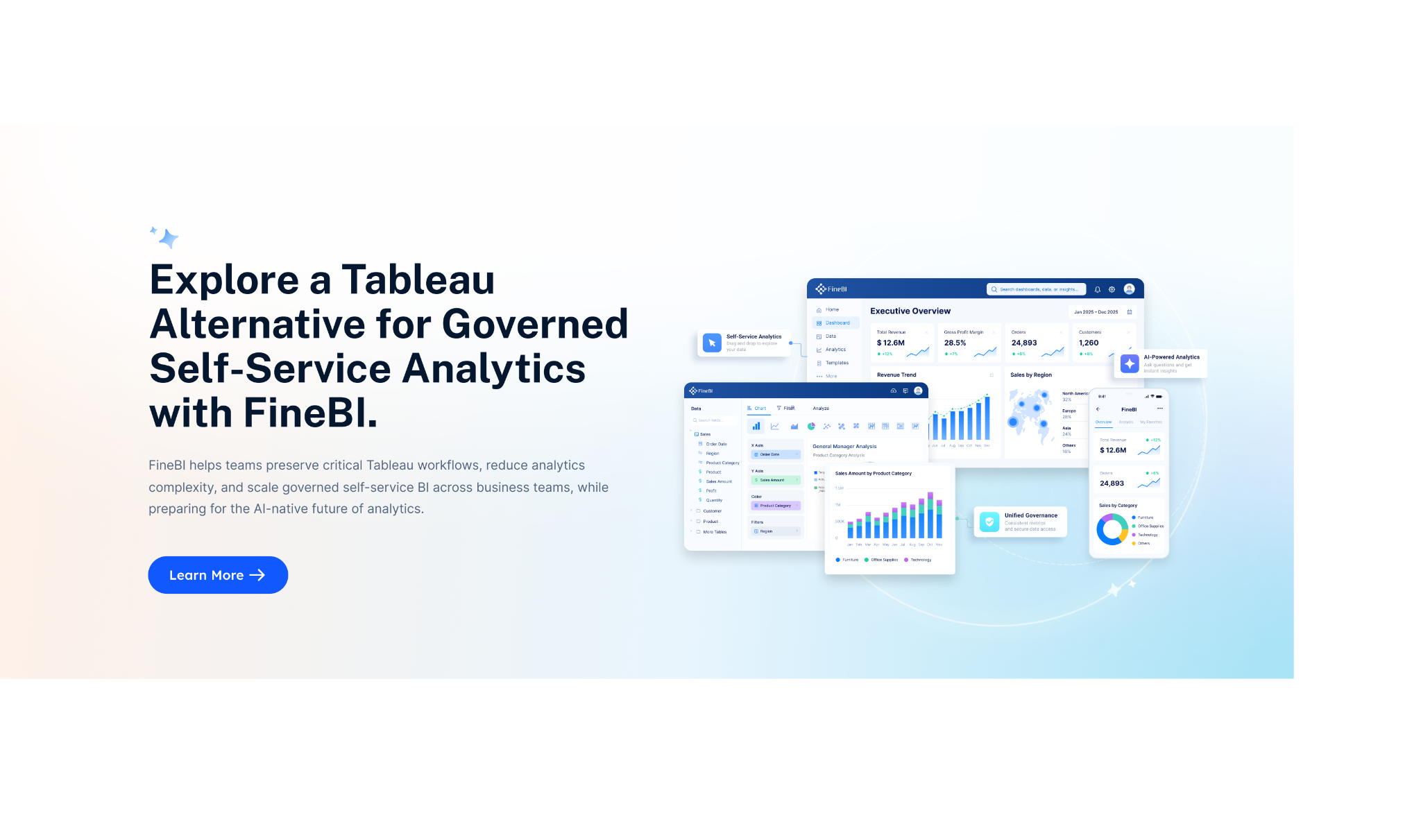
FineBI ranks first for organizations that want a practical balance of self-service BI, enterprise reporting, dashboard delivery, and accessible analytics without immediately moving into the complexity of a deeply fragmented stack.
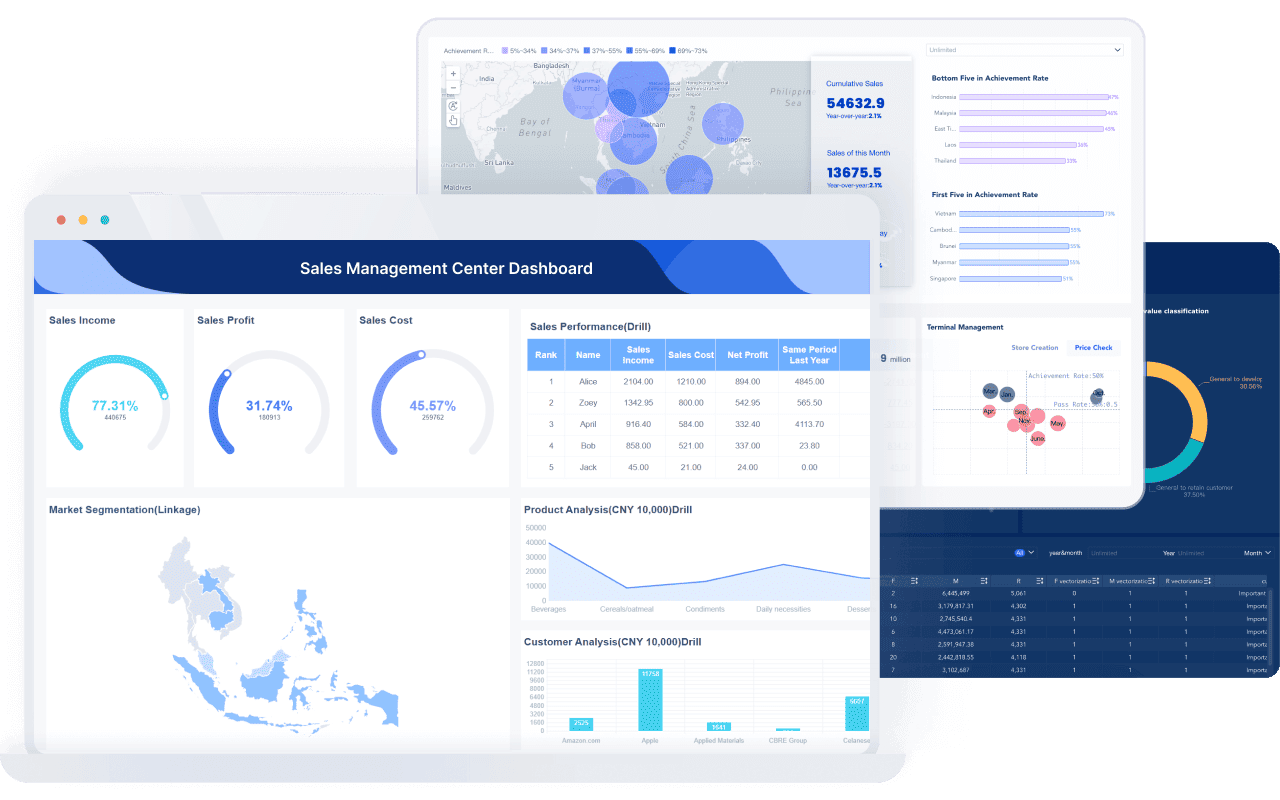
Its strongest value is usability combined with broad deployment flexibility. FineBI is well suited to teams that need:
- Business-friendly dashboards
- Fast report development
- Departmental self-service analytics
- Consistent data access across teams
- A manageable learning curve for non-technical users
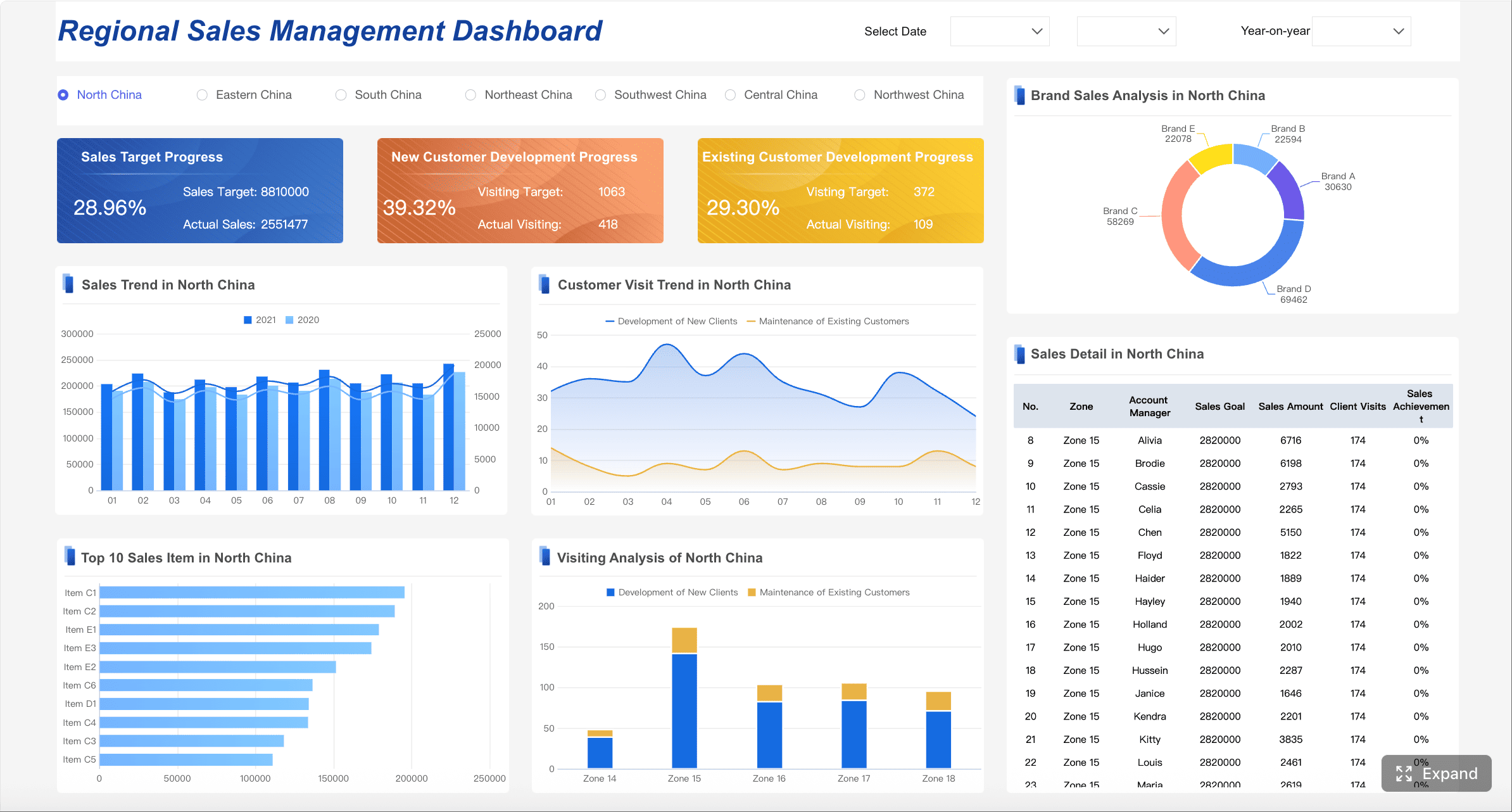
FineBI performs especially well when buyers want a modern analytics environment that can support both central BI delivery and wider business access. It is less governance-heavy than the most metadata-centric platforms, but for many midmarket and enterprise BI teams, it hits the sweet spot between capability, accessibility, and rollout speed.
Best fit: Organizations prioritizing practical BI delivery, rapid adoption, and balanced analytics functionality
Strengths: Self-service reporting, dashboard usability, broad business accessibility, faster implementation potential
Watchouts: Buyers with advanced metadata, lineage, and stewardship requirements may still need complementary governance tooling
2. Tableau
Tableau remains one of the strongest choices for organizations prioritizing mature dashboards, self-service analytics, and broad business adoption. It continues to lead in visual exploration and interactive analytics, making it one of the most familiar products in enterprise BI evaluations.
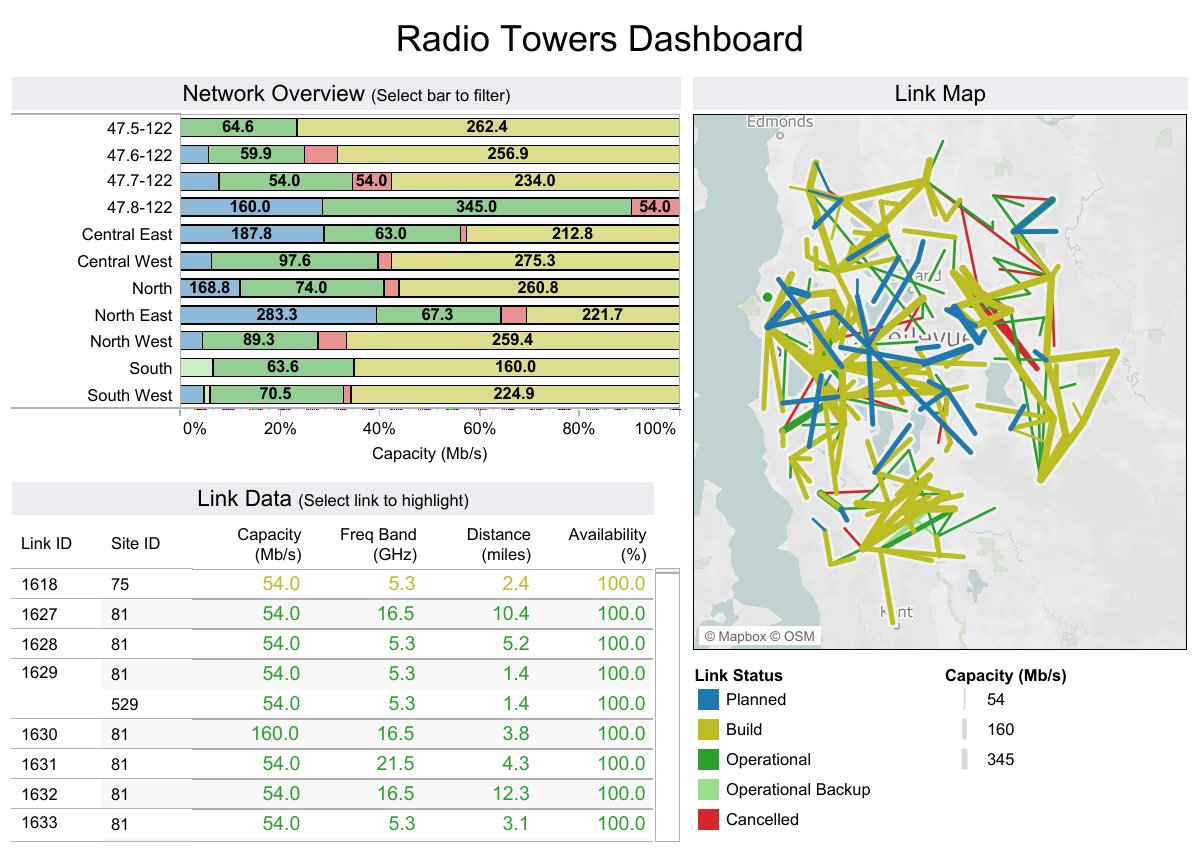
Its major strengths include:
- Rich visual analytics and dashboard design
- Strong ad hoc exploration for analysts and business users
- Mature reporting and broad ecosystem familiarity
- Wide talent availability in the market
- Proven enterprise adoption patterns
Tableau is often the benchmark for analytics experience. For companies that want users to engage directly with data rather than consume static reports, it remains highly compelling.
The main watchout is governance depth. Tableau can absolutely operate in governed enterprise environments, but much of that outcome depends on the surrounding stack, semantic modeling choices, and how well the organization manages metadata and trusted data sources outside the core product. Buyers seeking all-in-one governance may find it less complete than governance-led platforms.
Best fit: Organizations centered on dashboard adoption and self-service analytics
Strengths: Visualization maturity, business usability, exploration, reporting
Watchouts: Governance, lineage, and trust workflows may rely heavily on the broader data ecosystem
3. Databricks
Databricks stands out for teams that want analytics, data engineering, and AI workloads on a unified platform. It is particularly attractive in lakehouse-centric environments where scale, data science readiness, and engineering workflow support matter as much as traditional BI.
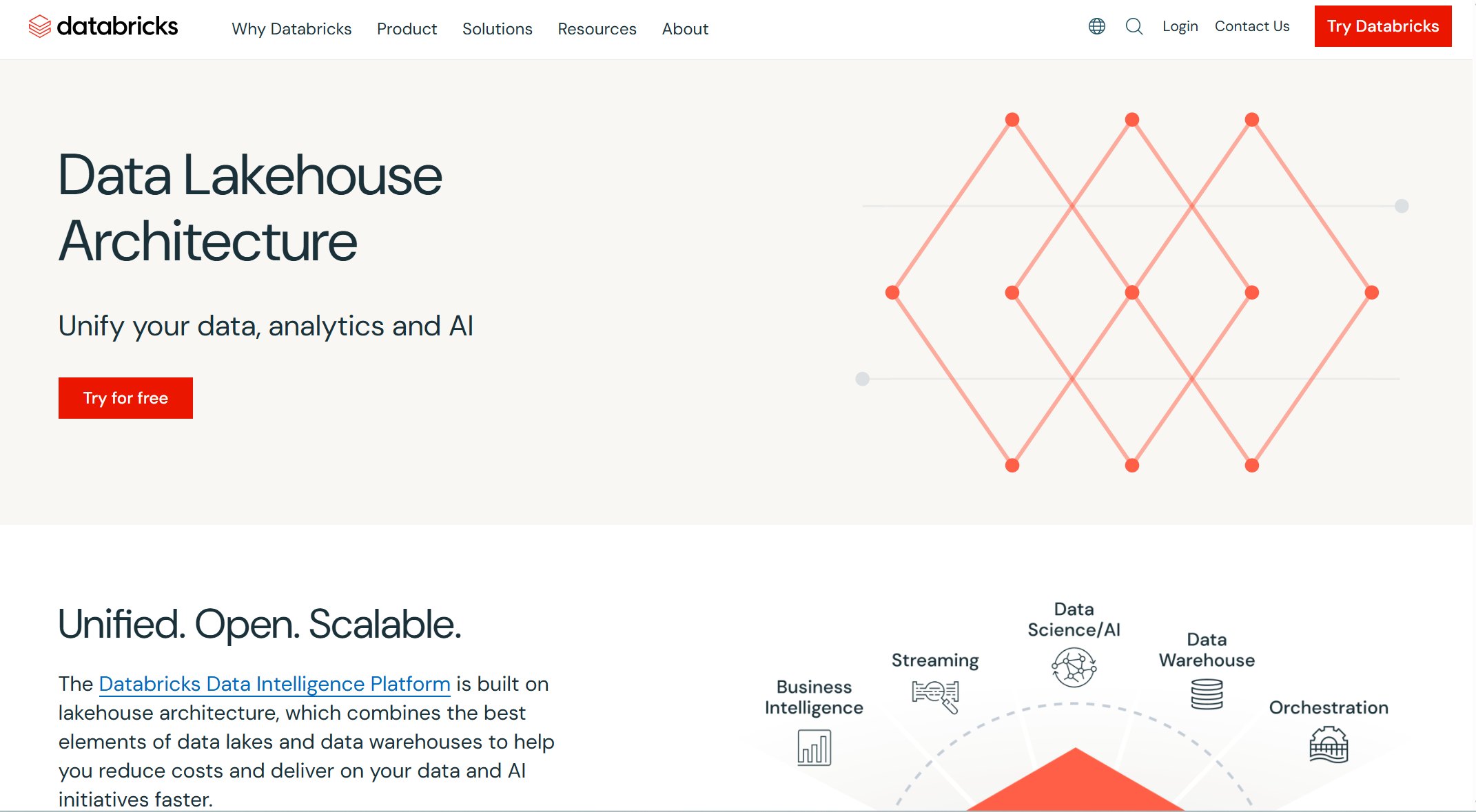
Databricks is strong in:
- Large-scale data processing
- Lakehouse architecture alignment
- Data engineering and pipeline support
- AI and machine learning workload proximity
- Collaboration between data engineers, analysts, and data scientists
For buyers trying to reduce fragmentation between analytics and data platforms, Databricks is one of the most strategic options in the market. It can support sophisticated data products, feature pipelines, and analytics layers in one broader environment.
The tradeoff is that it is not always the fastest route to business-user rollout if the organization lacks strong platform expertise. Companies seeking immediate dashboard-led adoption may still pair Databricks with downstream BI tooling or require stronger technical enablement.
Best fit: Data-mature organizations unifying analytics, engineering, and AI
Strengths: Scalability, platform unification, lakehouse fit, engineering depth
Watchouts: Steeper path for organizations wanting instant non-technical business rollout
4. IBM watsonx.data intelligence
IBM watsonx.data intelligence is one of the strongest enterprise choices for governance, metadata, trusted data delivery, and policy control across complex environments. It is particularly relevant to large organizations that need confidence in data quality, lineage, and explainability.
Key strengths include:
- Enterprise-grade governance workflows
- Metadata and catalog capabilities
- Data lineage and traceability
- Data quality support
- Oversight for regulated and hybrid environments
- Strong fit for trusted data delivery across distributed systems
This is a strong option when enterprise oversight matters more than lightweight dashboarding alone. It aligns well with organizations trying to improve trust in both analytics and AI outputs.
The main caution is implementation complexity. Buyers should enter with a clear use case, operating model, and ownership structure. Without that, a governance-rich platform can become underused or overly broad relative to business needs.
Best fit: Enterprises with complex governance and trust requirements
Strengths: Metadata, lineage, quality, policy control, enterprise oversight
Watchouts: More complex implementation and change management than visualization-first tools
5. Qlik
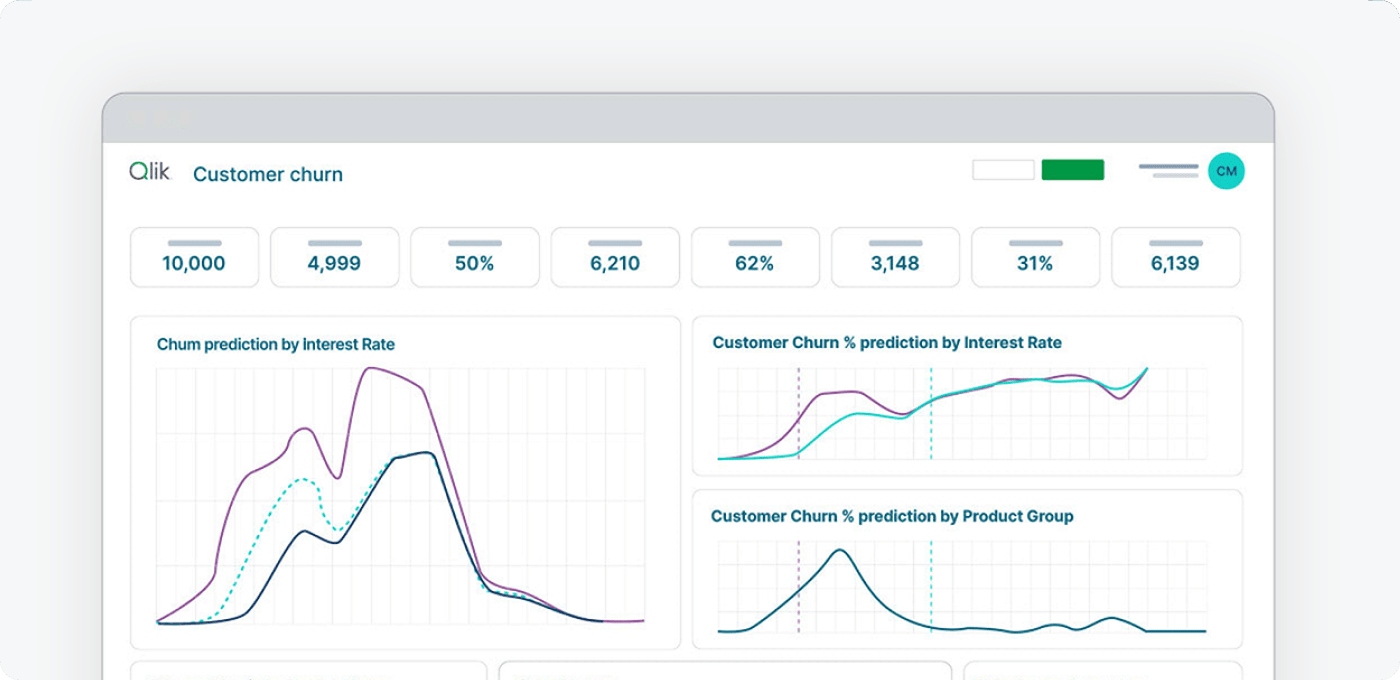
Qlik offers a compelling blend of data integration, quality, and analytics within one vendor ecosystem. That makes it attractive to buyers who want more than a dashboard layer and are also modernizing pipelines, trust controls, and data delivery patterns.
Qlik’s strongest areas include:
- Associative analytics and flexible exploration
- Data integration capabilities
- Data quality support
- Broad analytics coverage across reporting and exploration
- A vendor portfolio that can span from ingestion to insight
For many organizations, Qlik’s appeal lies in reducing the number of separate tools needed to move, prepare, and analyze data. It can be especially effective in transitional environments where legacy reporting and modern analytics need to coexist.
Buyers should still evaluate learning curve and specialization depth. Teams seeking the simplest business-user experience may compare Qlik carefully against Tableau or cloud-native BI tools. Teams seeking category-leading depth in a narrow function may prefer best-of-breed alternatives.
Best fit: Buyers wanting integration, quality, and analytics from one vendor
Strengths: Broad stack coverage, flexible analytics, pipeline modernization support
Watchouts: Can be less simple for some business users than more visualization-focused competitors
6. Alation
Alation is a leading choice for companies where catalog, discovery, stewardship, and data literacy are central to the platform’s value. It is especially strong in governed self-service environments where users need to find trusted data quickly and understand how to use it responsibly.
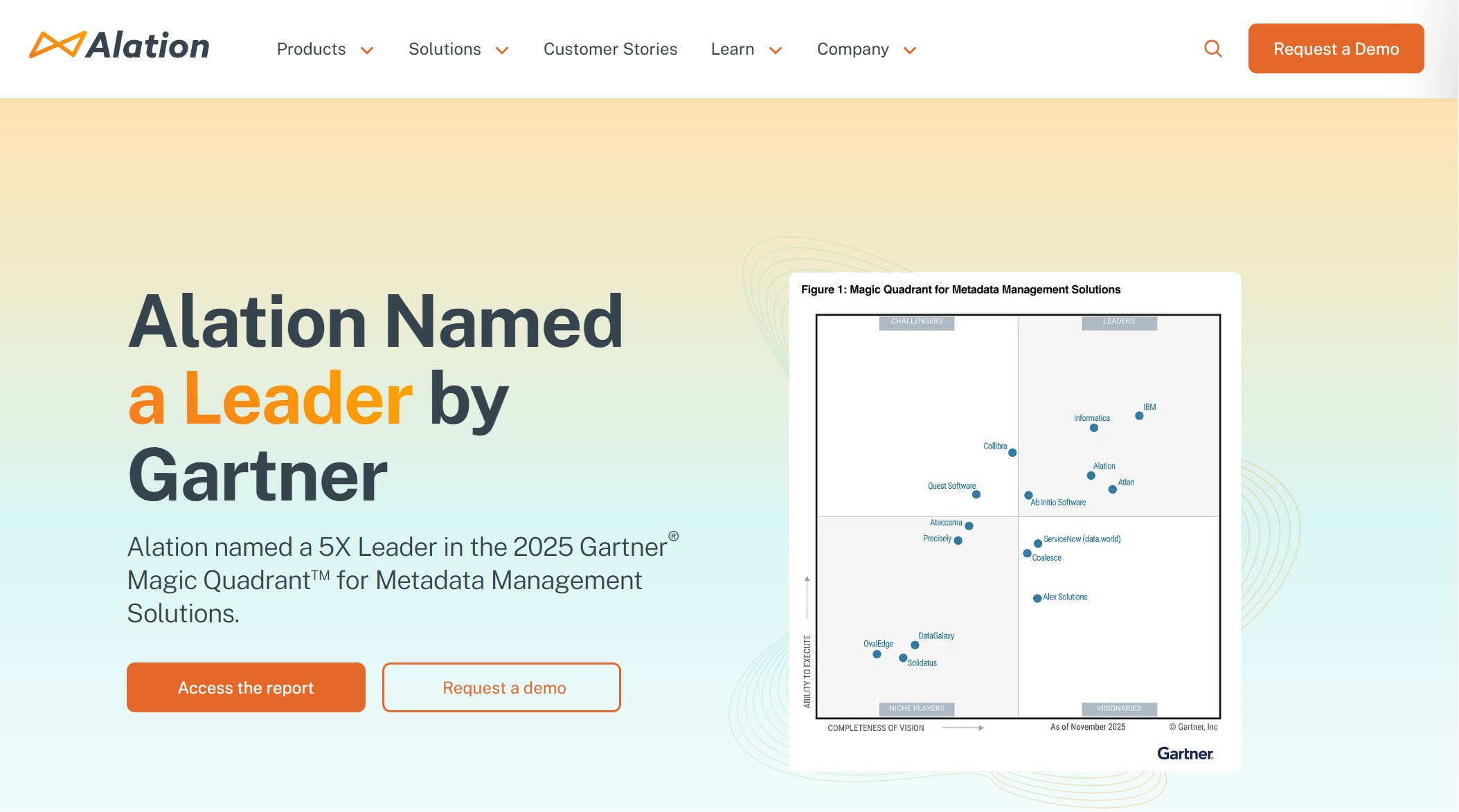
Its core strengths include:
- Data cataloging and discovery
- Stewardship workflows
- Business context around data assets
- Search and trust indicators
- Support for data literacy and governed adoption
Alation excels when the biggest blocker to analytics success is not dashboard creation, but poor discoverability and weak confidence in available data assets. It helps organizations scale self-service by improving visibility, ownership, and trust.
The obvious limitation is that advanced visualization is not its main purpose. Buyers who need rich dashboards and business-facing analytics in the same product will usually pair Alation with a BI platform.
Best fit: Organizations prioritizing cataloging, stewardship, and governed self-service
Strengths: Discovery, trust, metadata context, data literacy enablement
Watchouts: Not a substitute for advanced standalone BI visualization
7. waters_connect
waters_connect is a specialized data intelligence software option designed for regulated or scientific environments. It is not a general-purpose BI leader for broad enterprise use, but it deserves a high place in the ranking for buyers operating in laboratory-driven or compliance-intensive settings.
It is particularly relevant where:
- Scientific workflows shape data requirements
- Laboratory and instrument integration matters
- Compliance and auditability are core buying criteria
- Domain-specific data handling is more important than generic BI breadth
For these organizations, domain fit can outweigh general analytics flexibility. A specialized platform often delivers more operational value than a broad enterprise suite that lacks the required workflow support.
General BI buyers, however, should be cautious. If the need is enterprise-wide dashboarding, semantic consistency, and broad cross-functional analytics, waters_connect may be too specialized.
Best fit: Regulated scientific and laboratory-focused environments
Strengths: Domain-specific workflows, compliance alignment, specialized data handling
Watchouts: Limited relevance for broad enterprise BI needs
8. Cloud analytics and BI platforms
The final top-eight position goes to the broader category of cloud analytics and BI platforms, which includes leading offerings from major cloud ecosystems. These platforms are often the right choice for organizations standardizing on a single cloud vendor for reporting, semantic layers, security, and embedded AI services.
Their strengths typically include:
- Tight integration with cloud-native storage and compute
- Alignment with existing identity and security models
- Native connectivity to cloud services
- Easier procurement within established cloud relationships
- Increasingly strong AI-assisted analytics features
They can be highly effective for teams that want to minimize integration friction and build analytics close to existing cloud investments.
The tradeoff is portability. Buyers should evaluate lock-in risk, semantic model maturity, governance depth, and whether the cloud suite truly meets business-user requirements better than independent specialists.
Best fit: Organizations standardizing on a major cloud ecosystem
Strengths: Integration, security alignment, procurement simplicity, native cloud services fit
Watchouts: Portability concerns and feature tradeoffs versus independent vendors
9. Emerging shortlist and niche options
Beyond the top tier, a number of fast-growing and niche products deserve consideration. These tools are useful for buyers who want to validate whether a specialized vendor can outperform broader suites in a critical area such as natural language analytics, direct query performance, planning integration, or embedded analytics.
This tier is especially valuable when:
- A market leader feels too broad or expensive
- A specific requirement is non-negotiable
- The buyer wants stronger innovation in a focused area
- Existing stack investments reduce the need for a broad suite
The key risks are vendor maturity, support depth, ecosystem size, and long-term roadmap confidence. These products can be excellent finalists, but should be validated carefully through proof of concept.
Best fit: Buyers benchmarking alternatives before final selection
Strengths: Specialized differentiation, focused innovation, targeted value
Watchouts: Maturity, support, roadmap durability
10. Altair
Altair is a strong option for technically sophisticated organizations that value analytics combined with modeling, simulation, and broader engineering-oriented capabilities. It is more compelling in advanced analytical environments than in purely business-user dashboard rollouts.
11. Alteryx
Alteryx remains highly relevant for analytics automation, preparation, and workflow-based analysis. It is especially useful where analyst productivity and repeatable low-code data workflows are top priorities.
12. Amazon Web Services
AWS offers a broad ecosystem approach rather than a single simple BI answer. It is attractive for organizations already committed to AWS services and looking to align analytics, storage, governance, and AI workloads within one cloud operating model.
13. AnswerRocket
AnswerRocket is notable for natural language analytics and automated insight workflows. It is worth evaluating for teams that want faster question-to-answer experiences without heavy dependence on traditional query building.
14. BOARD
BOARD combines analytics, reporting, and planning capabilities, making it appealing for buyers who want decision support and performance management in addition to BI functionality.
15. Domo
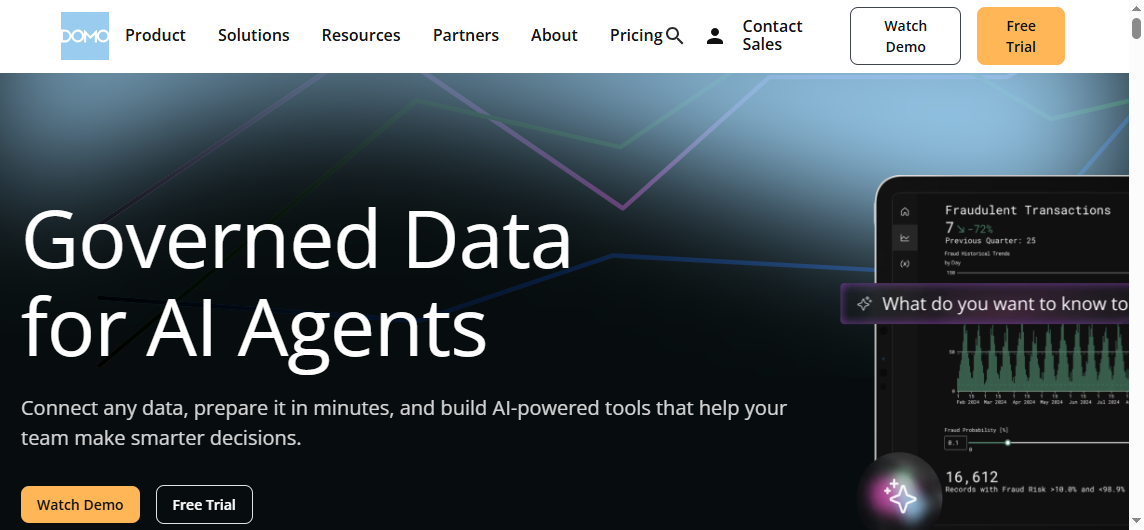
Domo appears on some market lists, but buyers should verify product positioning, vendor maturity, and actual fit before giving it the same weight as more established enterprise platforms.
16. Hitachi Vantara
Hitachi Vantara is more relevant in data infrastructure-heavy environments where broader enterprise data management and operational technology considerations intersect with analytics needs.
17. Cognos Analytics
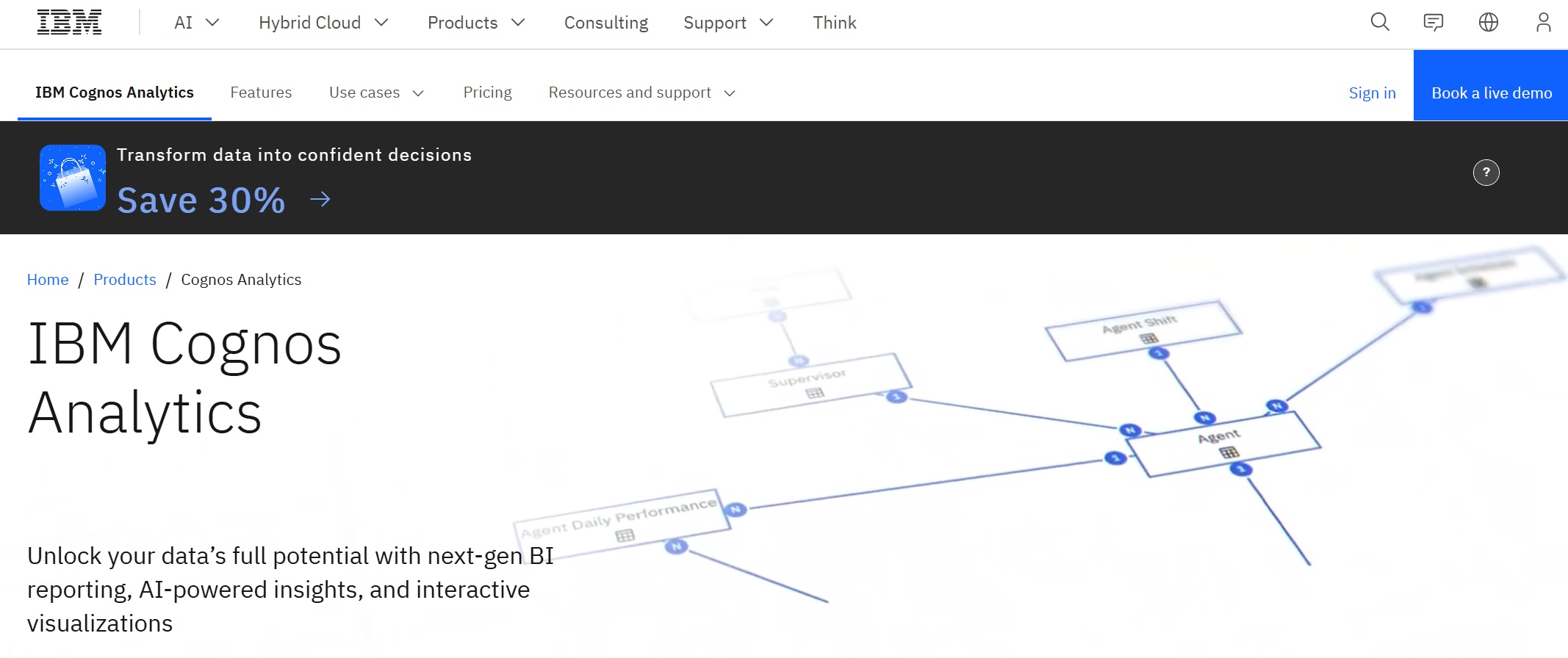
Cognos Analytics still has a place in enterprise reporting, governed distribution, and structured BI environments. It is especially relevant where formal reporting discipline matters more than freeform visual exploration.
18. Incorta Direct Data Platform
Incorta is well known for direct data access and strong performance on complex enterprise data, particularly in operational reporting and ERP-heavy environments. It can be compelling where speed to insight matters without extensive modeling delays.
19. Networked BI
Networked BI serves a more niche role and should be assessed carefully for architecture fit, support model, and actual business-user readiness.
20. Looker
Looker remains a key option for semantic modeling and governed metrics in cloud-first environments. It is often attractive to organizations that want centralized metric logic and stronger consistency across analytics outputs.
21. MicroStrategy
MicroStrategy is still relevant for large-scale enterprise BI deployments, especially where centralized governance, pixel-perfect reporting, and embedded analytics matter. It can be powerful, though often with a heavier enterprise footprint.
22. Oracle Analytics Cloud
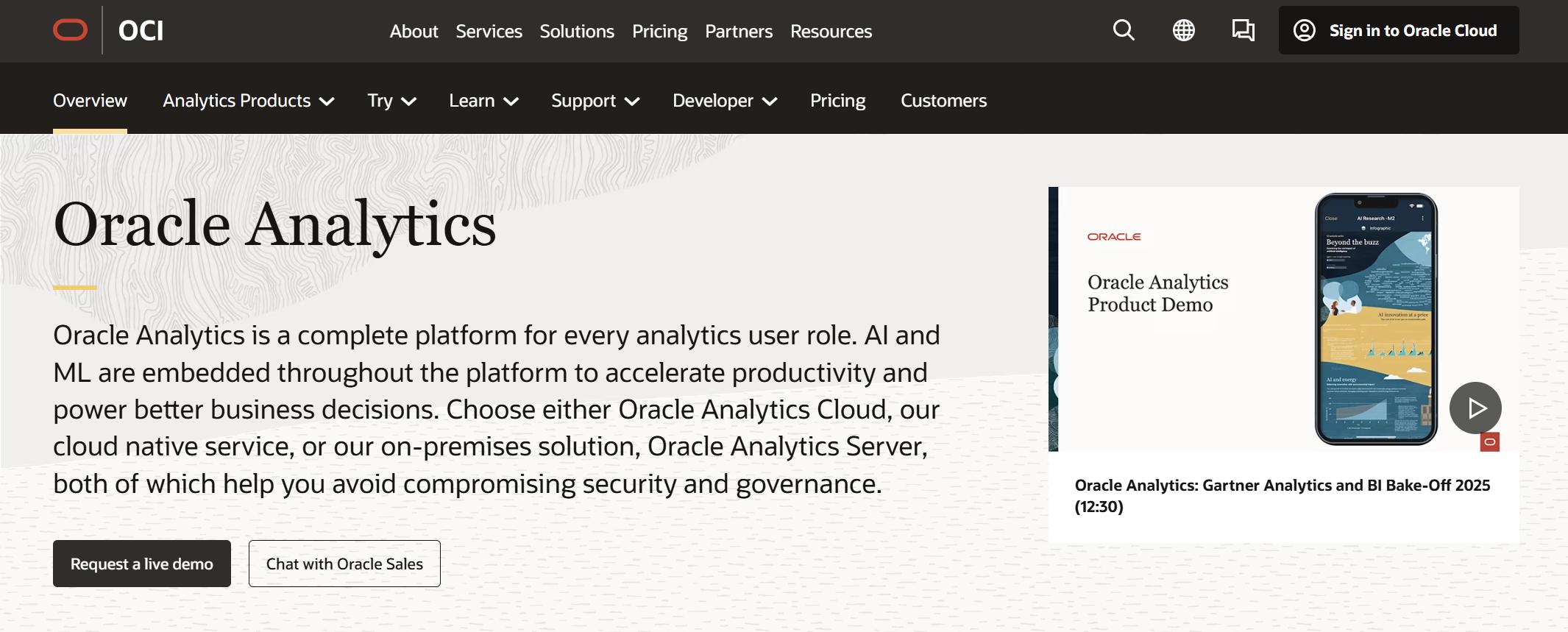
Oracle Analytics Cloud is a natural contender for organizations with large Oracle investments. Its value rises significantly when buyers want tighter fit with Oracle data, applications, and infrastructure.
23. Pyramid Analytics
Pyramid Analytics stands out for combining analytics, semantic modeling, and decision intelligence concepts in one platform. It deserves attention from buyers looking for broad capability with a modern analytical experience.
24. SAS Visual Analytics
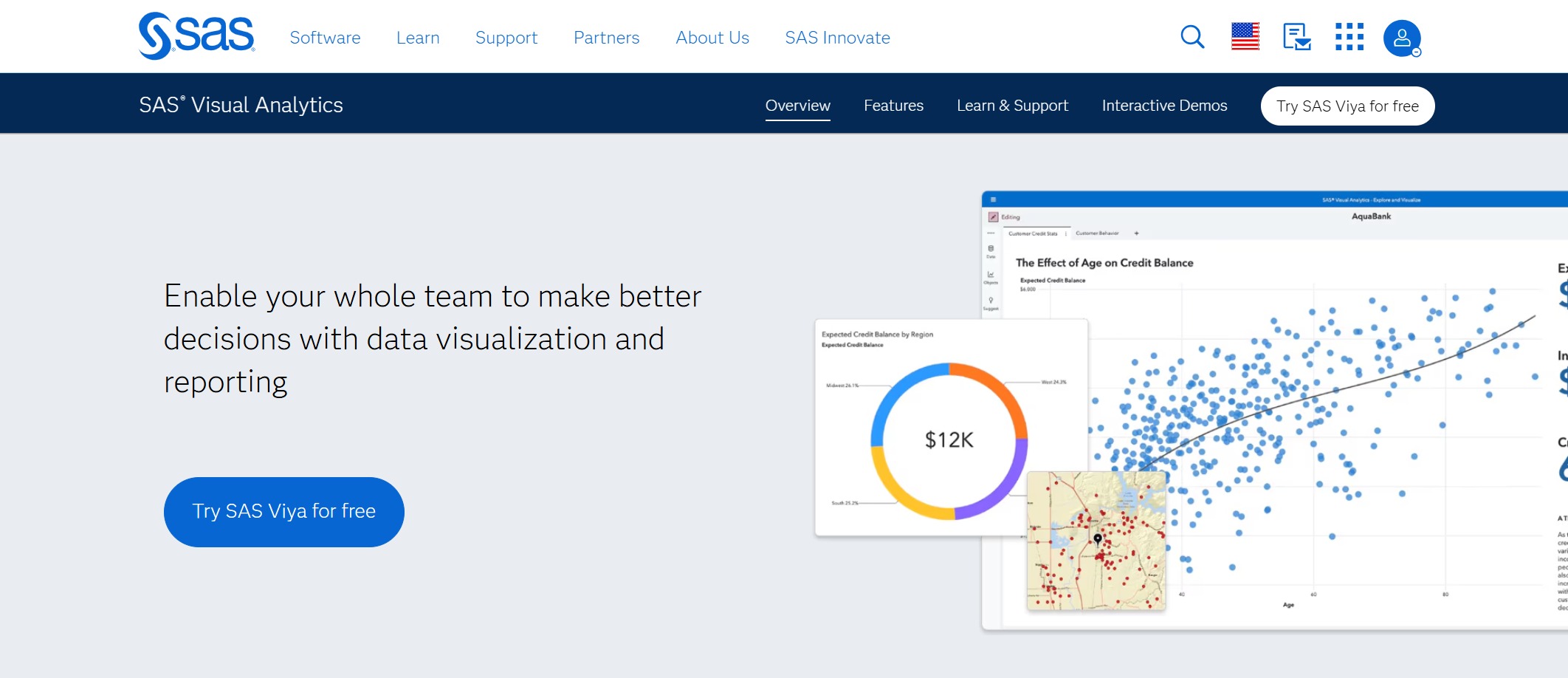
SAS Visual Analytics is attractive in organizations that already rely on SAS for advanced analytics, modeling, or regulated data workflows. It is strongest when part of a broader SAS ecosystem strategy.
25. Sigma Platform
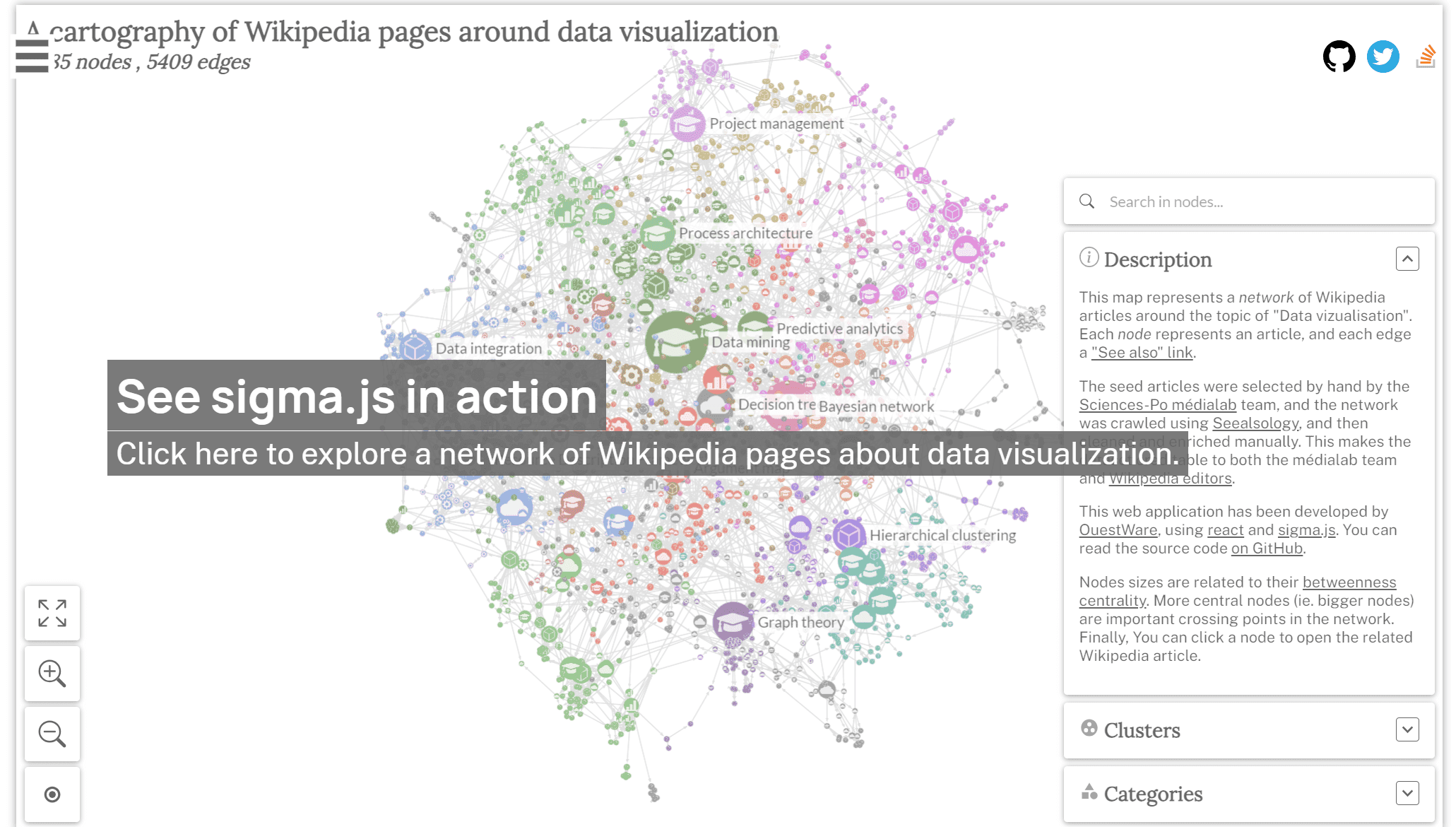
Sigma Platform is increasingly popular among cloud data warehouse users who want spreadsheet-friendly analysis directly on modern data platforms. It can be very effective for operational analytics and collaborative business analysis.
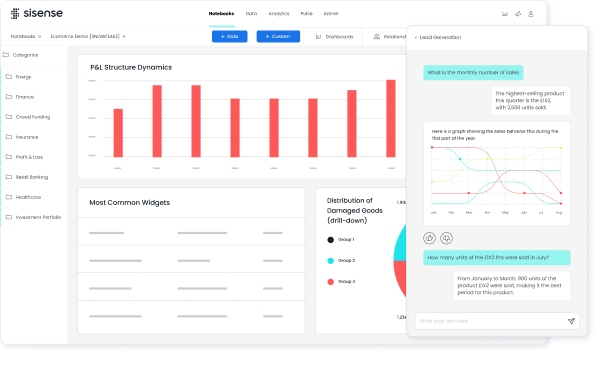
26. Sisense
Sisense remains relevant for embedded analytics and developer-oriented BI scenarios. It is often considered when analytics needs to be integrated into customer-facing or product experiences.
27. TARGIT Decision Suite
TARGIT Decision Suite is a focused BI option with strengths in reporting and business performance visibility. It can be a fit for organizations that want more straightforward BI without the heaviest enterprise stack.
28. Tellius
Tellius is notable for AI-driven analytics, search-based discovery, and augmented insights. It is worth shortlisting when buyers want stronger automation and assisted analysis in the user experience.
29. ThoughtSpot
ThoughtSpot is one of the strongest products in search-driven analytics and natural language exploration. It is especially useful for organizations trying to lower the barrier to insight for business users, though buyers should assess how it fits existing semantic and governance models.

30. TIBCO Spotfire
TIBCO Spotfire continues to be relevant for advanced analytics, data science-adjacent exploration, and specialized analytical use cases. It often performs best in technical or scientific environments rather than purely general-purpose BI rollouts.

Pros, cons, and best-fit recommendations by buyer type
Different buyers should not choose the same tool for the same reasons. The best data intelligence software depends on operating model, technical maturity, and business goals.
Best for enterprise governance-heavy environments
If the main goal is trusted, auditable, policy-controlled data use, governance-led platforms should rise to the top. In these environments, strong cataloging, lineage, quality, and stewardship features matter more than dashboard polish alone.
Top fits:
- IBM watsonx.data intelligence
- Alation
- Looker for governed metrics in analytics delivery
- Qlik where integration and quality also matter
- MicroStrategy in centralized enterprise BI settings
Pros of governance-heavy choices:
- Stronger trust and compliance posture
- Better stewardship and ownership visibility
- Improved consistency across teams
- Better foundation for AI readiness and data product reuse
Cons to watch:
- Longer implementation cycles
- Higher change management needs
- Risk of low adoption if governance is not connected to real user workflows
Buyers in this category should evaluate not only governance depth, but also how those capabilities connect to downstream BI consumption. A great catalog that users never touch will not solve the adoption problem.
Best for self-service analytics and dashboard adoption
For organizations focused on speed of insight and broad business usage, ease of use should be prioritized alongside semantic consistency and trust.
Top fits:
- FineBI
- Tableau
- ThoughtSpot
- Sigma Platform
- Qlik
Pros of self-service-focused tools:
- Faster adoption by business teams
- Lower reliance on central BI for every request
- Stronger daily engagement with analytics
- Better support for ad hoc exploration
Cons to watch:
- Self-service can create inconsistency if governance is weak
- Dashboard sprawl can return if semantic layers are poorly managed
- Some tools are easier to use but lighter in enterprise oversight
The best buyers in this category compare how each platform balances usability with trust. It is easy to over-index on beautiful dashboards and overlook governance debt that appears later.
Best for unified data platform and AI use cases
If the organization is trying to bring together analytics, data engineering, AI, and scalable storage on one foundation, platform-first options usually make more sense than standalone BI products.
Top fits:
- Databricks
- AWS ecosystem tools
- Cloud analytics and BI platforms
- IBM watsonx.data intelligence where governance and AI readiness overlap
- Altair in advanced analytical environments
Pros of unified platform choices:
- Better collaboration across engineering, analytics, and AI teams
- Reduced data movement
- Strong scalability and performance potential
- Better long-term architectural alignment
Cons to watch:
- Business-user analytics may not feel as native or polished
- More technical enablement is often required
- Quick wins can be harder without a companion BI layer
These buyers should test whether analytics consumption is strong enough for non-technical stakeholders or whether an additional presentation layer will still be needed.
Best for regulated and specialized industries
In regulated, scientific, or domain-specific environments, general-purpose BI rankings can be misleading. Specialized workflow support often matters more than broad dashboard flexibility.
Top fits:
- waters_connect
- SAS Visual Analytics
- TIBCO Spotfire
- IBM watsonx.data intelligence
- Hitachi Vantara in infrastructure-heavy sectors
Pros of specialized options:
- Better fit for auditability and validation
- Domain-aware workflows
- Stronger support for regulated processes
- Better alignment with technical users in specialized fields
Cons to watch:
- Less flexible for enterprise-wide business analytics
- Smaller user communities in some cases
- Broader analytics teams may still need an additional BI tool
These buyers should weigh the value of specialized functionality against the need for cross-functional enterprise reporting.
Final ranking and shortlist guidance for data intelligence software
The 2026 market for data intelligence software is being defined by four different leadership patterns:
- Best analytics experience: FineBI, Tableau, ThoughtSpot
- Best governance depth: IBM watsonx.data intelligence, Alation, Looker
- Best integration breadth: Qlik, AWS ecosystem options, Oracle Analytics Cloud in Oracle-centered environments
- Best platform unification: Databricks, cloud analytics and BI platforms, broader cloud-native ecosystems
For most buying teams, the smartest shortlist strategy is to start with three to five vendors, not ten. A practical model looks like this:
Shortlist strategy by company type
Midmarket organizations
- Start with FineBI, Tableau, Qlik
- Add Sigma or ThoughtSpot if usability and speed are central
- Avoid overbuying governance-heavy platforms unless compliance demands it
Large enterprises with mature data estates
- Start with Databricks, IBM watsonx.data intelligence, Tableau, Qlik
- Add Alation or Looker depending on whether metadata trust or governed metrics is the bigger need
- Compare suite consolidation versus best-of-breed architecture
Cloud-first organizations
- Include your cloud-native analytics option
- Benchmark it against Tableau, Looker, Sigma, or Databricks depending on use case
- Test portability and long-term ecosystem dependence before deciding
Regulated or specialized industries
- Include waters_connect, SAS Visual Analytics, Spotfire, and IBM where relevant
- Score domain requirements first, then evaluate general analytics breadth second
Buyer checklist for demos and proof of concept
Use this checklist to make vendor evaluations more realistic:
- Define the primary use case before seeing demos
- Separate must-haves from nice-to-haves
- Bring both business users and technical owners into evaluation sessions
- Test trusted data workflows, not just dashboard design
- Validate lineage, governance, and quality claims with realistic scenarios
- Measure time to first usable output, not just feature count
- Assess semantic consistency across teams and metrics
- Review implementation effort and admin overhead
- Model total cost of ownership over multiple years
- Plan rollout ownership across BI, data engineering, governance, and business teams
The strongest buying decisions in 2026 will come from teams that stop treating analytics, governance, and AI readiness as separate conversations. The best data intelligence software is the one that matches your organization’s real operating model, improves trust in data, and helps users get to decisions faster without adding unnecessary complexity.
FAQs
Data intelligence software combines analytics with capabilities like data cataloging, lineage, governance, quality monitoring, and AI-assisted discovery. It helps BI teams move beyond dashboards to more trusted and reusable data for reporting and decision-making.