
Month-end close is where finance discipline meets operational pressure. Finance managers need accurate reports, timely reconciliations, management visibility, and enough control to stand behind the numbers. But in many organizations, the close still depends on spreadsheets, manual consolidations, email approvals, and last-minute version checks.
That is why automation of financial reporting matters so much. It does not just speed up report production. It helps standardize close workflows, improve auditability, reduce manual errors, and make financial results easier to consume across management teams.
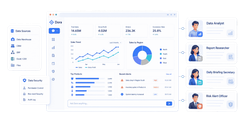
The opportunity becomes even stronger when reporting automation is combined with an AI assistant layer. With FineReport + Dora, teams can ask for a report summary in chat, generate structured narratives from trusted report assets, receive scheduled briefings, and push exceptions to the right owner. FineReport provides the trusted reporting foundation, while Dora acts as an enterprise Data Agent that helps finance teams consume, explain, monitor, and follow up on close reporting outputs.
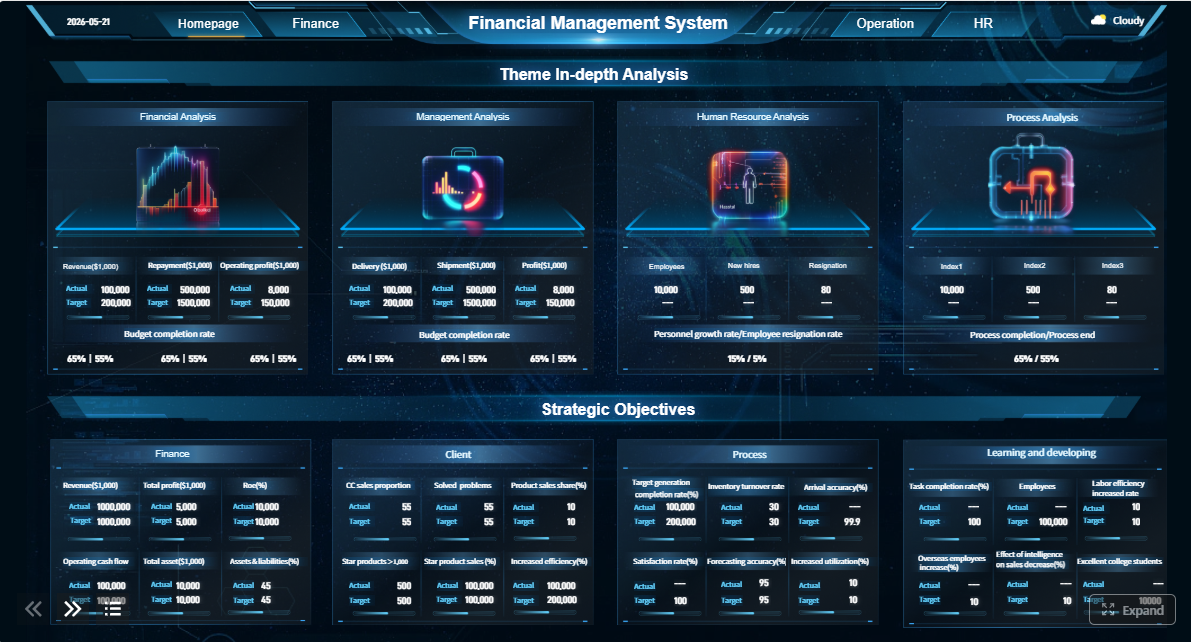 Click To Try The Dashboard
All reports in this article are built with FineReport
Why automation of financial reporting matters in the month-end close
Month-end close is not only an accounting process. It is a reporting process with dependencies across ERP data, subledgers, reconciliations, adjustments, review steps, management commentary, and stakeholder distribution. If any part is slow or inconsistent, reporting quality suffers.
Common reporting bottlenecks that slow down close timelines
Finance managers usually recognize the same bottlenecks:
- Manual extraction from multiple systems
- Repeated spreadsheet formatting
- Reconciliation delays between source systems and reporting packs
- Approval handoffs through email or chat
- Late discovery of exceptions or missing inputs
- Confusion over which file version is final
- Rework caused by inconsistent KPI definitions or mapping logic
These issues create reporting lag even when the accounting team is technically close to final numbers.
The hidden cost of manual consolidation, reconciliations, and version control
Manual reporting has costs beyond labor hours. It also creates:
- Control risk: formula errors, copy-paste issues, and inconsistent filters
- Review friction: too much time spent checking mechanics instead of business meaning
- Decision delay: executives wait longer for complete management reports
- Audit pain: tracing changes across spreadsheets is harder than reviewing governed workflows
- Key-person dependency: close knowledge sits with a few individuals
For finance leaders, the real problem is not only effort. It is the combination of effort, uncertainty, and poor scalability.
Where finance managers gain the most time and accuracy from automation
The highest-value gains usually come from recurring reporting work such as:
- Monthly management reporting
- Entity or departmental consolidation views
- Variance analysis packs
- Board reporting support
- Balance sheet reconciliation status reporting
- Close task status and exception monitoring
- Disclosure support schedules
KPI / report element examples
-
Close completion status: Percentage of close tasks completed by entity, function, or deadline.
Business value: Helps finance managers see whether reporting can proceed on schedule.
AI use: Dora can summarize incomplete tasks, identify overdue owners, and push a close-status briefing. -
Trial balance and account movement summary: Core changes in account balances during the period.
Business value: Supports fast review of unusual movements and material changes.
AI use: Dora can explain major period-over-period changes and include them in a structured report summary. -
Variance analysis: Actual vs budget, forecast, or prior period differences.
Business value: Turns raw financials into management insight.
AI use: Dora can highlight abnormal variances, produce chart-based answers, and notify responsible managers. -
Reconciliation exception list: Open or mismatched items requiring action.
Business value: Keeps close quality high without slowing final reporting.
AI use: Dora can act as a Risk Alert Officer, flag unresolved issues, and route follow-up reminders.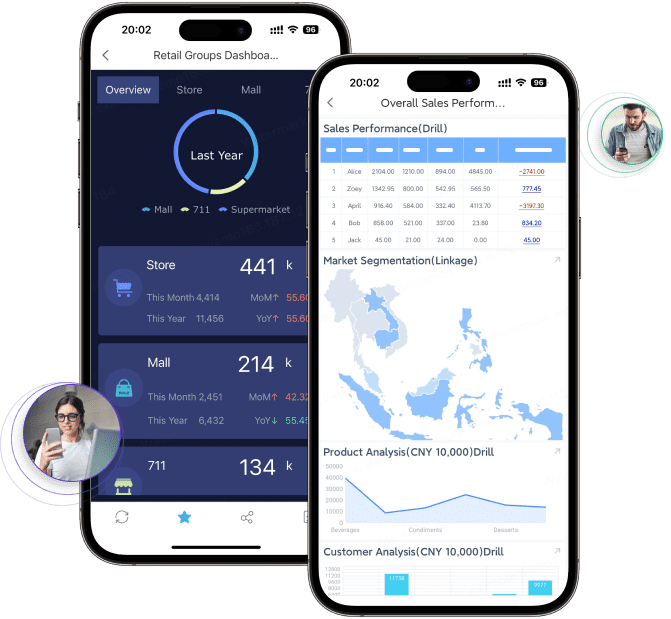
What financial reporting automation is and what it is not
Finance managers need a practical view of automation. Many projects fail because teams expect automation to fix unclear rules, poor data quality, or inconsistent reporting logic on its own.
Core capabilities: data integration, rules-based workflows, validations, and report generation
At its core, automation of financial reporting includes four capabilities:
- Data integration: connect ERP, general ledger, subledger, budgeting, and operational systems
- Rules-based workflows: standardize recurring close and reporting steps
- Validation and control: enforce checks, thresholds, mappings, and approvals
- Report generation and distribution: produce consistent outputs for finance and management stakeholders
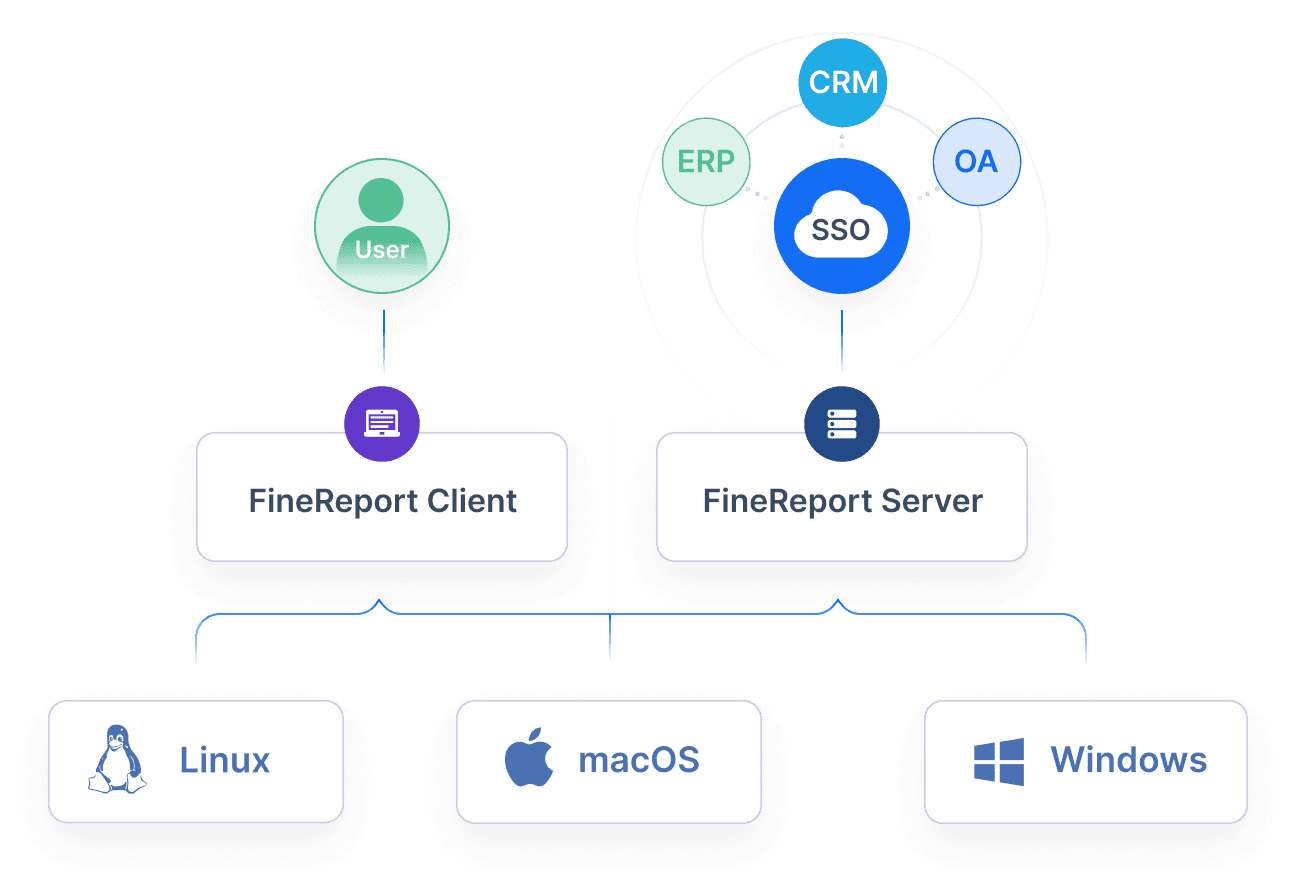
In enterprise reporting practice, FineReport supports these capabilities through formatted reports, management reports, complex reporting logic, operational cockpits, and reporting workflows.
The difference between spreadsheet-assisted reporting and end-to-end automated reporting
Many organizations are not truly automated. They are spreadsheet-assisted.
Spreadsheet-assisted reporting often means:
- Data exported manually
- Rules embedded in personal files
- Commentary added by hand
- Distribution managed through email
- Exceptions tracked outside the reporting system
End-to-end automation is different. It means the workflow is governed, repeatable, reviewable, and easier to scale.
Report element examples
-
Template-based management report: Standard close reporting structure with defined sections.
Business value: Reduces formatting rework and improves consistency.
AI use: Dora can generate a structured narrative for each section based on trusted FineReport outputs. -
Validation rule set: Logic for missing data, sign reversals, threshold breaches, or mapping errors.
Business value: Stops bad data from reaching management reports.
AI use: Dora can summarize validation failures and produce a follow-up list for owners.
What automation fixes in the close process and the limits leaders should plan for
Automation helps fix:
- repetitive data collection
- recurring report preparation
- validation consistency
- workflow visibility
- scheduled distribution
- audit trail gaps
But leaders should also plan for limits:
- Automation does not replace accounting judgment
- It does not solve poor chart of accounts design
- It does not eliminate review responsibilities
- It does not make ungoverned KPIs trustworthy
- AI narratives still require human oversight, especially in external or sensitive reporting contexts
This is where FineReport + Dora fits well. FineReport provides governed reports, templates, permissions, and reporting logic. Dora adds the AI assistant layer for trusted report consumption, summaries, exception pushes, and follow-up.
How to automate month-end reporting step by step
A successful rollout starts with reporting discipline, not just tool selection.
Map the current close and reporting workflow
Before automating anything, document how month-end reporting actually works.
Identify:
- source systems and file dependencies
- close milestones and deadlines
- approval checkpoints
- manual adjustments and reconciliations
- recurring exceptions
- report consumers by role
- where delays happen every cycle
This exercise often shows that reporting delays are caused not by one large problem, but by many small handoff failures.
Report element: Workflow handoff map.
Business value: Clarifies where close time is lost and where controls are weak.
AI use: Dora can later use this governed workflow structure to route briefings, alerts, and follow-up tasks to the right people.
Standardize data, controls, and reporting logic
Automation only works when teams agree on the rules.
Finance should define:
- chart of accounts mappings
- entity and cost center logic
- materiality thresholds
- reporting hierarchies
- variance definitions
- approval routing rules
- validation checks
- exception ownership
This is one of the biggest reasons enterprise reporting projects succeed or stall. If “operating margin” or “adjusted EBITDA” means different things across teams, no reporting layer or AI assistant can safely summarize results.
Report element: KPI definition library.
Business value: Ensures reports and explanations use one trusted business meaning.
AI use: Dora uses the trusted semantic layer to answer finance questions more accurately and to avoid ambiguous, prompt-only output.
Automate report preparation and distribution
Once the rules are stable, automate the recurring outputs.
A practical setup includes:
- reusable month-end report templates
- scheduled data refreshes
- controlled review checkpoints
- role-based distribution
- exception sections in management reports
- archive and audit trace for published outputs
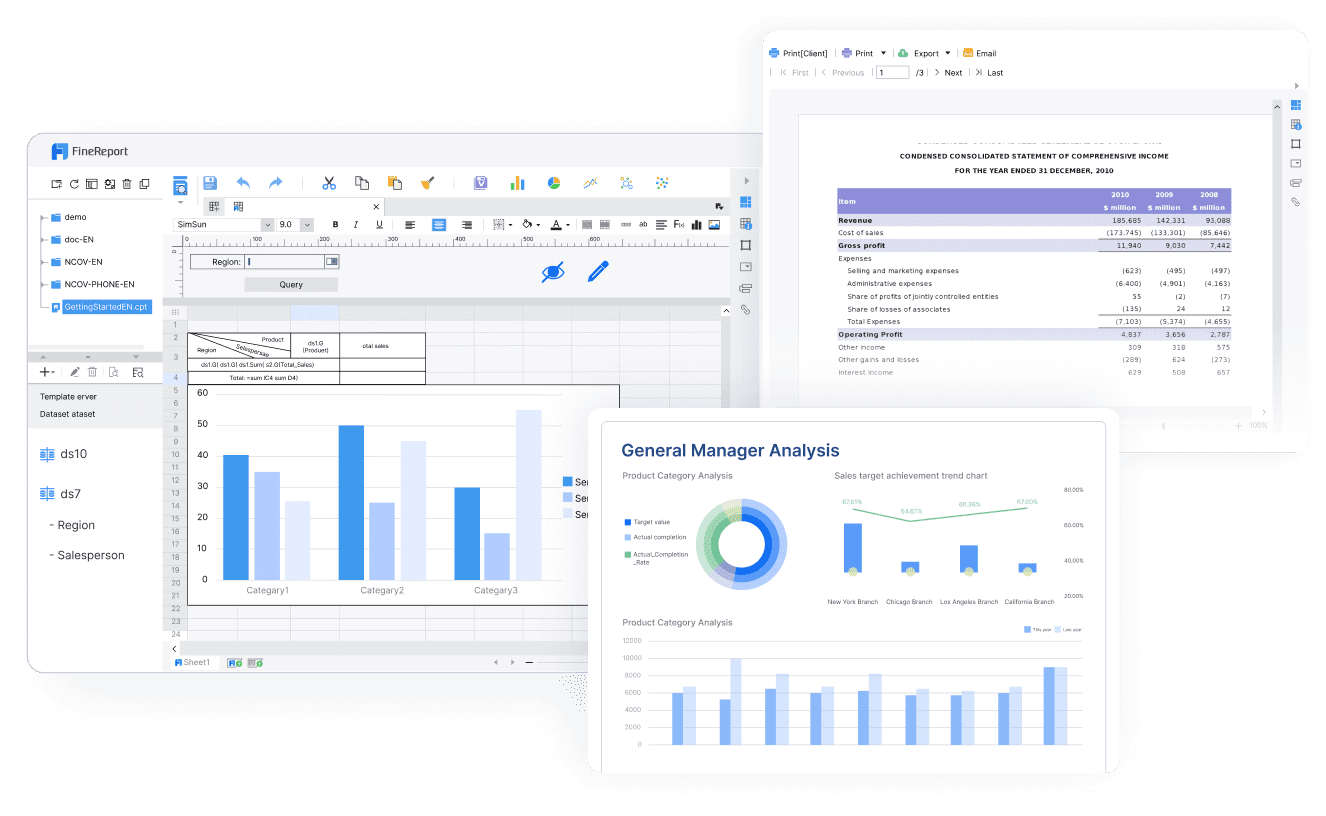
FineReport is especially strong here because finance reporting often requires more than simple dashboards. Teams need formatted statements, report packs, complex tables, drillable management views, and sometimes data entry or reporting workflows tied to approval processes.
Report element: Monthly management pack template.
Business value: Produces a consistent report package every cycle.
AI use: Dora can summarize the pack in chat, generate executive-ready commentary, and send scheduled briefings before review meetings.
Start with high-impact use cases
Do not try to automate every financial report at once. Start with recurring, high-friction, high-visibility use cases such as:
- monthly management reports
- board support packs
- budget vs actual variance reports
- close status dashboards
- reconciliation exception reports
- recurring disclosure support schedules
These are ideal because they happen repeatedly, involve standard logic, and create measurable value quickly.
Report element: Board pack summary page.
Business value: Gives executives a concise view of period performance.
AI use: Dora can create a structured management narrative, highlight exceptions, and prepare a meeting briefing from the trusted FineReport source.
Key benefits and best practices for finance managers
Automation should improve both speed and confidence. If a faster process produces more review risk, it is not a real finance improvement.
Faster close cycles without sacrificing review quality
The right workflow reduces manual assembly, so controllers and finance managers spend more time reviewing substance instead of mechanics. That means:
- earlier access to complete reporting packs
- more time for material issue review
- less last-minute rework
- more predictable close timing
Better consistency, auditability, and transparency across reports
When reports are built from governed templates and defined logic, finance teams gain:
- clearer version control
- traceable calculations
- standardized disclosures and commentary structure
- easier reviewer comparisons across periods
- stronger evidence for internal and external review
Best practices for ownership, exception handling, and change management
The strongest finance automation programs usually apply these practices:
-
Standardize report templates, KPI definitions, business terms, and exception rules.
This is the foundation for both automation and AI-assisted report consumption. -
Build a semantic layer inside the reporting workflow.
FineReport provides the trusted reporting asset base; Dora performs better when financial terms, thresholds, and templates are governed. -
Treat data quality as part of the AI implementation.
Dora should work on trusted financial reporting assets, not on unreviewed raw data exports. -
Start with high-value recurring reports instead of automating every report.
Month-end management packs, close summaries, and variance reporting usually provide the fastest returns. -
Define alert thresholds, responsibility rules, and escalation paths.
AI-generated exception alerts are only useful if ownership is clear. -
Preserve permission governance so AI outputs respect FineReport access boundaries.
Finance reporting often includes confidential entity, payroll, or legal data. -
Use human review for AI-generated report narratives and gradually expand Skills.
A governed AI workflow is more practical than unstructured prompt experimentation.
How to measure time saved, error reduction, and stakeholder satisfaction
Finance managers should measure success in business terms:
- close cycle duration
- report production lead time
- manual touchpoints removed
- number of validation or reconciliation issues caught earlier
- number of version-control incidents reduced
- stakeholder satisfaction with report timeliness and clarity
- review effort shifted from formatting to analysis
Where automation intersects with technical accounting and FP&A
Month-end reporting does not sit in isolation. It connects directly to technical accounting requirements and FP&A needs.
Supporting technical accounting requirements
Technical accounting often depends on policy-driven reporting structure and strong documentation. Automation helps finance teams support:
- classification consistency
- disclosure support schedules
- documentation trails
- recurring policy-based adjustments
- approval evidence for sensitive reporting areas
Report element: Policy-driven classification review.
Business value: Supports consistent application of accounting treatment.
AI use: Dora can summarize the accounts affected, highlight unusual classification changes, and prepare a review briefing for technical accounting leads.
Automation does not replace technical accounting judgment. But it can make supporting schedules, validation checks, and documentation easier to maintain and review.
Enabling better FP&A reporting
FP&A benefits when close reporting becomes faster and more reliable. Once actuals are available in a trusted reporting foundation, FP&A can move sooner into:
- forecast-to-actual analysis
- scenario reporting
- trend explanations
- departmental performance reviews
- executive decision support
Report element: Forecast vs actual bridge.
Business value: Helps business leaders understand whether results reflect timing, volume, pricing, mix, or cost changes.
AI use: Dora can explain bridge movement in plain language, generate chart-based answers, and prepare executive summaries for meetings.
What FP&A leaders should evaluate before expanding automation beyond close reporting
Before expanding into wider FP&A automation, evaluate:
- whether KPI definitions are standardized enough
- whether actuals, forecast, and plan data align
- whether permissions and entity rules are mature
- whether report templates are stable enough for recurring automation
- whether exception thresholds are defined clearly enough for AI push alerts
If these basics are weak, expansion should wait until governance is stronger.
How an AI Data Agent Automates Report Consumption
Traditional financial reporting automation focuses on producing the report. But finance teams also spend a large amount of time consuming reports: reading them, explaining them, extracting takeaways, answering executive questions, identifying exceptions, and following up with owners.
This is where Dora adds clear value as an enterprise Data Agent on top of FineReport.
For month-end close, the most relevant Dora digital employees are:
- Report Researcher for structured report generation from FineReport outputs, charts, and templates
- Daily Briefing Secretary for scheduled close summaries and meeting preparation
- Data Analyst digital employee for natural-language report query and metric explanation
- Risk Alert Officer for exception monitoring and owner follow-up
A finance manager scenario
Imagine the month-end close is complete enough for management review. FineReport has already generated the trusted management report, variance views, and reconciliation exception list. Instead of opening several reports and writing commentary manually, the finance manager asks Dora:
“Summarize this month’s close report, highlight material budget variances above threshold, identify unresolved reconciliation exceptions, and list the department owners who need follow-up before the management meeting.”
Dora does not answer as a generic chatbot. It works through governed access to trusted reporting assets and defined business rules.
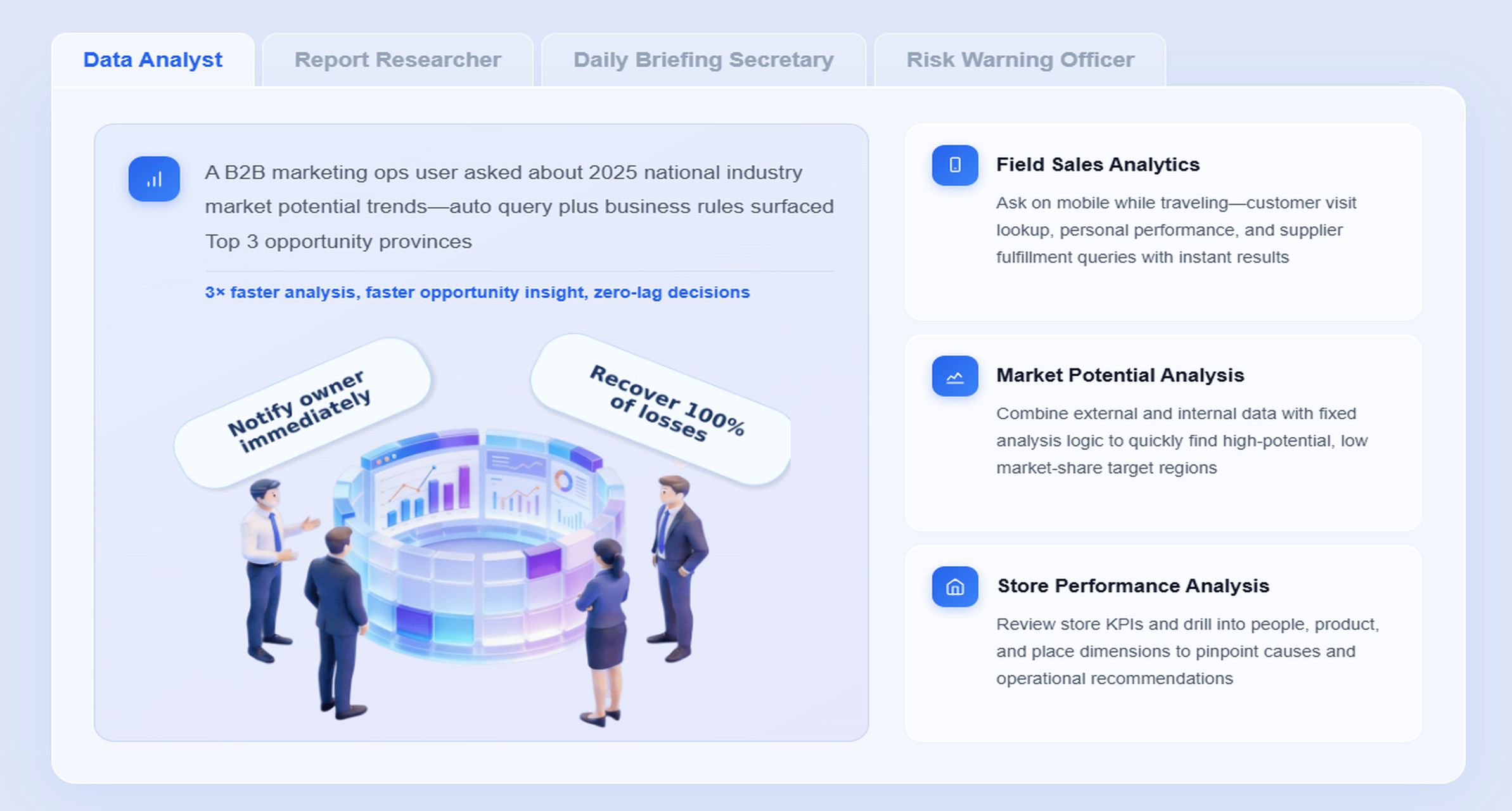
How the AI workflow works in practice
-
Retrieve trusted FineReport report or operational cockpit data.
Dora accesses the approved month-end management report, variance analysis, close status dashboard, and exception list. -
Understand KPI definitions, report templates, filters, business terms, and semantic rules.
It uses the governed semantic layer behind FineReport to interpret terms like materiality threshold, operating expense variance, entity scope, and overdue reconciliation item. -
Generate structured report summaries, chart explanations, or management narratives through chat.
Dora returns a concise but structured summary for the finance manager, organized by revenue, cost, margin, cash, key risks, and follow-up items. -
Detect exceptions, abnormal changes, overdue items, or threshold breaches when relevant.
If certain account movements or reconciliation issues exceed predefined limits, Dora highlights them instead of forcing users to search manually. -
Push report summaries, alerts, or suggested actions to responsible users.
A Daily Briefing Secretary can distribute a pre-meeting close summary, while a Risk Alert Officer can notify account owners about unresolved exceptions. -
Produce follow-up records or daily/weekly summaries for review.
Finance leadership gets a review-ready trail of what was summarized, what was flagged, and what requires owner action.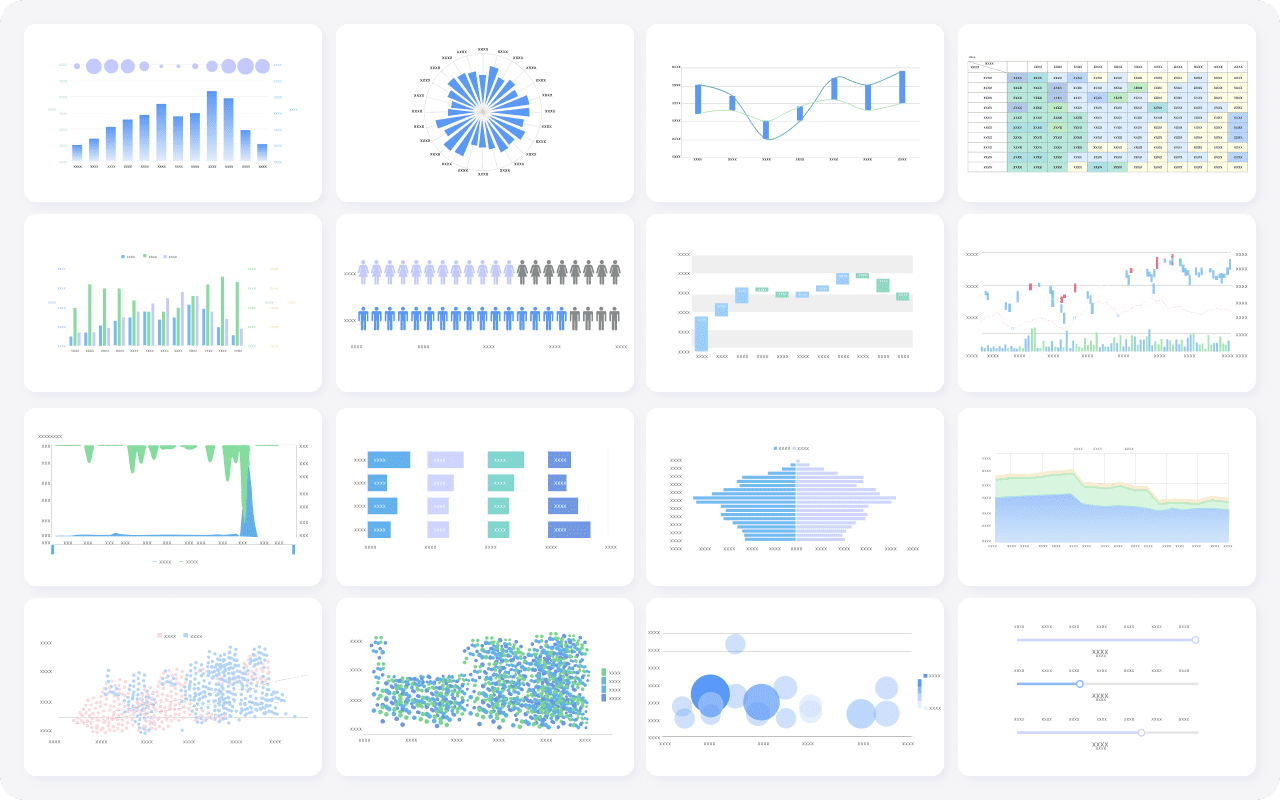
Why this works better with FineReport as the foundation
Dora’s value depends on trusted enterprise reporting assets. FineReport provides that base by standardizing:
- formatted financial reports
- operational cockpits for close monitoring
- KPI and template governance
- permissions and access control
- recurring report workflows
- report-level consistency across finance scenarios
That makes Dora more useful than raw prompt-only AI approaches. Instead of asking a model to infer business meaning from disconnected files, finance teams can rely on:
- natural-language query over trusted reporting assets
- chart-based answers from governed report outputs
- structured report summaries and management narratives
- scheduled summaries and close briefings
- exception alerts with clear ownership routing
- Skills-based execution for more controllable and auditable AI workflows
For finance managers, the practical benefit is simple: less time reading and rewriting reports, more time making decisions and managing follow-up.
Common mistakes to avoid and how to choose the right next step
Finance teams often understand the need for automation but still struggle with rollout decisions.
Automating broken processes before simplifying them
If the close workflow is cluttered with duplicate reports, inconsistent approvals, or unclear ownership, automation will only scale the confusion. Simplify first, then automate.
Overcustomizing workflows that should remain flexible
Not every finance report needs a highly customized process. Overengineering creates maintenance burden and slows adoption. Standardize the recurring core, then allow controlled flexibility where business judgment is required.
Choosing tools based only on dashboard features instead of controls and scalability
Finance reporting is not just about visuals. Finance managers should evaluate:
- data governance
- formatted reporting capability
- auditability
- workflow support
- permissions
- template reusability
- scalability across entities and reporting cycles
- AI execution control, not just chatbot appearance
This is why a reporting foundation like FineReport matters. Dashboards alone do not solve month-end close reporting requirements.
A practical 90-day roadmap for piloting, evaluating, and expanding automation
Days 1-30: Diagnose and prioritize
- map close reporting workflows
- identify 2-3 recurring report candidates
- define owners, bottlenecks, and current timing
- standardize KPI definitions and thresholds
- confirm data source availability
Days 31-60: Build the reporting foundation
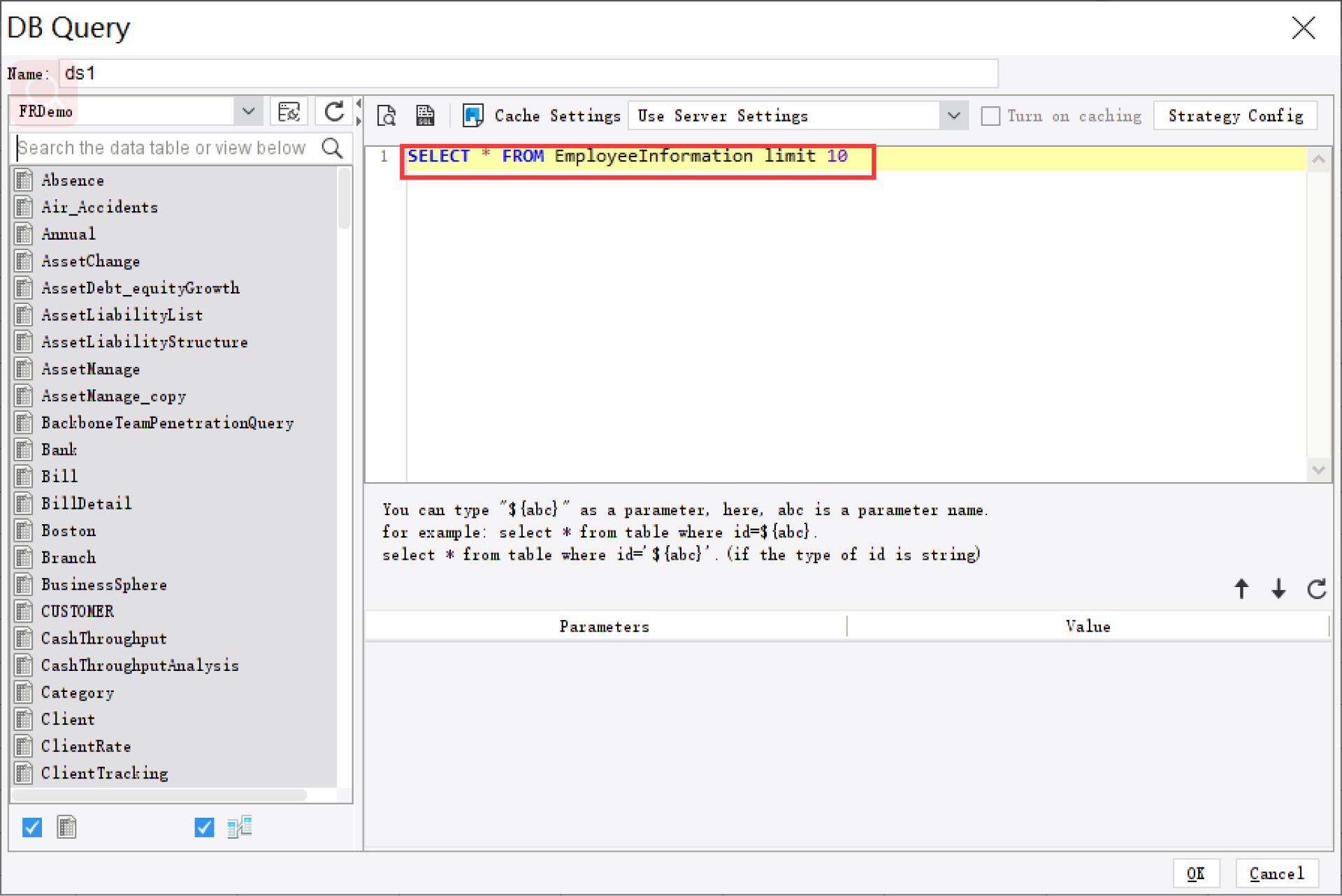
- create or refine FineReport templates
- configure validations and exception rules
- set refresh schedules and review checkpoints
- align permissions and distribution lists
- test audit trace and version control
Days 61-90: Add Dora for AI-assisted report consumption
- enable report summary and chat-based question use cases
- pilot one Dora role such as Daily Briefing Secretary or Report Researcher
- define follow-up alerts for material exceptions
- review AI-generated narratives with finance users
- expand Skills gradually based on control and business value
This phased approach is more realistic than trying to automate all close and FP&A scenarios at once.
FineReport + Dora Solution Pitch
Building this manually is complex. FineReport helps teams standardize trusted reports, operational cockpits, templates, and reporting workflows. Dora turns those assets into an AI assistant that can answer report questions in chat, generate structured summaries, push scheduled briefings, monitor exceptions, and follow up with responsible owners.
For finance managers, this means the automation of financial reporting becomes more than report production. It becomes a governed operating model for month-end visibility, management communication, and follow-through.
FineReport is the reporting foundation for:
- formatted financial statements and management packs
- complex reports with drill-down logic
- operational cockpits for close monitoring
- report automation and scheduled distribution
- workflow-driven data collection or reporting processes
Dora is the AI assistant layer for:
- natural-language query over trusted reporting assets
- report, cockpit, metric, and exception retrieval
- structured report summaries and chart explanations
- scheduled daily or weekly finance briefings
- exception alerts and push notifications
- digital employees for repeatable reporting workflows
FineReport + Dora is not only a reporting upgrade; it is a practical fourth-generation Agentic BI path. FineReport provides governed reports and operational cockpits. Dora provides the AI assistant layer for scenario execution, with more controlled Skills, lower token waste, faster execution paths, and more stable workflows than prompt-only agents.
Get Ready-to-Use Dashboard Templates in Fine Gallery
For executives, the value is concrete: Dora is not an AI experiment. It is a landed digital employee for recurring reporting work such as monthly management reports, finance risk summaries, variance analysis, exception alerts, and owner follow-up.
For IT teams, the role shifts from manually fulfilling every reporting request to improving data connections, semantic layers, report templates, permissions, and reusable agent Skills.
For business and finance users, the benefit is lower friction: faster access to report summaries, chat-based answers, scheduled briefings, and timely exception pushes without hunting through files or waiting for manual explanation.
The strongest Dora pitch is scenario + product + service: FineReport provides the trusted reporting foundation, Dora provides the AI digital employee, and implementation service connects data, governance, semantic setup, Skills, report templates, permissions, and rollout.
FAQs
Financial reporting automation uses software to collect data, apply rules, validate results, and generate recurring finance reports with less manual work. In month-end close, it helps teams produce accurate outputs faster and with better control.