Enterprise ESG reporting rarely fails because teams do not care about sustainability. It fails because the data is scattered across plants, procurement systems, supplier files, finance workbooks, email attachments, PDFs, and regional templates. By the time teams consolidate everything, validate definitions, and draft the narrative, the reporting cycle is already behind schedule.
That is why more enterprise teams are investing in ai in esg reporting as both a reporting efficiency upgrade and a governance upgrade. The goal is not to let AI replace controls. The goal is to help teams collect evidence faster, normalize inconsistent inputs, summarize approved results, and route issues to the right reviewers.
With FineReport + Dora, teams can ask for a report summary in chat, generate structured narratives from trusted report assets, receive scheduled briefings, and push exceptions to the right owner. For sustainability leaders, finance managers, IT teams, and compliance stakeholders, that means less manual chasing and a more governed path from fragmented ESG data to management-ready reporting.
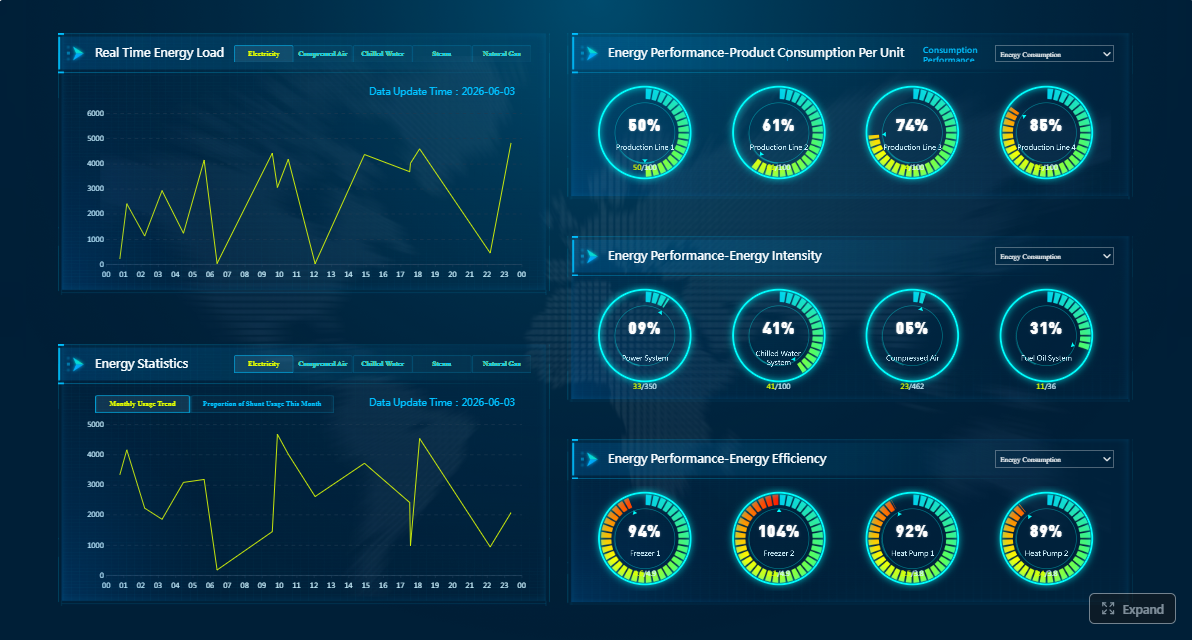 Click To Try The Dashboard
All reports in this article are built with FineReport
AI in ESG Reporting: why enterprise teams are rethinking the reporting process
Enterprise teams are rethinking ESG reporting because the old workflow no longer scales. Sustainability disclosures now require broader coverage, tighter traceability, and stronger alignment across business functions. At the same time, the underlying data still lives in too many operational and document-based systems.
A typical enterprise ESG reporting cycle involves:
- collecting emissions, waste, water, labor, supplier, governance, and policy data
- checking ownership and reporting boundaries
- normalizing units and reporting periods
- validating methodology and calculation rules
- preparing management reports and board summaries
- supporting disclosure readiness with evidence and review history
The problem is not only data volume. It is inconsistency. Different teams interpret the same KPI differently, submit on different cadences, and store supporting evidence in different formats. That creates delays, weakens confidence in the report, and increases audit risk.
This is where ai in esg reporting becomes practical. AI can support faster data collection, extraction, standardization, summarization, and review preparation. But in enterprise settings, AI only works well when it is connected to a governed reporting foundation. That means approved KPI definitions, controlled report templates, permissions, workflow rules, and source traceability still matter.
For executives, the value is concrete: faster management reports, better disclosure readiness, and fewer last-minute reconciliation cycles.
For IT teams, the role shifts from manually building every one-off report to strengthening data connections, semantic rules, permissions, report templates, and reusable AI Skills.
For business and sustainability users, the gain is simpler report consumption. Instead of hunting through multiple workbooks and prior email chains, they can get timely summaries, chart explanations, scheduled ESG briefings, and exception pushes in a controlled workflow.
Where ESG reporting breaks down when data lives in too many systems
Common sources of fragmentation across enterprise sustainability data
Most ESG reporting processes span more systems than teams initially realize. Common sources include:
- ERP and finance systems for spend, cost allocation, and legal entity structure
- EHS and operational systems for energy use, waste, water, incidents, and site performance
- procurement platforms for supplier records and questionnaires
- HR systems for workforce and diversity indicators
- spreadsheets used by regional teams for local submissions
- PDFs, policy documents, contracts, and assurance files
- email attachments and manually completed templates from suppliers or business units
The real complexity comes from the fact that these sources do not speak the same language. One region may report monthly, another quarterly. One business unit may use location-based energy factors while another reports market-based figures in a separate file. Finance may organize by legal entity while operations report by facility and sustainability teams report by topic.
This fragmentation creates three enterprise problems:
-
Metric inconsistency
The same ESG indicator can be calculated differently across regions or business lines. -
Workflow friction
Teams spend too much time chasing contributors, reformatting inputs, and resolving duplicate versions. -
Weak comparability
Management reports become hard to trust because changes may reflect process differences rather than actual performance.
The risks of manual consolidation and narrative drafting
Manual ESG consolidation often starts with good intentions and ends with hidden risk.
When teams stitch together spreadsheets and draft narratives manually, they run into:
- version confusion across reporting cycles
- missing evidence for key claims
- inconsistent metric definitions
- unsupported narrative statements
- weak traceability from reported number back to source
- duplicated effort between internal management reporting and external disclosure prep
This is especially dangerous when internal management reports and disclosure support packs drift apart. Executives may review one set of numbers while external reporting teams work from another version. Even if the final numbers are corrected later, the process becomes slow, difficult to explain, and harder to defend.
A governed reporting workflow reduces that risk. AI can accelerate the process, but only if the enterprise first treats ESG reporting as an operational reporting problem, not just a document-writing problem.
How AI helps turn fragmented ESG inputs into structured, governed reporting workflows
The strongest use of ai in esg reporting is not a generic text generator producing polished sustainability language. It is a governed workflow that helps teams extract, normalize, analyze, summarize, and route ESG reporting tasks around trusted data assets.
Extracting and standardizing data from messy source materials
Enterprise ESG reporting often begins with messy inputs: supplier forms, scanned documents, emailed spreadsheets, regional templates, tabular PDFs, and free-text explanations. AI can help identify and pull the relevant data from those materials.
Examples include:
- extracting facility energy usage from uploaded spreadsheets
- identifying waste and water metrics from regional forms
- pulling supplier response details from questionnaires or PDF declarations
- recognizing entity names, reporting periods, and units from inconsistent submissions
- mapping text-based descriptions to approved ESG categories or reporting topics
But extraction alone is not enough. The enterprise value comes from standardization. Inputs need to be mapped to a common taxonomy, approved units, reporting periods, legal entities, and KPI definitions.
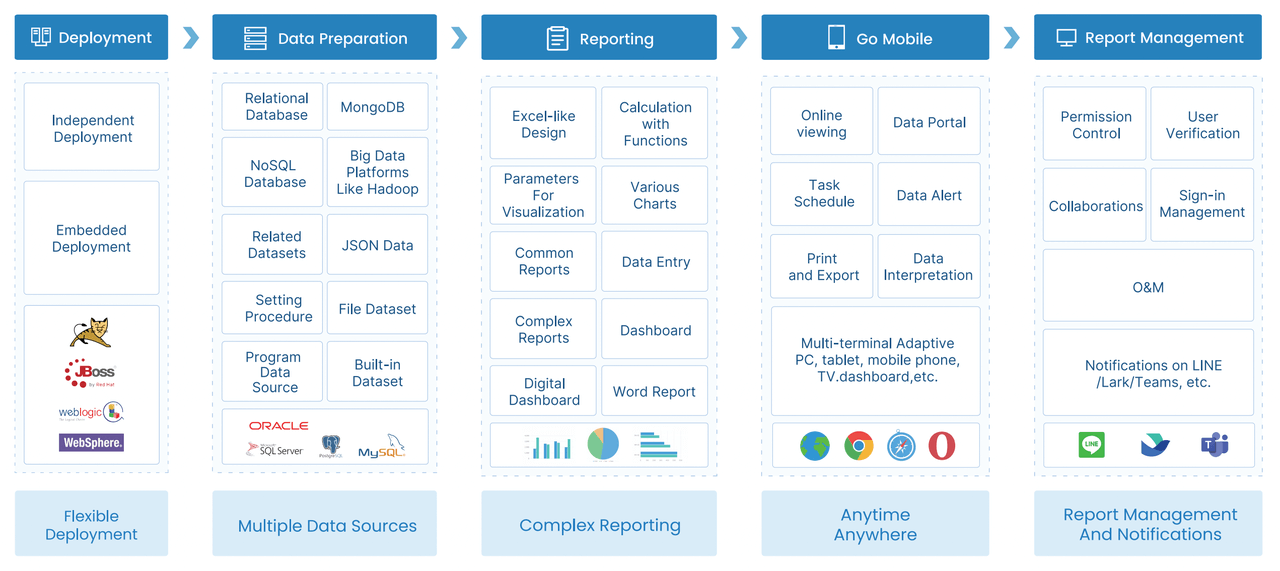
This is where FineReport becomes important as the reporting foundation. FineReport can standardize report templates, structured forms, management views, and operational cockpits so that ESG data is not only collected, but collected into a usable reporting framework.
Supporting analysis, anomaly detection, and draft generation
Once data is organized, AI can support the next stage of ESG reporting:
- flagging missing submissions before the reporting deadline
- identifying outliers or unusual changes in emissions, energy, waste, or workforce indicators
- spotting conflicting values across related records
- surfacing overdue follow-up items
- generating first-pass summaries grounded in approved report outputs
For example, if one facility shows a sudden drop in waste recycling rate while production volume stayed stable, AI can flag the anomaly for review. If supplier submission counts are incomplete for a key category, AI can push that exception into the reporting workflow before the issue reaches the board pack or disclosure draft.
AI can also generate a structured report summary from approved FineReport ESG reports. That helps sustainability and finance teams prepare management-ready narratives faster without manually rewriting every chart and table.
Keeping humans in control through review and approval steps
Enterprise ESG reporting still requires judgment, policy interpretation, and sign-off. AI should support those steps, not bypass them.
A governed ESG workflow should include:
- data validation checkpoints
- reviewer ownership by KPI or report section
- approval workflows for narrative and metric changes
- documented calculation logic
- source evidence links for reported statements
- escalation rules for gaps or anomalies
This is why enterprise AI adoption works better with controlled Skills-based execution than with raw prompt-only tools. Dora is designed as an enterprise Data Agent layer that operates on top of trusted reporting assets and semantic rules. That makes it more practical for repeatable ESG workflows where permissions, KPI governance, and auditability matter.
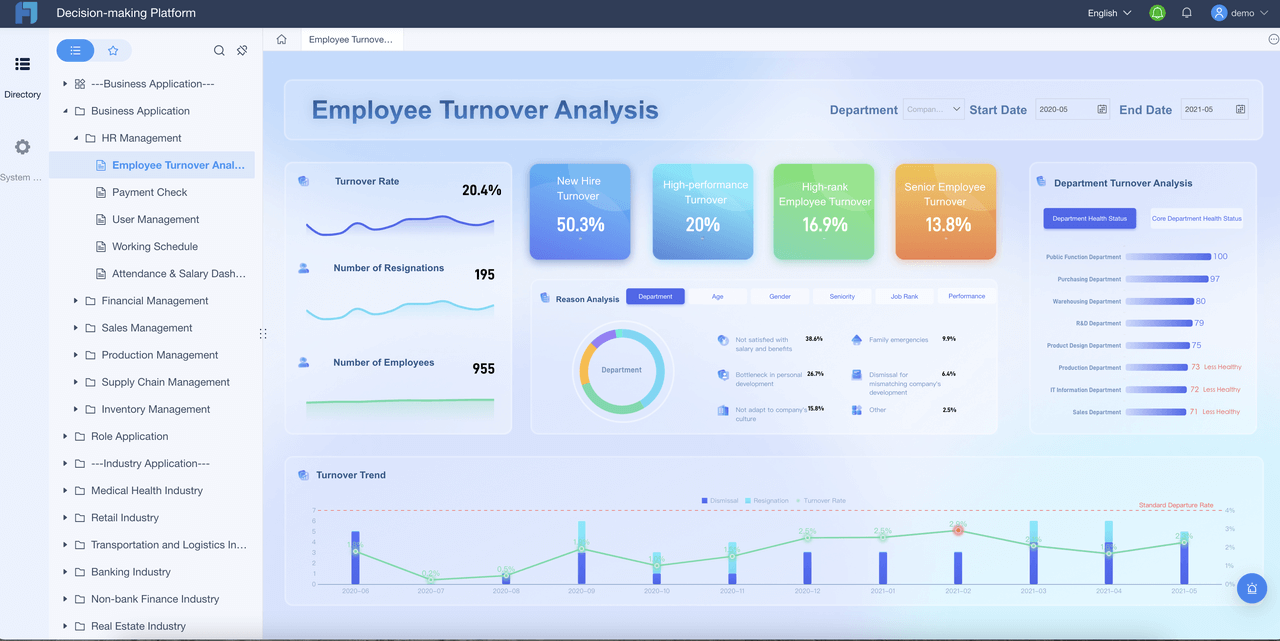
What governed ESG reporting looks like in practice
Governed ESG reporting means the enterprise can explain not only the final number, but also where it came from, who reviewed it, and how it was used in management reporting and disclosure support.
Building controls around data quality, permissions, and auditability
A mature ESG reporting workflow should include these core report elements:
-
Entity and boundary mapping
Definition: The approved organizational scope for each ESG metric, including facilities, legal entities, suppliers, or business units.
Business value: Prevents inconsistent inclusion and exclusion across reporting cycles.
AI use: Dora can explain scope differences in chat, summarize missing entity submissions, and include boundary notes in a scheduled management briefing. -
KPI definitions and calculation logic
Definition: The official methodology for metrics such as emissions, waste intensity, incident rate, supplier coverage, or training completion.
Business value: Reduces confusion between teams and improves comparability.
AI use: Dora can retrieve approved KPI definitions from FineReport-linked assets, answer metric questions, and use the right terminology in structured summaries. -
Source evidence tracking
Definition: The connection between reported values and underlying documents, forms, or system records.
Business value: Supports auditability and reviewer confidence.
AI use: Dora can link report summaries back to source-based report sections and flag data points with incomplete evidence trails. -
Change history and version control
Definition: A record of what changed, when, and by whom across the reporting cycle.
Business value: Reduces version confusion and strengthens review discipline.
AI use: Dora can summarize major changes since the prior reporting cut and notify owners when updates affect key report sections. -
Approval workflow status
Definition: The state of review, sign-off, and escalation for each ESG report component.
Business value: Keeps reporting on schedule and clarifies accountability.
AI use: Dora can push overdue approval alerts, generate status briefings, and identify bottlenecks in the workflow.
FineReport supports this by turning ESG reporting into a structured reporting process with standardized forms, management reports, and operational cockpit views rather than a loose collection of files.
Aligning AI outputs with internal reporting standards and disclosure expectations
AI-generated text is only useful when it aligns with approved methodology and enterprise reporting standards. In ESG, that means generated language should reflect:
- approved material topics
- accepted risk language
- validated methodology descriptions
- the correct entity and period scope
- internal disclosure style and template structure
FineReport helps teams build reusable report templates for board updates, sustainability management packs, plant-level exception reviews, and disclosure support reports. Dora can then work against those trusted assets to generate structured summaries, chart explanations, and management narratives in a more controlled way.
That is far more practical than asking a generic tool to draft ESG content from scratch without understanding the enterprise’s KPI definitions, semantic rules, or permissions.
Choosing between platform-led and custom approaches
When evaluating ai in esg reporting, enterprise teams often compare three paths:
-
ESG platform-led approach
Strong for framework-specific workflows, but may still require custom reporting and internal management views. -
Internal data stack plus custom AI build
Flexible, but often slow to implement and difficult to govern consistently across report users. -
AI-enabled reporting workflow approach
Useful when the enterprise already needs trusted reports, operational cockpits, and governed AI-assisted report consumption.
For many teams, the practical question is not “Which tool has the most AI features?” It is “Which approach can actually land in our environment with governance, permissions, templates, and cross-functional adoption?”
That is where FineReport + Dora stands out. FineReport builds the trusted reporting and operational cockpit foundation. Dora turns that foundation into a scenario-specific AI assistant or AI digital employee for recurring ESG reporting work.
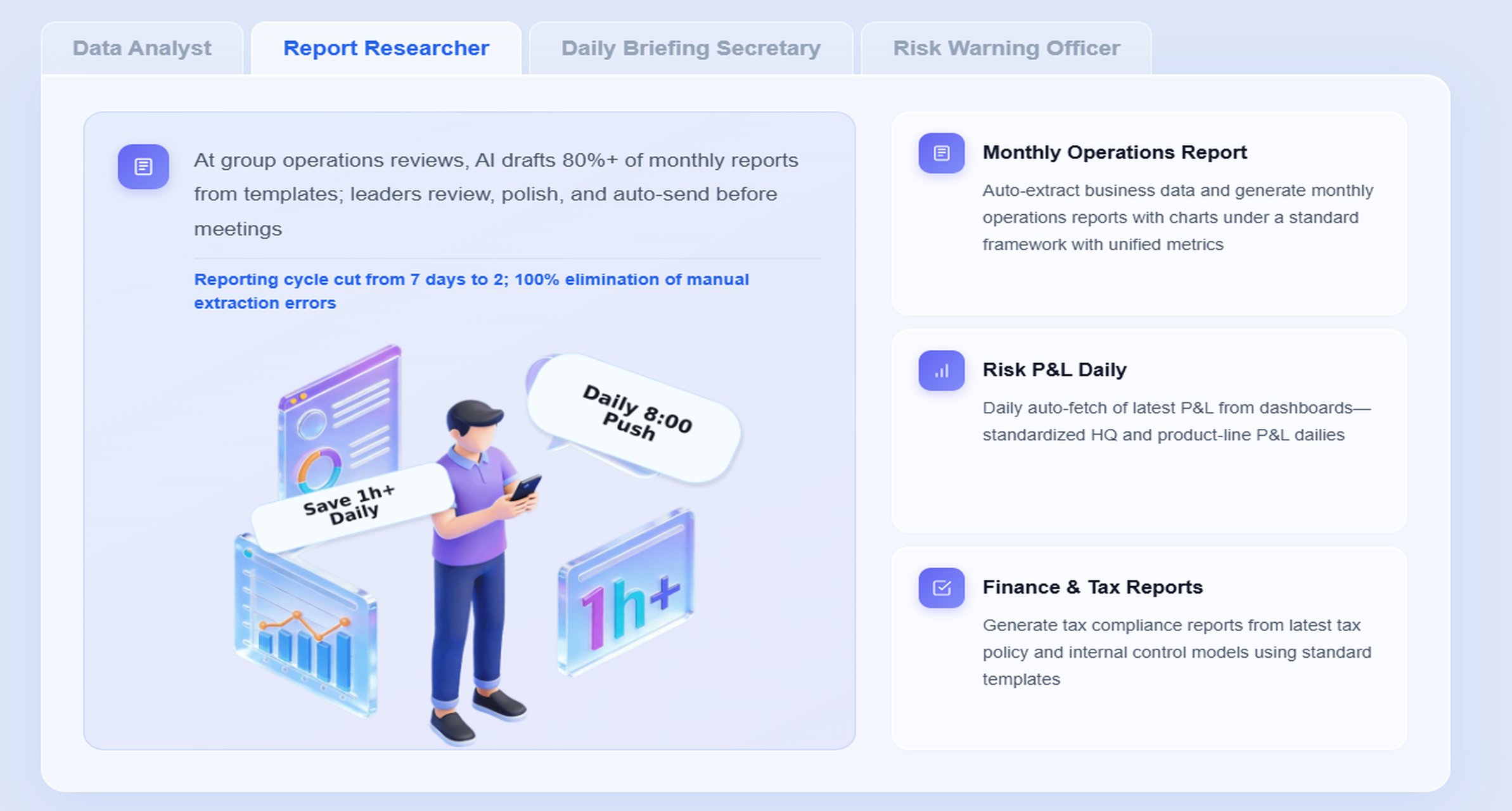
How an AI Data Agent Automates Report Consumption
The biggest reporting bottleneck is often not report creation alone. It is report consumption: reading the ESG pack, understanding what changed, identifying anomalies, and following up with the right owners.
In this scenario, the most relevant Dora digital employees are:
- Report Researcher for structured ESG report generation from FineReport reports, tables, charts, and templates
- Daily Briefing Secretary for scheduled management summaries and recurring report push
- Risk Alert Officer for anomaly detection, exception notification, and owner follow-up
- Data Analyst digital employee for natural-language ESG report questions and metric explanation
Here is a concrete chat-style example:
“Summarize this quarter’s ESG management report, highlight abnormal energy and waste changes by facility, list missing supplier evidence submissions, and show which owners need follow-up before the board review.”
A governed Dora workflow can look like this:
-
Retrieve trusted FineReport ESG reports or operational cockpit data
Dora accesses the approved ESG management report, facility exception list, and supplier evidence status from FineReport assets. -
Understand KPI definitions, report templates, filters, and semantic rules
Dora uses the governed semantic layer to interpret business terms such as reporting boundary, emissions category, supplier coverage, and approval status. -
Generate a structured report summary in chat
Dora produces a management-ready summary that explains chart movements, lists overdue items, and organizes findings by ESG topic or business unit. -
Detect exceptions and conflicting signals
Dora highlights abnormal changes, missing evidence, threshold breaches, or incomplete submissions that require human review. -
Push alerts and follow-up tasks to responsible users
As a Risk Alert Officer or Daily Briefing Secretary, Dora can push scheduled briefings, notify owners of unresolved issues, and direct users back to the FineReport source report. -
Record follow-up status for review cycles
Dora supports periodic summaries and follow-up records so sustainability, finance, and compliance teams can review open actions before final sign-off.
This is where Dora provides real enterprise value. It is not acting like a generic chatbot. It is an enterprise Data Agent that works on top of approved report assets and reusable Skills. That gives teams:
- natural-language query over trusted reporting assets
- chat-based AI assistance for ESG report consumption
- retrieval of metrics, cockpits, reports, and exception lists from FineReport
- generation of structured report summaries and chart-based answers
- scheduled summaries, weekly ESG briefings, and approval reminders
- stronger execution control through Skills-based workflows
- better enterprise fit through permissions, semantic rules, report templates, and data quality controls
Compared with prompt-only agents, this approach is more practical for landing in real enterprises because workflows are more controlled, auditable, and stable.
How enterprise teams can implement AI for ESG reporting successfully
Successful ai in esg reporting projects do not start by trying to automate every disclosure or every data source. They start with one bottleneck that is painful, repeatable, and measurable.
Start with a narrow, high-value use case
Good starting points include:
- supplier evidence collection for a high-risk ESG topic
- normalization of regional energy or waste reporting templates
- management narrative drafting for monthly or quarterly ESG review packs
- exception detection for missing submissions or unusual KPI changes
A narrow use case makes it easier to measure outcomes such as:
- time saved in report preparation
- reduction in manual reconciliation effort
- fewer version conflicts
- improved reviewer confidence
- faster issue escalation before reporting deadlines
For executives, this matters because Dora is not an AI experiment. It is a landed digital employee for recurring reporting work such as sustainability management summaries, exception follow-up, board briefing preparation, and disclosure support.
Establish governance before scaling automation
Automation without governance creates faster confusion. Before expanding AI usage, teams should define:
- approved model usage boundaries
- prompt and Skill controls
- review ownership by KPI and report section
- exception handling rules
- approval requirements for generated narratives
- escalation paths for unresolved anomalies
Teams should also define what can be automated and what still requires human judgment. For example:
- extracting and mapping submitted data can be partially automated
- summarizing approved report results can be AI-assisted
- policy interpretation and final sign-off should remain human-led
Build cross-functional adoption into the operating model
ESG reporting succeeds when sustainability, finance, IT, legal, compliance, and internal audit are involved early.
Each group has a different role:
- Sustainability teams define material topics, workflows, and reporting priorities.
- Finance teams help strengthen controls, reconciliation discipline, and management reporting alignment.
- IT teams build the data connections, semantic layer, permission governance, and reusable AI Skills.
- Legal and compliance teams review language risk, disclosure consistency, and policy adherence.
- Internal audit helps validate control design and evidence traceability.
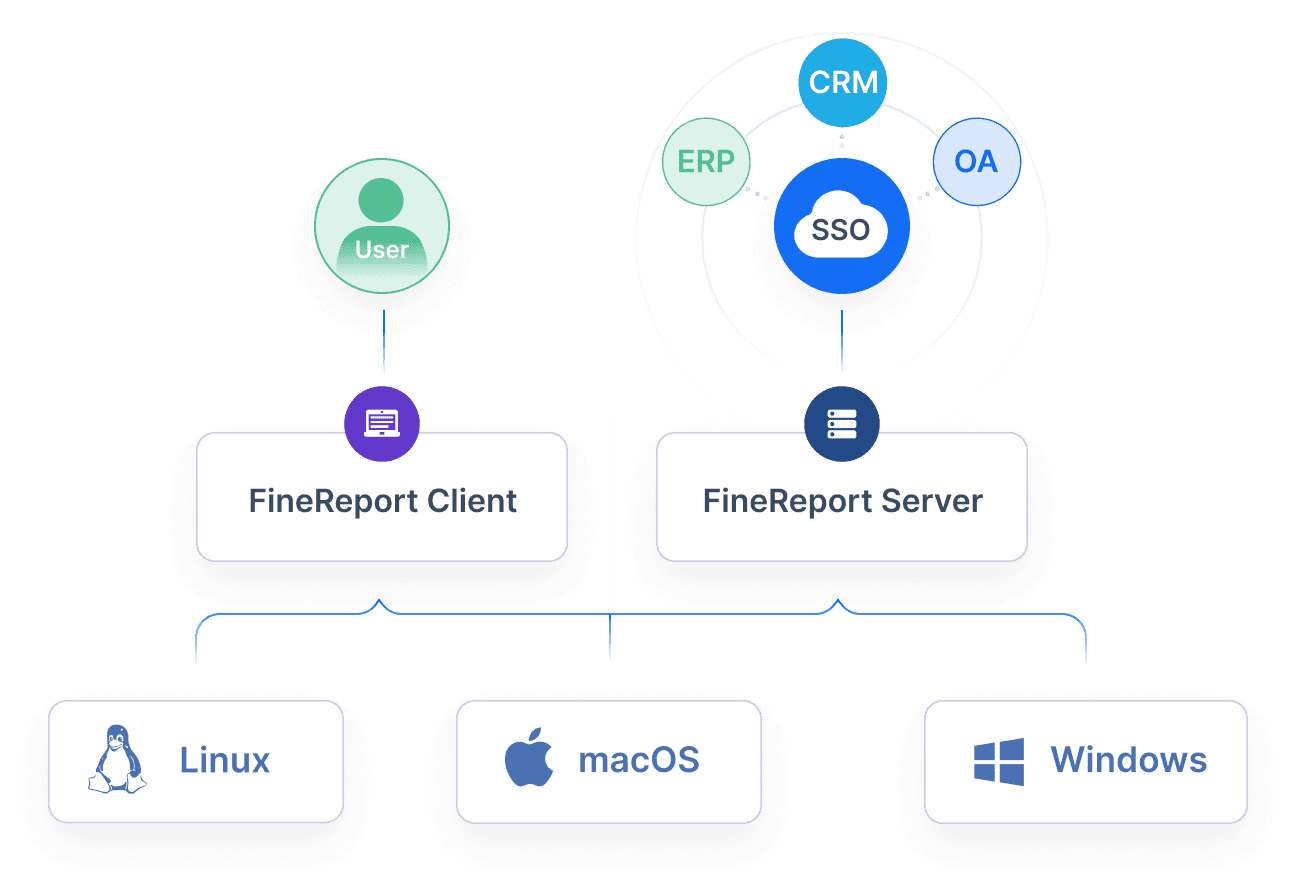
This cross-functional model is also why FineReport + Dora is easier to operationalize than isolated AI experiments. FineReport gives everyone a shared reporting foundation. Dora adds the AI assistant layer for repeatable workflow execution.
What to evaluate next as AI in ESG reporting matures
As enterprise adoption grows, teams should evaluate not only whether AI speeds up reporting, but whether it improves defensibility.
Three trends matter most.
First, assurance expectations are rising. That means AI-supported reporting will be judged on transparency, source traceability, and reviewability, not just convenience.
Second, generative AI will play a larger role in management reporting, compliance support, and stakeholder communications. But the winning approach will be governed generation from approved report assets, not free-form drafting detached from enterprise controls.
Third, enterprises will need a practical selection checklist. Key evaluation questions include:
- Does the solution support trusted reporting assets, not just ad hoc prompts?
- Can it work with fragmented ESG data while preserving KPI governance?
- Does it respect permissions and access boundaries?
- Can it produce structured report summaries and chart-based answers from approved reports?
- Does it support scheduled briefings, exception pushes, and follow-up workflows?
- Can IT manage semantic setup, Skills, and workflow control without rebuilding everything from scratch?
- Is there a realistic rollout path for sustainability, finance, and compliance teams?
Actionable Best Practices
1. Standardize report templates, KPI definitions, and business terms first
AI works better when ESG reporting language is already structured. Define core metrics, boundaries, units, ownership, and report sections before trying to automate summaries or alerts.
2. Build a semantic layer inside the reporting workflow
This is one of the most important AI-specific steps. Dora performs better when it can interpret approved KPI meanings, entity structures, exception rules, and report templates from FineReport assets instead of relying on vague prompts.
3. Treat data quality as part of the AI implementation
Poor ESG inputs produce weak AI outputs. Include validation rules, exception checks, and source evidence tracking as part of the implementation scope.
4. Start with recurring management reports, not every ESG workflow
Another key AI-specific best practice is to begin with high-frequency, high-friction report consumption scenarios such as monthly ESG summaries, plant exception reviews, or supplier evidence follow-up. These are easier to operationalize than trying to automate every disclosure process at once.
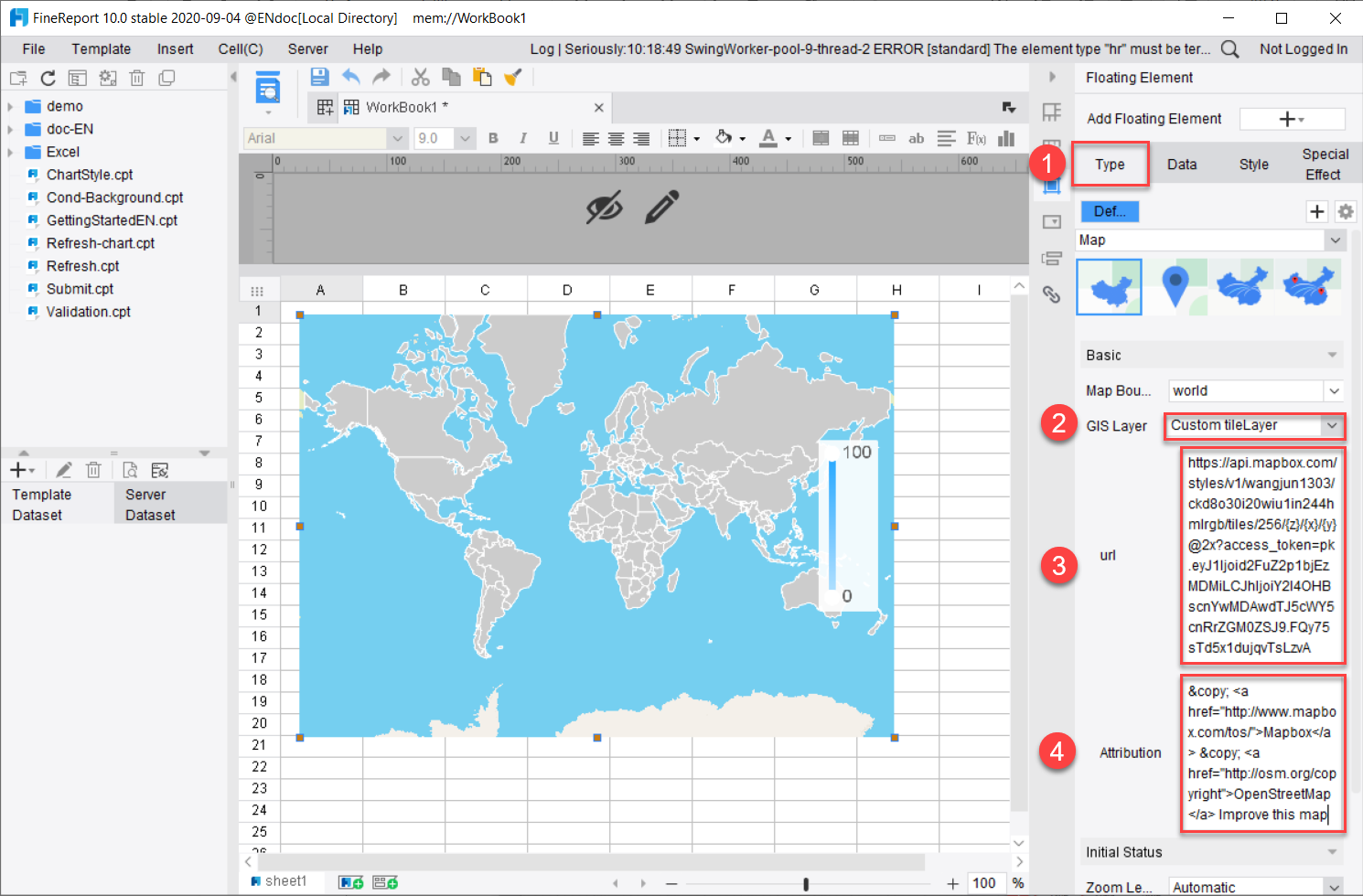
5. Preserve permission governance and human review
AI outputs should respect FineReport access boundaries. Keep role-based permissions, reviewer checkpoints, and sign-off workflows in place, especially for regulated or board-facing ESG content.
FineReport + Dora Solution Pitch
Building this manually is complex. FineReport helps teams standardize trusted reports, operational cockpits, templates, and reporting workflows. Dora turns those assets into an AI assistant that can answer report questions in chat, generate structured summaries, push scheduled briefings, monitor exceptions, and follow up with responsible owners.
For ai in esg reporting, this matters because enterprises do not just need better dashboards. They need a governed operating model for recurring sustainability reporting work. FineReport provides the trusted reporting foundation for ESG data consolidation, structured forms, management packs, and exception views. Dora adds the enterprise Data Agent layer that helps users consume those assets through chat, summaries, alerts, pushes, and follow-up.
FineReport + Dora is not only a reporting upgrade; it is a practical fourth-generation Agentic BI path. FineReport provides governed reports and operational cockpits. Dora provides the AI assistant layer for scenario execution, with more controlled Skills, lower token waste, faster execution paths, and more stable workflows than prompt-only agents.
Get Ready-to-Use Dashboard Templates in Fine Gallery
The strongest Dora pitch is scenario + product + service: FineReport provides the trusted reporting foundation, Dora provides the AI digital employee, and implementation service connects data, governance, semantic setup, Skills, report templates, permissions, and rollout.
For enterprise teams trying to turn fragmented sustainability data into governed reports, that combination is what makes ai in esg reporting practical instead of theoretical.
FAQs
AI helps enterprise teams collect, standardize, and summarize ESG data faster across many systems. It also reduces manual effort while supporting more consistent reporting and review workflows.