

Mainframe modernization is the process of updating legacy mainframe applications, data, and integration architecture so they can work with cloud platforms, APIs, analytics tools, and AI systems.
Mainframe systems have served as the backbone of corporate IT since the 1960s. These systems manage hyperscale workloads and high-volume transactions for industries like banking and healthcare. Mainframe Modernization emerges as a crucial strategy to enhance these legacy systems. The modernization process aligns mainframes with contemporary technological standards, ensuring efficiency and cost-effectiveness. In today's fast-paced technological landscape, discussing mainframe modernization becomes vital. Enterprises recognize the need to integrate and extend mainframe capabilities for innovation and increased resiliency. This approach helps businesses stay competitive and agile in a rapidly evolving market.
Understanding Mainframe Modernization
Definition and Explanation of Mainframe Modernization
What is Mainframe Modernization?
Mainframe Modernization refers to the process of updating and transforming legacy mainframe applications and infrastructure. Organizations undertake this process to align their systems with contemporary technological standards. The modernization involves upgrading hardware, software, and applications to integrate with newer technologies like cloud computing, mobile devices, and big data analytics. This approach addresses the challenges posed by aging and expensive mainframes filled with legacy applications. By migrating applications to the cloud or new hardware, businesses can achieve a fast and cost-effective solution.
Key Components of Modernization
Several key components drive Mainframe Modernization. Businesses focus on cost efficiency by reducing operational expenses associated with outdated systems. Agility becomes a priority to enhance responsiveness to market changes. Scalability ensures that systems can handle increased workloads without compromising performance. Integration and interoperability allow seamless connectivity with modern tools and platforms. Skills availability addresses the need for expertise in both legacy and modern systems. Security enhancements protect sensitive data from emerging threats. Innovation fosters the development of new capabilities and services.
Historical Context of Mainframe Modernization
Evolution of Mainframe Systems
Mainframe applications have served as the backbone of large-scale enterprise computing for decades. These systems managed critical operations across various industries, including banking and healthcare. Initially, mainframes provided unmatched processing power and reliability. Over time, technological advancements introduced more efficient and flexible computing solutions. As a result, organizations began recognizing the limitations of legacy systems. The evolution of mainframe systems highlighted the need for modernization to keep pace with changing business needs.
The Need for Modernization
Modernizing mainframe applications has become necessary in today's rapidly changing business landscape. Legacy systems can impede an organization's agility, efficiency, and competitiveness. Mainframe Modernization offers a strategic process to update these systems to meet current business demands. By migrating mainframes to the cloud, organizations can leverage APIs, microservices, and other integration tools. This enhances data accessibility and improves efficiency. A phased approach to modernization helps avoid overwhelming projects and ensures a smooth transition.
Mainframe Modernization Approaches
Most successful modernization programs combine multiple approaches. A common pattern is to start with data integration — making legacy data accessible to modern tools while the application modernization roadmap unfolds over months or years. This delivers business value early and reduces pressure on high-risk application transformation projects.
For a broader overview of modernization drivers and service models, see Data Modernization Services: Why They Matter.
Mainframe Data Modernization
Application modernization gets more attention, but data modernization is where most organizations hit their first wall. The problem is structural: mainframe data was designed for transaction processing, not analytical consumption.
Where Legacy Data Lives
Why Business Teams Need This Data
Legacy mainframe data is not archival. It is actively used for:
- Financial reporting: GL balances, transaction histories, regulatory filings sourced from DB2 or IMS
- Customer analytics: Account records, transaction patterns, and loyalty data spanning decades
- Risk and compliance: Audit trails, fraud detection baselines, and regulatory evidence stored in VSAM or batch logs
- Operational intelligence: Inventory, supply chain, and production data originating from mainframe transaction systems
- AI/ML training: Historical datasets too large or too sensitive to have been migrated to modern platforms
The gap is not that the data lacks value — it is that the format, encoding, schema, and access method are incompatible with modern analytics, BI, and AI tools. Making this data usable is a distinct discipline from application modernization.
What Modern Data Pipelines Must Handle
A data integration pipeline connecting mainframe data to modern systems must address:
- Encoding conversion: EBCDIC to ASCII/UTF-8 translation for text fields, packed decimals, and zoned numerics
- Schema extraction: Parsing COBOL copybooks or assembler macros to derive field definitions from flat files and VSAM datasets
- Hierarchical flattening: Converting IMS/IDMS tree structures into relational or denormalized tables suitable for analytics
- CDC for DB2: Change Data Capture to enable near-real-time synchronization without impacting mainframe transaction performance
- Data quality validation: Detecting truncation, encoding errors, and referential integrity violations introduced during extraction
- Governance and lineage: Tracking source-to-target mappings, transformation logic, and access permissions for audit compliance
These requirements are specific to mainframe environments. Generic ETL tools often lack native support for VSAM parsing, EBCDIC handling, or z/OS CDC. Purpose-built or well-configured integration platforms are necessary.
For more on real-time synchronization patterns applicable to legacy sources, see What Is Real-Time Data Integration and Why It Matters.
Importance of Mainframe Modernization
Business Competitiveness
Staying Relevant in the Market
Mainframe Modernization helps businesses maintain a competitive edge. Companies face challenges from newer technologies and evolving market demands. Modernizing mainframes allows organizations to stay relevant. Businesses can integrate modern technologies like cloud computing and microservices. This integration enhances system capabilities and improves customer experiences. IDC studies show that modernizers achieve significant benefits. They rate higher on various capabilities compared to replatformers. These advantages ensure businesses remain competitive in their industries.
Enhancing Business Agility
Agility becomes crucial for success in today's fast-paced market. Mainframe Modernization enhances business agility. Organizations can quickly adapt to changing market conditions. Modernized systems support DevOps practices and open-source capabilities. This support enables faster deployment of new applications and services. Businesses can respond swiftly to customer needs and market trends. Enhanced agility ensures companies can seize new opportunities. Mainframe Modernization provides the flexibility needed to thrive in dynamic environments.
Cost Efficiency
Reducing Operational Costs
Mainframe Modernization leads to significant cost savings. Legacy systems often incur high maintenance and operational costs. Modernizing these systems reduces expenses associated with outdated infrastructure. Organizations can migrate applications to more cost-effective platforms. This migration results in lower operational costs post-modernization. Successful modernization efforts lead to improved return on investment (ROI). Companies benefit from reduced expenses and increased profitability.
Optimizing Resource Utilization
Efficient resource utilization becomes possible through Mainframe Modernization. Modernized systems optimize the use of hardware and software resources. Businesses can allocate resources more effectively to meet current demands. Improved workflows and reduced duplication of efforts enhance efficiency. Organizations gain access to a larger pool of IT talent. This access supports the maintenance and development of modernized systems. Mainframe Modernization ensures alignment with business goals and efficient resource allocation.
Benefits of Mainframe Modernization
Improved System Performance
Mainframe Modernization significantly enhances system performance. Businesses achieve faster processing speeds through optimized data management and application performance tools. Organizations streamline processes and improve workflows. Enhanced processing speed allows companies to handle high transaction volumes efficiently. The banking and finance industries benefit from this capability, ensuring quick and reliable transaction processing.
Enhanced Processing Speed
Mainframe Modernization optimizes processing speed. Companies utilize performance optimization tools to maximize data management efficiency. Improved application performance leads to faster response times and increased throughput rates. Businesses experience a reduction in operational costs due to enhanced processing capabilities. This improvement ensures systems meet modern business demands effectively.
Increased Reliability
Reliability increases with Mainframe Modernization. Modernized systems offer improved transaction handling and response times. Organizations benefit from enhanced CPU capabilities and lower-cost environments. These improvements ensure consistent and dependable system performance. Businesses maintain high levels of operational efficiency and customer satisfaction.
Integration with Modern Technologies
Mainframe Modernization facilitates seamless integration with modern technologies. Companies leverage cloud computing and new applications to enhance system capabilities. This integration supports the development of user-friendly systems and better data utilization. Businesses gain a competitive edge by adopting innovative solutions and improving customer experiences.
Cloud Integration
Cloud integration becomes a key component of Mainframe Modernization. Organizations migrate applications to cloud-based platforms for improved scalability and flexibility. This migration enables businesses to access advanced tools and services. Companies benefit from enhanced data accessibility and reduced infrastructure costs. Cloud integration supports the development of new capabilities and services.
Support for New Applications
Mainframe Modernization supports the deployment of new applications. Businesses integrate modern technologies to enhance system functionality. This support allows companies to respond quickly to market changes and customer needs. Organizations benefit from improved workflows and streamlined processes. The adoption of new applications ensures alignment with current business goals and industry standards.
Challenges in Mainframe Modernization
Technical Challenges
Complexity of Legacy Systems
Mainframe Modernization often encounters the complexity of legacy systems. These systems have intricate architectures and outdated technologies. Businesses face difficulties in understanding and modifying these systems. The integration of new technologies with old systems poses significant challenges. Organizations must navigate through layers of outdated code and hardware. The lack of documentation further complicates the process. Companies need to invest in specialized tools and expertise to address these complexities.
Data Migration Issues
Data migration presents another challenge in Mainframe Modernization. Legacy systems contain vast amounts of critical data. Transferring this data to modern platforms requires precision and care. Data integrity and security become major concerns during migration. Incomplete or inaccurate data transfer can lead to operational disruptions. Businesses must ensure that data remains accessible and secure throughout the process. Effective data migration strategies are essential for successful modernization.
Organizational Challenges
Resistance to Change
Resistance to change poses a significant barrier in Mainframe Modernization. Employees accustomed to legacy systems may resist adopting new technologies. This resistance stems from fear of the unknown and disruption of routines. Organizations must address these concerns to facilitate a smooth transition. Change management strategies play a crucial role in overcoming resistance. Clear communication and training programs help employees adapt to new systems.
Skill Gaps in Workforce
Skill gaps in the workforce present another organizational challenge. Mainframe Modernization requires expertise in both legacy and modern systems. Existing employees may lack the necessary skills for new technologies. Retraining employees or hiring new talent becomes essential. This process can be costly and time-consuming. Companies must invest in training programs to bridge skill gaps. A skilled workforce ensures the successful implementation of modernization projects.
Expert Testimony: "Skill gaps with existing employees: One of the most frequently cited reasons for not modernizing IT infrastructure is the need to overhaul your workforce along with the new technology you’re installing to ensure you have skilled workers who can operate and maintain it."
Preparing for a Mainframe Modernization Project
Assessment and Planning
Evaluating Current Systems
Mainframe Modernization begins with assessing current systems. You must understand the existing infrastructure. Identify strengths and weaknesses in your mainframe systems. Evaluate the compatibility of these systems with modern technologies. This evaluation helps you determine the scope of modernization. Analyzing system performance and resource utilization is crucial. You should also consider the age and condition of hardware and software. This assessment provides a clear picture of what needs improvement.
Setting Modernization Goals
Setting clear goals is vital for successful Mainframe Modernization. Define what you want to achieve with modernization. Goals should align with business objectives. Consider factors like cost reduction, improved performance, and enhanced agility. Establishing specific targets helps guide the modernization process. You should prioritize tasks based on impact and urgency. Resource availability also plays a role in setting priorities. A well-defined plan ensures efficient project management.
Execution and Monitoring
Implementing Changes
Implementing changes is a critical phase in Mainframe Modernization. You need a detailed strategy for executing upgrades. Focus on minimizing disruptions during this phase. Incremental updates can help manage risks effectively. Each change should bring you closer to achieving your modernization goals. Ensure that all stakeholders are informed and involved. Communication is key to successful implementation. Regular updates keep everyone aligned with the project's progress.
Continuous Monitoring and Improvement
Continuous monitoring ensures the success of Mainframe Modernization. Track the performance of modernized systems regularly. Use metrics to measure improvements and identify areas for further enhancement. Monitoring helps you maintain alignment with business goals. Regular reviews allow you to make necessary adjustments. Continuous improvement keeps systems optimized and efficient. This approach ensures long-term benefits from modernization efforts.
How FineDataLink Supports Mainframe Data Modernization
FineDataLink is not a mainframe modernization platform. It does not refactor COBOL code, rehost z/OS workloads, or replace legacy applications. It operates in the data integration layer of mainframe modernization — connecting legacy data sources to modern analytics, BI, and AI systems so business teams can access trusted data without waiting for full application transformation.
Specifically, FineDataLink helps teams:
- Connect legacy databases and files: Native and configurable connectors for DB2, flat files, FTP/SFTP batch outputs, and enterprise APIs exposed by mainframe middleware. For VSAM and IMS, FineDataLink integrates with extraction utilities or middleware that expose these sources as readable streams.
- Build ETL/ELT workflows for legacy data: Visual pipeline design for encoding conversion, copybook-based schema parsing, hierarchical flattening, and field-level transformations — reducing dependency on custom JCL or COBOL extraction programs.
- Synchronize legacy data into modern targets: Scheduled batch sync or CDC-based near-real-time replication into data warehouses, cloud databases, or analytics-ready file stores.
- Standardize data definitions across sources: Centralized mapping and transformation logic ensures consistent field names, types, and business rules regardless of source format — addressing the schema fragmentation that makes legacy data unusable for cross-system analytics.
- Prepare trusted data for BI and AI: Built-in data quality checks, error handling, and monitoring ensure downstream dashboards, reports, and AI agents operate on validated, current data rather than stale or corrupted extracts.
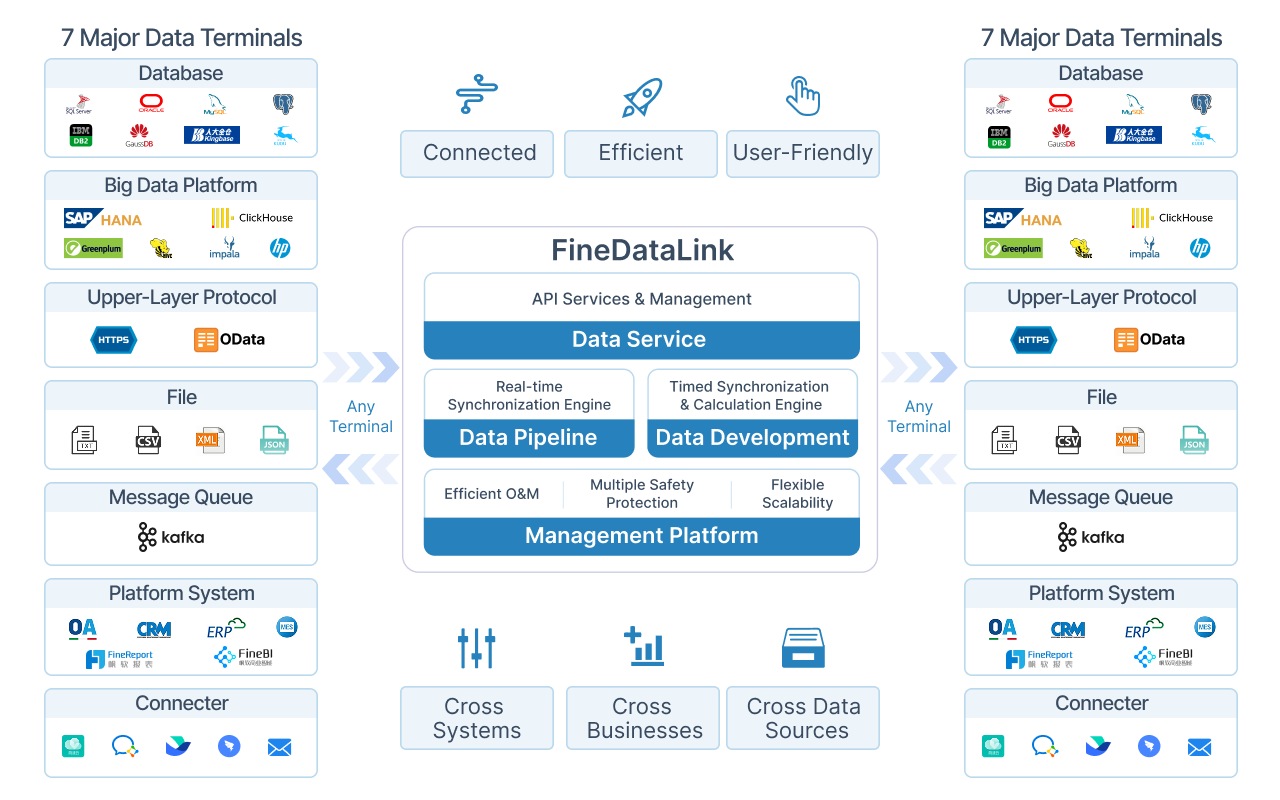
FineDataLink complements — not replaces — application modernization efforts. It delivers immediate analytics value while longer-term refactoring or replatforming projects proceed, reducing the business pressure to rush high-risk application changes.
Using Dora After Mainframe Data Is Modernized
Once legacy data has been integrated, cleaned, and synchronized into a governed analytics layer, Dora can help business users interact with it through natural language.
Dora does not connect to mainframes directly. It operates on the trusted, modernized data assets produced by FineDataLink and downstream BI/reporting platforms. Business users can ask questions like "What were the top 5 customer account anomalies last month?" or "Summarize this week's transaction volume variance vs. prior quarter" — and receive answers grounded in governed, validated data rather than raw legacy extracts.
This completes the modernization value chain for data consumers: mainframe source → FineDataLink integration → governed analytics layer → Dora conversational access. Each layer solves a distinct problem; none substitutes for the others.
FanRuan
https://www.fanruan.com/en/blogFanRuan provides powerful BI solutions across industries with FineReport for flexible reporting, FineBI for self-service analysis, and FineDataLink for data integration. Our all-in-one platform empowers organizations to transform raw data into actionable insights that drive business growth.
FAQ
What drives the need for mainframe modernization?
Security concerns drive the need for mainframe modernization. Businesses prioritize data protection, regulatory compliance, and infrastructure management. The 2022 Mainframe Modernization Business Barometer Report highlights security as a primary driver. Companies seek to safeguard sensitive information and meet industry standards.
How does mainframe modernization benefit industries like banking and healthcare?
Mainframe modernization enhances computing power for industries like banking and healthcare. These sectors rely on robust systems for high-volume transactions and data processing. A report by Allied Market Research estimates the mainframe market will reach USD 2.9 billion by 2025. Modernized systems support innovation and improve service delivery.
What are the common challenges in mainframe modernization?
Complexity of legacy systems presents a significant challenge. Businesses face difficulties in understanding outdated architectures. Data migration issues also pose challenges. Companies must ensure data integrity and security during the transition. Resistance to change within organizations can hinder progress. Skill gaps in the workforce require attention and investment.
What approaches exist for mainframe modernization?
Incremental modernization offers a step-by-step approach. Businesses upgrade systems gradually to minimize disruptions. A complete overhaul involves replacing legacy systems entirely. This method provides a fresh start with modern architectures. Companies must choose an approach based on their specific needs and resources.
How do companies prepare for a mainframe modernization project?
Assessment and planning form the foundation of a successful project. Companies evaluate current systems to identify strengths and weaknesses. Setting clear goals aligns modernization efforts with business objectives. Execution involves implementing changes with minimal disruption. Continuous monitoring ensures systems remain optimized and efficient.
What factors influence the decision between modernization and migration?
Cost considerations play a crucial role in decision-making. Modernization may involve lower upfront costs. Migration can lead to long-term savings by reducing operational expenses. Availability of skilled personnel impacts the choice. Complexity of existing systems influences the decision. Businesses assess potential disruptions to operations during the transition.