Data processing is the systematic conversion of raw data into usable, structured information through collection, cleaning, transformation, and storage. In enterprise environments, it encompasses everything from validating a customer record entered in a CRM to synchronizing millions of transaction rows from an ERP into a data warehouse.
This guide covers the definition, six-stage cycle, processing types, real-world business examples, and the distinction between data processing, data analysis, and data integration. It also explains how tools like FineDataLink automate enterprise data processing at scale.
What is Data Processing
Data processing refers to any operation performed on raw data to convert it into a form that is accurate, consistent, and ready for downstream use — whether that downstream use is reporting, analytics, AI, or operational decision-making.
In practice, data processing includes:
- Validation: Checking that data conforms to expected formats, ranges, and business rules.
- Cleaning: Removing duplicates, correcting errors, filling missing values, and standardizing formats.
- Transformation: Aggregating, joining, pivoting, enriching, or restructuring data to match target schemas.
- Integration: Combining data from multiple source systems into a unified, consistent dataset.
- Storage: Persisting processed data in databases, warehouses, lakes, or files for future access.
Data processing is not the same as data analysis. Processing makes data usable; analysis makes data meaningful. Both are essential, but they serve different functions in the data value chain.
The Six Stages of Data Processing
Data Collection
The first stage of the data processing cycle is data collection. This step involves gathering raw data from various sources, such as surveys, interviews, sensors, or databases. Defining clear objectives during this stage ensures the data aligns with your business goals and provides the necessary information for informed decisions. Choosing the right method for collecting data, whether through structured surveys or observational techniques, is crucial for maintaining accuracy and relevance.
High-quality data collection relies on careful planning and validation processes. For example, randomization reduces bias, while regular checks maintain data integrity. These practices ensure the raw data is accurate and ready for further processing.
By following these best practices, you can maximize the value of the insights obtained from your data.
Data Preparation
Once the data is collected, the next stage involves data preparation. This step focuses on cleaning, sorting, and filtering raw data to ensure accuracy and consistency. Data cleaning is particularly important, as it removes errors, duplicates, and irrelevant information that could compromise the quality of your analysis.
During this stage, you organize the data into a structured format, making it easier to process. For example, you might standardize formats, fill in missing values, or remove outliers. These actions improve data quality and ensure the information is ready for transformation and analysis.
Tip: Data preparation is the foundation of effective data processing. Investing time in this stage reduces errors and enhances the reliability of your results.
Data Input
The third stage of the data processing cycle is data input. This step involves converting the prepared data into machine-readable formats, such as spreadsheets, databases, or software applications. Accurate data input is essential for informed decision-making, as errors during this stage can lead to flawed analyses and financial losses.
Efficient data input processes enhance productivity and reduce redundant work. For example, automated systems can streamline data entry, minimizing manual intervention and ensuring consistency. Maintaining accuracy during this stage is also critical for compliance with legal requirements and for generating meaningful insights through data analytics.
- Decision Making: Accurate data is essential for informed decisions.
- Customer Satisfaction: Maintaining accurate customer data improves personalized experiences.
- Operational Efficiency: Efficient data entry processes save time and resources.
- Compliance and Legal Requirements: Errors in data entry can lead to non-compliance.
- Data Analytics: Reliable data input ensures meaningful insights for analysis.
By focusing on precision and efficiency, you can transform raw data into actionable information that drives success.
Data Processing
Data processing is the core stage where raw data undergoes transformation into meaningful insights. This step involves applying algorithms, statistical methods, and software tools to analyze and interpret the data. The goal is to extract actionable information that supports decision-making and strategic planning.
To ensure the reliability of this stage, you should follow a structured approach:
- Setting Clear Objectives: Define measurable goals to align the analysis with your business needs.
- Acquiring High-Quality Data: Use reliable methods like surveys or digital tracking to gather accurate information.
- Data Preparation: Clean and organize the data to eliminate errors and inconsistencies.
- Advanced Data Analysis: Leverage statistical tools and software to uncover patterns and trends.
Each step enhances the accuracy and relevance of the results, ensuring the processing of data yields valuable insights. For example, businesses can use predictive analytics to forecast market trends or customer behavior, enabling proactive strategies.
Tip: Invest in advanced tools and technologies to streamline this stage. Platforms like FineDataLink simplify data integration and processing, ensuring high-quality outcomes.
Data Output
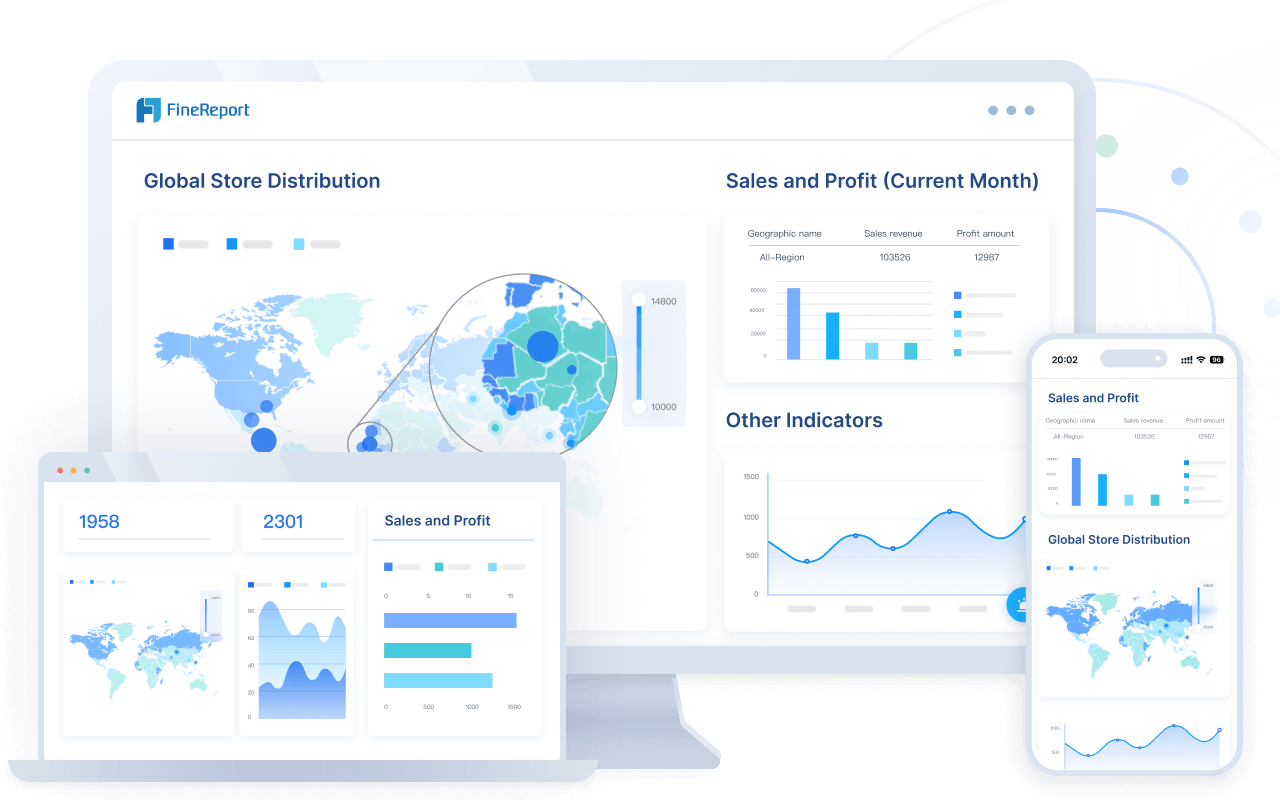
Data output is the stage where processed data is presented in a usable format. This could include reports, dashboards, visualizations, or even automated alerts. The primary objective is to make the interpretation of data straightforward and actionable for stakeholders.
Effective data output implementation leads to several outcomes:
- Changes in decision-making processes and organizational policies.
- Improved knowledge and skills among team members.
- Enhanced systems and workflows due to actionable insights.
- Long-term cultural shifts toward data-driven strategies.
For instance, a well-designed dashboard can help you monitor key performance indicators (KPIs) in real time, enabling quick adjustments to strategies. Short-term improvements, such as better skill development, often pave the way for long-term benefits like increased organizational efficiency.
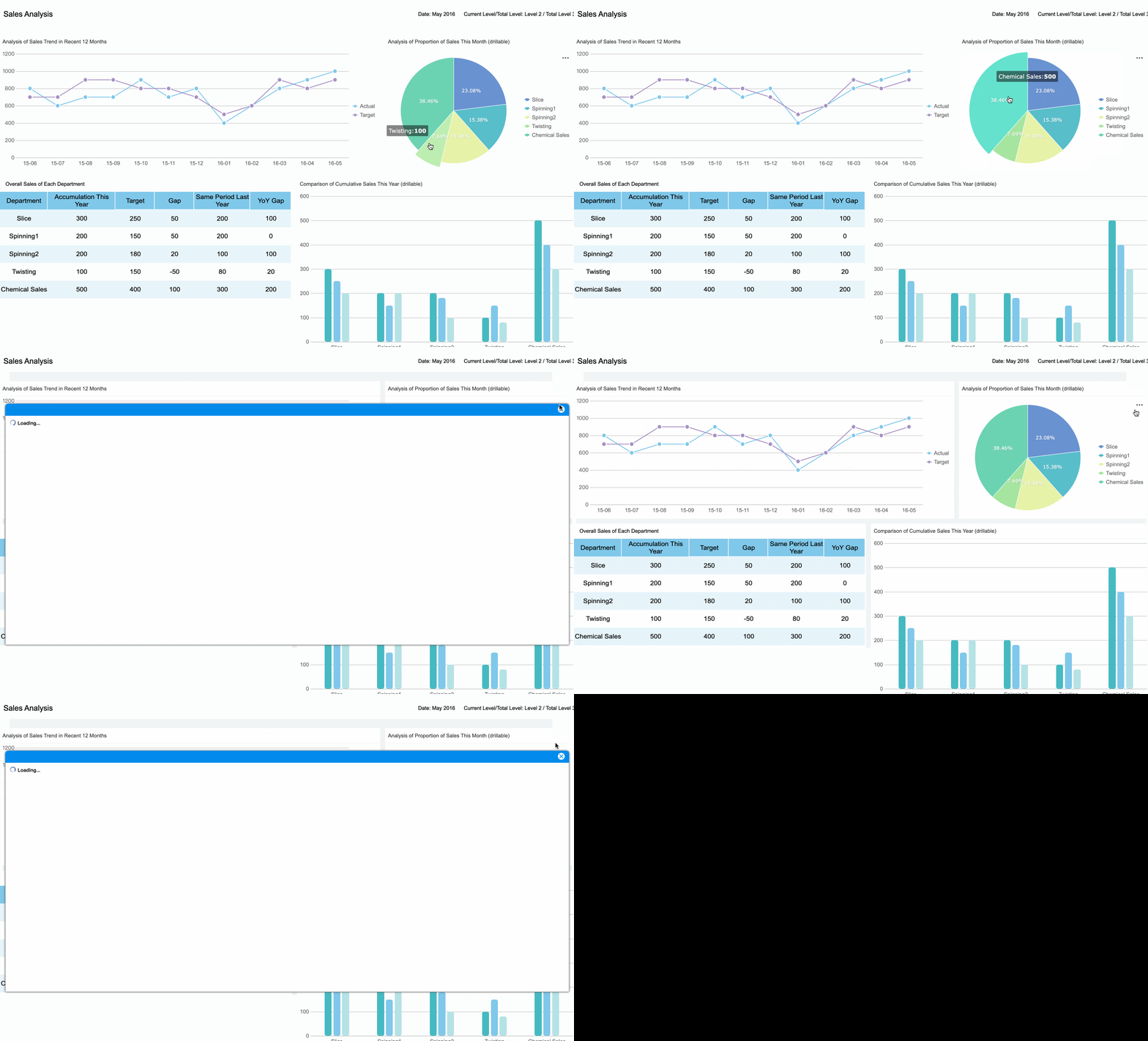
Platforms like FineReport simplify data output, ensuring high-quality outcomes.
Note: Ensure your data output aligns with the needs of your audience. Visual tools like charts and graphs can make complex information easier to understand.
Data Storage
Data storage is the final stage of the data processing cycle. It involves storing the data securely for future use, whether for compliance, analysis, or operational purposes. Choosing the right storage system is critical to maintaining data integrity and accessibility.
When storing the data, consider factors like scalability, security, and cost. For example, hybrid cloud storage offers flexibility by combining cloud scalability with on-premise control, making it suitable for sensitive data. However, it requires careful management to avoid integration challenges.
Tip: Regularly review your storage solutions to ensure they meet your evolving business needs. Tools like FineDataLink can help you manage and integrate data across multiple systems efficiently.
Types of Data Processing
Manual Data Processing
Manual data processing involves handling data without the use of machines or automated tools. You perform tasks like data entry, calculations, and analysis manually. This method often relies on tools such as paper, pens, and calculators. While it may seem straightforward, manual processing can be time-consuming and prone to errors.
Despite its limitations, manual data processing remains useful in situations where automation is not feasible. Small-scale projects or environments with limited resources often rely on this method. However, as data complexity grows, manual methods become less practical.
Mechanical Data Processing
Mechanical data processing uses machines like typewriters, calculators, or punch card systems to handle data. These tools help you perform repetitive tasks more efficiently than manual methods. For instance, a mechanical calculator can quickly perform complex calculations, saving time and reducing errors.
This method marked a significant step forward in data processing history. It allowed businesses to handle larger datasets with greater accuracy. However, mechanical processing still requires human intervention to operate the machines and interpret the results.
Although outdated in many industries, mechanical data processing paved the way for modern technologies. It remains a reminder of how innovation can transform the way you manage and process data.
Electronic Data Processing
Electronic data processing (EDP) uses computers and software to automate data handling tasks. This method is the most efficient and widely used today. You can process large volumes of data quickly and accurately with minimal human intervention.
For example, electronic systems allow you to collect, analyze, and store data in real time. This capability supports faster decision-making and improves operational efficiency. Compared to manual methods, EDP eliminates the need for double entry and verification, reducing errors and saving time.
Electronic data processing also supports advanced techniques like data mining. This approach helps you uncover patterns and trends, enabling better decision-making. By adopting EDP, you can streamline your operations and stay competitive in a data-driven world.
Real-Time Data Processing
Real-time data processing allows you to analyze and act on data as it is generated. This method processes data instantly, enabling you to make decisions without delay. For example, financial institutions use real-time systems to detect fraudulent transactions as they occur. Similarly, e-commerce platforms rely on real-time analytics to recommend products based on your browsing behavior.
To implement real-time data processing, you need systems capable of handling continuous data streams. These systems process data in milliseconds, ensuring timely insights. Key components of real-time processing include:
- Data Streams: Continuous flow of data from sources like sensors or user interactions.
- Processing Engines: Tools that analyze and transform data in real time.
- Output Systems: Dashboards or alerts that present actionable insights immediately.
Real-time processing offers several benefits. It enhances decision-making by providing up-to-date information. It also improves customer experiences through personalized interactions. For instance, ride-sharing apps use real-time data to match drivers with passengers efficiently.
Tip: Use platforms like FineDataLink to integrate and process real-time data seamlessly. Its low-latency capabilities ensure you can act on data as it arrives.
Batch Data Processing
Batch data processing involves collecting and processing data in groups or batches at scheduled intervals. Unlike real-time processing, this method does not handle data instantly. Instead, it processes large volumes of data at once, making it ideal for tasks that do not require immediate action.
You often see batch processing in industries like finance and healthcare. For example, payroll systems calculate employee salaries in batches at the end of each month. Similarly, healthcare providers use batch processing to analyze patient records for trends and insights.
The batch processing workflow typically includes:
- Data Collection: Gather data over a specific period.
- Processing: Analyze and transform the data in bulk.
- Output: Generate reports or summaries for review.
Batch processing is cost-effective and efficient for handling large datasets. However, it may not be suitable for scenarios requiring real-time insights. By combining batch and real-time processing, you can address diverse business needs effectively.
Note: FineDataLink supports both batch and real-time data processing, offering flexibility for various use cases.
Stream Processing
Stream processing continuously ingests and processes unbounded event streams. It is a subset of real-time processing optimized for event-driven architectures.
- Use cases: Clickstream analysis, log processing, sensor telemetry, real-time ETL
- Strengths: Handles infinite data streams; supports windowed aggregations and event-time semantics
- Limitations: Requires specialized frameworks (Flink, Kafka Streams); operational complexity
Transaction Processing
Transaction processing (OLTP) handles individual business operations with ACID guarantees — atomicity, consistency, isolation, durability.
- Use cases: Order entry, payment processing, inventory updates, account transfers
- Strengths: Guarantees data integrity for critical business operations
- Limitations: Not optimized for analytical queries; typically feeds downstream analytical systems
Manual vs Automated Data Processing
Manual processing has legitimate uses for prototyping, exception handling, and low-volume ad-hoc tasks. For any recurring, high-volume, or compliance-sensitive workflow, automation is not optional — it is foundational.
Data Processing Examples in Business
Abstract definitions become concrete through real-world application. These examples illustrate how data processing operates across business functions.
Sales Order Processing
Raw order data arrives from e-commerce platforms, POS systems, and EDI feeds. Processing validates product SKUs, checks inventory availability, calculates taxes and shipping, applies discounts, and writes confirmed orders to the ERP. Output triggers fulfillment workflows and updates revenue dashboards.
Customer Data Processing
Customer records originate from CRM sign-ups, support tickets, marketing forms, and third-party enrichment APIs. Processing deduplicates across channels, standardizes name/address formats, validates email syntax, appends firmographic attributes, and writes unified customer profiles to the master data store. Output powers segmentation, personalization, and compliance reporting.
Inventory Data Processing
Inventory signals flow from warehouse management systems, supplier ASNs, and IoT shelf sensors. Processing reconciles physical counts against system records, flags discrepancies exceeding tolerance thresholds, calculates reorder points based on lead time and demand forecasts, and updates available-to-promise quantities. Output drives procurement alerts and stockout prevention.
Financial Reporting Data Processing
Financial data spans GL entries, bank statements, expense reports, and intercompany transactions. Processing maps chart-of-accounts codes across entities, eliminates intercompany balances, applies currency conversions, validates period-close completeness, and aggregates trial balances into financial statements. Output feeds regulatory filings, investor reports, and internal management dashboards.
IoT and Log Data Processing
Sensor telemetry and application logs arrive as continuous high-volume streams. Processing parses raw payloads, extracts timestamps and metric values, filters noise and heartbeat signals, aggregates into time-windowed summaries, and routes anomalies to alerting systems. Output feeds predictive maintenance models, capacity planning, and real-time operational dashboards.
Data Processing vs Data Analysis vs Data Integration
These terms are frequently conflated. Clarity prevents misaligned tool selection and project scoping.
Data processing is the umbrella term for all operations that convert raw data into usable form. Data integration is a specific type of processing focused on combining disparate sources. Data analysis begins where processing ends — it interprets already-clean, already-integrated data to generate insights. Data pipelines are the automated infrastructure that executes processing and integration workflows reliably at scale.
FineDataLink operates primarily in the data processing and data integration layers. It does not perform statistical analysis or generate business insights directly; it ensures that the data feeding those activities is accurate, current, and trustworthy.
Common Data Processing Challenges
Even well-designed processing workflows encounter predictable obstacles. Recognizing them early prevents costly rework.
Most of these challenges are not solved by better algorithms or faster hardware. They are solved by better-engineered data processing infrastructure with built-in governance, monitoring, and automation.
How FineDataLink Automates Enterprise Data Processing
Enterprise data processing differs fundamentally from textbook examples. Data lives in dozens of systems with incompatible schemas, varying refresh frequencies, and inconsistent quality standards. Manual scripts and point-to-point integrations cannot sustain this complexity at scale.
FineDataLink is a data integration and processing platform designed for this reality. It helps teams:
- Connect 100+ enterprise data sources including ERP, CRM, relational databases, NoSQL stores, REST/SOAP APIs, cloud SaaS applications, spreadsheets, and file systems — through native connectors rather than custom code.
- Build visual ETL/ELT pipelines using a low-code interface that reduces dependency on specialized engineering resources while maintaining full configurability for complex transformations.
- Synchronize data in real time via CDC (Change Data Capture) for low-latency replication, or schedule batch syncs for cost-efficient periodic refreshes.
- Apply data quality rules inline — validation, deduplication, format standardization, referential integrity checks — within the pipeline itself, preventing bad data from reaching downstream consumers.
- Monitor and alert on pipeline health with end-to-end visibility into execution status, row counts, error rates, and latency metrics.
- Govern access and maintain lineage so every processed record is traceable to its source, every transformation is auditable, and permissions align with organizational security policies.
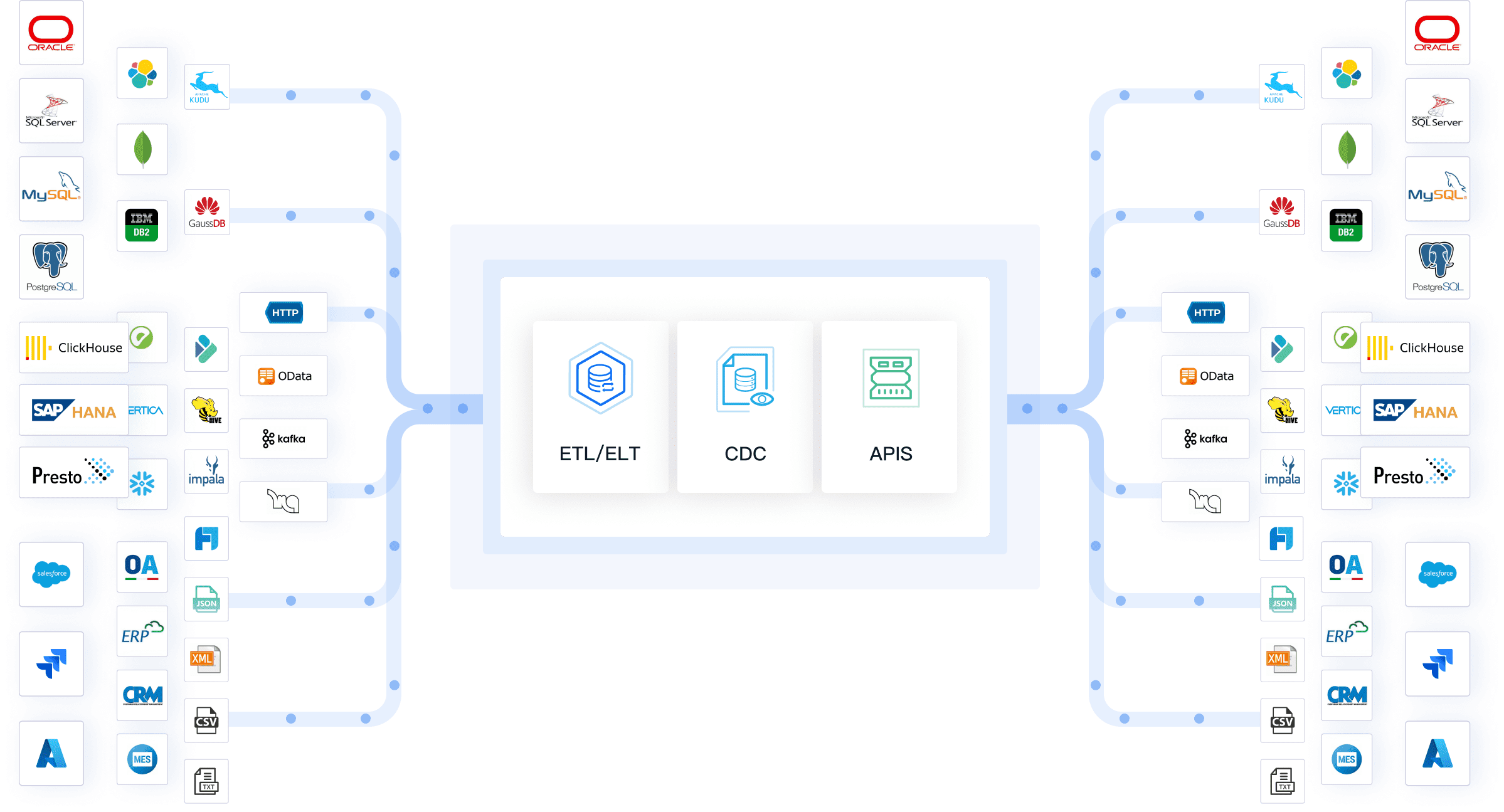
FineDataLink's Data Connection
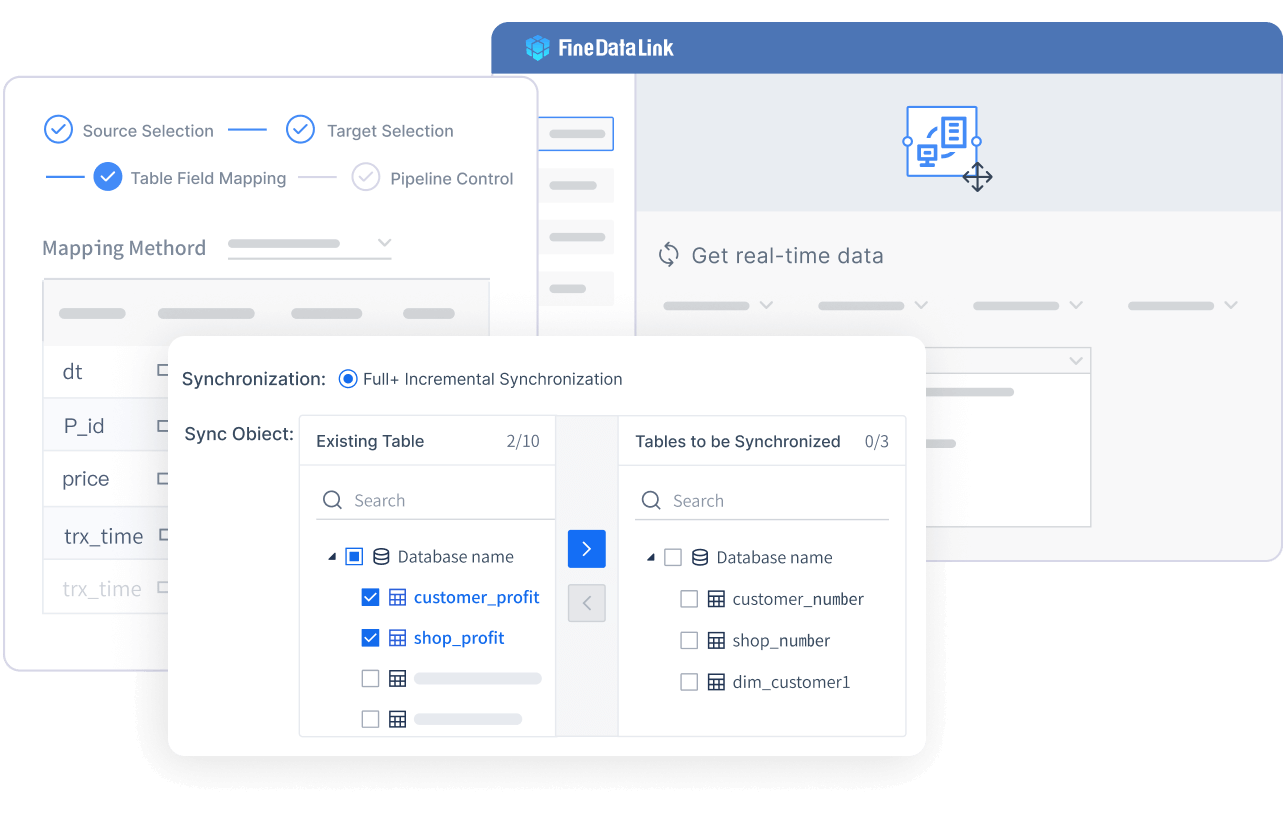
Real-time Data
FineDataLink does not replace data warehouses, BI tools, or AI platforms. It ensures they receive trusted, current, well-structured data — which is the prerequisite for everything downstream to function correctly.
From Processed Data to Dora AI Analytics
Once enterprise data has been cleaned, transformed, and synchronized by FineDataLink, Dora can help business teams ask questions in natural language, generate summaries, monitor changes, and receive scheduled insights from trusted data sources.
Dora operates on governed, processed data — not raw, unvalidated inputs. This architectural choice ensures that AI-generated answers reflect business reality rather than data artifacts. When FineDataLink maintains the processing foundation and Dora provides the conversational intelligence layer, business users get both accuracy and accessibility without compromising either.
FanRuan
https://www.fanruan.com/en/blogFanRuan provides powerful BI solutions across industries with FineReport for flexible reporting, FineBI for self-service analysis, and FineDataLink for data integration. Our all-in-one platform empowers organizations to transform raw data into actionable insights that drive business growth.
FAQ
What is the main purpose of data processing?
Data processing helps you transform raw data into meaningful information. This process ensures that the data you collect becomes actionable insights, enabling better decision-making, improved efficiency, and strategic growth in various industries.
How does FineDataLink simplify data processing?
FineDataLink simplifies data processing by offering real-time synchronization, ETL/ELT capabilities, and API integration. Its low-code platform allows you to manage complex datasets easily, ensuring seamless data integration and faster insights without requiring extensive technical expertise.
Why is real-time data processing important?
Real-time data processing allows you to analyze and act on data instantly. This capability is essential for industries like finance and healthcare, where timely decisions can prevent losses, improve customer experiences, and enhance operational efficiency.
What are the benefits of using electronic data processing?
Electronic data processing automates tasks, saving you time and reducing errors. It enables real-time monitoring, improves data accuracy, and supports advanced analytics like data mining. This method ensures you can handle large datasets efficiently and make informed decisions quickly.
Can data processing improve decision-making in education?
Yes, data processing helps educators analyze student performance and identify learning gaps. By using processed data, you can create personalized learning strategies, improve outcomes, and foster student success in both traditional and e-learning environments.