International financial report standard knowledge is essential for anyone who reads, prepares, or evaluates financial statements across borders. If you are a finance manager, business owner, analyst, auditor, or operations leader, the core challenge is simple: how do you compare companies fairly when each country may use different accounting rules? International Financial Reporting Standards, commonly called IFRS, solve that problem by creating a shared framework for financial reporting. That means better transparency, easier comparison, and stronger confidence for investors and regulators.
What Is the International Financial Report Standard and Why Does It Matter?
The international financial report standard usually refers to International Financial Reporting Standards (IFRS), a globally recognized set of accounting standards used to prepare financial statements. In simple terms, IFRS gives companies a common financial language. Instead of each country using entirely different reporting logic, IFRS helps organizations present financial results in a way that global investors and stakeholders can understand.
These standards are developed by the International Accounting Standards Board (IASB) under the IFRS Foundation. Their role is to create high-quality, understandable, and internationally accepted accounting standards. Businesses, investors, lenders, auditors, and regulators rely on IFRS because it improves trust in reported numbers.
Why does this matter in practice? Because capital moves globally. A manufacturer in Germany, a tech company in Singapore, and a retail group in South Africa may all seek investment from the same pool of international investors. If each business reports under very different rules, comparison becomes slow, expensive, and risky.
IFRS also differs from many local accounting systems because it is generally principles-based rather than heavily rules-based. That means it focuses more on the economic substance of transactions and less on narrow, prescriptive checklists. For beginners, the takeaway is straightforward: local rules may vary by country, but IFRS aims to create consistency on a global scale.
The Purpose of International Financial Report Standard
The purpose of international financial report standard is not just technical compliance. Its real business value is improving decision-making.
At its core, IFRS is designed to support:
- Transparency: Financial statements should reflect the real economics of a business.
- Comparability: Users should be able to compare companies across industries and countries.
- Consistency: Similar transactions should be reported in similar ways.
- Investor confidence: Reliable reporting reduces uncertainty for investors and lenders.
When companies operate internationally, common reporting rules make expansion easier. A multinational group may have subsidiaries in ten or twenty jurisdictions. IFRS helps management consolidate results, communicate performance clearly, and reduce reporting friction.
In international capital markets, standardized reporting is especially important. Investors do not want to spend excessive time translating local accounting methods before they can assess profitability, leverage, or cash flow quality. IFRS lowers that barrier.
Why Global Consistency Is Important
Global consistency matters because financial statements are only useful when users can interpret them with confidence. If two companies have identical economics but report under very different accounting frameworks, stakeholders may draw the wrong conclusions.
Shared standards make it easier to compare:
- Revenue trends
- Profit margins
- Asset values
- Debt levels
- Cash flow performance
- Lease obligations
- Disclosure quality
Consistency also reduces confusion for boards, lenders, regulators, and operational leaders. When reporting methods are aligned, fewer resources are wasted debating format differences, and more attention can go to actual business performance.
How International Financial Report Standard Is Structured in Practice
In practice, IFRS is built on a framework of accounting principles plus specific standards that address particular reporting topics. The framework helps explain the objectives of financial reporting, while individual standards explain how to account for transactions such as revenue, leases, financial instruments, or business combinations.
A beginner-friendly way to think about IFRS is this:
- Principles explain the reporting objective.
- Standards explain how to treat specific accounting issues.
- Disclosures provide the extra context users need to understand the numbers.
- Financial statements bring everything together in a structured format.
This structure matters because strong reporting is not only about recording numbers correctly. It is also about presenting them clearly and explaining the assumptions behind them.
IFRS is also updated over time. As business models evolve, the standard-setting process responds through consultation, exposure drafts, stakeholder feedback, and final amendments. That ongoing evolution helps IFRS remain relevant in changing markets.
Core Elements Beginners Should Know
If you are new to IFRS, start with the major components of financial reporting.
Key Metrics (KPIs)
- Financial Position: The company’s assets, liabilities, and equity at a point in time.
- Financial Performance: Revenue, expenses, profit, and other results over a reporting period.
- Cash Flows: Cash generated and used in operating, investing, and financing activities.
- Disclosures: Notes that explain accounting policies, risks, assumptions, and detailed line items.
- Recognition: Rules for deciding when an item should appear in the financial statements.
- Measurement: Rules for deciding the amount at which an item should be recorded.
- Presentation: How information is displayed in the primary financial statements.
- Disclosure Requirements: Additional information needed to make financial reports understandable and decision-useful.
These are the core elements every beginner should understand before diving into individual IFRS standards.
Who Uses IFRS?
IFRS is widely used by organizations and professionals involved in financial reporting and analysis.
Common users include:
- Public companies reporting to shareholders and stock exchanges
- Multinational businesses consolidating results across countries
- Investors comparing potential investments globally
- Auditors evaluating compliance and presentation quality
- Regulators overseeing market integrity and disclosure standards
- Lenders and banks assessing borrower risk and repayment capacity
IFRS-based reporting is especially useful when:
- A company raises capital internationally
- A group has overseas subsidiaries
- Investors compare peers across borders
- A business enters cross-border mergers or acquisitions
- Management wants more standardized reporting across regions
International Financial Report Standard in Accounting: Key Concepts for Beginners
In accounting, the international financial report standard is a framework that tells companies how to report economic events in their financial statements. Practically speaking, it covers how to account for income, expenses, assets, liabilities, equity, leases, and many other business transactions.
Some of the most common areas IFRS standards in accounting address include:
- Revenue recognition
- Property, plant, and equipment
- Inventories
- Leases
- Financial instruments
- Impairment
- Business combinations
- Provisions and contingent liabilities
- Income taxes
- Consolidated financial statements
What makes IFRS distinctive is its principles-based approach. Instead of relying only on detailed rules for every scenario, IFRS asks preparers to apply professional judgment in a way that reflects the economic reality of a transaction.
For beginners, that means IFRS is not just about memorizing entries. It is about understanding why a transaction should be presented a certain way.
IFRS vs. Other Accounting Frameworks
At a high level, IFRS is often compared with other national or regional accounting systems, especially those that are more rules-based. The most common example is comparison with US GAAP.
Here is the simple distinction:
| Framework | General Approach | Typical Use |
|---|---|---|
| IFRS | More principles-based | Widely used in many global jurisdictions |
| US GAAP | More rules-based | Primarily used in the United States |
| Local GAAPs | Varies by country | Often tailored to domestic regulation and tax environments |
These differences can affect financial analysis. For example, if two companies use different reporting frameworks, their treatment of leases, revenue, impairments, or financial instruments may not be fully aligned. That can influence ratios, margins, and valuation models.
For analysts and managers, this is why framework awareness matters. Good analysis starts with understanding the accounting basis behind the numbers.
Benefits and Challenges of Using International Financial Report Standard
The benefits of using international financial report standard are substantial, especially for organizations with cross-border stakeholders.
Main Benefits
- Better comparability across companies and countries
- Greater credibility with investors, lenders, and regulators
- Improved transparency in financial reporting
- Easier access to global capital markets
- Stronger consistency in group reporting for multinational businesses
- More efficient financial analysis for external users
For enterprise decision-makers, one of the biggest operational advantages is alignment. When finance teams across regions work from a common reporting framework, consolidation, reporting controls, and board communication become more manageable.
Common Challenges
IFRS is not effortless to implement. Organizations often face:
- Implementation costs for system changes and advisory support
- Training needs for finance staff and management
- Judgment complexity in principles-based reporting
- Disclosure burden due to detailed note requirements
- Transition issues when moving from local GAAP to IFRS
These challenges are real, but they are also manageable with good planning, the right governance model, and strong reporting tools. In many cases, the long-term value of consistency and market credibility outweighs the initial effort.
Why IFRS Matters to Beginners
IFRS matters to beginners because it builds financial literacy that is useful in many roles.
If you are a:
- Student, IFRS gives you a strong base in global accounting.
- Business owner, it helps you understand how investors and lenders assess your company.
- Investor, it improves your ability to read financial statements from international companies.
- Job seeker, it increases your relevance in accounting, finance, audit, and reporting roles.
A practical next step is to learn how IFRS applies to the main financial statements, then move into major topics such as revenue, leases, impairment, and disclosures.
Best Practices for Applying International Financial Report Standard
From a consulting perspective, successful IFRS implementation is less about theory and more about execution discipline. If your organization is preparing for IFRS adoption, upgrading reporting quality, or standardizing multi-entity reporting, these are the best practices that matter.
1. Start with a Gap Assessment
Review your current accounting policies against IFRS requirements. Focus on high-impact areas first, such as:
- Revenue recognition
- Lease accounting
- Financial instruments
- Consolidation
- Impairment
- Disclosures
This helps you prioritize effort instead of treating every standard as equally urgent.
2. Build a Reporting Map by Financial Statement Area
Translate IFRS requirements into operational reporting categories:
- Balance sheet impacts
- Income statement impacts
- Cash flow classification
- Required note disclosures
- Judgment-heavy areas needing approval workflows
A reporting map makes implementation more practical for finance teams and system owners.
3. Standardize Data Collection Across Entities
For multinational groups, inconsistent source data is often a bigger problem than the accounting rule itself. Define common templates, account mappings, and reporting calendars so every entity submits data in the same format.
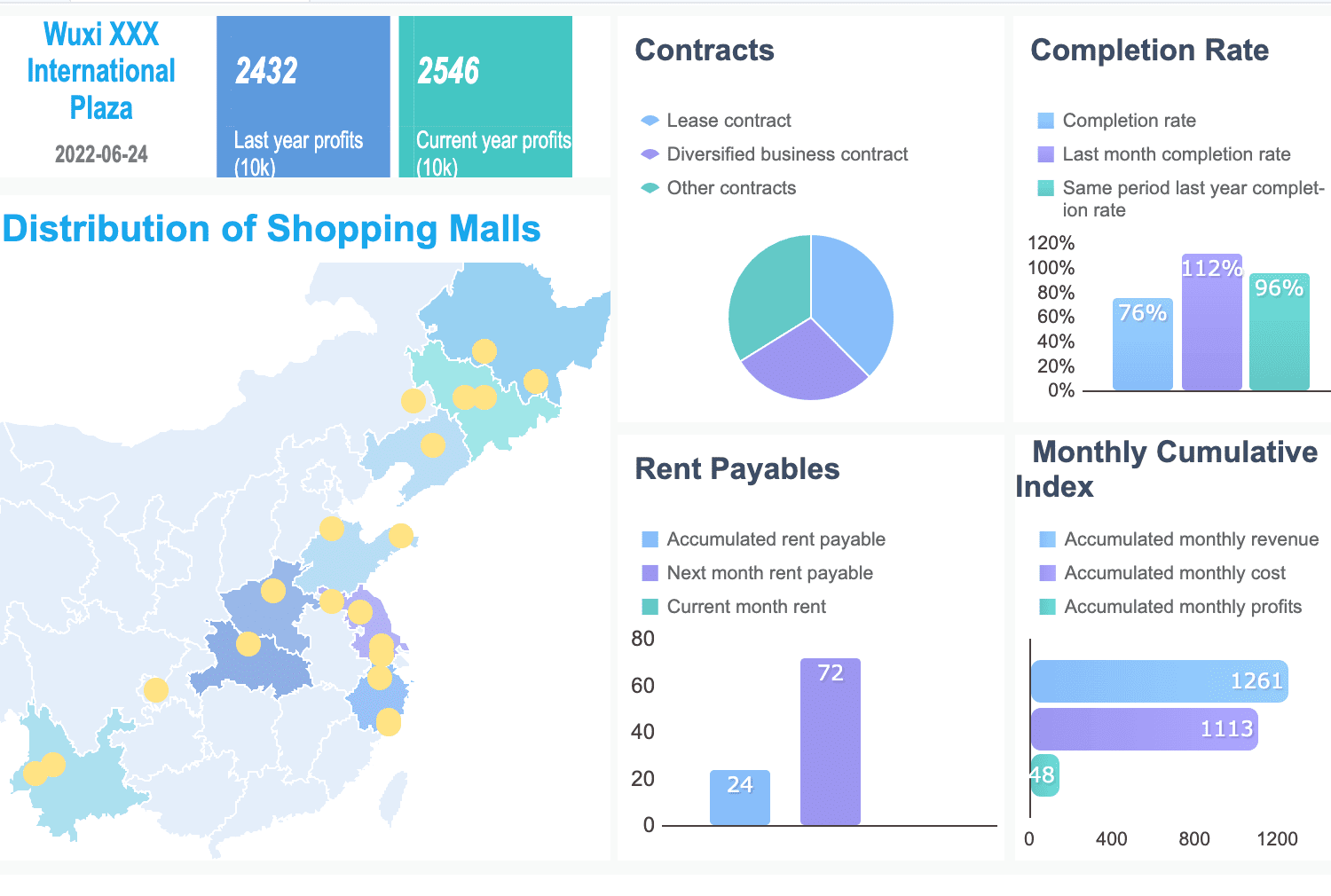
This is where reporting platforms can add real value. FineReport, for example, can help centralize dashboards, automate reporting views, and improve visibility across subsidiaries without creating endless spreadsheet versions.
4. Strengthen Review and Disclosure Controls
Because IFRS relies on judgment, review controls are critical. Create clear approval paths for assumptions, estimates, classifications, and note disclosures. This is especially important for areas involving fair value, impairment, provisions, and lease terms.
5. Use Dashboards to Monitor Reporting Quality
Do not treat IFRS as a year-end exercise. Use dashboards to monitor close status, reconciliation issues, disclosure completeness, and policy exceptions in real time. That reduces compliance risk and improves management visibility.
Where to Learn More About International Financial Report Standard
If you want to go deeper, start with authoritative and current guidance. The best learning path is to combine official standard-setting resources with beginner-friendly education from professional bodies.
Useful places to focus your learning include:
- The IFRS Foundation and IASB materials for official standards and updates
- Introductory learning resources from professional accounting bodies
- University or professional courses on financial reporting
- Practical guides on major IFRS topics such as revenue, leases, and financial instruments
- Current updates, because standards and interpretations can evolve over time
The most important habit is to use current and authoritative sources when reviewing reporting requirements. IFRS is dynamic, and outdated interpretations can lead to costly reporting mistakes.
For beginners, a smart learning sequence is:
- Understand the purpose of IFRS
- Learn the core financial statements
- Study recognition, measurement, presentation, and disclosure
- Explore major standards one by one
- Practice reading real financial statements prepared under IFRS
Final Thoughts
International financial report standard knowledge is no longer optional for organizations operating in a global economy. IFRS helps companies communicate financial performance with greater transparency, consistency, and credibility. For beginners, the key is not to get lost in technical detail too early. Start with the purpose, structure, and core concepts, then build toward practical application.
Whether you are standardizing group reporting, improving investor communication, or simply trying to understand international accounts better, IFRS gives you the framework to make financial information more useful and more comparable.
FAQs
International Financial Reporting Standards, or IFRS, are a global set of accounting standards used to prepare financial statements. They help companies report financial results in a more consistent and comparable way across countries.