A healthcare dashboard gives you a clear, visual summary of important healthcare data. You see key metrics like patient outcomes, operational trends, and financial figures all in one place. This tool helps you track progress and spot issues quickly.
Healthcare dashboards matter because they support better decision-making in hospitals and clinics. You improve patient care and satisfaction, reduce costs, and make daily operations more efficient. Studies show hospitals using dashboards report lower mortality rates, shorter patient stays, and savings up to $10.7 million. Many organizations also use dashboards for strategic and departmental decisions. Nearly 93% of healthcare organizations have an analytics strategy, but only a third have succeeded in using it fully.
Outcome Type
Findings Summary
Mortality Rates
Significant decreases, especially in surgical settings.
Length of Stay
Most report shorter stays, ranging from 0.28 to 18.8 days.
Patient Satisfaction
Higher satisfaction in most reported cases.
Cost Reductions
Savings from $160,000 to $10.7 million in multiple studies.
About 25% of healthcare organizations use executive dashboards for strategic decisions.
Over half use dashboards for departmental or hospital-level choices.
What is a Healthcare Dashboard?
A healthcare dashboard gives you a powerful way to see and understand importanthealthcare data. You use it to track key performance indicators (KPIs), monitor patient outcomes, and measure how well your organization performs. This tool brings together information from many sources, so you can make better decisions and improve care.
Core Functions in Healthcare
A healthcare dashboard serves several essential functions in the healthcare setting. You can use it to:
Monitor healthcare KPIs in real time, which helps you evaluate patient conditions and overall performance.
Visualize critical metrics, such as patient satisfaction, treatment outcomes, and resource use.
Identify areas for improvement by comparing current results with benchmarks or goals.
You can see the main functions of healthcare dashboards in the table below:
Core Function
Description
Optimizing Resources
You can spot workflow bottlenecks, track bed occupancy, and manage staff assignments to boost efficiency.
Supporting Compliance and Reporting
Dashboards help you meet regulatory requirements by making audits transparent and accurate.
Tracking Key Performance Indicators
You get a clear view of patient vitals, treatment outcomes, and other essential data for quick decisions.
Healthcare dashboards also help you standardize data and processes. You can use them to ensure everyone in your organization follows the same rules and definitions. This reduces confusion and improves communication between departments.
Note: A healthcare dashboard is not just a static report. It is an interactive tool that lets you drill down into details, filter information, and respond quickly to changes in healthcare data.
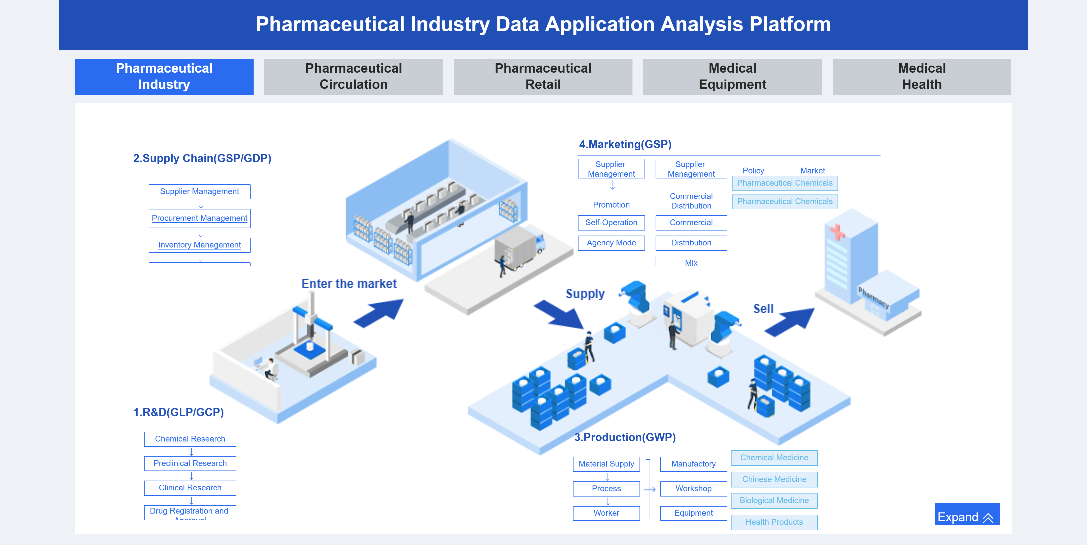
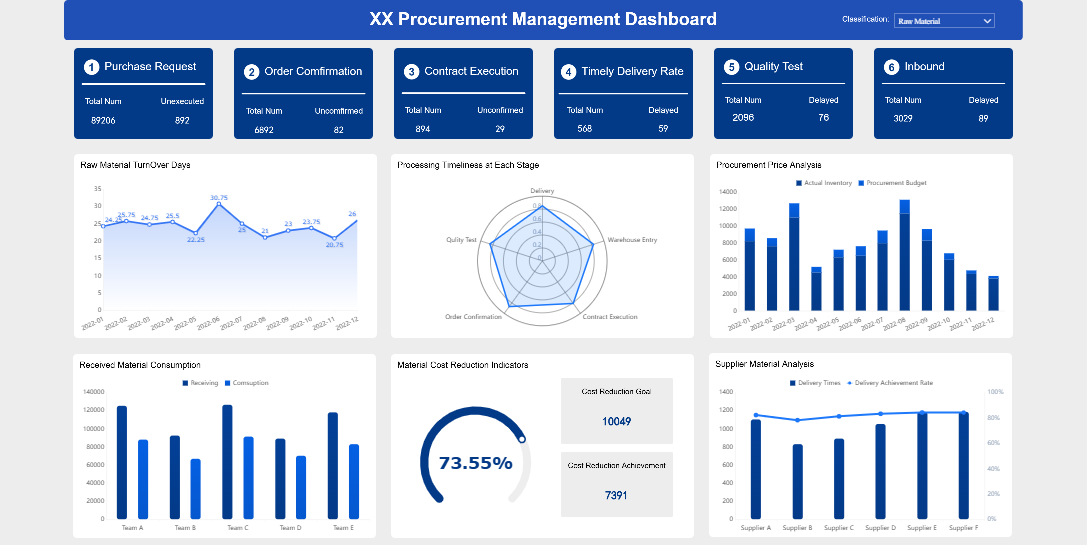
FineReport's Pharmaceutical Industry Data Application Analysis Dashboard - Click To Engage
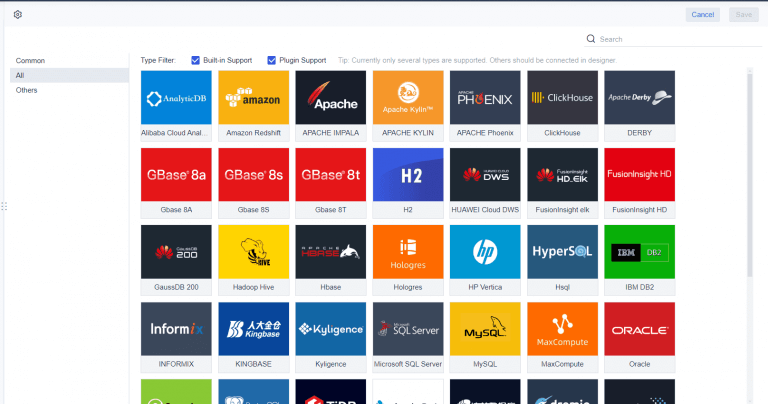
Healthcare dashboards collect and display data from many sources. You might see information from electronic medical records (EMR), hospital outpatient systems, or clinical guidelines. The dashboard uses technologies like HTML, CSS, JavaScript, APIs, and databases such as MySQL to bring all this data together.
Here is a table showing common data sources and technologies used in healthcare dashboards:
Data Sources
Technologies Used
Primary care patients
HTML, CSS, JavaScript
Hospital outpatients
APIs, i2b2, MySQL
EMR (Electronic Medical Records)
Highcharts, Python, Graphviz, Google Maps
Clinical guidelines
You interact with the dashboard through a user-friendly interface. You can filter data by patient group or time period. The dashboard supports role-based access, so clinicians, nurses, and administrators see the information most relevant to their work. Many dashboards also support touchscreen use, making it easy to access data on tablets or kiosks.
Healthcare dashboards often include automated alerts and notifications. If a value goes outside the accepted range, you receive a warning right away. This helps you respond quickly to urgent situations.
To ensure accuracy and interoperability, healthcare dashboards use standardized data formats and codes. For example, diagnoses may use international standards like ICD9-CM or ICD10-CM. Data mapping and standardization make it possible for different systems to share information smoothly.
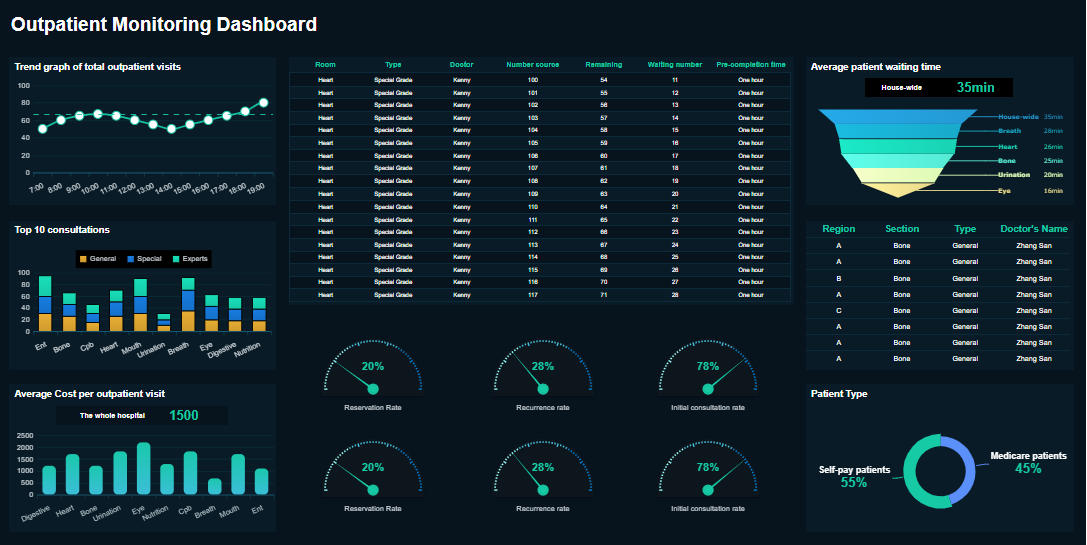
You benefit from dynamic, real-time monitoring. The dashboard updates as new data comes in, so you always have the latest information. In some hospitals, electronic dashboards have helped solve problems like patient handoff delays by making capacity and workflow visible to everyone involved.
A healthcare dashboard gives you a single, interactive view of your organization’s most important healthcare data. You can use it to improve patient care, streamline operations, and support compliance—all in one place.
Why Healthcare Dashboard Matters
Impact on Patient Outcomes
You rely on healthcare dashboardsto improve patient care and safety. When you have instant access to healthcare data, you can make faster decisions and respond to changes in patient conditions. A healthcare dashboard gives you a clear view of patient outcomes, helping you track progress and spot issues before they become critical.
Studies show that when clinicians use dashboards that are easy to access, such as those displayed on screen savers, care processes improve. You see better adherence to quality guidelines, which leads to better patient outcomes. Immediate access to clinical and quality dashboards helps you follow best practices and standards in healthcare.
Dashboard Feature
Effect on Patient Outcomes
Screen Saver Format
Positive correlation with improved care processes
Immediate Access for Clinicians
Enhanced adherence to quality guidelines
Clinical Dashboard Use
Improved adherence to standards, better patient outcomes
You notice the difference in patient care when you use healthcare dashboards. You can monitor vital signs, treatment progress, and satisfaction scores in real time. This approach supports safer, more consistent care and helps you deliver actionable insights that drive better health results.
Healthcare dashboards play a key role in streamlining operations. You use them to monitor workflows, track resource allocation, and identify bottlenecks. Inefficient healthcare operations contribute to billions of dollars in annual waste in the United States. You can reduce unnecessary procedures, administrative complexities, and treatment errors by using dashboards to optimize processes.
Evidence Type
Description
Annual Waste
Inefficient healthcare operations lead to $760-935 billion in annual waste.
You benefit from healthcare dashboards in several ways:
You identify issues early, especially in smaller hospitals.
You rally staff around common goals and celebrate improvements with data.
You track operational metrics such as patient flow, lab turnaround time, staffing utilization, and readmission rates.
Operational gains include shorter length of stay, tighter resource utilization, and smoother patient flow. You see these improvements reflected in safer, more consistent patient care.
You achieve shorter patient stays.
You use resources more efficiently.
You create smoother patient flow throughout your organization.
Healthcare dashboards help you monitor and improve these metrics, making your organization more efficient and responsive.
Financial Management Benefits
You use healthcare dashboards tomanage finances more effectively. These dashboards give you a clear view of costs, resource use, and billing trends. You track key metrics such as cost per patient, overhead expenses, and payment rates. This information helps you identify areas for cost reduction and improve your revenue cycle management.
You address financial management challenges such as data accuracy, reporting standards, manual processes, compliance, and timeliness of reporting. Manual data entry can lead to errors and delays. Inconsistent reporting standards make it hard to compare data across departments. Healthcare dashboards solve these problems by standardizing data and automating reporting.
Challenge
Description
Data Accuracy
Manual entry causes typos and delays.
Reporting Standards
Inconsistent standards hinder comparison and trend identification.
Manual Processes
Manual reports lack depth for strategic planning.
Compliance
Regulations like HIPAA and Medicare require robust monitoring.
Timeliness of Reporting
Delays lead to missed opportunities and inefficient resource allocation.
You also benefit from compliance monitoring systems and regular audits. Healthcare dashboards help you meet requirements for HIPAA, Medicare, and Medicaid. You use analytics to make real-time decisions, improve pricing models, and enhance return on investment. You gain actionable insights that support strategic development and financial health.
You will find that healthcare dashboards come in several main types, each designed to meet specific needs within healthcare organizations. Understanding these types helps you choose the right dashboard for your goals.
Clinical Dashboards
A clinical dashboard focuses on patient care and clinical quality. You use it to monitor vital signs, medication schedules, and infection control. Nurses and physicians rely on these dashboards to track multiple patients and make informed decisions quickly. The table below highlights key features and use cases:
Feature/Use Case
Description
Patient Care Metrics
Tracks metrics that impact patient care quality.
Data Visualization
Displays vital signs and medication schedules clearly.
Infection Control Metrics
Monitors infection rates and clinical quality measures.
Multi-Patient Monitoring
Allows staff to identify patients needing immediate attention.
Comprehensive Data Access
Enables review of patient progress for better treatment decisions.
Operational Dashboards
Operational dashboards help you manage daily activities and resources in healthcare settings. You use them to monitor workflows, staffing, and patient flow. These dashboards provide real-time or near real-time data, allowing you to spot bottlenecks and improve efficiency. Here is a comparison of operational and clinical dashboards:
Feature
Operational Dashboards
Clinical Dashboards
Purpose
Real-time operational information
Patient management metrics
Focus
Tactical scenarios
Operational analysis tools
Data Type
Real-time or near real-time
Historical and current patient metrics
Functionality
Drill-down capabilities
Multi-perspective analysis
Financial Dashboards
Financial dashboards give you insight into the financial health of your healthcare organization. You track key metrics such as accounts receivable, claim rates, and billing efficiency. These dashboards help you identify trends and address revenue cycle issues. Common metrics include:
Metric
Description
90+ Day Bucket
Shows accounts receivable older than 90 days.
Bad Debt Rate
Indicates uncollectible receivables.
Clean Claim Rate
Measures claims submitted correctly the first time.
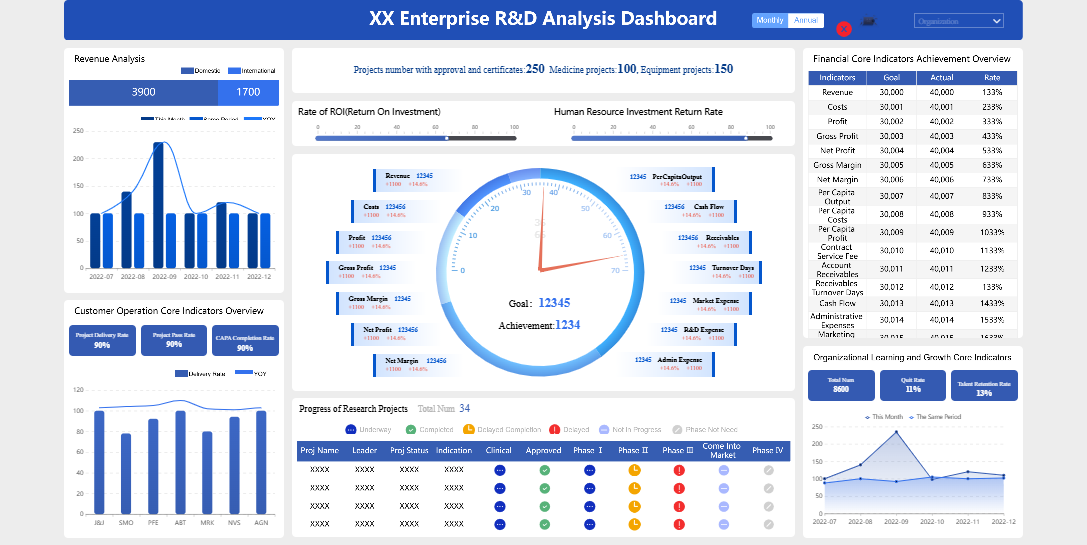
You may need a custom healthcare dashboard to address unique requirements. FineReportempowers you to build tailored dashboards for clinical, operational, or financial scenarios. You can integrate data from multiple sources, visualize complex metrics, and design interactive dashboards with drag-and-drop tools. For example, you can create a physician performance dashboard that analyzes discharge times and revenue, or a revenue-based dashboard that connects with electronic health records for accurate financial tracking. FineReport supports real-time data updates, mobile access, and advanced visualization, making it a strong choice for healthcare organizations seeking flexibility and insight.
Features of Effective Healthcare Dashboard
Key Features for Healthcare
When you use a healthcare dashboard, you expect clear, organized information that helps you make fast decisions. Effective healthcare dashboards display critical KPIs, offer intuitive layouts, and update data in real time. You can filter and segment healthcare data to analyze specific issues, and trend visualization tools let you track improvements over time. Actionable insights and alerts drive you to respond quickly. Simplicity is key; a clutter-free dashboard focuses on relevant insights. Mobile-friendliness ensures you can access healthcare dashboards on any device, which is essential for busy professionals. Customization options allow you to tailor your dashboard view to your needs, and fast load times encourage regular use. Data accuracy supports reliable, data-driven decisions.
Feature
Description
Clear KPIs
Quick understanding of patient feedback and outcomes.
Visual clarity and organization
Easy navigation and comprehension of healthcare data.
You need to monitor specific KPIs to ensure your healthcare dashboard supports quality care and efficient operations. These KPIs include:
Average hospital stay, which shows treatment efficiency.
Bed or room turnover, helping you manage patient flow.
Medical equipment utilization, revealing how well resources are used.
Error rate, which highlights staff effectiveness.
Training per department, ensuring high standards of care.
Cancellation rate, affecting resource allocation.
Readmission rates, reflecting care quality.
Patient safety, evaluating protocols for safe treatment.
Tracking these KPIs with healthcare dashboards helps you identify strengths and areas for improvement.
FineReport’s Role in Effective Dashboards
FineReport enhances healthcare dashboard design by supporting real-time monitoring and data entry. You can integrate data from multiple sources, which gives you the latest healthcare data for decision-making. Mobile data entry templates let you submit reports anytime, so dashboards reflect real-time changes. FineReport offers a user-friendly interface similar to Excel, making healthcare dashboard design simple and familiar. You can customize complex reports and dashboards with powerful visualization styles, including medical UI options tailored for healthcare data visualization. These features support data-driven decisions and improve the accuracy and usability of healthcare dashboards.
Tip: Choose a healthcare dashboard solution that supports real-time data integration, mobile access, and customization to maximize the value of your healthcare data visualization.
FineReport'sMultiple Built-in Charts For Visualization
You gainvaluable insightsfrom a healthcare dashboard when you work as a clinician, nurse, or allied health professional. Patient dashboards help you visualize clinical data and make informed decisions at the point of care. Interactive tools integrated into electronic medical records allow you to track patient outcomes, medication adherence, and test ordering. These features support you in recognizing suboptimal care and motivate you to improve patient care. The table below shows how clinical dashboards support your daily work:
Evidence Type
Description
Clinical Dashboards
Interactive tools that visualize clinical data and support decision-making.
Decision Support
Visual summaries help you identify areas needing improvement in patient care.
Effectiveness
Studies show dashboards can improve medication adherence and test ordering.
You use these tools to monitor trends, spot issues early, and deliver safer, higher-quality patient care.
Administrators and Managers
As an administrator or manager, you rely on healthcare dashboards to streamline data access and focus on interpreting information rather than gathering it. This efficiency is crucial as administrative tasks increase. You can monitor key metrics such as revenue per bed, number of patients, and profit and loss by location. The table below highlights how these metrics help you drive organizational growth:
KPI Type
Benefit Description
Revenue per bed/clinician/treatment
Understand which services are profitable and which are not.
Number of patients/encounters/clinicians
Identify high-performing locations within the organization.
P&L by location/budget
Determine opportunities for growth or partnership based on financial performance.
You also benefit from automation. For example, Massachusetts General reduced analyst time on ad hoc reports from 90% to less than 10% by using visual analytics. The University of Michigan Health System saved over 10,000 hours by automating finance and revenue cycle management. These improvements let you focus on value-added work and enhance patient care quality.
Patients and Stakeholders
You, as a patient or external stakeholder, benefit from the transparency that healthcare dashboards provide. Transparent organizations become more accountable, and you gain access to performance data that helps you make informed choices about your healthcare providers. Data visualizations in a hospital performance dashboard help you identify trends and patterns, making complex information easier to understand. This improved understanding leads to more meaningful discussions with your healthcare team and supports better patient care. Open communication and clear data presentation strengthen trust between you and your providers, ensuring you stay engaged in your own care journey.
Real-World Use and Best Practices
Healthcare Dashboard Case Studies
You can learn a lot from organizations that have successfully implemented healthcare dashboards. These case studies show how you can use healthcare data to solve real problems and improve outcomes.
Case Study
Overview
Objective
Solution
Impact
Key Learnings
Patient Flow Optimization in Emergency Rooms
Improved patient flow in ERs to reduce wait times and boost efficiency.
Streamline patient flow and raise satisfaction.
Used data analytics for real-time monitoring and predictive modeling.
Reduced wait times by over 40%, improved care, and increased staff satisfaction.
Managed hospital resources efficiently during peak times.
Adapt to changing patient loads and resource needs.
Applied real-time data analytics for dynamic resource allocation.
Improved patient care and operational efficiency.
Real-time data and flexible resource management are essential.
You see that real-time access to healthcare data and predictive analytics can transform patient care and operational efficiency. Staff engagement and continuous improvement also play a big role in success.
Best Practices for Implementation
You want your healthcare dashboard to deliver results. Follow these best practices to make sure your dashboard supports your goals and protects sensitive healthcare data.
Keep your dashboard simple and focused. Show only the most important healthcare data to avoid overwhelming users.
Use a clear hierarchy and flow. Organize information so users find what they need quickly.
Protect data security and privacy. Use strong security measures to keep patient information safe and comply with regulations.
Test and iterate. Gather feedback from users and improve your dashboard regularly.
Challenge
Solution
Lack of Executive Support
Get leaders involved and connect the dashboard to strategic objectives.
Overcomplicated Design
Focus on simplicity and clarity. Organize metrics and keep filters easy to use.
Lack of End-User Involvement
Involve users early. Ask what data they need and how they want to see it.
You can overcome common challenges by involving executives and end users, keeping the design simple, and focusing on the most valuable healthcare data. These steps help you create a dashboard that supports better decisions and improves care.
You see the value of a healthcare dashboard in every part of your organization. The table below highlights how dashboards boost satisfaction, drive data-driven decisions, and improve efficiency.
Benefit
Description
Boost patient satisfaction
Track care quality and improve patient experience.
Increase operational efficiency
Streamline workflows and reduce costs.
Improve financial management
Monitor expenses and revenue cycles.
You can use FineReport to create dashboards that fit your needs. As healthcare evolves, expect more machine learning, predictive analytics, and real-time reporting to shape the future.
Access a wealth of case studies, industry insights, and solution guides to accelerate digital transformation.
FAQ
What is a healthcare dashboard?
A healthcare dashboard is a digital tool that displays key metrics and data from your healthcare organization. You use it to monitor patient outcomes, track operational efficiency, and manage financial performance in real time.
How does a healthcare dashboard improve patient care?
You gain instant access to patient data and clinical trends. This helps you make faster decisions, spot issues early, and follow best practices. You improve safety and deliver better care with a healthcare dashboard.
Who uses a healthcare dashboard in a hospital?
You see healthcare professionals, administrators, and managers using healthcare dashboards. Clinicians track patient progress, managers oversee operations, and finance teams monitor costs and revenue.
Can you customize a healthcare dashboard for your needs?
You can customize a healthcare dashboard to fit your goals. You choose which metrics to display, set alerts, and design layouts that match your workflow. This flexibility helps you focus on what matters most.
What data sources connect to a healthcare dashboard?
You connect electronic medical records, billing systems, lab results, and more to your healthcare dashboard. This integration gives you a complete view of your organization’s performance.