A tax compliance report is a structured business report that shows whether a company has correctly calculated, documented, filed, and paid its tax obligations across the required periods and jurisdictions. For finance leaders, tax managers, controllers, and compliance teams, this report solves a practical problem: keeping tax data organized, reviewable, and defensible before errors turn into penalties, rework, or audit exposure.
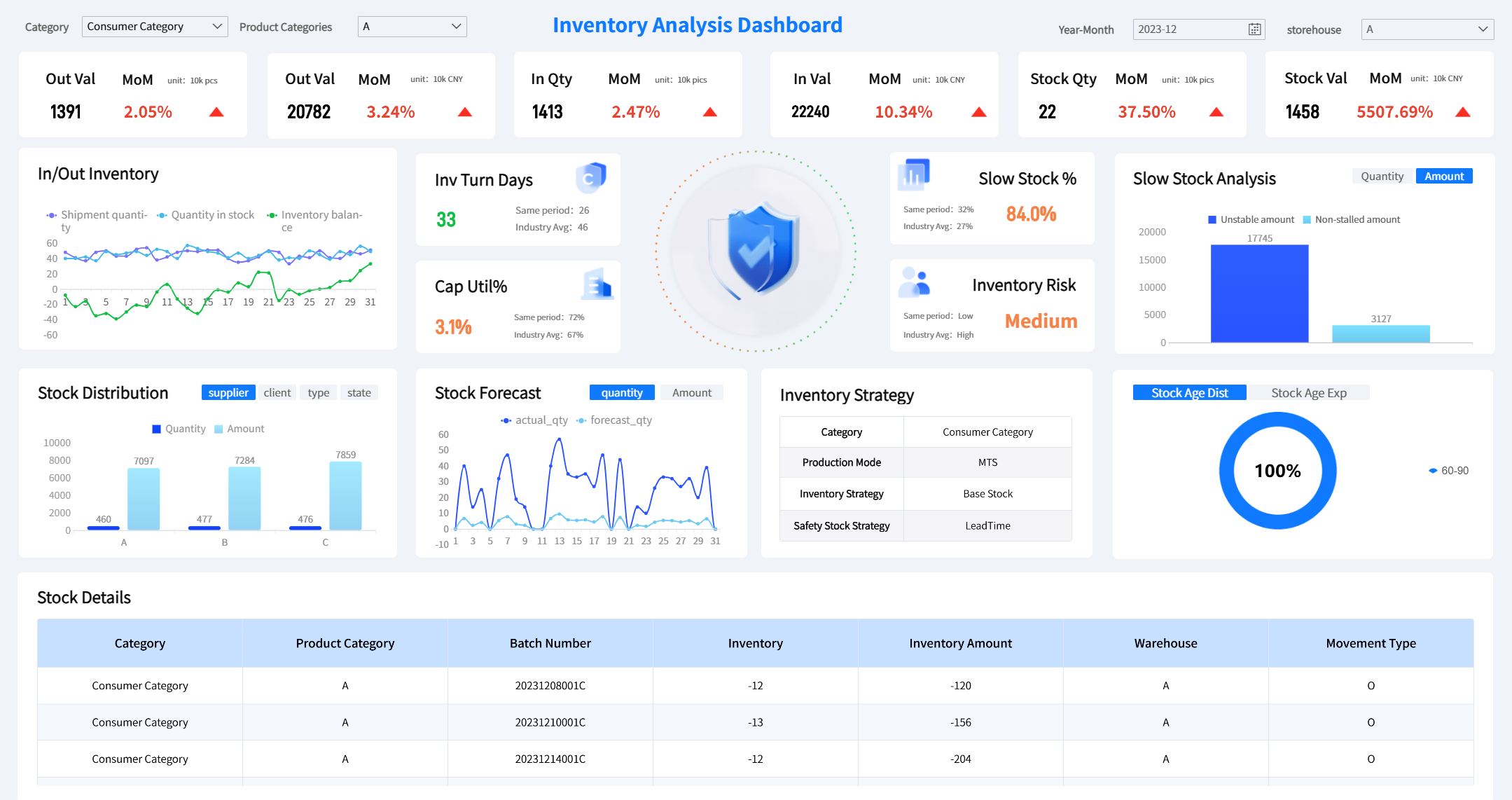
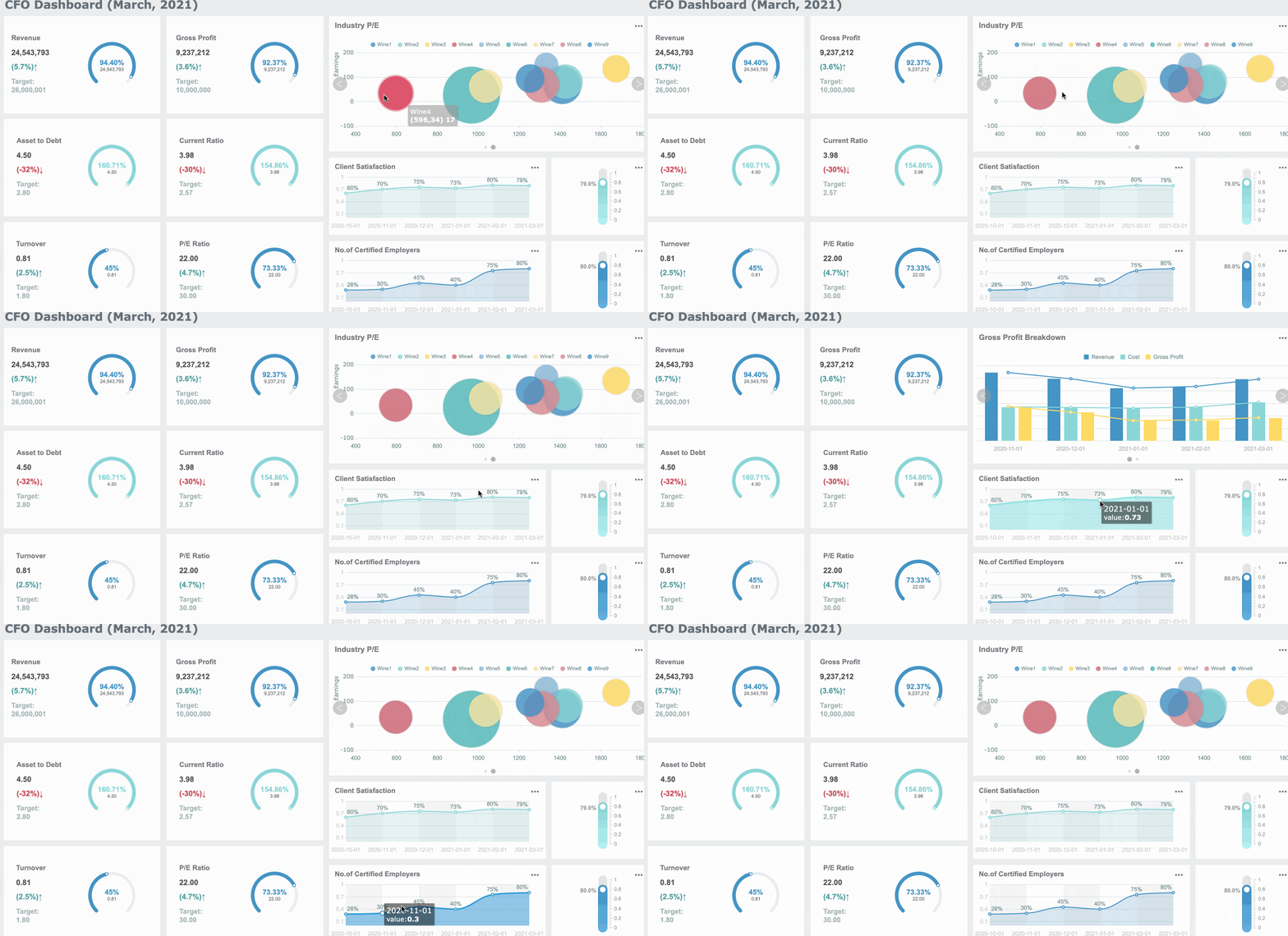
All reports in this article are built with FineReport.
What a Tax Compliance Report Is
A tax compliance report is a formal record that summarizes a business's tax obligations, supporting calculations, filing status, payment history, and review evidence. In plain language, it is the document that helps a company answer a critical question: Have we met our tax responsibilities accurately and on time?
Unlike raw tax return forms, this report gives stakeholders a broader operational view. It pulls together the data behind tax positions, explains what was filed, tracks what is still pending, and documents the controls used to reduce risk.
Typically, a tax compliance report is prepared by one or more of the following teams:
- Corporate tax departments
- Finance and accounting teams
- Controllers and compliance officers
- External tax advisors or accounting firms
- Regional tax specialists in multinational businesses
The people who use it often include:
- CFOs and finance directors
- Tax managers and tax analysts
- Internal auditors
- External auditors and regulators
- Operations leaders who need visibility into compliance exposure
A tax compliance report is also different from several related documents:
- Tax filings: These are the official returns or forms submitted to tax authorities. A tax compliance report may summarize and support those filings, but it is not the filing itself.
- Audit reports: Audit reports assess controls, evidence, or financial statement accuracy. A tax compliance report is more focused on ongoing tax obligations and filing readiness.
- Financial reports: Financial statements present overall business performance and position. A tax compliance report focuses specifically on tax-related data, deadlines, liabilities, and documentation.
In enterprise settings, this distinction matters. Tax teams do not just need to file; they need a repeatable system that proves compliance, supports review, and makes future reporting faster.
Why a Tax Compliance Report Matters
A tax compliance report matters because tax risk is rarely caused by one dramatic mistake. More often, it comes from fragmented data, missed deadlines, inconsistent calculations, or weak documentation. This report reduces that risk by creating a single source of truth for tax activity.
At the operational level, it helps businesses meet filing and payment obligations by showing:
- What taxes apply
- What has already been filed
- What remains outstanding
- Which deadlines are approaching
- Whether payments match reported liabilities
That visibility is essential for organizations operating across multiple legal entities, tax types, or jurisdictions. Without a consolidated reporting mechanism, teams rely on spreadsheets, email threads, and local records that are hard to verify.
A well-structured tax compliance report also helps reduce:
- Calculation errors
- Duplicate or missing filings
- Late payment penalties
- Regulatory scrutiny
- Internal review delays
Beyond compliance, it supports stronger governance. Senior management needs confidence that tax positions are documented and reviewable. Internal audit teams need traceability. Tax managers need to explain variances clearly. A tax compliance report makes all of that easier.
Key Metrics (KPIs)
The most effective tax compliance reporting frameworks include a clear set of measurable indicators. These are the core KPIs decision-makers should track:
- Filing completion rate: Percentage of required tax returns submitted on time.
- Payment completion rate: Percentage of tax payments made by the statutory due date.
- Outstanding liability balance: Total unpaid tax obligations still open.
- Overdue filing count: Number of filings that missed submission deadlines.
- Overdue payment count: Number of tax payments not completed on time.
- Adjustment value: Total value of manual adjustments applied to tax calculations.
- Reconciliation variance: Difference between source accounting records and reported tax figures.
- Exception rate: Number or percentage of transactions flagged for review due to anomalies or missing data.
- Jurisdiction compliance status: Filing and payment condition by country, state, province, or tax authority.
- Documentation completeness rate: Share of reports with all required supporting documents attached.
- Review cycle time: Time required to prepare, review, approve, and finalize a tax compliance report.
- Penalty exposure: Actual or estimated cost tied to late, inaccurate, or incomplete tax submissions.
These KPIs help transform tax compliance from a reactive task into a monitored management process.
Key Sections Included in a Tax Compliance Report
A strong tax compliance report follows a consistent structure so that reviewers can quickly validate completeness, identify issues, and trace every number back to source records.
Entity and reporting details
This section establishes the scope of the report. It tells the reader exactly which business unit, time period, and jurisdiction the report covers.
Typical fields include:
- Legal entity name
- Business unit or subsidiary
- Tax identification numbers
- Reporting period
- Applicable tax jurisdiction
- Tax type covered, such as VAT, corporate income tax, sales tax, payroll tax, or withholding tax
- Report preparation date
- Preparer and reviewer names
This section may seem basic, but it is foundational. In multi-entity environments, inaccurate header information can lead to misfiled returns, duplicated work, or confusion during reviews.
Tax positions and calculations
This is the analytical core of the tax compliance report. It explains how the business arrived at the reported tax obligation.
It commonly includes:
- Summary of taxable transactions or activities
- Tax base calculations
- Applied tax rates
- Exemptions or deductions
- Credits and offsets
- Adjustments for prior periods
- Current tax liability
- Accrued or estimated amounts where relevant
For enterprise users, this section should be transparent enough to support review without requiring a manual rebuild of every figure. If the report cannot explain how the amount was calculated, it creates compliance risk.
Useful presentation formats include:
| Component | What It Shows | Why It Matters |
|---|---|---|
| Taxable base | Revenue, purchases, payroll, or other taxable activity | Confirms scope and calculation basis |
| Applied rate | Statutory or effective tax rate used | Helps validate jurisdiction rules |
| Adjustments | Manual corrections, timing items, exclusions | Highlights exceptions and review needs |
| Credits | Eligible offsets or incentives claimed | Reduces overpayment risk |
| Net liability | Final amount due after adjustments and credits | Drives filing and payment actions |
Filings, payments, and deadlines
This section turns the report into an operational tool. It records whether obligations were completed and when.
Typical elements include:
- Return type and filing reference
- Submission date
- Status of each filing
- Tax payment amount
- Payment date
- Outstanding balance
- Statutory due date
- Late items or escalations
- Related penalties or interest
For management teams, this is often the most actionable part of the report because it reveals execution gaps immediately. A tax calculation may be correct, but if the return is filed late or the payment is delayed, the business still carries risk.
Best-in-class teams use this section to build deadline visibility across jurisdictions and tax categories.
Supporting documents and review notes
This section is what makes the report defensible. It connects each tax position to the evidence and review activity behind it.
Common inclusions are:
- General ledger extracts
- Transaction reports
- Invoices and receipts
- Payroll summaries
- Reconciliation workpapers
- Assumptions used in calculations
- Exceptions identified during review
- Reviewer comments
- Approval history and sign-off trail
This is especially important during internal reviews, external audits, or regulatory examinations. If the numbers cannot be supported quickly, review time increases and confidence drops.
A mature tax compliance report should make it easy to answer three questions:
- Where did this figure come from?
- Who reviewed it?
- What evidence supports it?
How Companies Use a Tax Compliance Report
Companies use a tax compliance report as both a control document and a management tool. It is not just created to satisfy recordkeeping requirements. It helps teams coordinate work, identify recurring issues, and improve tax operations over time.
One common use case is internal review preparation. Before filing deadlines, finance and tax teams use the report to confirm completeness, validate calculations, and spot unresolved exceptions. This reduces last-minute corrections and gives reviewers a cleaner approval path.
Another important use case is external examination readiness. If regulators, auditors, or advisors request support, the tax compliance report provides a consolidated record of positions, filings, and evidence. This shortens response time and improves confidence in the company's compliance posture.
Organizations also use the report to identify patterns such as:
- Repeated late submissions in certain jurisdictions
- Frequent reconciliation mismatches
- High levels of manual adjustments
- Missing documentation from specific business units
- Approval bottlenecks during period close
Those insights help businesses improve processes instead of repeating the same problems every filing cycle.
Just as importantly, a tax compliance report aligns multiple functions around one shared record. Tax compliance rarely sits with one person alone. It usually requires input from:
- Finance
- Accounting
- Legal
- Operations
- HR or payroll
- External advisors
When those groups work from fragmented records, issues get missed. When they work from a shared, standardized compliance report, accountability improves.
Common Mistakes and Best Practices of a Tax Compliance Report
A tax compliance report only adds value if it is accurate, complete, and maintained consistently. In practice, many companies struggle not because they lack data, but because the data is scattered, outdated, or poorly documented.
Common mistakes
Several recurring issues weaken tax compliance reporting:
- Missing supporting data: Source records are incomplete, unavailable, or stored in separate systems.
- Inconsistent figures: Tax calculations do not match ledger balances, return values, or prior reports.
- Outdated jurisdiction rules: Reports rely on old tax rates, thresholds, or filing requirements.
- Weak documentation trails: Adjustments are made without clear explanation or evidence.
- Unclear ownership: No one is fully accountable for preparing, reviewing, and approving each part of the report.
- Manual deadline tracking: Due dates are monitored in static spreadsheets, increasing the risk of missed submissions.
- Limited exception visibility: Errors are found too late because variances and anomalies are not flagged early.
These mistakes create more than administrative inconvenience. They increase penalty exposure, reduce confidence during reviews, and consume valuable time from tax and finance teams.
Best practices
The strongest tax functions treat tax compliance reporting like a controlled process, not a last-minute reporting exercise. Here are practical best practices that work.
1. Standardize the report structure across entities and jurisdictions
Use a common template for report headers, calculation logic, filing status, payment tracking, and review notes. Standardization improves comparability and makes cross-entity oversight much easier.
2. Build evidence capture into the process
Do not wait until review time to search for reconciliations, invoices, or supporting schedules. Attach evidence as the report is prepared so documentation is complete before deadlines approach.
3. Reconcile tax figures to source systems early
Match tax data against the general ledger, ERP extracts, payroll systems, and transaction records before final review. Early reconciliation reduces last-minute surprises and repeated rework.
4. Assign clear ownership for each review step
Define who prepares, checks, approves, and submits each report. Include escalation paths for unresolved exceptions and late inputs from other departments.
5. Update procedures when tax rules or business models change
Tax reporting procedures must evolve with new products, new legal entities, cross-border activity, or changing jurisdiction rules. A stale process is a compliance risk.
How to implement a stronger tax compliance reporting process
If you are building or improving this process, use this consultant-style approach:
- Map all tax obligations by entity and jurisdiction. Identify every required filing, payment, due date, and owner.
- Create a unified reporting template. Include entity details, calculation logic, filing records, payment status, exceptions, and supporting attachments.
- Automate data collection where possible. Pull from ERP, accounting, payroll, and transaction systems to reduce manual input.
- Set review checkpoints before statutory deadlines. Build in enough time for reconciliations, corrections, and approvals.
- Track KPIs monthly or quarterly. Monitor late filings, variances, missing documents, and approval delays to drive process improvement.
Final Takeaway
A tax compliance report is the working document that helps a business prove its tax obligations were calculated correctly, supported by evidence, filed on time, and paid accurately. It matters because tax compliance is not just about submitting forms. It is about maintaining visibility, control, and readiness across a complex set of obligations.
At a minimum, readers should expect a tax compliance report to include:
- Entity and reporting details
- Tax positions and calculations
- Filing, payment, and deadline records
- Supporting documents and review notes
When built well, the report becomes a practical tool for:
- Improving accuracy
- Reducing penalties and regulatory risk
- Strengthening internal controls
- Supporting audit and review readiness
- Aligning tax, finance, and compliance teams
Building this manually is complex; use FineReport to utilize ready-made templates and automate this entire workflow. For organizations that want a more controlled, visible, and scalable way to manage tax reporting, FineReport can help centralize data, standardize report structures, and turn compliance tracking into a real-time management process rather than a spreadsheet burden.
 Get Ready-to-Use Dashboard Templates in Fine Gallery
FAQs
A tax compliance report helps a business confirm that its tax calculations, filings, payments, and supporting documents are accurate and complete. It gives teams a clear record they can review before issues lead to penalties or audit risk.