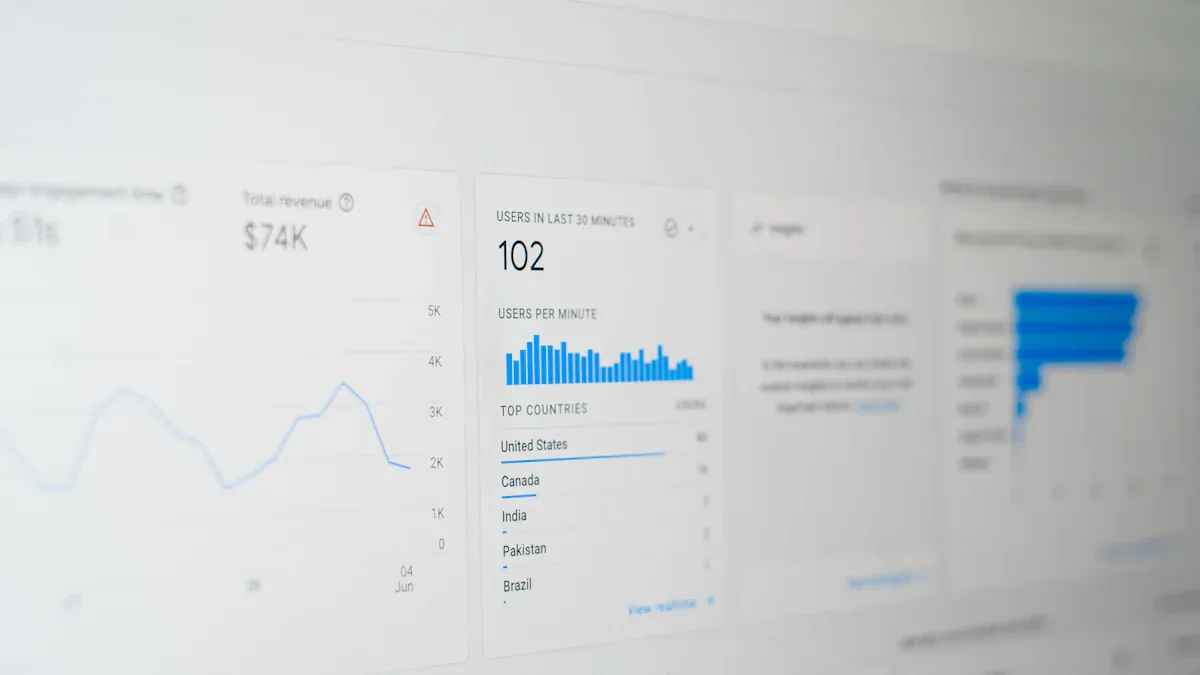

Reference data management is the discipline of defining, governing, and synchronizing the standardized codes, classifications, and lookup values that give business data meaning across systems. Without it, "APAC" in your CRM means something different from "Asia-Pacific" in your ERP, customer tiers conflict between sales and support, and every dashboard tells a slightly different story.
This guide defines reference data management, distinguishes it from master and transactional data, provides concrete examples, outlines a practical management process, and explains how FineDataLink automates reference data synchronization across enterprise systems.
What Is Reference Data Management?
Reference data management (RDM) is the process of creating, maintaining, governing, and distributing standardized reference data—codes, categories, statuses, units of measure, currencies, regions, and other classification values—that provide context and consistency to transactional and analytical data across an organization.
Reference data is typically:
- Relatively static. Changes infrequently compared to transactional data.
- Shared across systems. Used by ERP, CRM, HR, finance, supply chain, and analytics platforms.
- Definitional. Provides the vocabulary that makes business data interpretable.
- Governed centrally. Owned by specific stewards with defined approval workflows for changes.
Effective RDM ensures that when any system references "customer tier = Gold," "region = EMEA," or "product category = Industrial Sensors," every downstream consumer interprets those values identically. When RDM fails, organizations experience reporting discrepancies, integration errors, compliance gaps, and AI outputs grounded in conflicting definitions.

Reference Data vs Master Data vs Transactional Data
Confusing these three data types is one of the most common causes of failed data governance initiatives. Each has distinct characteristics, ownership models, and management requirements.
| Dimension | Reference Data | Master Data | Transactional Data |
|---|---|---|---|
| Definition | Standardized codes, categories, and lookup values used to classify other data | Core business entities (customers, products, employees, suppliers) | Individual business events (orders, invoices, clicks, sensor readings) |
| Change frequency | Low; updated periodically via governed process | Moderate; updated as entities are created or modified | High; continuously generated |
| Volume | Small; hundreds to thousands of records | Medium; thousands to millions of entity records | Large; millions to billions of event records |
| Ownership | Data governance team / domain stewards | Business domain owners (sales, product, HR) | Operational systems and process owners |
| Example values | Currency codes (USD, EUR), status values (Open, Closed), region codes (APAC, EMEA) | Customer "Acme Corp," Product "Widget X," Employee "Jane Smith" | Order #12345, Invoice #67890, Support Ticket #T-001 |
| Management focus | Consistency, standardization, cross-system synchronization | Identity resolution, golden record, deduplication | Accuracy, completeness, timeliness of individual events |
| Primary risk if unmanaged | Conflicting definitions across systems; unreliable aggregation and AI | Duplicate entities; fragmented customer/product views | Lost transactions; operational errors; audit failures |
Key distinction: Reference data classifies master and transactional data. Master data identifies business entities. Transactional data records business events. All three must be managed, but with different tools, processes, and governance models.
Common Reference Data Examples
Concrete examples clarify what qualifies as reference data versus other data types.
| Category | Reference Data Examples | Why It Matters |
|---|---|---|
| Geography | Country codes (ISO 3166), sales regions, territories, time zones | Enables accurate regional reporting, tax calculation, compliance |
| Organization | Department codes, cost centers, business units, legal entities | Supports financial consolidation, budgeting, access control |
| Product | Product categories, SKU hierarchies, unit of measure, packaging types | Ensures consistent catalog management, pricing, inventory |
| Customer | Customer tiers, industry classifications, account types, segments | Aligns sales, marketing, and support on customer value and routing |
| Finance | Currency codes, chart of accounts, tax codes, payment terms | Regulatory compliance, accurate financial reporting, multi-currency operations |
| Status & Workflow | Order status, ticket status, approval states, lifecycle stages | Cross-system workflow consistency; accurate pipeline and SLA tracking |
| Compliance & Standards | Regulatory codes, certification types, safety classifications | Audit readiness; industry-specific regulatory adherence |
| Technical | Error codes, API response codes, data type mappings | System integration reliability; troubleshooting efficiency |
Reference data exists in every domain. The test is simple: if a value is used to classify, categorize, or provide context to other data—and is shared across multiple systems—it is reference data.
Why Reference Data Management Matters
Poorly managed reference data creates compounding problems across the enterprise:
| Business Impact | Consequence of Poor RDM | How Good RDM Helps |
|---|---|---|
| Reporting accuracy | Dashboards show conflicting totals because regions, categories, or statuses are defined differently per source | Single authoritative definition propagated to all consumers |
| System integration | ETL pipelines fail or produce incorrect joins when code tables don't match | Synchronized reference values enable reliable cross-system data movement |
| Regulatory compliance | Tax codes, industry classifications, or reporting categories vary by jurisdiction without centralized control | Governed reference data with audit trails supports audit readiness |
| AI and analytics reliability | Models trained on inconsistently coded data produce unreliable predictions and explanations | Standardized dimensions improve model accuracy and explainability |
| Operational efficiency | Staff spend hours reconciling mismatched dropdowns, fixing misclassified records, and resolving disputes over definitions | Automated synchronization eliminates manual reconciliation |
| M&A and system migration | Integrating acquired companies' data requires mapping dozens of conflicting code tables | Centralized reference data hub accelerates integration timelines |
The cost of poor RDM is rarely visible as a line item. It manifests as delayed reports, disputed metrics, failed integrations, and eroded trust in data—all of which compound over time.
Common Challenges in Reference Data Management
| Challenge | Root Cause | Practical Response |
|---|---|---|
| Siloed definitions | Each system maintains its own code tables independently | Establish central reference data repository; synchronize via FineDataLink |
| Manual maintenance | Spreadsheets and ad-hoc updates create version conflicts | Automate distribution through governed pipelines with change tracking |
| No clear ownership | Nobody owns cross-system reference data standards | Assign domain stewards with defined RACI for each reference data domain |
| Change propagation lag | Updates take weeks to reach all consuming systems | Implement real-time or scheduled sync with validation at delivery |
| Legacy system constraints | Older systems cannot consume modern APIs or formats | Use middleware/adapters; maintain backward-compatible export formats |
| Insufficient governance | Changes made without approval or documentation | Implement approval workflows, audit logs, and version history |
| Scale complexity | Reference data grows as business expands geographically or through acquisition | Design for extensibility; use hierarchical and parameterized models |
Most RDM challenges are organizational, not technical. Technology enables synchronization and governance, but sustainable RDM requires defined ownership, approved processes, and executive sponsorship.
Reference Data Management Process
A repeatable RDM process follows six stages:
- Identify and inventory. Catalog all reference data domains across systems. Document current definitions, owners, update frequencies, and consumers. Prioritize domains by business impact and inconsistency risk.
- Define standards. For each priority domain, establish authoritative definitions, valid values, naming conventions, and metadata. Engage domain stakeholders to achieve consensus. Document in a centralized glossary or data catalog.
- Establish governance. Assign data stewards per domain. Define approval workflows for additions, modifications, and retirements. Set review cadences. Document escalation paths for disputes.
- Build synchronization. Implement automated pipelines that distribute authoritative reference data to all consuming systems. Validate on delivery. Log all changes. FineDataLink supports this stage with visual ETL/ELT workflows, multi-source connectivity, and built-in validation.
- Monitor and validate. Track synchronization success rates, latency, and exception volumes. Profile reference data for drift, orphaned values, and unused codes. Alert stewards to anomalies.
- Review and evolve. Conduct quarterly reviews of reference data domains. Retire obsolete values. Add new values as business evolves. Update standards based on feedback and audit findings.
This process is cyclical, not linear. Reference data management is an ongoing capability, not a one-time project.
Best Practices for Reference Data Management
- Start with high-impact domains. Don't try to govern everything at once. Prioritize reference data that causes the most reporting discrepancies, integration failures, or compliance risks.
- Centralize authority, distribute consumption. Maintain one authoritative source per reference data domain. Allow all systems to consume from it, but never allow multiple systems to independently define the same reference values.
- Automate synchronization. Manual distribution does not scale. Use governed pipelines to push reference data changes to consuming systems on a schedule matching business need.
- Validate at every touchpoint. Check reference data integrity at extraction, transformation, loading, and consumption. Catch mismatches before they corrupt downstream analytics.
- Version and audit everything. Every reference data change should have a timestamp, approver, rationale, and before/after state. Audit trails are non-negotiable for compliance and troubleshooting.
- Design for change. Reference data evolves. Build flexible schemas that accommodate new values, hierarchies, and attributes without requiring system redesigns.
- Integrate with data governance frameworks. RDM should not operate in isolation. Align with your organization's broader data governance, data quality, and master data management programs.
- Educate consumers. Ensure analysts, developers, and business users understand reference data standards and know where to find authoritative values. Reduce shadow definitions.
- Measure RDM effectiveness. Track metrics like synchronization success rate, reference data-related incident volume, time-to-propagate changes, and stakeholder satisfaction. Treat RDM as a measurable service.
- Plan for AI readiness. AI models and agents depend on consistent dimensions. Invest in RDM now to avoid costly rework when deploying AI-powered analytics later.
What to Look for in Reference Data Management Tools
Not every data tool handles reference data well. Evaluate platforms against these capabilities:
| Capability | Why It Matters |
|---|---|
| Multi-source connectivity | Reference data lives in ERP, CRM, databases, APIs, spreadsheets. Tools must connect to all relevant sources. |
| Bidirectional synchronization | Some systems need to receive reference data; others may originate updates. Sync must support both directions with conflict resolution. |
| Visual pipeline design | Business data teams should build and modify sync workflows without custom code. |
| Built-in validation and profiling | Detect invalid values, orphaned codes, and schema drift automatically within pipelines. |
| Change tracking and audit logs | Every modification must be traceable for compliance and troubleshooting. |
| Scheduled and event-driven execution | Support both batch refresh and real-time propagation depending on domain requirements. |
| Error handling and alerting | Failed synchronizations must be visible, recoverable, and escalated appropriately. |
| Integration with data catalogs and governance platforms | Reference data definitions should link to broader governance artifacts. |
| Scalability | Handle growing reference data volumes and increasing synchronization frequency without performance degradation. |
FineDataLink addresses these requirements for enterprise data integration scenarios where reference data synchronization is part of broader data movement and preparation workflows.
How FineDataLink Supports Reference Data Management
FineDataLink helps enterprises connect ERP, CRM, databases, APIs, and spreadsheets, then synchronize shared code tables, business dimensions, and reference values across systems. This makes it easier to keep sales regions, product categories, customer tiers, currency codes, and status values consistent before they flow into data warehouses, dashboards, reports, and AI workflows.
Key capabilities for reference data management include:
- Multi-source connectivity. Native connectors for relational databases, cloud warehouses, SaaS platforms, REST/SOAP APIs, and flat files. Single platform replaces fragmented scripts and point-to-point integrations.
- Visual ETL/ELT pipeline builder. Drag-and-drop interface for designing reference data extraction, transformation, validation, and loading workflows. Reduces dependency on custom code.
- Built-in data quality validation. Profile reference data for completeness, validity, and consistency within pipelines. Flag anomalies before they propagate to consuming systems.
- Scheduled and incremental synchronization. Match refresh frequency to domain volatility. Support full refresh for stable domains and CDC-based incremental sync for frequently updated reference data.
- Change tracking and lineage. Audit every reference data modification with timestamps, source/target mapping, and transformation logic. Support compliance and root-cause analysis.
- Error handling and recovery. Automatic retry, checkpointing, and alerting prevent silent synchronization failures. Exceptions are visible and actionable.
- Scalable execution. Distributed processing handles growing reference data volumes and increasing synchronization demands without proportional operational overhead.
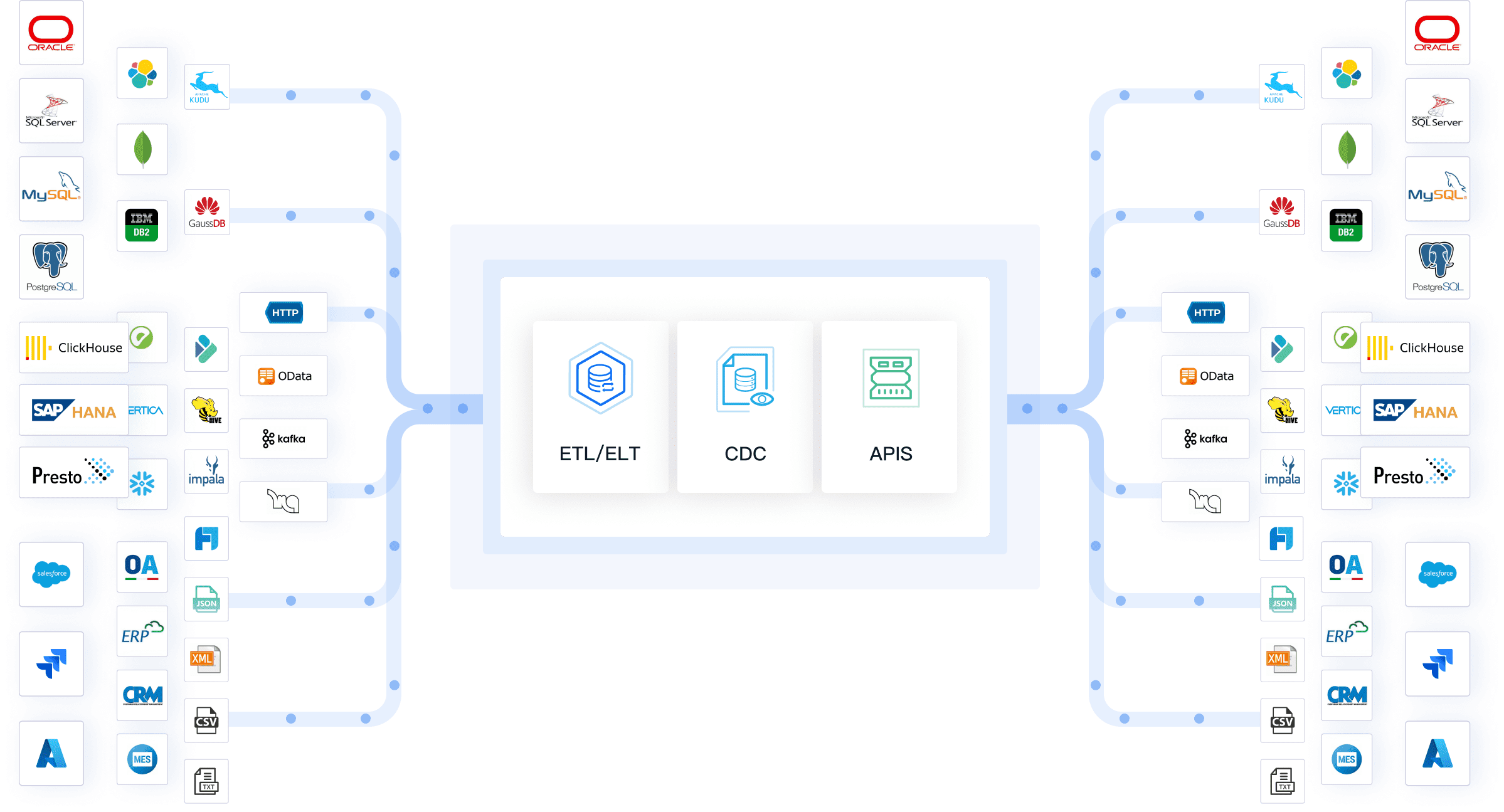 FineDataLink Data Connection
When reference data is synchronized reliably, downstream analytics in FineBI reflect consistent dimensions, and AI agents operate on unified definitions rather than conflicting code tables.
Explore FineDataLink for reference data management and enterprise data integration →
From Reference Data Management to AI Data Agent
Dora works better when business terms, dimensions, and reference values are already standardized. When regions, product categories, customer segments, and status codes are consistent, Dora can answer business questions more reliably, generate summaries, detect anomalies, and route follow-up analysis without mixing different definitions from different systems.
Reference data management is foundational infrastructure for AI-assisted analytics. Without it, natural-language queries return answers grounded in whichever system's definition happened to be queried first—producing confident-sounding but inconsistent outputs. With governed reference data synchronized by FineDataLink, Dora operates on a unified semantic layer where "EMEA," "Gold tier," and "resolved" mean the same thing everywhere.
The sequence matters: standardized reference data first, trusted datasets second, AI-assisted analysis third.
FAQs
Reference data consists of standardized codes, categories, and lookup values (currency codes, regions, statuses) used to classify other data. Master data consists of core business entities (customers, products, employees) that identify who or what is involved in transactions. Reference data is relatively static and shared broadly; master data changes more frequently and is owned by specific business domains. Both require governance, but with different processes and tools.