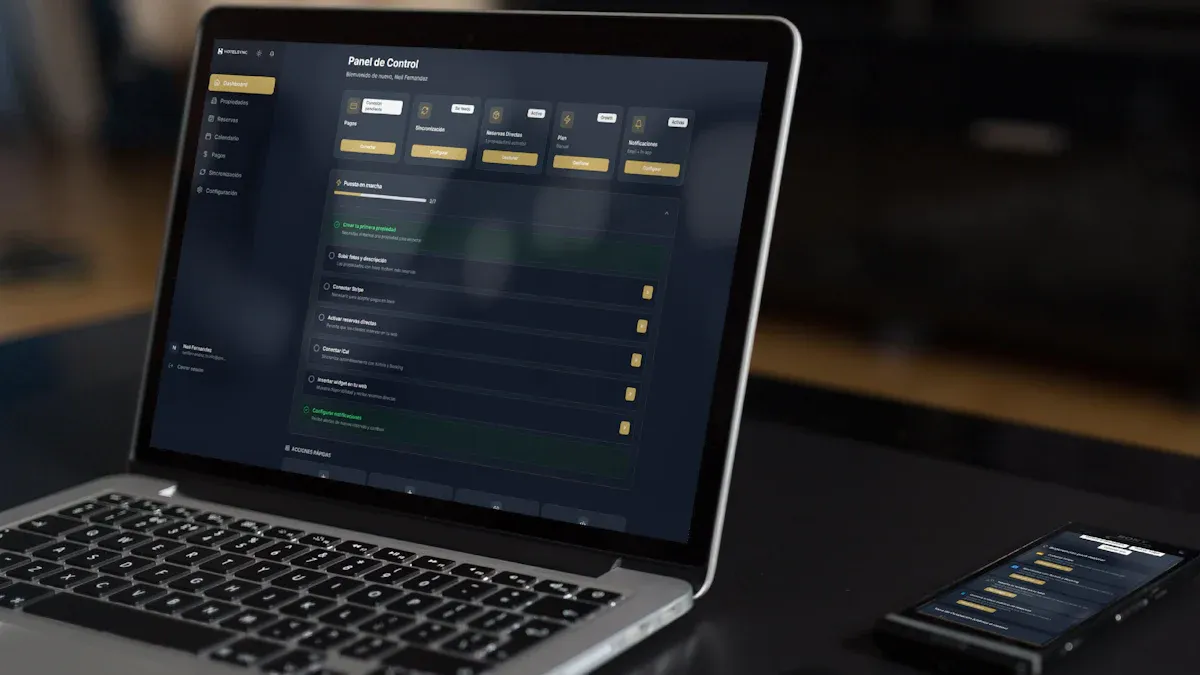
Revenue leakage in payments is rarely caused by one dramatic failure. It usually comes from dozens of small losses hiding inside declines, failed renewals, refunds, chargebacks, fee overruns, and reconciliation gaps. For operations leaders, the business value of a payment analytics dashboard is simple: it turns fragmented transaction data into a control system for protecting revenue, improving payment performance, and accelerating response time.
If you manage billing operations, subscriptions, finance ops, or payment performance, you already know the pain points. Teams are stuck in reactive mode. A processor issue appears after conversion drops. A spike in failed renewals shows up after churn rises. Payout discrepancies surface only when finance starts chasing missing deposits. A strong dashboard prevents that pattern by making payment risk visible early, in one place, and in a format the business can act on.
A well-designed payment analytics dashboard should help teams answer three questions fast:
- Where is money leaking right now?
- What is causing the loss?
- What action should we take next?
Raw transaction reporting is not enough. Transaction logs tell you what happened at the event level. Decision-ready payments analytics tells you what matters, why it matters, and where intervention will produce the greatest operational impact.
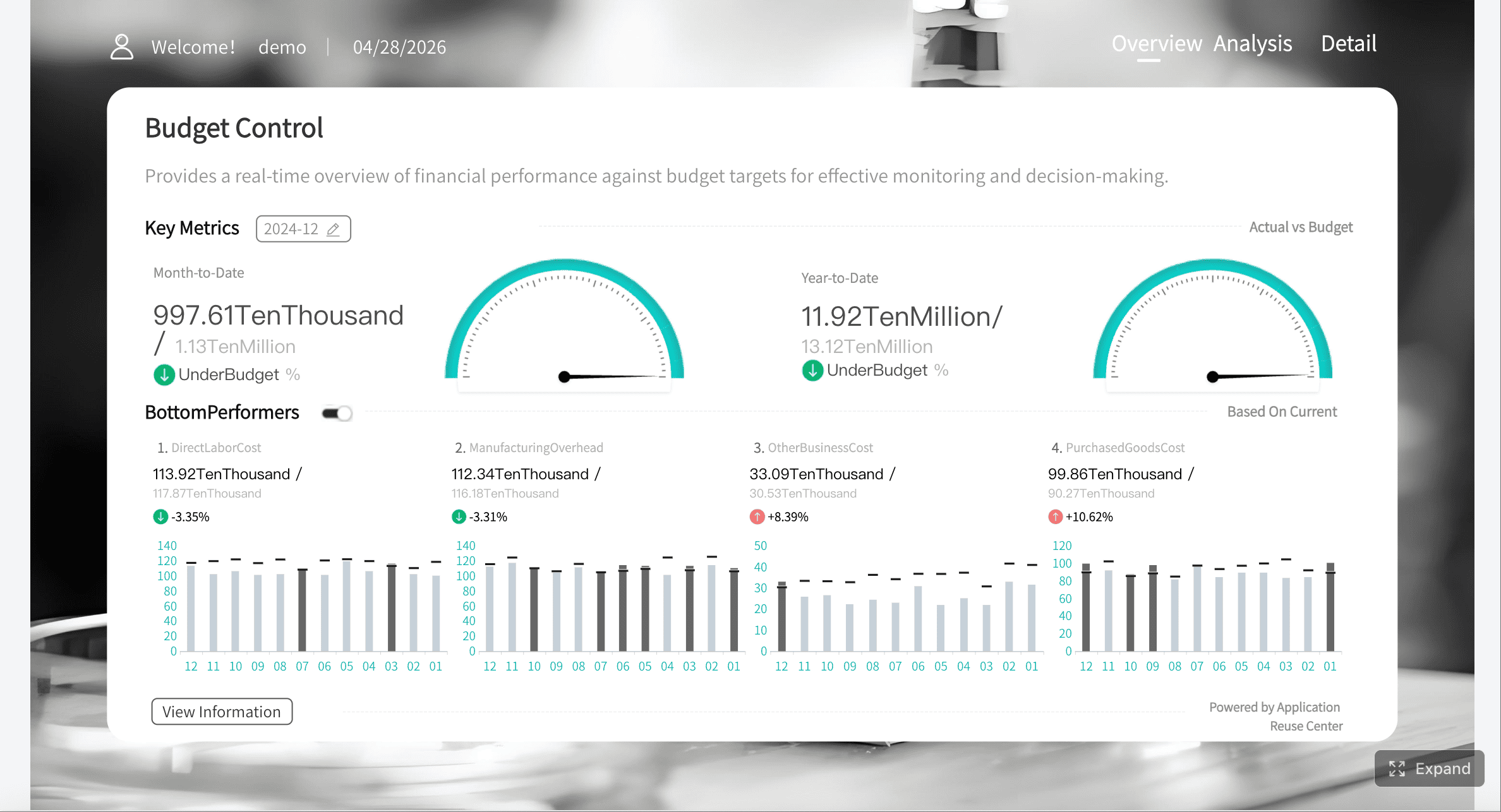
All dashboards in this article are created by FineBI
What a payment analytics dashboard should help operations leaders see at a glance
Revenue leakage across payments typically shows up in five categories:
- Failed payments: attempted revenue that never converts due to issuer declines, processor issues, expired cards, or routing problems
- Refunds: collected revenue that is later returned because of service issues, duplicate billing, customer confusion, or policy exceptions
- Chargebacks: disputed transactions that create direct losses, operational cost, and scheme-related risk
- Pricing and billing errors: undercharges, duplicate discounts, tax issues, or invoice mismatches that suppress collected revenue
- Settlement gaps: differences between gateway data, processor records, fees, and bank deposits that hide delayed or missing funds
The operational advantage of a single dashboard is visibility across the whole payment lifecycle. Instead of checking separate systems for billing, acquiring, subscriptions, disputes, and settlements, teams get one decision layer that connects cause and effect. That is what moves the organization from reactive firefighting to proactive monitoring.
For example, a drop in authorization rate may look like a checkout problem. But when viewed alongside processor latency, region, payment method, and retry outcomes, it may actually be a routing failure. Similarly, rising refunds may seem like a customer service issue until product line and billing descriptor segmentation reveals a billing confusion pattern.
A true payment analytics dashboard also differs from basic reporting in how it supports action:
- Raw reporting lists transactions, statuses, timestamps, and payment events
- Payments analytics aggregates patterns, highlights anomalies, measures financial impact, and enables drill-down by segment
- Decision-ready dashboards add thresholds, ownership, workflow triggers, and executive summaries
Key Metrics (KPIs) a payment analytics dashboard must include
For featured-snippet clarity, these are the core KPI categories operations leaders should prioritize:
- Authorization rate: Percentage of payment attempts approved on first submission
- Payment success rate: Percentage of all payment attempts ultimately collected, including retries where relevant
- Recovery rate: Share of failed payment value later recovered through retries or account updates
- Involuntary churn rate: Subscriber loss caused specifically by payment failures
- Refund rate: Percentage of transactions or revenue refunded in a given period
- Chargeback rate: Percentage of transactions that become disputes or chargebacks
- Dispute win rate: Percentage of disputed value successfully recovered through representment
- Settlement accuracy: Match rate between processor reports, fees, and bank deposits
- Payment method conversion: Performance of cards, wallets, bank debits, and local methods in completion and approval
- Net revenue yield: Revenue retained after refunds, disputes, and payment-related fees
- Processor performance: Comparison of providers by uptime, approval rate, latency, and cost impact
- Time to detect and resolve: Speed at which teams identify and fix payment issues
The 12 KPIs every payment analytics dashboard should track
Authorization and payment success rate
This is the first revenue protection KPI to watch. Authorization rate measures approved transactions against total attempts, while payment success rate captures what ultimately gets collected. Both should be segmented by processor, payment method, issuer region, currency, product line, and customer segment.
A blended approval metric can hide major problems. One processor may underperform in a specific market. One wallet may outperform cards for mobile checkout. One customer cohort may face elevated soft declines because of card expiration patterns.
Operations teams should use this KPI to identify:
- Hidden decline clusters
- Routing misconfigurations
- Issuer-specific underperformance
- Checkout or tokenization issues
- Regional acceptance gaps
Failed payment recovery rate
Failed payments do not always mean lost revenue. Recovery rate measures how much failed transaction value is later collected through retries, account updater tools, dunning workflows, or payment method changes.
This KPI is especially important in subscription businesses, but it also matters in one-time flows where retry logic or alternative payment prompts can rescue failed transactions. Compare recovery performance across business models, billing cycles, and customer cohorts.
A strong recovery analysis should show:
- Recovery by failure reason
- Recovery by retry sequence
- Recovery by payment method
- Recovery by subscription vs one-time payments
- Recovery by time elapsed since failure
If recovery is weak, the issue may not be payment acceptance alone. It may be retry timing, poor customer communication, lack of account updater coverage, or ineffective fallback methods.
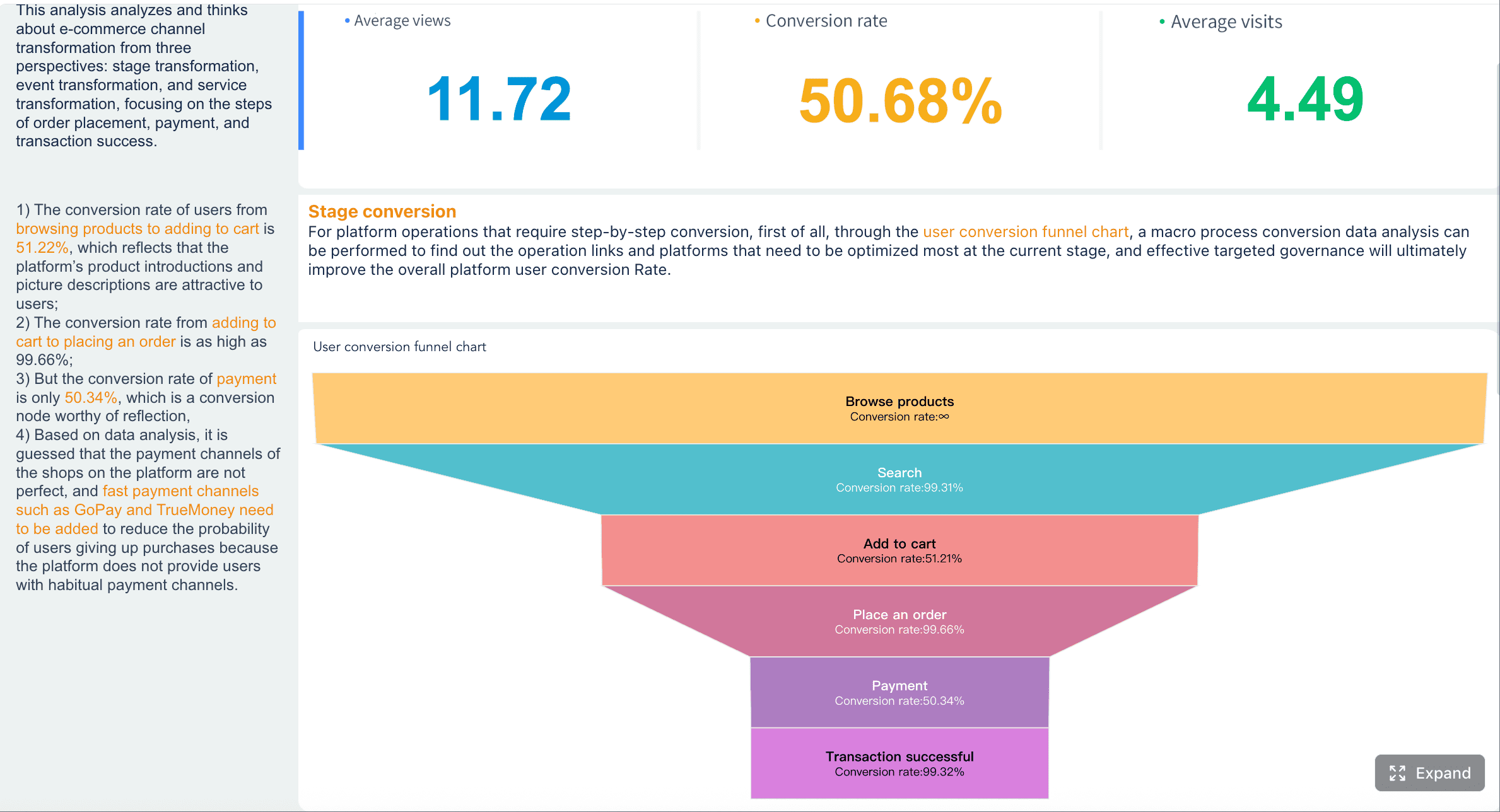
Involuntary churn from payment failures
Involuntary churn is one of the most damaging but underreported forms of revenue leakage. It represents customers who did not intend to cancel but were lost because payments failed and the recovery process broke down.
This KPI should quantify subscriber loss caused by:
- Expired cards
- Insufficient funds
- Bank declines
- Authentication failure
- Retry exhaustion
- Payment method expiration
The key is separating payment-related churn from product dissatisfaction or pricing-driven churn. Without that distinction, teams often invest in retention tactics when the real problem is billing operations.
Operations leaders should view involuntary churn alongside renewal volume, retry recovery, and card expiration exposure to prioritize interventions before renewal dates hit.
Refund rate and refund value
Refunds are not just a finance metric. They are a direct signal of operational friction. A rising refund rate can indicate billing confusion, duplicate charges, fulfillment issues, poor service recovery, or weak checkout communication.
Track both:
- Refund rate: number of refunded transactions as a share of total transactions
- Refund value: total refunded amount as a share of collected revenue
Then segment by reason code, product, geography, sales channel, campaign, and support ticket category. That analysis reveals which refunds are unavoidable and which are preventable.
High refund value with low refund volume often points to premium product issues. High refund volume with low average value may suggest recurring billing confusion or a broken self-service cancellation flow.
Chargeback rate and dispute win rate
Chargebacks generate leakage in three ways: lost revenue, added dispute costs, and increased risk exposure with schemes or acquirers. That makes chargeback rate a core KPI for both operations and risk teams.
Track:
- Number of chargebacks
- Chargeback value
- Chargeback rate by transaction count and payment value
- Dispute win rate
- Recovery from representment
- Chargeback reason mix
This KPI helps detect early signs of fraud, weak billing descriptors, poor customer communication, or support breakdowns. If dispute win rate is low, you may have a documentation problem. If chargebacks spike after a product launch, the issue may be operational or messaging-related rather than fraud-related.
Settlement accuracy and payout reconciliation gaps
Collected revenue is not real cash until settlements reconcile correctly. This KPI compares gateway reports, processor statements, fee deductions, reserve adjustments, and bank deposits to uncover missing or delayed funds.
Operations leaders often underestimate how much reporting distortion comes from reconciliation gaps. A clean sales day can still produce bank deposit mismatches if fees are misapplied, payouts are delayed, or ledger logic is inconsistent.
Measure:
- Settlement match rate
- Deposit variance
- Unreconciled transaction count
- Aged reconciliation items
- Fee discrepancy value
- Time to reconcile payouts
This is where operations, finance, and payment teams need one shared source of truth.
Payment method mix and conversion performance
Not all payment methods contribute equally to conversion or net revenue. A payment analytics dashboard should show how cards, wallets, bank debits, and local payment methods affect checkout completion, approval rates, and downstream recovery.
This KPI supports decisions on which methods to add, promote, route, or de-emphasize. It is especially valuable in international markets where local preference strongly impacts conversion.
Evaluate:
- Payment method adoption rate
- Checkout completion by method
- Authorization rate by method
- Refund and chargeback rate by method
- Fee impact by method
- Net revenue yield by method
A method with slightly lower gross volume may still be superior if it reduces declines, disputes, and costs.
Retry performance and recovery timing
Retries can recover revenue, but poorly designed retry logic can also increase cost, issuer friction, and customer frustration. This KPI measures when retries work and when they do not.
Track retry performance by:
- Retry number
- Days since initial failure
- Issuer response code
- Transaction amount
- Plan type
- Customer cohort
- Payment method
The goal is to learn the optimal retry windows and identify situations where retries add noise without meaningful recovery. Smart retry performance is one of the clearest areas where operations analytics can produce rapid financial returns.
Revenue at risk from subscriptions coming due
A forward-looking payment analytics dashboard should not stop at historical reporting. It should forecast upcoming renewal risk so operations teams can intervene early.
This KPI estimates revenue at risk from:
- Upcoming renewals
- Cards expiring soon
- Accounts with previous soft declines
- Customers lacking backup payment methods
- High-risk geographies or processors
- Cohorts with weak recent recovery trends
This turns the dashboard into an early-warning system instead of a post-mortem tool. For subscription operations, that shift is critical.
Processor and gateway performance
Most payment environments involve multiple providers, routing rules, or fallback logic. Without comparative analytics, teams cannot tell whether a processor is helping or hurting performance.
A useful dashboard should compare processors and gateways on:
- Approval rate
- Uptime
- Transaction latency
- Soft and hard decline patterns
- Routing outcomes
- Fee impact
- Regional strength
- Settlement speed
This KPI helps uncover provider underperformance and informs routing optimization, failover policies, and contract negotiations.
Fee leakage and net revenue yield
Gross collections can look healthy while margin erodes underneath. Fee leakage analysis focuses on what the business actually retains after payment-related costs.
Track fees such as:
- Interchange
- Acquirer markup
- Cross-border fees
- FX costs
- Gateway charges
- Chargeback fees
- Refund processing costs
Then calculate net revenue yield, which is collected revenue minus refunds, disputes, and all payment processing costs. This KPI is far more useful than gross payment volume when evaluating processor strategy, international expansion, and payment method mix.
Time to detect and resolve payment issues
Even strong analytics loses value if teams react too slowly. This KPI measures how quickly operations identifies anomalies, investigates causes, and restores performance.
Key measurements include:
- Time to detect issue
- Time to assign owner
- Time to root-cause diagnosis
- Time to mitigation
- Time to full resolution
- Prevented loss estimate
Fast response matters because payment problems compound quickly. A few hours of unnoticed decline spikes or gateway instability can translate into major revenue loss, avoidable churn, and a degraded customer experience.
How to build a useful payment analytics dashboard without overwhelming the team
A payment analytics dashboard fails when it becomes a dumping ground for every available metric. The goal is not maximum data density. The goal is faster, better operational decisions.
Organize metrics by the payment lifecycle
The best way to keep dashboards usable is to group KPIs into lifecycle stages. This mirrors how payment problems unfold and helps stakeholders connect one metric shift to the next business outcome.
Recommended dashboard views:
- Authorization: approval, declines, processor performance
- Recovery: retries, updater success, recovered revenue
- Retention: involuntary churn, renewal risk, card expiration exposure
- Dispute management: refunds, chargebacks, dispute win rate
- Reconciliation: settlements, payout variance, unresolved gaps
- Optimization: payment method mix, fee leakage, net revenue yield
This structure makes the dashboard intuitive for both executives and analysts.
Add segmentation that reveals the real source of leakage
Blended averages are one of the biggest reasons operations teams miss revenue leakage. Segment every critical KPI by the dimensions most likely to explain variance.
Core segmentation dimensions include:
- Product line
- Geography
- Currency
- Processor
- Gateway
- Payment method
- Subscription plan type
- Customer cohort
- Device or channel
- New vs returning customer
Segmentation turns a generic drop in performance into a solvable operational problem. Instead of seeing “authorization rate is down,” the team sees “approval is down for wallet payments in one region after a routing change.”
Use real-time alerts for high-risk changes
Dashboards alone are passive. To reduce leakage in live environments, add thresholds and automated alerts for the changes that matter most.
Common alert scenarios include:
- Sharp increase in issuer declines
- Processor downtime or elevated latency
- Spike in chargeback initiation
- Unusual refund volume
- Failed renewal surge
- Payout mismatch above threshold
- Fee anomalies or unexpected margin compression
Alerts should route directly to named owners with escalation paths. That closes the gap between visibility and action.
Dashboard tools, reporting workflows, and common implementation mistakes
The technology choice matters, but operating model matters more. A sophisticated dashboard with weak workflows still produces slow decisions.
What to look for in dashboards and software for payment analysis
When evaluating tools for a payment analytics dashboard, prioritize capabilities that support both executive oversight and operational investigation.
Look for:
- Clean integrations with payment gateways, processors, billing systems, and bank or finance data
- Flexible filters for region, method, processor, customer segment, and billing model
- Drill-down capability from KPI to transaction-level detail
- Reliable reconciliation views across settlements and payouts
- Real-time or near-real-time refresh for critical payment events
- Role-based dashboards for executives, analysts, and operations owners
- Alerting and workflow integration
- Strong governance for metric definitions and access control
A tool should not just visualize data. It should help teams operationalize it.
When built-in billing analytics are enough and when BI adds more value
Native billing and processor analytics can be enough for narrow use cases, especially when a company has one payment provider and a relatively simple revenue model. They often work well for quick monitoring of transaction volume, refunds, or subscription trends.
But BI adds more value when your team needs:
- Cross-system visibility across payments, finance, support, and product data
- Trend analysis beyond standard canned reports
- Multi-provider comparisons
- Forecasting for renewals and payment risk
- Reconciliation across processor and bank records
- Executive dashboards that combine payments with broader revenue KPIs
This is where teams often move beyond built-in Stripe analytics or billing-native reports and invest in a BI layer that can unify payment data with finance and operations context.
Common mistakes that weaken payment reporting
Several implementation mistakes repeatedly reduce dashboard value:
- Tracking too many vanity metrics: More charts do not create better decisions
- Ignoring net revenue: Gross collections alone hide fee leakage, refunds, and dispute impact
- Reviewing data too slowly: Weekly reviews are too late for live payment issues
- Failing to segment: Blended metrics bury root causes
- No ownership model: Metrics without owners do not drive operational improvement
- Poor reconciliation design: If cash movement cannot be validated, trust in the dashboard collapses
- No playbooks: Teams see the issue but still lose time deciding how to respond
A high-performing dashboard is as much an operating discipline as a reporting asset.
Turning KPI trends into action plans that reduce revenue leakage
To make a payment analytics dashboard operationally useful, every KPI needs three things attached to it:
- An owner
- A target
- A response playbook
For example, if authorization rate drops below threshold, the owner might be payments operations, the target might be approval above a defined baseline by region, and the playbook might include checking processor routing, issuer decline codes, 3DS performance, and recent checkout changes. If refund rate spikes, the owner may be customer operations or billing operations, with a playbook focused on reason-code analysis, duplicate charge audits, and policy review.
Review cadences should also match the metric:
- Real-time or hourly: authorization rate, decline spikes, processor uptime, payout mismatches
- Daily: retries, recoveries, refunds, disputes initiated
- Weekly: fee leakage, payment method mix, reconciliation aging
- Monthly: involuntary churn, processor benchmarking, net revenue yield trends
Most importantly, revisit the dashboard as your payment stack and business model evolve. New payment methods, new markets, subscription changes, and pricing experiments all change where leakage appears. A static dashboard becomes stale quickly.
Build the workflow faster with FineBI
Building this manually is complex; use FineBI to utilize ready-made templates and automate this entire workflow.
 Utilize ready-made templates and automate this entire workflow with FineBI
For enterprise teams, the challenge is not just designing KPI logic. It is integrating gateway data, billing events, settlement records, finance systems, and operational alerts into one trusted view. Doing that manually in spreadsheets or ad hoc dashboards creates version control issues, inconsistent definitions, and slow response cycles.
FineBI helps operations leaders build a payment analytics dashboard that is actually usable at scale. With ready-made templates, self-service analysis, interactive drill-downs, and flexible integration across business systems, FineBI makes it easier to centralize payment visibility without overwhelming the team.
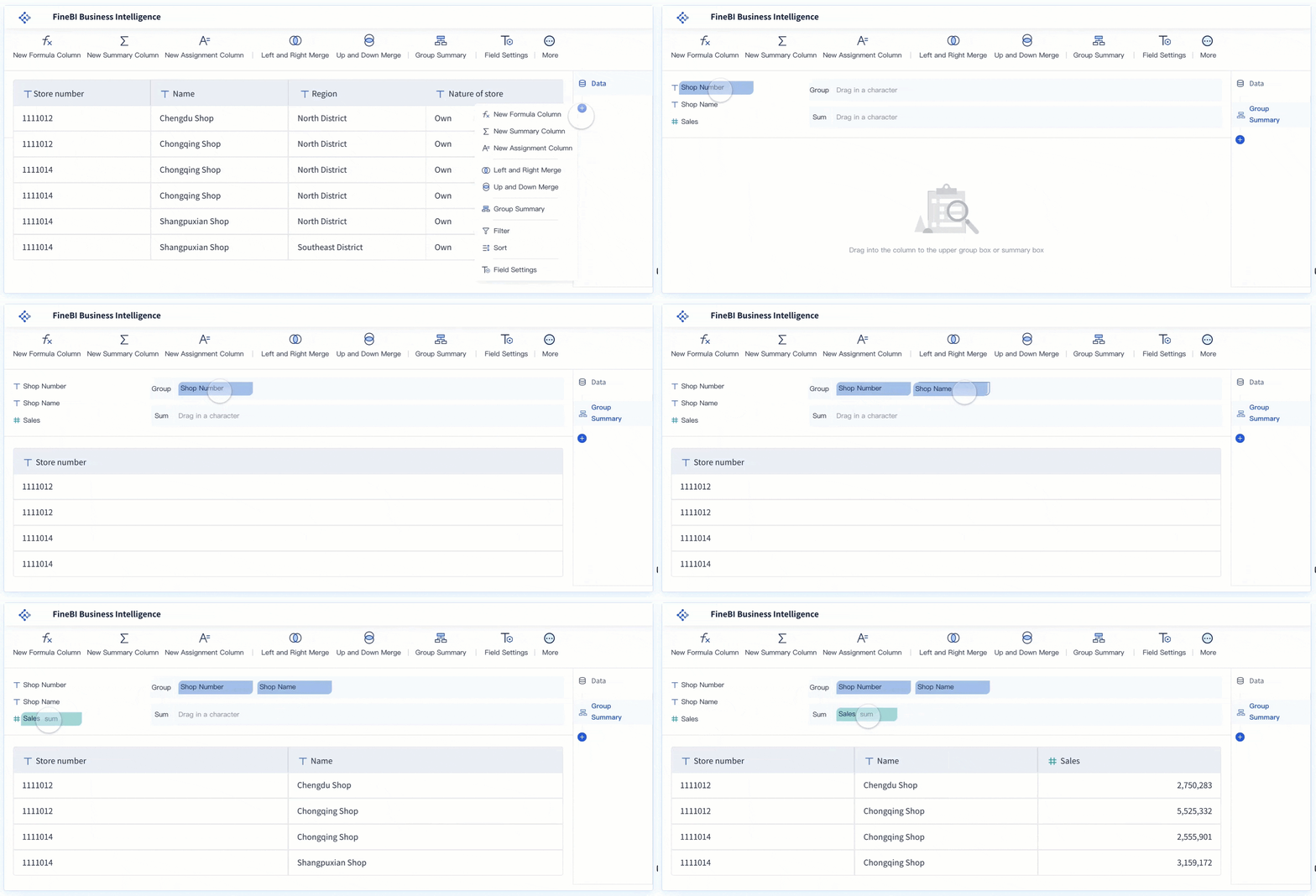
Use FineBI to:
- Build executive and analyst views from the same governed data model
- Segment payment KPIs by region, processor, method, plan, and cohort
- Automate recurring reporting and alerting workflows
- Create lifecycle-based dashboards for authorization, recovery, disputes, reconciliation, and optimization
- Reduce manual reporting effort while improving speed to insight
For organizations serious about cutting revenue leakage, the winning approach is clear: define the right KPIs, structure them around the payment lifecycle, assign operational ownership, and use FineBI to turn complex payment data into fast, reliable action.
FAQs
A payment analytics dashboard is a centralized view of transaction, billing, dispute, and settlement data that helps teams spot revenue leakage quickly. It turns raw payment activity into actionable KPIs, trends, and alerts.