
E-commerce product data management is not just a back-office data discipline. It directly affects how products are found, how they convert, how they are reported, and how quickly teams can act. When catalogs are inconsistent, dashboards become unreliable, channel listings break, and teams waste time reconciling numbers instead of improving performance.
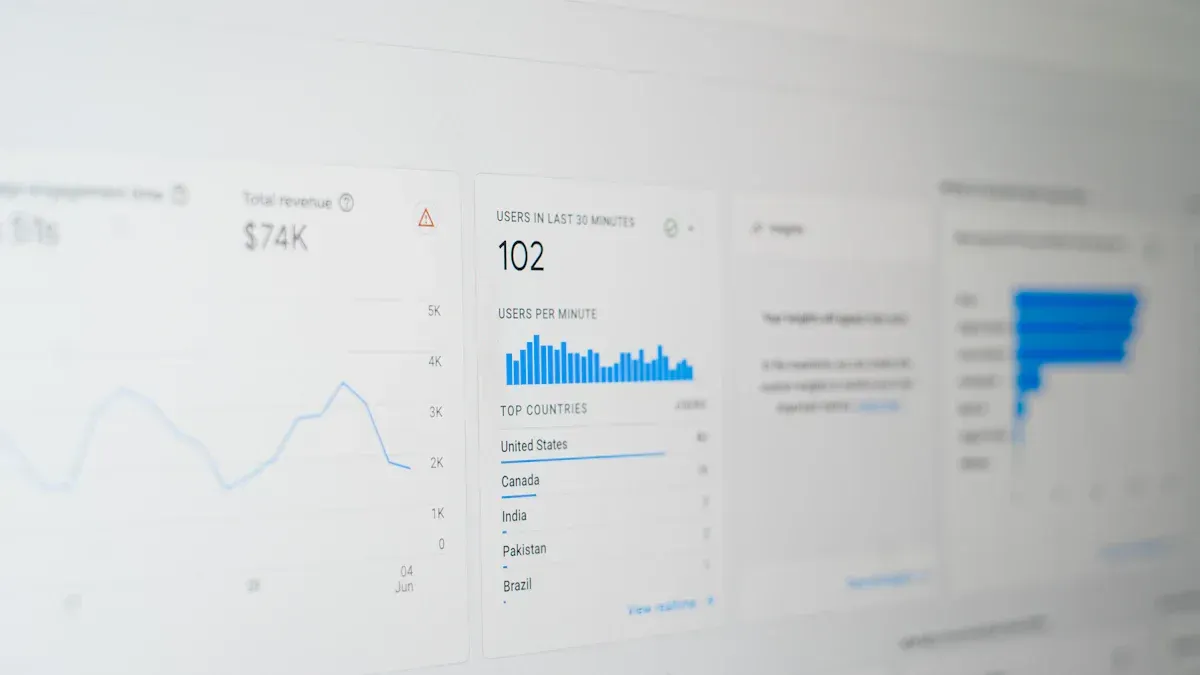
For online retailers, the challenge is twofold: build a clean, trusted product data foundation and make it easier for teams to use that data for reporting and action. With FineBI + Dora, business users can ask for analysis in chat, generate chart-based answers or dashboard-style views from trusted BI assets, and receive scheduled summaries before the next meeting.
 Click To Try The Dashboard
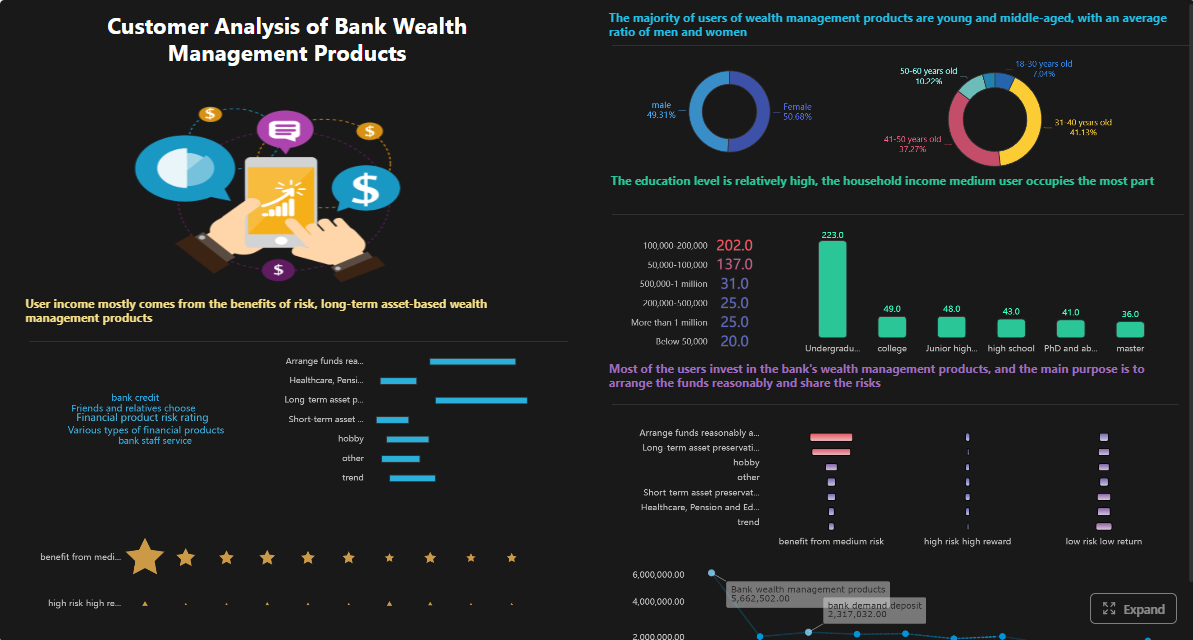
All dashboards in this article are built with FineBI
What E-commerce Product Data Management Means and Why It Matters
In an online retail context, e-commerce product data management refers to the processes, rules, systems, and ownership models used to create, maintain, distribute, and govern product information across channels. This includes core identifiers, product titles, descriptions, images, categories, attributes, prices, variants, inventory-related fields, and channel-specific content.
A clean product catalog improves three critical business outcomes:
- Merchandising quality: teams can group, filter, promote, and compare products correctly.
- Reporting confidence: analysts and managers can trust revenue, margin, stock, and conversion KPIs.
- Customer experience: shoppers can search accurately, filter effectively, and understand what they are buying.
The cost of poor product data is often underestimated. A missing size attribute can hurt filtering. A duplicate product record can split sales history. Inconsistent category mapping can distort assortment analysis. Incorrect parent-child relationships can create confusion in both storefront presentation and downstream reporting.
In practice, common product data issues create very visible business problems:
- Inconsistent attributes make channel listings and on-site filters unreliable.
- Duplicate records inflate catalog counts and fragment performance history.
- Missing fields reduce discoverability, weaken ad feeds, and harm conversion.
- Broken mappings produce inaccurate KPIs in sales, inventory, and margin reporting.
This is why product data management should be treated as both an operational discipline and an analytics prerequisite. Clean catalogs are not only for better listing hygiene; they are the foundation for trusted business intelligence and AI-assisted analysis.
The Core Components of a Clean Product Catalog
Product identifiers, attributes, and taxonomy
A clean catalog starts with a consistent structural model.
At the identifier level, teams need clear rules for:
- SKU: the unique sellable unit.
- Parent-child relationships: used for style-color-size structures and variant grouping.
- Category hierarchy: how products are organized for navigation, reporting, and channel mapping.
- Variant logic: how options such as size, color, material, or bundle type are represented.
Without this structure, one team may treat a color variant as a separate product while another treats it as a child item. That inconsistency causes reporting errors, merchandising confusion, and channel synchronization problems.
It is also important to distinguish between required fields and optional enrichment fields.
Required fields often include:
- SKU
- product name
- brand
- category
- price
- status
- variant attributes
- inventory mapping fields
Optional enrichment fields may include:
- long descriptions
- lifestyle imagery tags
- SEO metadata
- material details
- compatibility notes
- campaign labels
Both matter, but not equally. Required fields support transaction readiness and operational integrity. Enrichment fields support discoverability, filtering, conversion, and marketing performance.
Data quality standards and governance
Catalog quality depends on explicit rules, not informal habits.
Four practical standards should be defined:
- Completeness: required fields are populated.
- Consistency: similar products follow the same naming, formatting, and taxonomy rules.
- Accuracy: values reflect the actual product and current business state.
- Timeliness: updates happen fast enough to support selling, fulfillment, and reporting needs.
Governance means assigning ownership for each stage of the process. That usually includes:
- who creates new product records
- who validates attributes
- who approves category placement
- who resolves exceptions
- who manages supplier-originated changes
- who confirms channel publishing readiness
When ownership is vague, errors stay unresolved because every team assumes another team is responsible.
Source systems and data flow
Most e-commerce catalogs do not live in one system. Product data typically flows across multiple platforms, including:
- ERP
- PIM
- supplier feeds
- marketplace connectors
- ad platforms
- storefront systems
- warehouse or inventory systems
- analytics and BI tools
A practical data flow might look like this:
- Base product data is created in ERP or PIM.
- Enrichment and channel mapping are added by merchandising or marketing teams.
- Product records are distributed to marketplaces and storefronts.
- Sales, inventory, and return data flow back into analytics systems.
- BI tools such as FineBI model product performance, category trends, and KPI dashboards.
Errors are often introduced or amplified at handoff points, especially when:
- supplier data uses inconsistent naming
- categories are manually remapped
- channel-specific requirements are not standardized
- duplicate product creation happens across teams
- analytics joins rely on unstable or non-unique product keys
For this reason, product data management is not only a catalog issue. It is a cross-system control issue.
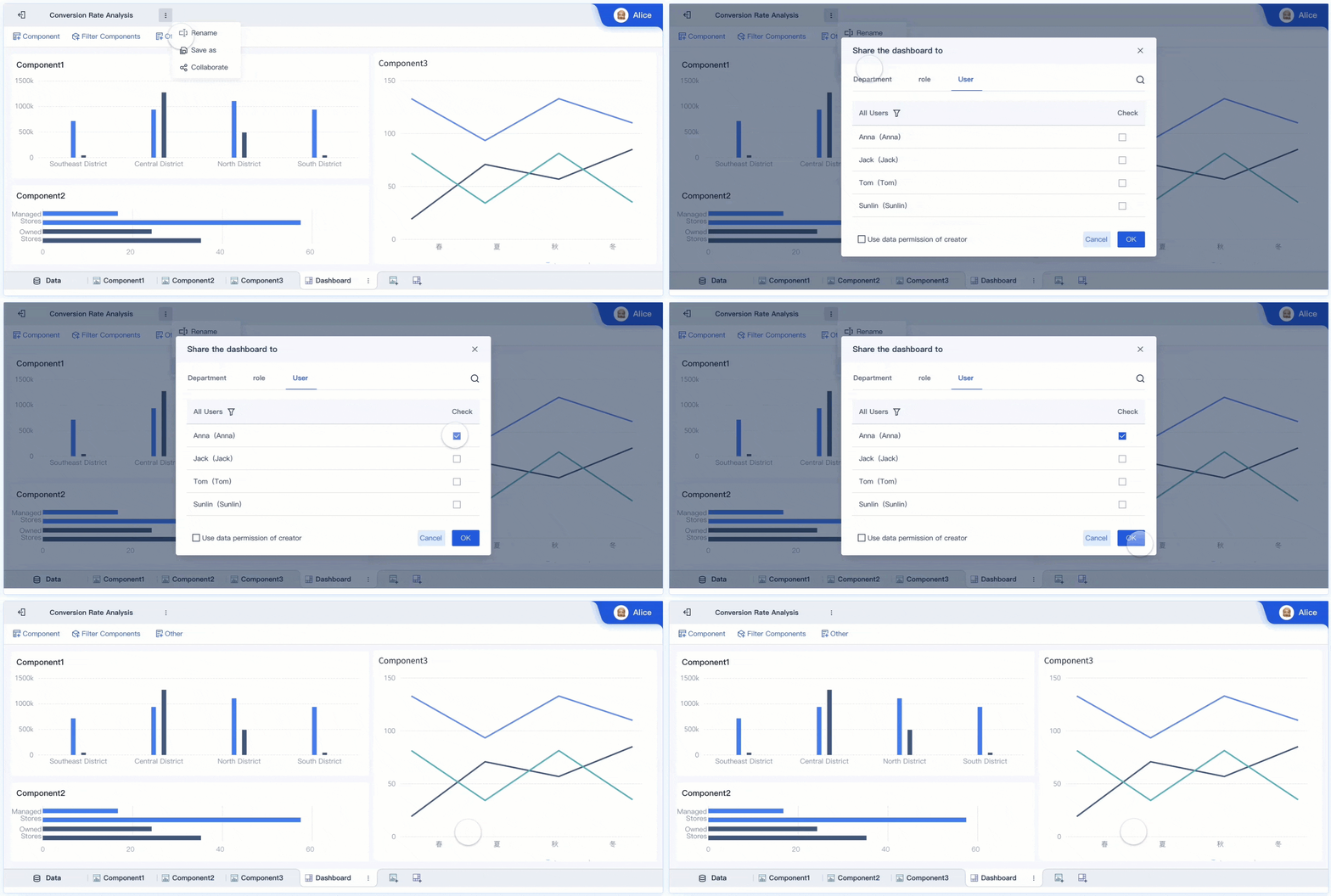
A Practical Framework for Managing Product Data at Scale
Standardize the catalog structure
At scale, catalog quality requires a shared language.
That starts with standardized rules for:
- product naming conventions
- category definitions
- attribute names
- acceptable value sets
- unit formats
- parent-child logic
- product lifecycle statuses
For example, if one team uses “navy” and another uses “dark blue,” reporting by color family becomes unreliable. If one business unit uses free-text categories while another uses governed taxonomy codes, assortment analysis becomes inconsistent.
A strong standardization program reduces ambiguity across merchandising, operations, marketing, and analytics teams. It also makes multi-channel expansion easier because the base data model is already controlled.
Build validation and enrichment workflows
Catalog structure alone is not enough. Teams also need repeatable workflows that detect and correct issues before they spread.
Validation workflows should check for:
- missing required values
- invalid formats
- duplicate records
- broken parent-child relationships
- out-of-range values
- category mismatches
- incomplete variant sets
Enrichment workflows should add business context that improves search, filtering, conversion, and reporting. Examples include:
- normalized brand naming
- search keywords
- season tags
- material or fit attributes
- use-case labels
- collection mapping
- campaign eligibility tags
This is where operational process and analytics value start to connect. Better enrichment not only improves customer experience; it also supports more precise segmentation and KPI breakdowns in FineBI.
Establish change control and auditability
As catalogs grow, the problem is rarely just data creation. It is uncontrolled change.
A practical change control model should include:
- edit tracking
- approval workflows
- effective dates
- version history
- rollback capability
- exception logging
This makes updates traceable. If margin analysis suddenly looks wrong for a product group, teams can review whether category mapping changed, cost fields were updated incorrectly, or variants were merged improperly.
Auditability also supports compliance and faster troubleshooting. Instead of debating which file or team changed a record, teams can trace when the change happened, who approved it, and which downstream systems were affected.
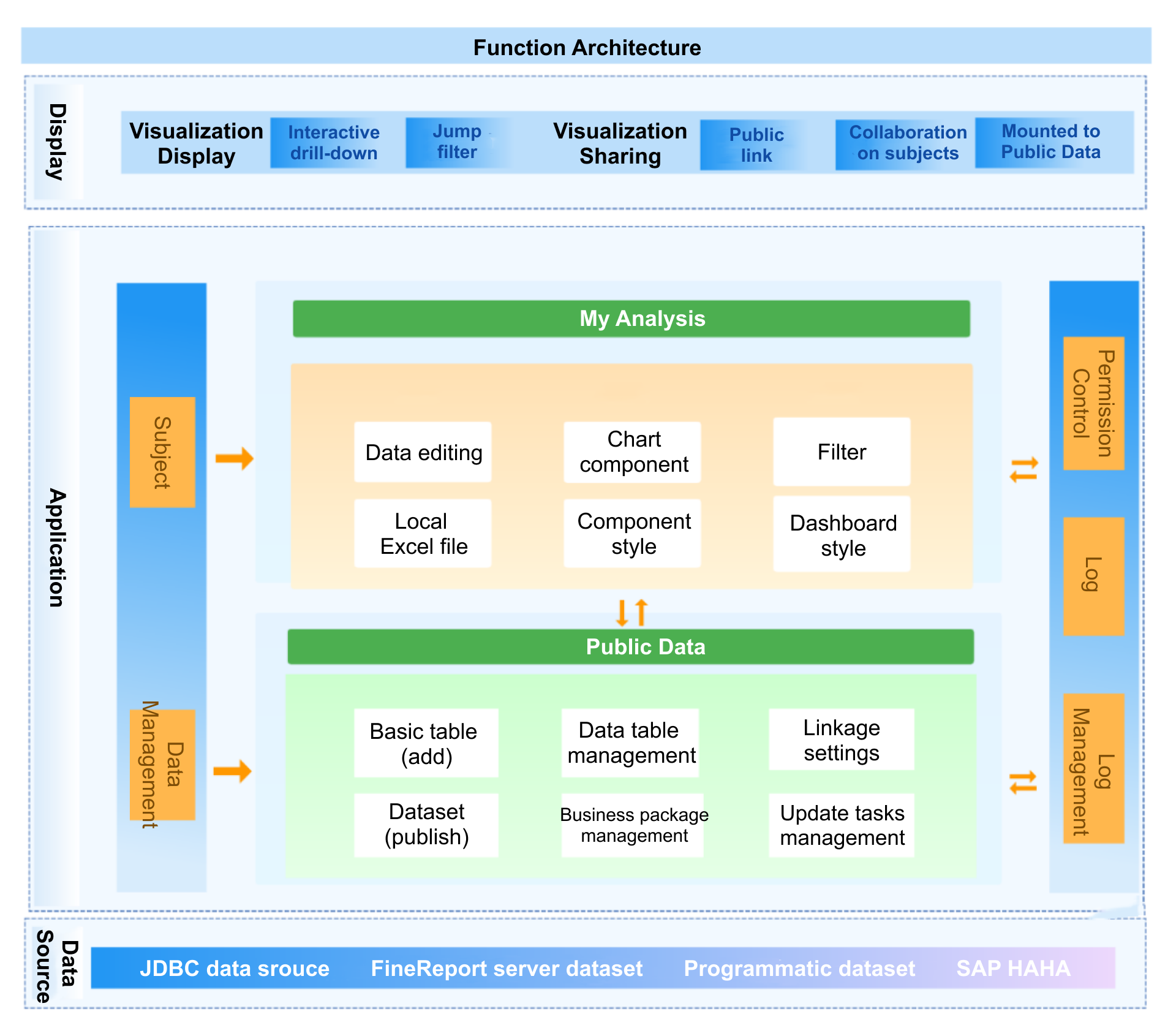
How Better Product Data Leads to Accurate KPIs
Connect catalog quality to reporting confidence
KPI accuracy depends on trusted source data. If the product catalog is broken, dashboards may still look polished, but the underlying business story is wrong.
Common examples include:
- Revenue attribution errors: duplicate SKUs or unstable product keys split sales across records.
- Inventory visibility issues: inconsistent variant mapping hides stock exposure.
- Margin distortion: incorrect cost or category mapping skews profitability analysis.
- Promotional reporting gaps: campaign labels are missing or applied inconsistently.
- Assortment blind spots: discontinued products remain active in reporting logic.
This is why business intelligence should not be separated from catalog governance. FineBI helps teams build trusted dashboards, metric models, and semantic assets on top of governed product data. When the product structure is clean, KPI reporting becomes far more reliable.
Define the metrics that signal data health
A clean catalog should be measured like any other business process. The following KPI framework is especially useful.
-
Catalog completeness rate: Percentage of products with all required fields populated.
Business value: Indicates operational readiness and listing quality.
AI use: Dora can retrieve this metric through chat, compare it by category or supplier, and include it in scheduled briefings. -
Duplicate record rate: Percentage of products flagged as potential duplicates.
Business value: Helps prevent fragmented reporting and listing confusion.
AI use: Dora can surface duplicate trends, highlight risky categories, and push exception summaries to owners. -
Attribute coverage rate: Share of products with key enrichment fields completed, such as size, material, or compatibility data.
Business value: Improves filtering, discoverability, and conversion analysis.
AI use: Dora can answer questions such as which categories have weak attribute coverage and generate chart-based answers. -
Taxonomy compliance rate: Percentage of products assigned to approved categories and subcategories.
Business value: Supports consistent navigation, assortment analysis, and campaign segmentation.
AI use: Dora can compare category compliance across channels and generate dashboard-style analysis views.
-
Error resolution time: Average time to close catalog issues after detection.
Business value: Reflects how fast the business can recover from data quality problems.
AI use: Dora can monitor backlog trends, alert stakeholders to aging issues, and prepare management follow-up summaries. -
Source-to-channel sync accuracy: Percentage of records published correctly from source systems to storefronts or marketplaces.
Business value: Reduces listing failures and cross-channel inconsistency.
AI use: Dora can summarize sync exception patterns and identify the highest-risk channel mappings.
These are leading indicators. They help teams detect problems before those problems distort revenue reports or customer-facing experiences.
Turn data quality into faster decisions
When product data is trusted, decision-making speeds up across the business.
Teams can act faster on:
- assortment expansion or cleanup
- pricing changes
- promotional targeting
- category optimization
- supplier correction requests
- channel listing fixes
Just as important, teams spend less time reconciling conflicting reports. Instead of arguing about why category revenue does not match another dashboard, they can focus on what to do next.
This is where Agentic BI becomes practical. FineBI provides the governed metric and semantic foundation. Dora adds the AI assistant layer so users can ask targeted business questions, retrieve trusted metrics, and receive timely summaries without waiting for manual analyst support.
How an AI Data Agent Handles This Scenario
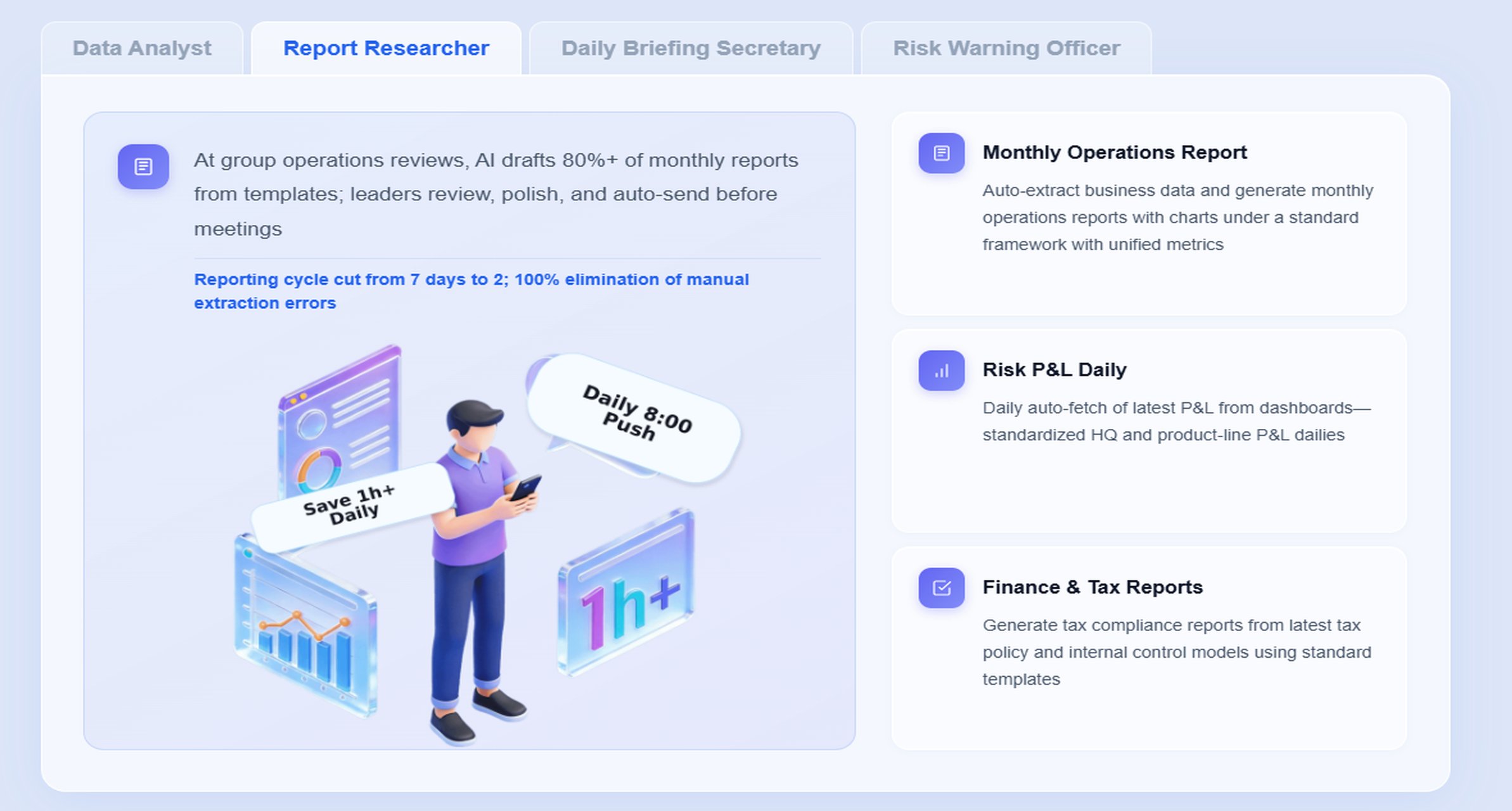
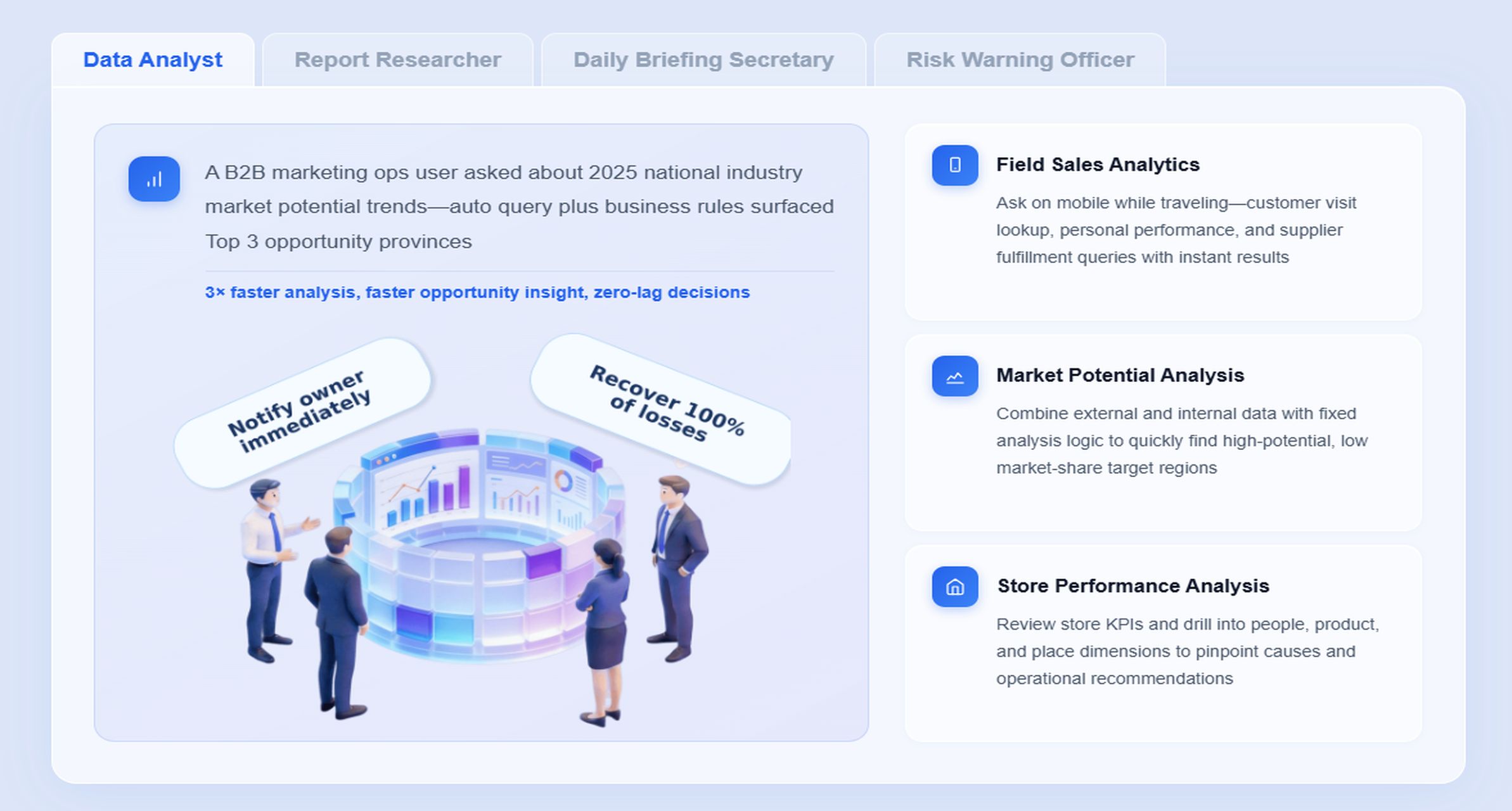
In e-commerce product data management, the most relevant Dora digital employees are often the Data Analyst digital employee, Daily Briefing Secretary, and Risk Alert Officer. Together, they help teams move from passive dashboard review to proactive monitoring and guided follow-up.
A merchandising manager, operations leader, or e-commerce analyst might ask:
“Show me catalog completeness by category, duplicate product trends in the last 30 days, and which missing attributes are most likely affecting conversion reporting.”
Here is how Dora handles the scenario through a governed AI workflow:
-
Retrieve trusted FineBI assets
Dora accesses the relevant FineBI dashboard, analysis subject, or metric model for product catalog health, channel status, and performance reporting. -
Understand KPI definitions and semantic rules
Dora uses the governed semantic layer to interpret terms such as completeness rate, duplicate product, active SKU, category owner, and conversion-impacting attribute. -
Generate chart-based answers in chat
Instead of only returning text, Dora can provide a chart-based answer or dashboard-style analysis view showing category comparison, issue trends, and exception lists. -
Detect exceptions or threshold breaches
If completeness falls below a defined threshold or duplicate rates spike in a supplier feed, Dora can trigger the Risk Alert Officer workflow. -
Push summaries and owner follow-up
Dora can send scheduled summaries to merchandising, operations, or marketplace teams, highlighting open issues, root-cause clues, and responsible owners. -
Support meeting preparation and action review
The Daily Briefing Secretary can prepare a weekly catalog health summary for management review, while the Data Analyst digital employee supports follow-up questions during the meeting.
This approach matters because Dora is not operating on ungoverned prompts alone. FineBI provides the trusted BI foundation: dashboards, metric definitions, governed permissions, and reusable semantic assets. Dora builds on top of that foundation to deliver natural-language data query, chart-based answers, scheduled briefings, anomaly alerts, and follow-up execution.
For enterprise teams, this is a far better fit than asking a raw prompt-only agent to interpret fragmented catalog exports. Skills-based execution makes the workflow more controllable and auditable. It also supports stronger enterprise governance through permissions, semantic rules, KPI definitions, and data quality controls.
Practical Dora use cases in this scenario include:
- a Data Analyst digital employee answering ad hoc questions about category-level data health
- a Risk Alert Officer monitoring spikes in duplicate records or sync failures
- a Daily Briefing Secretary pushing weekly summaries before merchandising and operations meetings
- a Report Researcher compiling structured catalog quality reports from FineBI dashboards and governed business rules
For executives, this makes the ROI more concrete: Dora is not an AI experiment. It is a landed digital employee for recurring data work such as product data health briefing, exception follow-up, KPI preparation, and cross-team reporting.
For IT teams, the value is also clear: instead of manually building every one-off analysis request, IT can focus on enterprise data connections, semantic layers, permission governance, data quality, and reusable agent Skills.
For business users, the benefit is lower friction: timely metrics, chat-based answers, exception pushes, and scheduled summaries without searching through multiple dashboards or waiting for analyst queues.
Common Challenges and How to Solve Them
Cross-channel inconsistency
Product data often diverges across marketplaces, ads, social commerce, and owned channels because each channel has different field requirements and update cycles.
To solve this:
- define a single master structure for core product attributes
- map channel-specific fields from governed source definitions
- monitor publish success and mapping exceptions
- review performance impacts when channels use different taxonomy logic
FineBI can unify cross-channel performance and exception views, while Dora can summarize where inconsistency is creating operational or reporting risk.
Rapid catalog growth and frequent changes
Seasonal launches, supplier feed updates, bundles, and discontinued items create constant pressure on product data quality.
To stay in control:
- standardize onboarding templates for new products
- automate validation before publishing
- apply lifecycle statuses consistently
- review high-change categories more frequently
- use alerts for spikes in update failures or missing attributes
A Risk Alert Officer workflow in Dora is especially useful here because it helps teams spot issue surges before they affect storefront quality or KPI trust.
Limited ownership and weak processes
Many product data issues are process failures, not only system failures. Merchandising, operations, marketing, and analytics may all rely on the same fields without clearly owning them.
A better model includes:
- named owners for key attributes and taxonomy areas
- approval rules for structural changes
- SLA-like expectations for issue resolution
- visible exception queues
- periodic quality reviews tied to KPI reporting dependencies
Once ownership is formalized, FineBI dashboards can track progress and backlog, while Dora can push reminders, summarize aging issues, and support management review with scheduled updates.
Getting Started With a Simple Implementation Plan
Assess the current state of your catalog
Start with a focused audit of:
- data sources
- field completeness
- duplicate risk
- taxonomy gaps
- variant structure quality
- cross-channel mapping logic
- reporting dependencies
This assessment should not stop at the catalog itself. It should also identify which KPIs depend on product data quality, including revenue attribution, stock visibility, sell-through, margin, and conversion analysis.
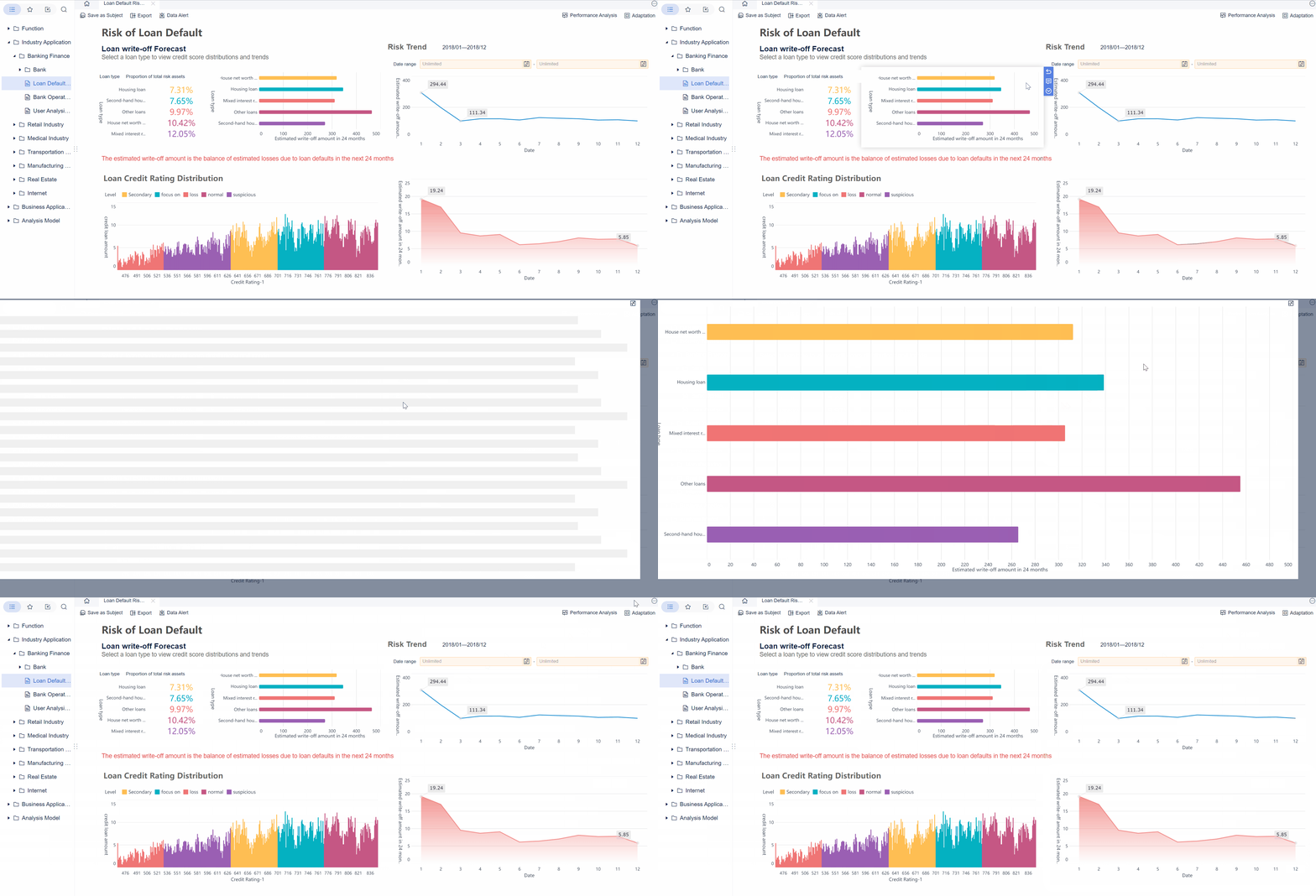
In FineBI, teams can build a baseline dashboard for catalog health and business impact. This creates a measurable starting point for improvement.
Prioritize high-impact fixes
Do not try to clean every field at once. Focus first on the data elements that affect:
- discoverability
- conversion
- channel compliance
- reporting trust
- margin visibility
- inventory accuracy
Typical priorities include:
- unique identifiers
- category mapping
- parent-child structure
- price and cost alignment
- core variant attributes
- active/discontinued status logic
Dora can support this stage by helping teams query where the biggest quality gaps intersect with business impact. For example, a manager could ask which categories have the lowest attribute coverage and the highest conversion decline, then receive a chart-based answer built from trusted FineBI assets.
Create a roadmap for continuous improvement
Product data management is not a one-time cleanup project. It needs a roadmap covering:
- governance setup
- system integration improvements
- semantic standardization
- training
- workflow automation
- periodic review cycles
A practical roadmap often includes:
- define KPI and taxonomy standards
- clean critical fields and mappings
- build validation workflows
- establish dashboards and ownership views in FineBI
- introduce Dora for recurring analysis, briefings, and alerts
- expand Skills gradually based on real business workflows
Actionable Best Practices
1. Standardize KPI definitions, synonyms, filters, and metric ownership
If “active SKU,” “sellable product,” or “catalog completeness” means different things to different teams, dashboards and AI outputs will conflict. Define terms once and govern them centrally.
This strengthens FineBI semantic assets and ensures Dora can answer questions using trusted business logic.
2. Build a semantic layer inside the BI workflow
Do not expect AI to compensate for weak data definitions. FineBI should hold the governed metrics, hierarchies, and reusable analysis logic that Dora references during chat-based analysis and digital employee workflows.
This is one of the most important reasons FineBI + Dora lands better in real enterprises than feature-only agent comparisons.
3. Treat data quality as part of the AI implementation
AI value depends on the quality of the underlying product data. If duplicate records, unstable mappings, or missing attributes are widespread, the right approach is not more prompting. It is stronger data governance, cleaner modeling, and better exception handling.
4. Start with high-value recurring workflows
Do not automate everything immediately. Begin with repeatable workflows such as:
- weekly catalog health briefing
- duplicate record alerting
- missing attribute summaries by category
- marketplace sync issue follow-up
- monthly KPI confidence review
These are ideal use cases for Dora’s Daily Briefing Secretary, Risk Alert Officer, and Report Researcher.
5. Preserve permission governance and use human review
AI outputs must respect the same access boundaries as FineBI dashboards and governed data models. Keep permissions aligned, use human review for AI-generated reports in the early phase, and expand Skills gradually as workflows stabilize.
FineBI + Dora Solution Pitch
Building this manually is complex. FineBI helps teams build trusted dashboards, metrics, and semantic assets. Dora turns those assets into an AI assistant that can answer questions in chat, generate dashboard-style analysis views, push scheduled summaries, monitor anomalies, and follow up with responsible owners.
For e-commerce product data management, this combination is especially practical. Product data quality touches many systems, many teams, and many KPIs. FineBI provides the governed analytics foundation needed to make catalog health visible and measurable. Dora adds the execution layer that helps people ask, analyze, generate, push, alert, and follow up.
FineBI + Dora is not only a BI upgrade; it is a practical fourth-generation Agentic BI path. FineBI provides governed metrics and visual analysis. Dora provides the AI assistant layer for scenario execution, with more controlled Skills, lower token waste, faster execution paths, and more stable workflows than prompt-only agents.
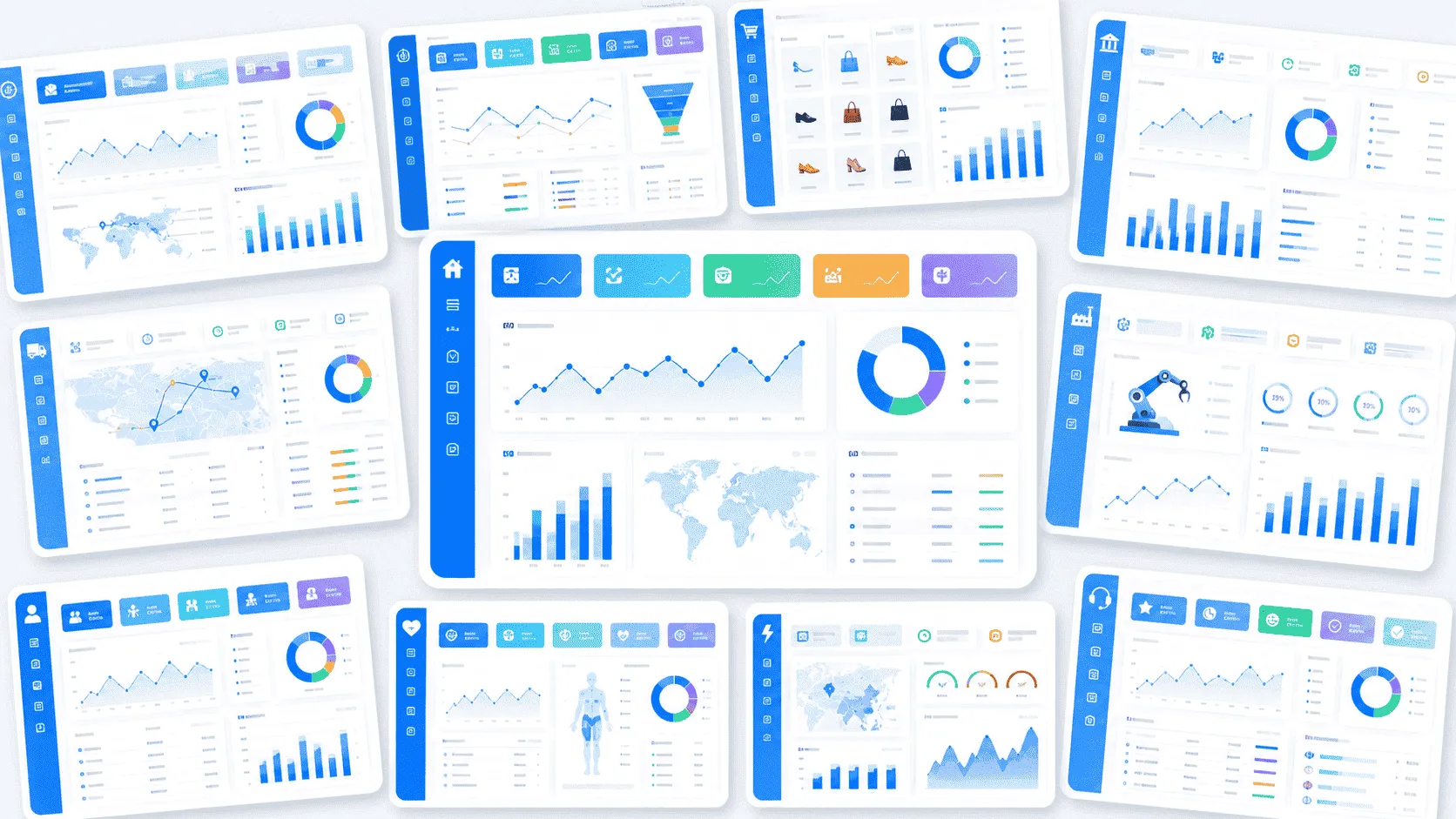
Get Ready-to-Use Dashboard Templates in Fine Gallery
The strongest Dora pitch is scenario + product + service: FineBI provides the trusted BI foundation, Dora provides the AI digital employee, and implementation service connects data, governance, semantic setup, Skills, and rollout.
For e-commerce leaders, that means cleaner catalogs, more accurate KPIs, faster issue detection, and lower reporting friction. For IT, it means a more governable AI path. For business teams, it means timely answers and useful follow-up instead of dashboard overload.
FAQs
It is the process of creating, maintaining, governing, and distributing product information across sales and reporting systems. It covers identifiers, attributes, categories, pricing, variants, and other fields needed for selling and analysis.