
Data lake solutions drive business intelligence, scalability, and digital transformation. Enterprises use these platforms for flexible storage, real-time processing, and advanced analytics. The market for data lakes will reach USD 25.0 billion in 2025, with 35% of companies deploying real-time analytics.
| Statistic Description | Value |
|---|---|
| Projected market size in 2025 | USD 25.0 billion |
| Expected percentage of enterprises deploying real-time analytics | 35% |
| Cloud-based deployment market share | 58.6% |
| Projected CAGR for the global data lake market | 21.3% |
If you want the best data lake solutions to transform your enterprise in 2026, you can try the following 7 data lake tools:
- FineDataLink
- AWS Lake Formation
- Microsoft Azure Data Lake Storage
- Google BigLake
- Databricks Lakehouse
- Snowflake Data Lake
- Informatica IDMC
You need a solution that supports business growth and enables fast, informed decisions. Modern data lake solutions offer flexible storage, improved decision-making, and support for real-time analysis.
Best Data Lake Solutions for 2026
Choosing the best data lake solutions for your enterprise in 2026 means looking at several important factors. You want a data lake platform that fits your existing ecosystem, keeps your data secure, scales with your needs, and supports automation. You also need strong metadata management, cost efficiency, and flexibility for hybrid or multi-cloud deployments. Here are the top seven data lake solutions you should consider:
1.FineDataLink by FanRuan
FineDataLink by FanRuan is a modern data lake platform designed for real-time data integration and transformation. You can synchronize data across multiple tables in real time, build ETL and ELT pipelines with a low-code interface, and connect to over 100 data sources. The platform supports database migration, backup, and real-time data warehouse construction.
Website: https://www.fanruan.com/en/blog/data-warehouse-solutions
- Real-Time Synchronization: You can update data across systems instantly, which is essential for timely decision-making.
- Low-Code Platform: You can create data pipelines with minimal coding, making integration accessible to more users.
- Support for Diverse Data Sources: You can connect to over 100 data sources, giving you a complete view of your business.
| Feature | Description |
|---|---|
| Real-time Data Transmission | Enables immediate data flow, crucial for timely decision-making in enterprises. |
| Non-intrusive Real-time Sync | Synchronizes data across multiple tables or entire databases without disrupting operations. |
| Flexible Task Scheduling | Allows for customized scheduling of tasks, enhancing operational efficiency. |
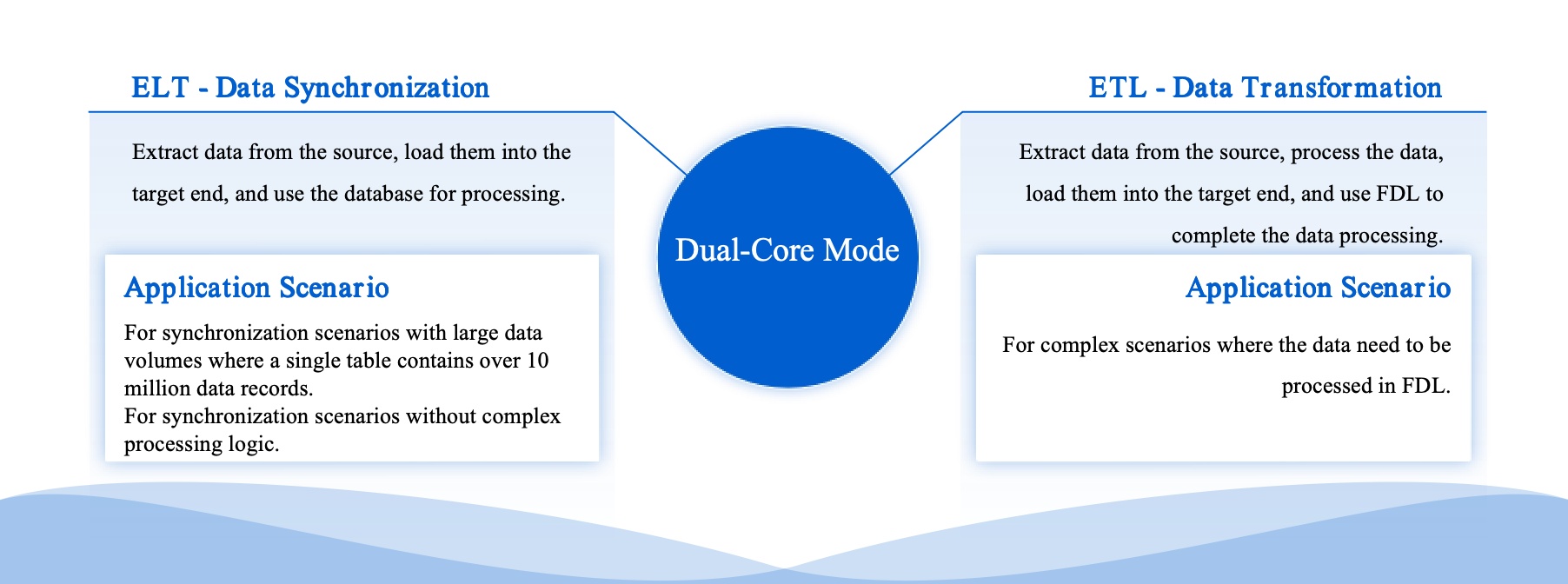
| Dual-core Engine | Supports both ELT and ETL processes, providing tailored solutions for various business needs. |
| Data Pipeline Module | Enhances data warehouse responsiveness and ensures data backup in real-time for disaster recovery. |
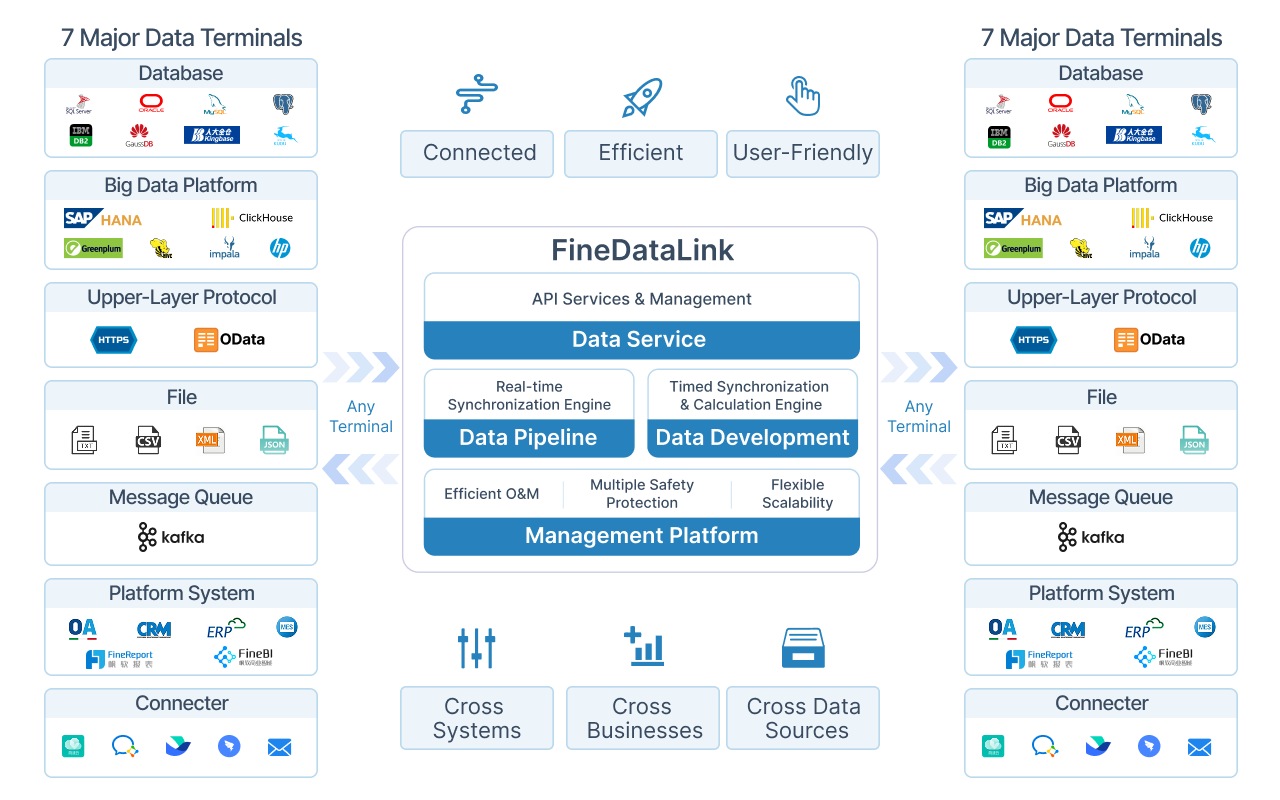
You should choose FineDataLink if you want a user-friendly, cost-effective cloud-based data lake solution that supports real-time integration, advanced ETL/ELT, and API connectivity. This platform fits enterprises that need to break down data silos, automate workflows, and manage data from multiple sources.
2.AWS Lake Formation
AWS Lake Formation stands out as a cloud-based data lake platform that helps you build secure, scalable data lakes quickly. You can automate data ingestion and classification, set fine-grained access controls, and connect with AWS analytics services. The platform gives you precise control over your data using Amazon S3 and AWS Glue Data Catalog.

Website: https://aws.amazon.com/lake-formation/
| Key Features | Unique Advantages |
|---|---|
| Automated data ingestion and classification | Seamless integration with the AWS ecosystem |
| Fine-grained access controls | Scalability for growing data volumes |
| Native integration with AWS analytics services | Enhanced data security and access control |
| Unique permissions model for data management | Precise control over data within Amazon S3 and AWS Glue Data Catalog |
You can use AWS Lake Formation to build data lakes quickly, simplify security management, and provide self-service access to data. For example:
| Use Case | Description |
|---|---|
| Build data lakes quickly | Simplifies deployment of ingestion workflows and enhances data quality through machine learning. |
| Simplify security management | Centralizes security policies and provides tag-based access control for data governance. |
| Provide self-service access to data | Allows users to search and manage data access through a centralized Data Catalog with custom attributes. |
This solution works best for enterprises already using AWS services and those needing a secure, scalable cloud-based data lake.
3.Microsoft Azure Data Lake Storage
Microsoft Azure Data Lake Storage is a powerful cloud-based data lake platform that integrates with the Azure ecosystem. You can connect it with Azure Synapse Analytics, Azure Databricks, and Power BI, which helps you break down data silos. The hierarchical namespace organizes files and folders, making analytics faster and more efficient.

Website:https://docs.azure.cn/en-us/hdinsight/overview-data-lake-storage-gen2
| Feature | Description |
|---|---|
| Integration with Azure Ecosystem | Seamless connection with services like Azure Synapse Analytics, Azure Databricks, and Power BI, eliminating data silos. |
| Hierarchical Namespace | Organizes files and folders in a true hierarchy, enhancing performance for analytics workloads. |
| Massive Scalability | Capable of handling exabyte-scale data with no practical limits on file size or number of objects. |
| Multiple Access Protocols | Data accessible through both blob storage APIs and file system APIs, providing flexibility for applications. |
You should choose Azure Data Lake Storage if you need a cloud-based data lake that scales to massive data volumes and integrates with Microsoft tools.
4.Google BigLake
Google BigLake is a modern cloud-based data lake platform that unifies data lakes and warehouses. You can manage all your data in one place, whether it sits in Google Cloud Storage, Amazon S3, or Azure Data Lake Storage Gen2. BigLake gives you fine-grained security at the table, row, or column level.

Website: https://cloud.google.com/biglake
| Feature | Description |
|---|---|
| Unification of Data Lakes and Warehouses | BigLake allows for the integration of data lakes and warehouses, enabling a seamless data management experience. |
| Fine-Grained Security | Provides detailed security controls at the table, row, or column level, enhancing data protection. |
| Multi-Cloud Support | Enables the creation of BigLake tables on various cloud platforms like GCS, Amazon S3, and ADLS Gen 2. |
| Interoperability | Supports various query engines, allowing users to access data without needing to move it. |
| Analytics Hub Support | Facilitates sharing of BigLake tables with external partners while maintaining data integrity. |
| Performance Acceleration | Queries for GCS BigLake tables can be accelerated using BigQuery infrastructure. |
You will find Google BigLake ideal if you need interoperability with engines like Spark, Trino, and Flink, want to avoid vendor lock-in, or manage complex data lifecycles in industries like finance or pharmaceuticals.
- Interoperability Requirement: Use BigLake when you need compatibility with various data processing engines.
- Vendor Lock-in Concerns: Choose BigLake if you want open formats for future migration.
- Financial Services Use Case: Leverage BigLake for analytics and open table formats.
- Pharmaceutical Company Use Case: Manage data lifecycle with external engines and BigQuery.
5.Databricks Lakehouse
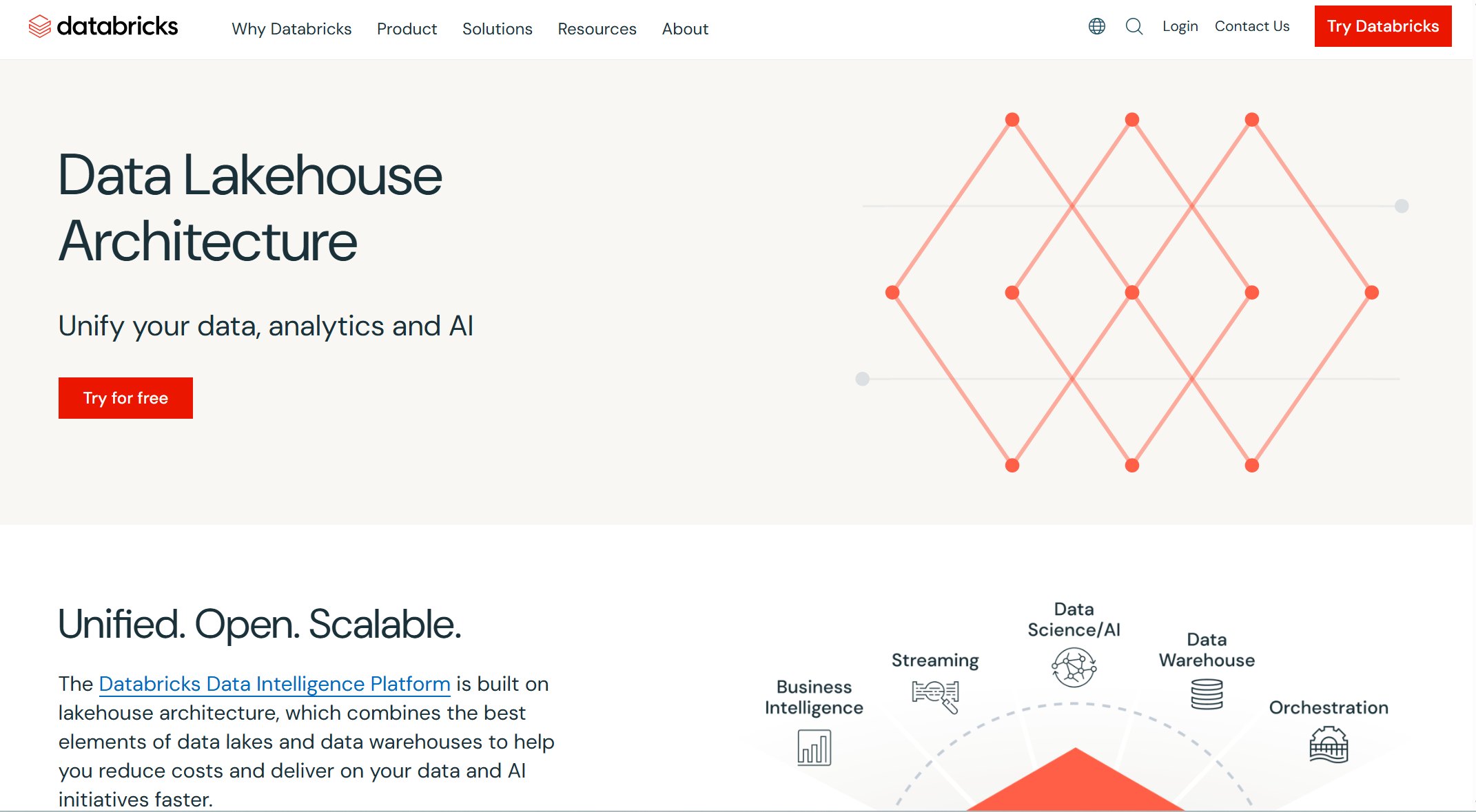
Databricks Lakehouse combines the flexibility of a data lake with the structure of a data warehouse. You can store both raw and processed data in one environment. This hybrid approach lets you handle structured and unstructured data, supporting advanced analytics and real-time workloads.
Databricks Lakehouse supports ACID transactions, schema-on-write, and schema-on-read. You can power business intelligence, real-time analytics, and machine learning on a single platform. The platform also provides built-in governance and data quality tools.
Website: https://www.databricks.com/product/data-lakehouse
| Benefit Description |
|---|
| Store and work with all types of data (structured, semi-structured, and unstructured) in one place |
| Power business intelligence, real-time analytics, and data engineering workloads on a single platform |
| Run AI and ML workloads natively, without duplicating or exporting datasets |
| Maintain control with built-in governance, access management, and data quality tools |
| Supports live data and real-time use cases, enabling teams to query and transform data instantly |
You should consider Databricks Lakehouse if you want a single source of truth, need to avoid isolated systems, and require scalable storage and processing for all your analytics needs.
6.Snowflake Data Lake
Snowflake Data Lake is a cloud-based data lake platform known for its performance and cost efficiency. You can optimize warehouses, tune queries, and manage storage intelligently to reduce costs. Snowflake supports near-infinite concurrent queries and handles diverse data formats like JSON, AVRO, and XML.

Website: https://www.snowflake.com/en/product/data-engineering/data-lake/
| Strategy Type | Description | Cost Impact |
|---|---|---|
| Warehouse Optimization | Right-sizing and auto-suspend configurations to eliminate idle costs. | 25-75% cost reductions |
| Query Performance Tuning | Using materialized views and caching to reduce repeated processing costs. | 30-60% cost reductions |
| Intelligent Storage Management | Implementing data lifecycle policies for efficient storage use. | Significant long-term savings |
| Monitoring and Analytics | Utilizing resource monitors and usage analytics for proactive cost management. | Improved cost visibility |
| Benefit Description | Type of Enterprise Benefiting Most |
|---|---|
| Unified Data Infrastructure on a single platform | Enterprises with diverse data workloads |
| Integrated data pipeline for processing data from any location | Companies needing real-time data processing |
| Near-infinite Concurrent Queries without performance compromise | Organizations with high query demands |
| Ensured Data Governance and Security | Enterprises in regulated industries |
| Low-cost storage with multiple consumption mechanisms | Startups and small businesses looking to minimize costs |
| Batch Mode Analytics with automatic file registration | Data-driven enterprises requiring regular updates |
| Ease of handling semi-structured data types (JSON, AVRO, XML, etc.) | Businesses dealing with varied data formats |
You should use Snowflake Data Lake if you want a cloud-based data lake that delivers high performance, strong governance, and cost savings for both large and small organizations.
7.Informatica IDMC
Informatica Intelligent Data Management Cloud (IDMC) is a comprehensive data lake platform for large enterprises with complex data needs. You can manage data integration, quality, governance, and security in one place. The platform supports workflow automation, self-service data access, and seamless cloud integration.

Website: https://www.informatica.com/platform.html
| Capability/Advantage | Description |
|---|---|
| Data Integration | Robust middleware for managing connections to various data sources and targets, supporting ETL processes. |
| Data Quality | Improved approaches to data quality and profiling to ensure high-quality data. |
| Data Governance | Features for data lineage, cataloging, and metadata to ensure compliance with governance policies. |
| Data Security and Compliance | Tools for data privacy compliance, including encryption and access controls. |
| Data Automation | Workflow automation and event-driven integration for efficient data pipeline management. |
| Self-Service Data Access | Empowers business users with self-service capabilities while maintaining governance. |
| Collaboration and Monitoring | Tools for sharing information and monitoring data flow across functions. |
| Cloud Integration | Seamless integration with cloud infrastructure and on-prem systems. |
| Scalability and Performance | Scalable and flexible to handle increasing data volume and complexity. |
| API Management | Tools for safely exposing data assets for easy consumption within the organization. |
You will benefit most from Informatica IDMC if you run a large enterprise with diverse data landscapes, strict compliance needs, and mature data governance practices. This cloud-based data lake platform works well for hybrid and multi-cloud environments and supports long-term strategic data management.
When you evaluate the best data lake solutions, you should:
- Evaluate Existing Ecosystem Compatibility
- Prioritize Data Lake Security
- Assess Scalability and Performance
- Find Automation in Data Onboarding and Transformation
- Check Metadata Management and Data Lineage
- Evaluate Cost Structures
- Look at Hybrid and Multi-Cloud Flexibility
By focusing on these criteria, you can select the right data lake platform to support your business growth and digital transformation.
What Is a Data Lake?

Data Lake Definition
You may wonder what a data lake is and how it fits into your data strategy. A data lake is a modern approach to data storage that lets you keep all your data in one place, no matter the format. You can store raw, structured, semi-structured, or unstructured data without needing to organize it first. Leading industry sources describe data lakes in the following way:
| Source | Definition |
|---|---|
| SAS | A data lake is a storage repository that can rapidly ingest large amounts of raw data in its native format, allowing business users quick access and enabling data scientists to apply analytics for insights. |
| AWS | A data lake is a centralized repository that allows you to store all your structured and unstructured data at any scale, enabling various types of analytics without needing to structure the data first. |
| Kopius Tech | A data lake is a storage system that allows you to store vast amounts of unstructured, semi-structured, and structured data at a low cost, serving as a large repository for raw data in its native format. |
You can see that a data lake gives you flexibility and scale for your data storage needs.
Key Benefits for Enterprises
When you use data lake solutions, you unlock several advantages for your business. Here are the main benefits:
- Scalability: You can expand your data storage as your business grows.
- Cost-Effectiveness: You save money by using low-cost storage options.
- Flexibility and Agility: You can store any type of data and adapt quickly to new requirements.
- Enhanced Data Analytics: You get a unified source for advanced analytics and insights.
- Improved Decision-Making: You access real-time data from many sources, helping you make better choices.
- Improved data agility lets you respond faster to changes.
- Enhanced analytics capabilities help you spot trends and predict outcomes.
- Data democratization gives more people access to data, supporting a data-driven culture.
- Reduced data silos mean you can analyze information from different departments together.
Tip: Centralizing your data storage in a data lake helps you break down barriers and foster collaboration.
Data Lake vs. Data Warehouse
You might ask how a data lake compares to a data warehouse. The table below highlights the main differences:
| Feature | Data Lake | Data Warehouse |
|---|---|---|
| Structure | Stores structured, semi-structured, and unstructured data without a pre-defined schema | Requires a pre-defined schema and only allows structured data |
| Scalability | Highly scalable, designed to handle massive volumes of data | Limited scalability due to structured nature |
| Cost | More cost-effective due to no need for data filtration and structuring | More expensive due to required data processing and organization |
Data lakes offer a cost-effective solution for storing any type of data. You do not need to filter or organize data before storing it, which lowers your expenses. Data warehouses require more processing and organization, which increases costs.
Solution Comparison

Feature Comparison Table
You want to compare data lake solutions before you choose one. The table below helps you see the main features side by side. You can check which platform fits your needs for data lake security, scalability, integration, and ease of use.
| Solution | Real-Time Sync | Low-Code Interface | ETL/ELT Support | Data Lake Security | API Connectivity | Scalability | Integration Options |
|---|---|---|---|---|---|---|---|
| AWS Lake Formation | ✔️ | ❌ | ✔️ | ✔️ | ✔️ | ✔️ | High |
| Azure Data Lake Storage | ✔️ | ❌ | ✔️ | ✔️ | ✔️ | ✔️ | High |
| Google BigLake | ✔️ | ❌ | ✔️ | ✔️ | ✔️ | ✔️ | High |
| Databricks Lakehouse | ✔️ | ❌ | ✔️ | ✔️ | ✔️ | ✔️ | High |
| Snowflake Data Lake | ✔️ | ❌ | ✔️ | ✔️ | ✔️ | ✔️ | High |
| FineDataLink | ✔️ | ✔️ | ✔️ | ✔️ | ✔️ | ✔️ | Very High |
| Informatica IDMC | ✔️ | ❌ | ✔️ | ✔️ | ✔️ | ✔️ | Very High |
Tip: You should always check data lake security features. Strong encryption, access controls, and audit logs protect your data from threats.
Use Case Comparison
You need to match data lake solutions to your business goals. Each platform works best for certain scenarios. You should focus on data lake security when you handle sensitive information.
- AWS Lake Formation: You use this for cloud-native environments. You get advanced data lake security and easy integration with AWS services.
- Azure Data Lake Storage: You choose this for Microsoft ecosystems. You benefit from enterprise-grade data lake security and compliance.
- Google BigLake: You select this for multi-cloud analytics. You get flexible data lake security and open formats.
- Databricks Lakehouse: You use this for unified analytics and machine learning. You rely on built-in data lake security and governance.
- Snowflake Data Lake: You pick this for global data sharing. You get robust data lake security and cross-cloud support.
- FineDataLink by FanRuan: You choose this for real-time integration and low-code deployment. You get visual tools and strong data lake security for fast decision-making.
- Informatica IDMC: You use this for complex enterprise needs. You benefit from advanced data lake security, automation, and hybrid cloud support.
Note: You should compare data lake vendors based on how well they protect your data. Data lake security is the key to safe and reliable analytics.
You need to select the right data lake solutions to help your business succeed in 2026. Focus on scalability, integration, security, cost, and enterprise fit when you compare options. Review your goals and see which platform matches your needs. Consider FineDataLink by FanRuan for real-time integration and easy deployment.
Request a demo or talk with vendors to find the best solution for your organization.
Frequently asked questions
A data lake stores raw data in many formats. You can keep structured, semi-structured, and unstructured data. Data lakes help you collect information from different sources. You can use data lakes for analytics, reporting, and business intelligence.