

Big data best practices are proven methods that help you manage, integrate, and analyze large volumes of data to drive informed decisions, improve processes, and boost business outcomes. If you want to master big data in 2026, you need strategies that deliver measurable results for enterprises.
| Evidence Type | Description | Impact on Business Value and Efficiency |
|---|---|---|
| Increase in Operational Efficiency | A company leveraging advanced analytics tools reported a 30% increase in operational efficiency. | Enhances productivity and reduces costs. |
| Project Success Rates | A business that defined clear data objectives saw a 50% increase in project success rates. | Improves project outcomes and ROI. |
| Efficiency from Regular Reviews | Companies that conduct regular data reviews achieve 35% higher efficiency in their operations. | Ensures alignment with business goals. |
| Employee Engagement and Productivity | A company that cultivated a data-driven culture reported a 15% increase in employee engagement and productivity. | Boosts morale and performance. |
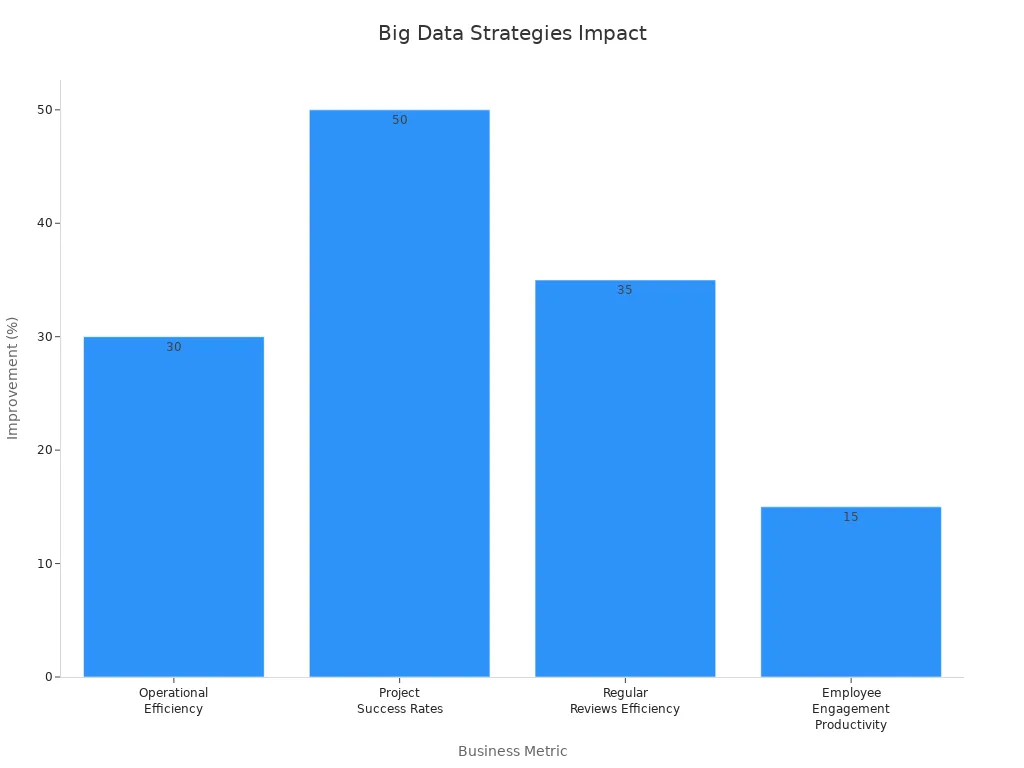
Modern data integration platforms like FineDataLink help you achieve these gains through real-time data synchronization and automation.
Big Data Best Practices For Enterprise Data Strategy
A unified enterprise data strategy helps you align every data project with business goals, ensuring your big data investments deliver measurable value and adapt to changing trends.
Align Data Initiatives With Business Goals
You need to connect your data projects to your company’s main objectives. This approach ensures your big data best practices support growth, customer satisfaction, and process optimization. When you align your enterprise data strategy with business goals, you create focus and accountability. The table below shows how this alignment benefits your organization:
| Benefit | Description |
|---|---|
| Strategic Focus | Ensures data analysis supports key goals like improving customer satisfaction and optimizing processes. |
| Increased Impact | Transforms data projects into integral parts of the company's strategy, directly impacting growth. |
| Resource Efficiency | Reduces wasted efforts by prioritizing projects that deliver measurable business value. |
Many leading enterprises have achieved success by connecting data initiatives to business outcomes. For example:
| Enterprise | Data Project | Business Objective | Outcome |
|---|---|---|---|
| Netflix | Recommendation algorithm | Enhance viewer engagement and retention | Increased streaming hours and customer loyalty |
| Airbnb | Location data for search | Boost bookings and satisfaction | Improved search rankings and personalized recommendations |
| UPS | ORION system for delivery | Streamline delivery and reduce costs | Reduced emissions and saved fuel since 2004 |
Develop A Scalable Data Roadmap
A scalable enterprise data strategy prepares you for future trends and growth. Start by assessing your current data systems and governance. Define clear business goals and use-cases. Establish strong data principles and policies. Select tools and platforms that support flexibility and scalability, such as FineDataLink.
Tip: Use a step-by-step approach to build your roadmap:
- Assess your current data environment.
- Define measurable business outcomes.
- Set governance policies.
- Choose scalable architecture and platforms.
- Communicate your roadmap for alignment.
- Implement using Agile methods.
- Evaluate and iterate regularly.
Platforms like FineDataLink help you manage big data efficiently, support real-time integration, and adapt to new trends. This approach ensures your enterprise data strategy remains future-proof and delivers ongoing business value.
Big Data Best Practices For Data Management & Quality
Strong data governance and data quality management help you break down silos, automate processes, and ensure your data drives real business value.
Data Governance And Standardization
You need a solid data governance framework to manage your big data. This framework should include people, strategy, processes, policies, and standards. Data governance professionals and data stewards play a key role. They set rules and monitor compliance. You should measure performance and track improvements using business-impact metrics. These include compliance scores, ROI, and governance maturity assessments. When you focus on continuous improvement, you reduce time-to-insight and boost business value.
Tip: Use clear data standards and rules, such as ISO standards, to guide your data habits and ensure regulatory adherence.
A robust data governance program delivers many benefits:
- Improved data quality and trust
- Better decision-making
- Enhanced operational efficiency
- Increased accountability
- Accelerated analytics outcomes
Ensure Data Accuracy And Consistency
Data quality management is essential for big data success. You must verify that your data is accurate, consistent, and complete. Regular data audits help you compare your data to benchmarks and spot weaknesses in your processes. Data accuracy means your data reflects real-world values. You achieve this by correcting errors, enforcing validation rules, and following clear policies for data collection and usage.
Key steps for data quality management:
- Conduct regular audits
- Identify and fix inconsistencies
- Enforce validation and ownership policies
These steps help you lower risk, improve customer experience, and boost ROI.
Real-Time Integration With FineDataLink
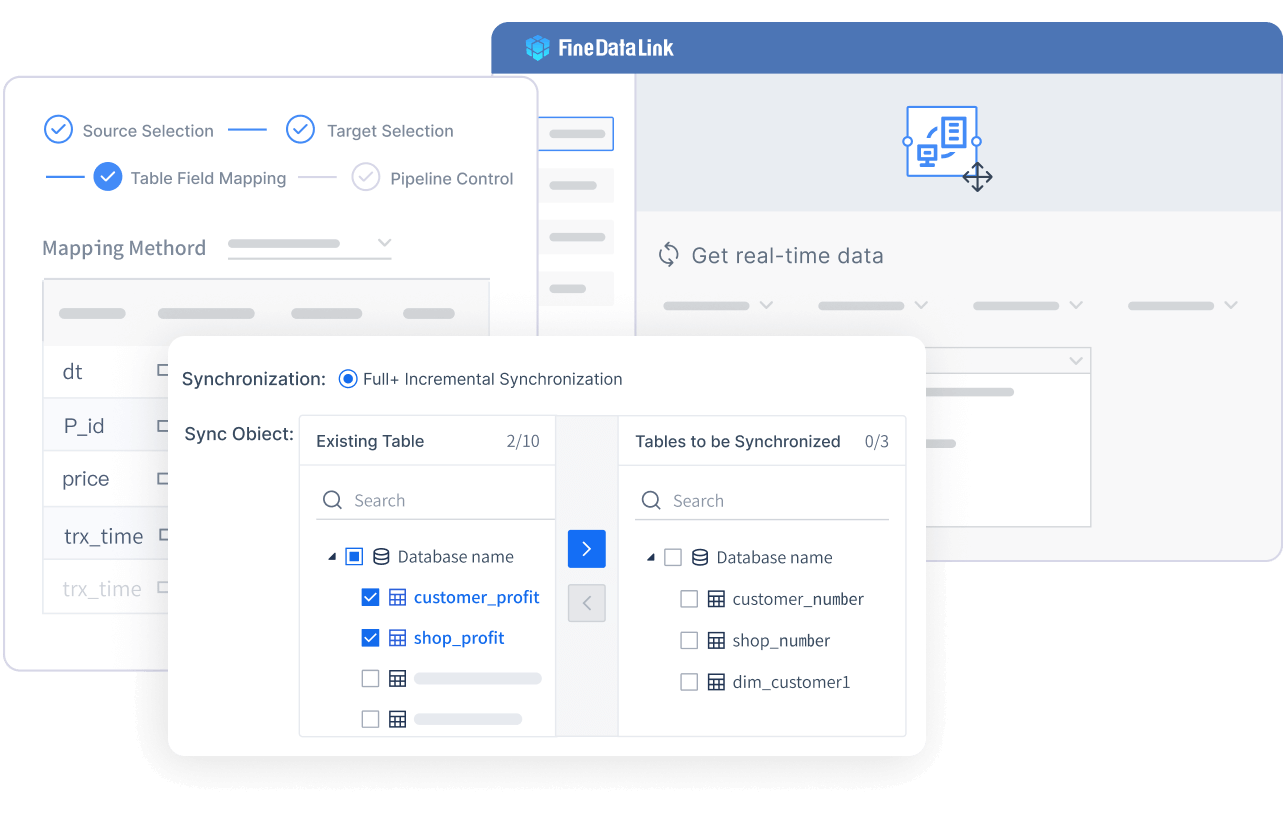
Automated ETL and ELT processes are vital for modern data management. FineDataLink helps you solve data silos and supports real-time data integration across systems. You can synchronize data in milliseconds, automate data pipelines, and connect over 100 data sources. For example, Domino’s Pizza used ETL to create a single source of truth, which improved data quality and business performance.

BOE, a global leader in IoT and displays, used FineDataLink to unify data, standardize metrics, and build a data warehouse. This led to a 5% reduction in inventory costs and a 50% increase in operational efficiency. Real-time integration and strong data quality management drive measurable results for enterprises.

Big Data Best Practices For Infrastructure & Technology

To master big data, you need infrastructure that scales, adapts, and delivers performance. Use cloud, hybrid, and low-code solutions to streamline integration, control costs, and support future growth.
Scalable Cloud And Hybrid Solutions
You must build infrastructure that grows with your data. Modern big data best practices recommend using cloud-based systems and hybrid environments for flexibility and resilience. Many organizations now choose multi-cloud and hybrid cloud strategies. These approaches let you combine public and private cloud, giving you better optimization, risk management, and compliance.
- Data-as-a-Service models offer on-demand access to datasets, making your infrastructure more cost-effective and scalable.
- Multi-cloud strategies help you avoid vendor lock-in and improve security.
- Hybrid cloud lets you keep sensitive data private while using public cloud for peak workloads.
A recent Gartner report shows that by 2027, 90% of organizations will use hybrid-first strategies. This shift supports advanced technologies and deployment flexibility.
Low-Code Integration With FineDataLink
You can simplify big data integration with low-code platforms like FineDataLink. The drag-and-drop interface allows you to connect data sources quickly. FineDataLink automates data synchronization and ensures data consistency, so your BI reports always reflect the latest information.
- Integrate data from many sources without complex coding.
- Automate data transformation for accurate analysis.
- Keep your infrastructure agile and easy to manage.
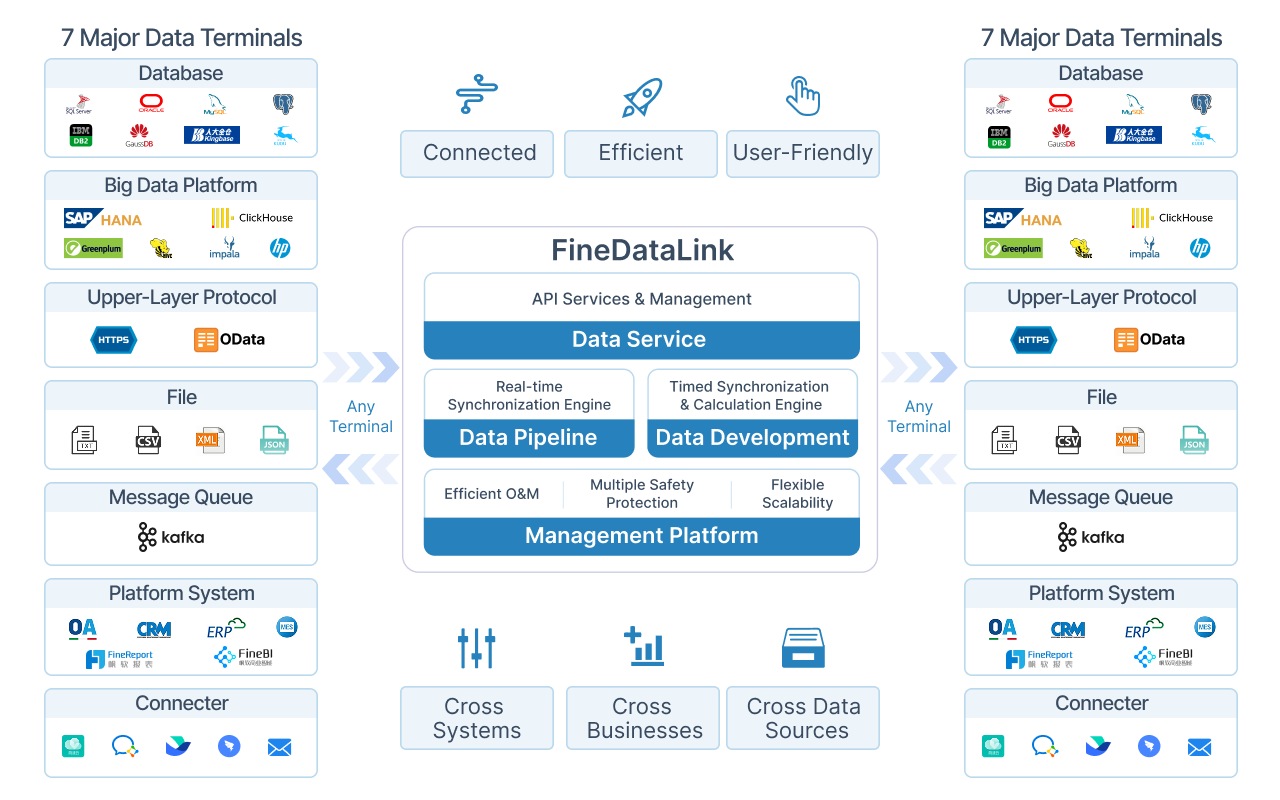
Low-code tools help you avoid overcomplicated architecture and make scaling your big data infrastructure easier.
Optimize Cost And Performance
You need to balance cost and performance as your infrastructure grows. Cloud services reduce upfront investments and make budgeting easier. Hybrid strategies let you keep baseline workloads on private infrastructure and use public cloud for spikes, optimizing expenses.
- Public cloud costs can rise quickly at scale.
- Private cloud needs more capital but can save money long-term.
- Hybrid solutions offer the best of both worlds.
Plan for growth. Make sure your infrastructure can handle rising data volumes and new demands.
Evaluate storage methods and use automation to keep your big data infrastructure efficient. Switch databases or summarize high-volume data to control costs and maintain performance.
Big Data Best Practices For Security & Compliance
You must protect your big data assets with strong security measures, comply with regulations, and monitor threats continuously to ensure confidentiality, integrity, and business trust.
Advanced Data Security Protocols
You need to secure your big data environment at every stage. Modern security measures use machine learning algorithms to analyze network traffic and detect threats in real time. These protocols help you identify unusual behaviors and respond quickly. You should integrate security features into your data architecture, from data ingestion to analytics. This approach protects confidentiality and supports data-driven decision-making. Strong data governance policies set the foundation for effective security.
Regulatory And Privacy Compliance
You face strict regulations when managing big data. Privacy laws like GDPR and HIPAA require you to protect personal information and follow data privacy standards. Failing to comply can lead to legal penalties and damage your reputation. The table below highlights common compliance challenges:
| Challenge | Description |
|---|---|
| Exposure to Privacy Breaches | Organizations managing big data are prime targets for cybercriminals, leading to various cyberattacks that can result in unauthorized access to personal information, financial losses, and reputational damage. |
| Non-Adherence to Data Privacy Standards | With numerous data protection regulations like GDPR and HIPAA, failing to comply can result in legal violations, hefty fines, and jeopardized individual privacy. Organizations must ensure they meet these standards to avoid consequences. |
You must build compliance into your data architecture and security measures to protect user privacy and meet international requirements.
Continuous Monitoring And Response
You should monitor your big data systems at all times. Regular audits and reviews help you evaluate security measures and spot weaknesses. Automating processes reduces human error and improves efficiency. Training and awareness programs teach your team to recognize threats and follow best practices. These steps maintain the integrity of your data and ensure rapid response to incidents.
Tip: Schedule frequent security reviews and automate alerts to catch threats early.
You create a secure environment for big data by combining advanced protocols, compliance, and continuous monitoring.
Big Data Best Practices For Big Data Analytics & Operations

To master big data analytics and operations, you must build a data-literate workforce, leverage real-time analytics, and measure business impact with clear metrics. These steps drive business intelligence, operational efficiency, and innovation.
Data Literacy And Workforce Training
You need a workforce that understands big data analytics and can use business intelligence tools confidently. Training programs like those from LinkedIn Learning, the Data Literacy Academy, and Kubicle help your team develop essential skills. These programs focus on practical data use, building a data-driven mindset, and improving communication. Over 75% of learners report better data analysis and communication abilities after training. When you invest in workforce training, you accelerate ROI, empower teams to turn raw data into strategies, and prepare your organization for ai and ml adoption. Data literacy ensures your analytics capabilities reach their full potential and supports every data analytics effort.
Real-Time Analytics And Visualization
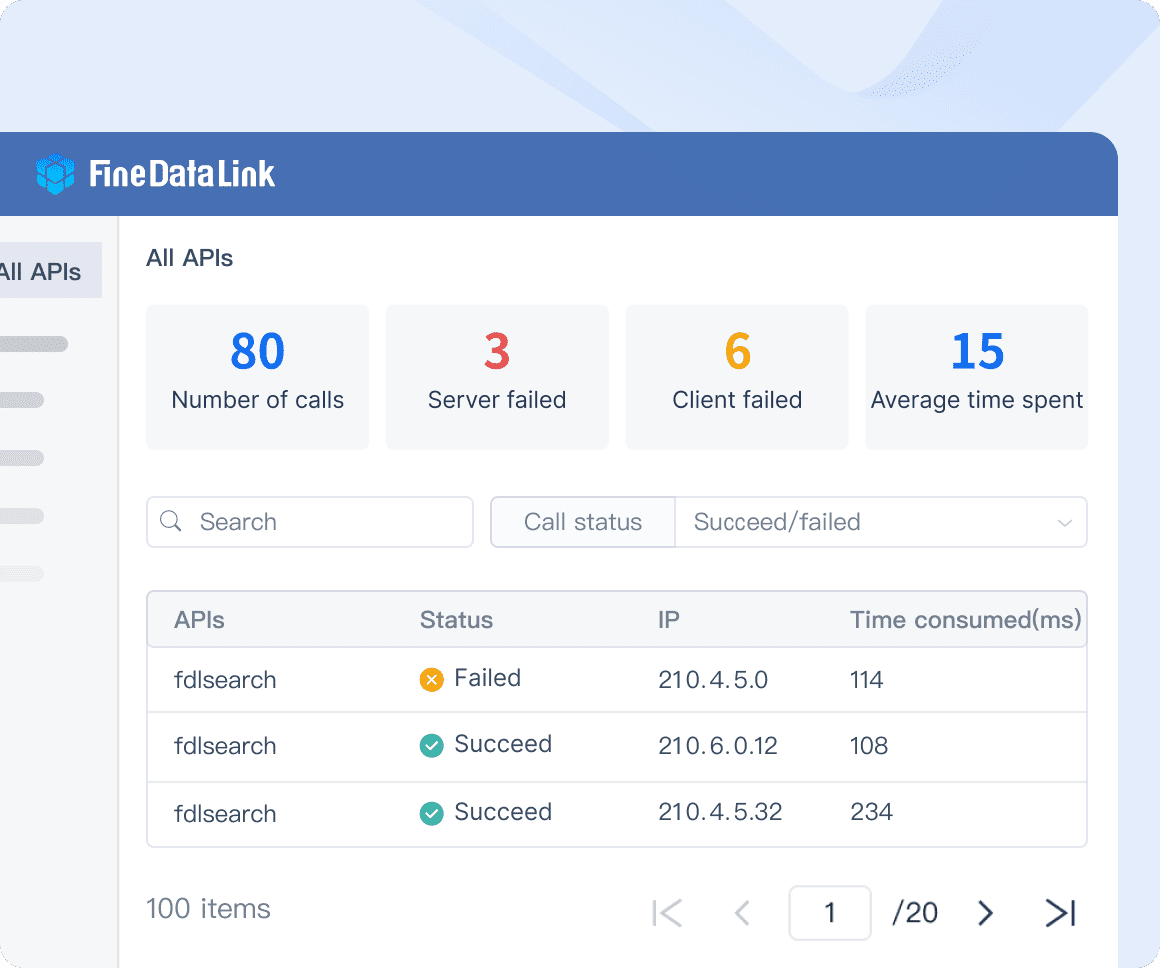
You gain a competitive edge when you use real-time big data analytics and visualization. FanRuan’s business intelligence solutions and FineDataLink enable you to connect over 100 data sources and generate insights three times faster. You can create custom dashboards with drag-and-drop tools, making self-service analytics accessible to everyone. Ai-driven analytics and ml models provide predictive insights and trend analysis for operational planning. Efficient reporting cuts report generation time by half, saving resources and boosting productivity. FanRuan’s business intelligence platform transforms analytics into a decision operating system, letting you ask questions in natural language and act on insights instantly.
Measure ROI And Business Impact
You must measure the value of your big data analytics initiatives. Use key performance indicators to track increased revenue, cost savings, improved efficiency, and risk reduction. The table below shows common KPIs:
| KPI Category | Description |
|---|---|
| Increased Revenue | Higher sales from improved forecasting and targeted marketing |
| Cost Savings | Reduced operational costs through efficiency gains |
| Improved Efficiency | Enhanced workflows and processes due to big data analytics |
| Risk Reduction | Lower risk and better compliance with data-driven decisions |
In manufacturing and smart factory settings, digital transformation with big data analytics increases revenue and operational effectiveness. Real-time monitoring, predictive maintenance, and ai-powered insights help you reduce downtime, improve equipment performance, and optimize production. These analytics capabilities drive business intelligence and support continuous improvement.
You can master big data in 2026 by following these seven strategies. Each step helps you overcome common challenges, such as data quality issues, high costs, and the need for skilled professionals:
| Challenge | Description |
|---|---|
| Data Quality Issues | Regular data cleansing is necessary to remove duplicates and correct inconsistencies. |
| Security Concerns | Protecting big data from breaches is critical, requiring encryption and multi-factor authentication. |
| High Costs | Implementing big data solutions can be expensive, impacting budgets significantly. |
| Need for Skilled Professionals | A lack of skilled data professionals hampers the ability to effectively manage big data initiatives. |
Platforms like FineDataLink give you user-friendly tools, real-time data, and flexible analytics. You gain the power to monitor, analyze, and act on your data quickly. Prioritize these best practices to drive long-term value and keep your business ahead. Start your journey now and turn your data into a true asset.
Continue Reading About Big Data Best Practices
10 Best Big Data Analytics Tools Every Business Should Know
The 10 Best Big Data Analytics Solutions for Enterprises
What Is a Big Data Pipeline and How Does It Work
Top 10 Big Data Tools You Should Know in 2025
What Are the Best Big Data Software Tools for Businesses in 2025?
Frequently asked questions
The 5 V's of big data -- velocity, volume, value, variety and veracity -- are the five main and innate characteristics of big data. Knowing the 5 V's lets data scientists derive more value from their data while also allowing their organizations to become more customer-centric.