If you want to find the best data lake companies for enterprise needs, you should look at FineDataLink, Databricks, AWS Lake Formation, Azure Data Lake, Google Cloud BigLake, Snowflake, IBM Data Lake, Dremio, and Teradata. FineDataLink stands out with real-time data integration and a low-code platform. Databricks leads in unified analytics and AI. AWS offers strong scalability. Azure connects well with Microsoft tools. Google Cloud BigLake brings multi-cloud flexibility. Snowflake focuses on cloud-native data sharing. IBM delivers enterprise-grade governance. Dremio makes self-service analytics easy. Teradata excels in high-performance analytics.
Choosing the right data lake company matters for you if you want to manage data integration, analytics, and digital transformation. When you compare your options, pay attention to technology, governance, performance, scalability, accessibility, security, and cost.
| Factor | Description |
|---|---|
| Technology | The underlying technology that supports data lake functionalities. |
| Governance | Policies and procedures for managing data integrity and compliance. |
| Performance | The efficiency and speed of data processing and retrieval. |
| Scalability | The ability to grow and manage increasing amounts of data. |
| Accessibility | How easily users can access and utilize the data stored in the lake. |
| Security | Measures in place to protect data from unauthorized access and breaches. |
| Cost | The financial implications of implementing and maintaining a data lake. |
What is Data Lake Companies and Why it Matters

When you look for the best data lake companies for enterprise needs, you want a solution that can handle all your data, no matter the source or format. The best data lake companies for enterprise needs help you break down data silos, support advanced analytics, and drive digital transformation. These companies offer data lake solutions that let you store, manage, and analyze massive amounts of information, giving your business a competitive edge.
Data Lake Definition
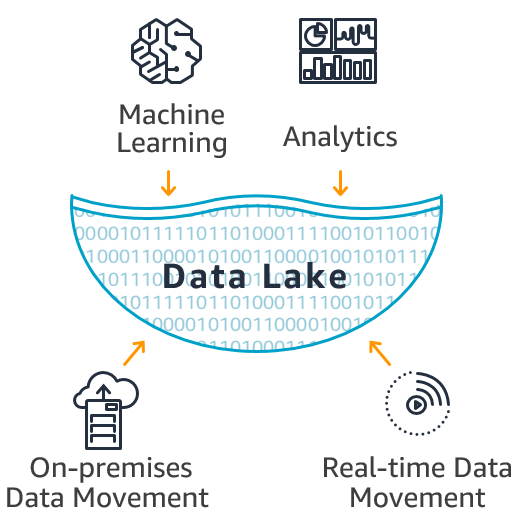
A data lake is a centralized repository that stores raw data in its original format. You can load structured, semi-structured, or unstructured data without worrying about a fixed schema. This flexibility sets a data lake apart from traditional data warehouses. Here’s a quick comparison:
| Feature | Data Lake | Data Warehouse |
|---|---|---|
| Data Type | Raw data in original format | Processed structured data |
| Scalability | Highly scalable, no fixed limitations | Less scalable, predefined schema |
| Data Structure | Unstructured, semi-structured, or structured | Structured with schema-on-write |
| User Accessibility | Flexible querying and analysis | Optimized for specific queries |
| Cost | Generally lower cost for storage | Higher cost due to processing and storage |
| Security | Varies, often less controlled | Greater control and consistency |
You can see that a data lake gives you more freedom and scalability, which is why so many enterprises choose it for their data lake analytics needs.
Enterprise Benefits of Data Lakes
When you use a data lake, you unlock several key benefits for your organization:
- Scalability: You can store and process huge volumes of data as your business grows.
- Flexibility: You can work with all types of data, from logs to images to sensor data.
- Cost-effectiveness: You save money by storing data before processing it.
- Advanced analytics: You can run machine learning and real-time analytics on diverse datasets.
Many companies, like Coca-Cola Andina and TTEC, have used data lake solutions to boost analytics productivity and improve customer experiences. You can also enhance data accessibility and make faster, smarter decisions.
Common Use Cases
Data lake solutions support a wide range of enterprise use cases. Here are some of the most common:
| Use Case | Description | Impact/Example |
|---|---|---|
| Real-Time Customer Insights | Analyzing customer interactions as they happen to personalize experiences. | Boosting conversion rates by up to 20% in e-commerce and financial services. |
| Predictive Maintenance in Manufacturing | Collecting sensor data to predict equipment failures before they occur. | Reducing downtime by 15-25% as reported by Siemens and GE. |
| Fraud Detection and Risk Management | Analyzing transaction data in real time to identify suspicious activity. | 30% reduction in fraud losses reported by banks after implementation. |
| Advanced Data Science and Machine Learning | Using diverse datasets to develop algorithms for improved outcomes. | Healthcare providers predicting disease outbreaks or treatment outcomes. |
| Enterprise Data Consolidation | Integrating data from multiple departments into a single repository for comprehensive analytics. | Companies like Amazon and Microsoft unifying data silos for better business intelligence. |
With these use cases, you can see why the best data lake companies for enterprise needs are so important. They help you turn raw data into valuable insights and drive your business forward.
Key Criteria for Data Lake Companies
When you search for the best data lake companies for enterprise needs, you want to know what sets them apart. This phrase means finding providers that deliver reliable data lake services, robust data lake architecture, and features that match your business goals. The best data lake companies for enterprise needs offer solutions that help you scale, secure, and manage your data efficiently.
You need to look at several criteria before choosing a provider. These criteria help you compare data lake services and decide which company fits your needs. Let’s break down the most important factors.
Scalability and Performance
Scalability is a must for any enterprise. You want a data lake that grows with your business and handles increasing data volumes. Performance matters too. Fast data ingestion and quick query response times keep your analytics running smoothly. Top data lake companies use elastic scaling and auto-scaling policies to adjust resources based on demand. They also track key performance indicators like data ingestion rates. DLBench+ is a popular benchmark for measuring performance and user experience.
| Benchmark Name | Description | Metrics Used |
|---|---|---|
| DLBench+ | Evaluates data lake implementations for textual and tabular data | Performance metrics, user experience |
- Elastic scaling lets you adjust resources as needed.
- Auto-scaling policies help manage resources efficiently.
- KPIs include data ingestion rates and query response times.
Security and Compliance
Security is critical for the best data lake companies for enterprise needs. You want data lake services that protect your information and meet compliance standards. Leading vendors use role-based access control, multi-factor authentication, and the principle of least privilege. They encrypt data at rest and in transit. Firewalls and intrusion detection systems monitor network traffic. Real-time monitoring helps detect threats. A strong data governance framework defines policies and responsibilities.
- Role-based access control restricts access.
- Multi-factor authentication adds security.
- Least privilege limits permissions.
- Encryption protects data.
- Firewalls and IDS monitor traffic.
- Real-time monitoring detects threats.
Integration and Connectivity
Integration is key for data lake architecture. You want data lake services that connect with your existing systems. Start with your business objectives and focus on impactful use cases. Choose tools that solve your specific problems. Data ingestion can be batch or real-time. Data pipeline orchestration tools like Actian DataConnect and KNIME help design workflows. Central management monitors integrations and handles exceptions. Flexible deployment lets you run solutions on-premises or in the cloud.
- Focus on business objectives.
- Use batch and real-time data ingestion.
- Orchestrate data pipelines visually.
- Monitor integrations and handle exceptions.
- Deploy on-premises or in the cloud.
Data Governance and Management
Good governance keeps your data lake organized. The best data lake companies for enterprise needs treat data as a strategic resource. Set policies for the entire data lifecycle. Involve business users in governance. Don’t forget master data management. Understand the value of your information. Avoid over-restricting data use. Start small and scale up. Align governance with your goals. Get executive buy-in and establish a framework. Think of your data as a product.
- Identify critical data elements.
- Set lifecycle policies.
- Involve business users.
- Manage master data.
- Value your information.
- Avoid over-restriction.
- Start small, then scale.
- Align with objectives.
- Get executive support.
- Establish a framework.
Cost and Pricing
Cost is always a factor when you compare data lake services. Pricing models vary by vendor. Some charge high base prices and support costs, while others offer more affordable options. You need to consider customization and support fees. Here’s a quick look at how leading vendors compare:
| Vendor | Base Pricing | Customization Cost | Support Cost |
|---|---|---|---|
| Alation | High (~$198K/year) | High | High |
| Collibra | High (~$170K - $500K+) | High | High |
| Informatica | High (~$129K - $500K) | High | High |
| OvalEdge | Low (~$15.6K - $90K/year) | Moderate | Moderate |
| Atlan | Moderate (~$6K/year) | Moderate | Moderate |
| Data.World | High (~$90K - $180K) | Moderate | Moderate |
| Microsoft Purview | Moderate | High | High |
| AWS Glue | Low | Moderate | Low |
| OpenMetadata | Low (~$1.2K - $6K/year) | High | Moderate |
| Apache Atlas | Low | High | High |
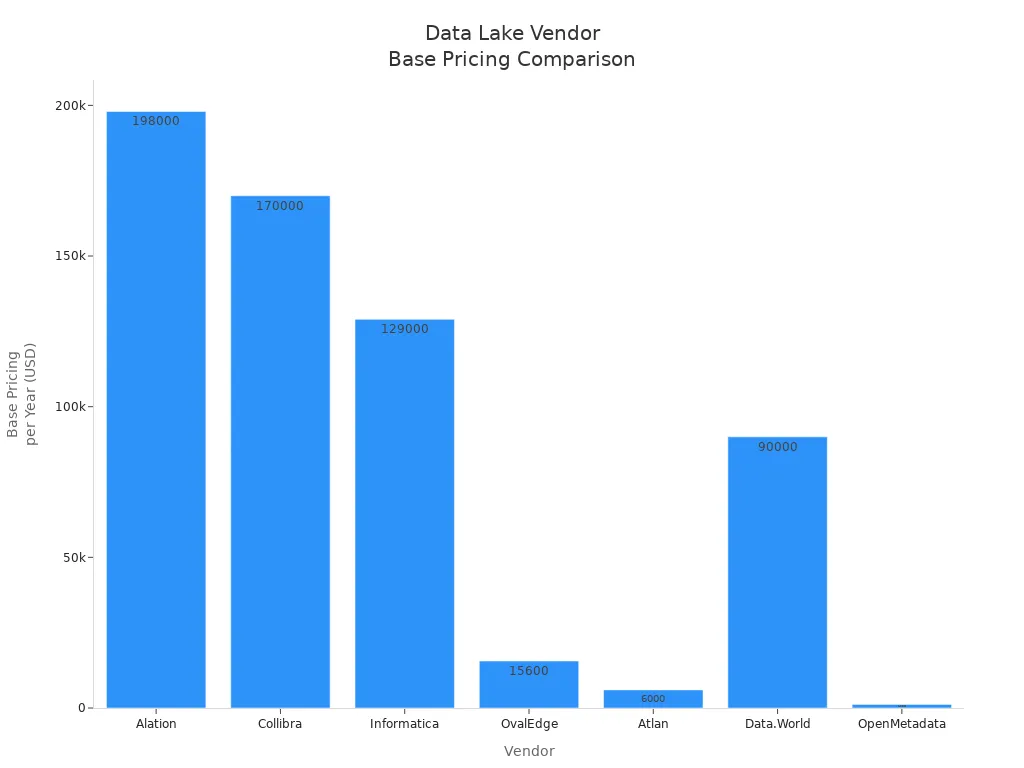
When you evaluate cost, look at your budget and the value each provider delivers. The best data lake companies for enterprise needs offer flexible pricing and support options to match your requirements.
Leading Data Lake Companies
When you look for the best data lake companies for enterprise needs, you want to know which providers lead the market and why. The best data lake companies for enterprise needs offer advanced technology, strong integration, and features that help you manage and analyze your data at scale. These companies deliver data lake solutions that support your digital transformation and business growth.
Let’s explore the top data lake companies and see what sets each apart.
FineDataLink

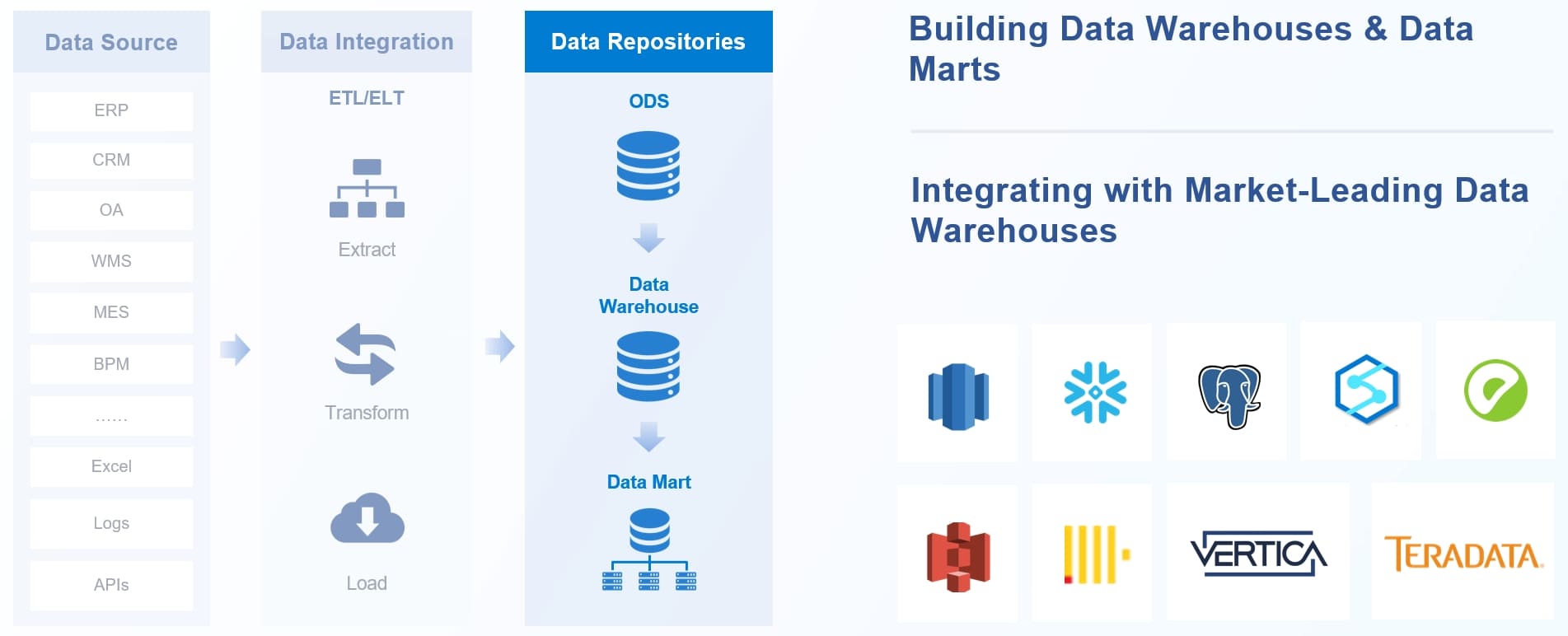
FineDataLink stands out among data lake companies with its low-code platform and real-time data integration. You can connect over 100 data sources and use drag-and-drop tools to build data pipelines quickly. FineDataLink supports both ETL and ELT, making it easy to manage data from multiple systems. If you need to break down data silos and enable real-time analytics, this platform gives you a cost-effective and user-friendly solution.

Databricks
Databricks leads with a unified architecture that combines data lakes and data warehouses. You get strong open-source foundations like Apache Spark and Delta Lake. Databricks also offers advanced analytics and machine learning tools. Its Unity Catalog helps you manage governance for both data and AI assets. You can run Databricks on AWS, Azure, or Google Cloud, so you avoid cloud lock-in.
| Strengths/Differentiators | Description |
|---|---|
| Unified Architecture | Combines data lakes and warehouses for seamless analytics. |
| Open-Source Foundation | Built on Apache Spark, Delta Lake, and MLflow. |
| Advanced Analytics | Deep integration for analytics and machine learning. |
| Governance Framework | Unity Catalog for data and AI governance. |
| Multi-Cloud Support | Native on AWS, Azure, and GCP. |
AWS Lake Formation
AWS Lake Formation helps you build secure and scalable data lakes within the AWS ecosystem. You get seamless integration with AWS IAM and other governance tools. The platform supports cross-account and cross-region data sharing, which is great for large organizations. Tag-based access control and audit logs make permission management and compliance easier.
| Feature | Description |
|---|---|
| Seamless Integration | Works with AWS IAM and governance tools. |
| Cross-Account/Region Sharing | Secure data sharing across accounts and regions. |
| Scalable Permission Management | Tag-based access control for dynamic permissions. |
| Data Exchange Integration | Access and share third-party data easily. |
| Enhanced Data Visibility | Improved search with AWS Glue catalog. |
| Audit Log Access | Simplifies auditing with Amazon CloudTrail. |
Azure Data Lake

Azure Data Lake is a top choice if your business already uses Microsoft products. You get seamless integration with your existing IT investments. The platform simplifies data management and governance. You can also leverage tools like Power BI and Azure Synapse Analytics for advanced analytics.
| Advantage | Description |
|---|---|
| Seamless Integration | Works well with Microsoft tools and systems. |
| Simplified Data Management | Reduces complexity for enterprises. |
| Enhanced Analytics | Uses Power BI and Synapse Analytics for large datasets. |
Google Cloud BigLake
Google Cloud BigLake gives you multi-cloud flexibility. You can manage data across Google Cloud Storage, AWS S3, and Azure Blob Storage without moving your data. The platform lets you query data using SQL and provides a unified view of structured and unstructured data.
| Feature | Description |
|---|---|
| Multi-cloud support | Manage data across Google, AWS, and Azure. |
| SQL-based querying | Query data on different platforms with SQL. |
| Unified data view | See all your data in one place, no matter the format. |
Snowflake

Snowflake’s cloud-native architecture makes data sharing and collaboration easy for large enterprises. You can create instant copies of data without extra storage costs. The platform enables secure, real-time sharing across departments and even with external partners. You do not need complex ETL pipelines for live data updates.
| Feature | Benefit |
|---|---|
| Zero-Copy Cloning | Instant data copies, no extra storage. |
| Secure Data Sharing | Real-time collaboration inside and outside your company. |
| Instant Data Sharing | Share data across regions or clouds. |
| Live Datasets Sharing | Share with users who do not have Snowflake accounts. |
| No ETL Required | Real-time updates without complex pipelines. |
IBM Data Lake
IBM Data Lake focuses on enterprise-grade governance and compliance. You can automatically discover and classify data, enforce protection rules, and manage access controls. The platform supports privacy and compliance standards like GDPR, HIPAA, and PCI DSS. You also get automated metadata management and data lineage tracking.
- Automatically discover and classify data.
- Enforce data protection and role-based access.
- Address privacy and compliance needs.
- Automate metadata and data lineage.
- Support for business glossary and major regulations.
Dremio
Dremio empowers you with self-service analytics. You can access data directly from various sources without intermediaries. The platform offers no-code tools, a robust SQL editor, and even text-to-SQL features. Data engineers can set access controls, and you get monitoring tools for compliance.
| Feature | Description |
|---|---|
| Direct Data Access | Connect to many sources directly. |
| Governance | Define access controls for users. |
| Intuitive Interface | No-code tools for easy data manipulation. |
| SQL Editor | Advanced queries for technical users. |
| Text-to-SQL | Natural language to SQL for accessibility. |
| Lakehouse Catalog | Tracks data asset history. |
| Git-like Branching | Experiment without affecting main data. |
| Monitoring Tools | Visibility into data usage and compliance. |
Teradata
Teradata delivers high-performance analytics for large-scale workloads. Its parallel processing and shared-nothing architecture let you scale easily. The platform optimizes queries, supports advanced analytics, and ensures reliability with built-in fault tolerance. You can handle petabyte-scale data warehouses and run complex analytics with high concurrency.
| Feature | Description |
|---|---|
| Parallel Processing | Processes large datasets quickly. |
| Shared-Nothing Architecture | High concurrency and scalability. |
| Data Partitioning | Optimizes storage and query performance. |
| Advanced Query Optimization | Efficient SQL execution. |
| Scalability | Supports petabyte-scale warehouses. |
| Reliability | Built-in redundancy and fault tolerance. |
| Advanced Analytics | Machine learning and predictive modeling. |
| Security and Compliance | Role-based access and encryption. |
Other Notable Data Lake Companies
You will also find notable data lake storage solutions that address specific enterprise needs. For example, Matillion and dbt Labs have received recognition from Gartner and Forrester for their innovation. Companies like Palantir, CData, Snowplow, SAS, Splunk, Tiger Analytics, ChainSys, DevsData, SoftKraft, DataToBiz, Lingaro, and Polestar Analytics offer specialized data lake solutions for operational decisions, real-time analytics, advanced analytics, observability, and more.
| Company Name | Enterprise Needs Addressed | Key Features |
|---|---|---|
| Foundry by Palantir | Operational decisions, AI support, real-time workflows | Ontology modeling, data integration, AI agents |
| Connectivity Solutions by CData | Seamless data access, real-time analytics | Real-time connectivity, support for 2,000+ apps |
| Behavioral Data Platform by Snowplow | High-fidelity data pipelines for AI and personalization | Real-time event-level data, Snowplow Signals |
| Analytics Software by SAS | Advanced analytics, ML, decision-making | Cloud-native platform, fraud detection |
| Observability Platform by Splunk | Monitoring and securing digital environments | Application performance monitoring, security analytics |
| AI Analytics Services by Tiger Analytics | Data-driven transformations, data lake implementations | Data engineering, advanced analytics |
| Smart Data Platform by ChainSys | Enterprise data management, ERP integration | No-code suite, data visualization |
| Data Lake Consulting by DevsData | Talent augmentation, custom builds | Staff augmentation, architecture design |
| Data Lake Solutions by SoftKraft | Cloud-based analytics and integration | ETL workflows, data quality tools |
| Data Lake Services by DataToBiz | AI and BI focus for business intelligence | AI model deployment, dashboarding |
| Data Lake Platform by Lingaro | Enterprise analytics and cloud services | Cloud migration, analytics hubs |
| Analytics Data Lake by Polestar Analytics | Real-time insights and ML | Real-time streaming, ML pipelines |
These notable data lake storage solutions help you address unique challenges and support your business goals.
Data Lake Companies Profiles and Strengths
When you search for the Best data lake companies for enterprise needs, you want to know what makes each data lake platform unique. This section gives you a clear overview of the top data lake companies, their technical strengths, and how they fit into different enterprise scenarios. You can use this guide to compare solutions and find the right match for your business.
FineDataLink: Enterprise integration and real-time data
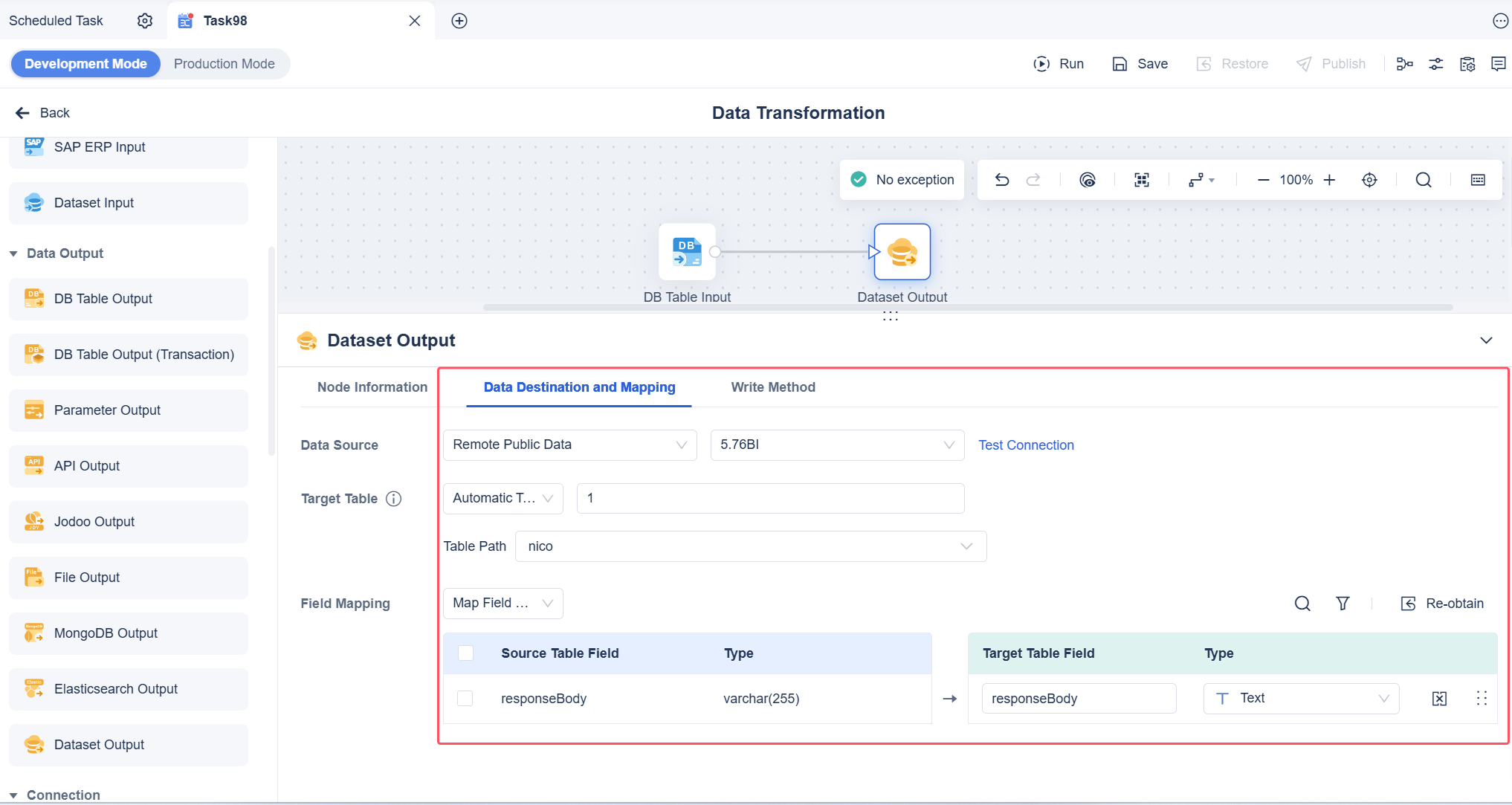
FineDataLink stands out among data lake companies for its focus on enterprise integration and real-time analytics. You get a low-code data lake platform that simplifies complex data integration tasks. The drag-and-drop interface lets you build data pipelines quickly, even if you do not have deep coding experience. FineDataLink supports over 100 data sources, so you can connect databases, SaaS applications, and cloud environments with ease.
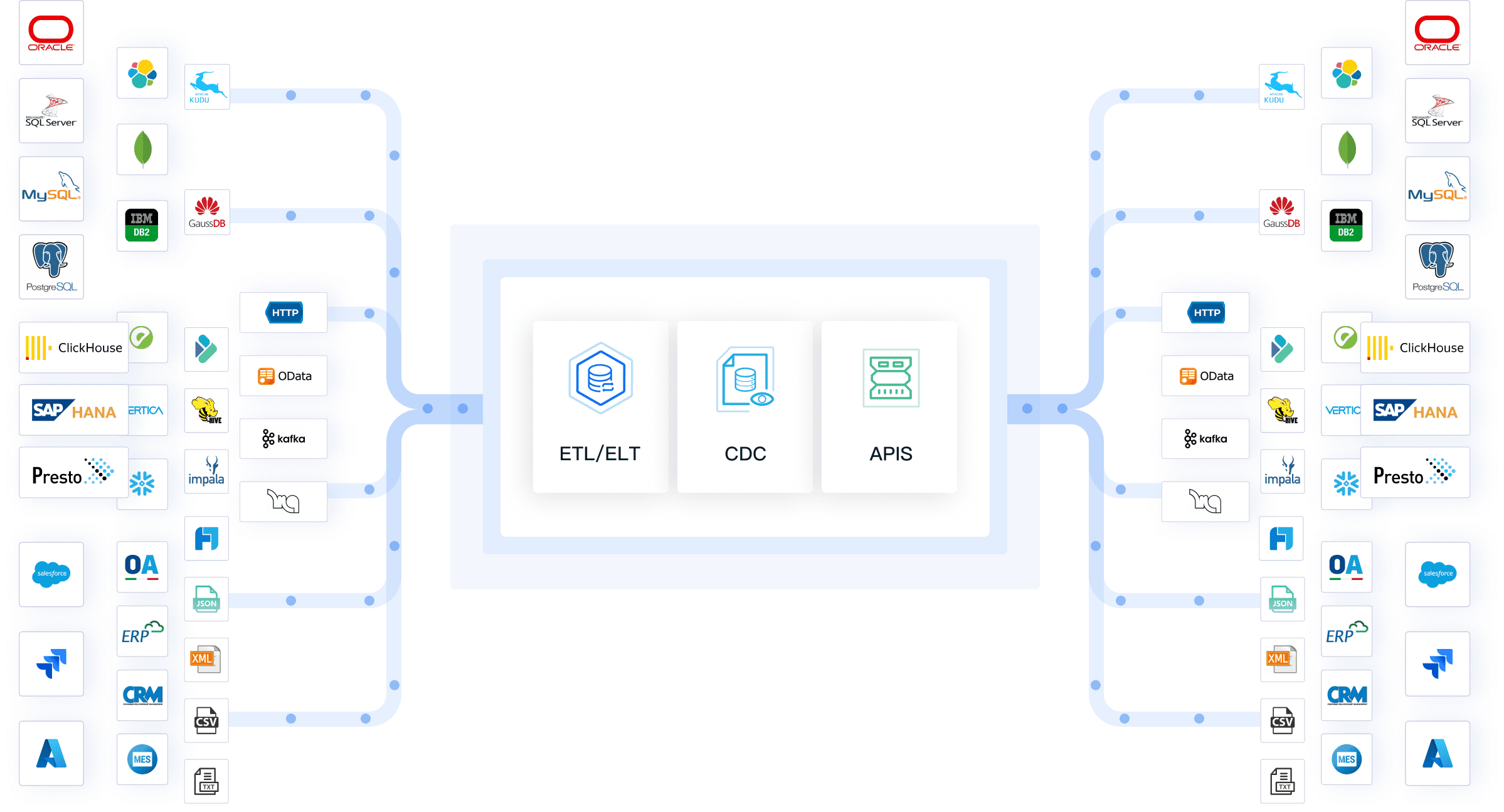
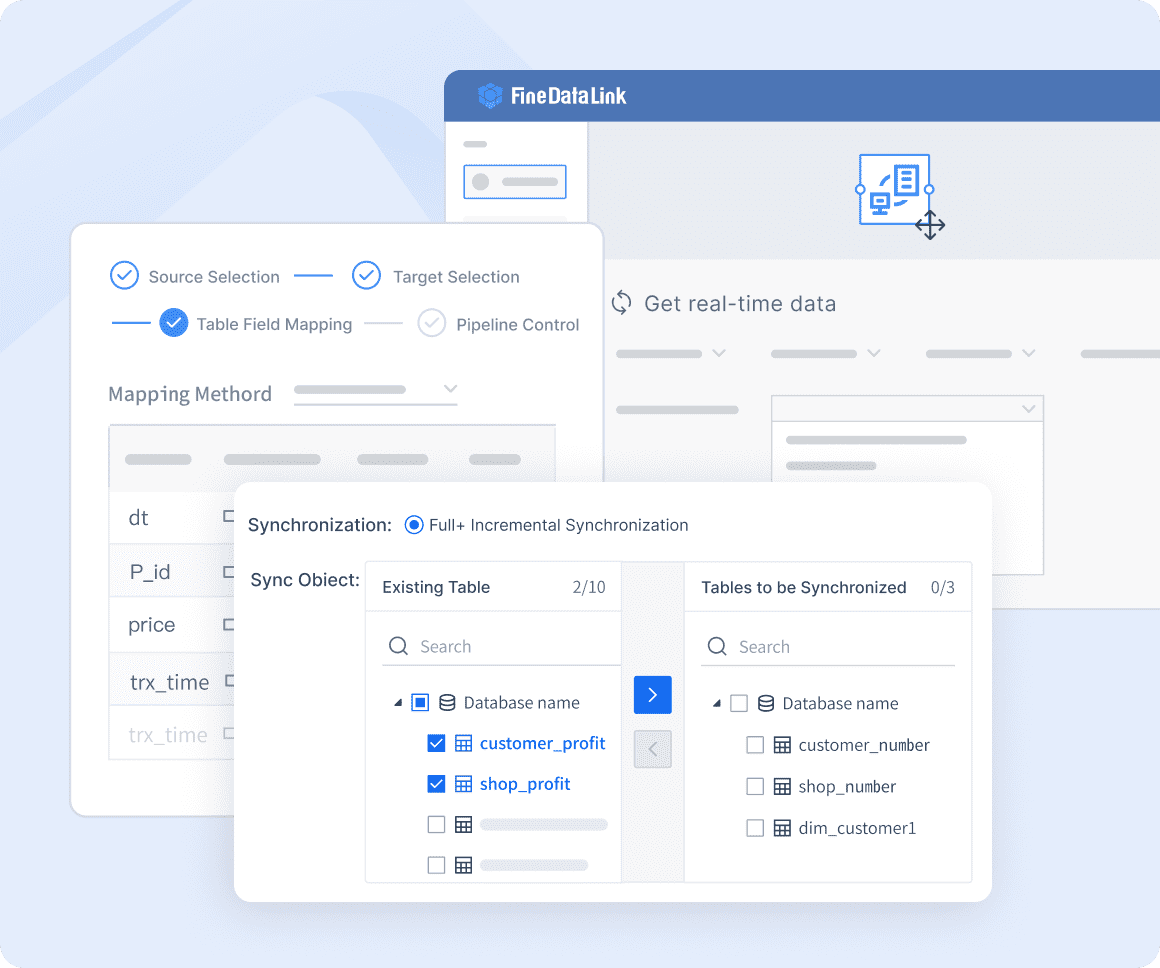
You can synchronize data across multiple tables in real time, which means your business intelligence reports always reflect the latest information. The platform automates ETL and ELT processes, reducing manual effort and errors. You can also launch API interfaces in minutes, making it easy to share data between systems. FineDataLink helps you break down data silos, improve data consistency, and streamline data processing for analytics and reporting.
Here’s a quick look at FineDataLink’s strengths:
| Feature | Description |
|---|---|
| Data Integration from Multiple Sources | FineDataLink enables integration from various sources, ensuring access to all relevant data. |
| Data Consistency | It guarantees that data from different sources is consistent and reliable, reducing error risks. |
| Automated Data Synchronization | The tool automates data synchronization, keeping BI reports updated with the latest information. |
| Seamless Data Transformation | Users can transform data during integration, ensuring it is in the correct format for analysis. |
If you want a cost-effective solution that supports real-time data integration, advanced ETL/ELT, and easy connectivity, FineDataLink is a top choice for enterprise needs.
Databricks: Unified analytics and AI
Databricks is a leader among data lake companies, known for its unified analytics and AI capabilities. You get a single data lake platform that combines data lakes and data warehouses, making collaboration easier across teams. Databricks uses open-source technologies like Apache Spark and Delta Lake, so you can process large volumes of data efficiently.
You can manage data ingestion, cataloging, and governance with tools like Unity Catalog and MLflow. Databricks supports fast-tracked GenAI workloads, guiding you from data ingestion to deployment and monitoring. The platform uses high-performance compute and autoscaling to optimize resource usage. You can also leverage semantic search for context-aware insights.
| Feature/Benefit | Description |
|---|---|
| Unified platform | Integrates various data processes, reducing costs and enhancing collaboration among teams. |
| Fast-tracked GenAI workloads | Guides users from data ingestion to deployment and monitoring, ensuring efficiency. |
| Cost reduction | Consolidates tools into a single lakehouse, cutting integration work and speeding up delivery. |
| Governance | Provides granular control over data access and lineage, ensuring compliance without slowing down. |
| Performance | Utilizes high-performance compute and intelligent autoscaling to optimize resource usage. |
| Experiment management | Uses MLflow for managing experiments and lifecycle, facilitating smoother transitions to production. |
| Data ingestion and cataloging | Supports various data types and ensures performance and versioning through Delta tables. |
| Semantic search | Employs Mosaic AI Vector Search for context-aware retrieval, enhancing the quality of insights. |
Databricks is ideal if you want a data lake platform that supports advanced analytics, machine learning, and AI-driven workflows.
AWS Lake Formation: Scalability and ecosystem
AWS Lake Formation is a top pick if you want scalability and deep integration with the AWS ecosystem. You can build secure and scalable data lakes using familiar AWS services. The platform offers centralized orchestration, so you can manage access and automate data flows across multiple AWS tools.
You get seamless integration with AWS Glue, which provides managed ETL in a serverless environment. This means you can scale data transformation without worrying about infrastructure. AWS Lake Formation works well with Amazon Athena, Amazon EMR, and Amazon Redshift, making data accessibility and analysis straightforward.
| Feature | Description |
|---|---|
| AWS Glue Integration | Provides a managed ETL service in a serverless environment, allowing for scalable data transformation without managing resources. |
| Centralized Orchestration | Automatically manages access and orchestrates data flows across multiple AWS services, simplifying data lake management. |
| Compatibility with Data Access Services | Integrates seamlessly with services like Amazon Athena, Amazon EMR, and Amazon Redshift, enhancing data accessibility and analysis capabilities. |
If your business relies on AWS, this data lake platform helps you scale, secure, and analyze data efficiently.
Azure Data Lake: Integration with Microsoft stack
Azure Data Lake is the go-to choice for organizations that use Microsoft products. You get seamless integration with tools like Azure Data Factory, Power BI, and Azure Databricks. Azure Data Lake lets you create data-driven workflows for orchestrating data movement and transformation. You can ingest data from various sources into Azure Data Lake Storage for further analysis.
- Azure Data Factory enables the creation of data-driven workflows for orchestrating data movement and transformation.
- It allows ingestion of data from various sources into Azure Data Lake Storage for further analysis.
- Azure Databricks and Microsoft Fabric are utilized for large-scale transformations and analytics.
- Storage is designed for durability, fault tolerance, and scalability.
- Processing is powered by engines like Apache Spark in Azure Databricks and Microsoft Fabric, enabling advanced analytics and machine learning.
If you want a data lake platform that fits into your existing Microsoft stack, Azure Data Lake makes integration and analytics simple.
Google Cloud BigLake: Multi-cloud flexibility
Google Cloud BigLake gives you multi-cloud flexibility, which is important if you want to manage data across different cloud providers. You can access and analyze data stored in Google Cloud Storage, AWS S3, and Azure Blob Storage without moving it. The platform lets you query structured and unstructured data using SQL, so you get a unified view of all your information.
Google Cloud BigLake is a strong choice if you need a data lake platform that supports hybrid and multi-cloud strategies. You can avoid vendor lock-in and keep your data accessible for analytics and reporting.
Snowflake: Cloud-native data sharing
Snowflake is a favorite among large organizations that need secure and efficient data sharing. You get real-time access to data for all stakeholders, which makes collaboration easy across teams. Snowflake lets you share live data across accounts in real time without copying or moving the data. You can provide read-only access to a centralized source, so everyone works with the most current version.
- Real-time access to data for all stakeholders.
- Facilitates seamless collaboration among cross-functional teams.
- Supports data-driven initiatives by ensuring everyone works with the most up-to-date information.
- Snowflake allows organizations to share live data across accounts in real time without copying or moving the data.
- It provides read-only access to a centralized source, ensuring all parties work with the most current version of the data.
- The platform eliminates duplication, reduces storage costs, and maintains strong data governance and security.
- End-to-end encryption for data in transit and at rest.
- Granular access control using roles and grants to specify who can access shared data.
- No data duplication, maintaining the integrity of the source data.
With Snowflake’s zero-copy data sharing, you avoid costly data replication and storage duplication. This reduces costs and improves operational efficiency.
IBM Data Lake: Enterprise-grade governance
IBM Data Lake focuses on enterprise-grade governance and compliance. You get automated data discovery and classification, so you can enforce protection rules and manage access controls. The platform supports privacy standards like GDPR, HIPAA, and PCI DSS. You can automate metadata management and track data lineage, which helps with audits and regulatory requirements.
IBM Data Lake is a strong option if you need robust governance, compliance, and data management for your enterprise.
Dremio: Self-service analytics
Dremio empowers you with self-service analytics. You can access data directly from many sources without intermediaries. The platform offers no-code tools and a robust SQL editor, so both business users and data engineers can work efficiently. Dremio includes text-to-SQL features, making data exploration accessible to everyone.
You can set access controls, monitor usage, and track data asset history with the lakehouse catalog. Git-like branching lets you experiment without affecting main data. Dremio is a good fit if you want a data lake platform that supports agile analytics and easy data access.
Teradata: High-performance analytics
Teradata delivers high-performance analytics for large-scale workloads. You get parallel processing and shared-nothing architecture, which means you can scale easily and run complex queries fast. The platform optimizes storage and query performance with data partitioning and advanced SQL execution.
Teradata supports petabyte-scale data warehouses and offers built-in fault tolerance. You can run machine learning and predictive modeling, making it a top choice for enterprises with demanding analytics needs.
Other companies: Niche solutions
You will find other data lake companies that offer niche solutions for specific enterprise needs. Matillion and dbt Labs focus on data transformation and pipeline orchestration. Palantir provides operational decision support and AI-driven workflows. CData specializes in real-time connectivity for thousands of applications. Snowplow delivers high-fidelity behavioral data pipelines. SAS and Splunk offer advanced analytics and observability platforms. Tiger Analytics, ChainSys, DevsData, SoftKraft, DataToBiz, Lingaro, and Polestar Analytics provide tailored services for data engineering, cloud migration, and real-time insights.
These data lake companies help you address unique challenges, whether you need specialized analytics, integration, or data processing capabilities.
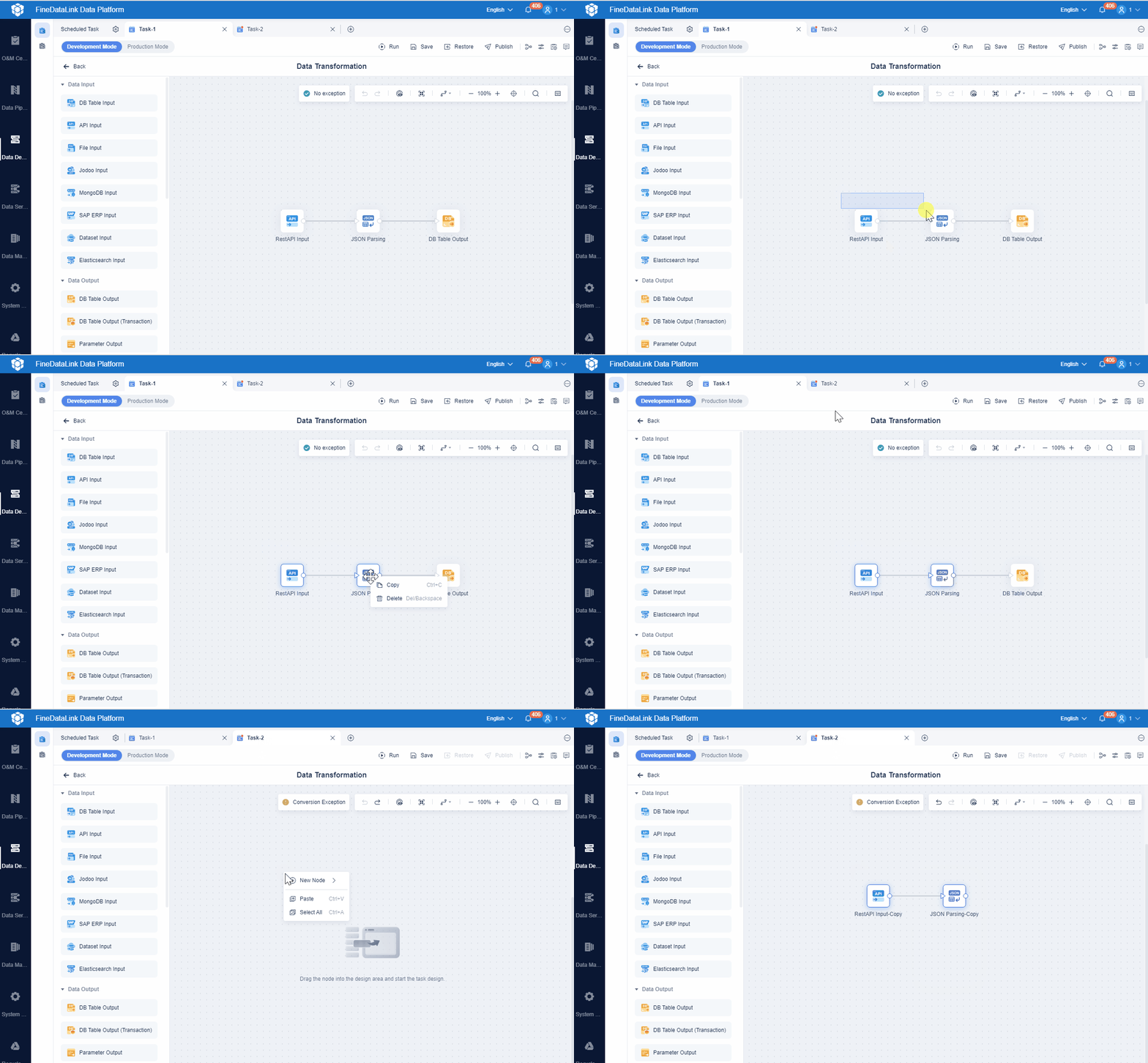
Data Lake Companies Comparison
When you search for the Best data lake companies for enterprise needs, you want to know how each option stacks up. This phrase means finding the right data lake storage solutions that fit your business goals, whether you need to scale, secure, or integrate your data. The Best data lake companies for enterprise needs offer platforms that help you manage data storage, analytics, and governance with ease.
You might wonder what sets different data lake storage solutions apart. The key features of data lake storage solutions include scalability, integration, security, governance, and cost. These features help you decide which platform works best for your company. You want a solution that grows with your data, connects to all your systems, keeps your information safe, and fits your budget.
Let’s break down the key features of data lake storage solutions in a simple comparison table. This table highlights how leading data lake storage solutions perform in the areas that matter most:
| Solution | Scalability | Integration Capabilities | Security Features | Governance Features | Cost/Value |
|---|---|---|---|---|---|
| FineDataLink | High, real-time | 100+ sources, low-code, APIs | Role-based, encryption | Automated, data lineage | Affordable, flexible |
| Databricks | Elastic, multi-cloud | Open-source, ML/AI integration | Unity Catalog, RBAC | Data & AI governance | Pay-as-you-go |
| AWS Lake Formation | Auto-scaling, AWS | Deep AWS integration, Glue ETL | IAM, audit logs | Tag-based, centralized | Usage-based |
| Azure Data Lake | Microsoft stack | Power BI, Synapse, Databricks | Azure AD, encryption | Lifecycle, compliance | Tiered, predictable |
| Google BigLake | Multi-cloud | SQL, hybrid cloud | Fine-grained, unified | Centralized, metadata | Flexible, competitive |
| Snowflake | Instant scaling | Zero-copy, live sharing | End-to-end encryption | Granular, no duplication | Storage-efficient |
| IBM Data Lake | Enterprise-grade | Hybrid, automated discovery | Compliance, access control | Automated, privacy-focused | Enterprise pricing |
| Dremio | Self-service, fast | Direct, no-code, text-to-SQL | Access controls, monitoring | Lakehouse catalog, branching | Transparent, scalable |
| Teradata | Petabyte-scale | Advanced analytics, SQL | Role-based, encryption | Partitioning, audit trails | High-value, scalable |
| Fivetran Managed | Yes | 700+ sources, automated | 99.9% uptime, safeguards | Automated, ACID compliance | 77%-95% cost savings |
You can see that the key features of data lake storage solutions vary, but each platform brings something unique. FineDataLink stands out for its low-code integration and real-time data storage. Databricks shines with unified analytics and AI. AWS Lake Formation and Azure Data Lake offer deep ecosystem integration. Google Cloud BigLake gives you multi-cloud flexibility. Snowflake makes data sharing simple. IBM focuses on governance. Dremio supports self-service analytics. Teradata handles massive workloads. Fivetran Managed delivers broad integration and cost savings.
When you compare data lake storage solutions, focus on what matters most for your business. Do you need easy integration? Is cost your top concern? Or do you want the strongest security and governance? The right choice will help you unlock the full value of your data storage and analytics.
Choosing the Right Data Lake Companies
When you look for the Best data lake companies for enterprise needs, you want a solution that matches your business goals and technical requirements. This phrase means finding a provider that can handle your data, support your analytics, and help your business grow. The Best data lake companies for enterprise needs offer platforms that make it easy to store, manage, and use your data for better decision-making.
Assessing Enterprise Needs
Start by understanding what your business really needs from a data lake. Think about the problems you want to solve and the goals you want to reach. You should talk with different teams in your company to learn about their data challenges. Some teams may need real-time analytics, while others want better data integration or stronger security. Make a list of your top priorities. This step helps you focus on what matters most and avoids wasting time on features you do not need.
Evaluating Vendor Fit
Once you know your needs, look at how each vendor matches up. Check if the company supports your most important data sources. Review their integration options and see if they offer the right level of security and compliance. Ask about scalability and performance. You want a platform that grows with your business and keeps your data safe. It helps to request demos or trials so you can see the platform in action. Talk to current users or read reviews to learn about real-world experiences.
Steps for Selection
You can follow these steps to choose the right data lake company for your enterprise:
- Define your business objectives and use cases. Get input from all stakeholders.
- Prioritize your data sources based on impact, quality, and compliance.
- Choose an architecture that is scalable, secure, and meets your compliance needs.
- Build flexible data ingestion and processing pipelines for different data formats.
- Establish strong governance, metadata management, and analytics support.
Tip: Keep your selection process simple and focused. Involve your team and test solutions before making a final decision.
You have seen how each company brings something unique to the table. FineDataLink stands out if you want real-time integration and a low-code approach. Databricks, AWS, Azure, Google, Snowflake, IBM, Dremio, and Teradata all offer strong options for different needs. Make sure your choice fits your business goals, scales with your growth, and connects with your systems. Ready to move forward? Request a demo, start a free trial, or talk with your team to find the best data lake solution.
Continue Reading About Data Lake Companies
Enterprise Data Integration: A Comprehensive Guide
What is enterprise data and why does it matter for organizations
Understanding Enterprise Data Centers in 2025
Enterprise Data Analytics Explained for Modern Businesses
Frequently asked questions
You want data lake providers that offer scalable, secure, and integrated solutions. The Best data lake companies for enterprise needs help you manage, store, and analyze large volumes of data to support your business goals.