

Vendor-managed inventory (VMI) represents a system where suppliers manage inventory levels for manufacturers. Suppliers handle tasks like monitoring, restocking, and adjusting orders based on sales data. VMI emerged in the 1980s, with companies like Procter & Gamble and Walmart leading the way. This approach enhances supply chain efficiency by optimizing shipments and improving forecasts. Businesses benefit from reduced inventory costs and increased collaboration between suppliers and retailers. VMI's role in modern supply chain management continues to grow as demand for efficient inventory solutions rises globally.
Understanding Vendor-Managed Inventory
Definition and Concept of Vendor-Managed Inventory
What is Vendor-Managed Inventory?
Vendor-managed inventory (VMI) represents a collaborative approach where suppliers oversee inventory levels for retailers. Suppliers take responsibility for monitoring stock, making replenishment decisions, and ensuring optimal inventory levels. This strategy allows suppliers to use sales data to predict demand accurately. VMI aims to streamline supply chain operations by reducing the burden on retailers.
Historical Background and Evolution
The concept of vendor-managed inventory emerged in the 1980s. Large companies like Procter & Gamble and Walmart pioneered this approach. These companies sought ways to reduce inventory management costs and improve efficiency. The success of VMI in these organizations led to its widespread adoption across various industries. Over time, technological advancements have further refined VMI processes, making them more effective and efficient.
Key Components of VMI
Supplier-Customer Relationship
A strong supplier-customer relationship forms the foundation of vendor-managed inventory. Suppliers and retailers must establish clear communication channels. Trust and transparency play crucial roles in this partnership. Suppliers need access to accurate sales and inventory data from retailers. This data sharing enables suppliers to make informed decisions about stock replenishment.
Inventory Management Systems
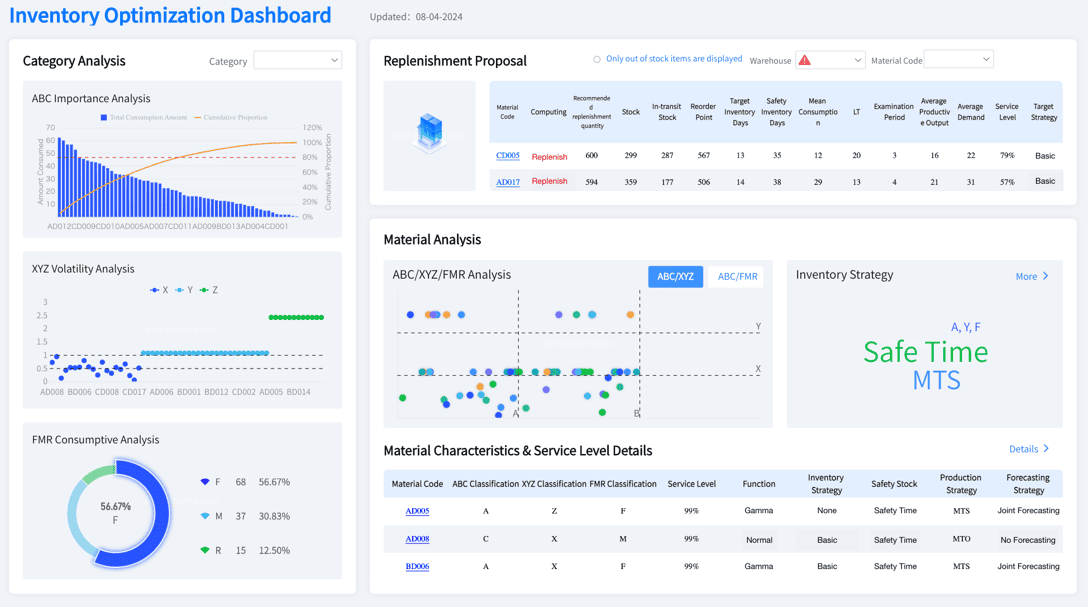
Here is the inventory optimization dashboard created by FineReport, click here to engage it.
Effective inventory management systems support the implementation of VMI. These systems track inventory levels, sales data, and order history. Advanced software solutions provide real-time insights into stock status. Integration of these systems with existing business processes ensures seamless operations. Automation features in inventory management systems help suppliers maintain optimal inventory levels without manual intervention.
Benefits of Vendor-Managed Inventory
Operational Efficiency
Vendor-managed inventory enhances operational efficiency significantly. Businesses experience fewer stockouts and overstocks. Suppliers monitor inventory levels closely. This monitoring ensures that stock levels remain optimal. Companies like Franz Wolf GmbH and Bosch illustrate this benefit. The VMI principle optimizes collaboration between suppliers and customers. Improved inventory turnover results from efficient stock management. Suppliers adjust inventory based on real-time data. This adjustment leads to faster product movement. Businesses maintain a steady flow of goods. Customers receive products without delays.
Reduced Stockouts and Overstocks
Vendor-managed inventory reduces stockouts effectively. Suppliers use sales data to predict demand accurately. This prediction minimizes the risk of running out of stock. Overstock situations decrease as well. Suppliers manage inventory levels efficiently. Retailers avoid excess stock that ties up capital. Businesses achieve a balance in inventory levels. This balance improves customer satisfaction.
Improved Inventory Turnover
Improved inventory turnover is a key benefit of vendor-managed inventory. Suppliers replenish stock based on actual sales data. This replenishment keeps inventory fresh and relevant. Products move quickly through the supply chain. Businesses reduce the time products spend on shelves. Faster turnover leads to increased sales opportunities. Companies like Bosch have demonstrated improved turnover rates. VMI enhances the speed of inventory cycles.
Cost Savings
Vendor-managed inventory offers significant cost savings. Businesses lower inventory holding costs. Suppliers manage stock levels efficiently. This management reduces the need for large storage spaces. Administrative expenses decrease with VMI implementation. Automated systems handle inventory tasks. These systems reduce manual labor requirements. Businesses save money on administrative overheads.
Lower Inventory Holding Costs
Lower inventory holding costs result from vendor-managed inventory. Suppliers optimize stock levels to minimize storage needs. Businesses reduce expenses related to warehousing. Efficient inventory management leads to cost savings. Companies allocate resources more effectively. Capital remains available for other business operations.
Reduced Administrative Expenses
Vendor-managed inventory reduces administrative expenses. Automated systems streamline inventory processes. These systems handle tasks like order placement and tracking. Businesses require fewer personnel for inventory management. Reduced labor costs contribute to overall savings. Companies like Franz Wolf GmbH have experienced these benefits. VMI programs lead to financial efficiency.
Enhanced Supplier-Customer Collaboration
Vendor-managed inventory enhances supplier-customer collaboration. Strong partnerships develop through shared goals. Suppliers and retailers work together seamlessly. Improved communication and data sharing occur naturally. Businesses experience better alignment in operations. VMI fosters trust and transparency between partners.
Strengthened Partnerships
Strengthened partnerships emerge through vendor-managed inventory. Suppliers and retailers align their objectives. Shared data enables informed decision-making. Businesses build long-lasting relationships. Trust grows as partners collaborate effectively. Companies like Franz Wolf GmbH demonstrate successful partnerships. VMI strengthens the bond between suppliers and customers.
Improved Communication and Data Sharing
Improved communication and data sharing are vital in vendor-managed inventory. Suppliers access real-time sales data from retailers. This access allows for accurate inventory management. Information flows smoothly between partners. Businesses make informed decisions based on shared insights. Enhanced data sharing leads to better outcomes. Companies achieve greater efficiency through open communication.
Systems and Technologies in Vendor-Managed Inventory

Inventory Management Software
Features and Capabilities
Inventory management software plays a crucial role in vendor-managed inventory systems. The software offers features that enable suppliers to monitor stock levels efficiently. Real-time tracking of inventory helps suppliers make informed decisions. The software provides alerts for low stock levels, ensuring timely replenishment. Suppliers use the software to analyze sales trends and predict future demand. The software supports automated order processing, reducing manual intervention. Businesses benefit from streamlined operations and improved accuracy.
Integration with Existing Systems
Integration with existing systems is vital for effective vendor-managed inventory. The software must work seamlessly with other business applications. Suppliers ensure compatibility with enterprise resource planning (ERP) systems. Integration allows for smooth data exchange between different platforms. Businesses achieve better coordination and efficiency through integrated systems. Suppliers can access real-time data from various sources. This access enhances decision-making and inventory management.
Data Analytics and Forecasting
Role of Data in VMI
Data plays a pivotal role in vendor-managed inventory. Suppliers rely on data to monitor inventory levels and sales patterns. Accurate data enables suppliers to forecast demand effectively. Suppliers use data to optimize stock levels and reduce excess inventory. Data-driven insights help suppliers respond to market changes swiftly. Businesses achieve better alignment between supply and demand through data analysis. Suppliers enhance their decision-making capabilities with comprehensive data.
Predictive Analytics for Inventory Management
Predictive analytics enhances inventory management in vendor-managed inventory systems. Suppliers use predictive models to anticipate future demand. These models analyze historical sales data and market trends. Predictive analytics helps suppliers adjust inventory levels proactively. Suppliers minimize the risk of stockouts and overstocks through accurate predictions. Businesses benefit from improved inventory turnover and reduced holding costs. Predictive analytics empowers suppliers to optimize their supply chain strategies.
Automation and IoT
Automated Replenishment Systems
Automated replenishment systems streamline inventory management in VMI. Suppliers use automation to trigger restocking based on predefined criteria. These systems reduce the need for manual intervention in inventory processes. Automated replenishment ensures timely stock replenishment, preventing stockouts. Suppliers maintain optimal inventory levels with minimal effort. Businesses experience increased efficiency and reduced operational costs through automation. Suppliers achieve better control over inventory management with automated systems.
IoT Devices for Real-Time Monitoring
IoT devices play a significant role in real-time monitoring of inventory. Suppliers use IoT sensors to track inventory levels continuously. These devices provide real-time data on stock status and movement. IoT technology enables suppliers to monitor inventory remotely. Suppliers receive instant alerts for any discrepancies or anomalies in inventory. Businesses benefit from enhanced visibility and control over their inventory. IoT devices improve accuracy and reliability in inventory management.
Implementing Vendor-Managed Inventory
Steps to Implement VMI
Assessing Readiness and Feasibility
Businesses must assess readiness before implementing vendor-managed inventory (VMI). Evaluating current inventory management practices is essential. Companies should analyze their existing data-sharing capabilities. Businesses need to ensure that technology infrastructure supports VMI. Assessing the feasibility of VMI involves understanding potential benefits. Companies should consider the impact on supply chain efficiency. Businesses must evaluate the cost implications of VMI implementation.
Selecting the Right Partners
Selecting the right partners is crucial for successful VMI implementation. Companies should identify suppliers with a strong track record. Suppliers must demonstrate expertise in inventory management. Businesses should prioritize partners with advanced technological capabilities. Suppliers should offer robust data analytics and forecasting tools. Companies should seek partners who align with their business objectives. Strong communication skills are vital for effective collaboration.
Challenges and Solutions
Common Implementation Challenges
Implementing VMI presents several challenges. Companies may face resistance to change from internal teams. Businesses might encounter difficulties in data integration. Suppliers and retailers may struggle with aligning objectives. Communication gaps can hinder successful VMI implementation. Companies might experience issues with inventory visibility.
Strategies to Overcome Challenges
Strategies exist to overcome VMI implementation challenges. Companies should provide training to address resistance to change. Businesses must invest in technology to facilitate data integration. Clear communication channels help align supplier and retailer objectives. Regular meetings foster collaboration and address communication gaps. Implementing real-time monitoring systems enhances inventory visibility.
Measuring Success
Key Performance Indicators (KPIs)
Key performance indicators (KPIs) measure VMI success. Inventory turnover rates indicate the efficiency of stock management. Reduced stockouts and overstocks reflect improved inventory control. Cost savings highlight the financial benefits of VMI. Enhanced supplier-customer collaboration strengthens partnerships. Improved lead times contribute to customer satisfaction.
Continuous Improvement and Optimization
Continuous improvement ensures VMI remains effective. Businesses should regularly review KPIs to identify areas for enhancement. Companies must adapt to changing market conditions. Suppliers and retailers should collaborate on process optimization. Technology upgrades support ongoing improvements in VMI systems. Regular feedback from stakeholders drives continuous development.
FanRuan
https://www.fanruan.com/en/blogFanRuan provides powerful BI solutions across industries with FineReport for flexible reporting, FineBI for self-service analysis, and FineDataLink for data integration. Our all-in-one platform empowers organizations to transform raw data into actionable insights that drive business growth.
FAQ
Common Questions and Answers
How does VMI differ from traditional inventory management?
Vendor-managed inventory (VMI) involves suppliers taking responsibility for managing inventory levels. Traditional inventory management requires retailers to manage their own stock. Suppliers in VMI use sales data to make replenishment decisions. Retailers in traditional systems place orders based on their own forecasts. VMI fosters a collaborative relationship between suppliers and retailers. Traditional inventory management often lacks this level of collaboration.
What are the risks associated with VMI?
Vendor-managed inventory presents certain risks. Suppliers may misinterpret sales data, leading to stockouts or overstocks. Retailers might experience a loss of control over inventory decisions. Communication gaps between suppliers and retailers can cause issues. Businesses must ensure robust data sharing to mitigate these risks. A middle-market company faced challenges when a top customer required a VMI relationship. The company had to adapt quickly to maintain business volumes.
Clarifying Misconceptions
Misconception 1: VMI leads to loss of control over inventory
Some believe that VMI results in a loss of control over inventory. In reality, VMI enhances control through improved data sharing. Suppliers and retailers work together to optimize inventory levels. Businesses gain better visibility into stock status with VMI. Collaborative decision-making strengthens inventory management. Companies maintain control while benefiting from supplier expertise.
Misconception 2: VMI is only suitable for large companies
Many assume that VMI suits only large companies. In fact, businesses of all sizes can benefit from VMI. Small and medium-sized enterprises can leverage VMI for efficiency. Suppliers offer scalable solutions tailored to different business needs. VMI provides opportunities for growth and improved supply chain management. Middle-market companies have successfully implemented VMI strategies.
Vendor-managed inventory (VMI) offers significant advantages for businesses. VMI enhances supply chain efficiency and customer satisfaction through shorter lead times and better transportation planning. Companies benefit from reduced inventory-associated costs by shifting management responsibilities to vendors. The future of VMI in supply chain management looks promising with growing demand and technological advancements. Businesses should consider adopting VMI to improve operational efficiency and collaboration with suppliers. VMI provides a strategic advantage in meeting customer expectations and optimizing inventory management.