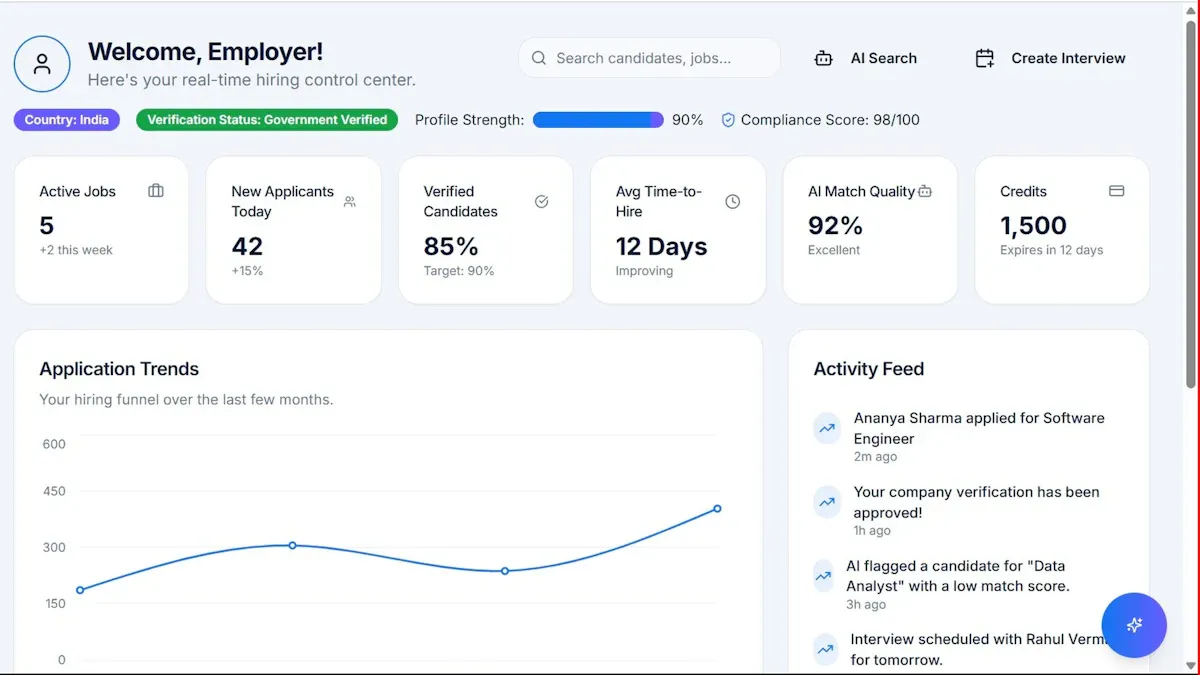

FineReport is a flexible enterprise reporting and dashboard platform that helps firms build highly customized, branded performance reports and analytics workflows from complex data sources.
10 tools RIAs and family offices should compare
1. Addepar
One-sentence overview: Addepar is investment performance reporting software built for firms managing complex portfolios, multi-entity households, and significant allocations to alternatives.
-
Key Features
- Multi-asset and multi-entity portfolio aggregation
- Reporting for private markets, real assets, and held-away assets
- Custom benchmarks, look-through analysis, and household-level views
- Client portal and branded reporting workflows
- Open architecture with integrations across wealth tech stacks
-
Pros & Cons
- Pros: Strong support for complex structures; well suited for alternative investments; flexible analytics and presentation.
- Cons: Implementation can be demanding; may be more platform than smaller firms need; pricing is typically better aligned to larger books of business.
-
Best For (Target user/scenario)
- RIAs, private banks, and family offices that need consolidated reporting across entities, asset classes, and illiquid holdings.
Addepar is often short-listed when firms outgrow basic reporting and need more than standard custodial data feeds. It is especially effective when reporting has to combine public markets with private equity, venture, hedge funds, real estate, or bespoke ownership structures. For firms serving ultra-high-net-worth households, this depth can justify the setup effort.
The trade-off is that flexibility usually comes with a steeper learning curve. Teams should expect a more involved implementation, more data mapping, and a stronger internal operations commitment than with lighter advisor platforms.
2. Black Diamond

One-sentence overview: Black Diamond is a polished advisor platform that combines portfolio reporting with client experience tools and broad practice workflows.
-
Key Features
- Client-friendly dashboards and portal experience
- Performance reporting and portfolio accounting
- Rebalancing and workflow support through an advisor ecosystem
- Mobile access and branded presentation tools
- Integrations with custodians and common advisor technology
-
Pros & Cons
- Pros: Strong user experience; attractive client reporting; good balance between advisor workflow and presentation quality.
- Cons: May be less flexible than institutional platforms for highly complex accounting needs; some firms may want deeper alternative asset handling.
-
Best For (Target user/scenario)
- RIAs that want broad advisor workflows, polished reports, and an interface clients can navigate easily.
Black Diamond is often chosen by firms that care as much about client communication as they do about back-office efficiency. The reporting tends to be visually strong, which matters for review meetings and ongoing portal engagement. For many growth-oriented advisory firms, that mix is appealing.
Its typical firm profile is an RIA that wants modern reporting without moving into a fully institutional operating model. It can be a strong fit when the priority is delivering a clean, branded experience while still supporting day-to-day advisory operations.
3. Orion

One-sentence overview: Orion is investment performance reporting software designed for advisory firms that want reporting tied closely to billing, trading, and portfolio management workflows.
-
Key Features
- Portfolio accounting and performance reporting
- Billing integration and fee workflow support
- Trading and rebalancing connectivity
- Composite and benchmark reporting options
- Client portal and customizable reports
-
Pros & Cons
- Pros: Broad advisor workflow coverage; strong fit for firms standardizing operations; useful integration across portfolio management functions.
- Cons: Feature breadth can feel complex; firms may need time to optimize configuration; user experience varies depending on modules adopted.
-
Best For (Target user/scenario)
- Advisory firms seeking a most-in-one environment for reporting, billing, trading, and operational scale.
Orion stands out when firms want reporting to work as part of a larger operating system rather than as a separate output layer. That can reduce manual handoffs between accounting, trading, billing, and client presentation. For firms focused on operational efficiency, this is a meaningful advantage.
The trade-off is that broad platforms require tighter process discipline. Teams evaluating Orion should assess not only report quality, but also whether the surrounding workflows match how advisors, operations staff, and compliance teams actually work.
4. Tamarac
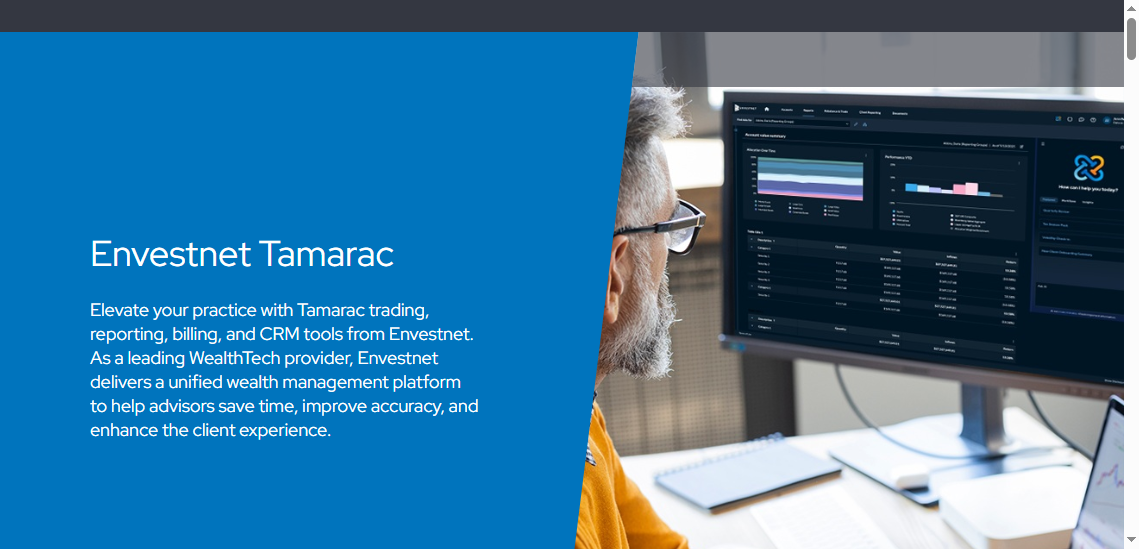
One-sentence overview: Tamarac is a strong enterprise choice for larger RIAs that prioritize rebalancing, reporting, and operational control across the firm.
-
Key Features
- Portfolio accounting and performance reporting
- Rebalancing and trading workflows
- Household-level management and advisor oversight
- Integrations with CRM and planning systems
- Scalable support for larger RIA operations
-
Pros & Cons
- Pros: Strong operational capabilities; suitable for larger firms; combines reporting with enterprise practice workflows.
- Cons: Can require significant onboarding effort; may feel heavyweight for smaller firms; some teams may prefer more modern client-facing visuals.
-
Best For (Target user/scenario)
- Larger RIAs that want enterprise portfolio management and reporting tied to rebalancing and operational scale.
Tamarac is typically evaluated by firms that have moved beyond basic reporting needs and now care about consistency across teams, books, and offices. It is particularly relevant when a firm wants to standardize investment operations as it grows.
Its strengths are often less about flashy presentation and more about business process depth. That makes it a practical choice for firms where reporting is one piece of a broader platform decision.
5. Morningstar Office or successor workflows

One-sentence overview: Morningstar-centered workflows appeal to firms that want reporting connected to investment research and familiar advisor processes.
-
Key Features
- Performance reporting linked to research data
- Benchmarking and portfolio analytics
- Established workflows familiar to many advisory teams
- Model and allocation analysis support
- Integration potential with broader Morningstar capabilities
-
Pros & Cons
- Pros: Research-connected environment; recognizable advisor workflow patterns; useful for firms already embedded in Morningstar tools.
- Cons: Firms should verify current product direction and successor workflows; may not be ideal for highly complex family office structures.
-
Best For (Target user/scenario)
- Advisory teams focused on research-driven reporting and established investment review processes.
For firms already relying heavily on Morningstar data, keeping reporting close to research can improve consistency in portfolio reviews and client conversations. It can also reduce friction for advisors who prefer familiar tools and terminology.
The main consideration is roadmap clarity. Buyers should confirm what current and future workflow support looks like, how reporting fits within the broader Morningstar ecosystem, and whether the platform can keep pace with the firm’s service model.
6. SS&C Advent
One-sentence overview: SS&C Advent offers institutional-grade accounting and reporting depth for firms that need precision, flexibility, and complex data handling.
-
Key Features
- Deep portfolio accounting capabilities
- Flexible performance reporting structures
- Support for complex reconciliation and accounting logic
- Institutional reporting depth across asset classes
- Configurable workflows for sophisticated firms
-
Pros & Cons
- Pros: High accounting rigor; powerful for complex environments; strong choice for firms with demanding reporting requirements.
- Cons: Implementation and maintenance can be resource-intensive; can be excessive for firms seeking simplicity and speed.
-
Best For (Target user/scenario)
- Institutions, larger RIAs, and complex managers that need robust accounting controls and flexible reporting depth.
SS&C Advent is often the answer when precision matters more than simplicity. Firms with institutional requirements, complex accounting policies, or highly specific reporting demands often appreciate its depth. That includes organizations where auditability and reconciliation discipline are central.
The trade-off is usability and operational effort. Teams considering Advent should be realistic about internal staffing, technical expertise, and willingness to invest in configuration and ongoing administration.
7. Envestnet platform options
One-sentence overview: Envestnet platform options fit firms that want investment performance reporting software inside a broader wealth management ecosystem.
-
Key Features
- Reporting integrated with advisor workflows
- Client portal and communication tools
- Account aggregation and multi-system connectivity
- Support for scalable advisor operations
- Access to a wider platform ecosystem
-
Pros & Cons
- Pros: Strong ecosystem benefits; useful for firms seeking fewer disconnected tools; supports advisor efficiency and personalization.
- Cons: Best-fit depends on which modules are used; firms wanting maximum flexibility may prefer more specialized solutions.
-
Best For (Target user/scenario)
- RIAs that want reporting to sit within a larger connected stack for planning, portfolio management, and client experience.
Envestnet is often attractive to firms trying to simplify tech sprawl. Instead of stitching together multiple point solutions, they can centralize more of the advisor workflow in one environment. That can help with data consistency and operational efficiency.
Still, buyers should distinguish between ecosystem convenience and reporting depth. The right question is not only whether Envestnet can produce reports, but whether those reports, workflows, and integrations fit the firm’s exact use cases.
8. SEI platform reporting tools
One-sentence overview: SEI platform reporting tools are a practical choice for firms that value outsourced support and integrated operational services alongside reporting.
-
Key Features
- Performance reporting within a broader serviced platform
- Operational support and outsourcing alignment
- Integrated account and portfolio workflows
- Client reporting and service capabilities
- Support for firms seeking external operational leverage
-
Pros & Cons
- Pros: Good fit for firms wanting service support, not just software; can reduce internal operational burden.
- Cons: May offer less flexibility than a fully open architecture stack; fit depends on appetite for outsourced operating models.
-
Best For (Target user/scenario)
- Firms that prefer integrated service and technology rather than building every process in-house.
SEI can be compelling when the software decision is really an operating model decision. Some firms are not just buying reporting tools; they are buying support, process infrastructure, and a way to reduce internal administrative strain.
That makes SEI especially relevant for firms focused on efficiency and scale without expanding headcount aggressively. The trade-off is that firms wanting full customization may find serviced models less flexible.
9. FundCount
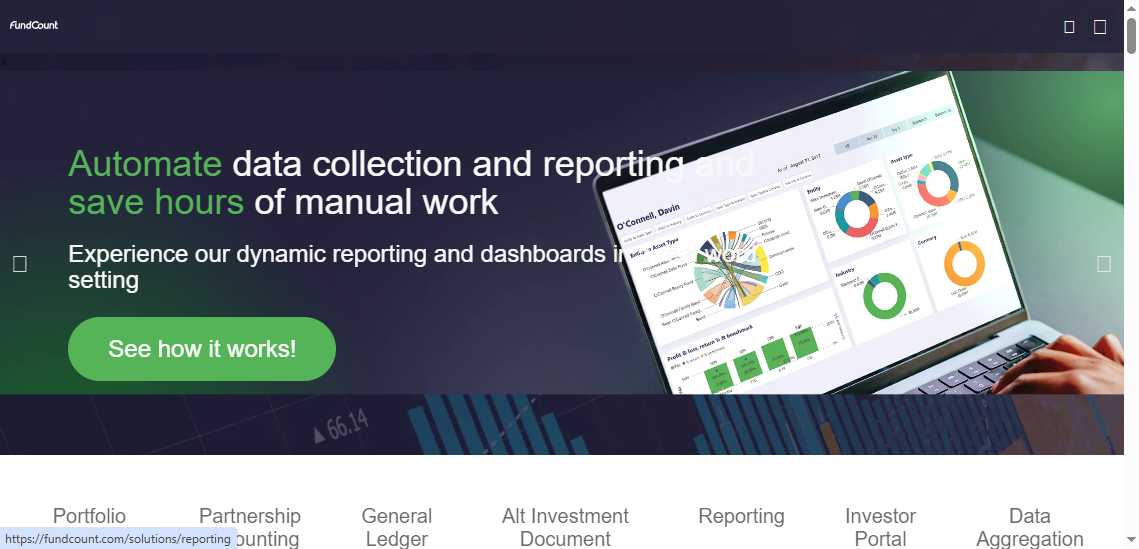
One-sentence overview: FundCount is built for family offices and investment firms that need partnership accounting, general ledger depth, and complex entity reporting.
-
Key Features
- Partnership and fund accounting support
- Multi-entity consolidation
- Detailed general ledger and accounting workflows
- Reporting across complex ownership structures
- Strong support for family office-style accounting needs
-
Pros & Cons
- Pros: Well suited for entity complexity; strong accounting orientation; useful for family offices with sophisticated structures.
- Cons: May be more accounting-heavy than advisor-centric RIAs need; client presentation layer may not be the sole reason to buy it.
-
Best For (Target user/scenario)
- Family offices requiring detailed accounting, entity-level reporting, and consolidated visibility across complex structures.
FundCount is often a better match for family offices than conventional advisor reporting tools because the underlying problem is different. These organizations frequently need more than performance snapshots. They need accounting rigor across partnerships, trusts, LLCs, and interrelated entities.
For that reason, FundCount is especially relevant when investment reporting must coexist with broader financial administration. Firms should evaluate whether they need advisor-style presentation first, or accounting depth first.
10. CircleBlack or similar modern reporting platforms
One-sentence overview: CircleBlack and similar modern platforms focus on streamlined interfaces, accessible dashboards, and advisor-friendly client presentation tools.
-
Key Features
- Modern dashboard design
- Client portal and visual reporting
- Multi-account aggregation
- Branding and presentation flexibility
- Simpler user experience for advisors and clients
-
Pros & Cons
- Pros: Clean interface; straightforward presentation; often easier for firms replacing spreadsheets or dated tools.
- Cons: May not match institutional systems on accounting depth or alternative asset complexity; scalability varies by firm requirements.
-
Best For (Target user/scenario)
- Advisory firms seeking a lighter, more modern reporting experience without the heaviness of enterprise platforms.
This category is appealing to firms that are less concerned with institutional-grade accounting and more concerned with making reporting understandable, presentable, and easy to manage. If the current pain point is clunky legacy software or manual report assembly, modern platforms can offer a fast improvement.
The key is knowing where simplicity stops being enough. Firms with complex alternatives, composites, or multi-entity family office needs should test carefully before assuming a cleaner interface will also satisfy deeper reporting demands.
What to look for in investment performance reporting software
Choosing investment performance reporting software is not just about generating attractive quarterly reports. The best-fit platform should support your calculation methods, pull clean data from multiple systems, and fit the operating model of your firm.
Core reporting capabilities: time-weighted and money-weighted returns, benchmark comparisons, composites, and fee reporting
At a minimum, firms should confirm whether the platform supports both time-weighted return and money-weighted return calculations. RIAs often rely on time-weighted performance for manager evaluation, while family offices and internal stakeholders may care more about cash-flow-sensitive measures in certain contexts.
Benchmark flexibility also matters. A system should let you compare portfolios against standard indices, blended benchmarks, or custom policy allocations. If your firm manages strategies at the household, sleeve, or composite level, you also need to test how easily the software handles those structures.
Fee reporting is another area where differences emerge quickly. Some tools are strong at portfolio presentation but weaker at linking reporting to billing detail, fee schedules, and audit trails.
Data aggregation needs across custodians, portfolio accounting systems, and alternative assets
Most firms do not operate from a single clean source of truth. They pull data from custodians, CRM platforms, billing systems, planning tools, spreadsheets, and, in family office settings, manually maintained records for private assets.
That means your investment performance reporting software should be evaluated on aggregation depth, not just output design. Ask how the platform handles:
- Multiple custodians
- Held-away accounts
- Private equity and venture funds
- Real estate and hard-to-value assets
- Entity-level consolidation
- Historical data migration
If alternatives are a meaningful part of client portfolios, verify whether the system supports capital calls, distributions, valuation timing, and irregular reporting cycles without forcing heavy manual work.
Client experience factors such as dashboard clarity, report customization, portals, and branding
A report can be technically correct and still fail the client experience test. Many firms switch software because clients struggle to understand existing reports or because advisors spend too much time explaining formatting rather than performance.
Look closely at:
- Dashboard readability
- White-label branding options
- Client portal usability
- Mobile accessibility
- Custom report templates
- The balance between visual polish and report depth
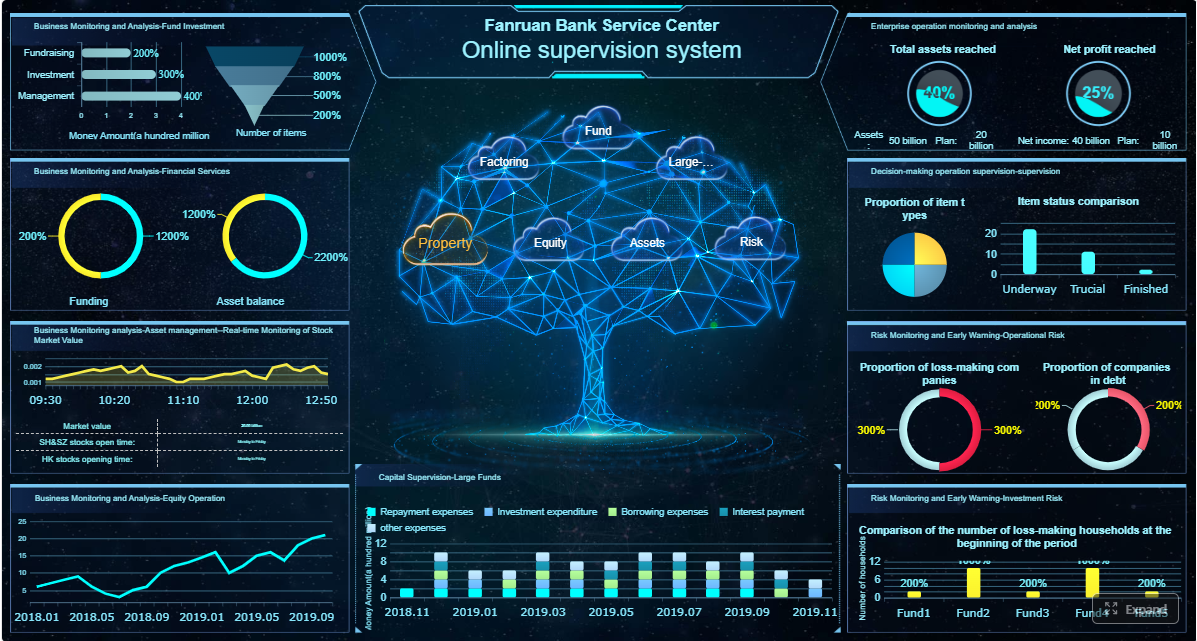
This is also where FineReport deserves consideration. While it is not a turnkey wealth management suite, FineReport can be highly effective for firms that want to build custom investment dashboards, internal performance reporting portals, executive views, and branded analytics outputs on top of existing data infrastructure. For firms with unique reporting logic or cross-system data challenges, that flexibility can be valuable.
Operational considerations including implementation effort, support quality, integrations, security, and pricing transparency
Operational fit is where many software decisions succeed or fail. A platform may look impressive in a demo but still become a poor choice if implementation drags on, support is inconsistent, or integrations require ongoing manual fixes.
Before choosing a platform, assess:
- Implementation timeline and historical conversion process
- Level of vendor onboarding support
- API and integration maturity
- Security controls and permissions
- User training resources
- Pricing transparency and scalability
The right system should fit both your current firm and your expected size in the next two to three years. Overbuying creates cost and complexity. Underbuying creates another migration project sooner than expected.
 Click To Try The Dashboard
How the top options compare by use case
Best for performance reporting for financial advisors
For many financial advisors, the best investment performance reporting software is not the deepest platform on the market. It is the one that balances report quality, advisor workflow efficiency, and client communication.
Strong candidates here often include Black Diamond, Orion, Tamarac, and certain Envestnet configurations. These tools generally appeal to firms that need a practical blend of:
- Good-looking client reports
- Reliable portfolio accounting
- Portal access
- Workflow integration with billing, trading, or CRM tools
If your primary audience is clients and advisors rather than institutional operations teams, usability should carry significant weight.
Best for family offices with complex holdings
Family offices usually need more than standard advisor reporting. They often require support for alternatives, multi-entity structures, consolidated household views, and detailed accounting logic.
Addepar and FundCount are especially relevant here, with SS&C Advent also worth serious consideration when accounting rigor is a top priority. These tools are generally stronger when portfolios include:
- Private funds
- Direct deals
- Real estate
- Trusts and partnerships
- Cross-entity ownership structures
- Nontraditional assets
The best choice depends on whether your biggest pain point is client-facing reporting, internal accounting depth, or total balance-sheet visibility.
Best for real-time portfolio and compliance visibility
Some firms prioritize up-to-date dashboards, exception monitoring, and oversight more than polished quarter-end books. In those situations, the right platform is one that improves visibility into data freshness, account status, and workflow issues.
Orion, Tamarac, SS&C Advent, and broader enterprise environments may be stronger options here depending on implementation. The key evaluation areas include:
- Data refresh frequency
- Dashboard usability for internal teams
- Alerts and exception visibility
- Compliance monitoring support
- Operational transparency across books and households
If leadership wants live oversight rather than just periodic reporting, demos should emphasize actual monitoring workflows rather than static sample reports.
Best for firms replacing spreadsheets or legacy reporting
Many RIAs and smaller family office teams are not replacing a sophisticated platform. They are replacing a mix of spreadsheets, PDFs, manual data pulls, and inconsistent templates.
In this scenario, CircleBlack-style modern platforms, Black Diamond, and some integrated advisor suites can offer a faster path to consistency. FineReport can also be a strong option for firms that already have underlying data sources but need a more controlled, scalable reporting layer for internal and client-facing dashboards.
The best-fit tools here are those that:
- Simplify onboarding
- Reduce manual report assembly
- Improve consistency
- Avoid unnecessary enterprise complexity
- Provide a clear upgrade path as the firm grows
Key trade-offs before you choose
Every investment performance reporting software decision involves trade-offs. The goal is not to find a perfect platform, but to choose the compromises your firm can live with.
Depth versus ease of use: institutional flexibility often comes with steeper setup and training requirements
The most flexible systems usually require more setup, more data governance, and more training. That can be worth it if your firm manages complex structures or institutional-style reporting requirements.
But if your team needs fast adoption and simple workflows, a lighter platform may create more value even if it offers fewer advanced configuration options.
All-in-one suite versus best-of-breed stack: broader platforms can reduce vendor sprawl but may limit flexibility
A suite can simplify integrations, vendor management, and operational consistency. That is attractive for firms trying to reduce technology sprawl.
A best-of-breed stack may deliver stronger functionality in each category, but only if your team can manage integration quality, data consistency, and support relationships across multiple vendors.
Reporting polish versus accounting rigor: not every tool is equally strong at both client presentation and back-office precision
Some platforms excel at clean client reports and portals. Others excel at reconciliation, partnership accounting, and complex data structures. Fewer do both equally well.
If your firm often chooses between a great-looking report and a technically complete one, you need to define which side matters more to your service model.
Cost versus scalability: evaluate whether the software fits your current size and your 2- to 3-year growth plan
Buying for today alone can lead to another migration in 18 months. Buying only for a hypothetical future can burden the team with cost and complexity now.
The better approach is to evaluate fit across a realistic two- to three-year growth window. Consider client mix, asset complexity, staffing plans, and expected service expansion.
How to choose the best-fit platform for your firm
Define your reporting goals and stakeholders
Start by clarifying what the platform must do and for whom. Your priorities may include:
- Client reporting
- Internal analytics
- Compliance oversight
- Billing support
- Family office accounting
- Executive dashboards
Different stakeholders will define success differently. Advisors may want elegant reports. Operations may want fewer manual exceptions. Leadership may want scalable oversight. Build your shortlist around those priorities first.
Audit your current data and integration environment
Before demos, inventory your current environment:
- Custodians
- CRM
- Financial planning tools
- Billing systems
- Data warehouses
- Spreadsheet dependencies
- Alternative asset data sources
Also document recurring data quality problems. This step is essential because a vendor can only demonstrate a realistic fit if your firm understands its own data complexity.
Run a use-case-based demo process
Do not let vendors control the entire evaluation with generic demo scripts. Instead, ask each platform to show how it handles your real-world use cases:
- A household with multiple entities
- A portfolio with alternatives
- A custom benchmark comparison
- A fee report with billing detail
- A quarterly client review package
- An internal dashboard for compliance or operations
Score vendors against the workflows your team uses today, not just the features on a checklist.
Plan implementation, migration, and adoption
The contract is only the beginning. Before signing, confirm:
- Implementation timeline
- Historical data conversion scope
- Internal resource requirements
- Training model
- Service and support approach
- Post-launch optimization process
This is also the stage to decide whether a platform like FineReport should complement, rather than replace, your core wealth system. Some firms use a portfolio accounting platform as the engine and FineReport as the customizable reporting layer to analyze and optimize portfolio performance with ease across internal and external audiences.
Build a shortlist based on the workflows that matter most, then choose the platform your team can actually implement, use, and scale. In investment performance reporting software, operational fit usually matters just as much as feature depth.
FAQs
It is software that helps firms aggregate portfolio data, calculate performance, and produce client-ready reports across accounts, entities, and asset classes. Many platforms also support dashboards, portals, benchmarks, and workflow integrations.