If your finance team is struggling with bloated annual reports, duplicated disclosures, and review cycles that drag on for weeks, the issue is usually not a lack of effort. It is a lack of editorial discipline around materiality. Knowing how to condense financial report sections is a practical reporting skill that helps finance leaders reduce clutter, improve readability, and keep investors, auditors, and internal stakeholders focused on what actually matters. For CFOs, financial controllers, SEC reporting teams, and audit committees, the business value is clear: shorter reports are easier to review, easier to defend, and more effective at communicating decision-useful information.

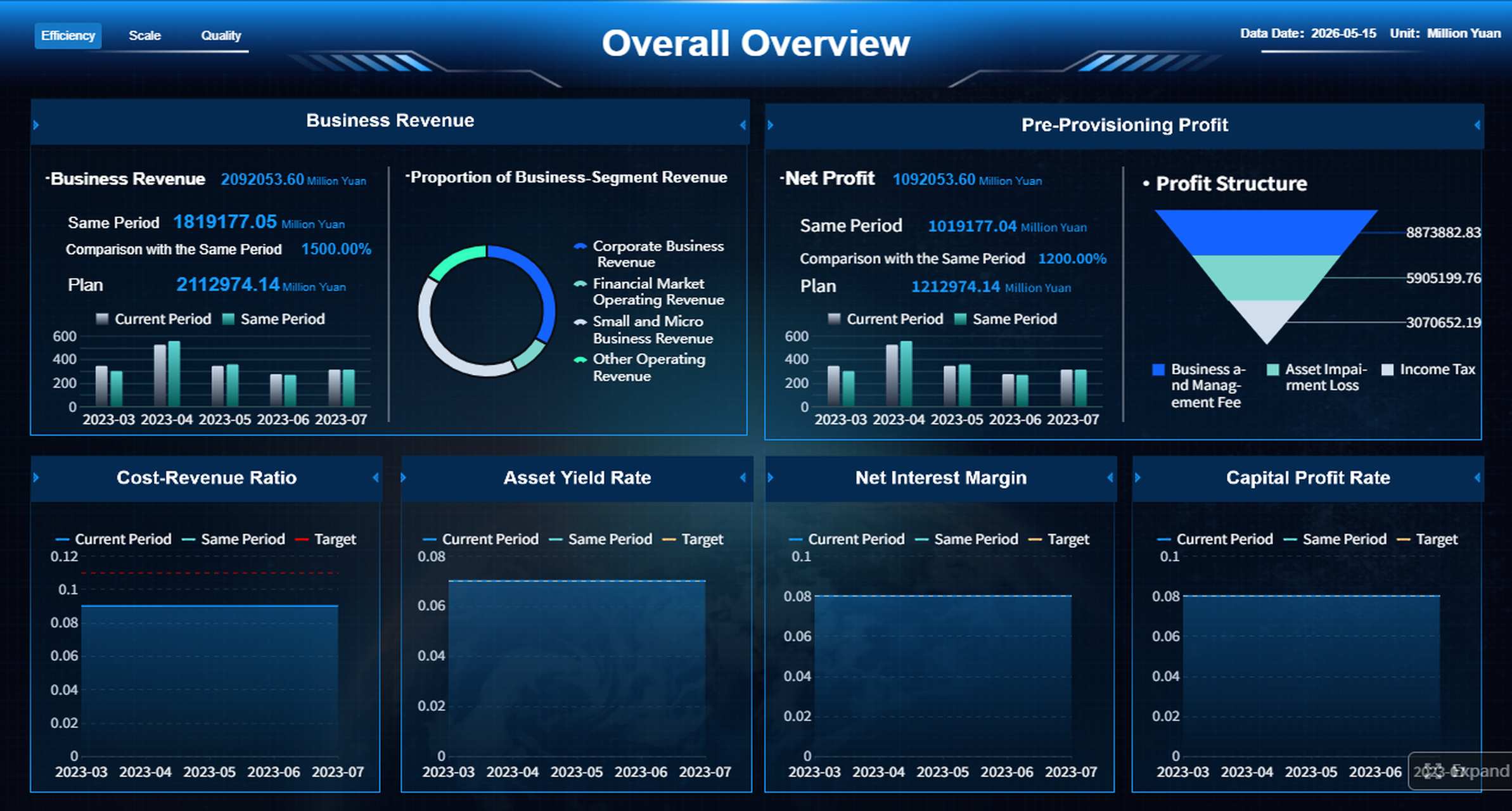
All reports in this article are built with FineReport.
Why length grows in financial report sections
Financial report sections rarely become too long overnight. In most organizations, length builds gradually as teams add one more paragraph for caution, retain one more historical explanation from last year, or copy forward language that no one has fully challenged.
Three causes show up repeatedly:
- Repeated background that explains the same business context in multiple sections
- Low-priority detail that is technically accurate but not useful to the reader’s decision
- Legacy wording carried forward from prior periods without reassessment
This creates a familiar problem: reports become complete in volume but weak in focus. Investors have to work harder to find significant judgments. Auditors spend more time tracing overlap. Internal reviewers get stuck debating wording instead of substance.
The goal is not to make reports shorter at any cost. The goal is to distinguish between necessary completeness and avoidable repetition. A well-condensed report still covers required disclosures, material judgments, and decision-relevant changes. It simply removes what no longer helps the reader understand the business, the numbers, or the risks.
In other words, material information matters more than total page count. A 20-page section can be less informative than a 10-page section if the critical message is buried under boilerplate.
How to condense financial report sections without losing material information
The best way to approach condensation is to start with the job each section must do. Every disclosure should help a reader answer a clear question: What changed? Why does it matter? What judgment was applied? What risk or uncertainty remains?
Before editing line by line, define the purpose of the section and the decision it should support for readers such as:
- Investors assessing performance and outlook
- Auditors evaluating completeness and consistency
- Internal reviewers checking governance and compliance
- Regulators or oversight bodies reviewing adequacy of disclosure
Once purpose is clear, separate content into four buckets:
- Material facts that must remain visible
- Contextual detail that may be shortened
- Boilerplate that can often be simplified or removed
- Duplicate explanations that should be consolidated
This is the foundation of how to condense financial report sections without weakening transparency. Clarity is not the enemy of compliance. In most cases, it improves it.
Key Metrics (KPIs)
Use these core editing metrics to manage disclosure reduction objectively:
- Materiality score: Rates each disclosure item by relevance, magnitude, and decision impact
- Duplication rate: Measures how much text repeats concepts already explained elsewhere
- Section readability: Assesses whether a non-specialist financial reader can follow the message quickly
- Disclosure density: Tracks how much useful information appears per paragraph or page
- Cross-reference load: Shows how often readers must jump between sections to understand a topic
- Legacy text carryover: Identifies wording copied from prior periods without current-year relevance
- Review cycle duration: Measures how report length affects internal and external review timelines
- Exception visibility: Confirms that unusual items, judgments, and uncertainties remain prominent
Define what is material before editing
Before removing a single sentence, define what “material” means for the report and the reporting period. This is where many teams go wrong. They start cutting for brevity before they have aligned on significance.
A practical materiality filter includes:
- Relevance: Does the information help explain performance, position, risk, or judgment?
- Magnitude: Is the amount, exposure, or change large enough to influence understanding?
- Decision impact: Would a reasonable reader view the omission or compression as significant?
Also flag content that must stay because it is required by:
- Regulation
- Accounting policy
- Governance practice
- Audit expectations
- Internal reporting standards
This step protects the team from over-editing. It also gives reviewers a shared rationale for why some content remains detailed while other wording is shortened.
Map overlap across sections
Most long reports suffer from structural duplication, not just verbose drafting. That is why content mapping is so effective.
Look for overlap in:
- Repeated risk language in both the front half and note disclosures
- Duplicated accounting descriptions across policies and transaction-specific notes
- Similar business explanations in MD&A and operational commentary
- Cross-referenced tables that restate, rather than complement, each other
Create a simple disclosure map that shows where each issue is explained, what is essential, and where the primary explanation should live. Then consolidate related text so readers can find the core explanation in one place.
This is especially useful when multiple teams draft different sections. Without a central map, duplication is almost guaranteed.
7 practical ways to cut length of financial report sections while preserving clarity
Below are the most effective techniques I recommend when advising finance and reporting teams. These methods reduce length while keeping reports decision-useful and review-ready.
1. Remove repeated background and standard phrasing
Long introductions often add very little value. If the context is already known or explained elsewhere, it does not need to be restated in full.
Focus on trimming:
- Generic opening lines
- Standard phrases with no entity-specific meaning
- Repeated descriptions of business structure or accounting context
For example, instead of using three sentences to frame a routine disclosure, move directly to the current-year issue, change, or judgment.
Best practice: Replace long stock language with direct statements that identify what changed and why it matters.
2. Lead with the conclusion, then support it
Many financial disclosures bury the important point in the middle or at the end of the paragraph. That forces readers to decode the message.
A stronger approach is:
- State the conclusion first
- Explain the judgment, change, or outcome
- Add only the supporting detail needed for interpretation
This structure helps investors and reviewers understand significance quickly. It also makes it easier to identify and remove unnecessary explanation.
For example, begin with the impairment conclusion, covenant outcome, or policy change, then provide the assumptions or evidence behind it.
3. Turn dense narrative into tables or bullets
Narrative is useful when management interpretation matters. But many report sections rely on narrative where structure would work better.
Use tables or bullets for:
- Assumptions
- Period movements
- Timelines
- Comparisons
- Scenario summaries
- Changes by business unit or geography
This is one of the fastest ways to improve readability while reducing word count.
| Content Type | Better Format | Why It Helps |
|---|---|---|
| Key assumptions | Table | Makes comparison easier |
| Movement analysis | Table or bullets | Removes repetitive sentence structure |
| Timeline of events | Bullets | Clarifies sequence quickly |
| Minor risk updates | Bullets | Highlights changes without overexplaining |
Naturally, keep narrative where judgment, interpretation, or uncertainty needs explanation.
4. Combine related disclosures
Fragmented reporting often makes sections longer than necessary. If the same issue appears in three places, readers may assume each mention adds something different, even when it does not.
Combine related disclosures when:
- They explain the same transaction or risk
- One section repeats context from another
- Separate notes create unnecessary cross-referencing
- The reader has to assemble the full story from multiple fragments
The key is to create one coherent primary explanation and support it with selective cross-references where needed.
This reduces both page length and cognitive load. It also improves consistency because the core wording lives in one place.
5. Cut immaterial detail and outdated history
This is where significant gains often come from. Reports accumulate background that was once useful but no longer changes the reader’s understanding of the current period.
Candidates for removal or compression include:
- Prior-period history with no current-year relevance
- Small items that do not affect assessment
- Detailed descriptions of routine activity
- Explanations of minor movements already evident in tables
Ask a simple question: If this paragraph disappeared, would the reader’s interpretation materially change? If not, it can likely be shortened or removed.
Be careful, however, with unusual items, one-time judgments, and emerging risks. These often deserve prominence even if the amount is not the largest line item.
6. Simplify technical language without changing meaning
Financial reporting often becomes long because writers rely on overly formal or legalistic phrasing. Precision matters, but complexity for its own sake does not.
Improve clarity by:
- Using plain-English explanations for accounting treatments
- Shortening sentence length
- Removing redundant qualifiers
- Retaining defined terms only when they improve accuracy
For example, instead of repeating technical wording across multiple disclosures, define the issue once and use simpler phrasing thereafter.
This improves comprehension for investors and internal stakeholders while reducing editing friction during review cycles.
7. Edit in review rounds with a materiality checklist
Trying to solve compliance, completeness, structure, and readability in one editing pass is inefficient. Strong finance teams edit in rounds.
A practical review sequence looks like this:
- Compliance pass: Confirm required disclosures are present
- Materiality pass: Remove or compress low-priority detail
- Structure pass: Consolidate overlap and improve flow
- Clarity pass: Simplify wording and lead with conclusions
- Final reader test: Check whether the main message is obvious quickly
Use a materiality checklist during each round so edits remain disciplined rather than subjective.
Actionable best practices for implementation
If you want to operationalize how to condense financial report sections across a finance team, treat it as a controlled process rather than an ad hoc writing exercise.
1. Build a section-purpose matrix before drafting
For each major report section, define:
- The primary reader
- The decision the section supports
- The material issues that must be visible
- The types of content that belong elsewhere
This prevents overproduction at the drafting stage.
2. Assign one owner to control overlap across sections
When separate teams draft MD&A, notes, and risk sections independently, duplication grows fast. Designate a central editor or reporting lead to manage consistency, cross-references, and content boundaries.
3. Use a red-flag review for copied-forward text
Mark every paragraph copied from the prior period and require the owner to justify why it still belongs. This is one of the most effective controls for cutting stale wording.
4. Standardize table-first disclosure for repetitive topics
For recurring disclosures such as assumptions, reconciliations, and movement analyses, set a rule that teams start with a structured table before adding narrative. This naturally limits unnecessary prose.
5. Test condensed sections with real reviewers
Before finalizing, ask one internal reviewer, one finance stakeholder, and one audit-facing reviewer to answer three questions:
- What is the key message?
- What changed this period?
- What uncertainty or judgment remains?
If they cannot answer quickly, the section may be shorter but not yet clearer.
Section-by-section financial report editing approach
Different report sections require different editing discipline. The same condensation method will not work equally well across MD&A, financial statement notes, and narrative governance sections.
Management discussion and analysis
In MD&A, the reader wants to understand:
- What changed
- Why it changed
- What it means for performance and outlook
That means you should prioritize:
- Period-over-period drivers
- Management interpretation
- Segment or business-line shifts
- Forward-looking implications where appropriate
Cut or compress:
- Narrative that simply restates table figures
- Broad business context already understood
- Repeated descriptions of routine operating conditions
A strong MD&A section should explain movement, not just accompany it.
Notes to the financial statements
The notes are where precision matters most, but that does not mean every explanation needs to be long.
Keep prominent:
- Significant accounting judgments
- Estimation uncertainty
- Unusual transactions
- Changes in accounting treatment
- Items with high interpretive importance
Condense where possible:
- Routine policy descriptions
- Standard accounting mechanics already captured elsewhere
- Long-form explanations of immaterial balances or movements
The best notes are technically sound and easy to navigate. They emphasize what affects interpretation rather than documenting every possible detail with equal weight.
Risk, governance, and other narrative sections
These sections often become the most repetitive because they pull language from templates, prior filings, legal review, and internal governance documents.
Focus on:
- Current, entity-specific risks
- Management actions taken
- Changes in exposure or control environment
- Clear alignment with the financial story
Reduce:
- Generic wording that could apply to any company
- Repeated risk statements appearing in multiple sections
- Inconsistent terminology that forces extra explanation
Aligning tone and terminology across sections can significantly reduce duplication and improve trust.
Quality checks before finalizing the financial report
Before sign-off, condensed reporting should go through a disciplined quality review. Shorter is only better if the report remains complete, defensible, and understandable.
Use this final checklist:
- Confirm that material judgments, assumptions, and uncertainties remain visible
- Verify consistency between condensed text, tables, and cross-referenced sections
- Check that key messages appear early, not buried in supporting detail
- Ensure the report is readable for investors and internal reviewers
- Confirm it remains auditable, with logic and support traceable
- Validate compliance with reporting requirements and governance standards
A useful governance step is to compare each section against its original purpose statement. If content does not support that purpose, it may not belong.
For teams managing complex reports across multiple entities or business units, a reporting platform can help standardize templates, control duplication, and visualize where disclosure length is growing. FineReport is especially useful for building internal dashboards that track section length, review status, materiality flags, and reporting consistency, making condensation a repeatable reporting discipline rather than a last-minute cleanup exercise.

Final takeaway
Learning how to condense financial report sections is not about aggressive cutting. It is about making material information easier to see, easier to review, and easier to trust. The most effective finance teams define materiality first, map overlap across sections, structure disclosures for readability, and edit in disciplined review rounds.
If you apply the seven methods in this guide, you can reduce report length without sacrificing compliance, transparency, or auditability. More importantly, you can deliver reporting that serves decision-makers better.
FAQs
Start by defining what is material, then remove duplicate explanations, trim boilerplate, and simplify background detail that does not affect decisions. The goal is to keep required disclosures, key judgments, and significant changes clear and visible.