You can change how you manage real estate by using a real estate dashboard like FineBI from FanRuan. This tool lets you see all your property data in one spot. It makes it easier to act fast and make good choices. Real-time insights show you what is happening right now. They help you understand your work and move quickly. The table below shows how having all your data together and getting updates right away can help property management:
Evidence Description
Impact on Property Management Outcomes
Real-time data gives a clear look at business on one dashboard.
Helps you use data to make choices and improve how you work.
Centralized visibility stops data from being stuck in different places and helps you manage before problems start.
Lowers wasted work and makes things the same at all locations.
Real estate dashboard basics
What is a real estate dashboard
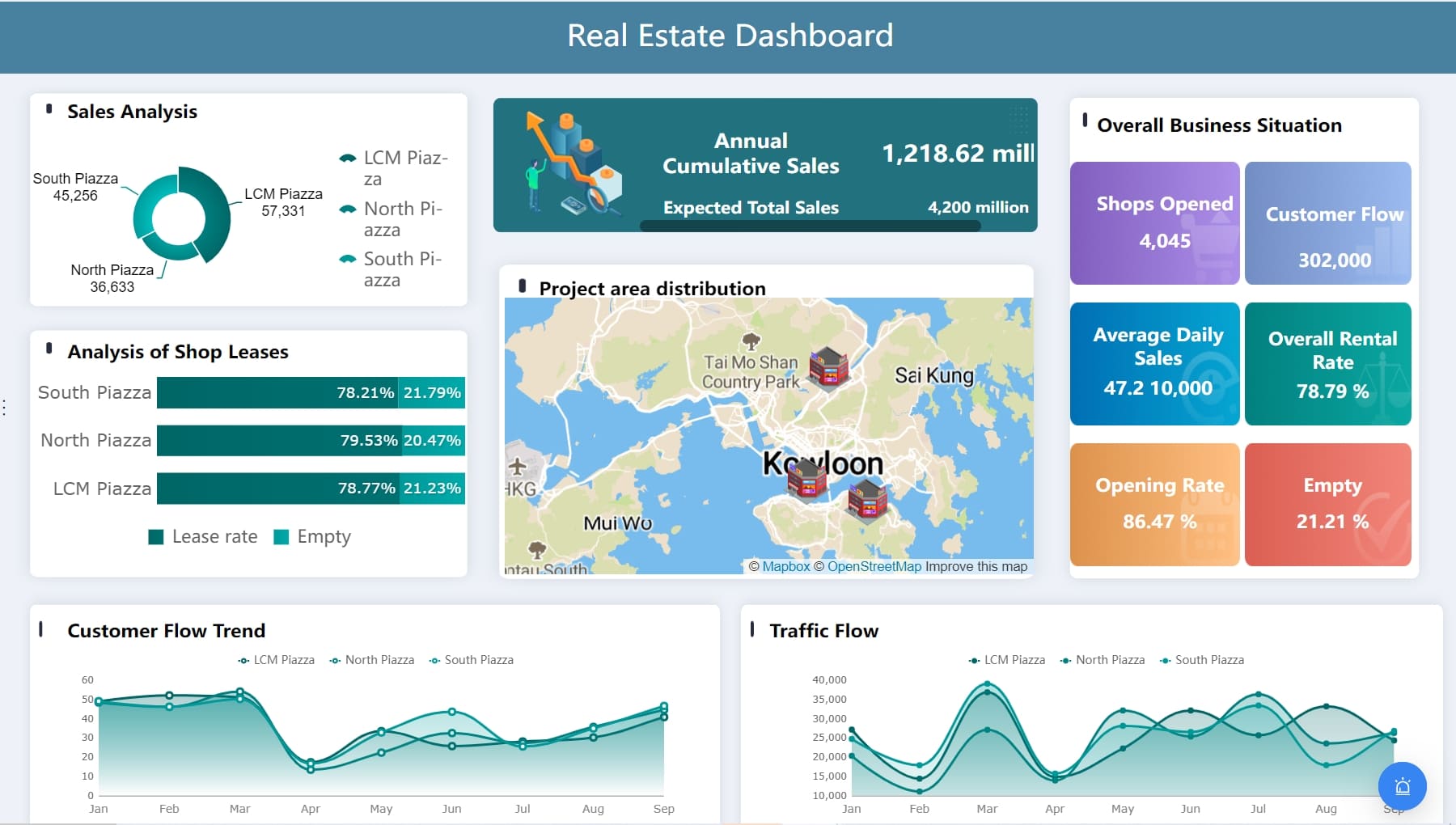
A real estate dashboard helps you see all your property data together. This tool shows important numbers like energy use and comfort scores. It also shows system health. You can look at these numbers right away. Property managers, investors, and agents use dashboards to make fast choices. Dashboards help you know how your properties are doing. They let you fix problems before they get bigger. Many top property management magazines say dashboards are the best for real-time data. You can change what you see on the dashboard to show what matters most.
FanRuan and its FineBI platform are leaders in this area. FineBI lets you connect to lots of data sources. You can make dashboards that fit what you need. You can watch real estate metrics and see updates right away.
Types of real estate dashboards
There are different kinds of dashboards for real estate management. Each one helps with a special job. The table below lists common dashboards and what they do:
Dashboard Type
Primary Functions
Facility Management Dashboard
Tracks service requests, response times, maintenance costs, and tenant satisfaction scores.
Property Management Dashboard
Monitors occupancy rates, rental income vs. operating costs, lease duration, and tenant retention metrics.
Financial Dashboard
Provides insights on net operating income, gross property income, management costs, and property value trends.
Real Estate Sustainability & ESG Dashboard
Tracks energy consumption, carbon footprint, and community satisfaction, aligning with sustainability goals.
Operations Dashboard
Monitors work order management, SLA performance, compliance status, and occupancy changes.
You can also find dashboards that show how buildings are running. Some dashboards give a big picture of all your properties. Some show live updates.
How dashboards differ from traditional tools
Dashboards change how you manage real estate compared to old tools. You get new data right away instead of old reports. You can change reports to match your goals. Dashboards do reporting for you, so you do not have to type in data. You can bring data from many places together to see how your properties are doing.
Real estate dashboards let you make charts and graphs for different people.
Old tools usually give basic reports that may not help with special needs.
With dashboards, you spend more time looking at data and less time entering it. You can see trends, set goals, and manage your properties better.
Key features of real estate metrics dashboard
Essential metrics for property management
You need to watch the right numbers to manage properties well. A real estate metrics dashboard puts these numbers in one place. This helps you find problems early and make smart choices. Here are some important numbers you should check:
Metric
Description
Occupancy Rates
Percentage of occupied units versus total units available.
Maintenance Costs
Total expenses incurred for property maintenance.
Rental Income
Total income generated from rental properties.
Ongoing Maintenance Requests
Number of active maintenance requests from tenants.
Lease Contract Deadlines
Important dates for lease renewals and expirations.
Payment Delays
Instances of late rent payments by tenants.
You can also keep track of these numbers: occupancy and vacancy rates, rental income compared to costs, average lease length, number of renewed contracts, and rental revenue. A real estate metrics dashboard shows these numbers in a clear way. You can see trends and compare different properties. You can use real estate data visualization to make charts and graphs. This makes it easier to understand your business.
Customization and integration with FineBI
You want your dashboard to match what you need. FineBI lets you change your real estate metrics dashboard. You can pick which numbers to show. You can move things around and add charts. FineBI connects to many data sources. You can use Excel files, big data platforms, and SQL databases. You can model your data and link different sets together. You do not have to set up everything by yourself. FineBI has a user-friendly interface. You can look at your data and do joint analysis easily.
Feature
Description
Data Integration
FineBI connects with over 30 big data platforms and SQL data sources, including Excel file datasets.
Data Modeling
Admins can model data based on relationships in the data warehouse and configure linkages easily.
User-Friendly Interface
Users can explore data and perform joint analysis on related datasets without manual configurations.
You can build your real estate metrics dashboard by dragging and dropping tools. You can set filters and pick what you want to see. You can share your dashboard with your team. You can work together and make choices faster.
Real-time data and visualization
You need to know what is happening right now. Real estate metrics dashboards give you real-time data. You can see updates as soon as they happen. You can use real estate data visualization to turn numbers into charts and maps. You can spot trends and act fast.
Advantage
Description
Instant Insights
Real-time dashboards provide immediate access to critical data, enabling timely decision-making.
Data Integration
They allow for the integration of various data sources, enhancing the comprehensiveness of insights.
Enhanced Decision-Making
Access to real-time data empowers teams to make informed decisions quickly and effectively.
You can get instant insights from your real estate metrics dashboard. You can make choices using new data. You can see how your properties are doing in different places. You can use real estate data visualization to compare results and find patterns.
Real-time access to important data helps you make smart choices fast.
You can bring data from many places together for a full view.
You can use real estate data visualization to help your team understand the numbers.
A real estate metrics dashboard helps you manage properties with confidence. You can track key numbers, change your dashboard, and use real-time data visualization to make your business better.
Performance dashboard benefits for property managers
Data-driven decision-making
A performance dashboard helps you make smart choices in real estate. You see real estate performance metrics right away. You can check key performance indicators like occupancy rates and rental income. You also see maintenance costs. FineBI gives you helpful data so you can act quickly. You do not need to wait for old reports. You can change your plans when the numbers change.
Feature
Benefit
Real-time Data Updates
You get quick updates about property performance metrics. You can change your plans fast.
Customizable Reports
You can make reports that fit your goals. This makes them more useful for you.
Integration with Multiple Data Sources
You can see all your property data together. This helps you make better plans.
You can change your property management dashboard to show what matters most. You can connect data from different places. You get a clear view of your properties. You can use tools to track real estate performance metrics and key performance indicators. You make choices based on facts, not guesses.
A performance dashboard helps you work faster and better. You can see work orders, maintenance requests, and tenant feedback in one spot. You do not need to check many systems. You can watch tasks and find problems early. Your team can use the dashboard together. Everyone sees the same data. You can share updates and give jobs quickly.
Investa, a real estate company in Australia, had trouble with manual reports and scattered systems. They started using a connected dashboard. They put all their data in one place.
Real-time monitoring gave them quick updates on work orders. They had less downtime and better service.
Leaders used data to save money and improve service. They earned more and tenants were happier.
You can use a property management dashboard to help your team work together. You can track performance metrics and key performance indicators. You can check progress and share results. You save time and avoid mistakes.
Financial oversight and reporting
A performance dashboard helps you manage money better. The dashboard connects income and expenses. You see real estate performance metrics like rental income and operating costs. You also see payment delays. You can watch cash flow and find problems early. You do not miss important dates. You can track contract renewals and lease expirations.
Dashboards make decisions easier. You see all numbers in one place. You do not miss anything.
You feel confident about your money management. You can check income and expenses together.
The dashboard helps you manage contracts before problems start. You see timelines and jobs clearly.
You can use a property management dashboard to make good reports. You can track real estate performance metrics and key performance indicators. You can share money data with your team. You make smart choices and keep your business strong.
A real estate dashboard gives you tools to watch, study, and improve property management. You use data to make choices. You work faster and better with your team. You control your money. You can trust your performance dashboard to help you reach your goals.
Building real estate dashboard solutions and best practices
Choosing the right dashboard solution
You need a dashboard that matches your real estate work. First, think about what your team needs most. Leaders want to see the big picture. Operations teams want to compare different properties. Finance teams want to see all their numbers together. Everyone wants to see data in a clear way. Your dashboard should also work with your current systems, like ERPs and Excel.
Criteria
Description
High-level visibility
Leadership wants high-level dashboard visibility.
Cross-property comparisons
Operations teams need cross-property comparisons.
Consolidated views
Finance teams require consolidated portfolio views.
Ability to integrate with multiple ERPs and Excel trackers.
FineBI from FanRuan has these features for you. You can make dashboards for building performance, investment analysis, or energy and emissions tracking. These tools help you watch your properties and make them better.
Implementation tips with FineBI
You can build your real estate dashboard step by step. Start with a simple template first. Add more features as you learn what works best. FineBI lets you drag and drop charts and connect to many data sources. You can track energy use, emissions, and costs. You can also make an investment analysis dashboard to see how your properties are doing.
Tip: Teach your team how to use the dashboard. Good training helps everyone use the new system and not go back to old ways.
Dashboards help you track service requests, response times, maintenance costs, and tenant satisfaction. You can also watch energy use and emissions. This helps you save energy and make your properties worth more.
Common pitfalls to avoid
You might have some problems when you start using a real estate dashboard. Too many changes at once can slow you down. Start with a simple template and change it slowly. If you skip training, people may use old tools again. Always test your data connections to stop mistakes.
Pitfall
Solution
Over customization
Start with standardized templates and refine gradually.
Neglecting user training
Provide proper onboarding to prevent reversion to legacy systems.
Ignoring integration testing
Regularly validate data flow to protect against system failures.
Treating platform as a reporting tool
Recognize the platform's full capabilities beyond just reporting.
Underestimating change management
Invest in user adoption strategies to ease transitions.
Integrating inconsistent data
Ensure source data is clean and consistent before integration.
Some teams may not want to use data for decisions. You can help by showing the benefits and leading well. Make sure your data is clean before you connect it. This keeps your dashboard working right.
Note: Real estate dashboards let you see all your data in one place. You can track energy use, emissions, and costs. You can also use an investment analysis dashboard to check your returns.
Real estate dashboard solutions: trends and future outlook
Case studies and success stories
You can see how real estate dashboard solutions help by looking at real examples. Many property managers use dashboards to see all their properties in one place. They can look closer at details, check rent-rolls, and guess how much money they will make. Automated work-order analytics help you find problems before they get big. You can also learn what tenants like and help them stay longer. When you use real estate dashboard solutions, you can tell the difference between capital expenses and operating expenses. This makes your money easier to understand. Teams that use data from many places can make choices faster. If you check and update your important numbers often, you can stay ahead in the market.
Emerging technologies in property management
New technology is changing how you use real estate dashboard solutions. Artificial intelligence and machine learning now help you guess what will happen next. For example, machine learning looks at old data to guess what you will need later. AI chatbots answer tenant questions in a way that feels natural. Computer vision lets you do virtual inspections without being there. Cloud APIs connect your systems so everything works together. Predictive analytics help you plan for changes in occupancy and maintenance. These tools can help you spend less money, do more work automatically, and help your team get more done. You get better data and answers faster.
Benefit
Impact
Lower operational expenses
15% reduction
Automated prospect workflows
90% automation
Higher team productivity
40% increase
Preparing for the future with FanRuan
You need to get ready for the future of real estate management. Real estate dashboard solutions will soon give you even more real-time updates. You will be able to react to changes in occupancy or rent right away. Predictive analytics will help you see market trends and pick the best time to invest. AI and machine learning will make it easy to study data and find patterns. You will not have to do extra work. FanRuan and FineBI are leading this change. You can use their dashboards to put all your data in one place, automate your work, and grow your business. With these tools, you can handle new problems and keep your properties running well.
You can change how you manage real estate with a dashboard like FineBI. Real estate dashboards help you follow goals and find risks. They also help you make smart choices. You see data as it happens. You can automate jobs and help your team work well.
Product Trial
FineReport
Pixel-perfect reports · Interactive dashboards · Easy data entry · Digital twins
Access a wealth of case studies, industry insights, and solution guides to accelerate digital transformation.
FAQ
How does a real estate dashboard help you manage properties?
A real estate dashboard shows all your property data in one place. You can track key numbers, spot problems early, and make smart choices fast.
Can you connect FineBI to different data sources?
Yes, you can connect FineBI to databases, Excel files, and big data platforms. You bring all your information together for easy analysis.
What real estate metrics should you track?
You should track occupancy rates, rental income, maintenance costs, lease deadlines, and payment delays. These numbers help you understand your properties.
Can you share dashboards with your team?
Yes, you can share dashboards with your team. Everyone sees the same data. You work together and make decisions faster.