

An ETL tool is a platform that extracts data from multiple sources, transforms it into a usable format, and loads it into a warehouse, lake, application, or operational system for analytics and business workflows.
The 15 Best ETL Platforms Ranked for 2026
Best for fast setup and managed connectors
1. FineDataLink
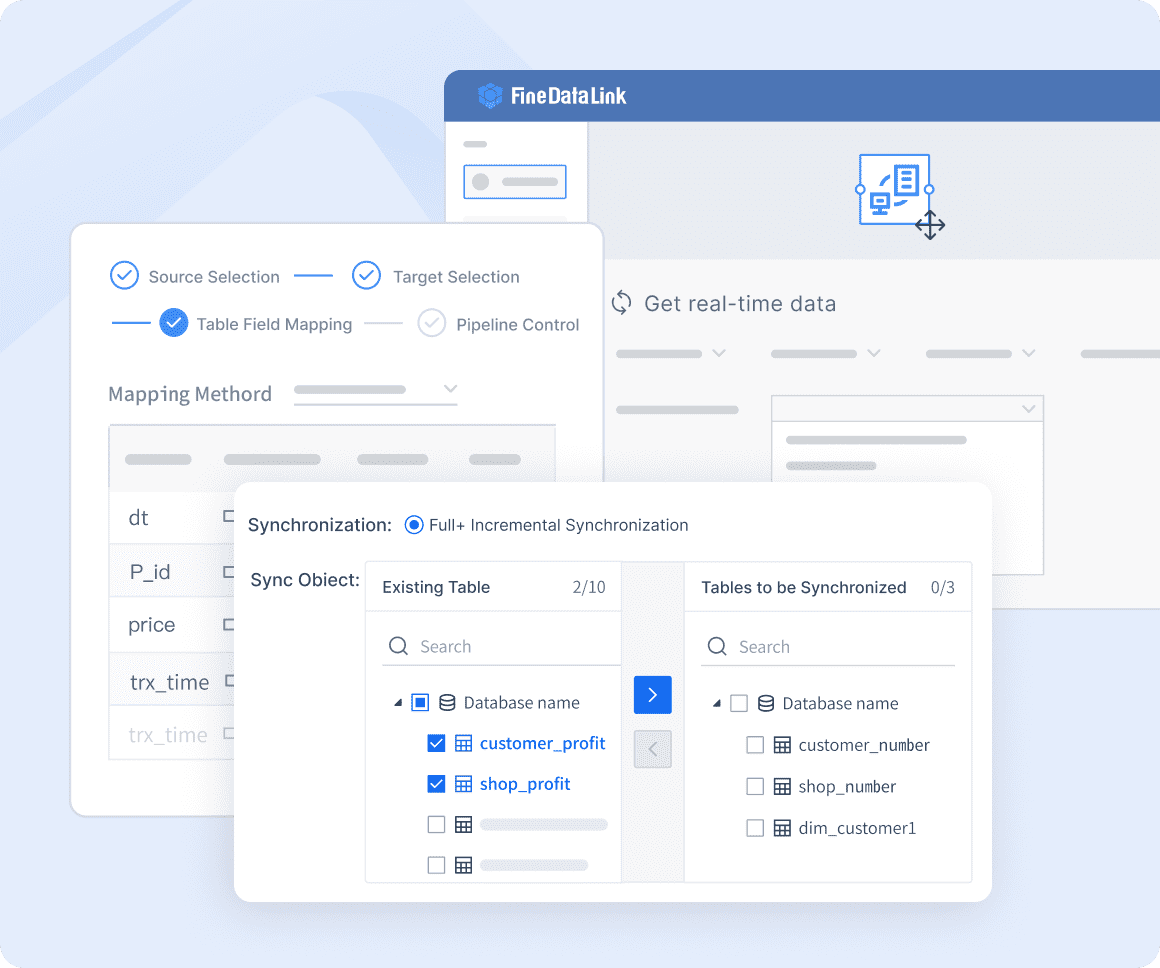
One-sentence overview: FineDataLink is a modern data integration and ETL platform built for teams that need fast pipeline deployment, real-time and batch synchronization, broad connectivity, and lower long-term maintenance effort.
 Key Features:
- Real-time and batch data integration
- CDC support for low-latency replication
- Visual pipeline design for faster setup
- Broad connectivity across databases, cloud platforms, APIs, and business systems
- Support for data distribution and multi-target delivery
- Centralized management for sync tasks and monitoring
Pros & Cons:
- Pros: Strong fit for hybrid ETL scenarios, practical balance of usability and control, supports operational sync as well as analytics pipelines, useful for teams that want to reduce custom connector work.
- Cons: Buyers should still validate niche connector depth and advanced transformation requirements during a proof of concept.
Best For (Target user/scenario): Mid-market and enterprise teams that want a flexible ETL tool with both batch and real-time capabilities without taking on heavy engineering overhead.
2. Fivetran
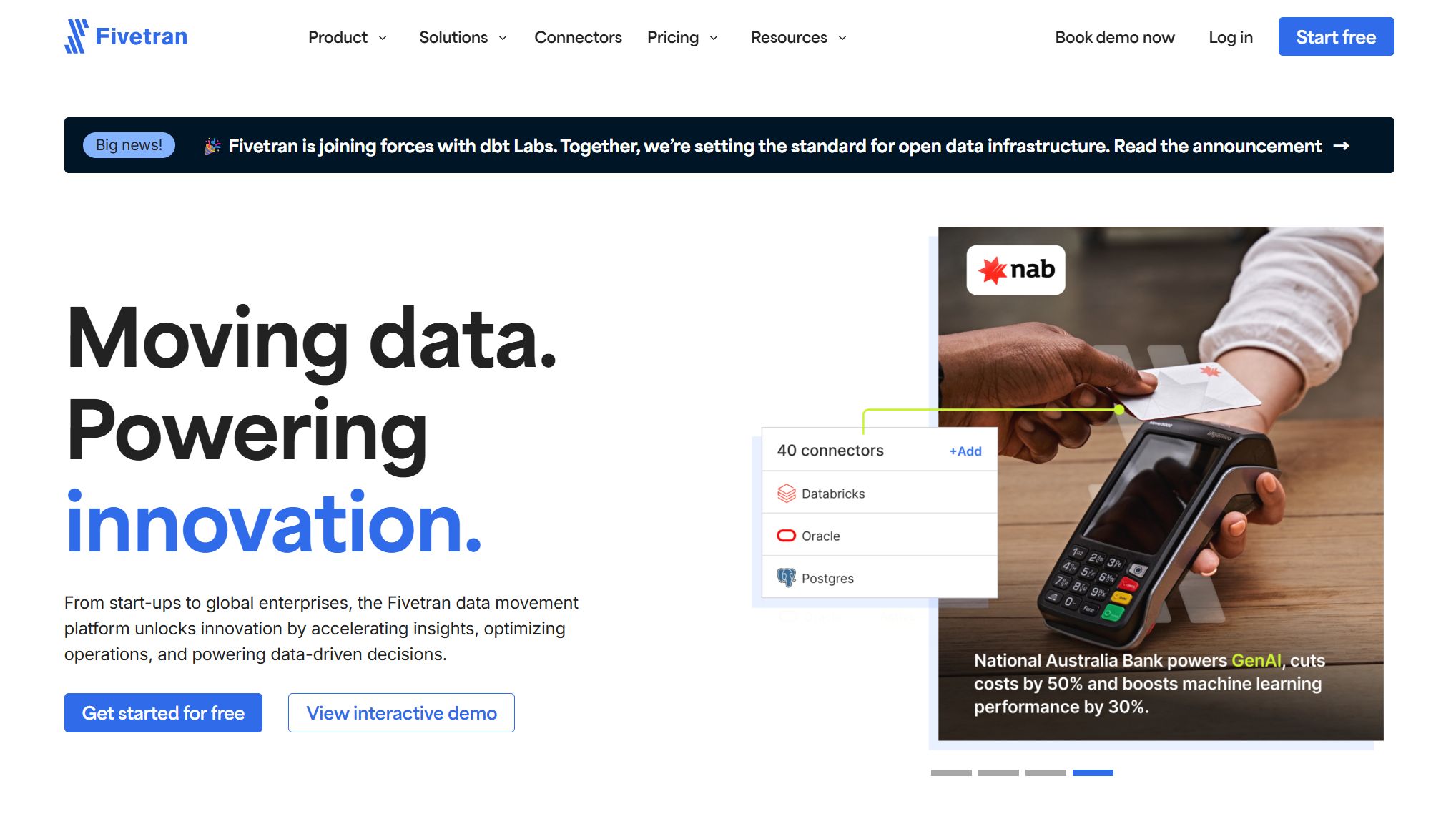
One-sentence overview: Fivetran is a managed ELT platform known for automated connectors, schema change handling, and low day-to-day maintenance.
 Key Features:
- Large library of prebuilt connectors
- Automated schema evolution
- Managed pipeline operations
- CDC and frequent sync options
- Integration with cloud warehouses and dbt workflows
Pros & Cons:
- Pros: Very fast to deploy, strong connector reliability, low operational burden.
- Cons: Usage-based pricing can rise quickly at scale; transformation flexibility inside the platform is limited compared with engineering-first tools.
Best For (Target user/scenario): Data teams that want turnkey ingestion into cloud warehouses with minimal infrastructure work.
3. Hevo Data
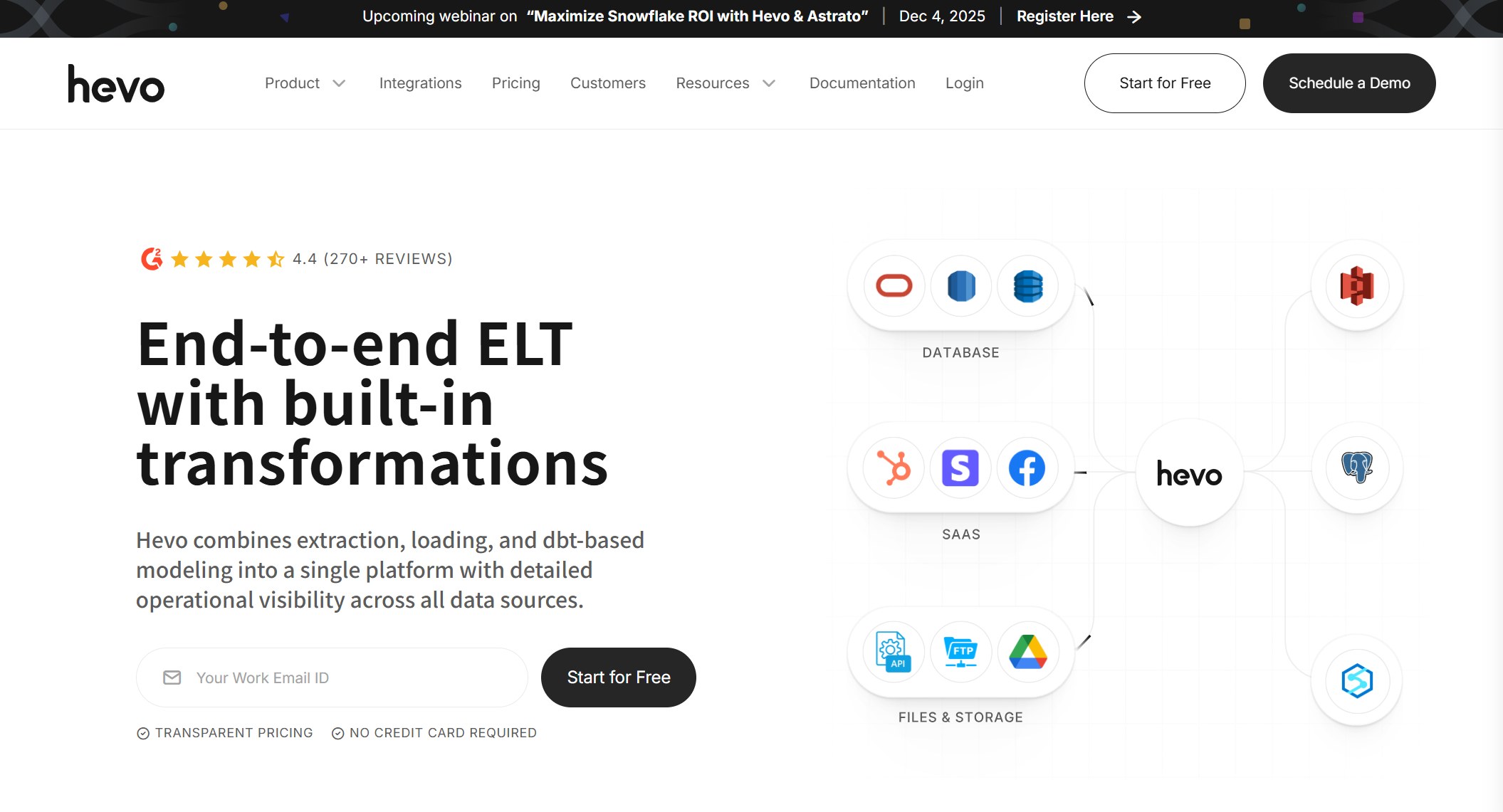
One-sentence overview: Hevo Data is a cloud-native ETL/ELT platform that emphasizes ease of use, no-code setup, and quick integration with common SaaS and database sources.
 Key Features:
- No-code pipeline setup
- Real-time and near-real-time sync
- Prebuilt connectors for SaaS apps and databases
- Basic transformation support
- Monitoring and alerting
Pros & Cons:
- Pros: Accessible for smaller teams, quick onboarding, relatively simple user experience.
- Cons: Advanced customization can be limited; connector breadth may not match the largest platforms in every category.
Best For (Target user/scenario): Lean analytics teams that need to get data flowing quickly without dedicated platform engineering.
4. Stitch
One-sentence overview: Stitch is a lightweight ETL service focused on straightforward data ingestion into warehouses for analytics use cases.
 Key Features:
- Simple connector setup
- Warehouse-focused replication
- Scheduling and sync controls
- Support for common SaaS tools and databases
Pros & Cons:
- Pros: Easy to understand, suitable for basic ingestion, lower barrier to adoption.
- Cons: Less feature depth than broader platforms; complex governance and enterprise controls are not its strongest area.
Best For (Target user/scenario): Startups and small teams with relatively standard ingestion needs.
Best for customization and engineering control
5. Airbyte
One-sentence overview: Airbyte is an open-source and commercial data movement platform that gives engineering teams strong extensibility and custom connector flexibility.
 Key Features:
- Open-source core
- Large and growing connector ecosystem
- Self-hosted and managed deployment options
- Connector builder and custom source support
- API-first operation
Pros & Cons:
- Pros: High flexibility, strong for custom integrations, attractive for teams that value portability and transparency.
- Cons: Connector quality can vary; self-hosted deployments may increase maintenance workload.
Best For (Target user/scenario): Data engineering teams that need custom connectors or want greater platform control.
6. Matillion
One-sentence overview: Matillion is a cloud-focused ETL/ELT platform designed for teams that want visual orchestration with deeper transformation control inside warehouse-centric architectures.
 Key Features:
- Pushdown transformations for cloud warehouses
- Visual job orchestration
- Support for Snowflake, BigQuery, Redshift, Databricks, and Synapse
- Scheduling, monitoring, and environment management
- Integration with SQL-based workflows
Pros & Cons:
- Pros: Good balance of low-code development and technical depth, strong fit for modern warehouse stacks.
- Cons: More configuration than fully managed ingestion tools; total cost includes platform plus warehouse compute.
Best For (Target user/scenario): Data teams that want more control over transformations without building every pipeline from scratch.
7. AWS Glue
One-sentence overview: AWS Glue is a serverless ETL service for teams operating heavily within the AWS ecosystem and needing scalable batch or streaming data pipelines.
 Key Features:
- Serverless Spark-based processing
- Data Catalog and crawlers
- Glue Studio visual authoring
- Batch and streaming ETL
- Tight integration with S3, Redshift, RDS, and Lake Formation
Pros & Cons:
- Pros: Strong native AWS integration, scalable architecture, no cluster management.
- Cons: Pricing can be harder to predict; debugging and developer experience may feel less streamlined for some teams.
Best For (Target user/scenario): AWS-centric organizations with in-house engineering capability.
8. Azure Data Factory
One-sentence overview: Azure Data Factory is Microsoft’s managed data integration service for orchestrating ETL, ELT, and hybrid data movement across cloud and on-prem systems.
Key Features:
- Visual pipeline orchestration
- Hybrid data movement support
- Broad connector library
- Integration with Azure Synapse and Microsoft services
- Scheduling, triggers, and data flow support
Pros & Cons:
- Pros: Strong for Microsoft environments, hybrid deployment support, flexible orchestration.
- Cons: Complex implementations can become difficult to manage; non-Azure environments may not get the same operational advantages.
Best For (Target user/scenario): Organizations standardized on Azure and Microsoft data services.
9. Apache NiFi
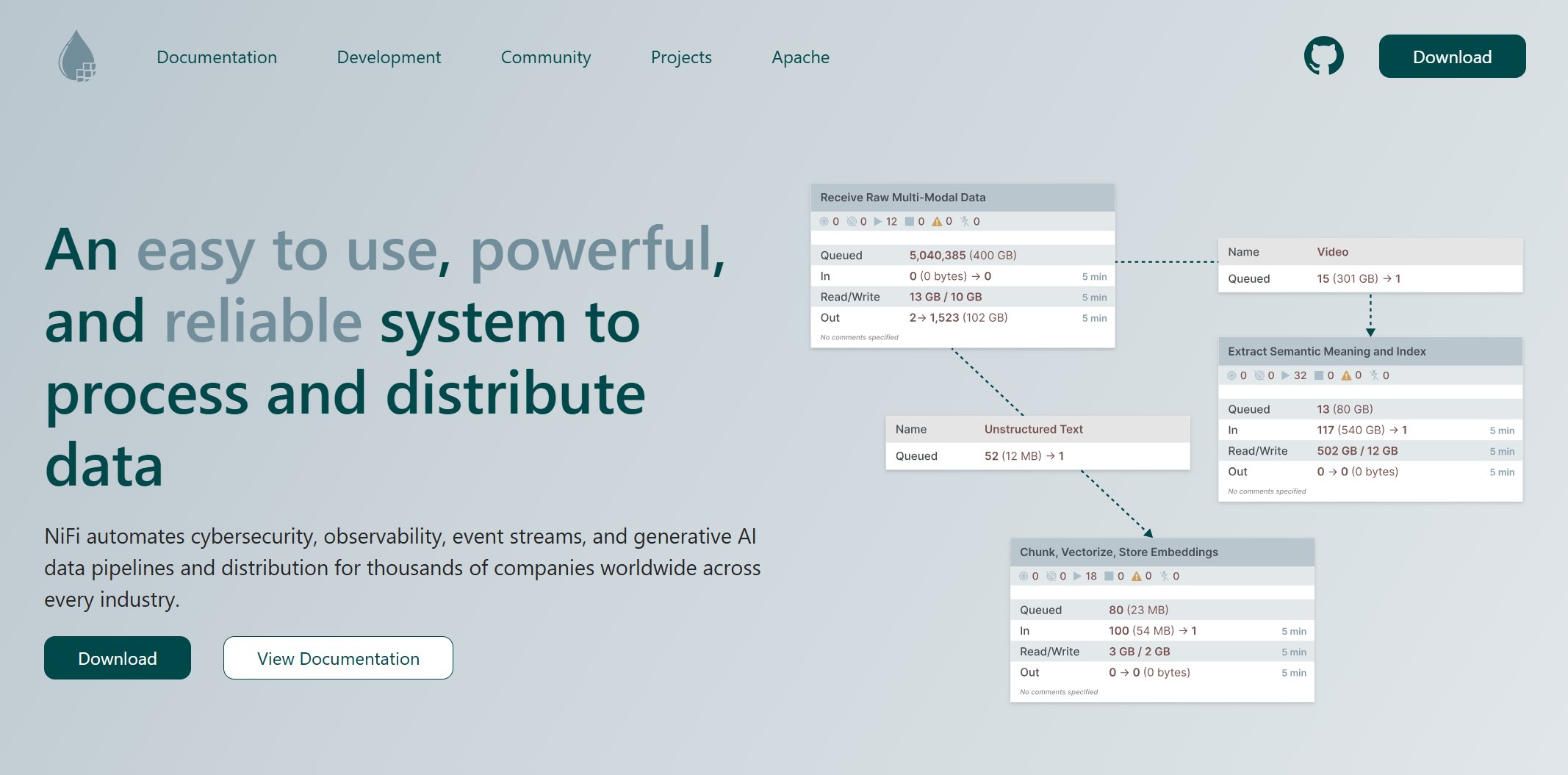
One-sentence overview: Apache NiFi is a flow-based data integration platform built for routing, transformation, and movement of data with fine-grained operational control.
 Key Features:
- Visual flow-based design
- Real-time data routing
- Provenance tracking
- Extensive processors and extensibility
- On-prem and hybrid deployment flexibility
Pros & Cons:
- Pros: Strong operational visibility, flexible routing logic, good for complex internal data movement patterns.
- Cons: Requires more operational expertise; not the easiest option for warehouse-first business teams.
Best For (Target user/scenario): Technical teams managing internal data flows, streaming patterns, and infrastructure-heavy environments.
Best for enterprise governance and scale
10. Informatica Intelligent Data Management Cloud
One-sentence overview: Informatica is an enterprise-grade ETL and data management platform known for governance, metadata, compliance, and large-scale integration programs.
 Key Features:
- Extensive enterprise connectors
- Data quality and governance capabilities
- Metadata management and lineage
- Hybrid and multi-cloud support
- Role-based access and centralized administration
Pros & Cons:
- Pros: Mature enterprise feature set, strong governance, broad deployment flexibility.
- Cons: Higher complexity and cost; often more platform than smaller teams need.
Best For (Target user/scenario): Large enterprises with strict compliance, governance, and multi-team data integration requirements.
11. Talend Data Fabric
One-sentence overview: Talend is a long-standing data integration platform that combines ETL, data quality, and governance for complex enterprise environments.
 Key Features:
- Broad connector support
- Data quality tooling
- Batch and near-real-time integration
- Hybrid deployment options
- Metadata and governance features
Pros & Cons:
- Pros: Strong data quality orientation, good for mixed environments, flexible integration patterns.
- Cons: Can require more setup and specialized knowledge than managed SaaS ETL tools.
Best For (Target user/scenario): Enterprises that need ETL plus data quality and hybrid deployment support.
12. IBM DataStage
One-sentence overview: IBM DataStage is an enterprise ETL platform built for large-scale transformation, governance, and integration in regulated environments.
 Key Features:
- Parallel job execution
- Complex transformation handling
- Enterprise security controls
- Governance and metadata support
- Hybrid data integration patterns
Pros & Cons:
- Pros: Designed for large-scale, mission-critical environments, strong enterprise management.
- Cons: Cost and implementation effort are significant; not ideal for small teams seeking rapid time to value.
Best For (Target user/scenario): Large regulated organizations with established enterprise data programs.
13. Oracle Data Integrator
One-sentence overview: Oracle Data Integrator is an enterprise data integration platform optimized for Oracle-heavy ecosystems and large-scale transformation workloads.
 Key Features:
- ELT-oriented architecture
- Strong Oracle ecosystem integration
- Metadata-driven design
- High-volume processing support
- Enterprise administration controls
Pros & Cons:
- Pros: Strong fit for Oracle estates, scalable enterprise processing model.
- Cons: Less attractive outside Oracle-centered stacks; licensing and administration can be complex.
Best For (Target user/scenario): Enterprises deeply invested in Oracle databases and applications.
Best value for lean teams
14. Dataddo
One-sentence overview: Dataddo is a no-code ETL/ELT platform that aims to keep setup simple and pricing easier to understand for smaller teams.
Key Features:
- No-code data pipelines
- SaaS and BI connector coverage
- Warehouse and app destinations
- Basic scheduling and automation
- Reverse data movement options
Pros & Cons:
- Pros: Accessible interface, good for smaller business teams, relatively quick time to implementation.
- Cons: Advanced engineering and governance requirements may outgrow the platform.
Best For (Target user/scenario): SMBs and lean analytics teams that need simple, business-friendly data movement.
15. Meltano
One-sentence overview: Meltano is an open-source, code-first data integration platform built for teams that want Singer-based flexibility with modern workflow management.
Key Features:
- Open-source framework
- Singer tap and target compatibility
- CLI-first workflow
- Integration with version control and developer tooling
- Extensible orchestration options
Pros & Cons:
- Pros: Cost-effective for technical teams, transparent workflows, strong fit for engineering-driven stacks.
- Cons: Higher maintenance than managed platforms; not aimed at non-technical users.
Best For (Target user/scenario): Small but technical teams that prioritize flexibility and open tooling over convenience.
ETL Tools List for 2026: How to Compare Platforms Before You Buy
Choosing from any etl tools list is easier when you evaluate platforms against your actual workloads instead of headline feature counts.
Start by defining your primary use case:
- Batch pipelines: Scheduled movement from transactional systems into warehouses or lakes.
- Real-time sync: Low-latency replication for dashboards, operational analytics, and event-driven use cases.
- Reverse ETL: Sending modeled warehouse data back into CRMs, marketing platforms, and support tools.
- Hybrid use cases: A mix of batch, CDC, operational sync, and analytics delivery.
Next, separate must-have requirements into clear buckets:
- Connectors: Databases, SaaS apps, files, APIs, event streams, ERP systems, and custom sources.
- Transformation flexibility: SQL pushdown, visual mapping, Python support, dbt compatibility, or advanced business logic.
- Deployment model: SaaS, self-hosted, on-prem, hybrid, or private cloud.
- Governance: Access controls, audit trails, lineage, encryption, policy enforcement, and compliance support.
- Maintenance effort: How much engineering time is needed for setup, monitoring, schema changes, and upgrades.
Finally, decide how your team will weigh trade-offs between:
- Speed of setup
- Long-term ownership cost
- Engineering control
This is where many buyers misjudge tools. A platform that looks inexpensive at entry level may become costly through row-based pricing, premium connectors, or hidden maintenance work. Conversely, a platform with a higher subscription price may reduce engineering burden enough to lower total cost of ownership.
Ranking Criteria: Connectors, Cost, and Maintenance Overhead
Connector breadth and ecosystem fit
Connector coverage is often the first filter in an etl tools list, but raw connector count is not enough. A platform with 500 connectors is not automatically a better fit than one with 150 if the latter covers your core systems more reliably.
When comparing connector breadth, review support across:
- Databases
- SaaS applications
- Cloud warehouses
- Lakehouses
- File systems
- APIs
- Streaming platforms
- On-prem sources
Then go deeper into connector quality:
- Reliability: Do syncs fail often under production load?
- Refresh frequency: Can the platform meet your latency requirements?
- Schema change handling: Does it adapt automatically or require manual intervention?
- Custom source support: Can your team build or request additional connectors?
Tools such as Fivetran and Hevo prioritize managed connectors and simple setup. Platforms like Airbyte and Meltano offer more customization. FineDataLink stands out for teams that need both mainstream integration coverage and practical support for hybrid, real-time, and multi-destination scenarios.
Pricing model and total cost of ownership
ETL pricing is rarely simple. Buyers need to compare more than the starting monthly fee.
Common pricing models include:
- Subscription-based
- Usage-based
- Rows processed
- Compute-based
- Connector-based
- Tiered enterprise licensing
To estimate total cost of ownership, account for:
- Premium connectors
- CDC or streaming add-ons
- Orchestration charges
- Support tiers
- Data volume growth
- Internal engineering time
- Warehouse compute generated by transformation workloads
For example:
- Usage-based tools can be efficient for light workloads but expensive at large data volumes.
- Compute-based tools offer flexibility but can be difficult to forecast.
- Enterprise license models may look expensive upfront but make sense for large, stable environments.
A useful buying question is: What will this tool cost after 12 months of growth, not on day one?
Maintenance, reliability, and team workload
Maintenance overhead is where tool economics often change.
Review:
- Setup complexity
- Pipeline monitoring
- Alerting
- Retry logic
- Versioning
- Documentation quality
- Testing support
- Upgrade management
- Security review requirements
Then estimate ongoing work tied to:
- Connector fixes
- Schema drift
- Transformation changes
- Infrastructure management
- User access control
- Incident response
Fully managed tools reduce operational burden but may limit customization. Engineering-first and self-hosted tools offer flexibility but often shift support responsibilities onto your team. FineDataLink, Fivetran, and Hevo are often evaluated by teams trying to minimize maintenance, while Airbyte, Meltano, NiFi, and cloud-native services like Glue or ADF appeal to teams comfortable owning more of the stack.
Side-by-Side Comparison of Features, Trade-Offs, and Pricing
Connector coverage and data source support
Here is a practical way to compare the 15 tools by connector profile rather than marketing claims.
| Tool | SaaS Connectors | Database Connectors | Warehouse/Lake Support | API/Custom Source Flexibility | Streaming/Real-Time Support | General Connector Profile |
|---|---|---|---|---|---|---|
| FineDataLink | Strong | Strong | Strong | Good | Strong | Balanced for hybrid enterprise use |
| Fivetran | Very strong | Strong | Very strong | Moderate | Strong | Best-in-class managed coverage |
| Hevo Data | Strong | Strong | Strong | Moderate | Strong | Good cloud-native breadth |
| Stitch | Moderate | Strong | Strong | Limited | Moderate | Basic ingestion-focused coverage |
| Airbyte | Strong | Strong | Strong | Very strong | Moderate | Excellent for extensibility |
| Matillion | Moderate | Strong | Very strong | Moderate | Moderate | Strong for warehouse-centric stacks |
| AWS Glue | Moderate | Strong | Very strong in AWS | Strong | Strong | Best in AWS ecosystem |
| Azure Data Factory | Moderate | Strong | Strong in Azure | Strong | Moderate | Best in Microsoft environments |
| Apache NiFi | Limited | Strong | Strong | Very strong | Strong | Great for internal flow engineering |
| Informatica | Very strong | Very strong | Very strong | Strong | Strong | Enterprise-grade breadth |
| Talend | Strong | Very strong | Strong | Strong | Moderate | Broad hybrid support |
| IBM DataStage | Moderate | Very strong | Strong | Moderate | Moderate | Enterprise legacy + modern mix |
| Oracle Data Integrator | Moderate | Strong | Strong | Limited | Moderate | Best in Oracle-centric estates |
| Dataddo | Moderate | Moderate | Strong | Limited | Moderate | Lean business-focused coverage |
| Meltano | Variable | Strong | Strong | Very strong | Limited | Depends on engineering ownership |
Key takeaways:
- Best managed connector breadth: Fivetran, Informatica
- Best open extensibility: Airbyte, Meltano, NiFi
- Best cloud ecosystem fit: AWS Glue, Azure Data Factory, Matillion
- Best balance of broad integration and practical maintenance: FineDataLink
Pricing trade-offs by team size
Pricing fit often changes by company size and pipeline complexity.
Startups
Best options typically include:
- Stitch
- Dataddo
- Hevo Data
- Meltano
- Airbyte
These platforms fit smaller budgets or technical teams willing to trade convenience for lower software spend. However, usage-based pricing can become less favorable as data volumes grow.
Mid-market teams
Best options often include:
- FineDataLink
- Fivetran
- Hevo Data
- Matillion
- Airbyte
Mid-market buyers usually need a better balance between connector reliability, governance, and manageable maintenance. This is where a tool like FineDataLink can be attractive because it supports both fast implementation and more complex sync requirements without forcing an all-in enterprise platform purchase.
Enterprises
Best options usually include:
- Informatica
- Talend
- IBM DataStage
- Oracle Data Integrator
- Fivetran
- FineDataLink
Large organizations care more about governance, deployment flexibility, auditability, and support models than about the lowest entry-level subscription.
Operational overhead and maintenance profile
A simple way to understand operational overhead is to group tools into three categories.
Lowest maintenance
- FineDataLink
- Fivetran
- Hevo Data
- Stitch
- Dataddo
These tools are best when the priority is getting reliable pipelines live quickly and avoiding constant connector troubleshooting.
Moderate maintenance
- Matillion
- AWS Glue
- Azure Data Factory
- Informatica
- Talend
These platforms offer more flexibility or enterprise depth, but they usually require more active management, design discipline, and internal ownership.
Highest maintenance but strongest control
- Airbyte self-hosted
- Meltano
- Apache NiFi
- IBM DataStage
- Oracle Data Integrator in complex deployments
These are better suited for organizations that value customization, platform control, or strict architecture alignment over convenience.
Common buyer questions and real-world evaluation signals
Will we get locked in?
Vendor lock-in usually appears in three places:
- Proprietary pipeline logic
- Proprietary connectors
- Migration-heavy metadata models
Open and code-first tools reduce lock-in risk but increase ownership burden. Managed tools reduce effort but may make migration harder later.
How hard is migration?
Check:
- Export options
- Reusability of SQL/dbt models
- Ability to recreate connectors elsewhere
- Dependency on vendor-specific monitoring and metadata
What is the debugging experience like?
This matters more than many buyers expect. Ask:
- Are logs readable?
- Can you replay failed syncs?
- Is lineage visible?
- Can you isolate a schema drift issue quickly?
What does the user community say?
Strong evaluation signals include:
- Connector issue resolution speed
- Documentation depth
- Frequency of product updates
- Community activity
- Transparency around outages or breaking changes
How to Choose the Right ETL Tool for Your Team
Choose based on your architecture and data maturity
Your best choice depends on both your current stack and how mature your data practice is.
Use this simplified matching logic:
- Cloud warehouse first, low ops required: Fivetran, Hevo Data, FineDataLink
- Warehouse-centric transformation control: Matillion
- AWS-native stack: AWS Glue
- Azure/Microsoft stack: Azure Data Factory
- Custom engineering workflows: Airbyte, Meltano, Apache NiFi
- Enterprise governance and compliance: Informatica, Talend, IBM DataStage
- Oracle-heavy estate: Oracle Data Integrator
- Small team with limited admin bandwidth: Dataddo, Stitch, Hevo Data
- Hybrid batch + real-time operational sync: FineDataLink
If your team is still early in its data maturity, prioritize:
- Connector reliability
- Ease of monitoring
- Clear pricing
- Low maintenance
If your team is mature and engineering-heavy, prioritize:
- Extensibility
- Version control
- Testing
- Custom connector frameworks
- Infrastructure portability
Build a short list and run a proof of concept
A strong proof of concept should not be a polished demo. It should test realistic workloads.
Use 3 to 5 representative scenarios:
- A core SaaS connector with incremental sync
- A database replication job with schema drift
- A transformation workflow with business logic
- A failure and retry scenario
- A security or access-control review
- A reporting output to warehouse or operational destination
During the proof of concept, score each tool on:
- Setup time
- Connector reliability
- Logging quality
- Alerting
- Change management
- Documentation
- Support responsiveness
- Estimated monthly cost at current and projected scale
This is often where theoretical rankings change. A platform that looks ideal on paper may fail on one critical connector or become too expensive once realistic data volume is modeled.
Use a final decision checklist
Before buying, confirm the following:
Connector fit
- Does the tool support all critical systems today?
- How are new connectors requested or built?
- How does it handle APIs, files, and edge-case sources?
Transparent pricing
- What metric drives cost?
- What happens when data volume doubles?
- Are premium connectors or support charged separately?
Observability
- Are monitoring, logs, and alerts usable for day-to-day operations?
- Can failures be diagnosed without vendor support every time?
SLA expectations
- What uptime and support response commitments are available?
- Are enterprise support tiers required for acceptable service?
Support quality
- Is onboarding effective?
- Are docs current and technical enough for your team?
Future scalability
- Can the platform handle more sources, more destinations, and stricter governance later?
- Will it still fit if your use cases expand from batch analytics to real-time sync or reverse ETL?
Final Verdict on the Best ETL Tools List for 2026
If you need the shortest path to reliable data movement, managed platforms remain the safest option. If you need deeper customization, open and engineering-first tools still offer the most control. If you operate under strict governance or hybrid architecture constraints, enterprise platforms justify their complexity.
For many modern teams, the right choice is not the platform with the biggest connector count or the lowest advertised starting price. It is the one that matches your architecture, keeps maintenance predictable, and scales without forcing a full rebuild later.
Among this etl tools list, FineDataLink is especially worth shortlisting for teams that want a practical mix of connector coverage, real-time and batch integration, manageable ownership cost, and lower maintenance pressure. It is particularly well suited for organizations that need more than simple warehouse ingestion but do not want the operational burden of stitching together multiple tools.
If you are evaluating ETL platforms for 2026, build a shortlist around your real workloads, test failure scenarios early, and compare total ownership cost instead of feature counts alone. That is how you choose a platform that will still work for your team a year after implementation, not just during procurement.
FAQs
Focus on connector coverage, pricing model, ease of setup, transformation depth, real-time or batch support, and expected maintenance effort. The best choice depends on your data sources, team skills, and whether you need simple ingestion or more advanced pipeline control.