Choosing the best supply chain tools in 2026 means you gain smarter management and real-time insights for your business. You see how supply chain management tools and software transform operations, with 86% of executives planning to invest in AI and analytics for cost reduction. Digital transformation increases supply chain management efficiency by reducing transaction costs and improving resilience. Against this backdrop, here is a curated list of the 9 Best Supply Chain Tools for Smarter Management in 2026:
- SAP IBP
- Oracle SCM
- Kinaxis RapidResponse
- Manhattan Associates
- Blue Yonder
- Infor
- Coupa
- E2open
- FineReport
| Finding | Description |
|---|---|
| Digital Transformation Impact | Significantly improves supply chain efficiency by reducing transaction costs and enhancing resilience. |
| Dataset | 41,657 firm-year observations from Chinese A-share listed companies (2009-2023). |
FineReport lead with solutions that solve integration, visibility, and efficiency challenges, giving you the data and insights you need for success.
Why Supply Chain Management Needs Smarter Tools
Key Challenges in Modern Supply Chains
You face many obstacles in supply chain management today. Companies must adapt quickly to market changes, but several challenges slow progress. The table below shows the most common issues you encounter:
| Challenge | Description |
|---|---|
| Workforce Development | Companies investing in training programs outperform competitors in adapting to market changes. |
| Technology Implementation Complexities | 41% of companies using advanced planning systems still require extensive manual interventions. |
| Geopolitical Tensions | Two-thirds of organizations are regionalizing their supply chains due to geopolitical issues. |
| Supply Chain Transparency | Modern consumers demand information about product origins and environmental impacts. |
| Automation | Successful automation enhances human capabilities rather than replacing them. |
| Materials Scarcity | Shortages of materials like glass, plastics, and metals delay production and increase costs. |
| Rising Fuel Costs | Ongoing conflicts have led to increased fuel and energy prices. |
| Complex Demand Forecasting | Determining demand patterns has become increasingly challenging in a fast-paced market. |
| Labor Shortages | Retaining talent post-pandemic is no longer solely about salary increases. |
| Environmental and Social Impacts | Businesses need to invest in sustainable supply chains to reduce costs and dependence. |
You also see volatility in demand and supply. Latency in supply chain events leads to delayed responses. Inefficiencies persist even when you try to optimize processes. Disruptions can cause losses in sales and revenue. Customer satisfaction drops when delays and shortages occur. The ripple effect impacts suppliers and logistics providers. Industries like automotive, retail, healthcare, technology, and food face unique challenges during disruptions. Increased costs and reduced output often result. Many companies now diversify suppliers and localize production to build resilience and flexibility.
The Role of Digital Transformation
Digital transformation changes how you manage supply chain management. You use ai tools to improve supply chain visibility and forecasting. Technologies such as IoT, cloud computing, big data analytics, and artificial intelligence help you access real-time data and make better decisions. The table below highlights how these technologies impact supply chain visibility:
| Technology Used | Impact on Supply Chain Visibility |
|---|---|
| Internet of Things (IoT) | Enhances transparency and real-time data access |
| Cloud Computing | Optimizes decision-making and resource allocation |
| Big Data Analytics | Improves flow of information among supply chain partners |
| Artificial Intelligence | Increases responsiveness to unforeseen events |

You benefit from real-time analytics, which transforms supply chain management by providing timely information and reducing reliance on outdated data. These ai tools allow you to monitor events as they happen and respond proactively. You can collect and analyze procurement data for improved decision-making. Integration with ERP systems enhances operational efficiency. Real-time analytics supports procurement managers in analyzing various data sets and enables better forecasting. You gain immediate insights, which help you maintain smooth operations even when unexpected events occur.
Tip: Embracing digital transformation and ai tools gives you a competitive edge in supply chain management. You can anticipate disruptions, optimize resources, and improve forecasting accuracy.
Essential Features of Supply Chain Tools
Automation and Workflow Integration
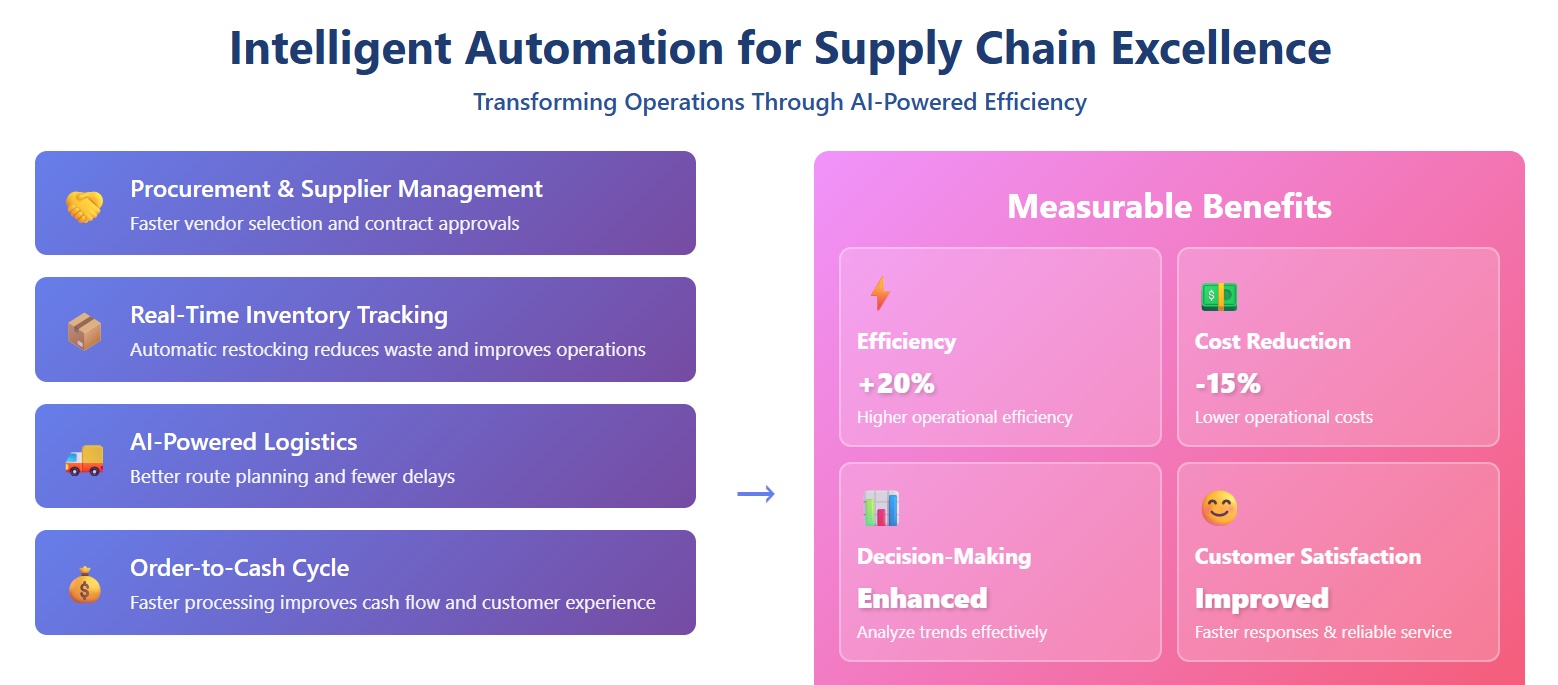
You need supply chain management tools that deliver automation and efficiency. Intelligent automation speeds up procurement and supplier management, making vendor selection and contract approvals faster. You see real-time inventory tracking and automatic restocking through AI, which reduces waste and improves operations. Logistics improvements with AI lead to better route planning and fewer delays. The order-to-cash cycle moves faster, improving cash flow and customer experience. When you use workflow integration, you gain measurable benefits:
| Benefit | Measurement |
|---|---|
| Efficiency | 20% higher efficiency |
| Cost Reduction | 15% lower costs |
| Improved Decision-Making | Enhanced ability to analyze trends |
| Customer Satisfaction | Faster responses and reliable service |
Real-Time Data and Analytics
Supply chain management relies on real-time data monitoring and analytics for smarter decisions. You get immediate feedback on logistics conditions, which helps you adapt quickly to market demands. Analytics let you minimize costs from delays or overstocking. A retail giant reduced holding costs by 20% using real-time analytics. Another company achieved a 30% reduction in IT costs and a 75% improvement in data query times, enabling near real-time decision-making. Walmart saw a 40% drop in inventory costs and a 25% increase in customer satisfaction by using analytics and IoT sensors. You gain insights that improve forecasting and customer experience.
Scalability and Flexibility
You want supply chain management tools that grow with your business. A demand planning tool should support rapid growth, keeping speed and stability as you add more SKUs, sites, and transactions. The tool must adapt to your workflows and planning logic. Cloud technology allows you to scale resources quickly, which boosts operational efficiency and customer satisfaction. Embracing scalable and flexible solutions helps you stay competitive and respond to market challenges.
Risk Management and Compliance
Supply chain management tools must address risk and compliance. You need technology that provides visibility and consistency. Conduct gap assessments of third-party risk processes to find weaknesses. Use continuous monitoring tools for real-time risk assessment. Require vendors to maintain incident response plans and use automated screening for compliance. The table below shows key strategies:
| Key Strategies for Risk Management in Supply Chains | Description |
|---|---|
| Continuous Monitoring | Technology platforms provide real-time insights into supplier performance, allowing for swift action on non-compliance issues. |
| Supplier Performance Assessments | Regular audits and clear SLAs help ensure suppliers meet compliance standards. |
| Integration of Risk Management | Aligning procurement strategies with overall risk management frameworks helps identify vulnerabilities. |
| Ongoing Vendor Assessments | Continuous monitoring of vendors is essential to adapt to evolving regulations and risks. |
| Use of Technology | Automated tools and data-driven approaches enhance visibility and proactive risk management. |
Tip: Choose supply chain management tools that combine predictive analytics, intelligent automation, and robust compliance features for the best results.
Top Supply Chain Management Tools for 2026

Choosing the right supply chain tools can transform your business. You gain better visibility, faster decision-making, and improved supply chain efficiency. Below, you will find the leading supply chain management software for 2026, each with unique strengths and features to help you achieve supply chain optimization.
1.SAP Integrated Business Planning (IBP)
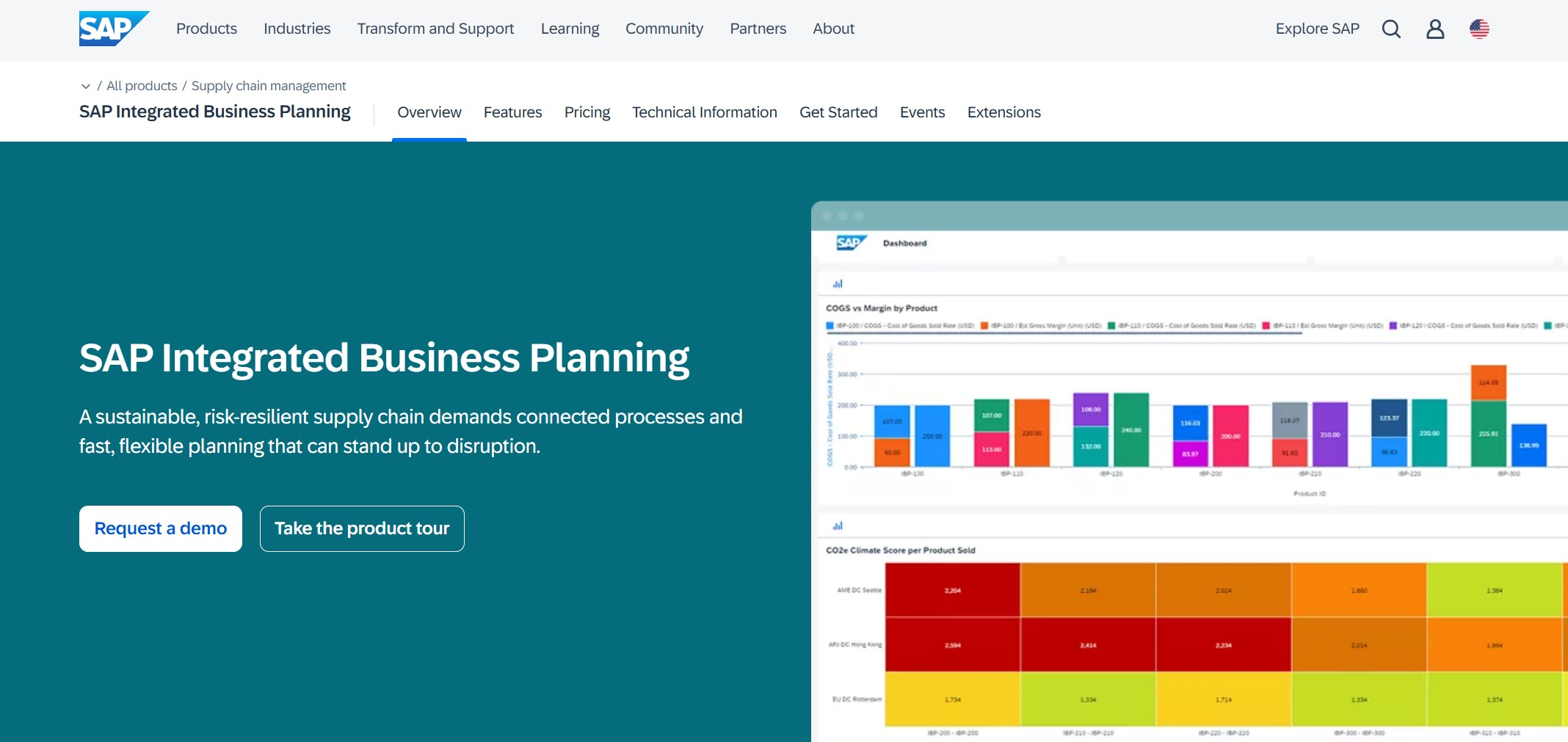
Website: https://www.sap.com/products/scm/integrated-business-planning.html
SAP Integrated Business Planning stands out as a comprehensive platform for supply chain management. You use this software to connect demand, inventory, and supply planning in one place. The system helps you respond quickly to market changes and improves forecast accuracy. You can optimize inventory levels, which frees up capital and reduces carrying costs. The table below summarizes the main strengths:
| Strengths | Description |
|---|---|
| Enhanced Forecast Accuracy | You improve demand planning and reduce errors. |
| Inventory Optimization | You lower inventory costs and free up resources. |
| Improved Customer Satisfaction | You deliver on time and boost service levels. |
| Agility in Supply Chain | You respond quickly to disruptions and market shifts. |
| Integrated Planning | You connect business functions for better decisions. |
SAP IBP works best for large enterprises that need advanced planning and inventory optimization. You benefit from its strong analytics and automation features.
2.Oracle Supply Chain Management Cloud
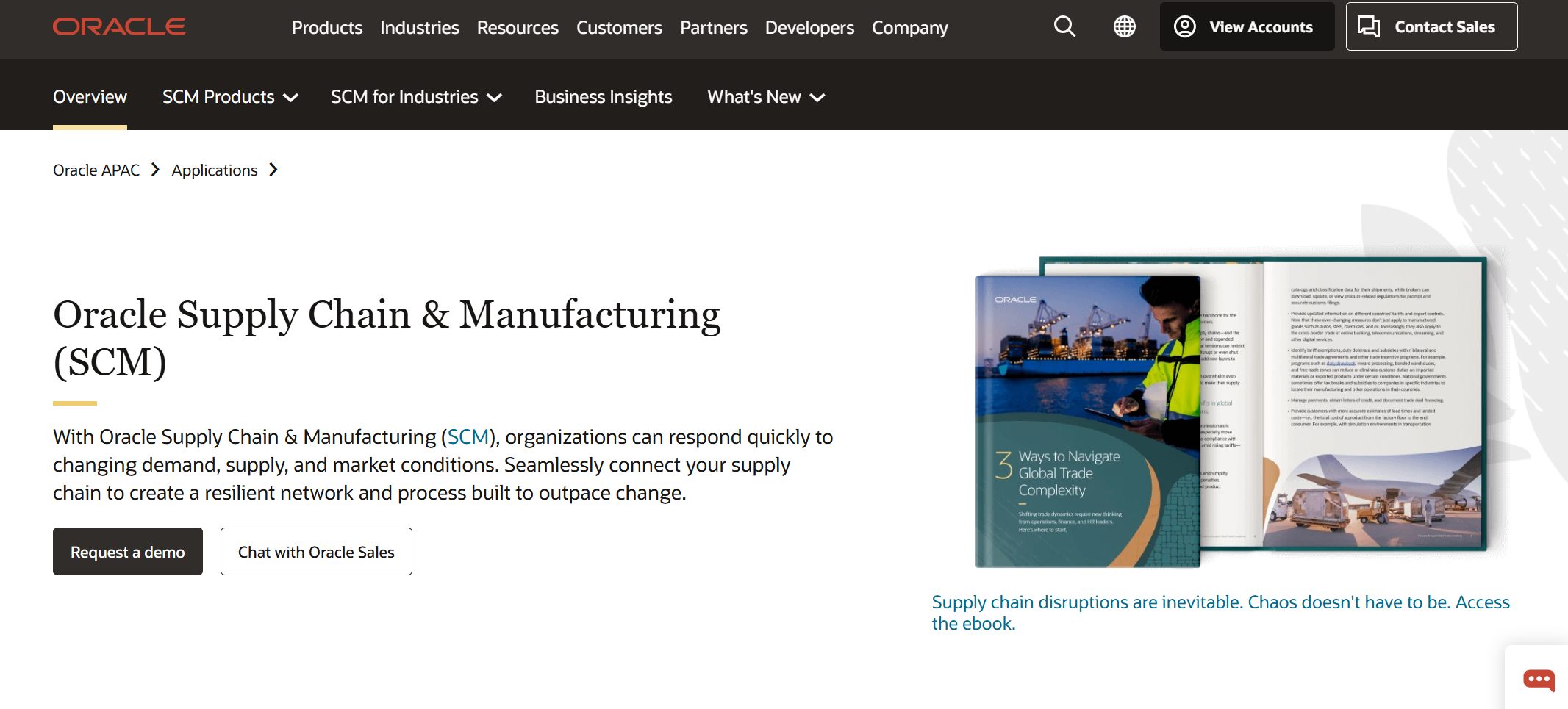
Website: https://www.oracle.com/apac/scm/
Oracle Supply Chain Management Cloud gives you a unified platform for planning, procurement, and logistics systems. You access shared data, which ensures all stakeholders see the same information. This alignment reduces delays and improves efficiency. The software includes prebuilt analytics and embedded machine learning, helping you uncover ways to increase revenue and reduce costs. The table below highlights key features:
| Feature | Description |
|---|---|
| Shared Data Access | You enhance collaboration with real-time information. |
| Alignment of Stakeholders | You reduce delays and improve supply chain efficiency. |
| Prebuilt Analytics Solution | You find new ways to improve operations and customer satisfaction. |
| Embedded Machine Learning | You detect and resolve issues faster with advanced analytics. |
| Integrated Communication Tools | You collaborate better with partners and suppliers. |
Oracle rates highly for digital planning and analytics. You should consider this software if you want strong integration and advanced analytics in your supply chain tools.
3.Kinaxis RapidResponse
Website: https://www.kinaxis.com/en/solutions/platform
Kinaxis RapidResponse offers real-time planning and scenario simulation. You use its concurrent planning engine to adjust plans quickly. The software brings sales and operations together in one collaborative space. You benefit from intuitive dashboards that make adoption easy, especially if you know Excel. The table below outlines standout features:
| Feature | Description |
|---|---|
| Real-time recalculation | You adjust plans instantly as conditions change. |
| Collaborative planning | You unite teams for better decisions. |
| Intuitive dashboards | You access user-friendly interfaces for quick adoption. |
| Speed and agility | You reduce planning time from days to minutes. |
| Digital twins | You visualize unlimited scenarios for better forecasting. |
| Scalability | You handle big data and complex needs with ease. |
| Robust reporting | You generate comprehensive reports that integrate with various ERPs. |
Kinaxis works well for companies that need speed, agility, and advanced scenario planning.
4.Manhattan Associates
Website: https://www.manh.com/
Manhattan Associates leads in warehouse and logistics systems. You gain real-time tracking and reporting, which improves visibility across your supply chain. Companies like PetSmart have seen a 60% drop in "where's my truck" calls, thanks to proactive ETA notifications. Integration with platforms like FourKites gives you actionable insights to manage disruptions. You benefit from enhanced communication and route optimization, making your supply chain more resilient.
5.Blue Yonder Luminate Platform

Website: https://blueyonder.com/
Blue Yonder Luminate Platform uses AI and machine learning to deliver powerful insights. You get end-to-end visibility across your supply chain, which boosts operational efficiency. The platform adapts to your business needs and integrates quickly with existing solutions through a common API set. The table below shows its unique capabilities:
| Capability | Description |
|---|---|
| AI and ML Integration | You gain advanced insights for better decision-making. |
| End-to-End Visibility | You see your entire supply chain in real time. |
| Adaptability | You adjust planning and execution as your business evolves. |
| Ecosystem Integration | You connect with other tools easily for enhanced capabilities. |
| Autonomous Distribution Networks | You support flexible and automated logistics operations. |
Blue Yonder is ideal for companies seeking advanced automation and visibility.
6.Infor Supply Chain Management
Website: https://www.infor.com/solutions/scm
Infor Supply Chain Management addresses integration challenges in large enterprises. You use industry-specific tools that help you deliver high-quality products on time. The software unifies data and reduces manual processes, which minimizes the need for expensive third-party solutions. Infor tailors its solutions to your industry, making it easier to overcome unique integration issues and improve efficiency.
7.Coupa Supply Chain Design & Planning
Website: https://www.coupa.com/resources/coupa-supply-chain-design-planning/
Coupa Supply Chain Design & Planning extends the scope of supply chain management. You incorporate tactical decision-making into your planning process, which improves responsiveness. The software helps you plan for risk and resilience, adapting to new technologies and business models. The table below highlights key differentiators:
| Key Differentiator | Description |
|---|---|
| Extend the scope of supply chain design | You manage broader aspects for greater efficiency. |
| Incorporate tactical decision making | You respond faster to changes and disruptions. |
| Account and plan for risk and resilience | You develop strategies to handle risks and maintain operations. |
| Adapt new technologies and business models | You stay competitive with the latest innovations. |
Coupa is a strong choice if you want to combine strategic and tactical planning with automation.
8.E2open Supply Chain Platform
Website: https://www.e2open.com/
E2open Supply Chain Platform provides a unified approach to supply chain management. You integrate demand, procurement, inventory, production, and logistics systems into one platform. The software offers real-time monitoring, automated scheduling, and scenario simulation. You benefit from a control tower that tracks KPIs and sends alerts, enabling you to optimize resources and accelerate execution. E2open supports digital management and AI-assisted decision support, making it a comprehensive tool for modern supply chain optimization.
9.FineReport for Supply Chain Management
Website: https://www.fanruan.com/en/finereport
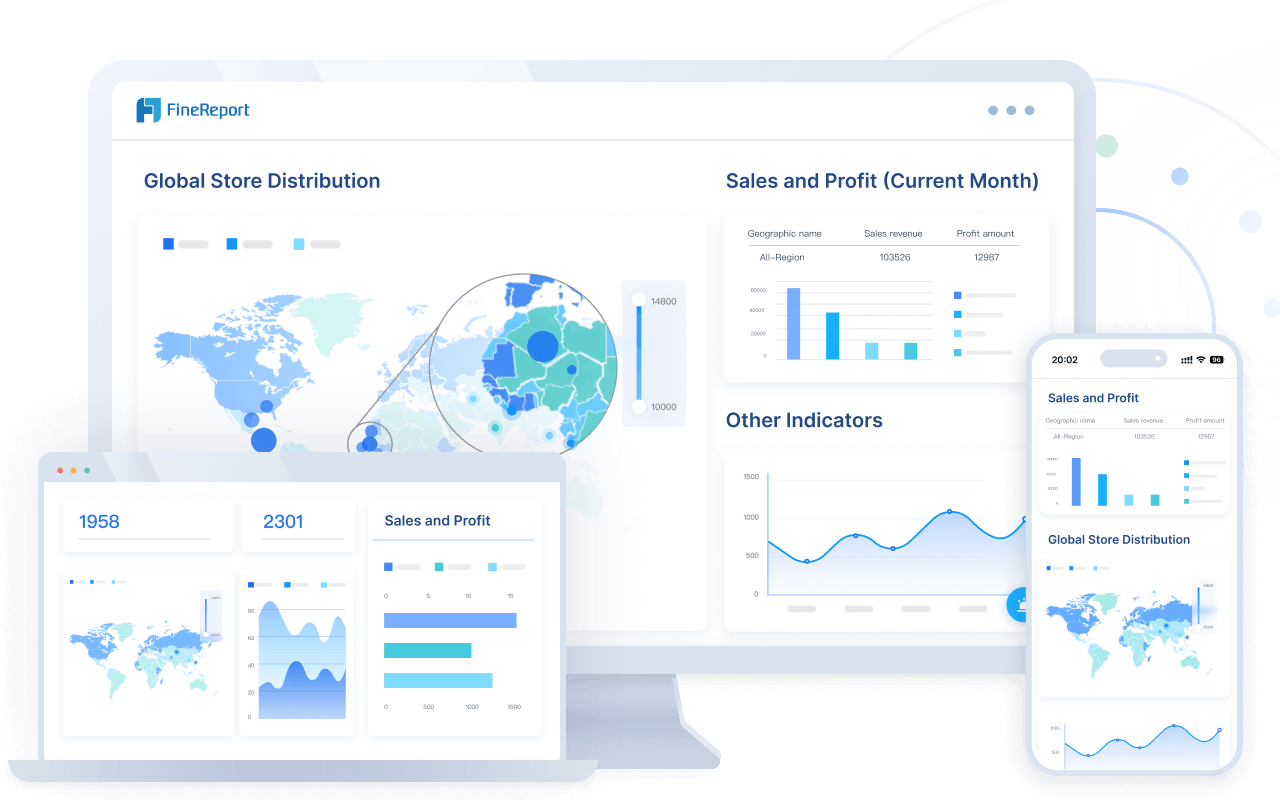
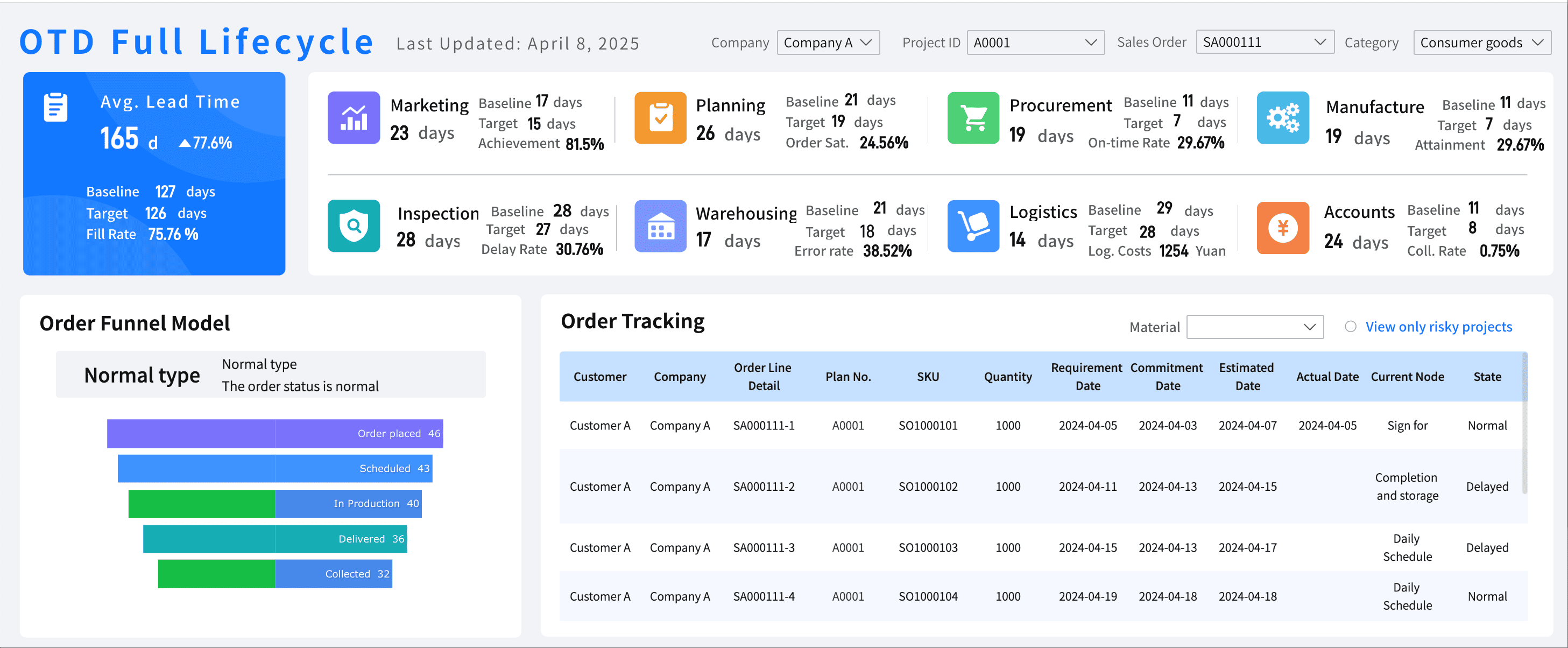
FineReport stands out as a leader in supply chain management software. You use this platform to achieve seamless integration, advanced visualization, and real-time analytics. FineReport enables real-time monitoring and analytics, giving you immediate insights into supply chain performance. You automate scheduling and simulation, which boosts operational efficiency. The unified control tower centralizes KPIs and alerts, improving visibility and responsiveness.
The table below summarizes the key features and impacts:
| Feature/Impact | Description |
|---|---|
| Real-time monitoring and analytics | You make timely decisions with up-to-date information. |
| Automated scheduling and simulation | You optimize resource allocation and planning. |
| Data-driven decisions | You support strategic and operational adjustments with real-time data analysis. |
| Unified control tower | You centralize KPIs and alerts for better visibility. |
| Real-time KPI monitoring | You track key metrics like OTD/OTIF and inventory turns. |
| Early-warning center | You receive alerts for proactive issue resolution. |
| Cross-factory benchmarking | You compare performance across plants for continuous improvement. |
| Inventory cost reduction | You achieve measurable savings, such as a 5% reduction in inventory costs. |
You benefit from FineReport’s strong integration capabilities, flexible dashboards, and mobile access. The software supports automation, visualization, and real-time analytics, making it a top choice for businesses seeking smarter supply chain management.

Other Noteworthy Supply Chain Tools
You will find several other innovative supply chain tools making an impact in 2026. These include:
- Logiwa WMS: Best for ecommerce with cloud DTC fulfillment and over 200 integrations.
- NetSuite: Offers robust planning features with demand forecasting and predictive analytics.
- Netstock: Focuses on intelligent inventory management and demand planning.
- Precoro: Enhances transparency with custom workflows and automation.
- Magaya Supply Chain: Automates supply chain operations and integrates various functions.
- FreightPOP: Designed for freight shippers with extensive integrations.
- Shippabo: Centralizes operations with real-time shipment information and predictive intelligence.
You also see emerging trends such as artificial intelligence and machine learning for predictive analytics, blockchain for transparency and security, and sustainable supply chain practices. Last-mile delivery innovation, autonomous warehousing solutions, generative AI, and intake and orchestration technologies are shaping the future of supply chain management.
Note: When you choose supply chain tools, look for software that combines automation, visibility, and advanced planning features. These elements will help you stay ahead in a rapidly changing market.
How to Choose the Right Supply Chain Management Tool
Assessing Business Needs and Scale
You start by evaluating your supply chain management needs. Focus on metrics that reveal how well your operations perform. The table below shows important metrics you should track:
| Metric | Description |
|---|---|
| Perfect order rates | Monitor error-free orders using a specific calculation formula. |
| Warehousing costs | Use software and audits to keep expenses in check. |
| Inventory turnover | Identify overstocking and high-demand periods. |
| Inventory accuracy | High accuracy reduces outages and carrying costs. |
| On-time shipping | Measure orders shipped on or before the estimated date. |
| Rate of return | Gain insights into growth potential from return rates. |
| Inventory velocity | Track how often inventory needs replenishment. |
| Inventory-to-sales ratio | Measure effective conversion of inventory into sales. |
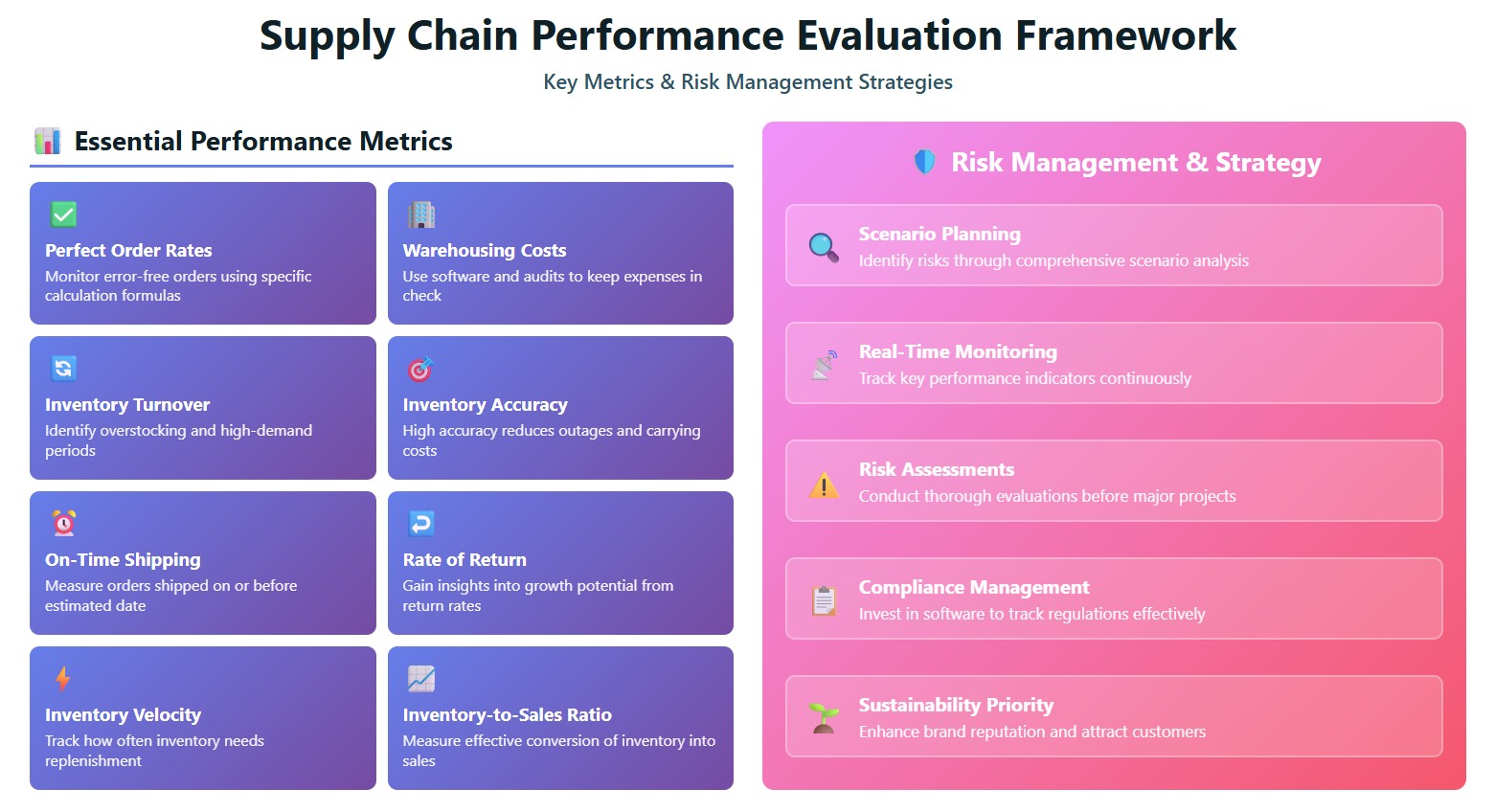
You also identify risks through scenario planning and monitor key performance indicators in real time. Conduct risk assessments before major projects. Invest in compliance management software to track regulations. Prioritize sustainability to enhance your brand and attract customers.
Industry-Specific Requirements
Your industry shapes your supply chain management choices. Different sectors have unique needs. The table below highlights key considerations:
| Industry Sector | Key Considerations |
|---|---|
| Food and Beverage | Perishability and expiration dates |
| Healthcare | Shelf-life constraints and regulatory oversight |
You select solutions that address these requirements. For example, food companies need tools that track expiration dates. Healthcare organizations require systems that manage shelf-life and comply with regulations.
Evaluating Integration and Support
You look for supply chain management systems that integrate smoothly with your existing processes. Consider these factors:
- Secure organizational buy-in, including full commitment by management.
- Understand and articulate benefits for all parties.
- Adapt to changes in work design and structure.
- Use appropriate technologies for communication and data exchange.
- Ensure compatibility with your strategic vision.
You choose platforms that support effective communication and product development. Integration helps you achieve better efficiency and data accuracy.
Budget and ROI Considerations
You assess the cost and return on investment for supply chain management solutions. Calculate the total cost of ownership, including software, training, and support. Estimate how much you will save through improved efficiency and reduced errors. Track performance improvements using the metrics above. Sustainable practices often lead to long-term savings and stronger customer loyalty.
Tip: Select supply chain management solutions that match your business size, industry needs, and strategic goals. This approach helps you maximize efficiency and data-driven decision-making.
Implementing Supply Chain Management Tools Successfully
Building a Cross-Functional Team
You need a cross-functional team to implement supply chain management tools. Bring together people from IT, operations, procurement, and finance. Each member offers a unique view of your supply chain. When you involve different departments, you spot gaps and improve communication. Management involvement is also important. Leaders set clear goals and encourage innovation. You create a culture where everyone supports the new system.
| Best Practice | Explanation |
|---|---|
| Comprehensive Training | Employees require extensive training to understand new systems and their roles in the processes. |
| Management Involvement | Active participation from top management is crucial to encourage innovation and support staff. |
| Holistic Approach to Analysis | A comprehensive view of supply chain processes is necessary for effective implementation and adaptation. |
Data Integration and Migration
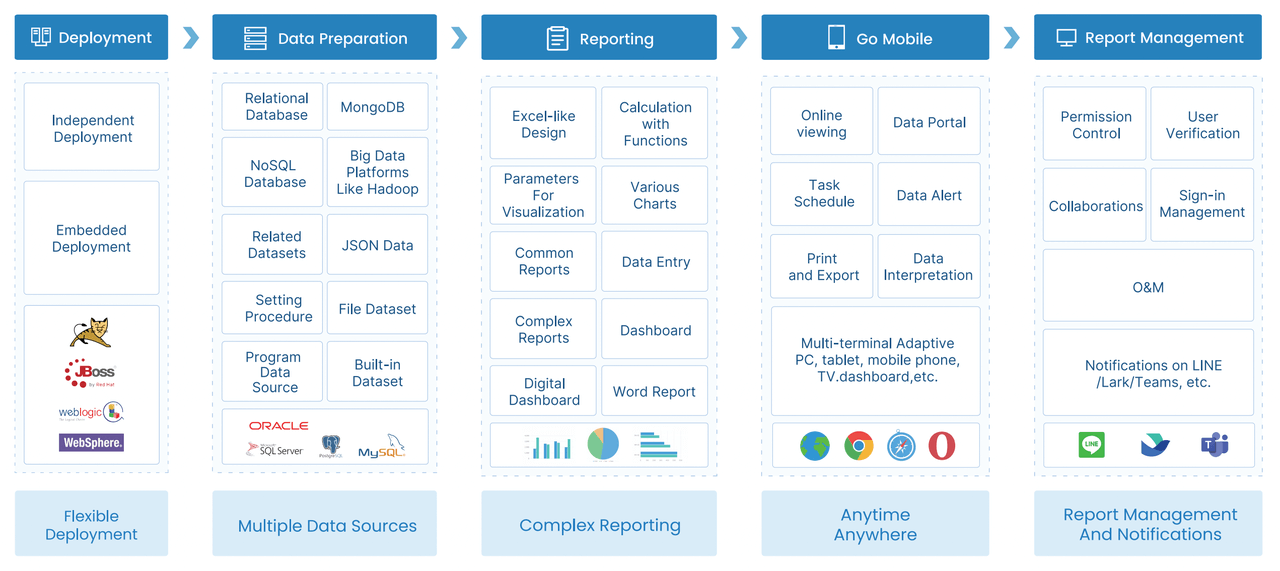
You must connect data from different systems for successful supply chain management. FineReport helps you integrate data from ERP, MES, and SRM platforms. The low-code design makes this process easier. You reduce the risk of data silos and ensure information flows smoothly. Real-time insights let you track inventory, orders, and logistics without delay. When you migrate data, check for accuracy and consistency. This step prevents errors and supports better decision-making.
Training and Change Management
You should invest in training for your team. Employees need to understand how to use new supply chain management tools. Training sessions help everyone learn their roles and responsibilities. Change management is also key. You must explain the benefits of the new system and address concerns early. When you support your team, you reduce resistance and speed up adoption. Use risk management software to monitor progress and identify issues during the transition.
Measuring Success and Continuous Improvement
You measure success by tracking key performance indicators. Monitor metrics like inventory turnover, order accuracy, and on-time delivery. Use dashboards to see real-time results. FineReport gives you end-to-end visibility and reporting. Regular reviews help you find areas for improvement. Continuous feedback from your team leads to better supply chain management. You can also use risk management software to spot trends and prevent future problems.
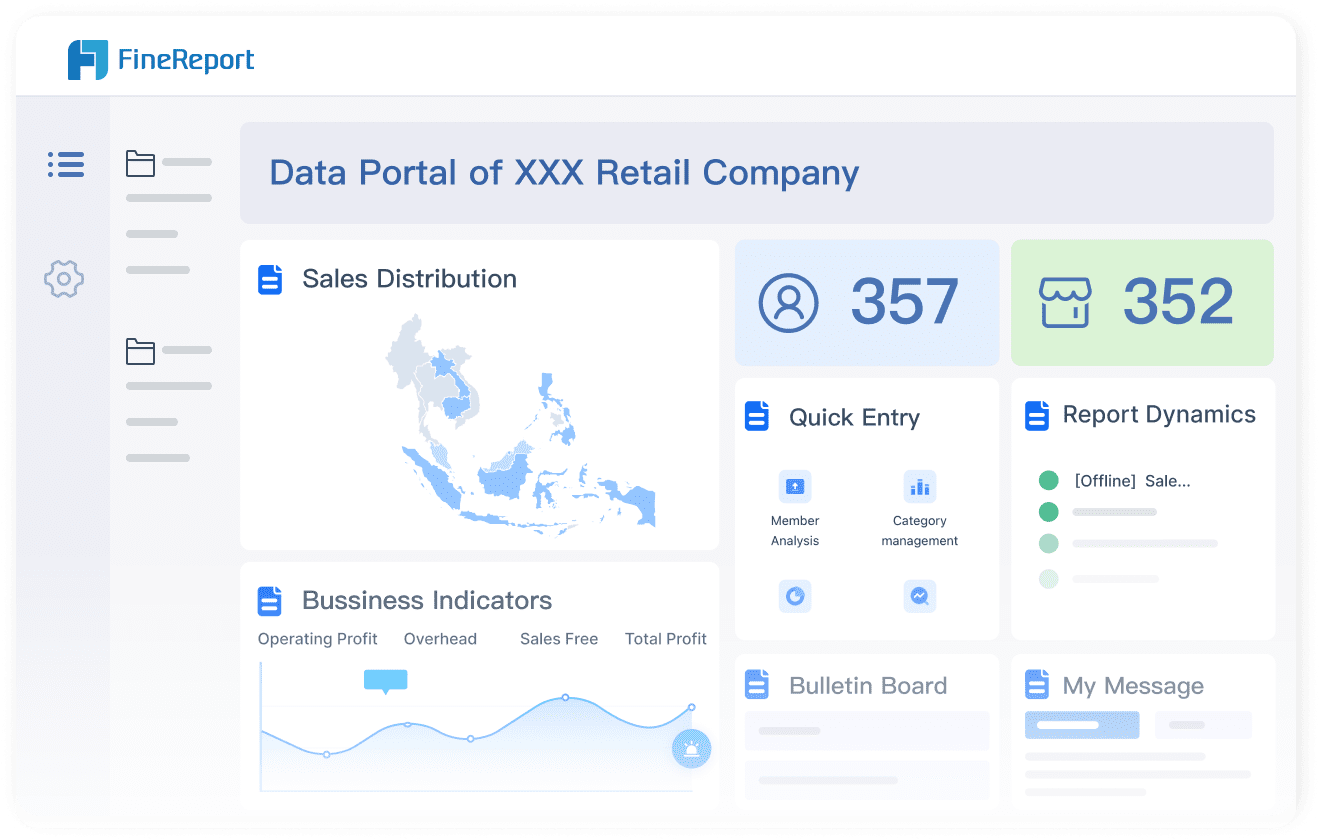
Tip: Choose supply chain management tools that offer strong data integration, real-time analytics, and support for risk management software. These features help you adapt and grow in a changing market.
- FanRuan’s implementation stands out for several reasons:
- End-to-end visibility across your supply chain.
- Seamless data integration from multiple systems.
- Low-code functionality for easy setup.
- Real-time insights for informed decisions.
Supply Chain Risk Management and Analytics

Real-Time Monitoring and Early Warning
You need real-time monitoring to strengthen supply chain risk management. When you track supply chain management events as they happen, you spot problems before they grow. You use dashboards to watch key metrics like inventory levels, order status, and supplier performance. Early warning systems send alerts when something goes wrong. For example, if a shipment gets delayed, you receive a notification. This helps you act fast and avoid bigger issues. Real-time monitoring gives you the power to respond quickly and keep your supply chain management running smoothly.
Tip: Set up automated alerts for critical supply chain risk management events. This keeps you informed and ready to take action.
Scenario Simulation and AI Decision Support
You improve supply chain risk management by using scenario simulation and AI decision support. Scenario simulation lets you test different outcomes before making decisions. You can see what happens if a supplier fails or if demand spikes. AI tools analyze data and suggest the best actions. You use these insights to plan for disruptions and reduce risks. With supply chain management software, you run simulations and get recommendations in seconds. This helps you prepare for the unexpected and make smarter choices.
| Simulation Benefit | Description |
|---|---|
| Risk Reduction | You identify and avoid potential problems. |
| Faster Decision-Making | You get quick answers from AI tools. |
| Improved Planning | You adjust plans based on real data. |
Case Study: BOE and FanRuan FineReport
You can learn from BOE’s experience with supply chain risk management. BOE faced challenges with fragmented data and inconsistent metrics. They used FanRuan FineReport to build a unified system for supply chain management. The solution included real-time KPI dashboards and cross-factory benchmarking. BOE reduced inventory costs by 5% and improved operational efficiency by 50%. You see how supply chain risk management tools help companies track performance, spot risks, and make better decisions. FanRuan FineReport gave BOE the visibility and analytics needed for smarter supply chain management.
Note: When you use supply chain risk management solutions like FineReport, you gain real-time insights and improve your ability to manage risks.
You see how supply chain management tools drive smarter management in 2026. These solutions help you match features to your business needs and improve performance. FanRuan and FineReport stand out for their integration, analytics, and real-time visibility. You gain measurable benefits across industries:
| Industry | Measurable Impact |
|---|---|
| Retail | Improved service levels |
| Food and Beverage | Enhanced cost efficiency |
| Industrial Manufacturing | Increased resilience |
| Aftermarket Parts | Better forecasting accuracy |
| Consumer Goods | Smarter inventory strategies |
| Life Sciences | Stronger coordination across teams |
You should review your supply chain management processes. Consider upgrading to advanced supply chain management tools. Start a trial, consult with solution providers, or assemble an internal evaluation team. These steps help you achieve better supply chain management results.
Continue Reading About supply chain tools
Top 10 Supply Chain Management Software for Small Businesses
Top 10 Supply Chain Tracking Software for 2026
7 Must-See Supply Chain Dashboard Designs for Modern Businesses
Frequently asked questions
You should look for real-time data integration. This feature helps you see your entire supply chain at once. It lets you make faster, smarter decisions and respond quickly to changes.